
WMG News - Latest news from WMG
WMG welcomes Siam Cement Group
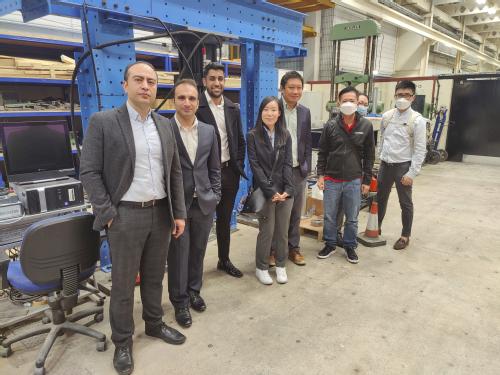 WMG and the School of Engineering at the University of Warwick were pleased to welcome Siam Cement Group (SCG) to campus recently.
A senior delegation of directors at SCG, enjoyed an extensive tour of the University’s state-of-the-art facilities including WMG’s Advanced Materials and Manufacturing Centre (AMMC).
SCG, based in Thailand is one of the world’s largest cement and concrete manufacturers. The Group is investing in world-leading technology for construction including Concrete4Change. Concrete4Change is an award-winning R&D start-up, supported by WMG and the School of Engineering, developing net-zero concrete technology.
Dr Sid Pourfalah, Founder and CEO of Concrete4Change, and Honorary Associate Professor at the University of Warwick commented: “We are delighted to host SCG at the University of Warwick. The University has been an invaluable R&D partner in our journey so far, and with SCG now entering into collaboration with Concrete4Change, we can scale our presence in the market and create the true net-zero pathway that the concrete industry desperately needs.”
Read more about the Concrete4Change project here: CO2 consuming concrete technology showcased at COP26 to be tested at University of Warwick - WMG :: News
National Grid calls on support from the construction industry to improve wellbeing for workers
 • Research shows 91% of construction workers have felt overwhelmed and 26% have experienced suicidal thoughts*
• National Grid issues call to join its Health in Construction Consortium to improve wellbeing of workers across the industry.
• National Grid opens new Health Hub at IFA interconnector site to provide wellbeing support for staff and contractors
National Grid is calling on the construction sector to work together to develop an industry-wide approach to improve the mental health and well-being of its workers.
Suicide rates for construction workers in the UK are over three times the national average with over two employees dying by suicide every day.
This highlights that wellbeing initiatives are not reaching the most vulnerable and more needs to be done to improve support and services offered within the sector.
There are a range of factors which make construction employees especially at risk of poor mental health including regular periods of underemployment, extended time spent away from family and friends and high mobility within the workforce. This has only been exacerbated through the pandemic.
According to research by CIOB, some 91% of workers report feeling overwhelmed and 26% have experienced suicidal thoughts. *
National Grid is determined to change this, by establishing a Health in Construction Consortium and leaders have called for supporters from throughout the sector to join the project.
The call to action was made at the official launch of a new on-site Health Hub at the company’s IFA interconnector site in Kent on Thursday. (19th May).
The facility has been specially designed to improve the wellbeing of construction workers and includes a canteen providing heathy meals, recreational space, a garden and a gym as well as a quiet room for prayer and reflection.
Services such as mental health and wellbeing sessions, training and support helplines will be provided by charity Lighthouse Construction Industry Charity which provides vital support for those working within the sector.
The facility, which has been constructed by contractor J Murphy & Sons Limited, is already providing vital services to hundreds of employees working around the clock at the company’s IFA interconnector.
Together with Considerate Constructors Scheme, National Grid has established a Health in Construction Consortium and will be sharing findings from this project across the industry to demonstrate the difference this kind of support can make to workers.
Managing Director of Interconnectors for National Grid, Nicola Medalova, said: “This is an issue that all of us in the construction sector have a responsibility to address. The research shows that something has to change. That’s why we’re looking for representatives from across the sector including small to medium-sized enterprise, large businesses, contractors, and clients, who are passionate about mental health, to be part of the solution. We understand that collaboration and coordination across key stakeholders in the industry will be critical to tackling the mental health crisis in construction. So, whether you are getting started, in development, or leading the way on mental health issues within the sector, we call for your support and ask for you to join us in being an agent for change.”
Considerate Constructors Scheme Chief Executive Amanda Long said: “As an industry, the workforce is at a higher-than-average risk of poor mental health and suicide and we must take action. It is vital that we work together with the construction sector to give all employees access to the support and facilities they need to look after their mental health and wellbeing.”
Chief Executive of Lighthouse Construction Industry Charity Bill Hill said: “We are absolutely delighted to be working with National Grid on this significant issue within our industry. It is so important that we get the message of support to the 'boots on the ground' that we are there for them 24/7. If our workforce don’t know we are there for them we simply can’t help them in crisis. We are delighted to support National Grid’s Wellbeing Hub and I am convinced that this initiative will have a positive impact on workforce wellbeing and ultimately save lives.”
National Grid is working with WMG at the University of Warwick to research the experiences of construction workers using the Health Hub, and the benefits these additional services will have on employee mental wellbeing. The project is being led by Dr Carla Toro, Associate Professor in Digital Healthcare Sciences at WMG.
The research will help the business understand and make recommendations to the sector on the challenges that the construction workforce experience, and the kinds of wellbeing initiatives that could have a positive impact on quality of life and mental health.
Organisations interested in joining the Health in Construction Consortium should contact Alisha Baig by emailing alisha.baig@nationalgrid.com
*Source of Research: 2019 CIOB (The Chartered Institute of Building) Research & Survey: Understanding Mental Health in the Built Environment.
Prestigious teaching award for WMG academic
 WMG’s Dr Greg Gibbons has been awarded the Senior Fellowship of the Higher Education Academy (SFHEA).
Senior Fellowship of SFHEA is an advanced level of professional standing that evidences expertise in teaching and learning in higher education.
Dr Gibbons said: “I am extremely pleased to have been awarded Senior Fellowship of the Higher Education Academy (SFHEA). It is recognition of my understanding and use of effective approaches to teaching and learning support, and my contribution to providing high quality student learning within WMG.”
Dr Gibbons is responsible for the mentoring of student projects within the field of Additive Layer Manufacturing (ALM) processing of materials (metals, ceramics and polymers), at undergraduate, master’s and postgraduate level.
Read more about Dr Gibbons career and expertise here: WMG :: Our People :: Profile (warwick.ac.uk
WMG research recognised at key industry awards
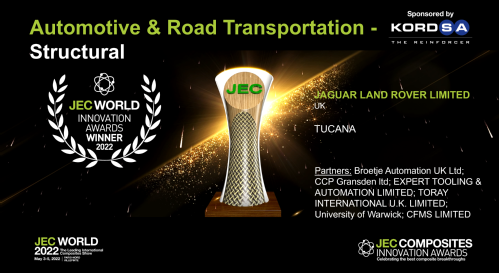 WMG’s composites manufacturing expertise, on Project TUCANA, has been recognised at the prestigious JEC World Composites Innovation Awards 2022,
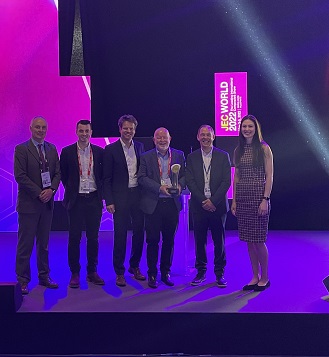 in Paris.
The Awards celebrate innovation in design and manufacturing within the global composites industry. Project TUCANA, led by Jaguar Land Rover in partnership with WMG at the University of Warwick; Expert Tooling & Automation Limited; Broetje-Automation UK Ltd; Toray International U.K. Limited; CCP Gransden Ltd; and CFMS Limited, was announced as the winner of the Automotive and Road Transportation - Structural category.
WMG experts, led by Professor Ken Kendall, helped to develop a stiffer and lighter vehicle structure using light weight carbon fibre composite components.
The research, which took place in the Materials Engineering Centre, has developed world-leading cost effective, scalable carbon fibre composite solutions, with the view to boosting the performance of electric vehicles. Upon adoption of the design philosophy in JLR vehicles the total combined CO2 benefit of the project between 2023-2032 is projected to be 4.5 million tonnes.
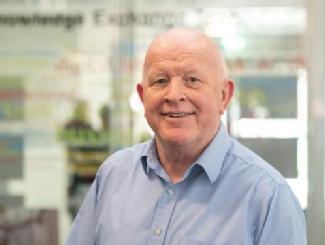 Professor Ken Kendall explains:“Our research helped develop the design and manufacturing technology needed to optimise the vehicle body architecture required for electric vehicles, improving their environmental impact through reduced weight, improved rigidity and range extension.
“This project has helped develop the understanding of what is achievable through the use of mixed composite materials to improve structural performance at affordable cost for high volume manufacture. WMG were a key partner in developing and demonstrating the technologies required and transitioning this knowledge to our industrial partners. We are delighted that the project has received the recognition it deserves.”
Over 90% of engineering research at the University of Warwick recognised as world-leading or internationally excellent by the Research Excellence Framework
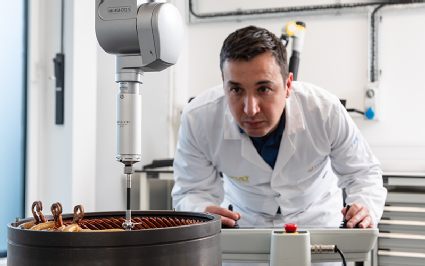
The high quality of engineering research at the University of Warwick has been recognised within the results of the 2021 Research Excellence Framework (REF), which were made publicly available today.
The University’s engineering research has been ranked 20th out of 89 UK institutions (according to Times Higher Education), with over 90% of engineering research outputs being identified as world-leading or internationally excellent.
Colleagues from research, technical services, teaching and professional services at WMG and the School of Engineering combined to create a strong submission within the ‘B12 Engineering’ category, augmented by related research from the Department of Physics.
Reflecting on the results, Professor Robin Clark, Dean of WMG and Director of Education said: “With 93% of our engineering research rated world leading or internationally excellent, the joint submission with our colleagues in the School of Engineering demonstrates the quality and breadth of work being undertaken at the University.
“Covering a diverse range of topics and delivering cross disciplinary research to address global and industrial challenges is something we and our industry partners value, and it is something we will develop further in the future.”
Professor David Towers, Head of the School of Engineering added: “The results show strong positive progression in research outputs and impact case studies. Most notably, we have – and are continuing – to invest in research infrastructure, in clean energy technologies, biomedical engineering and sustainable cities with a core strength in predictive modelling, the majority of which is ranked as world-leading. Hence, we are optimistic of our potential to further expand our academic and societal impact over the coming years together with our industry partners.”
The collective submission acknowledged the work of the University’s engineering-based researchers, spanning key areas such as: embedding sustainability through energy innovation; helping people live longer and healthier lives through biomedical engineering; realising visions for future cities; maximising the potential of technology and society; and embedding innovation throughout materials and manufacturing.
As part of this, a series of case studies were submitted to illustrate the breadth and depth of impact generated throughout engineering research at the University. Over 60% of these case studies have received the highest rank of ‘world-leading’.
Professor Paul Jennings, Director of Research at WMG commented: "Our research constantly evolves to address the needs of our industry partners across many sectors. So, to achieve this recognition for its quality and impact, especially during a period of significant growth and change, is testament to the capability and hard work of colleagues across the whole of our department."
The REF is the UK’s system designed to evaluate the quality of research across higher education. The assessment is conducted by Research England (as well as equivalent funding bodies for institutions across Scotland, Wales and Northern Ireland) through a process of expert review by academics, international members and research users.
WMG’s contribution within the submission involved significant partnership with industry and public bodies. The technical focus has evolved since REF 2014, to cover key themes such as vehicle electrification; sustainable materials; resilient manufacturing; and opportunities from improved use of data and connectivity. WMG's research also informs its education provision and skills programmes, as well as the national agenda, through initiatives like the National Electrification Skills Framework.
The School of Engineering spans Civil Engineering, Mechanical, Materials and Process Engineering, Electrical and Electronic Engineering, and Systems and Information Engineering, embedded within a single unified department to enable cross-fertilisation in research.
The results also recognised an increase in the economic and societal impact of the University’s research as a whole, which highlights the real-world benefit of the University’s work.
Commenting on the REF2021 assessment, Professor Stuart Croft, Vice-Chancellor at the University of Warwick, said: “These results demonstrate the truly world class quality of our research, our approach and most importantly our people.
“This is an outstanding achievement and a source of tremendous pride for everyone connected with this great institution.
“Our research has always been driven by a strong sense of purpose and commitment to ensuring what we do has a positive impact on wider society. From helping to save lives through our modelling work during the Covid pandemic, and the development of new, sustainable forms of transport and energy, to making a fairer criminal justice system, and supporting our cultural institutions and creative industries, our research delivers real-world benefit.
“Overall, the REF results also reflect the remarkable strength, quality and breadth of research within the UK. The future for our researchers is bright and exciting. We will continue to push boundaries, innovate and learn through our research work so we can benefit more people, in more places, more often.”
Read more about WMG’s research impact here and find out more about WMG’s REF submission here.
Read more about the School of Engineering’s research impact here and more about their REF submission here.
Read more about the University’s research impact and innovation here. The University’s announcement can be viewed here.
University of Warwick proposes new quality and safety regulations report for micromobility vehicles

• Legal framework proposed by researchers at the University of Warwick lays out how future micromobility vehicles such as eScooters could be designed and operated in the UK by mid-2023.
• New standards would require manufacturers to develop safer and better quality vehicles.
• The roadmap proposes new powers of enforcement to deter antisocial and illegal use.
• Conclusions were drawn from a wide-ranging consultation with over 100 organisations.
The UK is the last major Western economy not to legislate ‘Powered Micro Vehicles’. The University of Warwick wants to change that and has proposed a new set of regulations for allowing micromobility vehicles, such as e-scooters to operate legally in the UK. The report looks at ways to improve the quality and safety of models available, as well as providing clear guidance for authorities to deal with unsafe behaviour.
WMG researchers at the University of Warwick, with support from Cenex, has published ‘Micromobility, a UK roadmap’. It is a regulatory framework that provides a set of standards for eScooters, a cargo variant and other micro vehicles, to be operated legally in the UK, which is aimed at supporting regulatory change through parliament.
100 organisations representing road users, safety groups, transport authorities and industry have helped shape the roadmap. If the roadmap was adopted, the public could legally operate eScooters and other micromobility vehicles by mid-2023.
Micromobility is a key part of achieving net-zero emissions for transport. For many journeys, particularly short journeys, walking or using micromobility are much better for the environment than using a car. The economic benefits are also compelling both in the cost of the vehicle and the manufacturing opportunities. Without change many manufacturers may leave the country.
The key recommendations of the roadmap are:
• The creation of a new vehicle category “Powered Micro Vehicles” and three initial new vehicle types in the category: eScooter, Light Electric Cargo Vehicle, Electric Light Moped.
• Specific standards and regulations for each vehicle type, including speed limits and weight limits.
• Vehicles must be registered and be visually identifiable.
• Cardinal design requirements around minimum wheel size and redundancy of braking systems, so there is a secondary method of slowing the vehicle down.
• Daytime running lights, a sound emitter and indicators are required to improve visibility for current road users.
• No use on the pavement in any circumstance, and instead use on roads and cycle-ways.
• Minimum ages for operating the vehicles, and PPE recommendations.
• New powers for local policing and PCSOs in England and Wales, to fine breaches and illegal use.
Lead author John Fox, Programme Director at WMG at the University of Warwick, said “The purpose of the 'Micromobilty, a UK roadmap’, is to provide regulations on how powered micromobility vehicles could be designed and operated in the UK.
“It’s important that these vehicles are high quality, safe, and legal. They can provide a low-carbon mobility option which is available to everybody, allowing us to make choices about how we travel, and stimulating future innovation which will accelerate a market for UK manufacturers.”
Robert Evans, CEO at Cenex comments, “In order to lower emissions from transport, it is crucial we find a way forward that allows the UK micromobility market to grow sustainably and safely for all.
“The growth in e-bike use and the popularity of e-scooter trials have demonstrated that electric powered micro vehicles will have a significant role in our future transport systems. The right legislation and regulations must enable this whilst minimising any potential negative impacts.
“Cenex is proud to have supported WMG in this work and looks forward to seeing the benefits and impacts.”
Richard Dilks, Chief Executive at CoMoUK, said “Further to our recent letter to the Transport Secretary, CoMoUK sees a clear need for legislation to fill the void we currently have over micromobility options such as escooters beyond the welcome rental scheme trials. We welcome the announcement from the Transport Secretary that the Government intends to legislate. We need all the options we can lay our hands on to reduce our over-reliance on private cars in particular and motorised mileage in general, and proposals such as these help put flesh on the bones of how we can fill the gap.”
Adam Norris, Founder of Pure Electric, said, “As Europe’s largest e-scooter retailer we are working hard to support the Government with bringing in legislation. The UK still remains the only large economy not to have legalised and regulated private e-scooters. It is frustrating that the UK has fallen behind the rest of Europe, however, the detailed work from the experts at the University of Warwick demonstrates that the UK has the potential to become a world leader in micro-mobility.”
Over the course of six months, the researchers held five workshops with over 100 organisations represented. Participants came from a broad range of stakeholders, including user groups – such as road safety groups, charities and cycling groups - service providers, vehicle developers and manufacturers, local and regional transport authorities, and policymakers. These workshops examined a range of options covering vehicle types, vehicle safety, maximum speeds, to try and form a consensus.
• The roadmap is available online: short version and long version
• The image (taken on private land) is courtesy of Pure Electric.
WMG is hosting its 2nd micromobility event on 9th June where the roadmap will be debated by key industry stakeholders. The event will also feature the latest data from industry and technology experts, with the opportunity to trial some of the latest micromobility solutions
WMG appoints new Professor of Supply Chain Management
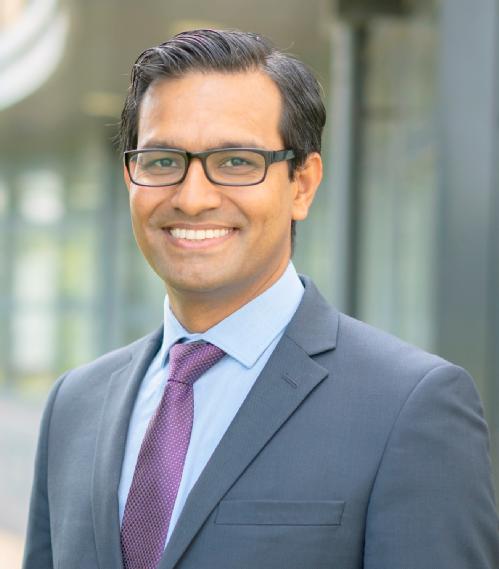 WMG, at the University of Warwick, has appointed Dr Alok Choudhary as its new Professor of Supply Chain Management and Head of Supply Chain Group.
Dr Choudhary, who joined WMG earlier this month, brings a wealth of knowledge after more than a decade of working in supply chain management and logistics at Sheffield University Management School, and more recently as a Professor of Supply Chain Management at Loughborough University’s School of Business and Economics.
Alok comments: “I am excited to contribute to the success of a world-leading institution that is a powerhouse for creating research-led impact and developing innovative solutions for many industrial and societal challenges.
“More than ever before, innovation and transformation are needed to tackle some of the pressing global supply chain challenges we face today including sustainability, Net Zero, risk and digital transformation.
“I’m looking forward to leading WMG’s Supply Chain Group and collaborating with our industry partners and colleagues from across the University, to make a step-change in addressing these challenges.”
Alok served as a panel member of REF2021 Subpanel "Business and Management" as one of the only two operations and supply chain management experts. Most recently, Professor Choudhary worked with Midlands Engine and Energy Research Accelerator to develop the UK Midlands pan-regional green growth plan.
He has led and contributed to several projects funded by EPSRC, ESRC, European Union, RED and the British council with specific focus areas including Sustainability (including ESG issues, Decarbonisation and Circular Economy), Resilience and Digital Transformation in the supply chain. Dr Choudhary has served as a Guest Editor at many journals, as well as authoring and co-authoring over 100 research publications including over 55 for international journals.
He was a Visiting Faculty at the Indian Institutes of Technology (IITs), Ivey School of Business; Vienna University of Economics and Business, and a Visiting Researcher at Harvard Business School. He has also served as a scientific committee member, session chair and keynote speaker at several international conferences and delivered guest lectures at many universities across the world.
Find out more about WMG’s Supply Chain Group here.
WMG alumnus Kanishka Arumugam and his company EKKI recognised at Global Pump Industry Awards
Kanishka Arumugam, WMG MSc Engineering Business Management alumnus, has been recognised at the prestigious Global Pump Industry Awards.
Kanishka, who graduated in 2015, is Co-CEO of EKKI WATER TECHNOLOGIES in India. Kanishka and EKKI were recognised in two categories at the ceremony, in Kenilworth, organised by the British Pump Manufacturers Association (BPMA) along with leading European pump industry members.
The Pump Industry Awards (PIA) is not only one of the most prestigious, but also one of the oldest and most revered in the world. The Awards aim to recognise outstanding achievement and superior performance in areas such as leadership, technological innovation, customer service and skills. EKKI is the first Indian company to be recognised in two categories.
EKKI was recognised as a key contributor for skills and training in the industry through its EKKI International Water Technology Centres (EIWTC). EIWTC is a global centre of excellence for training, research and entrepreneurship in pumps and water related technologies, partnering with leading industries, government and academic institutions globally.
Kanishka was also acknowledged as a ‘Rising Star,’ for his significant contribution in transforming the fortunes of his family business, EKKI, from making agriculture pumps to cutting-edge water technologies around the world. He is credited for setting up India’s first waste water joint venture with German Pump major HOMA which has a presence in more than 120 countries across the world.
Kanishka Arumugam said: "We at EKKI are immensely proud to be recognised internationally for our innovative initiatives within the industry. This recognition from the world’s most respected and important members of the Pump Industry, recognises the true success and potential of EKKI.
“At EKKI, we are really passionate about producing globally competitive products from India and make EKKI as one of the most respected family-owned companies from this part of the world.
“WMG at the University of Warwick, taught me the importance of applied academia, and I was very fortunate to be mentored by Professor Sujit Banerji who taught us to make global quality. Professor Banerji has recently been appointed as a Chief Advisor to EKKI and continues to mentor us, which is of immense value to both me personally and the company.”
He added: “I dedicate this recognition to my father our Group Founder Mr.Arumugam.P, members of EKKI, our partner HOMA in Germany, distributors, dealers and supply chain partners across the globe.
“I would also like to thank my alma mater, Warwick University, for fostering in me the art of applied academia in industry.”
Commenting on this prestigious European recognition, EKKI’s German partner Mr. Hans Hoffmann, CEO of HOMA said: “EKKI is seen as one among the fastest growing water tech companies in India and globally. EKKI as a company has proved to a German partner like us that they are full of potential with extraordinary quality and capable of designing and producing highly competitive products, with impressive profits.
“Kanishka Arumugam is one of the most successful young executives we have in the industry. Backed by his strong academic background from Oxford and Warwick he is an intellectually curious young leader who is ready to pause, to reflect, seize new opportunities, and create an impact in the water industry.”
Arumugam.P, Group CEO and Founder said: "EKKI serves as a role-model for all our other companies within the group. By this distinguished recognition, it has once again led the way. I could not be any prouder, because I know that no one is more capable of leading EKKI successfully into a sustainable and digital future than Kanishka.”
Project launched to deliver the next generation of sustainable electric motors
 WMG, at the University of Warwick, is playing a key role in the UK-ALUMOTOR consortium working to build on the UK’s electric motor supply chain by leveraging manufacturing expertise to deliver the next generation of sustainable electric motors.
The consortium, led by Ricardo, will deliver a tested and validated pre-production, highly sustainable motor, with up to 12kg reduction in rare earth magnets per machine. This will enable the UK to scale motor production and accelerate the transition to electrified transport, as well as build and secure its national capability and domestic supply chain without risk from international markets, so providing competitive advantage.
The consortium is also investigating higher performance derivatives, suitable for passenger cars, defence and motorsport applications.
WMG’s role as the project’s stator integration lead is to use the DER Winding Centre of Excellence to help build several novel synchronous reluctance e-machine prototypes, helping to develop a range of manufacturing processes to pre-production level for the pre-production design. Engineers and researchers at WMG will conduct process development and components testing, leveraging work on earlier APC funded projects, to advise the partners on design for manufacture, bill of processes, and end of line testing to provide a viable manufacture solution.
Funding for the project has been awarded by UKRI’s Driving the Electric Revolution and will allow the consortium to take the light commercial vehicle motor concept to a much higher level of manufacturing readiness.
This two-year project builds on previous successful collaboration between the consortium in 2021 as the UKRI funded feasibility study was delivered. WMG has supported the design since its inception through earlier DCR project with Ricardo in 2020.
Teri Hawksworth, President of Ricardo Automotive and Industrial EMEA, said: “The cost of electrification is widely recognised as being the biggest barrier to wide-scale adoption of electric commercial vehicles. Manufacturers are also concerned about the supply security and volatile costs of the rare earth metals used in most zero emission vehicles. Ricardo is committed to supporting manufacturers by driving cost out of electrification, leveraging our world-renowned expertise in motor innovation, and driving sustainable technology solutions which will support the UK in achieving its net zero carbon emission targets for commercial vehicles by 2030.”
David Simkin, Head of the DER Winding Centre of Excellence (WCE), said: “The challenge of taking a novel topology of eMachine to early stage production is exactly what the DER WCE facility was designed to deliver. Taking the experience and knowledge gained in the earlier UK-ALUMOTOR program to early phase manufacturing will build on the manufacturing process and training skills already at WMG. Manufacturing of eMachines in the UK is necessary to move to a zero emissions outcome in the UK. It is the priority of the WCE to support UK manufacturers and UK supply chain companies to satisfy this market opportunity in electrification, and this project provides a perfect opportunity for us to do this.”
In addition to consortium leader, Ricardo, the project consortium partners include: Aspire Engineering, Brandauer, WMG, Phoenix Scientific Industries, and Global Technologies Racing.
Find out more about WMG’s Transport Electrification research here.
Members of the Worshipful Company of Engineers visit WMG
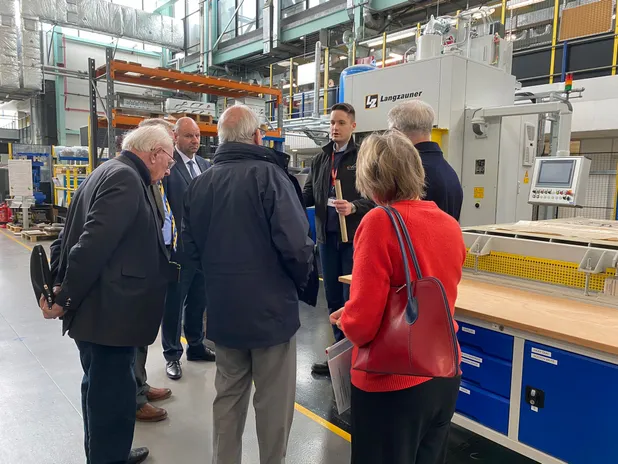
WMG, University of Warwick welcomed members of the Worshipful Company of Engineers to the department to discuss the importance of industry working with academia on research and education. The Company comprises leading engineers, and works to promote and develop all aspects of the science, art and practice of engineering.
Professor Mark Williams, Head of Metrology and Visualisation gave a tour of WMG facilities which focused on the important role of CT scanning in battery technology, criminal forensics, and medicine.
Current winner of the Leete Premium Award, Will Naylor presented his PHD work to the group. Will’s research which has been recognised due to its potential to introduce significant change in manufacturing, investigates methods of capturing, transmitting, and delivering high quality, multisensory, 3D data between remote locations.
Professor Paul Jennings ,Director of Research at WMG who led the visit said: “It was a pleasure to welcome members of the Worshipful Company of Engineers to WMG and give them a real insight into our pioneering research and innovation. The importance of collaboration was a key discussion point throughout the day and Will’s work is a true testament to that – his research is helping engineers to seamlessly work together and share ideas around the world.”
Find out more about WMG’s research here: https://warwick.ac.uk/fac/sci/wmg/research/