
WMG News - Latest news from WMG
Expert comment from Margot James and Professor David Greenwood
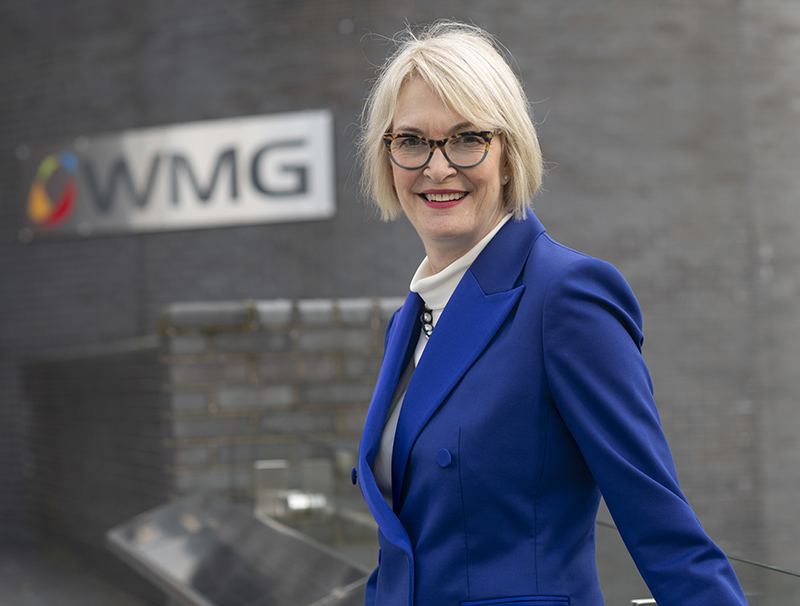 WMG's Executive Chair, Margot James, and Professor David Greenwood, CEO of the WMG centre High Value Manufacturing (HVM) Catapult and Director of Innovation respond to the Government’s 10-point climate change plan.
Margot James comments: “Zero Carbon transport is crucial to protecting our planet, so the government’s timescale for our national shift to electric vehicles is, rightly, ambitious. We should approach this challenge with optimism and enthusiasm.
“At WMG at the University of Warwick, our researchers identify, test, and scale up for manufacture the next generation of batteries, developing batteries that are smaller, more powerful, longer lasting and cheaper to run than ever before, while also ensuring they have a second life to help power homes and factories with clean energy. From lithium-ion to solid-state, much of our future travel will be battery powered, and the government’s announcement of a £500 million investment in the development and production of electric vehicle batteries will help us get there faster.
“Developing the advanced batteries to improve electric vehicle performance and lower cost is just one part of the sustainable transport challenge. To ensure a green recovery, Britain’s Research and Development networks and manufacturing base must work together so the next generation of green automotive jobs are created in Britain.
“To achieve this, we need to build gigafactories in the UK to produce batteries and back our supply chain to build the motors and power electronics, energy management systems and lightweight materials needed for the next generation of electric vehicles, all as we train up the next generation of engineers and business leaders with the skills needed for the UK to lead in Zero Carbon Transport.
“In all of these areas, WMG and Warwick are partners with Britain’s leading businesses. They tell us how important it is to invest now in the supply chain, infrastructure and skills, training and education if the UK is to benefit from the sustainable transport revolution. The Government’s announcement of extra investment will help ensure British transport innovation will lead to green transport jobs across the UK.”
Professor David Greenwood comments: “This 10 point plan really places the UK at the forefront of decarbonisation. This is truly welcomed but we should not underestimate the scale of the challenge. Sustained investment will be needed both by industry and government to bring the cost of electric vehicle technology down, to have the manufacturing capacity to supply the vehicles, to deliver the charging infrastructure required, and to recycle the EVs at the end of their life. In particular, research and development has a huge part to play in delivering this as quickly and as cost effectively as possible. As this has been exactly the focus of WMG’s Energy research activities over the last decade, we look forward to playing our part in this green transport revolution.”
The ultimate conditions to get the most out of high-nickel batteries
It is common knowledge in battery manufacturing that many cathode materials are moisture sensitive. However, as the popularity of high nickel-based battery components increases, researchers from WMG, University of Warwick have found that the drier the conditions that these cathodes are stored and processed in, then significant improvement in performance of the battery is gained.
High-Ni (Nickel) batteries are becoming increasingly popular worldwide, with more automotive companies investigating the use of high-Ni batteries for electric vehicles.  However, high-Ni cathode materials are prone to reactivity and instability is exposed to humidity, therefore how they are stored in order to offer the best performance is crucial.
In the paper, ‘The effects of Ambient Storage Conditions on the Structural and Electrochemical Properties of NMC-811 Cathodes for Li-ion batteries,’ published in the journal Electrochimica Acta, researchers from WMG, University of Warwick propose the best way to store high-nickel cathodes in order to mitigate premature degradation.
Researchers exposed NMC-811 (high-Ni cathode material) to different temperatures and humidities, then measured the material’s performance and degradation in a battery over a 28 day period, analysing them using a combination of physical, chemical and electrochemical testing. This included high-resolution microscopy to identify the morphological and chemical changes that occurred at the micron and sub-micron scale during the batteries charging and discharging.
The storage conditions included vacuum oven-dried, as exposed (to humidity) and a control measure. Researchers looked for surface impurities, which include carbonates and H2O, and found there were three processes that can be responsible for impurities, including:
1. Residual impurities emanating from unreacted precursors during synthesis
2. Higher equilibrium coverage of surface carbonates/hydroxides (present to stabilise the surface of Ni-rich materials after the synthesis process)
3. Impurities formed during ambient storage time
They found that in all conditions, (oven dried and as-exposed) showed inferior first discharged specific capacity and cycling performance, compared to the control. However the as-exposed measure showed that after 28 days of ambient moisture exposure the H2O and CO2 react with the Li+ ions in the battery cell, resulting in the formation of lithium carbonate and hydroxide species.
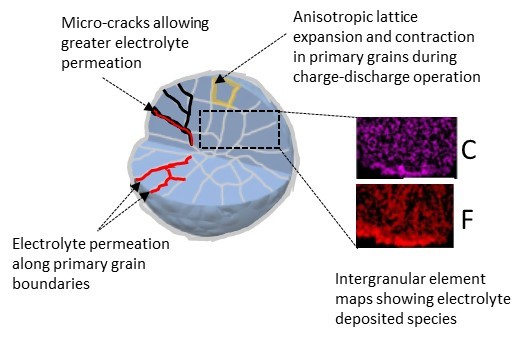 The formation of carbonates and oxides on the surface of NMC-811 contribute to the loss of the electrochemical performance during ageing of the materials, due to the inferior ionic and electronic conductivity, as well as the electrical isolation of the active particles. This means that they can no longer reversibly store lithium ions to convey “charge”. SEM analysis confirmed the inter-granular porosity and micro-cracks on these aggregate particles, following the 28 days of ambient exposure.
They can therefore conclude that the driest conditions, at dew points of around -45 oC, are the best for storing AND processing the materials, in order to then produce the best battery performance. Humidity conditions and exposure at junctions along the manufacturing process will cause the materials and components to experience; this results in shorter battery lifespan.
Dr Mel Loveridge from WMG at the University of Warwick comments:
“Whilst moisture is well known to be problematic here, we set about to determine the optimal storage conditions that are required to mitigate unwanted, premature degradation in battery performance. Such measures are critical to improve processing capability, and ultimately maintain performance levels. This is also of relevance to other Ni-rich systems e.g. NCA materials.”
Professor Louis Piper from WMG at the University of Warwick adds:
“Considerable global research effort will continue to focus on these materials, including how to protect their surfaces to eliminate risks of parasitic reactions prior to incorporation into electrodes. In the UK, leading research by the Faraday Institution has a project consortium entirely devoted to unravelling the degradation mechanisms of such industry-relevant materials.”
ENDS
18 NOVEMBER 2020
NOTES TO EDITORS
High-res images available at:
https://warwick.ac.uk/services/communications/medialibrary/images/october_2020/the_effects_of_ambient_air_storage_on_the_surface_stability_of_nmc-811.jpg

(1) Caption: The effects of ambient air storage on the surface of NMC-811
Credit: WMG, University of Warwick
https://warwick.ac.uk/services/communications/medialibrary/images/october_2020/post-mortem_nmc811_particle.jpg
(2) Caption: a-b) Post-mortem NMC811 particle, with no prior exposure to moist air, analysed by FIB-SIMS, targeting Lithium detection. c-d) Post-mortem NMC811 particle, after 28 days exposure to moist air, analysed by FIB-SIMS, targeting Lithium detection.
Credit: WMG, University of Warwick

https://warwick.ac.uk/services/communications/medialibrary/images/october_2020/schematic.jpg
(3) Caption: Schematic illustration of particle breakdown during charge-discharge of a battery
Credit: WMG, University of Warwick

Paper available to view at: https://www.sciencedirect.com/science/article/pii/S0013468620317515?via%3Dihub
WMG Centre HVM Catapult hosts ’System Safety and Accident Analysis conference
WMG Centre HVM Catapult was proud to host the first virtual European STAMP Workshop and Conference (ESWC) from 21st-22nd October.
 The conference focussed on safety analysis of complex systems in diverse domains including self-driving cars, marine, aviation and healthcare. The conference brought together researchers and practitioners to hear more about Systems-Theoretic Accident Model and Processes (STAMP).
STAMP is a new accident causality model based on systems theory, increasing our understanding of why complex systems fail, and helping to make them safer by predicting accidents and analysing hazards.
The varied agenda featured world-leading speakers from General Motors, Thales, Ansys, Codethink, as well as experts from the Intelligent Vehicles research group at WMG.
Presenters included Dr John Thomas from Massachusetts Institute of Technology and Professor Nancy Leveson (at MIT) who have introduced STAMP methods (STPA and CAST) to the world.
Over 300 people attended over the two days from more than 30 countries, including Japan, South Korea, Israel, Turkey, UAE, USA, Sweden, Finland, France, Russia and the UK, with diverse representation from both academia and business.
WMG has also been selected by the European conference steering committee to host the 9th European STAMP Workshop and Conference (ESWC) in October 2021. This is the first time the conference will be physically hosted in the UK, providing a valuable opportunity to showcase the UK’s world-leading capabilities in complex systems like Connected and Automated mobility (CAM) technology and systems, Electric Vehicles, Aviation and Marine.
Find out more about STAMP and WMG System Safety research here or contact Dr Siddartha Khastgir.
To register your interest in the 9th European STAMP Workshop and Conference (ESWC) in October 2021 click here.
WMG apprentice wins at 2020 West Midlands regional National Apprenticeship Awards
 Congratulations to Manoj Vadher, Head of Engineering Reliability and Knowledge at Royal Mail, who’s been named as the winner in the Degree Apprentice of the Year category, at the West Midlands regional National Apprenticeship Awards 2020.
Manoj, is currently in his final year of his Master’s Level 7 Degree Apprenticeship as part of the WMG Senior Leader Degree Apprenticeship programme.
Manoj explains: “I am also the functional lead in engineering for the Royal Mail development programme. I have been working with the communities, colleges and the universities to develop apprenticeship programmes. As a result, Engineering at Royal Mail now has the benchmark development programme all through the apprenticeship schemes.
“I have also applied the learning from my apprenticeship to deliver solutions that had the major positive impact on the ways of working bringing significant financial savings. I delivered engineering maintenance strategies, robotic process automation and machine learning initiatives.”
He adds: “Balancing work and study can be challenging, especially if you are in a demanding role. The programme is delivered using the block delivery model, making it easier to balance your time. The key benefit of studying through apprenticeships is that it allows you to integrate study with your day-to-day role. For me, both areas grew in parallel. You quickly start to understand and manage the priorities in your personal and professional life. My personal productivity improved. I don’t think I will ever go back and waste valuable time on the some of the activities at both work and home.”
WMG Senior Leader Course Leader, Trudy Spencer, explains: “The teaching team at WMG thoroughly enjoy working with the Royal Mail delegates to deliver the Senior Leader Degree Apprenticeship Programme. It is particularly satisfying to see the programme learning being applied in the workplace and having a positive impact on both the Royal Mail business and the delegates’ personal development.
“Manoj has been an advocate for our programme from the launch and has taken every opportunity to apply and share his learning back at work. We are delighted to see his achievements being recognised through this award.”
James Baker, Chief Engineer and Fleet Director at Royal Mail group said: “I am delighted Manoj’s hard work and dedication has been recognised at the West Midlands regional National Apprenticeship Awards. He has used his learning to develop himself and to grow the capabilities of the wider business team. A great personal achievement and demonstrates the positive impact continual development can have.”
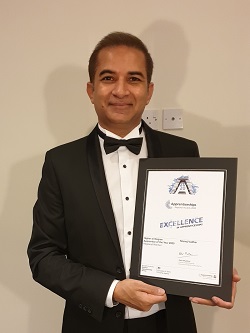
Manoj adds: “If anyone is thinking about doing an apprenticeship, I would say it is the best choice you can make for yourself. Find the right course with the relevant apprenticeship standards for you and go for it.”
Manoj went on to the final of the National Apprenticeship Awards on 25th November where he was Highly Commended.
Find out more about the WMG Senior Leader Programme here.
WMG academic helps identify the frameworks for the Government to enrol Autonomous Vehicles
When it comes to Autonomous Vehicles the question on everyone’s lips is when will they be on the roads? However for them to be safely deployed there must be a policy framework.
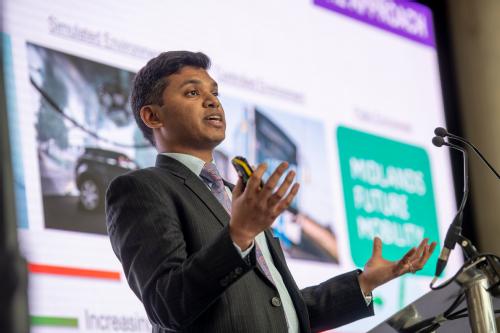 In the report, ‘Safe Drive Initiative: SafeDI Scenario-Based AV Policy Framework - an overview for policymakers, published by the World Economic Forum, Dr Siddartha Khastgir from WMG, University of Warwick as part of the Technical Working Group of the Safe Drive Initiative, contributed to the technological aspects of the policy framework building on his UKRI Future Leaders Fellowship research outcomes.
In order to measure driving safely in the AV sector there are many challenges, especially how to evaluate the safety of AVs. In this report, the Forum along with industry, government and academic experts have developed guidance and tools to create a useful, practicable governance approach for safety assurance of AVs, based on how it behaves in the context of its operating environment, known as its Operational Design Domain (ODD).
The Safe Drive Initiative seeks to establish a high-level framework to enable regulators and AV developers to work collaboratively to demonstrate an AV system’s capability to operate without intervention from a driver. The initiative proposes a data-driven, scenario based assessment using a graduated approach to safety assurance. The framework’s approach is vehicle and solution-agnostic and builds upon existing national and international standards, where possible. The approach focusses on assessing AV in the context of its deployment ODD by demonstrating behaviour competence in a range of scenarios and covers using simulation, driving in controlled environments and naturalistic on-road driving for evaluation. This can then be adopted by a regulator or government entities, which are responsible for managing AV development and deployment.
The report has highlighted numerous points of testing that all bodies should follow, including:
1. Prepare - Convene necessary stakeholders to identify interim milestones as a function of the deployment ODD which can be defined using standard taxonomies e.g. BSI PAS 1883
2. Define - Specify qualitative scenarios for the interim milestones as behaviour competencies in each ODD sub-set
3. Measure – Using a scenario database (e.g. SafetyPool, UK’s National CAV Test Scenario Database), select scenarios based on ODD for simulation and corresponding success criteria
4. Execute – Conduct on-road tests and perform on going monitoring to evaluate scenario exposure to refine evaluation
The graduated approach enables defining interim milestones as a function of deployment ODD. After completing all steps of the assessment regulators should have a clear idea of which AV developers are ready to operate commercially in the deployment operational design domain. Ideally, the AV developer should demonstrate the vehicle’s capability to operate without a safety driver, but this depends on back-up on mechanisms such as minimal risk manoeuvres and remote operators to take control should they meet a rare situation it is not designed to handle, for example if an emergency vehicle is approaching.
Dr Siddartha Khastgir, from WMG, University of Warwick comments:
“Although this framework is for all regulators who want to implement an operational safety assessment within their jurisdiction, not one-size will fit all, different towns and cities all over the world will have different concerns based on their respective Operational Design Domains, and therefore each step should be customised for each community. Defining the interim milestones and qualitative scenarios as a function of deployment ODD, enables this framework to be used by wide variety of stakeholders like manufacturers, governments, local-authorities etc.
“We do however hope that this framework will help us see the safe development and deployment of CAVs, so that in the future we can see the benefits of safe, clean and inclusive mobility. WMG are already researching this in many ways, as we are leading the Midlands Future Mobility testbed, which sees autonomous vehicles being tested on real worlds, and have the facilities, such as the 3xD simulator to test AVs before they go on real world tests.”
Tim Dawkins from the World Economic Forum comments:
“By bringing together a multi-stakeholder community of industry, academia, safety organizations and regulators, we’ve developed a pro-active approach which will enables policymakers to structure a safety evaluation for AVs which reflects the challenges of their roads, and expects a common standard of safety across different types of vehicle. Partnering with research institutions like WMG is essential to building the knowledge base to empower regulators for success.”
11 NOVEMBER 2020
NOTES TO EDITORS:
High-res images available at:
- 3xD Simulator: https://warwick.ac.uk/services/communications/medialibrary/images/november_2020/3xd.jpg
- Dr Siddartha Khastgir: https://warwick.ac.uk/services/communications/medialibrary/images/november_2020/sid_42.jpg
Report available to view at: http://www3.weforum.org/docs/WEF_Safe_DI_AV_policy_framework_2020.pdf
More details about Siddartha’s UKRI Future Leadership can be seen at:
- https://warwick.ac.uk/fac/sci/wmg/research/cav/vandv/ukriflf/
- https://youtu.be/sjpL82E-JCQ
A TEDx talk by Siddartha can also be seen at: https://youtu.be/KrOOXE3SW-A
The next generation of WMG engineers
Congratulations to the 2018 cohort of Graduate Trainee Engineers who have all now successfully completed the Scheme, and secured new positions as Project Engineers at WMG.
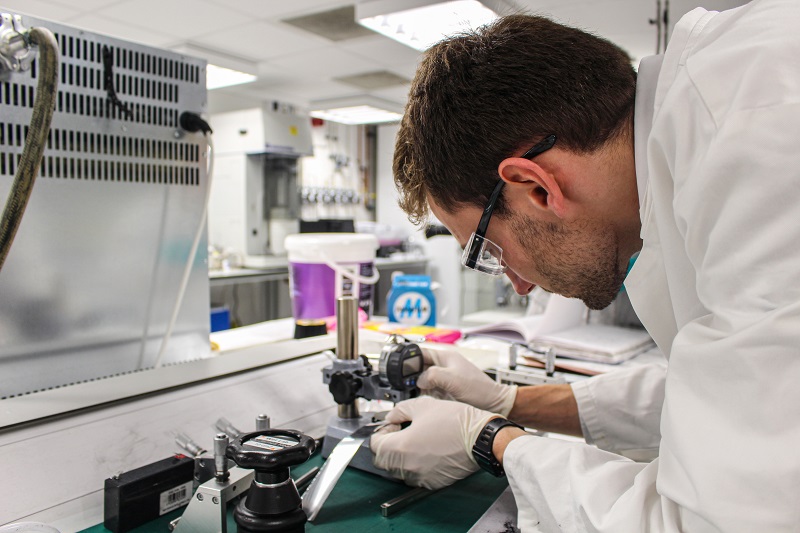 Over the last two years the eight graduates; Harry Chan, Edward Griffin, Katerina Gonos, Jet Feng, Ben Ayre, Adam Szypula, Vidya Narayanan and Puja Unadkat; have been developing their engineering skills by working with academics and industry partners on either autonomous vehicles or energy innovation research.
Several of the graduates have also had their work published in leading academic journals and shared their expertise at key industry events.
In addition all eight have also supported WMG’s Outreach programme by taking part in workshops, demonstrations and talks with local school children including at the University’s Family Day events.
WMG’s Graduate Scheme Manager, Louise Oddy explains: “The recent success of our graduates is a true testament to their consistent hard work, determination and professionalism. They have made a lasting impact across several areas of WMG and will continue to do this within their roles as Project Engineers. Growing our own talent is integral to the future success of WMG and I could not be prouder of all of the Graduate Engineers. Thank you to those across the department that continue to support the scheme and make our programme so unique.”
 Project Engineer, Ed Griffin adds: “WMG is an exceptional organisation where the graduate scheme promotes excellent tailored development in each graduate’s individual technical field. Our exposure to a range of cutting-edge automotive research, combined with various project management opportunities, is now invaluable in our Project Engineer roles.”
Find out more about the WMG Graduate Scheme here.
Prof. Lord Bhattacharyya Building announced as a 2021 Civic Trust Awards Regional Finalist
The Prof. Lord Bhattacharyya Building, home to the National Automotive Innovation Centre (NAIC) has been announced as a 2021 Civic Trust Awards Regional Finalist.
The aim of the Civic Trust Awards is to encourage the very best in architecture and environmental design, to improve the built environment for us all through
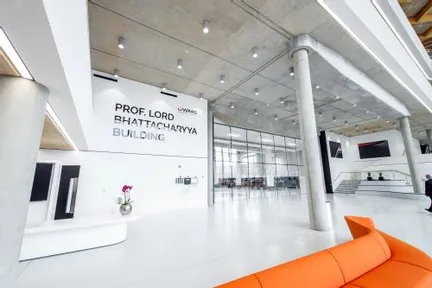
design, sustainability, inclusiveness and accessibility, but also to reward projects that offer a positive cultural, social, economic or environmental benefit to their local communities.
Based at the University of Warwick, NAIC was officially opened on 18 February 2020 by HRH The Prince of Wales. The Centre is a partnership between WMG, University of Warwick, Jaguar Land Rover, and Tata Motors, and is the largest centre of its kind in Europe. It is well timed, arriving when a global mobility revolution is underway, with a new age for transport mobility.
A beacon for automotive research it brings together the brightest minds from industry and academia, to develop future vehicles and mobility solutions. It is home to up to 1,000 staff working across design, engineering and research, as well as future engineers on degree programmes.
Designed by Cullinan Studios the brief for the Centre was for simplicity and strength of purpose, turning a complex assembly of spaces into an immediately legible building.
All regional finalists will now be considered for National/International Civic Trust Awards and AABC Conservation Awards, the outcome of which will be in January 2021. All projects will also be considered by the Selwyn Goldsmith Awards Panel which recognise Universal Design excellence in the built environment.
The Prof. Lord Bhattacharyya Building wins Project of the Year at the Building Awards 2020
The Prof. Lord Bhattacharyya Building, home to the National Automotive Innovation Centre (NAIC) stands proud as it wins Building Magazine Project of the Year at the Building Awards 2020 on 3rd November 2020.
Last month we announced that the building had been shortlisted in the Project of the Year category.
Nominees had to demonstrate outstanding contribution to the built environment and be an exemplar of good construction practice. Lynne Sullivan OBE, a member of the judging team, said ‘We were both impressed and inspired by the National Automotive Innovation Centre. It feels like research and innovation 21st century style. It also feels like a great place to work, it has tactile qualities and spaces linking to outdoors. It is heroic and yet flexible and people centred, a memorable winner’.
Based at the University of Warwick, NAIC was officially opened on 18 February 2020 by HRH The Prince of Wales. The Centre is a partnership between WMG, University of Warwick, Jaguar Land Rover, and Tata Motors, and is the largest centre of its kind in Europe. It is well timed, arriving when a global mobility revolution is underway, with a new age for transport mobility.
A beacon for automotive research it brings together the brightest minds from industry and academia, to develop future vehicles and mobility solutions. It is home to up to 1,000 staff working across design, engineering and research, as well as future engineers on degree programmes.
Designed by Cullinan Studios the brief for the Centre was for simplicity and strength of purpose, turning a complex assembly of spaces into an immediately legible building.
This is the third award NAIC has won in the last month, the previous awards are BCO Central and Mildands Innovation Award and AIA Excellence in Design Award.
WMG helped keep Tetley tea on shelves during the first wave of the COVID-19 pandemic
As the UK entered lockdown as a result of the Covid-19 pandemic, panic buying of essential items including tea caused a massive spike in demand. With demand for products doubling in some instances, many companies struggled to keep up with supply, but Tata Consumer Products Ltd (TCPL), the parent of the Tetley tea brand in the UK, Eight O Clock Coffee in the USA and Tata Tea in India, managed to keep products on shelves and customers supplied with the tea they needed.
To ensure that it could maintain supplies of tea Tetley’s UK factory in Teesside increased production by more than 40%. Their ability to adapt and respond to the unprecedented level demand owed much to their supply chain strategy on which WMG, University of Warwick had been working with them to enhance since 2015.
Professor Jan Godsell from WMG led the team that analysed Tetley’s sales and stock data to create a demand profile. Professor Jan Godsell explains: “We identified an optimal level of utilisation that would keep TCL competitive and allow spare capacity to deal with fluctuations in demand. John Burdett, Global Operations Director for Tata Consumer Products Ltd, then used these recommendations to help set-up the supply chain strategy, which was rigorously tested during the COVID-19 pandemic as the demand for tea soared.
“It was both an exhilarating time and a frightening time. Because of the buffer management approach we had in place, we were able to deliver 35% surge capacity to supply our customers and consumers and keep the UK drinking tea. This meant we could react extremely quickly to the rapidly moving market conditions and gain competitive advantage.”
TCPL demonstrated how having a flexible supply chain can be used to react quickly to the market and enhance market performance, being able to respond to increased demand and maintain supplies of tea resulted in Tetley gaining market share during the Covid-19 panic buying period.
Through two Innovate UK grants, WMG also helped to develop SupplyVue analytics software. SupplyVue can assess a business’s end-to-end supply chain including production scheduling, planning and inventory management to suggest ways to optimise the supply chain. TCPL made the bold move to deploy SupplyVue just as the COVID-19 pandemic was reaching its initial peak, helping them to reconfigure their tea supply to Canada. When there are increasing levels of volatility along the supply chain, a phenomenon known as the ‘bullwhip effect’ occurs and this took place during the pandemic. It occurs when orders received from a customer are rounded up to suit production constraints resulting in a mismatch in stock levels compared with what is actually required.
John comments: “The end to end visibility that we have as a result of SupplyVue means we’ve eliminated the bullwhip effect – we saw no increased stock levels as we recovered from the panic buying phase of pandemic. Enabled by insight through analytics, we’re now collaborating across the supply chain and are using the end-to-end visibility to get a smooth, even flow of products through to our customers.”
TCPL are now looking at rolling out the same optimisation model into other supply chains and unlocking more value.
Professor Godsell comments: “As humans, we are subject to myopic loss aversion. This is a bias that means we tend to fear loss more than gain. In supply chains, it means that the fear of losing a sale, leads to a change in the production schedule that can lead to overproduction. COVID-19 exacerbated this effect.
“SupplyVue provided full end-to-end supply chain visibility, and the confidence to trust the current plan. This enabled customer orders to be fulfilled at lowest possible supply chain cost and the unnecessary costs of overproduction and excess inventory to be avoided.”
ENDS
2 NOVEMBER 2020
NOTES TO EDITORS
High-res images available at:
https://warwick.ac.uk/services/communications/medialibrary/images/january2019/jangodsell250.jpg
Caption: Professor Jan Godsell, from WMG at the University of Warwick
Credit: WMG, University of Warwick

https://warwick.ac.uk/services/communications/medialibrary/images/october_2020/lifestyle_tetley_shot_-_new_pack.png
Caption: A pack of Tetley tea.
Credit: Tetley UK
Studies available to view at:
https://warwick.ac.uk/fac/sci/wmg/research/transformation/supply_chain/wmg_tetley_success_story_buffer_theory.pdf
For further information please contact:
Alice Scott
Media Relations Manager – Science
University of Warwick
Tel: +44 (0) 7920 531 221
E-mail: alice.j.scott@warwick.ac.uk
Prof. Lord Bhattacharyya Building wins Sustainability category at the AIA Excellence in Design Awards 2020
 The Prof. Lord Bhattacharyya Building, home to the National Automotive Innovation Centre (NAIC) has won yet another award, this time at the 2020 Excellence in Design Awards, hosted virtually by the AIA UK Chapter on the 28 October. The awards were chosen from three overarching categories: Professional, Emerging Practice and Sustainability, a new category addition. The building scooped the Sustainability-Large Project category.
This comes shortly after the building was recognised as one of the best workplaces in the Midlands and Central England at the annual British Council for Offices (BCO) regional awards, winning the British Council for Office Midlands and Central Innovation Award.
Based at the University of Warwick, NAIC was officially open on 18th February 2020 by HRH The Prince of Wales. The Centre is a partnership between WMG, University of Warwick, Jaguar Land Rover, and Tata Motors, and is the largest of its kind in Europe and is well timed, arriving when a global mobility revolution is underway, with a new age for transport mobility.
A beacon for automotive research it brings together the brightest minds from industry and academia, to develop future vehicles and mobility solutions. It is home to up to 1,000 staff working across design, engineering and research, as well as future engineers on degree programmes.
Designed by Cullinan Studios the brief for the Centre was for simplicity and strength of purpose, turning a complex assembly of spaces into an immediately legible building.