
Current Fellows

Current Fellows
2026-27 ESRC IAA Postdoctoral Impact Fellows:
Oska Paul
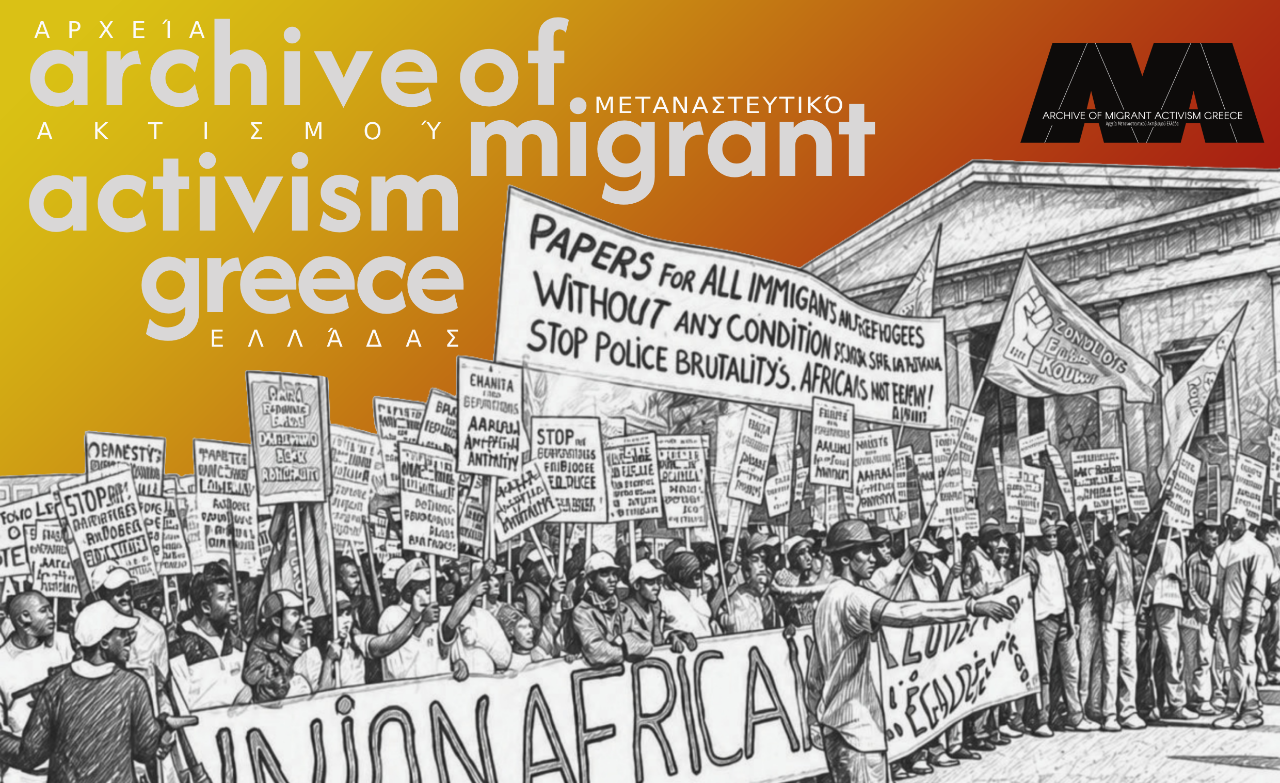
Project: The Archive of Migrant Activism Greece
Mentor: Professor Vicki Squire
Department: Politics and International Studies
The Archive of Migrant Activism Greece (AMAG) brings together the histories of migrant-led political organising in Greece. The online platform presents a diverse collection of photographs, oral histories, newspaper cuttings, timelines and other materials in an accessible and engaging way. The project has emerged from Oska Paul's PhD research about the history of African activism in Greece. However, it will be delivered in partnership with the Greek Forum of Migrants and is designed to encourage other scholars, archivists, activists and community groups to contribute their own research and materials. The archive will be launched in 2027, as part of the Greek Forum of Migrants' twenty-five-year anniversary, alongside other related events.
The archive will generate impact by making research accessible beyond academia; consolidating dispersed archives; strengthening migrant-led organisations through public recognition of their histories; and challenging negative narratives about migrants in Greece. It will function as a living archive that can grow and continue to develop beyond the fellowship.

Santiago Ventura Coella
Project: Bridging the Affective Gap: A Practitioner Toolkit for Evidence-Based Policy Communication in Polarized Environments
Mentor: Professor Nick Chater
Department: Warwick Business School
In polarized societies, even scientifically sound policies, such as those addressing public health or climate change, are often rejected by the public simply because of the political group that endorses them. Dr Ventura Coella's research shows that citizens use a "unidimensional" mental shortcut to judge politicians, meaning they ignore specific facts about competence if they have a negative emotional bias toward the messenger.
This project, Bridging the Affective Gap, addresses the challenge of "policy paralysis" by developing an evidence-based communication toolkit for practitioners. By applying behavioral insights to create "depolarized" messaging frameworks, this project will help ensure that vital social and economic reforms are judged on their objective merits. This leads to more resilient governance, higher public compliance, and reduced societal friction in the implementation of critical national policies.
2025-26 ESRC IAA Postdoctoral Impact Fellows:

Danya NusseirLink opens in a new window
Project: Digital skills for Arab refugee women focused on online job search and application
Mentor: Dr Gabriel AtfieldLink opens in a new window
Department: Warwick Institute for Employment ResearchLink opens in a new window
With rising numbers of female refugees and increasing uncertainty around international aid funding to support them, Nusseir’s project aims to better equip refugee women with the skills they need to integrate into their host country’s labour market through the creation of an inclusive, accessible and cost-effective training resource that recognises the specific barriers faced by one of the most marginalised groups, with particular focus on Arab refugee women.
This project aims to respond to the findings of Nusseir’s doctoral research by developing a policy and practice document and a digital skills training toolkit for refugee women to aid their employment integration. The toolkit will focus on job-specific digital skills, particularly ones for online job search and application, and can be used by local and international NGOs who deliver or fund digital skills training for refugees, as well as providing evidence for government officials and policymakers focusing on digital strategies.

Mark Scott
Project: Measuring What Matters: the economic, aesthetic, and social impact of cultural assets on local communities
Mentor: Dr Haley BeerLink opens in a new window
Department: Warwick Business SchoolLink opens in a new window
Measuring What Matters aims to develop an evidence-based framework for assessing the economic, aesthetic, and social impact of cultural assets to enable policymakers to make informed, evidence-based funding decisions that align cultural investment with policy priorities, including reducing inequalities, improving wellbeing, and strengthening local economies.
Building on Scott’s doctoral research, Scott will work with Coventry’s Belgrade Theatre and Coventry City Council, to create a replicable place-based measurement model-framework that responds to local policy needs and addresses the urgent need for robust, data-driven measurement that reflects broader societal outcomes. By equipping local authorities with data-led impact tools, this project will contribute to stronger, more accountable cultural policies, ensuring that culture is recognised as a driver of social and economic resilience.
2024-25 ESRC IAA Postdoctoral Impact Fellows:

Jack Wilson
Project: Understanding QAnon through its infrastructure: connecting policy and media platform analysis to combat disinformation and radicalisation
Mentor: Professor Meg Davis
Department: Centre for Interdisciplinary Methodologies
There are over 40 national elections planned over the course of 2024, with the aggregate population of these nations amounting to approximately 40% of the total global population. In turn, policymakers’ concerns about matters of mis/disinformation and extremism are as high as they have ever been. Wilson's impact project will collaborate with key stakeholders – government, industry, and the third sector – to work towards improving their understanding of how people seek out and actively generate disinformation.
There is an abundance of work from psychology examining the nature and causes of disinformation and conspiracy theory. The weakness of these approaches is that they focus on subjects’ interpretation of information, and ignore the practices through which people seek out and actively generate disinformation. QAnon is a far-right conspiracy theorist movement that has become an extremely influential generator of mis/disinformation on politics and health. Following QAnon believer’s claims as to the importance of doing ‘your own research,’ Wilson’s PhD project was concerned with how ‘research’ is understood and performed within the movement. The study demonstrated that the process of doing ‘research’ is a neglected site of potential intervention in a person’s becoming a QAnon believer and represents an opportunity for impact in efforts to counter mis/disinformation and radicalisation.
Project activities will involve: a secondment at the Institute of Strategic Dialogue; holding a workshop for activists, journalists, and non-academic extremism researchers to equip them to better address mis/disinformation; and contributing a counter-mis/disinformation module to the Digital Health and Rights Project’s Digital Empowerment Hub.

Geoff Lewis
Project: Strengthening how early career teachers deploy teaching assistants to enhance educational inclusion
Mentors: Professor Olympia Palikara and Dr Mark Pulsford
Department: Education Studies
The promotion of educational inclusion and equity in schools continues to be an international priority for policymakers, practitioners, and researchers. Amidst a deepening crisis in the English special educational needs system, the effective deployment of teaching assistants has been shown to be an integral component in the achievement of educational inclusion within the classroom. However, recent policy frameworks on teacher induction in England have underestimated the challenge early career teachers face in deploying teaching assistants for educational inclusion, and are not sufficiently sensitive to the specific career-stage factors which shape this work.
Working collaboratively with Dr Rob Webster (creator of the Maximising the Impact of Teaching Assistants), the TA Network Hub, and the University of Cambridge Primary School, this project will address this challenge by:
- Working with preservice teachers, early career teachers and teaching assistants to develop targeted training and support that facilitates equitable and inclusive approaches to teaching assistant deployment in the primary classroom.
- Developing awareness amongst primary school staff and initial teacher educators of the challenges associated with deploying teaching assistants to strengthen preservice education and early career induction support.