
Dr Robert Rohland
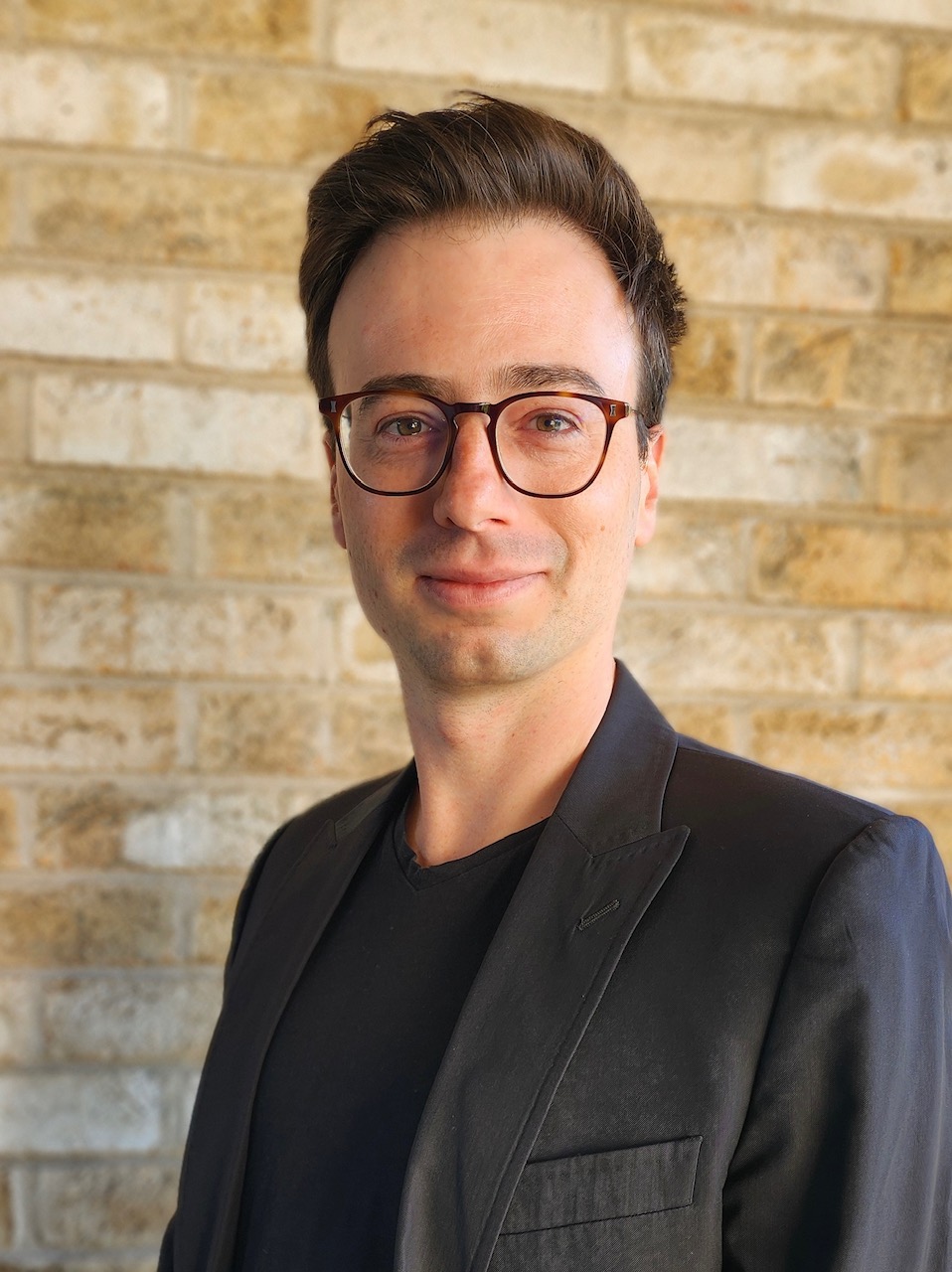
Teaching Fellow in Latin Literature and Language
Room FAB2.18
Faculty of Arts Building
About
I am a Latinist specialising in early Imperial poetry and in the interactions between literature and other forms of cultural production. I have held positions as a Humboldt Research Fellow at Marburg University, a Junior Research Fellow at Trinity College, Cambridge and a Teaching Fellow at the University of Warwick. I completed my PhD at Cambridge and previously studied at Oxford (MSt) and St Andrews (MA). From 2027, I will be responsible for Latin subject reviews at Greece & Rome.
Research interests
My research centres on the literature of the early Roman Empire – especially lyric and epigram – and on its relationship with material culture, conceptions of time and critical theory. I am particularly interested in the dialogue between literary texts and the Roman multimedia and in the role of temporality in Greek and Latin poetry. These interests converge in my book Carpe Diem: The Poetics of Presence in Greek and Latin Literature (Cambridge University Press, 2022). The book explores the importance of the carpe diem motif and asks how poetry can give us the almost magical impression that something is happening here and now.
My current work builds on this foundation while extending its scope and drawing on approaches from the new materialisms. Projects include a co-edited volume on critical approaches to the Late Antique epigrammatist Luxorius and a conference on realia and Latin literature in Marburg. I am also working on chapters on literary genre and material culture, on epigrams and occasions as well as on objects in Roman myth. I have organised conferences with collaborators in the UK (Cambridge, 2025), Australia (Sydney, 2026) and Germany (Marburg, 2027). My work has been supported by the Humboldt Foundation and Trinity College, Cambridge through competitive fellowships, as well as by funding for short-term research stays at the Fondation Hardt and the University of Sydney, where I was a Ritchie Fellow.
Publications
Book
Carpe diem: The poetics of presence in Greek and Latin literature, Cambridge University Press 2022.
Articles and Book Chapters
- ‘Horace above the law: Clemency and the sovereignty of song’, Dictynna. Forthcoming.
- ‘Everyman’s Odyssey: Premediations of the Odyssey in imperial stone epigrams’, Greece & Rome. Forthcoming.
-
‘The town and its ruins: Mythical objects and anachronisms in Rome’. In A. Haug and D. Pausch, eds. City-images and anachronism: Strategies of temporal fracture in visual, textual and built environments, De Gruyter. Forthcoming
- ‘“Stimmung” and sacred song: Horace’s Odes and changes in religious atmosphere’. In R. Peel, K. Schautt, P.D. Seinsche and M. Zepernick, eds. Echoes of change: Exploring the dynamics of religious atmospheres. Mohr Siebeck. Forthcoming.
- ‘Convivial epigrams: Roman banquets and performance in Greek epigrams of Philip’s Garland’. In Voiceless writing: Epigrams, performance and oral poetry. Eikasmós: Quaderni Bolognesi di Filologia Classica 37. Forthcoming 2026.
- ‘The ancient photograph: Mirror and time in Horace Odes 4.10’, Arethusa 58 (2025): 101–25.
- ‘Writing down epic: Another Homeric allusion in Horace Odes 1.6’, Classical Philology 118 (2023): 125–31.
- ‘A note on Laelia in Martial 10.68: Code-switching, linguistic and moral purity, and Cicero’s influence on Martial 10.68’, Hermes 147 (2019): 508–14.
- ‘Highway to hell: AP 11.23 = Antipater of Thessalonica 38 G-P’, Mnemosyne 72 (2019): 459–70.
Reviews
- A. Haug (2025) Die antike Stadt als Gefühlsraum: Rom und Pompeji als Orte der Liebe, Erotik und Sexualität and A. Tafaro (2025) Inscribing Flavian Rome: Epigraphic strategies in Martial’s Epigrams. The Classical Review (2026)
- S.J. Harrison (2025) Horatian readings: Poetic and literary texture. BMCR 2026.04.34.
- M. Grawehr and M. Kersten, eds. (2024) A second gaze: Intertextuality and transient meaning in Roman texts and objects. BMCR 2025.11.11.
- K. Gilhuly and J.P. Ulrich, eds. (2023) Making time for Greek and Roman literature. BMCR 2024.09.38.
- V. Lütkenhaus (2023) And with the Teian lyre imitate Anacreon: The reception of Anacreon and the Carmina Anacreontea in Horace’s lyric and iambic poetry. BMCR 2024.02.45.
Outreach
- ‘The greatest king Assyria never had’, Omnibus 89 (2025): 6–8.
- ‘Time and wine in Rome’, Omnibus 86 (2023): 10–12.
Teaching and supervision
Undergraduate modules (2026–2027)
-
CX115/215/305: Latin 1
-
CX101/201/301: Latin 2
-
CX114: Encounters with Latin Texts
-
CX112: Ancient Thought: Philosophy, Politics, Science
Drop-in hours
Wednesdays, 12–1 (except Week 8, when hours are 1–2)
Fridays, 12–1
Or email to arrange a meeting at another time.
Teaching
CX115/215/305: Latin 1
CX101/201/301: Latin 2
CX114: Encounters with Latin Texts
CX112: Ancient Thought: Philosophy, Politics, Science