
Introduction: Lying and Truth: A Very (Early) Modern Problem?
Week 1
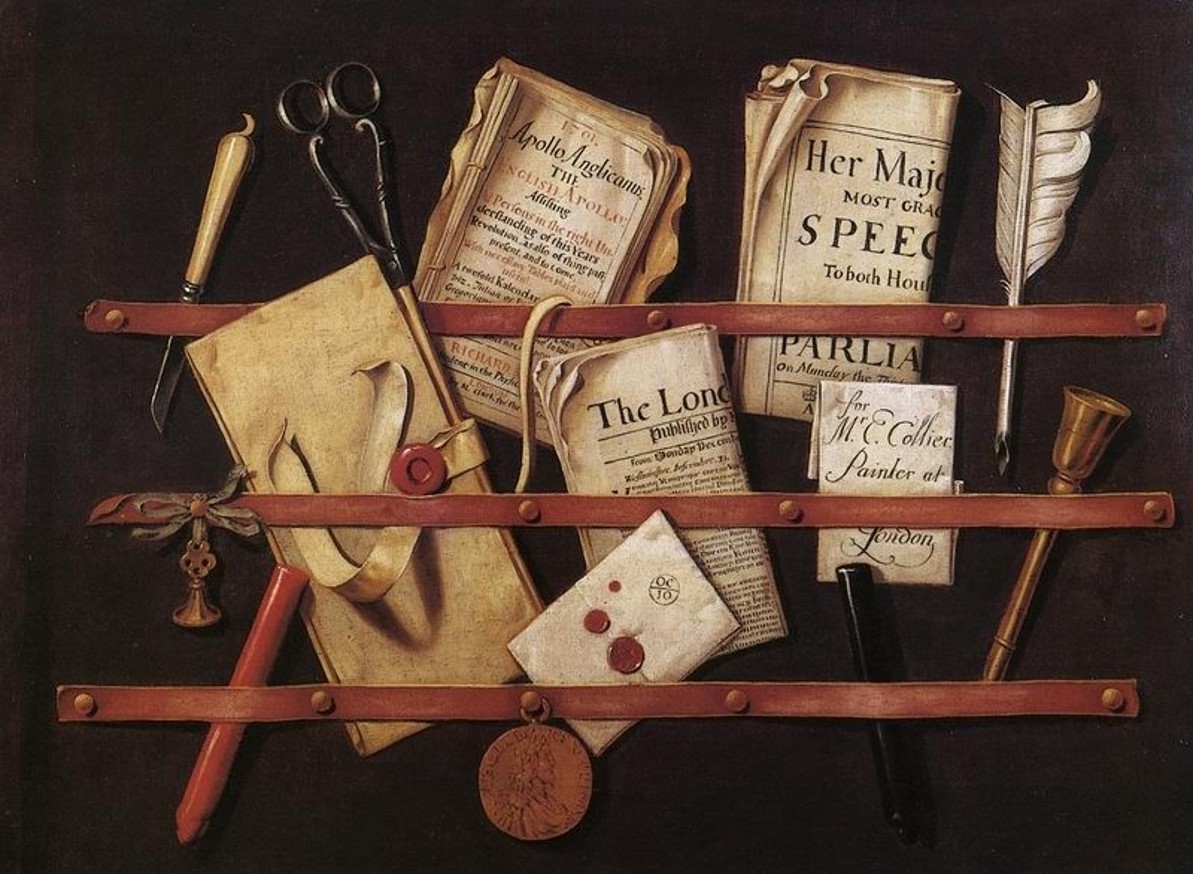
Tutors: Mark Knights and Naomi Pullin
This opening seminar introduces students to the themes of the module and sets out its aims, structure and assessment pattern. We will devote some time in the seminar to thinking about keywords and concepts for studying truth in early modern English texts. Students should come having prepared what is listed below and thought about the seminar questions.
Required preparation
- In addition to thinking about how lying and truth might relate to your previous work, are there current events or news stories that relate to these themes that you think might be useful to discuss?
- Steven Shapin, A Social History of Truth: Civility and Science in Seventeenth-Century England (1994), chapter 2 “Who Was Then a Gentleman?” Integrity and Gentle Identity in Early Modern England' and chapter 3
-
Andrew Hadfield, Lying in Early Modern English Culture: From the Oath of Supremacy to the Oath of Allegiance (2017), introduction: 'Being Economical with the Truth in Early Modern England' (ebook)
* All of the required and further readings are available via the module reading list (Talis), supported by the library.
Seminar questions
- What factors made truth contested in the early modern period?
- What concepts of truth and lying did contemporaries work with?
- How far did early modern notions of truth and lying differ from our own?
- How should we define these terms?
- What key terms were associated with truth and lying? (we will explore online databases, so you could have a look at Early English Books Online and Eighteenth Century Collections Online, if you have not already come across them).
- Was Britain idiosyncratic in its preoccupation with truth and lying?
- Why are truth and lies important topics for historians and how history is written?
Key texts
- Emma Claussen, Luca Zenobi et al., Special Issue: ‘Beyond Truth: Fiction and Disinformation in Early Modern Europe’, Past and Present, 257, Issue Supplement 16 (2022), esp. 'Fiction and Disinformation in Early Modern Europe: An Introduction', pp. 1-35.
- Natalie Zemon Davis, Fiction in the Archives: Pardon Tales and Their Tellers in Sixteenth-Century France (1990).
- John McTague, Things That Didn’t Happen (2019), Introduction?
-
Madeleine Pelling, Hoax. Truth and Lies in the age of Enlightenment (Profile, 2026).
- Steven Shapin, A Social History of Truth: Civility and Science in C17th England (1985), Chapter 1 'Trust, Truth and the Moral Order'.
Further reading (please also consult the background reading list for this module)
- Patricia M. Ball, ‘Sincerity: The Rise and Fall of a Critical Term’, The Modern Language Review 59, no. 1 (1964): 1-11.
- Emma Claussen, Luca Zenobi et al., Special Issue: ‘Beyond Truth: Fiction and Disinformation in Early Modern Europe’, Past and Present, 257, Issue Supplement 16 (2022).
- David Colclough, Freedom of Speech in Early Stuart England (2005).
- Faramerz Dabhiowala, What is Free Speech: The History of a Dangerous Idea (2025).
- Clare Egan, ‘Libel in the Provinces: Disinformation and ‘Disreputation’ in Early Modern England’, Past & Present , 257..Suppl. 16 (2022) 75-110.
- Andrew Hadfield, Lying in Early Modern English Culture: From the Oath of Supremacy to the Oath of Allegiance (2021).
- Johannes Müller and Michiel van Groesen (eds), Far From the Truth: Distance, Information, and Credibility in the Early Modern World (London: Routledge, 2024).
- Margaret Poovey, The History of the Modern Fact (1998).
- Barbara Shapiro, Probability and Certainty in C17th England (1983).
- H G Van Leeuwen, The Problem of Uncertainty in English Thought 1630-90 (1963).
- Brian Vickers and Nancy Streuver (eds), Rhetoric and the Pursuit of Truth (1985).