Warwick Education Conference 2026 Highlights
Learning for a Complex and Hopeful Future: Pedagogies of Empowerment, Equity, and Global Readiness
The Warwick Education Conference 2024 took place:
Thursday 4th June 2026, 9:30am - 4:30pm
Ramphal Building
This year’s conference explored education as a powerful force for shaping a hopeful future in a complex and uncertain world. It encouraged participants to reflect on how higher education can create inclusive and empowering learning environments that enable students and staff to thrive, contribute, and drive meaningful change. Through discussions, workshops, and keynote sessions, the conference highlighted the importance of equity, global readiness, and lived experience in addressing contemporary challenges, while equipping learners with the critical, adaptive, and collaborative skills needed to navigate complexity. Overall, the event reinforced the role of higher education in fostering hope, advancing equity, and supporting all learners to shape the future with purpose and compassion.
Keynote speakers
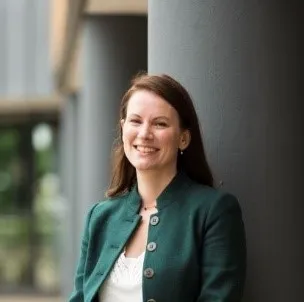
Dr Karen Gravett
University of Surrey, UK
"From flailing to flourishing? Connection and criticality for uncertain times"
Dr Karen Gravettis Associate Professor and Head of the Surrey Institute of Education at the University of Surrey, UK, where her research focuses on the theory-practice of higher education, and explores the areas of digital education, belonging, and relational pedagogies.
Please click here for Powerpoint Slides from this SessionLink opens in a new window

Professor Jason Arday
University of Cambridge, UK
"We Dream the Same Dream: Collective Empowerment in Pedagogy"
Jason Arday is Professor of Sociology of Education at the University of Cambridge, Faculty of Education, and a Fellow at Jesus College, Cambridge.
Sessions
Ideas exchanges
Idea Exchanges were structured around brief presentations followed by discussion.
Mary Griffin (Warwick Law School)
When students draw on their own lived experience, they can forge connections between abstract theory and grounded reality. Inviting students to explore personal experience and share their stories not only fosters empathy and inclusivity, it provides an opportunity to reflect and learn from one another, often highlighting unconscious bias, values and areas of expertise students may not have previously acknowledged. This session will share the example of an interdisciplinary undergraduate module which empowers students to develop their own writing style to analyse and communicate the human rights issues that matter most to them. The module invites students to break away from imagining human rights as theoretical and distant, instead learning about human rights (and wrongs) in practice and in context. By centring human impact and the voices of those affected, we can challenge dominant narratives and ask how we might “live human rights”. Students consider "radical honesty", a “pedagogical practice of truth-telling that seeks to challenge racist and patriarchal institutional cultures in the academy” (Williams, 2016) and respond to Audre Lorde’s rallying cry in The Transformation of Silence into Language and Action. While higher education is beginning to realise the importance of inviting students’ lived experiences into teaching and learning practices, anxieties around discomfort, unpredictability, and potential risks, may deter some teachers from introducing first-person perspectives to their classroom. But this misses the opportunity to draw on the cultural capital of our students, and to empower them as authors. The session will explore how similar strategies of students telling their own stories can be used across disciplines, with examples from teachers of nursing, business and science. This form of narrative pedagogy builds on Heideggerian hermeneutic phenomenology. It reminds us that while we educate and empower students to challenge norms and cultivate hope, we can also highlight the valuable educational resources that are already within them.
Marion Patel (Student Opportunity), Kelly Coles (Student Opportunity), and Erin Dilger (School of Life Sciences)
Leadership is often perceived by students as hierarchical, managerial, or reserved for formal positions of authority. This narrow interpretation limits students’ ability to recognise and articulate the breadth of leadership qualities they already demonstrate throughout their academic, personal, and professional experiences, and how these could link to inclusive and broad leadership roles in their future. In alignment with Warwick’s ESE 2030 Strategy, this project seeks to provide a framework for leadership as a broad, inclusive, and accessible skill for all disciplines.
This institution wide initiative brings together Student Opportunity, academic departments, Warwick Enterprise, and students to cocreate a new Warwick Leadership Framework. Drawing on research into inclusive leadership theory and qualitative insights from student and alumni interviews and focus groups, the project will contextualise leadership through diverse lived experiences.
The project includes the creation of: – a university wide, student informed Leadership Framework – teaching resources and case studies for integration into curricula – a new Warwick Award Leadership Pathway accessible to all students – embedded leadership activities piloted in SLS (LF271) and WMS curricula
The session will share research findings, emerging framework components, and sample resources. Initial evaluation findings from student collaborators and early pilot engagement will be included, alongside discussion of how colleagues can adopt, adapt, or embed this work within their own modules or cocurricular initiatives.
By reframing leadership as inclusive, values driven, and rooted in everyday practice, this project aims to cultivate reflective, confident graduates equipped to lead positive change across varied professional and civic contexts.
Richard Watson (School of Engineering)
Engineering requires technical skills in ensuring that anything designed or made is safe and suitable for purpose. How this is achieved through conventional education includes the maths, physics and engineering principles as a theoretical basis. This basis was the main consideration for many years of engineering education, but design and other skills have become essential. Modern working engineers require a broad range of skills in addition to the theoretical basis to deal with uncertainty, complexity, and the modern work environment. The question is how do we develop these skills and is this of use in other disciplines?
In my teaching we aim to develop engineers who will have to cope with uncertainty and complexity as part of their career, this is being achieved by education through practical project-based learning. A range of challenging projects with uncertainty as an essential part of the project specifications are set for student groups to produce a prototype solving a specific challenge. With designed in uncertainty and complexity the students must develop skills for understanding and quantifying uncertainty and the skills needed to address this in a scientific manner. This development is guided through a range of seminars providing information on strategies and techniques for them to utilise. These seminars include skills for research, design processes, application of engineering science principles, practical manufacturing, and project management, to design the prototype solution and then manufacture this prototype over two terms. This is undertaken in groups of 6-8 mimicking the modern teamwork environment for engineers.
This session aims to stimulate discussion on development of skills for addressing an uncertain future not only for engineers but how that can be developed for interdisciplinary education. Discussions on assessment over 20+ weeks, project based learning and, practical components and their role in education and module design are envisioned.
Rachel Strisino (Centre for Lifelong Learning) and Briony Martin (Centre for Lifelong Learning)
Since the 1990s, UK education policy has increasingly promoted lifelong learning to widen participation among non-traditional students (Cornford, 2002). In this context, higher education programmes must move beyond access alone to consider how pedagogical design can meaningfully empower students as active agents in their own learning. Our contribution to the Warwick Education Conference explores how critical and transformative pedagogies can be operationalised within professional programmes to amplify student voice, challenge dominant narratives, and foster reflective, confident learners.
Drawing on teaching practice across the Child and Family and Counselling and Psychotherapy programmes in the Centre for Lifelong Learning (SELCS), our discussion examines the intentional use of critical reflection, dialogic learning, and collaborative assessment as pedagogies of empowerment. Informed by Mezirow’s theory of transformative learning (1991), reflective activities are designed to support students in constructing and revising frames of reference through structured dialogue with peers and educators. This is complemented by situated cognition theory (Ataizi, 2012), which emphasises learning as socially embedded and enhanced through group discussion, mentoring, and shared meaning-making – learning by doing.
In Counselling and Psychotherapy teaching, every lecture and seminar involves dialogic learning. We’ll share the joys and pitfalls of this approach.
In Child and Family, we’re engaging in critical reflection by embedding time in sessions where students recognise the significance of these sessions for future practice, fostering personal and professional growth.
In both our disciplines, we’re using collaborative assessment, where students grade and comment on their own work before formal marking.
By embedding these approaches across teaching and assessment, we argue that students are afforded genuine opportunities to shape their learning journeys, develop critical self-awareness, and translate insight into behavioural and professional change. We encourage you to reflect on the role of the educator, recognising that institutional support, reflective teaching practice, and pedagogical confidence are essential to sustaining transformative approaches. Ultimately, we ask how you can be influential in fostering empowerment, agency, and equity in lifelong learning pedagogies.
Ataizi, M. (2012). Situated Cognition. In: Seel, N.M. (eds) Encyclopaedia of the Sciences of Learning. Springer, Boston, MA. https://doi.org/10.1007/978-1-4419-1428-6_16 Cornford, I.R., (2002) Reflective teaching: empirical research findings and some implications for teacher education, Journal of Vocational Education and Training, 54:2, 219-236, DOI: 10.1080/13636820200200196
Mezirow, J., & Taylor, E.W., (1991) Transformative Learning in Practice : Insights from Community, Workplace, and Higher Education, (ed.) John Wiley & Sons, Incorporated, 2009. ProQuest Ebook Central, https://ebookcentral.proquest.com/lib/warw/detail.action?docID=469114.
Katie Stone (School of Modern Languages and Cultures)
Across the UK higher education sector, the National Student Survey repeatedly identifies assessment and feedback practices as areas for enhancement. A desire to understand the roots of student dissatisfaction with assessment, marking, and feedback has accordingly driven much pedagogical research for several decades. There is general agreement that traditional marking criteria based on evaluative language (‘poor’, ‘good’, ‘excellent’) are subjective, ‘fuzzy’ (Sadler, 1987), and make sense primarily to those who already possess the ‘tacit knowledge’ and ‘academic literacies’ to understand the standards expected (Chan & Ho, 2019; Panadero & Johnson, 2020). Informed by this literature, the School of Modern Languages and Cultures at Warwick has revised its marking criteria as part of a longer-term initiative to foster assessment for learning.
This session will begin with an introduction to the research and consultation process that informed our approach to creating more inclusive and transparent assessment practices. The main aim of the session, however, is to stimulate discussion about how marking criteria fit within and relate to broader strategies for enhancing assessment literacy (O’Donovan, Price, & Rust, 2004; Lorber, Rooney, van der Enden, 2019). It will be a space for sharing best practice and reflection on how teaching and assessment can be used to support students from a wide range of backgrounds and negotiate the emotional aspects of assessment and feedback.
References
- Chan, Z., & Ho, S. (2019). Good and bad practices in rubrics: the perspectives of students and educators. Assessment & Evaluation in Higher Education, 44(4), 533-545.
- Lorber, P., Rooney, S., & Van Der Enden, M. (2019). Making assessment accessible: A student– staff partnership perspective. Higher Education Pedagogies, 4(1), 488-502.
- O'Donovan, B., Price, M., & Rust, C. (2004). Know what I mean? Enhancing student understanding of assessment standards and criteria. Teaching in Higher education, 9(3), 325- 335.
- Panadero, E., & Jonsson, A. (2020). A critical review of the arguments against the use of rubrics. Educational Research Review, 30, 1-19.
- Sadler, D. R. (1987). Specifying and Promulgating Achievement Standards. Oxford Review of Education, 13(2), 191–209.
Natasha Nakariakova (FOLD/Digital Learning) and Yihua Huang (FOLD/Digital Learning)
Bring Your Own Device (BYOD) is often introduced as a technical solution to scaling digital assessment. However, sector practice suggests it has significant pedagogical implications. Institutions such as Cambridge, UCL, UEA and Kent & Medway Medical School have developed structured BYOD approaches for in-person digital exams, combining minimum device specifications, secure browsers, advance preparation, and contingency planning. Alongside this, Advance HE positions BYOD within broader blended, flexible and student-centred learning environments.
Our discussion reframes BYOD not as infrastructure replacement, but as a shift in the learning relationship. When students use their own devices in high-stakes assessment, familiarity, autonomy and continuity between formal and informal learning spaces may be strengthened. At the same time, digital readiness, accessibility, confidence and equity become pedagogical considerations rather than purely technical issues. Drawing on cross-institutional examples and our own experiences within the School of Law and WMG apprenticeship programmes, this Idea Exchange session will explore how device ownership intersects with assessment design and learner experience. In Law exam, early BYOD implementation highlighted the importance of student confidence and clarity of responsibility. Within WMG apprenticeships, where learners are often workplace-based professionals with varied digital ecosystems, BYOD raises further questions about flexibility, inclusivity and authenticity of assessment practice. Does BYOD enable more authentic, open-book or applied assessment? Does it strengthen digital fluency as a graduate and professional capability? Or does it risk narrowing assessment to what secure platforms can technically support? After a short summary of sector practice, we will invite participants to discuss three questions:
• How does BYOD shape assessment design?
• What support structures make digital readiness part of learning, not a barrier?
• How can institutions balance student empowerment, fairness and academic integrity?
The session aims to stimulate collaborative reflection on BYOD as a deliberate pedagogical strategy.
Samantha Wilson-Thain (School of Life Sciences), Bruno Martins (School of Life Sciences), George Haughie (Student Opportunity), and Chris Rodrigues (Life Sciences)
Higher education faces growing pressure to graduate students who can thrive in global workplaces— bringing disciplinary expertise alongside transferable skills and intercultural competencies for collaboration across cultures and disciplines. Yet graduates often report feeling underprepared, and employers continue to highlight gaps in communication, teamwork, adaptability, and problem-solving.
Building on Miller and Konstantinou’s (2022) argument that reflective, authentic assessments bridge academic and professional practice, this case study explores an initiative within the School of Life Sciences. We introduced a formative, structured dialogic process that informs summative assessment, aligned to the Warwick 12 core skills, positioning students as active partners in their development. This approach fosters meaningful dialogue between students and supervisors and engages academic and professional services staff in co-creating an inclusive, transparent, and equitable assessment experience.
Drawing on literature around authentic assessment and employability (Knight & Yorke, 2004; Jackson, 2016), the framework scaffolds student growth, enhances assessment literacy, and cultivates shared responsibility for employability. By embedding structured reflection and partnership, the initiative supports students in articulating skills for intercultural and interdisciplinary collaboration, preparing them to navigate complex, global contexts.
Participants will learn how to embed structured dialogue into assessment design to promote reflection, inclusivity, and skill articulation. They will take away adaptable templates for dialogic frameworks and practical strategies for aligning employability skills with disciplinary learning— approaches transferable across contexts to strengthen academic–professional connections and prepare graduates for collaborative, culturally diverse environments.
Yesim Kakalic (Student Opportunity) and Thomas Greenaway (Student Opportunity)
Intercultural awareness and competence are increasingly treated as a core graduate capability for global readiness, yet UK evidence on whether experiential training produces meaningful gains in intercultural awareness remains limited. This study asks how effective an experiential Intercultural Training (ICT) programme is in developing students’ intercultural awareness and reported behaviour change, and how students, facilitators, and academic staff perceive its impact.
We use a mixed methods design. Phase 1 comprises secondary analysis of anonymised post workshop feedback from 2020 to 2025, combining Likert scale ratings with free text reflections (in 2024 to 2025, approximately 2,800 attendees and 1,450 feedback submissions). Descriptive statistics summarise reported outcomes, and thematic analysis (Braun and Clarke, 2006) identifies learning processes and conditions for transfer. Phase 2 will collect new data in 2025 to 2026 via short anonymous questionnaires aligned to ICT learning outcomes and focus groups or in-depth interviews with four participant groups: ICT attendees, non-attendees, facilitators, and module leaders. We will also review ICT materials (slides, facilitator notes, evaluation reports) to contextualise findings; transcripts will be anonymised and coded in NVivo.
Preliminary analysis indicates consistently positive evaluations of interactive activities and structured reflection. Students commonly report heightened awareness of cultural assumptions, increased confidence to communicate across difference, and intentions to adapt teamwork practices. Constraints on transfer include limited opportunities to practise, time pressure, and requests for more discipline specific scenarios and follow up support. Early findings suggest experiential ICT can enhance intercultural awareness and global readiness, but sustained behaviour change likely depends on curricular reinforcement and repeated application opportunities. Implications for inclusive curriculum design are outlined. The study will generate design recommendations for embedding. intercultural learning across programmes and inform future longitudinal, equity sensitive evaluation of intercultural competence development.
Chris Wilkinson (Warwick Enterprise, Innovation Group)
Today’s social and ecological problems require students and graduates who can collaborate across diverse cultures and disciplines and apply local learnings to global contexts. Enterprise and entrepreneurship education (EEE) offers a pedagogical approach for developing empathy, resilience, and creative thinking (QAA, 2018). EEE has been shown to support global readiness and its associated skills (Guzmán & Velazco, 2022). However, opportunities for students to employ these skills in a truly global context remain limited.
To address this, in 2025, the University of Warwick and Monash University launched the Global Futures Challenge (GFC), a unique initiative which blended EEE with cross-continental collaboration. Students formed interdisciplinary teams to develop social enterprises addressing the UN Sustainable Development Goals. As part of the experience, students were required to navigate time zones, cultural differences, and disciplinary perspectives, mirroring real-world global challenges. Winners of the GFC participated in a Week of Action in Kuala Lumpur, learning from social entrepreneurs and community leaders, and receiving mentorship to sharpen their solutions and hone their skills, supporting them in confronting global challenges past the programme.
As we plan to expand the GFC, this session asks participants to co-design the future of global readiness initiatives. How might we scale global readiness initiatives across campus and beyond? How can we support students in creating change and achieving global impact? How can we ensure equitable access and experience across diverse student populations? How can we help students reflect on their Warwick experience to create global change?
Participants will leave with practical tools for integrating cross-cultural collaboration into their learning and activities, and the opportunity to shape future programs and activities to develop globally minded student leaders. (273 Words)
References:
Hernández Guzmán, D., & Hernández García de Velazco, J. (2024). Global Citizenship: Towards a Concept for Participatory Environmental Protection. Global Society, 38(2), 269–296. https://doi.org/10.1080/13600826.2023.2284150
Quality Assurance Agency for Higher Education. (2018). Enterprise and entrepreneurship education: Guidance for UK higher education providers. https://www.qaa.ac.uk/docs/qaas/enhancement-anddevelopment/enterprise-and-entrpreneurship-education-2018.pdf
Michelle Watson (Education Group) and Linda Sherwin (Education Group)
Transitions within higher education are often framed as administrative or pastoral moments, yet for many students (particularly those moving to live off-campus) they represent profound shifts in identity, belonging, and agency. This idea exchange shares learning from the University of Warwick’s work on supporting students through internal transitions, with a specific focus on the move to living off-campus as a critical, equity-shaping moment in the student experience.
Grounded in lived experience, the project centred student voice to surface the often-invisible challenges of off-campus living, including isolation, navigating adult responsibilities, and uneven access to institutional support. Through co-creation with students, we explored how departments can move beyond deficit narratives to design responses that build students’ confidence, autonomy, and capacity to navigate complexity.
The 10-minute presentation will briefly outline the inquiry approach, co-creative methods, and emerging outcomes, offering practical provocations about how teaching, learning, and support structures intersect at moments of transition. The session will then open into a facilitated discussion, inviting attendees to reflect on their own contexts and consider how pedagogical and support practices can foster hope, equity, and belonging beyond the classroom.
Designed as an interactive idea exchange, this session prioritises dialogue and shared inquiry. Participants will leave with adaptable insights into how student partnership and transition-aware pedagogies can empower learners to thrive in complex, interconnected futures- particularly where learning extends into lived, off-campus environments.
Tajvinder Kaur Grewal (WMS), Rukshana Begum (WMS), Laura McNally (WMS), Anandini Arumugam (WMS), Jaskiran Johal (WMS) and Lavanya Vimalan (WMS)
Higher education can provide a platform for teaching students how to navigate challenging and sensitive topics. Throughout lived experience and professional journey, complex situations arise, including workplace challenges, subject-specific difficulties, and personal experiences that shape how individuals respond and cope. As educators our role extends beyond delivering course content, it also involves supporting the development of student’s identities as they transition into their professional lives.
This semi-controlled environment enables students to engage in exploration, reflection, and self understanding in relation to their chosen discipline. Within this space, learners can be introduced to challenging situations in a supported way, allowing them to develop insight, confidence, and resilience before encountering similar experiences in real-world professional contexts.
On the MBChB course, when teaching first-year medical students, we explore a range of challenging topics students will encounter during future clinical practice. These include breaking bad news, psychiatric examinations, and trauma-informed consultations alongside early patient exposure. Introducing these topics at an early stage allows students to engage with the emotional and relational aspects of medical practice alongside their academic learning.
Central to this approach is the creation of psychologically safe learning spaces. Psychological safety enables students to ask questions, express uncertainty, reflect on emotional responses without fear of judgement. This supports student wellbeing whilst also contributing to the development of professional identity, as students begin to see themselves as future practitioners who can engage compassionately and reflectively with complexity.
We invite educators to reflect on their courses and consider the learning needs of students both within and beyond the boundaries of current content. This includes identifying where challenging topics may need to be introduced to support professional identity formation, and where psychologically safe spaces are essential for meaningful engagement. In this way, educators shape not only what students learn, but who they are becoming as professionals.
Gemma Gray (Psychology), Luke Hodson (Psychology) and Claudie Fox (Psychology)
There is a growing recognition that compassion plays a central role in how we create supportive environments in higher education. Compassionate practices help cultivate a sense of shared humanity between staff and students, offering crucial support during periods of vulnerability (Parfitt et al., 2021). Kotera et al. (2023) further suggests that fostering self compassion can strengthen students’ intrinsic motivation, encouraging greater engagement and academic persistence. The value of compassion extends to staff communities as well: studies indicate that compassionate institutional cultures are linked to enhanced staff motivation and wellbeing (West, 2021; WONKHE, 2023).
While the sector’s increasing emphasis on student mental health and compassionate practice is vital, this shift has also placed growing emotional and administrative demands on staff. Emerging evidence suggests that this imbalance is contributing to staff burnout and reduced wellbeing (Cordaro et al., 2024; Constantin et al., 2024).
This ideas exchange session will focus on projects carried out by the WIHEA Compassionate Pedagogies learning circle, which explored compassion fatigue in UK academics. These studies used both quantitative and qualitative focus to explore the impact of compassion fatigue on staff wellbeing, burnout and intention to quit. We will also give an update on our earlier "Conversations about Compassion " piece, exploring staff and student views of compassion at Warwick. Here we hope to explore what makes compassion at Warwick work, and how can we ensure that compassionate policy and practice are aligned to support both students and staff.
Interactive panels
Interactive Panels provided the opportunity for topics to be explored from multiple perspectives.
Helen Anne Nolan (Warwick Medical School (WMS)), Vicky Panossian, PhD Candidate (Department of Sociology), Rachel Craven, (Conduct and Resolution), Charlotte Jones (Centre for Lifelong Learning) Vasileios Marinos (Warwick Students' Union), Richard Clay (Warwick Medical School (WMS)), Yanyan Li (Institute of Advanced Study) and Shaoyu Yang, PhD Candidate (School of Modern Languages and Cultures)
Background:
Recent studies indicate over 75% of UK university students have experienced at least one trauma exposure (1, 2). Traumatic events may have significant consequences, including on mental and physical health, relationships, academic performance, employment, and economic outcomes (1). Trauma often originates from established power structures and discrimination, leaving various minoritised groups disproportionately impacted. Trauma-informed practice acknowledges the nature of traumatic impacts on individuals and communities and ensures that stakeholder needs are accommodated in individual practice and organisational policy to prevent retraumatisation and promote inclusion and empowerment for all stakeholders.
Trauma-informed pedagogies encourage educators to recognise and respond to trauma and its impacts using strategies to improve engagement and wellbeing for those impacted by trauma. While trauma-informed practice and pedagogy (TIPP) are establishing in UK higher education (3), co created guidance for UK contexts is lacking. Supported by the Monash-Warwick Alliance (MWA), we are undertaking a cross-institutional project to inform implementation of TIPP in higher education.
Panel overview
This panel, featuring stakeholders from university departments and services, will explore perspectives through audience engagement and interaction using audience response software and think-pair-share activities. The session will explore audience familiarity with TIPP, and provide an overview of TIPP and our MWA project. Panellists from university departments and services will then discuss current practice and emerging needs at Warwick. Participants will be invited to identify examples of good practice and areas requiring further support. The session concludes with an overview of project outputs to advance TIPP, and a call-to-action to consider implementation within participants’ own contexts.
Audience Take Homes
Participants will gain awareness of; contacts and resources at UoW to support the enhancement of TIPP in their own work; opportunities to pilot or apply project outputs; and pathways to advocate for and champion TIPP within their departments and everyday practice.
References
1. Allen SF, Thursby S, Elkwood L, Carthy NL. A latent profile analysis of psychosocial factors and trauma exposure in UK students and their association with mental health and academic persistence. Psychological Trauma: Theory, Research, Practice, and Policy. 2024.
2. Davies E, Read J, Shevlin M. Childhood adversities among students at an English University: A latent class analysis. Journal of Trauma & Dissociation. 2022;23(1):79-96.
3. Donkin S. Advance HE2025. [cited 2026]. Available from: https://www.advancehe.ac.uk/news-and-views/everyone-can-benefit-more-trauma-informed-approach-highereducation.
Paul Blagburn (Head of Widening Participation and Social Mobility), David Bather Woods (Philosophy), Emma Cann (Social Inclusion), Liza Yousf (PGT Student), Oliver Daniels (UG Student) Victoria Hill (Widening Participation and Social Mobility)
Inclusion is a fundamental principle of Higher Education, particularly as universities seek to support increasingly diverse student populations to access, succeed, and thrive in the context of an evolving landscape.
As part of Warwick’s commitment to inclusion and widening access, we strive to take a holistic and whole institutional approach to address the risks to equality of opportunity. The University’s Access and Participation Plan outlines ambitious targets identified through an analysis of institutional performance on access, student success and progression. This commitment is embedded in our lifecycle approach, supporting underrepresented students from pre-entry to graduation and beyond.
Liz Thomas (2024) has defined a whole provider approach as focusing on ‘widening access and student experience interventions across the student lifecycle and operating across the institution’ to create an enabling environment across the entire university to actively drive equity forward. When universities are working with an increasingly complex and diverse student body, a whole institutional is imperative to create positive and sustained equity and inclusion for all.
This interactive panel will bring together a wide range of perspectives and insights into Widening Participation and Social Mobility work across the University of Warwick. The panel will be composed of current Warwick students from a Widening Participation background, academic staff supporting departmental practice and Widening Participation practitioners to share lived experience, current practice and sector insights. Together, we will explore how inclusive practice can be embedded across the student lifecycle, moving beyond isolated interventions towards shared academic and institutional responsibility. Attendees will participate in engaging and dynamic discussion, be encouraged to ask questions, and will leave with an enhanced understanding of whole institution approaches to widening participation and how they can contribute to Warwick’s within their own context.
Adriana Ortega (School of Medicine and Health Sciences | Dep. Psychology Monash University Malaysia), Ninna Makrinov (WMG), Leonardo Dias Alves (WMG), Reham Ahmad (WMG and WMS) and Diana Shore (WMG).
This interactive panel explores how pedagogies of empowerment can be enacted in practice through international interdisciplinary collaboration, virtual student exchange, and ethically bounded uses of AI. Drawing on a co-created curriculum between the University of Warwick and Monash University Malaysia. The session is convened through the voices of students and tutors to explore the co-created curriculum, aiming to give students genuine voice and agency while navigating tensions within formal assessment. Discussion will be invited with the audience through exploring the key questions that came out of the study, considering how and whether student voice can be “designed” into our curriculum. The curriculum links Warwick’s Fundamentals of AI: Research, Development and Management module with Monash’s Advanced Career Counselling unit. Students engage in cross‑institutional consultancy projects, virtual teamwork, and AI‑supported reflective activities that position them as co‑constructors of knowledge. AI tools deliberately scaffold planning, reflection, and skills development, rather than generating academic outputs, enabling students to interrogate how technology shapes professional identities, decision-making, and power.
Early evidence will be shared, alongside the challenges of sustaining empowerment across institutional boundaries, time zones, and varying levels of digital confidence. The panel will highlight how student voice can be ‘designed’ into curricula without reducing it to tokenistic participation, and how ethically bounded AI can support agency while retaining the centrality of human judgment. Through short provocations, guided discussion, and audience participation, the panel invites participants to reflect on how pedagogies of empowerment can be embedded into curricula in ways that are inclusive, ethically grounded, and practically sustainable, enabling students to challenge dominant narratives while retaining the centrality of human judgment in AI-mediated learning environments. Attendees will leave with practical insights into designing student voice and agency, strategies for balancing empowerment with assessment requirements, and approaches to using AI as a scaffold for reflection and collaboration.
Engagement workshops
Engagement Workshops focused on interactive, hands-on activity.
Debbi Marais (Warwick Medical School (WMS)), Roberta Wooldrige Smith (Student Opportunity), Massimillano Tamborrino (Department of Statistics), Daniel Jones (Warwick Global Academy), Thomas Greenaway (Student Opportunity) and Sujaya Shrestha, Student Researcher WIHEA Internationalisation Mapping project
As universities respond to increasingly interconnected futures, a central challenge emerges: what exactly constitutes a meaningful global education opportunity? Traditionally defined through longstanding models of physical mobility, “global experiences” have often been accessible only to a minority of students. Warwick’s GEO100 vision aims to revolutionise this, with a very ambitious goal: 100% of students will have an international experience during their studies at Warwick (defined as physical, blended, or digital; embedded in curriculum or co-curriculum; and inclusive of intercultural, interdisciplinary, and internationally-oriented experiences). If every student is to engage globally, then our sector must broaden, challenge and even rewrite prevailing definitions, going beyond the idea of international mobility. This workshop invites participants to collaboratively explore and define the core elements of a global education opportunity appropriate for a diverse and future-focused university. Taking inspiration from the GEO100 Programme, we will unpack the principles that might guide a shared institutional definition.
Together, we will examine questions such as:
What experiences genuinely develop a global mindset, intercultural sensitivity, and international orientation?
How can opportunities be designed to include students with limited financial means, diverse language profiles and cultural backgrounds, disabilities, caring responsibilities, or time constraints?
Which forms of global engagement should “count”, and why?
How do sustainability, digital innovation, and interdisciplinarity reshape what global learning can look like?
Participants will engage in structured discussion and design activities to map the attributes, thresholds, and values that might underpin a Warwick definition of a global education opportunity. By the end of the session, attendees will have co-created a set of draft principles that can inform practice, support equitable access, and guide related initiatives. This workshop is ideal for staff interested in internationalisation, inclusive education, curriculum design, and preparing students to thrive in a globally connected world.
Sanchia Rodrigues (Warwick Global Academy)
What does racism have to do with …
academic writing style?
speaking clearly and intelligibly?
language tests for those not from “English-speaking” countries?
teaching and research in English (only)?
the fetishisation of multilingualism?
This workshop focuses on an aspect of personal/professional practice that is pivotal to anti-racism and yet often goes overlooked: language. In some ways, the relationship between racism and language is clear: UK universities have clearly benefitted both from the global spread of English through empire, and the enduring ideologies that simultaneously attract and marginalise large numbers of so-called “international” students to our campuses (Gao, 2025; Hsu, 2017). From this point of departure, the workshop explores how racism operates not only through our use of language, but also through our understandings of what language is and does.
In the first half, attendees explore a menu of activities introducing concepts such as the ‘white listening subject’ (Rosa and Flores, 2015) and uncovering the hidden role of language in the university, with the freedom to choose those they find most relevant. In the second half, the focus turns inwards: drawing on Kubota (2020) and the Sister Scholars (2023) and beginning from a place of collegiality, care and curiosity, the workshop invites us to collectively reflect on our own biases, how they relate to our personal journeys and relationships with language, and crucially, how we can work together to actively resist epistemic racism and coloniality through language.
Attendees will leave not just with inspiration, but with practical interventions to enact meaningful change in their personal/professional practice. More importantly, following Vandeyar (2020) and Arday et al. (2021), they will also start to build an emerging community of like-minded practitioners offering the cross-institutional support needed to sustain truly radical, anti-racist practice at Warwick
Link opens in a new window Click here to view PresentationLink opens in a new window
Kate Owen (WMS), Surangi Jayakody (WMS), Simron Kaur (WMS), Sean Barrett (WMS) and Mohamad Alobeid (Coventry Refugee and Migrant Centre)
Compassionate practice can be protective against burnout and increase resilience and wellbeing amongst students. Many students achieve this through volunteering, however we have integrated this into our curriculum through "service learning" drawing on an extensive pedagogy largely from North America. We have conducted a systematic review to ensure our innovation is evidence based then developed and integrated into our core curriculum opportunities for students to serve the local community aligned with our academic discipline. We are now conducting a realist evaluation which has evidenced transformative learning and This workshop is an opportunity to explore, design and critique potential service learning initiatives aligning with your discipline. Working on tables with students and members of the local community who have taken part you will consider step-by-step the development of a plan which will be supported by our experiences. This will include practicalities, identifying community opportunities, developing learning outcomes and identifying unexpected learning, evaluating students learning through reflection, supporting students and project evaluation.
We will finish with a "gallery walk" where participants will be able to view and critique other developmental plans.
At the end of the session you should have a discipline-aligned plan for service learning to take back to your department.
Megan Caulfield (Dean of Students Office), Beccy Freeman, Deputy Pro Vice Chancellor (Education) and Adele Browne (Student Experience)
Students don’t encounter university life in neatly separated compartments. Their sense of connection, motivation, and ability to succeed is shaped by a continuous network of everyday touchpoints that extend beyond the classroom. From communications, administrative processes and learning environments to peer connections, personal tutor interactions, and assessment expectations, this interactive workshop explores how universities can design for inclusion across the whole student experience.
Drawing on cross-institutional work with students and with academic and professional service teams, this session highlights practical examples where small, intentional shifts in practice have led to meaningful improvements in students’ experiences.
By foregrounding these everyday touchpoints, the session reframes inclusion as a shared institutional responsibility that depends on collaboration across academic and professional boundaries. Attendees will be invited to reflect on the diverse routes students take through university and consider how minor adjustments can have a significant impact on equity, connection, and wellbeing.
The session will conclude with a practical, reflective activity in which attendees identify one or two achievable changes they can implement within their own roles and context.
Linda Sherwin (Student Experience Division) and Penny Cowie (Wellbeing and Safeguarding Team)
The way we communicate matters. It shapes our culture, our relationships, and the wellbeing of everyone in our community. Whether your role requires you to deliver feedback, share difficult news, navigate complex conversations or all three, having an understanding of how communicating with compassion can make a difference, will help.
This inspiring and practical session shares top tips and recommendations to help us engage with empathy, clarity, and care, even when the message is challenging. It is part of the Compassionate Communication Project at the University of Warwick; a university‑wide movement to embed compassion at the heart of all student communications. From formal letters and university policy, to everyday conversations, it's rethinking how we connect with one another to build a more supportive, inclusive, and values‑driven environment that considers the individual experiences of our students and removes barriers for engagement.
Delivered one year after the guidance was first approved, this session will also provide an update on the progress of the initiative so far – offering insight into what has been achieved, its work with students, what we’ve learned, and what we can do next to work towards a truly Compassionate Campus.
In this session, you will:
- Discover what Compassionate Communication is and how it enhances relationships across the university.
- Learn about Warwick’s Compassionate Communication Project and its exciting progress.
- Reflect on what compassion means in a professional context – and how it can shape our culture for the better. - Explore compassion in higher education – and imagine what a truly compassionate university could look like.
- Take away practical tips you can apply in your own communications.
Collaborative spaces
Collaborative Spaces emphasised collaboration, dialogue and shared problem-solving.
India Palmer (WMG) and Maryam Masood (WMG)
Preparing graduates for sustainable futures requires assessment practices that can engage with complexity, uncertainty, and ethical judgement rather than reduce learning to predictable outputs. Education for Sustainable Development (ESD) positions sustainability as a way of thinking and acting (UNESCO,2017) therefore demanding systems awareness, collaboration, and reflexivity. This approach challenges conventional assessment models (Sterling, 2011). Given the powerful influence of assessment on student learning (Boud, 2010), rethinking how we assess sustainability is both necessary and timely, as traditional assessment formats often struggle to effectively consider the multi-dimensional and applied nature of sustainability challenges. Assessment of sustainability in higher education is something that has gotten less attention with more focus being on the content and pedagogical approaches to deliver the content (Redman and Wiek, 2021).
This collaborative session adopts an inquiry-led approach to assessment for sustainability. Rather than presenting fixed solutions, the session invites participants to collectively explore, test, and critique emerging assessment ideas grounded in theory and practice. Drawing on scholarship related to assessment for complex learning (Fischer, King and Redman, 2025), the session creates a space to share assumptions, tensions, and possibilities in current assessment practices.
Through structured prompts and facilitated small-group activities, participants will experiment with questions such as:
- What might assessment look like if complexity, uncertainty, and collaboration were treated as assets rather than problems?
- How can sustainability-oriented assessments remain credible within PSRB, apprenticeship, and institutional frameworks?
- How might assessment design better support equity, student agency, and shared responsibility for learning?
Participants will be given examples, or they can bring examples from their own contexts and work collaboratively to adapt, remix, or reimagine assessment approaches, including group- and project based tasks. The session models the conference pedagogy by grounding discussion in scholarship, prioritising dialogue and co-creation, and designing for inclusive participation.
Participants will leave with new ways of thinking about assessment for sustainability, along with experimental, adaptable ideas they can refine and test within their own teaching contexts.
References:
Boud, D. (2010). Assessment 2020: Seven propositions for assessment reform in higher education. Sydney: Australian Learning and Teaching Council. Available at: https://www.uts.edu.au/globalassets/sites/default/files/Assessment-2020_propositions_final.pdf
Fischer, D., King, J. and Redman, A., 2025. Rethinking Learning Assessment in Education for Sustainable Development: A Call for Action. Journal of Education for Sustainable Development, 19(1), pp.58-75.
Jackel, B., Pearce, J., Radloff, A. & Edwards, D. (2017) Assessment and feedback in higher education: A review of literature for the Higher Education Academy. Available at: https://s3.eu-west2.amazonaws.com/assets.creode.advancehe-documentmanager/documents/hea/private/hub/download/acer_assessment_1568037358.pdf
Redman, A. and Wiek, A., (2021) Competencies for advancing transformations towards sustainability. In Frontiers in Education (Vol. 6, p. 785163). Frontiers Media SA.
Sterling, S. (2011). Transformative learning and sustainability: sketching the conceptual ground. Learning and Teaching in Higher Education, 5(1), 17-33. Available at: https://www.tandfonline.com/doi/full/10.1080/13504622.2010.505427?needAccess=true#d1e270
Bing Lu (Faculty of Arts), Elena Sokola, student, (Warwick Manufacturing Group (WMG)), Chole Barker, student, (Global Sustainable Development (GSD)), Madison Bracher, student (Warwick Medical School (WMS)), Surangi Jayakody, (WMS), Naveera Abhayawickrama (Law), Jianhua Yang (WMG), Feng Mao (School for Cross-faculty Studies (SCFS)) and Modupe Jimoh (School of Engineering)
Across UK higher education, over 400,000 of undergraduate research projects are awarded each year. However, most dissertations are archived after assessment, representing a long-overlooked goldmine of ideas and insights within higher education. The piece ‘rethinking the undergraduate dissertation’ published by The Guardian (2011), suggests that while retaining the core learning outcomes of traditional dissertations, there’s room to offer students alternative formats that align more closely with their interests and future career paths. Project-based learning is becoming increasingly important in the AI era, especially as educators place greater emphasis on authentic assessment.
This session responds to a growing pedagogic challenge: how can project-based learning move beyond isolated, short-term outputs to support collective, sustainable, and meaningful student research?
Long Term Collective Student Research (LoCoR) is a two-year, cross-faculty, student–staff co-created initiative that enables students to build projects on previous student research, fostering continuity, openness, and research community across cohorts and disciplines. Drawing on the learning developed from the project, this interactive session invites participants to explore how undergraduate students can be positioned not only as learners, but as knowledge producers whose work contributes to shared, interdisciplinary research legacies. Our focus group data shows that this process enhances students’ personal resilience and optimism through recognising that their work has lasting value.
Grounded in scholarship on students-as-producer (Neary & Winn, 2009), project-based learning in Higher Education (Guo et al., 2020) and teaching-research nexus (Healey, 2005), the session will briefly introduce the LoCoR model before moving into collaborative activities. Participants will work in mixed groups (staff and students) to reflect on their own disciplinary contexts and co-design responses to shared challenges, including:
1. equity and fairness in project-based assessment,
2. ethics and openness in reusing student research,
3. interdisciplinarity and collaboration across programmes,
4. sustainability of staff workload and digital infrastructures.
5. working with advanced technologies in project-based learning contexts, for both learners and teachers
Facilitated by LoCoR staff co-leads and student co-creators, the session prioritises dialogue, mutual learning, and inclusive participation. Structured prompts and small-group activities will ensure all voices are heard, with multiple modes of engagement offered.
Participants will leave with:
1. practical design principles for collective undergraduate research,
2. strategies for embedding student agency and interdisciplinarity into project-based learning, and
3. a shared toolkit of ideas for making student research more visible, equitable, and impactful.
4. student participants leaving feeling their voice was heard and their ideas potentially incorporated into the assessment process
Karen Simecek (Social Sciences) and Ali Collins (Student Opportunity)
Connecting the Social Sciences Big Questions with the increasing need to support students’ skills development and employability, the Faculty of Social Sciences and Student Opportunity are working together to develop a faculty-wide module which proposes an innovative approach to interdisciplinary learning. Whilst this initiative is currently focused on Social Sciences, this could serve as a model for all three faculties at Warwick.
The module is aimed at first year students, who will form cross-departmental teams to work on projects addressing one of the Big Questions and linked to regional, national or global practice through input from employers and alumni. The module would enable students to focus on a project aligned to their values, to see how their disciplinary expertise can help them to have an impact on issues they care about, and to understand the value of interdisciplinarity in tackling wicked problems and developing the skills they will need as they transition into their careers.
Based on successful existing models such as the LSE100 model and Taylors University Impact Labs, the proposed module will provide students with transferable employability skills and an understanding of how their area of specialism can be applied to a wide range of global challenges. It will also give them exposure to employers and alumni, enabling them to start building a professional network and levelling the playing field in terms of the connections and cultural capital which still play such an important role in career success.
The module is still in the early stages of development. This collaborative space session provides an opportunity to discuss and co-create the module with colleagues, as well as consider how this approach might translate to the Faculty of Arts and SEM. In particular we will explore:
- Integrating and reflecting existing departmental employability initiatives within a faculty-wide module.
- Addressing the challenges of scaling the module up for all first year students.
- Considering departmental perspectives on the potential benefits or challenges of this approach.
- Understanding the potential barriers to student engagement with a faculty approach to employability.
Susie Cowley-Haselden (Warwick Global Academy), Mucahit Ozden (WMG), Hollie White (WMS), Kerry Dobbins (ADC), Kate Owen (WMS), Katie Stone (SMLC) and Leticia Villamediana Gonzalez (SMLC)
This year’s conference invites proposals on designing teaching and learning that empowers students and prepares them for a global and complex world, as well as embedding sustainability, equity and inclusion in higher education. Scholarly research and practice are at the heart of our endeavours as educators to work towards all these goals. However, time is tight and workload allocation for scholarship is limited. What is more, what we can/should/would do within this time can be unclear and elusive. Our collaborative space is designed for sharing ideas about how we “get started” and “find the time” to integrate scholarship into our daily practices. We will focus specifically on the Scholarship of Teaching and Learning (SoTL) and consider what we can do individually and as a community to embed the foundations, understanding and development of SoTL into our educational activities. SoTL has been seen as one of the most powerful forms of professional learning for educators (King, 2022). This applied session will harness the potential of SoTL for educators, recognising that engagement in this activity might look different for all of us depending on our context, experience and intention.
The session will be divided into three parts:
- Mini presentations from members of the new SoTL development network on what has worked well in their contexts.
- Small group discussion on what participants have done, could do, and have been inspired by.
- A “Wall Walk” to capture the outputs of the discussions and locate fellow travellers and potential collaborators and supports.
By attending our session, you will gain:
- Ideas about how to integrate SoTL into daily practice in an evidence-informed way;
- Ideas for encouraging SoTL community and collaboration;
- Opportunities to connect with others interested in SoTL.
References
King, H. (2022). Professional learning for higher education teaching: An expertise perspective. In H. King (Ed.) Developing expertise for teaching in higher education: Practical ideas for professional learning and development (pp.157-174). Routledge.
Dr Gurpreet Chouhan (WMS), Prof Debbi Marais (WMS), Dr Gill Frigerio (SELCS-CLL), Dr Erin Dilger (School of Life Sciences), Dr Katrine Wallis (School of Life Sciences) and Fatima Adam (SELCS-CLL)
In complex and increasingly diverse higher education contexts, assessment practices play a powerful role in shaping students’ sense of agency and belonging. Yet assessment criteria and feedback are frequently experienced as opaque and subjective, particularly by postgraduate taught (PGT) and international students navigating unfamiliar academic cultures. This interactive session explores cocreated assessment rubrics as a pedagogy of empowerment that centres lived experience, promotes equity, and supports learners to engage meaningfully with feedback.
The session draws on mixed-methods research conducted across three departments within the University of Warwick, combining quantitative survey data with qualitative Friendship Method group interviews to capture PGT students’ perspectives on assessment. Findings revealed inconsistent use of rubrics, limited access to criteria prior to submission, and a tendency for rubrics to be used diagnostically only after marking. Students highlighted vague descriptors, subjective language, unclear progression between grade bands, and absent weightings as key barriers to assessment literacy, disproportionately affecting students from non-traditional and international backgrounds.
Participants will engage with these findings through structured activities and guided discussion. Working in small groups, attendees will analyse anonymised rubric excerpts, identify sources of ambiguity and inequity, and co-generate clearer, more transparent alternatives. Facilitated dialogue will also focus on the practical implications of “giving more” to students: what meaningful transparency and support look like in practice, where boundaries are needed, and how assessment design can reduce rather than intensify workload for both students and staff.
A key element of the session will be collective problem-solving around sustainability. Participants will discuss how co-created rubrics and guidance can pre-empt confusion, reduce individualised clarification requests, and support consistent marking, while acknowledging the emotional and cognitive labour already carried by educators. With focus on collaboration and shared responsibility, this session contributes to pedagogies of empowerment that promote equity, global readiness, and sustainable learning futures.
Mark Pulsford (SELCS)
and Ruby Deakin and Harriet Paget (Students Union)
The session aims to engage attendees with issues of disability inclusion at Warwick and in the HE sector more widely. It will begin with provocations from recent national reports on disabled students’ HE experiences, draw on insights from a Warwick-wide project on Reasonable Adjustments conducted in partnership with students in 23/24, and hear perspectives from the current SU Disabled Student Officers. In small groups, attendees will reflect on the differences between staff and student views and be encouraged to consider the productive tensions between these using Warwick’s Belonging Framework as a guide for understanding.
These discussions will be placed in the context of rising numbers of disabled students enrolling at Warwick and projections of further increases in coming years. As we move towards a quarter of Warwick’s students having a declared disability or long-term health condition, the session invites attendees to consider arguments from disability scholars that (just) adjusting for individuals’ disability is neither a sustainable nor empowering approach to disability inclusion that dismantles barriers to student success.
The session will then introduce and work with three universities’ ‘baseline inclusion standards’. Attendees will collaborate in groups to discuss the ambition and the reality of these ideals, working to identify the barriers and enablers at Warwick. We will use a ‘gallery walk’ and a ‘marketplace’ activity to surface and gauge attendees’ views on priority areas; by the end, the group will have a sense of the shared challenges and hopes for equity-minded change, and considered where practice in their own area could evolve.
Warwick Education Conference 2026 - Nano-Presentations
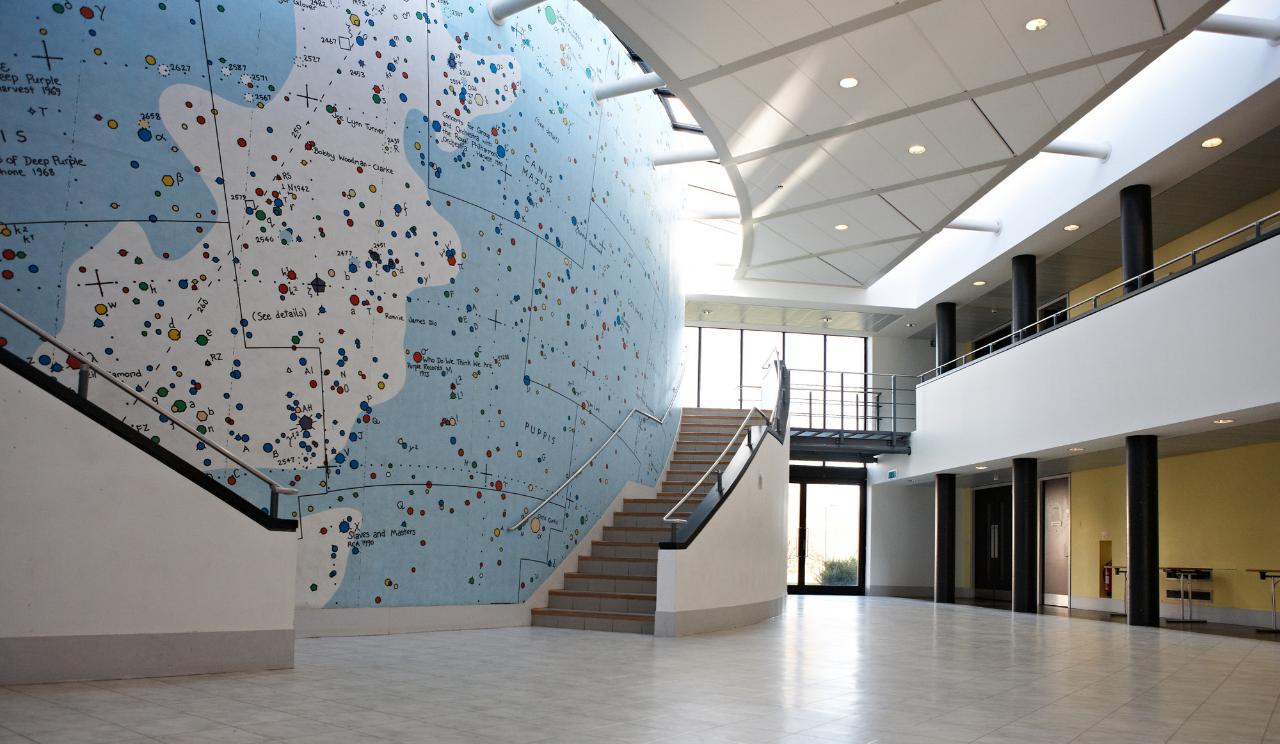
The Warwick Education Conference 2026 blends asynchronous resources and live events to offer a range of exciting ways for everyone to engage with the theme of Learning for a Complex and Hopeful Future. Short nano-presentations have been created asynchronously for you to watch and feel inspired at a time and place that suits you.
Education Fund Posters
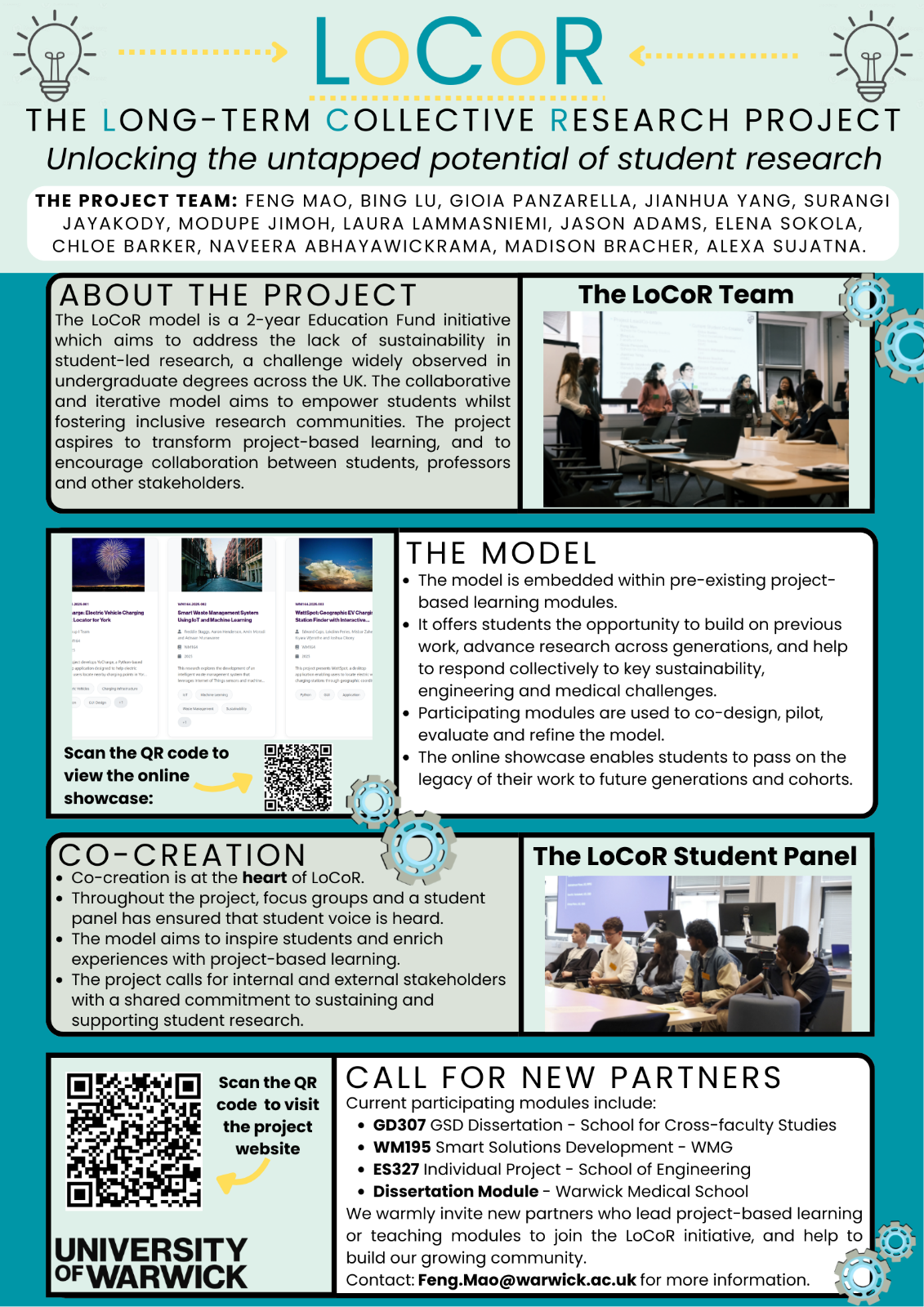
The Long-Term Collective Research Project - Unlocking the untapped potential of student research
Feng Mao, Bing Lu, Gioia Panzarella, Jianhua Yang, Surangi Jayakody, Modupe Jimoh
The Long-term Collective Research (LoCoR) project is a two-year Warwick Education Fund initiative that addresses the continuation of student-led research in undergraduate project-based learning. Rather than viewing student projects as isolated outputs, LoCoR develops a collaborative and iterative model in which research is built cumulatively across student cohorts. Embedded within existing modules, the model enables students to extend previous work, contribute new insights, and collectively respond to complex societal challenges. Co-creation is central to the approach, with student panels and focus groups shaping the design and evaluation of the model. The LoCoR showcase, the central repository further enables students to pass on the legacy of their research to future cohorts. By fostering collaboration between students, academics and stakeholders, LoCoR aims to transform project-based learning into a more inclusive, sustainable research ecosystem within higher education.
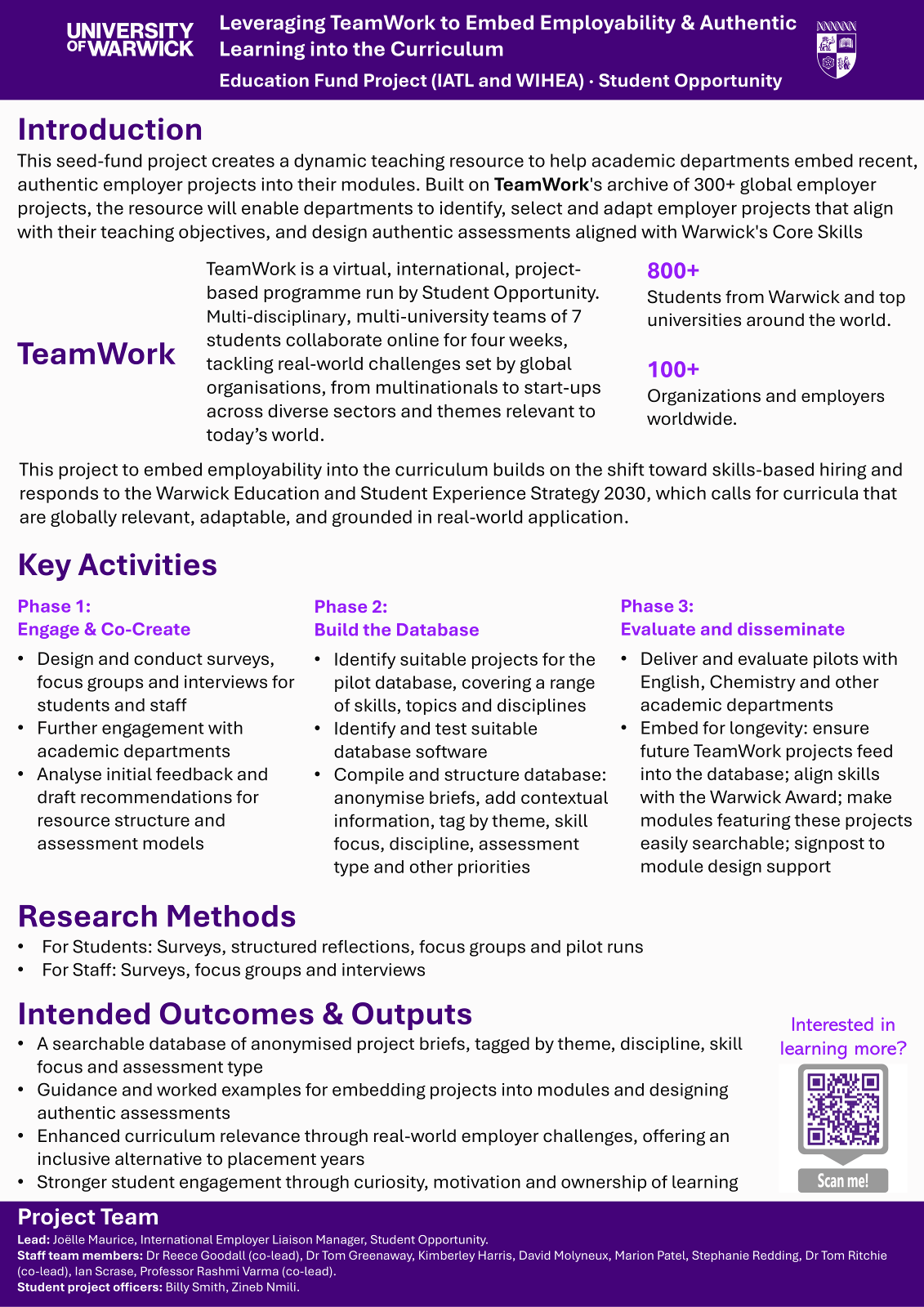
Leveraging TeamWork to embed employability and authentic learning into the curriculum
Joelle Maurice, Zineb Nmili, Billy Smith, Tom Ritchie, Reece Goodall, Rashmi Varma, Jen Baker, Karen Simecek, Dave Ashworth, Aysu Dincer Hadjianastasis, Claire Woodrow, Jane Bryan, Jagjeet Jutley Neilson, Marion Patel, Tom Greenaway, David Molyneux, Kimberley Harris, Ian Scrase, Stephanie Redding
This project develops a dynamic teaching resource that enables academic departments to embed recent, authentic employer-led projects into their curricula. Drawing on TeamWork’s archive of over 300 global projects, the resource will provide a searchable, categorised database of anonymised project briefs enriched with contextual information and mapped to Warwick’s Core Skills and strategic priorities. Co‑created with Student Project Officers, it will include guidance for designing authentic assessments, embedding real‑world challenges into modules, and supporting student reflection and skill development. The project will be piloted across multiple departments, with evaluation through student and staff feedback, engagement metrics, and learning outcomes. By offering an inclusive and scalable alternative to traditional work‑based learning, the resource aims to enhance curriculum relevance, strengthen employability, and support departments in integrating authentic, globally oriented learning experiences across disciplines.
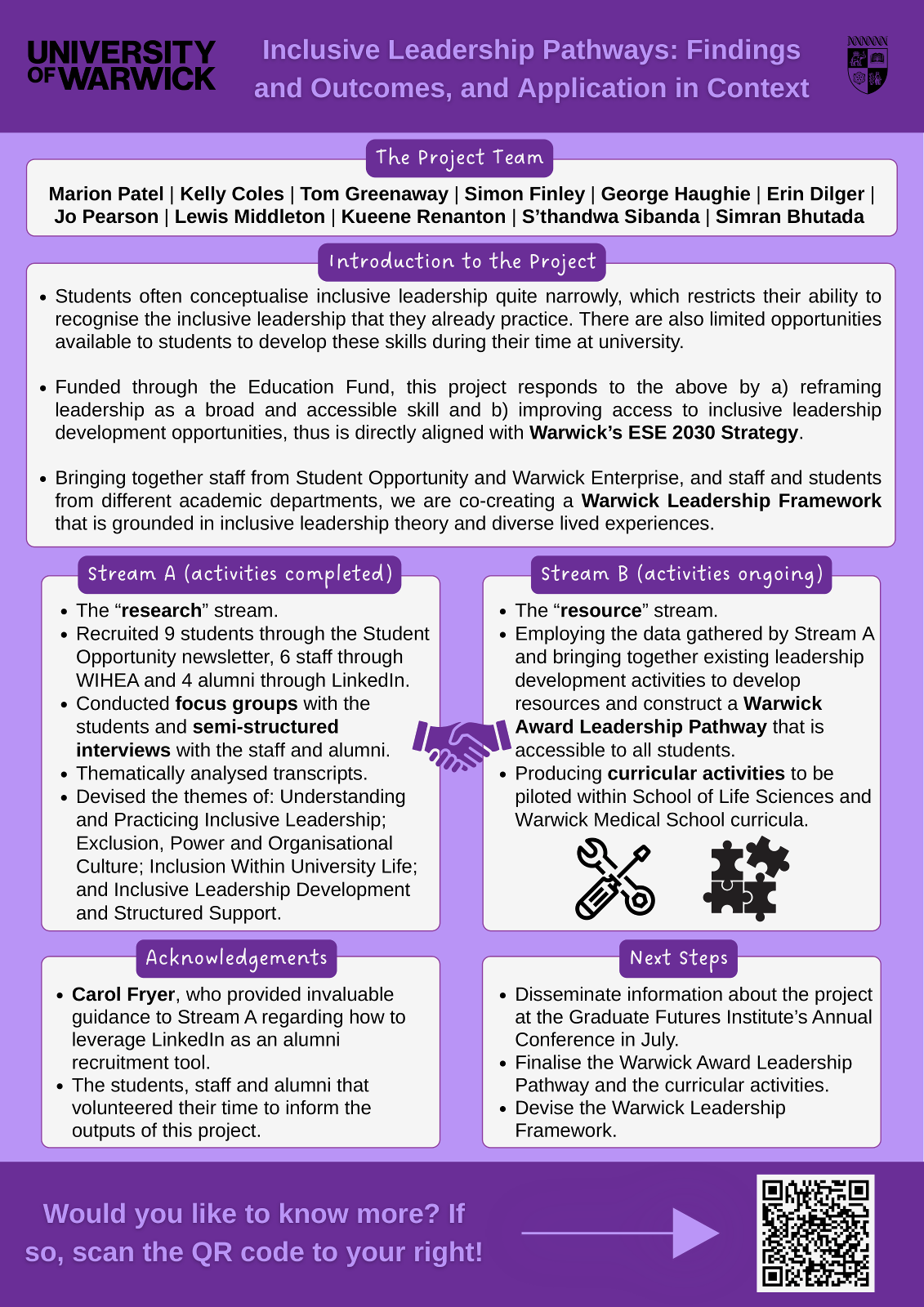
Inclusive Leadership Pathways: An Education Funded Project
Marion Patel, Kelly Coles, Erin Dilger, Tom Greenaway, George Haughie, Jo Pearson, Simon Finley, Nahid Ahmad, Simran Bhutada, Lewis Middleton, Kueene Renanton, S'thandwa Sibanda
This institution wide initiative brings together Student Opportunity, academic departments, Warwick Enterprise, and students to cocreate a new, broad and inclusive Warwick Leadership Framework.
- The project includes the creation of:
- a university wide, student informed Leadership Framework
- teaching resources and case studies for integration into curricula
- a new Warwick Award Leadership Pathway accessible to all students
- embedded leadership activities piloted in SLS (LF271) and WMS curricula
The poster will set out the project aims, key findings to date and intending outcomes of this Education Funded Project

Exploring Engagement: Active Learning in Practice
Adriana Smith Ortiz, Amy Stickels, Anna Tranter, Abigail Ball, Sara Hattersley, Emily Davies, Sutong Duan, Caitlyn Lim, Grace Fisher, Upama Ghosh
Active learning is increasingly prioritised in higher education, yet its use differs across disciplines and teaching levels. This multidisciplinary study examines how active learning is currently used at the University of Warwick and investigates how often students encounter it, the types of activities they undertake, and their perceptions of its benefits for engagement, interaction, deeper understanding, and academic achievement. Using a mixed methods design, questionnaires will capture the frequency, forms, and perceived effectiveness of active learning practices, while focus groups with students and staff will provide deeper insight into their experiences, expectations, and the contextual factors shaping practice.
The project will identify key enablers and barriers influencing successful adoption and highlight areas where greater support, consistency, or innovation may be required. Findings will inform evidence based strategies to enhance inclusive, collaborative, and resilient teaching practices, in alignment with the University’s 2030 strategic vision.
Study Workplace Skills Gap Project
David Molyneux, Gitit Kadar-Satat, Marion Patel, Amanda Lang, Jodie Lucas, Angela Lorenz
The WIHEA-funded Warwick Skills Gap Project explores the perceived gap between the skills students develop during their studies and those expected in the workplace. Bringing together student and employer perspectives, the project aims to co‑create resources and recommendations that better prepare Warwick students for work‑integrated learning and graduate employment. Three research streams examine the issue from complementary angles: student experiences of placements (Stream A), the development and curation of skills‑building resources (Stream B), and employer insights into placement and graduate skills needs (Stream C). Through focus groups, surveys, interviews, and collaborative resource design, the project highlights challenges such as applying academic skills at work, digital skills gaps, and misalignment between university and workplace skill priorities. The outcomes will inform new mixed‑media guidance, employer-informed reports, and enhanced support to help students articulate and develop the skills that matter most.