
WMG News - Latest news from WMG
WMG expert contributes to Micromobility Whitepaper
WMG’s Head of Human Factors for Future Mobility, Dr Roger Woodman, has shared his expertise in a whitepaper entitled ‘Navigating new technologies and the safety and business risks.’
The whitepaper, produced by DriveTech UK, from The AA, the world leader in fleet risk and driver safety management; including driver training, aims to inform businesses about the challenges and risks of micromobility, as well as their corporate obligations.
It also anticipates a wider and likely legalised use of private e-scooters, in the near future, and recommends a serious need to focus on training to keep all users safe.
Dr Roger Woodman explains: “It’s highly likely that rental and private e-scooters will be legalised in the next year or so. Undoubtedly there will be restrictions on these vehicles for both speed and weight. Rental e-scooters will be relatively easy to maintain control of, and from what I have witnessed, the trials have been broadly successful.
“However, the legalisation of private e-scooters is where issues will arise and will quickly become a big social and safety problem if certain things aren’t considered. The most important of which is people will modify e-scooters to make them go faster.
“Consequently, we need to introduce rules similar to car and motorbike ownership, which makes people more aware that they are responsible for what they do with the vehicle and importantly there is a link between them, the vehicle and law enforcement. Psychologically this is very important and is one of the reasons the e-scooter rental trial has made it a requirement that riders must have at least a provisional driving license.
“I believe we need several legal rules imposed with the legalisation of private e-scooters. Firstly, all private e-scooters (including rental), should require a registration plate. Secondly, e-scooters should be taxed and insured in the same way as motorbikes. This requirement greatly reduces the number of people who can own and operate an e-scooter, and I expect this will be dropped for both rental and privately owned e-scooters. However, there will be greater emphasis put on training, which will include safe riding and the Highway Code.”
Read the report in full here: DriveTech-E-Scooter-White-Paper.pdf
WMG is in the process of creating a Micromobility Roadmap, in consultation with users and industry, which will be made public later this year. Read more about WMG’s Intelligent Vehicles research here: Intelligent vehicles (warwick.ac.uk)
WMG supports innovation in polymer science for a sustainable future
 WMG researchers based in the International Institute for Nanocomposites Manufacturing (IINM) have been developing a range of polymer-based solutions for application across several critical sectors, including renewable energy, sustainable transport, and replacement of single use plastics, helping to contribute to a sustainable future.
Here’s a summary of the key projects.
Renewable Energy: Graphene Enabled All Polymer Solar Thermal Cell
Professor Tony McNally working with Dr Sandeep Kumar in partnership with Senergy Innovations Ltd, has submitted patent applications to the UK Intellectual Property Office that describe 2D material filled polymers for use in Solar Thermal Cells. Critically, the materials developed have very high ‘in-plane’ and ‘through-plane’ thermal conductivity and can be processed using conventional polymer processing methods.
The project was supported by BEIS £11M Energy Entrepreneurs Fund. This scheme is for the development and demonstration of state-of-the art technologies, products, and processes in the areas of energy efficiency, power generation, and heat and electricity storage.
Christine Boyle, CEO of Senergy Innovations Ltd, commented: " Working with the IINM and WMG has allowed Senergy to push the boundaries with innovative technology that has the potential to bring a lot of societal good in sustainability and job creation, also enabling future innovation within the business. Dramatic cost reductions of more than 40% are possible when solar thermal systems are re-engineered with high performance polymers. In 2022 we will work alongside our early customers to showcase how the Senergy solar panels can now reduce the cost of delivering solar hot water and heating to a price point that will finally compete with gas and oil."
Professor McNally said: “We are really excited by this exploitation of our research which has far reaching applications in numerous other sectors, including thermal management in electronic devices and electric vehicles.”
The design for manufacture aspects of the development of the solar thermal cell were supported by the High-Volume Manufacturing (HVM) Catapult and the WMG SME Team.
Sustainable Transport: New Chemistry Enables Conventional Sulphur-vulcanised Tyre Tread Rubbers to Self-heal
Dr Chaoying Wan working with Dr Alan Wemyss in collaboration with Bridgestone EMIA have recently filed a patent application which describes the design and inclusion of dynamic bonds in vulcanised rubbers. This allows the conventional covalent-crosslinked rubber networks to be adaptive to external mechanical damage, self-healable and be reprocessed. The dynamic crosslinking networks also promise excellent mechanical properties and fatigue-resistance that are comparable to conventional rubber vulcanizates.
Dr Raffaele di Ronza, R&D Open Innovation Expert at Bridgestone EMIA commented: “At Bridgestone we have a high focus on sustainability and material technologies to extend tyre life, a key element of our strategy in this field. Through this collaboration with WMG we could explore new solutions that support the realisation of our long-terms targets.”
Dr Chaoying Wan said: “We are delighted with the progress that has been made in improving the sustainability of vulcanised rubber products during our collaboration with Bridgestone. We are now able to further our understanding of self-healing vulcanised rubbers thanks also to the support from WMG and the High Value Manufacturing Catapult which will take us further towards in-depth understanding of elastomer science and new technology development for sustainable elastomer manufacturing.”
Replacement of single-use plastics: Sustainable Bioplastics for Food Packaging Applications
Dr Chaoying Wan and Professor McNally in partnership with Pujing Chemical Industry Co., Ltd., have developed fully biodegradable plastics with the gas barrier and mechanical properties required for food packaging applications. Poly(glycolic acid) or PGA has great potential as a substitute for current single-use plastics used in food packaging applications but with a lower carbon footprint. By blending and promoting interfacial interactions between PGA and other bioplastics, such as PBAT, the team have developed sustainable plastics for food packaging.
In collaboration with Sherkin Technologies UK Ltd., the team have been able to enhance the barrier properties of PGA/PBAT further by crosslinking the outer surface of the films using low energy electron beam treatment.
Dr Bowen Tan, Research Manager (UK), Pujing Chemical Industry Co., Ltd. Stated: “We collaborated with WMG on a research project on the blending of biodegradable plastics for flexible packaging applications. They have provided specialist and a wealth of expertise on plastic processing and modification. WMG is equipped with a wide range of polymer processing and testing equipment which enable our research to be carried out from small to manufacturing scales. The outcome of the project was beyond our expectation.”
Mr Donal O’Sullivan, Managing Director, Sherkin Technologies UK Ltd. Commented: “Plastic packaging plays an important role in the reduction of food waste. Biodegradable food packaging usage has great potential to meet local and global targets for the use of sustainable packaging. The recent work undertaken by the IINM, and their industrial partners is an important step in demonstrating the potential for Low Energy Electron Beam as a platform technology which can be deployed to improve and optimise barrier properties in a new generation of biodegradable films.”
Read more about WMG’s Nanocomposites research here: Nanocomposites (warwick.ac.uk)
Using digital flash glucose monitoring for people with diabetes & COVID-19 frees up NHS resources
- Patients with diabetes hospitalised with COVID-19 at University Hospitals Coventry and Warwickshire (UHCW) NHS Trust used flash glucose monitors as inpatients rather than traditional methods
- This approach was evaluated by researchers from WMG at the University of Warwick and University Hospitals Coventry and Warwick NHS Trust
- Patients who used the non-invasive skin monitors were adequately cared for and freed up resources making the care and monitoring of the high-risk
 patients more efficient
People with diabetes are at a higher risk of poor outcomes and severe illness if they develop COVID-19, they need careful glucose monitoring to ensure appropriate glycaemic control during a period of any acute illness, including due to COVID-19.
In order to support the management of these patients at UHCW, digital flash glucose monitoring devices were used as part of a a nationally leading research project. Researchers from WMG at the University of Warwick, and UHCW evaluated the benefits of this trailblazing research.
They found that patients were able to be monitored as effectively as using traditional methods, such as finger pricks and time was saved enabling staff to car for more patients.
Professor Theo Arvanitis from WMG, University of Warwick comments:
“Traditional ways of measuring glucose levels are time consuming and put pressure on resources especially when under pressure from the pandemic, therefore the use of flash glucose monitoring can help free up resources.
“We are pleased to have carried out the first pilot inpatient use of digital flash glucose monitors in an NHS hospital. Overall, there are strong arguments for the inpatient use of these devices in the COVID-19 setting, as we have found that this approach if effective in monitoring patients and can help NHS workers when resources are tight.”
Professor Harpal Randeva from UHCW NHS Trust comments:
“The use of these devices frees nursing time, allows closer monitoring of patients and is popular with them. Building on this evaluation we have now offered devices to over 400 patients with diabetes and COVID-19 and feel this project represents a key step-change in providing care for people with diabetes in hospital. This approach builds on UHCW NHS Trusts Vision of being a National and International leader in healthcare, with a clear focus on world leading digital technology”
Professor Sailesh Sankar from UHCW NHS Trust added:
“Innovation is at the heart of providing the best quality care for people with diabetes. Whilst these devices have been used in the outpatient context, we have achieved the widespread use of devices in an inpatient benefiting both patients and staff. We hope others nationally can learn from this project” The monitor works by measuring glucose from interstitial space, rather than from the blood. They are applied to the patient’s skin and measure glucose levels every 15 minutes for up to 14 days. The glucose levels are then easily read by placing an electronic reader or smartphone over the device, which is more convenient and less invasive than finger-prick monitoring.
Data was gathered from patients who were monitored during their stays, the data was then analysed, and potential associations were explored between relevant parameters, including time in hypoglycaemia, hyperglycaemia, and in range, glycated haemoglobin (HbA1c), average glucose, body mass index (BMI), and length of stay.
Percentage of time in hyperglycaemia exhibited significant associations with both percentage of time in hypoglycaemia and percentage of time in range.
View the academic article hereLink opens in a new window
Clean Transport Accelerator launched by NatWest and University of Warwick to help SMEs fast-track their innovations
- NatWest and WMG, a department at the University of Warwick, are inviting businesses that are creating the next generation of clean green transport to apply to their new accelerator
- Businesses will receive support to fast-track their innovations, including easy access to clean transport experts and equipment, exclusive 1:1 coaching sessions, and access to growth funding
- The Clean Transport Accelerator is a fully-funded programme and will help the UK be a green leader in carbon-neutral transport for future mobility, helping businesses bring their innovations to the market quicker
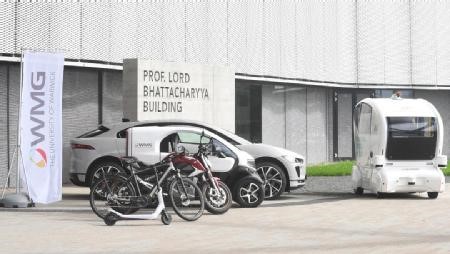 With transport being the largest carbon emitting sector in the UK, a partnership between NatWest and WMG at the University of Warwick has led to the launch of the Clean Transport Accelerator. It will support businesses which are part of the mobility sector to develop products and services that will play their part in achieving the UK’s net-zero goals.
The first cohort of the programme will help 10-15 businesses through education, events, networking and coaching. They will also have access to experts and equipment to help them accelerate their innovations to the market and demonstrate an impact in the pursuit of net zero goals.
Applicants can be from anywhere across the UK and cover a broad range of businesses, whether they are based within supply chains, are fuel providers, want to develop new means of transport, or be focused on specific transport such as light rail, cargo delivery or scooters.
The programme will be delivered jointly by NatWest and WMG, University of Warwick. NatWest will provide an enterprise acceleration manager with 1:1 coaching, access to their accelerator growth events and access to work space, as well as learning hubs at the University of Warwick and Birmingham.
The University of Warwick will provide access to clean energy, manufacturing, automotive and connected experts at WMG and their HVMC (High Value Manufacturing Catapult), as well as the tools to validate and test any equipment designed by the businesses and access to co-working spaces on Campus.
NatWest supported over 55,000 entrepreneurs in 2021 and has 13 accelerator hubs across the UK. Businesses with high growth potential benefit from a range of support through the accelerators. This includes coaching, community, access to a wide network and thought leadership content. NatWest accelerators are keen to attract more female and BAME led businesses as well as companies outside London and the South East. Any business keen to take its next step for growth should consider applying to the NatWest accelerator scheme.
The Clean Transport Accelerator news follows the recent launch of NatWest’s green loans for SMEs and green asset finance through Lombard. Companies can access funds with no arrangement fee to help them transition to more sustainable working practices. The bank has pledged to lend £100 billion by 2025 to businesses looking to invest in being greener. NatWest’s Springboard to Sustainability report, published in October 2021, found that half the UK’s carbon reduction ambition can be delivered by the SME sector and the Clean Transport Accelerator is the bank’s latest offering to help UK SMEs pursue this goal.
Professor David Greenwood, CEO of the High Value Manufacturing Catapult (HVMC) at WMG, University of Warwick comments:
“The drive to net zero has opened up new and exciting opportunities for innovation in the transport sector. Together with NatWest, we’d like to ensure that the UK delivers economic benefits as well as environmental benefits as we meet this critical objective. This programme is aimed to support small and innovative companies as they build and scale up their products, services and business models.”
Richard Hill, Head of Automotive and Manufacturing at NatWest, said:
“NatWest has set out a clear ambition to play a leading role in helping to address the climate challenge, and so we are thrilled to be working with the University of Warwick to offer clean transport businesses a fast-track to delivering on the UK’s green goals.
“Packed with experts, access to equipment, networking opportunities and funding advice, the Clean Transport Accelerator is a must for any business keen to scale up their next step. I look forward to seeing the innovative and exciting businesses that we support.”
Businesses can apply for the Clean Transport Accelerator here: Registration Portal
Where it says ‘Voucher Code’ please enter ‘CleanTransport01/2022’
The deadline for applications is the 11th April 2022.
ENDS
22 FEBRUARY 2022
NOTES TO EDITORS
High-res image available at:
https://warwick.ac.uk/services/communications/medialibrary/images/february_2022/electric_vehicles_outside_wmg_.jpg
Caption: Electric Vehicles outside WMG, University of Warwick
Credit: WMG, University of Warwick

For more information and to apply to the Clean Transport Accelerator visit here
For more information on NatWest’s nationwide accelerators visit here
For more information on NatWest’s green loans visit here
For further information please contact:
Alice Scott
Media Relations Manager – Science
University of Warwick
Tel: +44 (0) 7920 531 221
E-mail: alice.j.scott@warwick.ac.uk
Laura Blumenthal
Media Relations Manager – NatWest
Tel: 07947974464
E-mail: laura.blumenthal@natwest.com
About NatWest Group
NatWest Group is a relationship bank for a digital world. We champion potential; breaking down barriers and building financial confidence so the 19 million people, families and businesses we serve in communities throughout the UK and Ireland can rebuild and thrive. If our customers succeed, so will we.
About WMG, University of Warwick
WMG is a world leading research and education group, transforming organisations and driving innovation through a unique combination of collaborative research and development, and pioneering education programmes.
As an international role model for successful partnerships between academia and the private and public sectors, WMG develops advancements nationally and globally, in applied science, technology and engineering, to deliver real impact to economic growth, society and the environment.
WMG’s education programmes focus on lifelong learning of the brightest talent, from the WMG Academies for Young Engineers, degree apprenticeships, undergraduate and postgraduate, through to professional programmes.
An academic department of the University of Warwick, and a centre for the HVM Catapult, WMG was founded by the late Professor Lord Kumar Bhattacharyya in 1980 to help reinvigorate UK manufacturing and improve competitiveness through innovation and skills development.
WMG FutureFest brings students and employers together
WMG held its annual student careers fair from 14th to 18th February 2022.
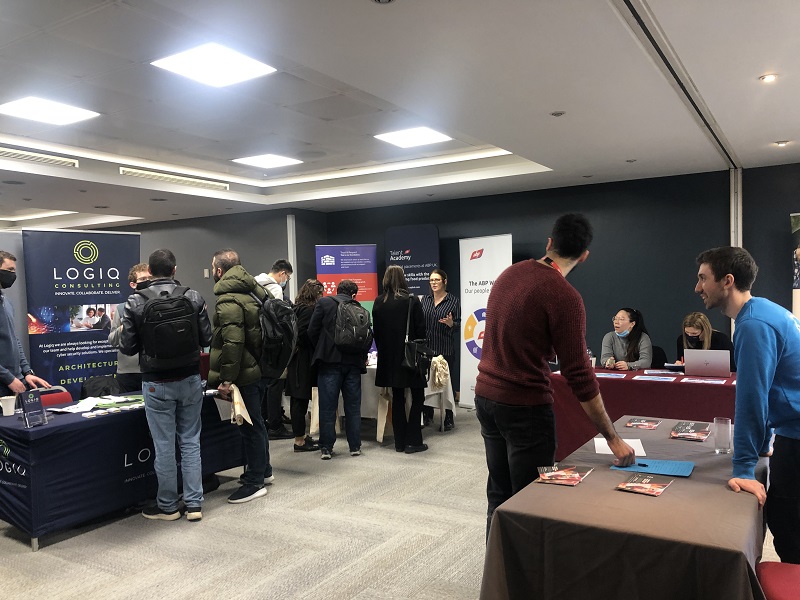 FutureFest, organised by the WMG Master’s Team gave students the chance to hear from prospective employers, explore career opportunities, attend skills workshops, and network with others.
Konstantina Dee, WMG’s Careers and Employability Officer, and organiser of the event, said: “We have held FutureFest annually for the last few years. Last year, due to the Covid restrictions, the event was held fully online. But this year, we were delighted to be able to offer a mix of both online and in-person sessions.
“There was a great atmosphere, and it was nice for students and employers to be able to meet face-to-face, as well as participating in online events. We would like to say a big thank you to all employers, students and staff who took part in sessions across the five days. We are pleased that FutureFest 2022 was another great success.”
A total of 14 companies attended the event including Rolls Royce, Faithful+Gould, Tata Consultancy Services, Alten UK, ABP Food Group UK and TPP.
More than 730 students joined over the course of the week describing it as ‘very valuable’, ‘insightful’, and a ‘great opportunity to speak to employers and find out about opportunities within their organisations.’
Kenta Shibuya from 4C Associates said: “FutureFest Careers Fair is a fantastic opportunity for exhibitors to connect with students seeking a masters’ degree from WMG. As an alumnus, it was a pleasure introducing opportunities at 4C Associates to the students.”
Mandy Thompson from ABP Food Group UK added: “After two long years of hosting virtual careers fairs it was lovely to get back onto campus and meet so many interesting students in person. Warwick didn’t disappoint in presenting us with engaged students who were more than equipped for a career in the food industry.”
A particular highlight of FutureFest was a session led by Adeel Azam from Faithful+Gould. Adeel is a former WMG Master’s student, who is now a Director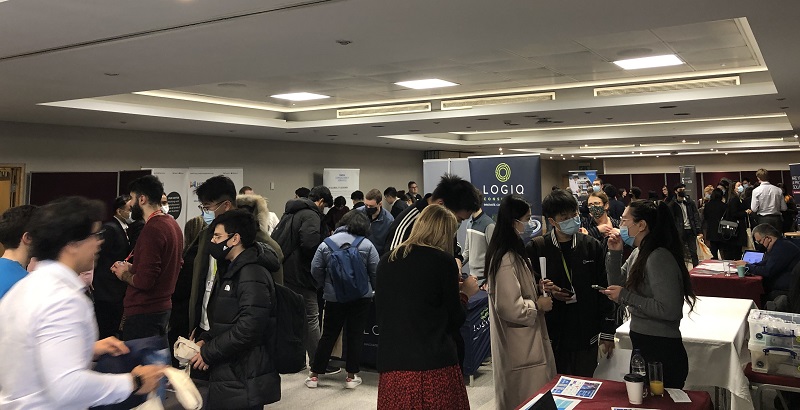 at the integrated project and programme management consultancy. Adeel gave an account of his career so far, and shared advice with students one-to-one at the end of the session.
Daniel Dowling-Brown, Managing Surveyor at Faithful+Gould, said: “What an amazing two days spent with WMG at the University of Warwick. The students were very engaging, and it was a privilege to be able to speak to so many about our business and our industry. We look forward to seeing many of them again as colleagues in the future and look forward to being back again next year.”
If you’re a company or business looking to attract graduates across a range of roles and sectors, contact us to find out how you can get involved with future WMG Student Careers and Employability events: wmg_employability@warwick.ac.uk
Margot James, Executive Chair of WMG, Chairs Coventry Climate Change Board
 Coventry has taken a bold step to facilitate the development of an independent partnership with local businesses, public and community organisations
To drive forward changes to address Coventry’s impact on climate change and the environment.
Five key themes have been identified by the new Independent Climate Change Board for Coventry, and each is led by influential leaders of key organisations and institutions in the city.
The activities support Coventry by integrating solutions which make an impact on, our people, our neighbourhoods and our environment. They include how we use energy, support wildlife, address inequalities such as fuel poverty, reduce waste and find ways to deal with the effects of climate change like flooding and over-heating.
Chris Lovatt, Chief Operating Officer, UK Solutions for E.ON is the new chair of the Low emission development pathway group. This pathway covers how we reduce pollution and emissions in the city. This could be through promoting renewable energy, more efficient buildings, encouraging sustainable travel as well as reducing and changing the way in which we consume energy overall.
Chris explained: “Coventry is E.ON’s home city so naturally we’re very happy to use our expertise and experiences to support Coventry in becoming a cleaner, greener city and drive forward plans to take action against the climate crisis and create a more sustainable city.”
“At E.ON we work alongside cities, local authorities and with residents to look at how we can help them reduce their energy use, cut their bills and carbon emissions, whether that is by better insulating properties or giving people a better understanding of their energy consumption.
“We are also applying new technologies; installing heat pumps, solar panels, batteries and getting ready for electric vehicles and finding the best ways to electrify our heating and transportation needs, which now make up the majority of emissions across the country.”
Margot James, Executive Chair for WMG at the University of Warwick, and former minister for culture, communications and creative industries, is the chair of the Coventry Climate Change Board.
Margot said: “Coventry’s Climate Change Board is bringing together key city stakeholders to draw up a set of actions that will meet the carbon reduction targets set by the Council. I’m delighted to be joined on the Board by the University of Warwick’s Provost Professor Chris Ennew OBE and Russell Hall, Senior Research Fellow at WMG who will also be leading the Circular Development, pathway group.
“I appreciate very much the excellent support the board is getting from local industry, utilities, public services and the voluntary sector. Together with the citizens of Coventry, I am optimistic that we can bring about real change for the better.
“I’m grateful to have E.ON supporting this important agenda for Coventry and I welcome Chris Lovatt, Chief Operating Officer, UK Solutions at E.ON, who is the first expert leading one of our key areas; the Lower emissions development pathway group. We have also identified the following people; Russ Hall, Ed Green and Geraldine Tsakirakis who will be leading the Circular Development, Nature-based and Equitable and Resilience pathway groups. In the coming months, we will identify further leads all of whom will be experts in their fields.”
The new Climate Change Board met for its second meeting recently. Senior leaders from organisations across Coventry are helping to shape and move forward actions to reduce the impact
of climate change and are meeting regularly to share policies, plans, good practice and work together collaboratively in an effort to keep the city on track for a zero-carbon future.
Margot added: “At WMG we are working with industry to develop solutions that will have a long-term impact on climate change, including electrification of transport from passenger cars to very light rail vehicles, and developing sustainable manufacturing processes.
“I want this Board to make a difference, cutting through any blockages preventing action within and between the organisations we represent, to develop solutions to complex challenges together.”
Cllr Jim O’Boyle, Cabinet Member for Jobs, Regeneration and Climate Change at the Council, added: “It’s great to have experts steering the work of the board and I’m sure that we will be able to share innovative approaches.”
Watch the video hereLink opens in a new window
WMG launches new West Midlands Future Leaders' Scholarships
WMG, at the University of Warwick, has launched a new Future Leaders' Scholarship specifically for prospective postgraduate students in the West Midlands region.
The scholarships will provide tuition fee awards of £10,000 for up to 20 UK students to support study on any of the WMG Full-time MSc courses. To be eligible, applicants should be living or working in the region, or have graduated from any West Midlands university. They must also meet the academic entry criteria for the course they are applying for.
Professor Robin Clark, Dean of WMG, and Director of Education explains: “WMG has an established reputation for delivering education programmes that develop future talent, and with the announcement of the Government’s Levelling Up white paper, we are pleased to be supporting the development of talent in the West Midlands through our new Future Leaders' Scholarships.”
“WMG’s applied Master’s courses provide students with the skills and knowledge required to make a positive impact and contribution within their chosen fields, from innovation and technology to engineering and management.”
Margot James, Executive Chair at WMG adds: “The West Midlands is a major part of the UK economy, and we are committed to supporting the region’s development and growth. With WMG’s new scholarship, we are delighted to be supporting the next generation of skilled graduates, and help shape the leaders of tomorrow.”
The deadline for applications is 1st June 2022. Further information including how to apply can be found here: WMG West Midlands Future Leaders' Scholarships.
WMG welcomes Bridget Phillipson MP, Labour Shadow Education Secretary to mark National Apprenticeship Week 2022

Labour Shadow Education Secretary, Bridget Phillipson MP visited the WMG Degree Apprenticeship Centre at the University of Warwick today (Thursday 10th February) to mark National Apprenticeship Week 2022.
Following a visit to the motorsport and advanced engineering group Prodrive earlier in the morning, where she met WMG degree apprentice Abi Holloway from the Applied Engineering Programme, Bridget Phillipson then visited the WMG Degree Apprenticeship Centre with Professor Stuart Croft, Vice-Chancellor and President of the University of Warwick and Professor Robin Clark, Dean of WMG and Director of Education.
The Shadow Education Secretary met with apprentices and staff for a tour of the Centre, including workshop demonstrations and live seminars before meeting local employers including Aston Martin, JLR, Royal Mail Group and Allett, as well as the Federation of Small Businesses.
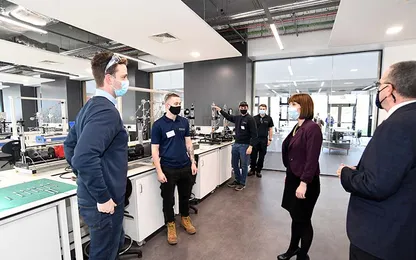
Bridget Phillipson MP, Labour’s Shadow Education Secretary, said:
“It was a pleasure to visit the WMG Degree Apprenticeship Centre to mark National Apprenticeship Week, and to see how businesses and education providers are working together to equip young people with the skills our country needs to prosper.
“Labour is committed to working with educators and employers to ensure young people leave education ready for work and ready for life.
“As our national skills needs develop and change, I want young people and older workers wanting to reskill to be able to access high quality, local training programmes which lead to good jobs in all parts of the UK.”
The Coventry and Warwickshire Local Enterprise Partnership funded WMG Degree Apprenticeship Centre offers a bespoke learning environment with open spaces for collaborative and individual work, technology-enabled seminar rooms and a purpose-built laboratory for mechanical, electrical and thermal experiments.
Professor Stuart Croft, Vice-Chancellor and President of the University of Warwick said:
“It was a pleasure to welcome Bridget Phillipson MP to the University to share our approach to combining quality Higher Education and work-based learning. We have a responsibility to provide students with the environment they need to develop the knowledge, skills and behaviours needed to succeed while supporting business growth through their work. The WMG Degree Apprenticeship Centre is a flagship example of how this can be achieved when strategic investment is combined with industrial and academic collaboration.”
The visit also comes just a few weeks after the launch of the WMG Skills Centre, including seven new courses in technologies such as energy systems, intelligent vehicles, and digital manufacturing to meet current and future industry needs.
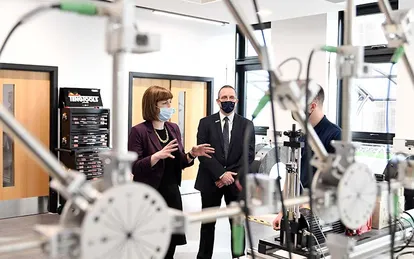 Professor Robin Clark, Dean of WMG and Director of Education said:
“We were delighted to welcome the Labour Shadow Education Secretary to our WMG Degree Apprenticeship Centre during National Apprenticeship Week. The visit was a great opportunity to highlight the achievements of our apprentices and to discuss future opportunities in work-based education with a panel of influential local industry partners.”
Margot James, Executive Chair at WMG, added:
“It’s great that Bridget Phillipson MP was able to meet our incredible apprentices and industry partners. She heard from them that, with the Green Industrial Revolution and the road to Net Zero leading to emerging skills needs in areas like automation, electrification and robotics, it is vital UK businesses invest in their people to encourage new-skilling, re-skilling and up-skilling.”
Live testing to begin as part of landmark partnership to develop UK electric motorcycle capability
Today (Tuesday 8th February) marks the official end of the collaboration stage of the TE-1 project, a unique four-way partnership with WMG, Triumph Motorcycles, Williams Advanced Engineering and Integral Powertrain Ltd e-Drive Division, focusing on developing specialist electric motorcycle technology.
The prototype demonstrator is now fully ready for the live testing programme led by Triumph Motorcycles.
The project, funded by the Office for Zero Emission Vehicles through Innovate UK, was set up to create ground-breaking developments in specialist electric motorcycle engineering and innovative integrated technology design.
Due to WMG’s vast experience and proven track record on key Innovate UK projects, Triumph Motorcycles asked WMG to project manage TE-1 on their behalf.
As part of this WMG was also tasked with identifying the project consortium partners, as well as providing guidance relating to future legislation, charging infrastructure and recycling strategies.
The prototype demonstrator integrates all the latest and final innovations from the project partner workstreams.
Triumph: final chassis, including frame, rear sub-frame, cockpit, panels and wheels, final drive system including transmission and Gates Carbon belt drive, electronics, Öhlins USD cartridge forks, unique prototype Öhlins RSU, Brembo M50 monobloc calipers, and Triumph motorcycle control software
Williams Advanced Engineering: final iteration of prototype WAE battery pack incorporating dedicated cell packaging for optimum centre of gravity, vehicle control unit, DCDC converter, integrated cooling, charge port, and styled carbon covers
Integral Powertrain: final prototype powertrain with scalable integrated inverter and combined motor with silicon carbide switching technology and integrated cooling
WMG: final pre-live trial simulation completed, with all results indicating that the project is on course to deliver the intended performance and durability outcomes
Truong Quang Dinh, WMG’s Associate Professor of Energy Management and Control Systems, explained: “Our creation of initial computer-based simulation models at the start of Phase 1 has been instrumental in ensuring that the component selection was appropriate to achieve the performance targets defined by the partners for the TE-1 Prototype.
“We have continued with this work across Phase 2 of the project, refining the models to a much more complex level to allow us and the partners to imitate further components on the bike such as braking, throttle, lighting and other systems and mimic real-world riding to provide development opportunities and real-time testing before components were fully designed. Additionally, we have created a physical rig wired with all of the control units and e-drivetrain, in order to implement a design validation test programme to ensure the function of each section was within the allowable range.”
Key project achievements so far include test results that exceed current benchmarks and targets set by the UK Automotive Council for 2025, providing a platform with great potential for future development in electric motorcycle performance.
Over the next six months the prototype demonstrator will undertake an extensive live testing programme within Triumph’s state-of-the-art facilities.
At the completion of the live testing phase, estimated to be Summer 2022, the prototype demonstrator will be updated with its final body panels and paint scheme, in preparation for active track demonstration. At this time, the full results of the project including the final specifications and testing outcomes will be published, as well as insights and key facts on how the TE-1 delivers on the project targets for innovation and sets new standards for the motorcycle sector overall, including final battery and range performance.
“It has been truly exciting to see the progress made during phase 3 of Project Triumph TE‑1 with the final prototype motorcycle now going into real life testing. Everyone involved at Triumph are proud to have been part of this innovative British collaboration. Personally, I am thrilled with the results we have already achieved with our partners, and the exciting preview of the potential electric future to come.” said Nick Bloor, Triumph CEO. “We look forward to continuing the ambitious and innovative work on the TE-1 demonstrator prototype through the live testing phase and sharing the outcome with Triumph fans across the world.”
Read more about WMG’s Transport Electrification research expertise here: Energy (warwick.ac.uk)
Latest bursary winners announced under Lord Bhattacharyya Engineering Education Programme
The Royal Academy of Engineering has announced the second cohort of West Midlands students to receive the Lord Bhattacharyya Higher Education bursaries, which aim to widen participation in engineering.
Nine bursaries, each worth £5000 a year for three years, have been awarded to students from underrepresented groups across the region who are progressing from A Levels or technical engineering courses to degree-level engineering courses in the 2021/22 academic year.
These prestigious awards form part of the wider Lord Bhattacharyya Engineering Education Programme, a five-year programme funded by the UK Government Department for Business, Energy and Industrial strategy (BEIS) as a tribute to the late Professor Lord Kumar Bhattacharyya Kt CBE FREng FRS, a renowned engineer, academic, educator and government advisor who established WMG at the University of Warwick in 1980.
The programme, led by the Royal Academy of Engineering in close partnership with WMG, aims to promote engineering to young people in the West Midlands from low-income backgrounds and those who are underrepresented in engineering. The comprehensive support package provided to the programme’s network of secondary schools and FE colleges aims to upskill teachers and inspire young people to take up engineering, before supporting their progression into further and higher education and into engineering careers.
The nine awardees are:
- Dawud Ahmed, studying Electronic and Electrical Engineering at Birmingham University
- Mohammed Shahid Akther, studying Aerospace Technology and Coventry University
- Farid Alhaji, studying Automotive Engineering at Coventry University
- Jamila Houmadi, studying Electronic Engineering with Foundation Year at Birmingham City University
- Iqra Khan studying Civil Engineering at Coventry University
- Raees Kiani, studying Civil Engineering at Coventry University
- Afras Malik, studying Aerospace Systems Engineering at Coventry University
- Bianca Miller, studying Computer Systems Engineering at the University of Essex
- James Wilkes, studying Aircraft Maintenance Engineering at Solihull College & University Centre
Dr Rhys Morgan, Director of Engineering and Education at the Royal Academy of Engineering, says: “It’s so great to see these talented young people in the West Midlands being supported to become future engineers and technicians. The Academy is proud to help continue the engineering heritage of this region and it is vital that we work as a profession to attract a diverse workforce who will in turn bring added benefits of creativity and productivity to local businesses.”
Professor Robin Clark, Dean of WMG, University of Warwick adds: “I would like to congratulate the second cohort of recipients of a Lord Bhattacharyya Higher Education bursary—Professor Lord Bhattacharyya was a passionate advocate of inspiring young people to follow a career in STEM. I’m absolutely delighted to see the enthusiasm of the students and the diverse range of engineering subjects that the students are passionate about”.
Applications for the third round of Lord Bhattacharyya Higher Education Bursaries will open in March 2022, for students enrolling at university in September 2022.
More information about the nine awardees can be found here.
Media enquiries to:
Pippa Cox at the Royal Academy of Engineering Tel. +44 207 766 0745; email: Pippa.Cox@raeng.org.uk
or
Lisa Harding at WMG Lisa.Harding@warwick.ac.uk Tel +44 7824 540845