
WMG News - Latest news from WMG
Minister for Science, Research and Innovation visits the University of Warwick
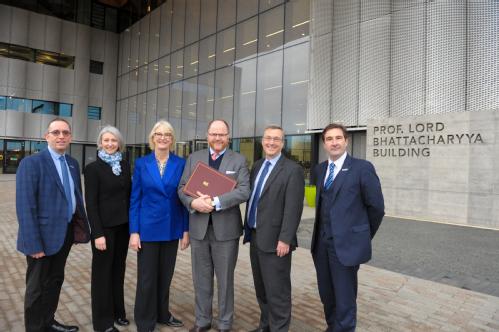
The University of Warwick was today, 2nd February, pleased to welcome George Freeman MP, Minister for Science, Research and Innovation, to visit the Professor Lord Bhattacharyya Building, home to the National Automotive Innovation Centre, following a visit to the UK Battery Industrialisation Centre.
During his visit Mr Freeman met with researchers from WMG conducting pioneering research into battery innovation, and their integration and control for propulsion and energy applications, and attended a demonstration of WMG’s autonomous vehicle 3DX simulator to learn more about Warwick’s work in the development of new transport technologies.
Mr Freeman’s visit coincides with the publishing of the government’s white paper on Levelling Up.
Commenting on the minister’s visit the University of Warwick’s Vice-Chancellor, Professor Stuart Croft, said:
“On the day of the launch of the government’s Levelling Up white paper, it has been a privilege to welcome the Minister for Science, Research and Innovation to Warwick and to highlight some of the many projects the University is undertaking that will support levelling up across our region.
“Through sustainable transport and technologies, life sciences, and as the home of the National Automotive Innovation Centre and as a partner in the UK Battery Industrialisation Centre – Warwick’s contribution to the levelling up work across the West Midlands will be a significant feature of our University’s future, with the energy and drive of our innovation at the fore.”
Commenting on their visit to the University of Warwick Campus and UKBIC, George Freeman MP said:
“It was fantastic to visit the University of Warwick manufacturing cluster, a globally renowned centre for research & innovation in propulsion, battery tech, robotics, and life sciences.
“As part of our mission to Level Up the UK, today we pledged to spend over half the government’s R&D budget outside the South East of England by 2024-25, piloting new Innovation Accelerators to give three regions – including the West Midlands - access to £100 million of new funding.
“This is what Levelling Up looks like in practice - growing the economy while ensuring we can all share in our country’s success.”
Commenting on the minister’s visit to Warwick and the government’s commitment to increase publicly funded research Executive Chair of WMG at the University of Warwick, Margot James, said:
“I am delighted to welcome George Freeman, Science Minister, to WMG today, we are proud that the Minister has chosen WMG at the University of Warwick to showcase his launch of the innovation accelerators. I welcome wholeheartedly the commitment within the Levelling Up white paper to an increase of 40% in publicly funded research across the Midlands.”
Robin Clark, Dean of WMG, University of Warwick add “I'm pleased to see a strong commitment to skills in the Levelling Up White Paper, at WMG, we're keen to help deliver this mission, providing the opportunity for more people to take quality skills courses, from apprenticeships to in-work learning.
Through our new WMG Skills Centre, WMG Degree Apprenticeship Centre and the National Electrification Skills Framework we will be working with employers to develop the skills programmes that are needed by industry and companies to provide these opportunities.”
The £130 million UK Battery Industrialisation Centre (UKBIC) is a pioneering 18,500 square metre state-of-the-art national facility, which has been developed to support UK industry with development of battery technologies for future electrification. UKBIC presents an opportunity for UK technology developers to prove out their innovations and processes by acting as the bridge between new battery chemistries developed in the research laboratories and mass scale production for the automotive market in Gigafactories.
Jeff Pratt, Managing Director of UKIBC said “We were delighted with the Minister’s visit to UKBIC today, in which he spoke about the importance of science and innovation to the UK economy. It was good to discuss with him the importance of realising value from R&D and scaling industrial opportunities - highlighted through facilities such as our own – and to recognise the importance of supporting our growing battery ecosystem across the UK. UKBIC is a key part of the UK Government’s Faraday Battery Challenge, created to fast track the commercialisation of cost-effective, high-performance, durable, safe, low-weight and recyclable batteries.”
The National Automotive Innovation Centre is a partnership between WMG, at the University of Warwick, Jaguar Land Rover, and Tata Motors European Technical Centre. There are over 1,000 designers, engineers and researchers located within the Centre, working on a range of future vehicle and mobility solution projects. Students and apprentices also share the space working alongside staff as our future designers and engineers.
Further to Warwick’s role in developing battery and transport technology, the University is supporting an extensive range of activities to support growth, investment, and regeneration in the West Midlands; including as a Principal Partner of Coventry UK City of Culture 2022, which has to secured £172.6m of investment into the city and over £500m of city regeneration activity. WMG’s new Skills Centre and National Electrification Skills Framework will also support high quality skills development.
WMG alumna wins British Council award
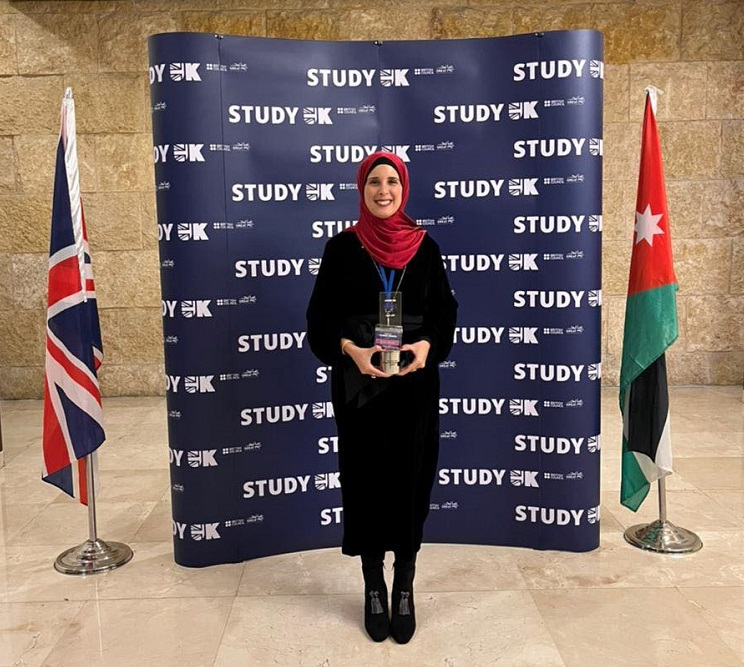 Noor Abu-Jbara, WMG MSc Innovation and Entrepreneurship alumna, has won a prestigious Study UK Alumni Award.
Noor, who graduated from WMG in 2019, was announced as the winner in the Business and Innovation Award category for Jordan at an awards ceremony held on Sunday (30 January).
The UK Alumni Awards are led by the British Council to celebrate the outstanding achievements of the UK’s international alumni. Award winners and finalists are leaders in their fields who have used their experience of studying at a UK university to make a positive contribution to their communities, professions and countries.
The Business and Innovation Award category specifically recognises those who are active in initiating and contributing to innovative or creative new ideas, solutions or business opportunities, that have the potential for growth.
Professor Robin Clark, Dean of WMG said: “This award is a true testament to Noor’s dedication and passion for entrepreneurship and empowering women in Jordan. I’m delighted that her efforts have been recognised. Congratulations Noor!
“We look forward to seeing the wonderful things that she continues to achieve throughout her career.”
After graduating Noor became the Entrepreneurship and Innovation Supervisor at TheTank by Umniah and the Founder of SHEE. She is trainer and mentor for start-ups and has worked as a consultant and researcher in the fields of innovation, entrepreneurship, women empowerment and management consultation.
You can read more about Noor’s career here: https://warwick.ac.uk/fac/sci/wmg/education/wmgmasters/alumni-profiles/noor-abu-jbara_iae/
Autonomous vehicle safety standard concept enables tests needed to be road ready
- Operation Design Domain (ODD) is a fundamental to Connected autonomous Vehicle (CAV) safety, as it describes specific operating conditions in which the CAV system can operate safely, including environmental parameters such as weather an infrastructure
- Defining an ODD in a standard way has now been made official thanks to a new international standard concept created the German standards body ASAM and led by WMG at the University of Warwick, which defines the language used to define an ODD
- The new ASAM OpenODD language concept clears the barrier between CAV manufacturers and authorities, so they can find out if the vehicle is allowed to drive within the authority’s area or not and vice versa
An Operational Design Domain (ODD) is fundamental to Connected Autonomous Vehicle safety, however defining an ODD hasn’t been done before, until now, thanks to the work undertaken by German standardisation body ASAM and led researchers from WMG, University of Warwick.
An Operational Design Domain Definition (ODD) describes specific operating conditions in which the automated driving system is designed to properly operate. It specifies what operating parameters the CAV must be able to manage, for example, weather conditions, infrastructure, location, time of day and everything else that can have an impact on the driving situation. The ODD is thus an important part of the safety concept of a vehicle and must be valid throughout its entire service life for a particular configuration of the CAV.
ASAM, a German standardisation body have been working with WMG, University of Warwick and other international experts to publish a new international standard concept, to develop a language for defining ODDs. They have successfully created a concept for machine-interpretable format to represent the ODD specification. The concept paper can be downloaded free of charge. Additional use cases or requirements can still be proposed before the standard development starts.
Th new format concept enables governments and the automotive industry to access ODD descriptions that are exchangeable, comparable, and processable.
An application example of the effective use of ASAM OpenODD is as follows: A city describes the ODD for its downtown area in the ASAM OpenODD format and makes it available to automotive manufacturers. The manufacturers can then use these descriptions to easily match their vehicles with the defined ODD to find out if their vehicles are allowed to drive in the respective downtown area. They can also use the descriptions to map their scenario test catalogue to the requirements of the ODD. The registration authorities have the benefit of defining ODDs that they can use to check autonomous vehicles. They can also be used to support the development of the ADAS and AD systems, as the use of the ODD can define the testcases that are necessary to validate the vehicle. There can be obvious limitations, for example, if the vehicle is not capable of speeds above 50 km/h highway tests are not necessary. This application of an ODD helps to focus the limited validation resources on the really needed scenarios.
Dr Siddartha Khastgir, from WMG, University of Warwick and project lead for ASAM Open ODD Concept project comments: “Operational Design Domain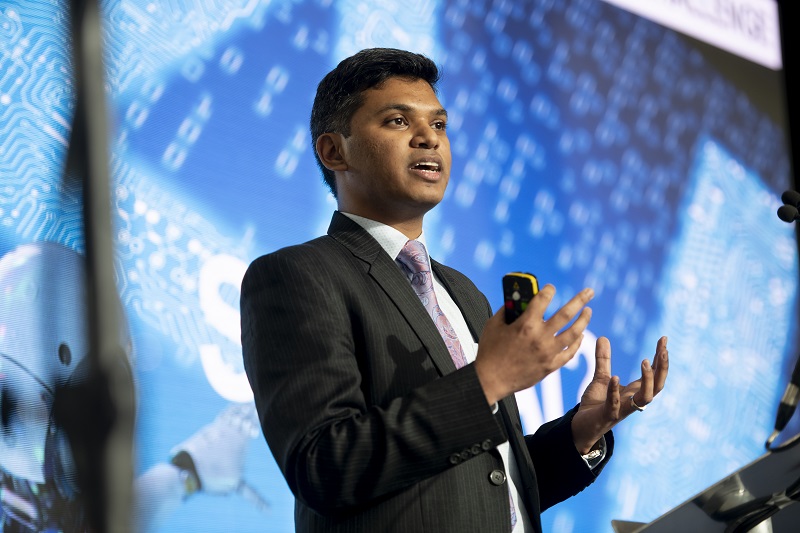 definition is key to creating a safe automated vehicle. However, how is an ODD defined hasn’t been officially deemed, until now, as the ASAM OpenODD concept has provided the language to define an ODD.
“This means that going forward CAV manufacturers can define and exchange ODD definitions and authorities can have a common understanding of the ODD definition. I am grateful to all international experts who have contributed to this work. Achieving safety of automated driving needs to be a collaborative effort and ASAM OpenODD is an example of this.”
Peter Voss, Managing Director, ASAM E.V. comments:
"ASAM OpenODD will be a standard that will not only contribute to the safety of automated vehicles, but more importantly, will help to implement automated driving functions faster,".
In addition to the format and syntax, the concept for ASAM OpenODD also takes into account attributes (leveraging ISO 34503), metrics and the representation of uncertainties. The future standard will be compatible with all other standards of the ASAM OpenX family, particularly with OpenDRIVE, OpenSCENARIO and OpenXOntology.
ENDS
1 FEBRUARY 2022
NOTES TO EDITORS
High-res images available at:
https://warwick.ac.uk/services/communications/medialibrary/images/april2020/sid_39.jpg

Caption: Dr Siddartha Khastgir, from WMG, University of Warwick
Credit: WMG, University of Warwick
ASAM OpenODD Concept: https://www.asam.net/standards/detail/openodd/
Recording of webinar: https://www.asam.net/conferences-events/detail/webinar-asam-openodd-concept/
Further resources on understanding ODDs:
What is an ODD (by Nicco Hagedorn, ASAM e.V.): https://www.youtube.com/watch?v=u4F5OZlRlaQ
Curious case blog (by Siddartha Khastgir, WMG): https://bit.ly/CuriousCaseODD
For further information please contact:
Alice Scott
Media Relations Manager – Science
University of Warwick
Tel: +44 (0) 7920 531 221
E-mail: alice.j.scott@warwick.ac.uk
Partnering with Rolls-Royce and Electroflight to create the battery for world’s fastest all-electric aircraft
- The Rolls-Royce ‘Spirit of Innovation’ aircraft is officially the world’s fastest all-electric aircraft, clocking up speeds of 387.4mph
- Rolls-Royce worked in partnership with aviation energy storage specialist Electroflight to create this world-class technical achievement for the UK, that will help lead the way towards a more sustainable way to fly
- In order to power the aircraft, the most power dense propulsion battery pack ever assembled in aerospace had to be developed directly supported by researchers from WMG, University of Warwick using their state-of-the-art battery characterisation and testing facilities
In the wake of COP26 the need for electrification has never been more evident, with aviation top of the list of global priorities.
Committed to taking on this challenge, Rolls-Royce decided to create the ‘Spirit of Innovation’, an all-electric aircraft, which this week officially set not one,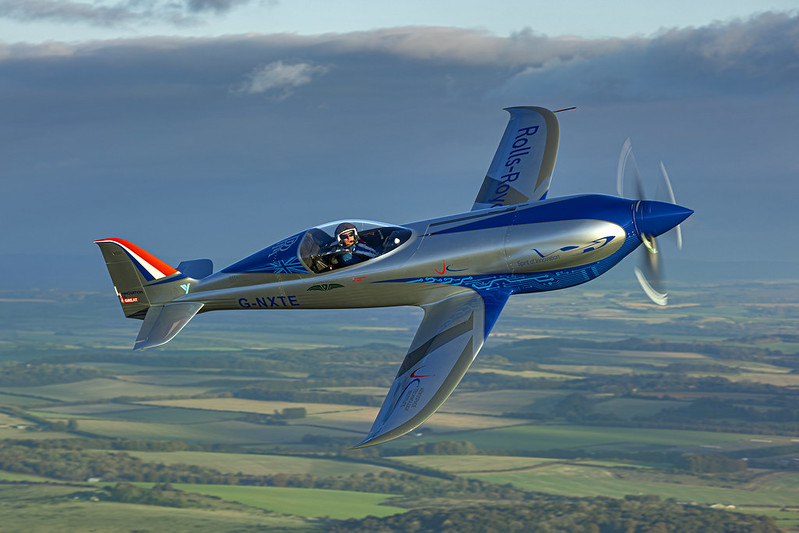 but two World Records and during these record runs it reached speeds of 387.4mph (623 km/h) making it the world’s fastest all-electric vehicle.
In embarking on this unprecedented feat, Rolls-Royce partnered with aviation energy storage specialist Electroflight to help develop the battery system for the record-breaking plane. The WMG team at the University of Warwick were exclusively used to test and validate the batteries used on the aircraft.
Using their state-of-the-art facilities at WMG’s Energy Innovation Centre, researchers at WMG supported the team through the development process, conducting extensive electrical, thermal, safety, and vibration & shock testing. This was delivered all the way from Electroflight’s initial single lithium-ion cell selection through to the battery module and finally the battery pack for a full propulsion battery system.
Testing included cell selection, fire protection system design, module level thermal management, system testing and pack level testing, and also included sub-powertrain testing of the battery system and electric machines connected together.
Individual components such as the battery casing materials, individual lithium-ion cells, cell clusters and sub-modules were all examined in WMG’s battery testing laboratories including the Battery Abuse Testing Centre. Aerospace DO-160G shock and vibration testing was performed in WMG’s battery vibration facility – the first time an aircraft propulsion battery has successfully completed DO-160G testing in the UK.
On 16th November, the Spirit of Innovation took to the sky at the UK Ministry of Defence’s Boscombe Down experimental aircraft testing site for its record-breaking flight. Data was submitted to the Fédération Aéronautique Internationale (FAI), who control and certify world aeronautical records, have confirmed that the Spirit of Innovation is the world’s fastest electric plane.
The two new world records broken are:
1. The aircraft reached a top speed of 555.9 km/h (345.4 mph) over 3 kilometres, smashing the existing record by 213.04 km/h (132mph)
2. The aircraft achieved 532.1km/h (330 mph) over 15 kilometres – 292.8km/h (182mph) faster than the previous record
Chief Engineer Mark Amor-Segan, from WMG, University of Warwick comments:
“It’s incredibly exciting to see Rolls-Royce’s ‘Spirit of Innovation’ be awarded two new world records and officially be titled the World’s fastest all-electric aircraft. It has been a tremendous journey to share with Electroflight, to help verify and validate the battery system end-to-end and help create the most power-dense propulsion battery ever for Aerospace.
“We have worked closely with Electroflight and Rolls-Royce throughout this process, cementing new collaborative relationships and helping achieve world-class pioneering technology. To see it progress from literally a single cell into a full-scale battery system and a world-record breaking flight, is tribute to the incredible dedication and capability of the whole team at ACCEL. This project has played a very important part in our work in Aerospace, and we’re excited to continue our research into electrification and the future of sustainable flight.”
Douglas Campbell, Technical Director of Electroflight said:
“This has been a landmark project for our company and our industry – one which opens up a world of possibilities in the electrification of aviation. We’re thrilled to have played such an important part in this success and grateful to our partners at WMG for their support throughout this endeavour.”
Customer Director Matheu Parr from Rolls-Royce added: “The support we received from WMG to develop the battery technology that would power the world’s fastest all-electric aircraft was critical for the team’s record-breaking triumphs. Rolls-Royce has a long-standing relationship with WMG to ensure we are the forefront of technology and we will build on this capability to deliver propulsion and power systems for the advanced air mobility market.”
ENDS
26 JANUARY 2022
NOTES TO EDITORS
High-res images available at:
Pictures and B-Roll video footage can be found here:
https://www.flickr.com/photos/rolls-royceplc/albums/72157705298410174
https://vimeo.com/rollsroyceplc
Credit: Rolls-Royce
FOR FURTHER INFORMATION PLEASE CONTACT:
Alice Scott
Media Relations Manager – Science
University of Warwick
Tel: +44 (0) 7920 531 221
E-mail: alice.j.scott@warwick.ac.uk
WMG welcomes Victoria Prentis MP, Minister of State at the Department for Environment, Food and Rural Affairs (DEFRA)
WMG was pleased to welcome Farming Minister Victoria Prentis yesterday (Thursday 20th January).
The Minister was welcomed by WMG Executive Chair, Margot James, and given a tour of the Innovate UK-funded Natural Light Growing Centre and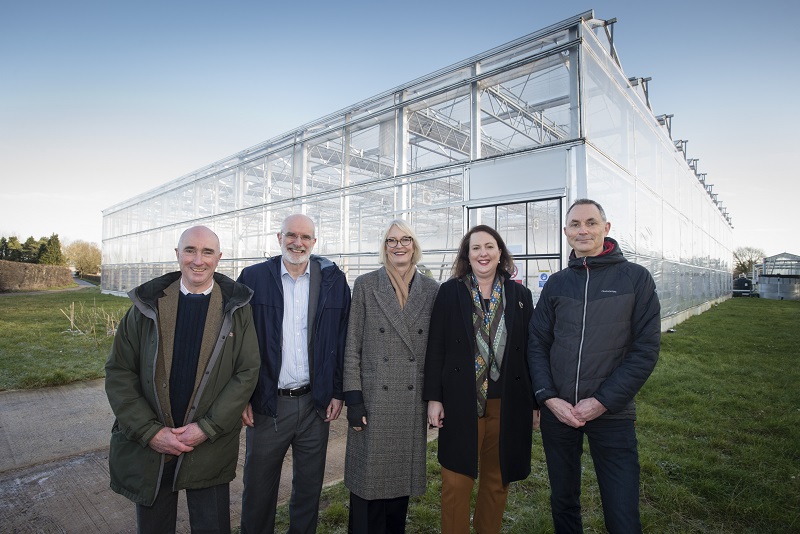 DEFRA-funded vegetable gene bank research centre, run by the School of Life Sciences, at the University of Warwick’s Wellesbourne campus.
The delegation then headed to WMG, on the University of Warwick campus, where they were given a presentation from Professor Robert Harrison on horticultural robotics and how they can support on a range of agricultural tasks. They then met with Professor Kerry Kirwan, who explained more about water treatment using recycled carbon fibre sheets.
Finally Dr Mark Swift, Head of SME Programmes, explained more about the SME support programme where WMG has helped the food and drink sector apply digital manufacturing techniques.
Margot James, executive Chair at WMG, University of Warwick said: "It was a pleasure to have Minister Victoria Prentis to visit us today, we were delighted to share the cutting edge research we are doing in collaboration with the agriculture and horticulture industries.
“These are vital sectors to the UK economy but there is vast potential to improve using automation, AI and digital manufacturing, as well as new growing practices being researched by our Life Sciences department."
Farming Minister Victoria Prentis, added: “It was great to visit the University of Warwick, which is making significant strides to ensure agri-robotics can be a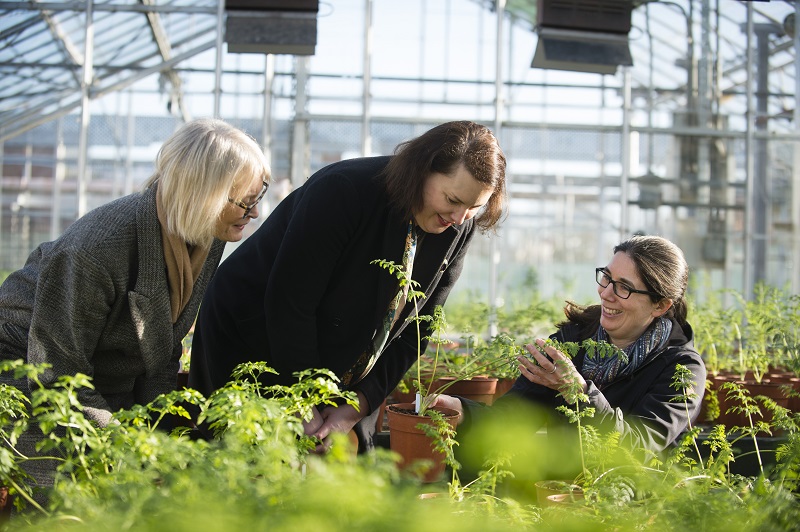 reality for farmers and growers in the UK.
“We know how important it is for the industry to maximise productivity and yields. We are putting in place a series of initiatives – from the Farming Investment Fund, to the Farming Innovation Programme – to support the development and uptake of technology which can boost food production, productivity and the environment.”
WMG alumna nominated for prestigious award
 Noor Abu-Jbara, WMG MSc Innovation and Entrepreneurship alumna, has been selected as a finalist for a prestigious Study UK Alumni Award in her native Jordan.
Noor, who graduated from WMG in 2019, has been nominated for a Business and Innovation Award.
The UK Alumni Awards are led by the British Council to celebrate the outstanding achievements of the UK’s international alumni. Award winners and finalists are leaders in their fields who have used their experience of studying at a UK university to make a positive contribution to their communities, professions and countries.
The Business and Innovation Award category specifically recognises those who are active in initiating and contributing to innovative or creative new ideas, solutions or business opportunities, that have the potential for growth.
Professor Jay Bal, MSc Innovation and Entrepreneurship course lead at WMG said: “Noor is passionate about Women’s Entrepreneurship as a tool for empowering women in developing countries. We hope her efforts get recognised at the awards.”
After graduating Noor became the Entrepreneurship and Innovation Supervisor at TheTank by Umniah and the Founder of SHEE. She is trainer and mentor for start-ups and has worked as a consultant and researcher in the fields of innovation, entrepreneurship, women empowerment and management consultation.
The winners will be announced at an awards ceremony on 30th January.
You can read more about Noor’s career here: https://warwick.ac.uk/fac/sci/wmg/education/wmgmasters/alumni-profiles/noor-abu-jbara_iae/
WMG research featured in House of Lords report
 Research led by Dr Mark Elliott, Associate Professor at the Institute of Digital Healthcare at WMG, has been featured in the House of Lords National Plan for Sport and Recreation Report.
The report considers the effectiveness of current sport and recreation policies and initiatives, and the case for a national plan for sport and recreation.
Dr Elliott’s research has investigated the effectiveness of the use of incentives and rewards for exercise, using a rewards-for-exercise app called Sweatcoin. The contribution to the House of Lords report was based on the findings that people increased their daily step count by an average of nearly 20% when using the incentives platform.
Dr Mark Elliott, comments: “Our findings highlighted how digital platforms that incentivise physical activity through tracking step count recorded on smartphones can have a positive impact on people’s exercise behaviours. We were pleased to be able to contribute our findings as evidence to the House of Lords National Plan for Sport and Recreation Report.”
Read the report in full here: https://publications.parliament.uk/pa/ld5802/ldselect/ldsportrec/113/113.pdf
New Loqski glass fibre ski lock to keep your skis safe this season
- With winter being the ski season many skiers will be off on holiday, possibly taking their own expensive skis
- When leaving your skis for a break from the slopes they’re at risk of being taken intentionally or unintentionally from the racks, however Loqski have come up with a solution made and manufactured in the UK
- Loqski is a pocketable device locking skis and poles together, WMG at the University of Warwick have helped them manufacture the locks affordably and sustainably
- Loqski’s new and improved lock is available to buy now
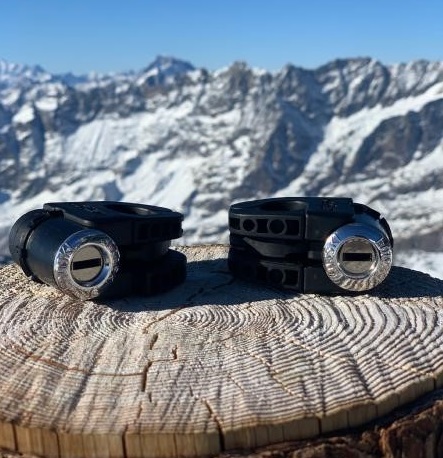 On a ski resort, after spending time on the slopes skiers will often head inside for a break in a restaurant or bar leaving their skis with everyone else’s on a rack outside. For this reason avid skier James Pittard decided not to buy himself expensive skis for fear that they would go missing, whether intentionally or unintentionally.
This led him to think about an easy to use, pocketable device that could lock both skis and poles simply together. Taking his idea to a design agency, the Loqski ski lock, with its high security combination lock that can be operated even with ski gloves on, was launched in a zinc-based material.
However, as sales were taking off the zinc-based material used couldn’t be manufactured quick enough to keep up with demand, until they discovered GV-5H, a glass fibre reinforced thermoplastic material that is often used in the automotive industry as it’s incredibly tough yet lightweight.
James then approached WMG, at the University of Warwick for help on a number of aspects of this looking into Grivory GV-5H, including testing the material, assessing the strength of the redesigned components in the assembly and giving advice on ways in which costs can be reduced during the manufacturing process.
Whilst it’s not possible to 3D print in Grivory GV-5H, researchers from WMG printed the prototype parts in strong engineering plastic with a carbon fibre infill using Markforged Mark 2 FDM printer that would reflect the strength of this material. These prints proved the suitability of Grivory GV-5H for this product.
They also assessed whether a redesigned barrel design component would fit into the assembly as changing just this one part would help reduce costs. They produced many 3D prints of the barrel component; these parts were then thoroughly tested not only for form and function but also to assess that it would fit with the other components in this existing assembly.
Being able to fully test the fitment of the new barrel design enabled Loqski to compare the cost of having to tool a completely redesigned product, which would be an excess of £50,000, or spending £7,000 for tooling just this barrel component and using it in the existing assembly.
“Loqski are now in a position where they are able to streamline manufacture. With less components to assemble, the assembly time has sped up and so manufacturing costs have been reduced. Loqski always had an ambition of keeping manufacture in the UK and by reducing manufacturing costs, we are pleased that we could assist them in doing that. We are thrilled to see them take their new and improved lock to the market, and hope that skiers this season will invest to keep their skis safe.” says Neil Jeffree, Innovation Manager at WMG, University of Warwick.
By reducing manufacturing costs Loqski is now able to produce a more cost-effective end product in higher volumes, which will put the company in better stead to work with distributors and have the product stocked by retailers worldwide. It has also led James to consider expanding the product’s reach even further.
“One of the things we’d now like to push is getting the new product into the ski rental market, where it can be hired out when skiers rent their skis. This is something we would never have considered with the zinc-based product as it was just too expensive.” says James Pittard, founder of Loqski.
ENDS
18 JANUARY 2022
NOTES TO EDITORS
High-res images available at:
https://warwick.ac.uk/services/communications/medialibrary/images/january_2022/img_2601.jpg
Caption: The Loqski Lock
Credit: Loqski

https://warwick.ac.uk/services/communications/medialibrary/images/january_2022/img_2612.jpg
Caption: The Loqski Lock
Credit: Loqski

For further information please contact:
Alice Scott
Media Relations Manager – Science
University of Warwick
Tel: +44 (0) 7920 531 221
E-mail: alice.j.scott@warwick.ac.uk
WMG Skills Centre launched to bridge the technical skills gap
· With increased pressure on businesses to be flexible, resilient, increase efficiency and to meet sustainability goals there is an unprecedented need for new skills in the workforce.
· In order to thrive during periods of change WMG has launched the Skills Centre, offering an ever changing and growing range of courses to meet current and future industry and business needs.
· The Centre is launching with seven new courses in innovative technologies ranging from energy systems, intelligent vehicles, digital and manufacturing.
The WMG Skills Centre launched today, the 17th January. The Centre provides the opportunity for businesses to respond to challenges through a range of innovative short courses which will equip workforces with the latest technical skills.
 Over the last five years businesses and organisations across the UK have faced many challenges, from Brexit to Covid, with the next milestone being the urgent requirement to respond to the need to achieve Net Zero. The WMG Skills Centre will support businesses enabling them to survive and thrive through these and future challenges.
A Government white paper released in 2021 ‘Skills for Jobs: Lifelong Learning for Opportunity and Growth’, saw the then Secretary of State for Education Gavin Williamson CBE MP stating that we (the UK) do not have enough technicians, engineers or health and social care professionals. Redressing this will be critical to improving our productivity and international competitiveness.
WMG, at the University of Warwick, is a leader for bridging the gap between academia and industry, driving innovation in science, technology, engineering and skills. The WMG Skills Centre is launching with courses covering Digital Manufacturing, Energy Systems, Intelligent Vehicles and Manufacturing. Over the course of 2022 further courses will be added to support the ever-changing skills needs of business and industry.
All of the courses range from half-day workshops to five-day courses providing short, sharp, interventions to support skills growth. The first courses to be launched are Data-Driven Smart Manufacturing, Demystifying Digital Twins, Electric Drivetrain School, Intelligent Connected Automated Mobility (ICAM) School, Industry 4.0 Integration and Implementation, Manufacturing Awareness and Battery School.
Margot James, Executive Chair of WMG, University of Warwick comments:
“WMG has worked tirelessly over the last 40 years to bridge the gap between research and industry, preparing our students from our academies, degree apprenticeships and post-graduate courses to be equipped with the skills to improve Britain’s workforce.
“I am therefore delighted to see that we can continue to help businesses improve their skills, by offering courses at the new WMG Skills Centre, so that everyone can access the knowledge they need to succeed, and help our industry partners, region and country to create a digital and sustainable economy of the future.”
Dr Benjamin Silverstone, Associate Professor, Head of WMG Skills Centre adds:
“Change for business has never been more rapid and the need to adapt and evolve to meet current and future needs is critical to ensure survival. The courses offered by the WMG Skills Centre build on our strong history of delivering skills innovation to industry and will up-skill, re-skill and new-skill workforces across the country to ensure that they are resilient and able to thrive. “
Although the WMG Skills Centre is new, it has been created based on the success of courses that have previously been run by WMG, such as The Battery School. Dr Graham Hoare, President of Global Operations at Britishvolt who attended the course in 2021 said:
“I have worked in the powertrain divisions of blue-chip car companies such as Ford, BMW and Jaguar Land Rover in the past. The course here at WMG effectively allows people like me, who have got good mechanical experience, to really understand and appreciate battery technology and enable us to lead teams of battery scientists in the future. The two days on the Battery School course were fundamental to my understanding about battery technology and really equipped me to be able to jump into this important world very efficiently.
“Batteries are at the heart of this industrial transformation, so being here, at WMG and learning and seeing with my own eyes how that can be applied really was transformational. I feel so much more equipped for the challenge ahead.”
You can find out more about the new WMG Skills Centre by visiting: WMG Skills Centre
ENDS
17 JANUARY 2022
NOTES TO EDITORS
High-res images available at:
https://warwick.ac.uk/services/communications/medialibrary/images/january_2022/wmg_skills_centre_1.jpg
Caption: People on a course at WMG
Credit: WMG, University of Warwick

https://warwick.ac.uk/services/communications/medialibrary/images/january_2022/wmg_skills_centre_2.jpg
Caption: People on a course at WMG
Credit: WMG, University of Warwick

https://warwick.ac.uk/services/communications/medialibrary/images/january_2022/wmg_skills_centre_3.jpg
Caption: People on a course at WMG
Credit: WMG, University of Warwick

https://youtu.be/4_i1UJbwQGs
Caption: Video: WMG Skills Centre - a solution for national skills gaps | Message by Margot James
Credit: WMG, University of Warwick
For further information please contact:
Alice Scott
Media Relations Manager – Science
University of Warwick
Tel: +44 (0) 7920 531 221
E-mail: alice.j.scott@warwick.ac.uk
WMG academic joins Department for Transport’s Science Advisory Council
· Dr Siddartha Khastgir, from WMG at the University of Warwick has been appointed to be on the Department for Transport’s Science Advisory Council (SAC).
· The DfT Science Advisory Council (SAC) provides independent strategic advice and challenge to the Department on key areas of science, social science engineering and technology.
· Dr Khastgir will focus on taking a systems thinking approach across various modes of transport (land, air and marine) to ensure their safe enrolment and public acceptance in the UK
Dr Siddartha Khastgir from WMG, University of Warwick, has been appointed to be on the DfT’s Science Advisory Council, where he will advise on a wide range of science and engineering issues, such as enrolment of Autonomous Vehicles.
Today, Friday 14th January 2022, the Department for Transport have announced five new members and a new Chair joining their Science Advisory Council, including Dr Siddartha Khastgir from WMG, University of Warwick.
The DfT’s Science Advisory Council provide the DfT with advice and challenge on key areas of science, engineering and technology, supporting the role for the DfT Chief Scientific Adviser Professor Sarah Sharples, by ensuring departmental activity is informed by the best external expertise and evidence, identifying relevant emerging issues and trends and assuring DfT’s use of science and technology.
Dr Siddartha Khastgir is Head of Verification and Validation of Connected and Autonomous Vehicles at WMG, University of Warwick. In 2019 he was awarded a UKRI Future Leader Fellowship focusing on Autonomous Vehicle safety standards. Leveraging his research on Autonomous Vehicles safety, he will focus on taking a cross-domain approach to safety in land, marine and air.
With his new appointment on the council Dr Khastgir will help advise DfT on the technological and societal challenges surrounding introduction of new technologies, and how they can be enrolled in UK safely and efficiently. He comments:
“To be a part of the Department for Transport’s Science Advisory Council is incredibly exciting, I’m looking forward to working with other experts in the field to provide advice to help the DfT to inform future policy, with its foundations in strong research outputs. Not only do we need to create safe systems, we need to communicate with the public to ensure public acceptance.”
Margot James, Executive Chair at WMG, University of Warwick adds “I am delighted to hear that Siddartha has been appointed to the Department for Transport Science Advisory Council, a reflection of his world-leading research into safety for connected and autonomous vehicles. I will be watching with interest to see how the DfT moves this emerging technology forward, and look forward to Siddartha being a key part of this.”
UKRI Future Leaders Fellowships Director Stephen Meader said:
“The world leading research undertaken by Dr Khastgir and his team is vital for the development of safe autonomous vehicles that can cut both congestion and carbon emissions.
“Dr Khasgir’s appointment to the Department for Transport’s Science Advisory Council (SAC) demonstrates both the importance of this work to the future of mobility in the UK and the value the Future Leaders Fellowships scheme brings in enabling his research.”
Other new appointees joining six existing members include:
· Dr Siddartha Khastgir, Head of Verification and Validation of Connected and Autonomous Vehicles, University of Warwick
· (SAC Chair) Professor Alastair Lewis, Professor of Atmospheric Chemistry, University of York
· James Gaade, Head of Programme Management, The Faraday Institution
· Professor William Powrie, Professor of Geotechnical Engineering, University of Southampton
· Dr Emma Taylor, Head of Digital Safety, RazorSecure Ltd.
· Professor Patricia Thornley, Director of the Energy & Bioproducts Research Institute, Aston University
Department for Transport Chief Scientific Adviser, Sarah Sharples, said: “I’m pleased to welcome the new members appointed to the Science Advisory Council. They bring significant additional expertise in key areas that will support DfT’s effective use of science and engineering. I look forward to working with them.”
ENDS
14TH JANUARY 2022
NOTES TO EDITORS
High-res images available at: https://warwick.ac.uk/services/communications/medialibrary/images/april2020/sid_39.jpg
Caption: Dr Siddartha Khastgir, from WMG, University of Warwick
Credit: WMG, University of Warwick
For further information please contact:
Alice Scott
Media Relations Manager – Science
University of Warwick
Tel: +44 (0) 7920 531 221
E-mail: alice.j.scott@warwick.ac.uk