
WMG News - Latest news from WMG
Eatron and WMG win funding for project COBRA
A new partnership between Eatron TechnologiesLink opens in a new window and WMG has been formed for the COBRA (Cloud/Onboard Battery Remaining useful life Algorithm) project, thanks to the funding from the Faraday Battery ChallengeLink opens in a new window.
The COBRA project will create new algorithms which will estimate the Remaining Useful Life (RUL) in an Electric Vehicle (EV) battery, and could contribute to the UK becoming a supplier of the most advanced Battery Management Systems (BMS) in the world.
The innovation of project COBRA comes from combining advanced battery ageing models developed by WMG with Eatron Technologies' own machine-learning-based approach to Remaining Useful Life (RUL) estimation from existing internal R&D work.
The technology has been refined to a level of usability, reliability, and maturity that gives battery manufacturers and integrators the confidence required to enable mass adoption.
Undertaken by a team of highly experienced engineers with a track record of delivering state-of-the-art software and system solutions for electrification projects with the automotive sector, project COBRA will:
· Develop a unified physics and machine-learning-based approach for battery RUL estimation with high accuracy of over 90%.
· Integrate a developed solution in automotive-grade BMS hardware.
· Integrate a solution into cloud-based platforms for fleet operation services.
The funding from the Faraday Battery Challenge enables lead partner Eatron Technologies to put the UK on the map as a global leader in the design, development, and manufacture of batteries for electric vehicles. The COBRA project offers the opportunity to be first-to-market with an accurate RUL algorithm that can be implemented in a real-world BMS.
As part of project COBRA, Eatron Technologies is currently developing and integrating advanced battery diagnostics algorithms for its next generation of BMS and cloud-based battery analytics; it's expected that these will deliver significantly higher value both to battery manufacturers and integrators as well as electric vehicle Original Equipment Manufacturers (OEMs), UPS suppliers, and other providers of off-highway applications.
In terms of the usefulness of these technologies, the possibilities offered by project include: predicting the RUL of a lithium battery under real-world operating conditions, COBRA technology will work with both off-board fleet data analysis and on board vehicle data while integrating with the BMS and guide battery manufacturers and their cell suppliers.
All of this can be used to track and assess the real-life fleet performance of batteries during product validation and post-production phases. In wider terms, successful adoption of these new BMS features would ultimately also increase the value of the EVs and their uptake on UK roads`
As well as extending a batteries' first life by giving an accurate indication of a battery's remaining life, COBRA will also improve second-life applications by reducing the need for expensive testing, as well as increase the effective power of batteries by allowing the safe utilisation of a wider operating window.
Dr Dhammika Widanalage from WMG, University of Warwick comments:
“We are delighted to work with Eatron technologies on the COBRA project, and look forward to using our novel battery ageing technology to test out their algorithms in their battery management system.
“If their algorithms means consumers can get more out of their EV battery, then it’s possible more people may be inclined to buy one, therefore helping the UK pave the way to a cleaner greener zero-carbon future.”
After months of discussion with interested customers around the world, intelligent software provider Eatron Technologies found there exists a strong demand for the features that the COBRA project can offer in batteries for EVs. COBRA could contribute to the UK becoming a supplier of the most advanced Battery Management Systems (BMS) in the world, as well as contributing to an increased uptake of EVs which in turn will help nations around the globe to reach environmental targets over the coming decades.
"This funding has brought the project forward by 12 months, and there is huge demand from potential customers," said Dr Umut Genc, Managing Director, Eatron Technologies. "With the funding, we've been able to immediately hire additional software engineers as well as tapping into cutting-edge battery research from the team at WMG. Ultimately, grant funding this project de-risks the activities required to achieve feasibility of this highly innovative approach to RUL estimation.
Tony Harper, Challenge Director for Faraday Battery Challenge at UK Research and Innovation, said:
“Since 2017 the Faraday Battery Challenge has been supporting the UK’s battery companies to produce batteries that are more cost effective, more efficient, charge faster and can easily be recycled. This new round of funding has enabled us to support companies, like Eatron Technologies, across the battery supply chain and build on the UK’s world class research and innovation.”
EVs on UK roads are set to see rapid growth, with 1.8 million expected to be sold in 2030, or 64% of total car sales, according to the Faraday Institution. The accompanying acceleration in battery manufacturing will drive a substantial increase in second-life applications, while the supply for stationary applications could excess 200 gigawatt-hours per year by 2030.
This rapid adoption of EVs around the world will increase global demand for BMSs over the coming years. Eatron Technologies is proud to be seen as a forerunner in BMS technology by the Faraday Institute and hopes that project COBRA plays an important role in the global fight for the environment by making EVs more practical for fleet operators and drivers around the world.
UK’s most outstanding university/industry collaborations shortlisted for Bhattacharyya Award
The Royal Academy of Engineering and WMG, at the University of Warwick, have shortlisted 11 exceptional collaborations for the inaugural Bhattacharyya Award. With a cash prize of £25,000, the Bhattacharyya Award will be presented to the team who best demonstrate how industry and universities can work together. Winners will be announced on 16 September 2021.
The Bhattacharyya Award is funded by the Department for Business, Energy and Industrial Strategy and was announced in July 2019 as a tribute to Professor Lord Kumar Bhattacharyya KT CBE FREng FRS, the Regius Professor of Manufacturing at the University of Warwick and founder of WMG.
Starting his career as a graduate apprentice at Lucas Industries, Professor Lord Bhattacharyya became Britain's first ever Professor of Manufacturing. Having seen first-hand how slowly academic advances were translated into real business and social change, he founded WMG in 1980 to help business innovate and help university researchers change our lives. Academic excellence with industrial relevance has always been at the heart of WMG, and today, it is one of the world’s top applied research centres, with a reputation for academic excellence and business results spanning the globe.
The shortlist features collaborations that address some of the most pressing national and global challenges, from cybersecurity and medical simulation to powering the aircraft of the future.
The full shortlist is as follows:
- Imperial College London and Shell
- Loughborough University and Rolls Royce
- Queen's University Belfast and the Centre for Secure Information Technologies
- Swansea University and the Steel Strategic Alliance
- The University of Manchester and BP
- University of Bath and the Institute for Advanced Automotive Propulsion Systems
- University of Cambridge and the Cambridge Centre for Smart Infrastructure and Construction
- University of Leeds and Simulation Solutions Ltd
- University of Sheffield and Siemens
- University of Surrey and the 5G Innovation Centre
- University of York and the High Integrity Systems Engineering group
Science Minister Amanda Solloway said: "We are extremely proud to be funding the Bhattacharyya Award, which encourages collaboration between our fantastic universities and businesses. By working hand-in-hand, academic advances can be quickly translated to industry, bringing forward game-changing innovations and helping us to build back better from the pandemic."
Professor Dame Ann Dowling OM DBE FREng FRS, immediate past-President of the Royal Academy of Engineering, is chair of the judging panel for the Bhattacharyya Award. She said: “Lord Bhattacharyya was a strong advocate of an effective industrial strategy, seeking a revitalisation of skills policy, a growth in apprenticeships, a focus on the impact of research and training and technology partnerships between industry and universities. We received some fantastic entries that showcase best practice in developing effective collaborations between universities and industry – we hope that these will inspire productive new partnerships in the future.”
Margot James, Executive Chair at WMG, University of Warwick said “The Bhattacharyya Award amplifies the approach Professor Lord Bhattacharyya took in transforming how universities research and educate to meet the needs of industry and society. Supporting genuine collaboration to create relevant and impactful research and enabling education programmes that nurture the brightest talent. The shortlist exemplifies the very best of university/ industry collaboration. We look forward to seeing which collaboration is selected as the overall winner.”
The winner of the Bhattacharyya Award will be announced on Thursday 16 September 2021. Those wishing to attend can register via the Academy’s website here.
NAIC shortlisted for AJ Architecture Awards
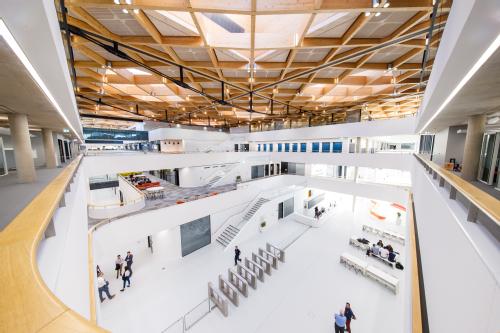
The National Automotive Innovation Centre (NAIC), situated in the Prof. Lord Bhattacharyya Building at the University of Warwick, has been shortlisted in the ‘Workplace’ category of the 2021 AJ Architecture Awards.
Recognising excellence in UK architecture, these highly coveted awards are unique to the market, with the winners published in a special edition of the Architects' Journal. The Workplace category is defined as ‘new-build refurbished architectural projects for workplaces completed between January 2019 and July 2021.’
To qualify for the category, the workplace in question must exceed 10,000m², an entry requirement the Centre comfortably eclipses with its 33,000m² of space for engineers, designers and academics to enjoy.
The Centre was officially opened in February 2020 by HRH The Prince of Wales. A partnership between WMG, University of Warwick, Jaguar Land Rover and Tata Motors, the Centre is the largest of its kind in Europe. Its unveiling was well-timed too, arriving during a global mobility revolution, a new age for transport mobility.
The Centre is driving the future of the automotive industry from the heart of the United Kingdom. A beacon for automotive research, it brings together the brightest minds from industry and academia, to develop future vehicles and mobility solutions.
Designed by Cullinan Studios, the brief for the Centre was for simplicity and strength of purpose, turning a complex assembly of spaces into an immediately legible building.
The AJ Architecture Awards winners will be revealed during a celebratory event on 17 November 2021 at the Grosvenor House, London.
UK-based consortium established to develop prototype solid-state batteries
MOU signed between Johnson Matthey, Faraday Institution, Britishvolt, Oxford University, UK Battery Industrialisation Centre, Emerson & Renwick and University of Warwick
HARWELL, UK (19 August 2021) A consortium of seven UK-based organisations has signed a memorandum of understanding to combine ambitions to develop world-leading prototype solid-state battery technology, targeting automotive applications.
Solid-state batteries offer significant potential advantages over conventional lithium-ion batteries and could be transformational in meeting the UK’s net zero commitments through the electrification of transport. The successful outcome of the collaboration would be to harness and industrialise UK academic capability to produce cells using highly scalable manufacturing techniques that leapfrog the cost-effectiveness and performance achieved elsewhere.
The consortium comprises the following world-leading organisations in battery research, development and manufacturing:
· Faraday Institution – the UK’s independent institute for electrochemical energy storage research, which has led the consortium’s formation and will lead its development.
· Britishvolt – the UK-based Gigaplant developer, with a site in NE England.
· E+R (Emerson & Renwick) – a world leading designer of manufacturing equipment.
· Johnson Matthey – a global leader in sustainable technologies and the UK’s leading battery materials business.
· Oxford University – that leads the Faraday Institution’s solid-state battery project (SOLBAT) and provides the necessary scientific understanding to the consortium.
· UK Battery Industrialisation Centre – the pioneering battery manufacturing development facility to enable UK battery manufacturing scale-up and facilitate upskilling in the battery sector.
· WMG, University of Warwick – leaders in battery R&D and initial scale-up capability, as well as academic and apprenticeship skills development.
The preliminary design for a prototyping facility has been developed. Sources of funding are currently being sought.
Minister for Investment Lord Grimstone said: “Collaboration between industry, government and our world-leading academic institutions is putting the UK at the forefront of global efforts to develop innovative automotive technologies, such as solid-state batteries.
“It is the work of our internationally-renowned research and development base, like those brought together by this consortium, that will give us the tools needed to forge a strong and sustainable future for the automotive sector and increase our contribution to combatting climate change.”
“I am delighted to be able to announce the formation of this unique consortium for the advancement of solid-state battery prototyping that includes leading UK-based organisations at many stages in the value chain,” said Professor Pam Thomas, CEO of Faraday Institution. “Our leadership in this venture signals a move towards a role that the Faraday Institution will increasingly play as a trusted convener of significant partnerships between UK industry and academia as a route to commercialise breakthrough science emerging from our research programmes to maximise UK economic value.”
Solid-state batteries (SSBs) offer significant potential advantages over existing lithium-ion battery technologies, including the ability to hold more charge for a given volume (leading to increased electric vehicle (EV) range) and reduced costs of safety-management. Early deployment of SSBs is likely to be in consumer electronics, niche automotive applications and unmanned aerospace, before being used in broader EV markets. The Faraday Institution forecasts that, in 2030, SSBs are likely to take a 7% share of the global consumer electronics battery market and a 4% share of the EV battery market[1]. Global SSB revenues from sales to EV manufacturers are expected to reach $8 billion by 2030[2] and then grow rapidly to 2040 and 2050 when the market is expected to become extensive.
 However, there are fundamental scientific challenges that need to be addressed before high power SSBs with commercially relevant performance can be realised. The Faraday Institution’s SOLBAT project has made considerable progress in addressing these challenges over the last three years.
The construction of the one-of-a-kind facility being developed by the collaboration will enable SSB technology to emerge from UK university laboratories. It will allow larger cells to be produced using scalable manufacturing techniques that will be improved iteratively through deep investigation of the causes of problems that emerge during manufacture and testing of prototype batteries. This will leverage the collective knowledge of Faraday Institution SSB researchers and the industrial partners.
Christian Gunther, CEO, Battery Materials at Johnson Matthey comments, “The realisation of a prototype solid-state battery cell will be a great achievement for the UK battery industry, and this consortium will be a critical enabler for delivering this milestone. Delivering enhanced range and safety over traditional lithium-ion battery technologies will be a key driver for battery electric vehicle adoption, supporting the transition to a net zero future.”
Dr Allan Paterson, Chief Technology Officer, Britishvolt comments, “Solid-state is the holy grail of battery solutions. Solid-state batteries have the potential to increase energy density significantly over battery technology available today and could dramatically, and positively, change the world of electric vehicles. Britishvolt will be at the forefront of commercialising this step change over the coming years. This collaboration, which includes major global industrial leaders such as Johnson Matthey and academic leadership from University of Oxford, underscores another key objective in our technology roadmap – home grown intellectual property.”
Professor Peter Bruce, Principal Investigator of SOLBAT, comments: “It’s fantastic to see the culmination of combined UK academic strength in solid-state battery research come to fruition. I’m proud that the work of the Faraday Institution SOLBAT project, led by Oxford University, will make a significant contribution to the UK’s green energy revolution.”
Ian Whiting, Commercial Director at UKBIC added: “Our newly opened national battery manufacturing scale up facility is already contracted to scale new cells and battery packs by companies basing their manufacturing centres in the UK. It’s a really exciting time for this fast-growing industry. We’re scaling technologies that will be the core products of the UK’s emergent Gigafactories. But we need to think even further ahead and solid-state battery technology is going to be a big part of that. This collaboration is what is needed to give the UK the edge it needs in creating a centre of excellence for solid-state batteries and we’re excited to be part of it. The bringing together of academic and industrial know how in this space is key to unlocking Britain’s electrified potential.”
David Greenwood, Professor of Advanced Propulsion Systems, and CEO of WMG High Value Manufacturing Catapult comments: “Early forms of solid-state battery are already around us, but we have yet to see solutions which are both mass-manufacturable and meet the performance and cost targets for future transport applications. There remains huge opportunity for innovation in this space, and this initiative will provide the route for the UK to fast-track candidate technologies to industrialisation.”
Andrew C Jack, Sales Director, E&R Group comments, “E&R Group are delighted to be contributing our world renowned engineering expertise working in partnership Faraday and the wider consortium on this exciting development for next generation battery production for the UK.
For more information on the Faraday Institution, visit www.faraday.ac.uk and follow @FaradayInst on twitter.
WMG Master’s students present at prestigious service management conference
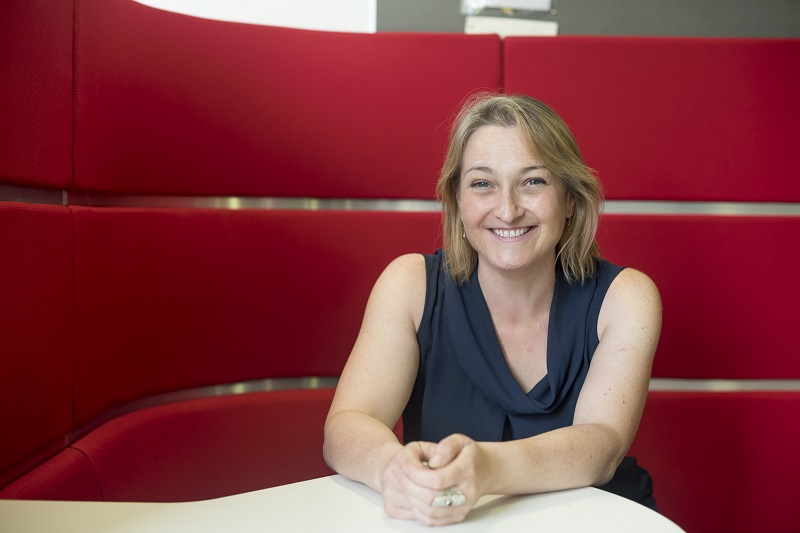 WMG Associate Professor, and MSc Service Management and Design Course Director, Mairi Macintyre and her students presented ‘COVID 19 - Lessons for the Service Professional’ at the prestigious international INFORMS Conference on Service Science (ICSS2021).
The research was based on insights taken from a series of special online seminars, at the height of the pandemic, hosted by Mairi. The series line-up included experts from a mix of sectors including aerospace, engineering, entertainment, energy, finance, travel and education. Companies represented included Rolls Royce UK, Innovate UK, Hong Kong Disneyland, National Grid, and many more.
The experts shared their insights and experiences of crisis management including their responses to the COVID19 pandemic, and predictions and challenges for the recovery period.
The students then analysed these insights to identify shifting priorities for the service professional, before presenting the findings at the Service Marketing stream at ICSS2021.
Mairi explained: “Congratulations to all researchers involved. To achieve publication at this prestigious conference is a real achievement. The students approached the tasks each week diligently, and with the commitment required to carry out first class research of publishable quality without the opportunity to ever meet in person. It is a fantastic accomplishment and one that we can all learn from.”
The students have also submitted their research to an international education conference taking place in Autumn 2021.
The students working in partnership with Mairi were S. Street; Y. Chen; H. Gao; H. Liu; R. Lu; J. Ma; Z. Meng; Y. Pan; L. Samuel; Y-H. Tsai; S. Wang; Y. Wei; W-K-E. Wong; X. Wu; X. Yang; Y. Yang; B. Zhan; X. Zhang and Y. Zhang.
Find out more about the MSc Service Management and Design (SMD) here: MSc Service Management and Design | University of Warwick
Three RIBA award wins for the Prof. Lord Bhattacharyya building
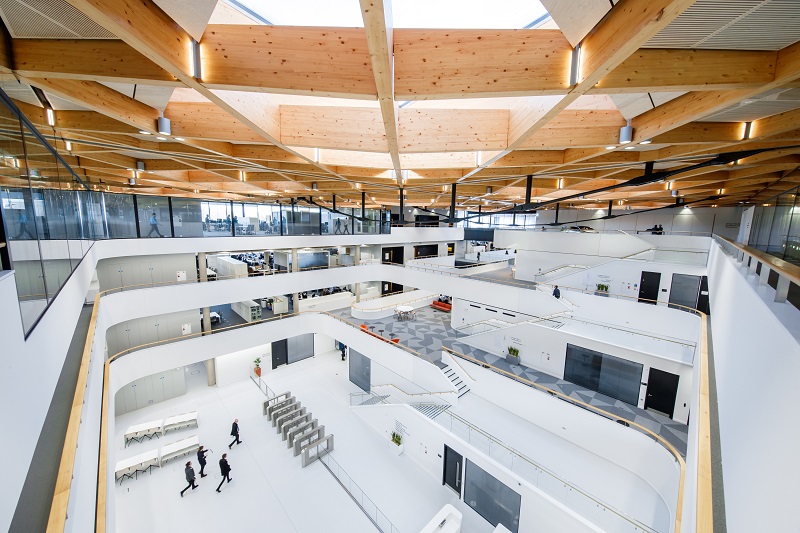 The Prof. Lord Bhattacharyya building, home to the National Automotive Innovation Centre, based at the University of Warwick, has received an impressive three awards at the RIBA West Midlands regional awards.
The building scooped top spot for Building of the Year, Client of the Year and the Regional Award, beating off stiff competition from across the West Midlands.
The RIBA awards champion and celebrate the best architecture in the UK and around the world, no matter the form, size or budget.
Executive Chair of WMG, Margot James comments: “I’m thrilled that the Prof. Lord Bhattacharyya Building has been recognised in this way, it is a great tribute to the late Professor Lord Bhattacharyya’s vision. Having a building that inspires designers, engineers and academics to develop the next generation of transport is excellent news for our partners and the region. The Midlands is the beating heart of automotive in the UK, and the National Automotive Innovation Centre, will be the driving force behind future innovation in transport mobility.”
James Breckon, Director of Estates, at the University of Warwick, comments: “It is great to see this new building being recognised and is testament to the wealth of architectural and engineering talent that was brought together to deliver this exemplary sustainable building. It brilliantly draws Industry and Academia together providing an inspirational environment to innovative within. As a landmark building it has transformed the campus at the University of Warwick and is a fitting legacy to the late Prof Lord Bhattacharyya.
The National Automotive Innovation Centre is a partnership between WMG, University of Warwick, Jaguar Land Rover, and Tata Motors, and is the largest of its kind in Europe and is well timed, arriving when a global mobility revolution is underway, with a new age for transport mobility.
A beacon for automotive research it brings together the brightest minds from industry and academia, to develop future vehicles and mobility solutions. It is home to up to 1,000 staff working across design, engineering and research, as well as future engineers on degree programmes.
Designed by Cullinan Studios the brief for the Centre was for simplicity and strength of purpose, turning a complex assembly of spaces into an immediately legible building.
The National Automotive Innovation Centre is a £150m investment between WMG, Jaguar Land Rover, and Tata Motors with £29.5m funding from the UK government’s UK Research Partnership Investment Fund through Research England, which includes the development of an Advanced Propulsion Research Laboratory.
You can see all of the 2021 West Midlands RIBA award winners here: https://www.architecture.com/awards-and-competitions-landing-page/awards/riba-regional-awards/riba-west-midlands-award-winners
Bringing battery research to life at Our Future Moves
WMG is proud to play a part in the Our Future Moves exhibition at the Coventry Transport Museum.
The interactive exhibition tells the stories of the objects on display by envisioning how future cities may look and explores how pioneering developments in transport and technology could affect the environment and the way we live.
It features a range of exhibits that highlight the region’s pioneering work in transport innovation – from autonomous vehicles to one-person submarines.
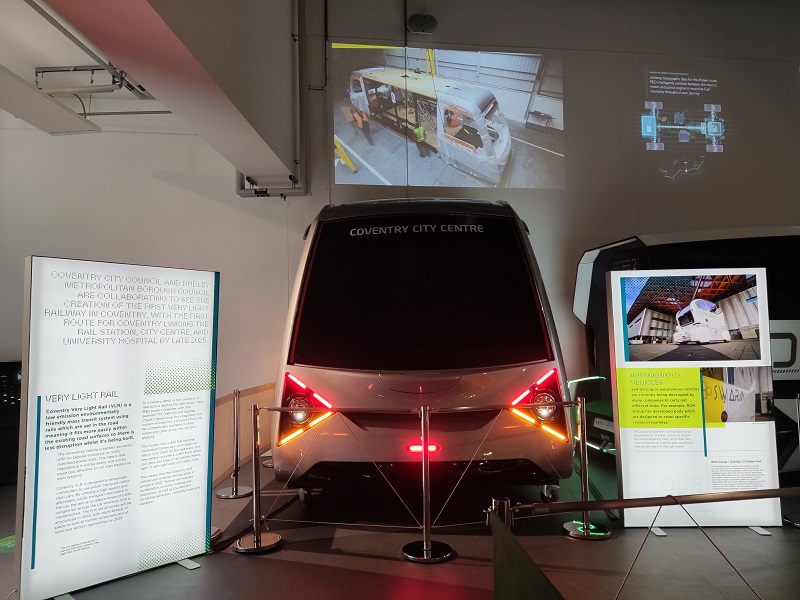 As well as showcasing the Coventry Very Light Rail Project, engineers from WMG’s Automation Systems Group have also created a display using a UR5 collaborative robot, or cobot, to show and explain how automation plays an important part in battery assembly and manufacturing.
The cobot, which is the centrepiece of the display, was the brainchild of WMG Project Engineer Rohin Titmarsh. After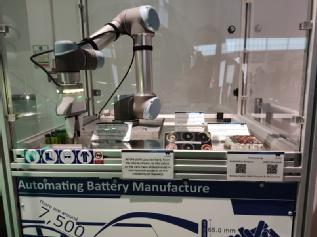 working on AMPLIFII , a research project which delivered novel and leading designs for high power and high energy modules, along with the manufacturing methods to deliver them to medium volume production, Rohin started to investigate ways to bring the project to life for a younger audience. The team collaborated with Schunk, suppliers of gripping systems for industrial robots, who have generously loaned a gripper to the team for use in this exhibition, highlighting WMG’s strength in industry and breath of partners we work with.
Rohin explains: “This project is a shining example of the fantastic ability we have between our research and technical teams, to help bring projects to life. I am very appreciative of the support of Engineering Technician, Bethany Haynes, and thankful to Phil Jemmett and Margaret Low in the Outreach Team for the opportunity and assistance to develop this extension of the ‘Battery Builder’ activity.
“It is always important to explain why automation is crucial in producing the number of batteries we need for the future. The ‘Battery Builder’ activity does that for school students by introducing robots in manufacturing, why we use them and some basics about programming them. The gamification of this activity means we’re communicating the key points about our research in a fun and engaging way. Being able to have a real cobot running in the museum is a fabulous example of modern day engineering and in turn a great way to inspire the next generation of young engineers
“We look forward to working with Schunk and other partners in the future on more exciting and innovative uses for cobots.”
Our Future Moves runs until 31st October 2021 - find out more here: Our Future Moves - Coventry Transport Museum (transport-museum.com)
Mayor opens Ramfoam’s new headquarters as company embraces digital thanks to WMG, University of Warwick
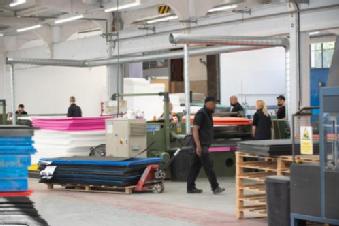
One of the first companies to sign up to a programme to improve the digital capabilities of smaller businesses has officially opened its new company headquarters and factory in Sandwell.
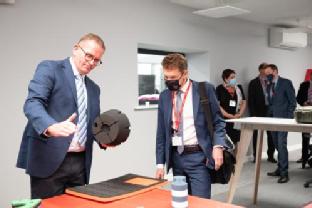
Andy Street, Mayor of the West Midlands and chair of the West Midlands Combined Authority (WMCA) cut the ribbon at Ramfoam’s new site on Haigne Road, Tividale which will see the business increase in size by 50 per cent.
Ramfoam, which makes foam products for the military and other organisations, was one of the first businesses to sign up to the West Midlands Made Smarter programme which is aimed at increasing the number of small and medium-sized enterprises (SMEs) adopting digital technology in manufacturing. Last year Ramfoam adapted its manufacturing practices to produce two million face visors a week at the height of the COVID-19 pandemic.
Made Smarter, which was officially launched in June, is headed up by the WMCA and the Department for Business, Energy and Industrial Strategy (BEIS).
Andy Street, the Mayor of the West Midlands said: “The West Midlands is a shining light for UK innovation, and that has become even more apparent throughout the pandemic.
 “That’s why, in partnership with BEIS, we set up the Made Smarter programme to help SMEs really make the most of our region’s digital capabilities.
“It is therefore brilliant to see companies like Ramfoam not only taking part in the programme, but also the transformative effective it has had with their new expansion. The more companies that prosper like Ramfoam, the more jobs we’ll be able to create for local people.”
So far 85 companies have asked to join Made Smarter West Midlands and 58 have started the first stages of the programme. The year-long £1.9 million programme will see digital experts provide advice to businesses - like Ramfoam - on how to switch to advanced and automated technologies as well as working to improve employees’ overall digital skills.
Tim Mulqueen, Ramfoam’s sales director, said: “The Made Smarter programme is greatly assisting SMEs with their invaluable experience. Ramfoam is now actively working with Made Smarter to apply digital technologies to our business that will enable us to manufacture smarter and improve our efficiency, and in turn generate growth.
“I believe all West Midlands SME businesses could greatly benefit from support through Made Smarter; we all as SMEs need to challenge the way we do things in order to continuously improve and innovate.”
Ramfoam was helped by WMG at the University of Warwick to scale up production from 100,000 to two million face visors a week for the Government at the height of the pandemic.
 By creating a digital twin (a virtual model) Ramfoam was able to make 54 million visors over the last year. The company also signed up for WMG’s help to creating digital visualisation of its new factory, and now, as one of the first participants in Made Smarter West Midlands, will benefit from further assistance in adopting digital technology further.
Dr Mark Swift, head of SME programmes at WMG, University of Warwick commented:
“The pandemic was a tough time for any business, and being able to flourish during it is certainly an achievement that Ramfoam has been able to do. We thoroughly enjoyed helping them drive up productivity and look forward to helping to transform Ramfoam further.
“It is incredibly exciting to see a West Midlands manufacturer doing so well, and we hope that more businesses will sign up to Made Smarter and continue to make the West Midlands a thriving manufacturing hub.”
The Coventry and Warwickshire Local Enterprise Partnership (CWLEP) Growth Hub is leading the one-year Made Smarter scheme with the region’s other Growth Hubs in Greater Birmingham and Solihull, the Black Country, Worcestershire, The Marches, and Stoke-on-Trent and Staffordshire on behalf of the WMCA and BEIS. The Growth Hubs are working closely with the WMCA and their strategic partners WMG, at the University of Warwick, and the Manufacturing Technology Centre (MTC) in Coventry.
Craig Humphrey, managing director of the CWLEP Growth Hub, said Ramfoam is a great example of a company best placed to take advantage of the Made Smarter scheme.
He said: “It’s fantastic that Ramfoam is one of the first firms to become part of the Made Smarter programme here in the West Midlands. It will help firms like Ramfoam develop innovative technology for the benefit of the region, as well as adopting new technology themselves to improve efficiency.
“Made Smarter will enable SMEs across the West Midlands receive the specialist support they need to embrace digital technology, and we are looking forward to more companies applying to Made Smarter and following in Ramfoam’s footsteps.”
Cllr Ian Brookfield, WMCA portfolio lead for economy and leader of City of Wolverhampton Council, said: “SMEs have felt the effects of the pandemic and have had to adapt to different ways of working as demonstrated by Ramfoam.
“Improved digital expertise gained through Made Smarter can help the region’s SMEs future-proof their practices, contributing to the economic prosperity of the region.”
To find out more about Made Smarter visit https://www.cwgrowthhub.co.uk/made-smarter-west-midlands
Synthetic diamond and AI research at Warwick to shine in new industry partnerships
§ University of Warwick is involved in two Prosperity Partnerships that will bring together expertise and insight from academia, business and industry
§ Researchers in the Departments of Physics, Chemistry and Engineering will work with Element Six on establishing a synthetic diamond supply chain to help develop new diamond-enabled technologies
§ Researchers from the Department of Computer Science and WMG at the University of Warwick involved in developing a Framework for responsible adoption of Artificial Intelligence in the financial services industry
Projects that will combine the expertise and insight of University of Warwick researchers with that of business and industry to further developments in diamond-enabled technologies and to develop a Framework for responsible adoption of Artificial Intelligence in the financial services industry have received national funding.
They are announced today (22 July) among eight business-led Prosperity Partnerships in support of the government’s ambitious new Innovation Strategy.
They are supported with an investment of almost £60 million by the Engineering and Physical Sciences Research Council (EPSRC), part of UK Research and Innovation (UKRI), businesses and universities.
Prosperity Partnerships build on existing UK strengths in industry and academia to develop new technologies, processes, and skills that will deliver economic growth and create jobs across the UK.
At the University of Warwick, researchers will establish a supply chain of synthetic diamonds to help develop new technologies, as well as developing a Framework for responsible adoption of Artificial Intelligence in the financial services industry, in projects that will see them collaborate closely with business and industry.
Diamond is one of the most versatile materials on earth, with applications in thermal, optical, sensing, electrochemistry and quantum.
The world we live in today presents a variety of technical challenges, each associated to different industrial applications, such as thermal management bottlenecks in internet and telecommunication infrastructures, as well as industrial wastewater management and disposal. Over the last few years’ diamond has been recognised as a reliable solution in many of these fields, while also unlocking novel applications in quantum technology as well as material machining and welding using high power lasers.
The £5.2 million project, a partnership between the Departments of Physics, Chemistry and Engineering at the University of Warwick and Element Six, aims to establish a supply chain for these vital technologies, which will help researchers and businesses to capitalise on the potential of high quality, engineered synthetic diamonds to deliver new, disruptive solutions across a range of industries, including semiconductors, water technology and quantum.
Professor Mark Newton, of the University of Warwick Department of Physics, said: “The project outcomes will include new materials with improved and tailored properties, new science enabled by enhanced properties and the ability to manufacture innovative diamond devices.”
Dr Daniel Twitchen, Chief Technologist at Element Six said: “Leveraging nearly 20 years of successful collaboration, ranging from fundamental science to commercialised applications, our partnership with the University of Warwick aims to build on the UK’s world-leading role in this field, alongside Element Six’s renowned expertise and capabilities in advanced material solutions, to develop the next generation of diamond-enabled technologies.”
Researchers from WMG at the University of Warwick and the Department of Computer Science are also involved in a project that will see The Alan Turing Institute, HSBC, and other organisations in the financial sector, developing a Framework for responsible adoption of Artificial Intelligence in the financial services industry (FAIR).
This Prosperity Partnership project aims to develop the trustworthy, data-driven AI decision-making approaches that are needed for the wider adoption of these technologies in the financial and professional services sector, which employs 2.2 million people and has an estimated total value of £190 billion. The University will lead the work on security and privacy issues in AI deployment in financial services. Professor Carsten Maple leads the EPSRC-NCSC Academic Centre of Excellence in Cyber Security Research and is a member of the Royal Society working group on Privacy Enhancing Technologies and Professor Graham Cormode is Fellow of the ACM and an award winning researcher for his work in privacy and data analytics.
Professor Maple said: “With the increasing deployment of AI it is vital that the systems and their inferences are secure and respect the privacy needs of citizens and businesses. We are proud to work with such an outstanding group of researchers and organisations to deliver a project that provides the fundamental research that can transform the sector and place the UK at the global forefront.”
EPSRC Executive Chair Professor Dame Lynn Gladden said: “Artificial intelligence, digital chemistry and digital twins are some of the new and transformative technologies that will help to drive the Net Zero revolution, address major societal challenges, and deliver prosperity to the UK.
“By bringing together UK businesses and universities, these new Prosperity Partnerships will generate the knowledge and innovations that will enable these cutting-edge technologies to realise their transformative potential across a diverse range of sectors.”
§ Read the EPSRC’s press release at: https://www.ukri.org/news/intelligent-road-repairs-among-eight-new-prosperity-partnerships/
Ends
Notes to editors:
Image for the Element Six/University of Warwick diamond project available at: https://warwick.ac.uk/services/communications/medialibrary/images/july_2021/prosperity-partnership.jpg

Caption: Laser light shining through Element Six’s NV diamond – Copyright of Element Six
Project summaries:
Element Six and University of Warwick
Diamond is the epitome of a multi-functional material with applications in thermal management, optical transmission, electrochemistry, and quantum technologies. Engineered synthetic diamonds offer an extraordinary combination of extreme properties and are capable of meeting the needs of the most demanding of applications in these diverse fields. The partnership aims to build on the UK’s world-leading role in diamond growth and exploitation to develop diamond solutions in areas where conventional materials are increasingly unable to meet the performance levels required by new technologies. We will establish a UK diamond technology supply chain which will help researchers and businesses to capitalise on the potential of high quality, tailor-made synthetic diamonds to develop next-generation solutions to real-world challenges.
HSBC and The Alan Turing Institute
AI technologies have the potential to unlock significant growth for the UK financial services sector through:
§ novel personalised products and services
§ improved cost-efficiency
§ increased consumer confidence
§ more effective management of financial, systemic, and security risks.
The partnership aims to develop the trustworthy, data-driven AI decision-making approaches that are needed for the wider adoption of these technologies.
It aims to address challenges such as how to increase the accuracy of predictive models without threatening fair treatment of all customers or improving transparency without leaving systems open to external threats.
It aims to outline how the finance sector can make the transformational shift to the greater use of AI technologies and ensure that these technologies have fairness, security and accountability at their heart. Whilst also, being robust and aware of privacy.
22 July 2021
WMG Graduation time!
Congratulations to all of the brilliant WMG students on their graduation.

This year a total of 406 Master’s, Postgraduate Research and Undergraduate students graduated from across WMG.
There were 302 Master’s students made up of 279 UK and overseas full-time students, and a further 23, from the part-time Master’s programme.
From the Undergraduate courses, 17 graduated from Cyber Security and 74 from the Applied Engineering Programme (AEP).
There were a further 13 from the Postgraduate Research programme including three EngD, eight PhD, one McPhil and one Master’s by Research.
A virtual results celebration will be held today (21st July) with official graduation ceremony expected to take place in summer 2022.
Professor Robin Clark, Dean of WMG and Director of Education, said: “It has been another incredibly difficult year for our students, but they have all risen to the challenge very well and achieved some fantastic results.
“Congratulations to you all, celebrate safely, and I wish you all the very best in your future careers.”
Read more about all WMG courses here: Education (warwick.ac.uk)