
WMG News - Latest news from WMG
WMG PhD student attends prestigious Global Young Scientists Summit
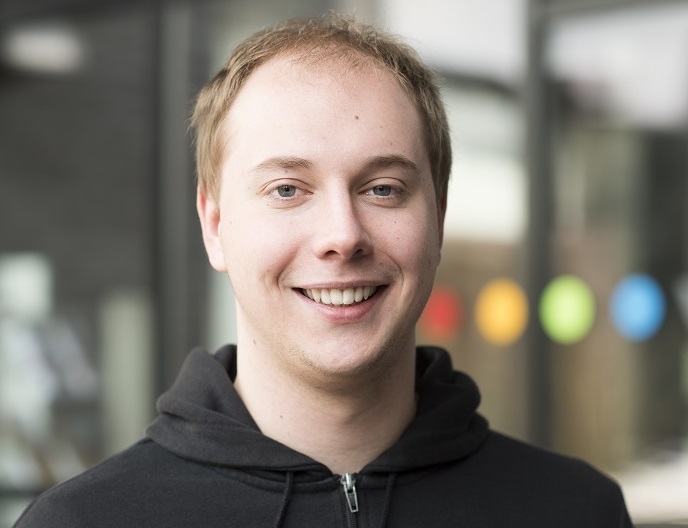 WMG PhD student Chris Ellingford has been selected to attend the 8th Global Young Scientists Summit (GYSS) in Singapore from 14 to 17 January 2020.
Chris was one of only 300 participants, from across the world, and one of only five from the University of Warwick invited to attend.
GYSS gathers young researchers and scientists from across the world to encourage them to pursue their scientific ambitions. They have the chance to network with peers, as well as distinguished scientists and researchers.
The theme for this year’s event is "Advancing Science, Creating Technologies for a Better World,” with an impressive line-up of speakers including recipients of the Nobel Prize, Fields Medal, Millennium Technology Prize and Turing Award.
At GYSS Chris, as one of only 100 participants selected, will present at the poster session, and take part in lectures and panel discussions, and have the opportunity to interact with speakers in informal small group sessions. Outside of the Summit, Chris will also have the chance to visit local universities and research centres to learn more about Singapore’s research and innovation ecosystem.
Chris is currently in the 4th year of his Research Degree at WMG. He is based within the Nanocomposites team investigating "Self-healing Elastomeric Nanocomposites for Actuation and Energy Harvesting."
Charging ahead at Battery School
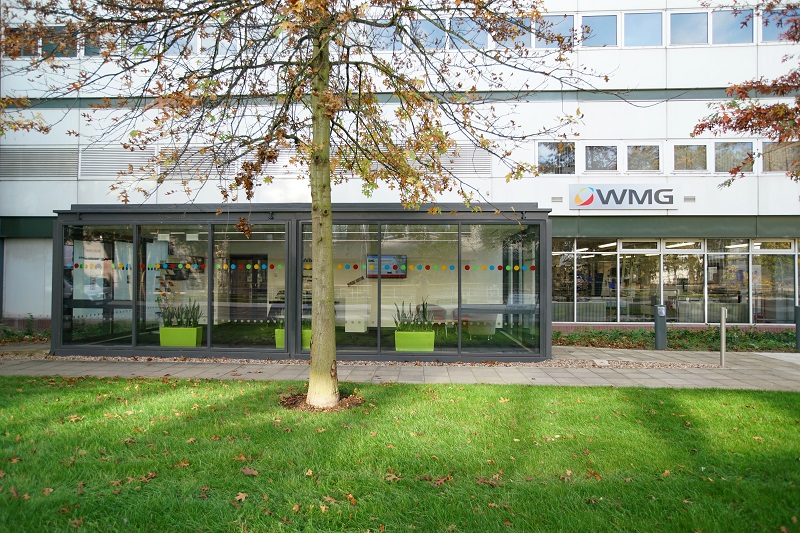 WMG is running a special three-day Battery School at its Energy Innovation Centre from 17-19 February 2020 for industry personnel.
WMG battery experts will facilitate a mix of lectures and practical hands-on-sessions, with the intention of inspiring the next generation of engineers into battery related careers, crucial for the UK’s electrification sector.
The lectures will cover areas including manufacturing Lithium batteries, module and pack design, electrical testing and ageing, battery management systems, safety and abuse testing, forensic characterisation and battery end of life.
Meanwhile the practical lab sessions will focus on microscopy; electrode mixing and coating; pouch and cylindrical cell fabrication; cell and module testing; and forensics.
Find out more and book your place here.
Ho ho ho! Merry Stitchmas!
WMG’s Outreach team was pleased to play a part in the University of Warwick’s Winter Wonderland Family Day early this month.
The Team put together a series of STEM activities each with a special festive twist including:
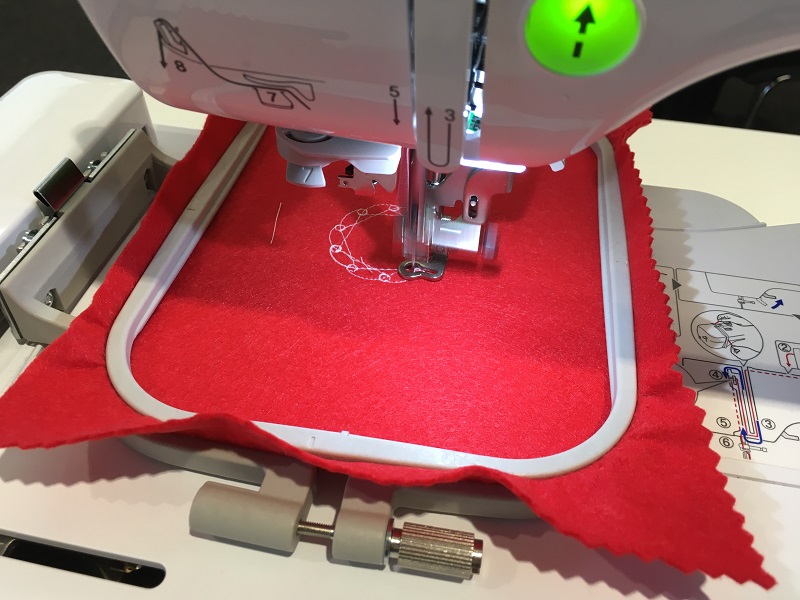 Merry Stitchmas: software and control
Professor Margaret Low and Helen Luckhurst hosted a festive craft drop-in session introducing the public to coding in a creative context, with children and their families used Turtlestitch to write a computer program. This was then inputted into WMG’s digital embroidery machine. They watched the machine stitch their designs onto felt, then cut them out and added a loop of string to make tree decorations.
X-Peri-Mas
There’s never a better time to tinker with some science and engineering than over the Christmas holidays. Everyone is inside and there’s plenty of things in the kitchen cupboards to raid for experiments.
Phil Jemmett put on a show of science and engineering tricks that young people could recreate at home over the Christmas holidays. Volunteers learned how to do tricks like making a rainbow pattern on a water surface, creating a tornado in a bottle, turning a jar full of water upside down without a lid and (usually) without making a mess, and how to do rocket science with fuel from the kitchen.
Miniature Race Track
Staff from the WMG Graduate Development Scheme gave children and their families an introduction to autonomous technology with children guiding their driverless vehicles around a festive miniature racetrack. The vehicle was a self-driving reindeer robot pulling a 3D-printed sleigh that the children had decorated. They were given an insight into the technology inside autonomous vehicles and how they worked, exploring how objects were identified and tackling winter driving scenarios.
Find out more about WMG’s Outreach activities here.
WMG Professor appointed Director of the Institute of Digital Healthcare
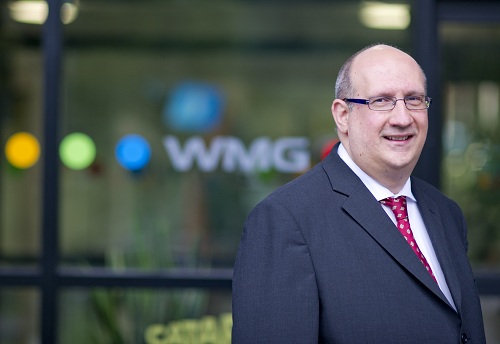 Professor Theo Arvanitis has been appointed as the new Director of the Institute of Digital Healthcare (IDH), at WMG.
Professor Arvanitis takes over the new role replacing Professor Sudhesh Kumar from Warwick Medical School.
He joined WMG in 2007, as a Professor of e-Health Innovation and Head of Research in IDH, and his research interests span the areas of biomedical engineering, neuroimaging and health informatics.
Professor Arvanitis will manage his new role alongside his current research responsibilities within WMG. He will be supported by a new IDH Advisory Board which will be appointed in the new year.
WMG Professor takes on new role as Deputy PVC (Research) for Knowledge Exchange and Partnerships
Professor Kerry Kirwan has been appointed as the new Deputy Pro-Vice Chancellor (Research) for Knowledge Exchange and Partnerships, for the University of Warwick.
Knowledge exchange, industry partnerships and innovation are key components of much of the University’s research, with Professor Kirwan appointed to support this growing area.
Kerry, a Professor at WMG is also a Director of the £11m EPSRC Centre for Doctoral Training in Sustainable Materials and Manufacturing (EngD), Strategic Director of the £10m Industrial Doctorate Centre and Head of WMG’s Sustainable Materials and Manufacturing Research Group. He also sits on the University’s Research Executive Group.
Professor Kirwan is actively involved in the newly emerging Knowledge Exchange Framework programme, Monash-Warwick Alliance, Warwick in Europe, the Global Challenges Research Fund, Midlands Innovation, Energy Research Accelerator (ERA) and the Innovative Manufacturing and Future Materials GRP.
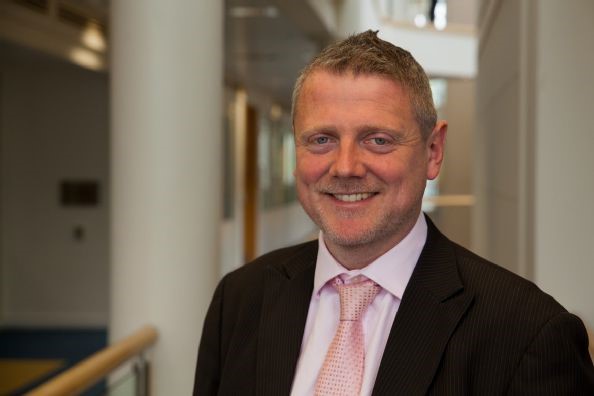 Speaking about his new appointment, Professor Kirwan said: “I am delighted to take up this position and very much look forward to continuing to work with the Pro-Vice Chancellor for Research to ensure we continue to grow our knowledge exchange, innovation and business and industry partnerships, and ultimately advance the outstanding research achievements of the University.”
Professor Pam Thomas, Pro-Vice Chancellor (Research), commented: “Professor Kirwan will play a critical role and his skills and experience will be instrumental in furthering the development of Warwick as a leading research-intensive University with strong industry partnerships – locally, nationally and globally.”
Car batteries can be frozen for safer transportation
Currently transporting damaged and defective car batteries is an expensive process as they need to be placed in an explosion proof box which costs thousands of pounds, however researchers from WMG at the University of Warwick in collaboration with Jaguar Land Rover engineers have been able to freeze batteries with Liquid Nitrogen.
An explosion proof box to transport a typical Tesla sized battery costs €10,000 and a further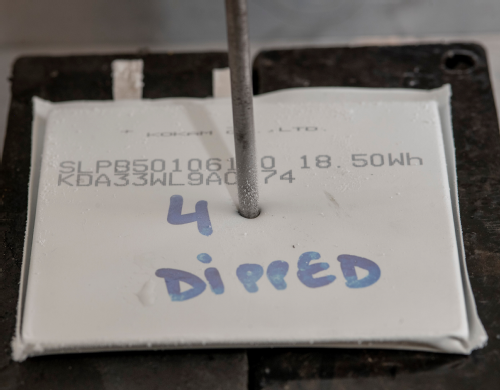 €10,000 for the UN accreditation, however, the ability to transport them in plastic containers which cost a couple of hundred pounds has been made more accessible thanks to researchers from WMG at the University of Warwick.
In the paper, ‘Cycle life of lithium ion batteries after flash cryogenic freezing’ published in the Journal of Energy Storage, researchers highlight that cryogenic freezing does not reduce lithium ion battery’s energy capacity or affect cycle or service life, and could be transported in a safer way.
As the sales of electric vehicles increases, there is more concern for the transportation of damaged and defective lithium ion battery packs. Currently, it is an expensive process, as they are put in an explosion proof box that costs €10,000 and a further €10,000 for the UN accreditation, which EV manufacturers are picking up the bill for.
Explosion boxes are used to contain the battery in case it goes into thermal runway, an overheating condition which can lead to violent explosions and toxic gases being released. However being able to cryogenically flash freeze the batteries completely removes the risk of an explosion, and could therefore mean they can be transported safely in a plastic box.
Researchers who were part of the ELEVATE project funded by EPSRC, WMG Centre High Value Manufacturing Catapult, and 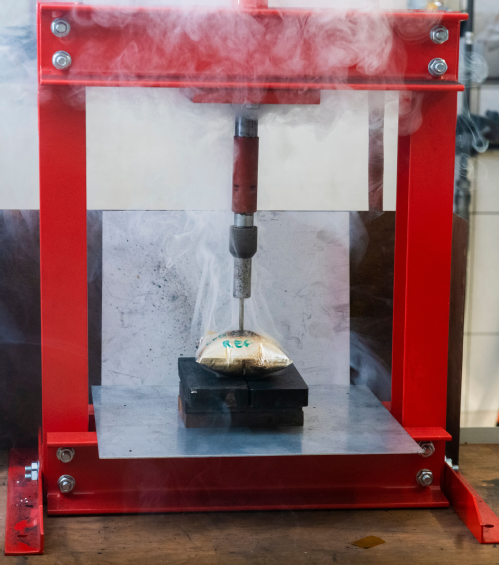 supported by Jaguar Land Rover tested the batteries activity before they froze cells with liquid nitrogen and after, they also drove nails through the frozen cell to test the safety of them, and managed to show that their performance was not effected after freezing.
When being transported batteries will have to be kept in a lorry at -35 degrees, however the amount of packaging is significantly less than explosion proof boxes, making the process more sustainable.
Dr Thomas Grandjean from WMG, at the University of Warwick comments:
“Transporting damaged and defective batteries is an expensive and unsustainable process, however being able to freeze them with liquid nitrogen could save thousands of pounds and help electric vehicle manufacturers be more sustainable.
“We tested the batteries in the most extreme abuse conditions, such as driving nails through the cells and inducing external short circuits, proving that the freezing process is effective and safe.”
ENDS
2 DECEMBER 2019
NOTES TO EDITORS
High-res images available credit to WMG University of Warwick at:
https://warwick.ac.uk/services/communications/medialibrary/images/december2019/batts_3_.png
Caption: A frozen battery cell with a nail through it

https://warwick.ac.uk/services/communications/medialibrary/images/december2019/batts_5_.png
Caption: A frozen battery cell with a nail through it

https://warwick.ac.uk/services/communications/medialibrary/images/december2019/batts_7_.png
Caption: A room temperature cell with a nail through it exploding

https://warwick.ac.uk/services/communications/medialibrary/images/december2019/batts_6.png
Caption: A room temperature cell with a nail through it exploding

https://warwick.ac.uk/services/communications/medialibrary/images/december2019/batts_2_.png
Dr Thomas Grandjean from WMG, University of Warwick handling the battery cell frozen by liquid nitrogen

https://warwick.ac.uk/services/communications/medialibrary/images/december2019/untitled.png
Dr Thomas Grandjean from WMG, University of Warwick handling the battery cell frozen by liquid nitrogen

For further information please contact:
Alice Scott
Media Relations Manager – Science
University of Warwick
Tel: +44 (0) 2476 574 255 or + 44 (0) 7920 531 221
E-mail: alice.j.scott@warwick.ac.uk
WMG research development conference with North America focus
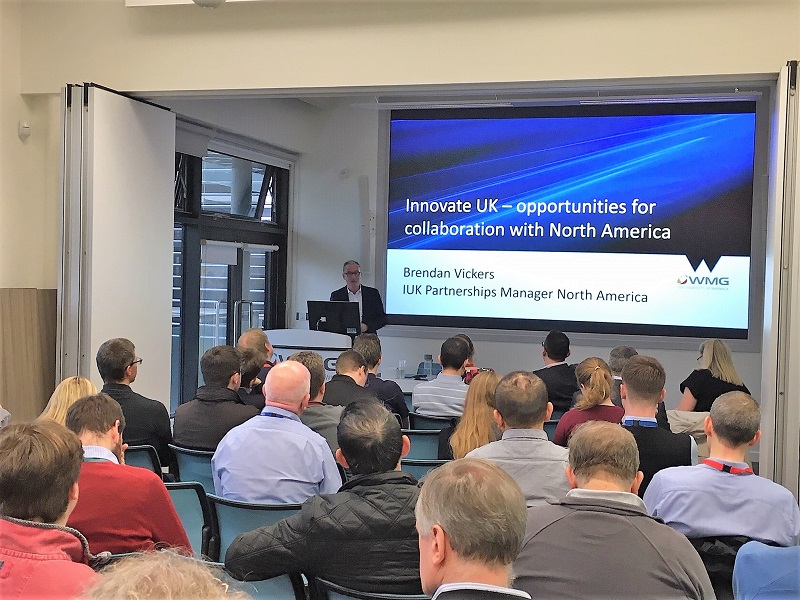 WMG’s Research Office hosted a conference for around 50 academics and researchers from across the University of Warwick’s Science Faculty, on Thursday (28th November).
The conference focused on research collaboration opportunities with North America, and considered various funding options to support increased engagement in this area.
Professor Carsten Maple, Deputy Pro Vice Chancellor at the University of Warwick charged with leading the strategy in North America, provided an overview of the University’s International Strategy, and Sarah Wilson from WMG’s Research Office shared insights from a recent visit to Washington DC.
The delegates then heard from Brendan Vickers, Innovate UK’s Partnership Manager for North America, who explained the Innovate UK structure and strategy, and gave an insight into potential future funding calls in this space.
Finally, invited academics shared their collaboration experiences. These included Darren Hughes who has previously conducted work at various US National Laboratories, Alon Ratner who recently visited NREL, Sandra Chapman who detailed the benefits of her Fulbright Scholarship to her space weather research, and Matthew Higgins, from WMG’s Intelligent Vehicles team, who explained more about the 5G Technology research project with National Instruments.
As one of the outcomes from the meeting, WMG will now be developing a special alumni newsletter specifically for WMG alumni based in North America who have a relationship with the University and are interested in building on this connection.
Department for Transport to give keynote address at WMG’s Very Light Rail Conference
On the 28th November 2019, Steve Berry OBE, Head of Highways Maintenance, Innovation, Resilience, Light Rail and Cableways at the UK Department of Transport will give the keynote address at the Very Light Rail Conference being held at The Slate on the University of Warwick’s campus. He will speak about the potential for Very Light Rail to transform local public transport.
Steve Berry will be joined by industry speakers and academics involved in developing very light rail, including local companies TDI and RDM. They will talk about three projects that are underway across the West Midlands, and discuss why the West Midlands is leading the way in VLR.
As the UK population continues to grow along with traffic congestion and vehicle emissions, new transport options are needed to create modal shift and encourage people to leave their cars at home.
At present buses and trams (light rail) provide alternatives to private cars, but bus patronage has been falling steadily for many years in contrast to tram ridership which has taken passengers out of their cars. However, tram routes are expensive to construct and can only be afforded by large city conurbations such as Birmingham. That said, Very Light Rail (VLR) may be a solution that medium sized cities could afford.
Very Light Rail is a lower cost, zero emission option for sustainable transport. The technology can be applied to branch lines as well as urban rail (trams). The Coventry VLR scheme aims to reduce the cost through the delivery of lightweight, battery electric vehicles combined with a novel track form, the first system of its kind in the world.
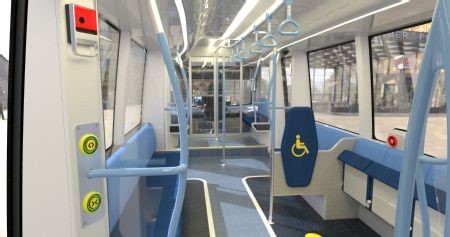 3D visualisations of the Coventry VLR vehicle were unveiled earlier this year. The lightweight vehicle is fabricated from a combination of steel, aluminium and composite components and will be capable of carrying 50 passengers.
Unlike traditional trams, the Coventry VLR system will not have overhead cables – the vehicle will be powered by an on-board battery which will be rapidly charged at the end of the route. The vehicles will run on a novel prefabricated track form which be easy to install into the road and remove, negating the need to utility companies to relocate their equipment (which is a significant cost in light rail tram solutions).
Currently the system is being designed to meet Coventry City’s needs, but it is expected other medium sized cities across the UK, such as Leicester and Derby, may follow in due course.
Dr Nick Mallinson from WMG, University of Warwick comments:
“At WMG we’ve been working on very light rail technology with a number of industry partners for 5 years. Progress achieved to date recently convinced the Department for Transport that the time is right for a conference to showcase the work and make local authorities, transport planners and industry aware of the potential for very light rail solutions”
To see the full agenda and register your interest in the event please fill out the form at: https://warwick.ac.uk/fac/sci/wmg/mediacentre/wmgevents/vlr/
ENDS
22 NOVEMBER 2019
NOTES TO EDITORS
High-res images available at:

Please credit the following images and videos to: WMG, University of Warwick
https://warwick.ac.uk/services/communications/medialibrary/images/november2019/9.jpeg

https://warwick.ac.uk/services/communications/medialibrary/images/november2019/3.jpeg

https://warwick.ac.uk/services/communications/medialibrary/images/november2019/6.jpeg

https://warwick.ac.uk/services/communications/medialibrary/images/november2019/7.jpeg

https://warwick.ac.uk/services/communications/medialibrary/images/november2019/8.jpeg

https://warwick.ac.uk/services/communications/medialibrary/images/november2019/11.jpeg

https://warwick.ac.uk/services/communications/medialibrary/images/november2019/1.jpeg

FOR FURTHER INFORMATION PLEASE CONTACT:
Alice Scott
Media Relations Manager – Science
University of Warwick
Tel: +44 (0) 2476 574 255 or +44 (0) 7920 531 221
E-mail: alice.j.scott@warwick.ac.uk
WMG Professor recognised by UK engineering institution
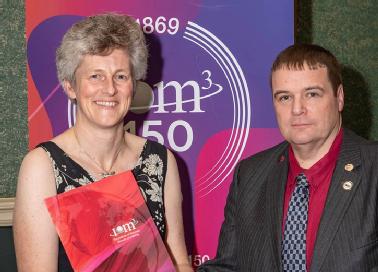 Congratulations to WMG Professor Claire Davis who has been awarded the prestigious Hadfield (Sir Robert Hadfield) Medal and Prize by The Institute of Materials, Minerals and Mining (IoM3).
Professor Davis was presented with the award in recognition of her exceptional contribution to the steel industry and its value chain.
The Hadfield Medal is widely recognised as a distinguished achievement in relation to metallurgical practice, process development, product development, metallurgical understanding or design engineering connected with iron and steel or associated industries.
Professor Davis holds the Royal Academy of Engineering / Tata Steel Chain in Low Energy Steel Processing at WMG. Her research focuses on the development of microstructure during processing and the relationships between microstructure and properties (both physical and mechanical) in steels.
Find out more about Professor Davis’s research here.
WMG welcomes NIST
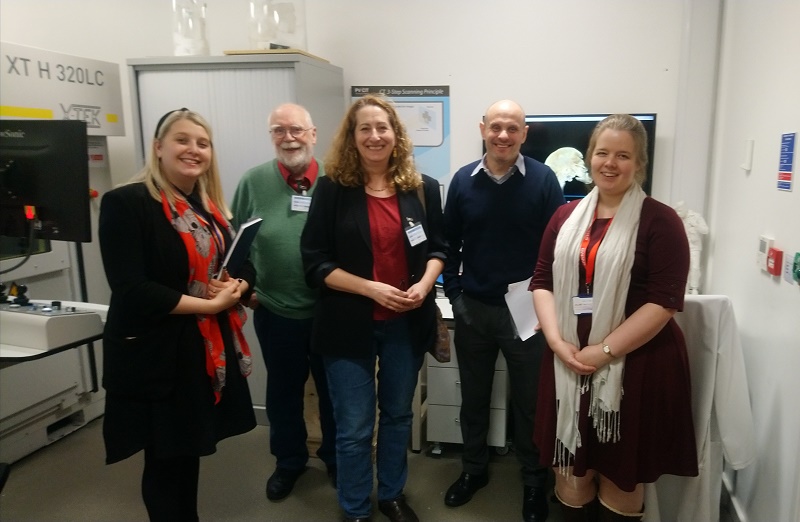 WMG was pleased to welcome visitors from the National Institute of Standards and Technology (NIST) recently. The visit came on the back of WMG’s Research Office’s engagement with NIST earlier this year.
The NIST is a physical sciences laboratory and a non-regulatory agency of the United States Department of Commerce. Its mission is to promote innovation and industrial competitiveness.
The visitors were welcomed by Professor Carsten Maple, Deputy Pro Vice Chancellor at the University of Warwick charged with leading the strategy in North America, and given a tour of WMG’s research facilities.
Associate Professor Jungong Han explained more about WMG’s Data Science research, and Professor Robert Harrison talked more about the current Automation projects.
Finally the visitors were shown WMG’s Forensic Centre for Digital Scanning and 3D printing, where Professor Mark Williams explained more about WMG’s work with West Midlands Police, and the use of digital prototyping tools and techniques to generate forensic evidence to support criminal investigations.
WMG’s research team is looking forward to exploring opportunities for collaborative research with the NIST in the future.