
WMG News - Latest news from WMG
Car component quality testing technology helps hip surgeons ensure prostheses bind to bones
Hip surgeons are making significant advances in designing hip replacement components using additive manufacturing (3D printing) but have been struggling to devise easy methods of testing the designs they have created without using destructive testing techniques. Now researchers in WMG at the University of Warwick have devised a way of examining and ensuring the quality of those designs without destructive testing using scanning techniques normally used to examine new component designs for high-end automotive manufacturing.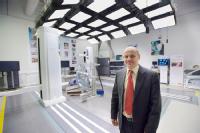
Successful surgical reconstruction or replacement of a joint (arthroplasty) requires integration of the prosthetic implant with the bone to replace the damaged joint. Surgeons therefore seek to use Bone-mimetic biomaterials for implants as their mechanical properties and porous structure can be designed to allow bone ingrowth and help fix the implant.
Young Alumni Achiever Award for WMG Principal Engineer
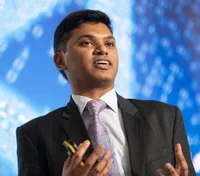 Principal Engineer Siddartha Khastgir has been presented with a prestigious Young Alumni Achiever Award from the Indian Institute of Technology (IIT) Kharagpur, India.
Siddartha graduated from IIT in 2011 before going on to complete a PhD at WMG, under the supervision of Professor Paul Jennings , on developing testing methodologies for ensuring the safety of autonomous vehicles. He is now a Principal Engineer within our Intelligent Vehicles capability.
Formula 1 driving simulation technology could help put the UK on the fast track to self-driving vehicles
A new research programme by WMG at the University of Warwick, and XPI Simulation, co-funded by Innovate UK, is examining the potential for applying the simulation technology used to train Formula 1® drivers for the testing and certification of autonomous vehicles. The market for such vehicles is expected to reach £52 billion by 2035, according to government figures.
The new research could dramatically reduce the time to market, helping manufacturers to achieve the UK government’s vision for self-driving vehicles to be operating on our roads as early as 2021.
Several manufacturers are already testing their vehicles on public roads, with mixed results. One of the problems is the volume and repeatability of testing. Carrying out such testing on controlled tracks or on-road presents significant cost and safety challenges – as well as requiring huge amounts of mileage to be driven to gather evidence.
Inspiring young engineers
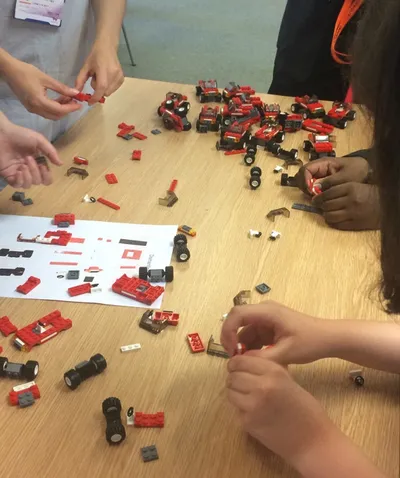 In June, we hosted a series of Insight into Engineering workshops for children from schools across Coventry and Warwickshire.
The children all took part in practical workshop activities including using Lego to create vehicles. Afterwards our staff, along with engineers from Jaguar Land Rover explained more about the career choices they had made and the variety of opportunities that a career in STEM can lead to. Dr Emma Rushforth also presented ‘Robots for Real’ exploring the use of robots in society.
The older children then enjoyed a tour of our engineering hall and Advanced Propulsion Centre (APC) showcase area, whilst the primary school pupils took the campus sculpture trail investigating the materials and techniques used to create them.
The Great Outdoors family fun
 Over the summer, our Outreach team took part in the Warwick Family Day organised by our colleagues at Warwick Arts Centre. The University hosted activities across campus and this year our team but put on a series of fun activities too.
This year’s theme was the Great Outdoors, and the children had a great time making pond slime, creating paper rockets, building Lego robots and using our virtual reality apparatus.
More than 3,500 families visited campus, and our team did a fantastic job helping to keep them all entertained. Our activities received some fantastic feedback including:
“WMG was the best bit” and “we loved the cricketers and all the stuff at WMG”.
It was a great day and we’re looking forward to playing our part again next year.

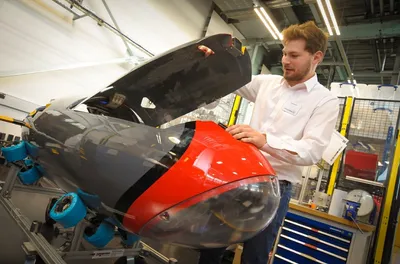
£100 million new funding for WMG’s work in the High Value Manufacturing Catapult – will help create the technologies of tomorrow
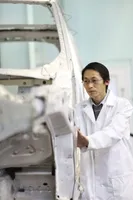 The Chancellor of the Exchequer, the RT Hon Philip Hammond MP has announced today (Friday 10th August 2018) that WMG, at the University of Warwick, has been awarded £100m in Government funding for WMG’s work in the High Value Manufacturing Catapult.
It forms part of a £780 million announcement of which £270.9 million has been awarded to the West Midlands (to WMG and MTC for their work in the High Value Manufacturing Catapult, and the Energy Systems Catapult in Birmingham).
New Director of Apprenticeships at WMG
 We are pleased to announce the appointment of Sue Parr as WMG’s new Director of Apprenticeships.
Sue joined WMG in December 2015 as a Business Development Director, tasked with developing our Professional and Executive Programmes, following 12 years at the Open University where she was Director of Executive Education.
Following the huge success of our Applied Engineering and Dyson degree programmes we are now extending our Degree Apprenticeship provision across engineering, digital, cyber security and healthcare.
Our Degree Apprenticeship programmes complement our existing academic and professional courses and enable us to contribute to regional and national employment needs and to enhance our students’ employability and skills. Crucially, they help widen access and participation by introducing alternative entry criteria, new flexible modes of study and new models of delivery.
Midlands based global doyens of darkness are LED into daylight
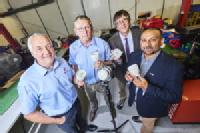 Tipton-based darkroom specialists Paterson Photographic Ltd have added daylight to darkness in their leading studio and theatre lighting equipment, thanks to LED technology support from WMG at the University of Warwick.
Having developed a global reputation for the quality of their darkroom equipment, they wanted to add to their product offering and re-enter the studio lighting market with a comprehensive range of Continuous Lighting units manufactured in their own UK factory.
Creating a studio lighting range that used LEDs with a colour temperature of 6000K (daylight) rather than the most common methods using fluorescent lighting would provide Paterson Photographic with a technological leap in their products.
The SME (Small and Medium Sized Enterprises) support team at WMG at the University of Warwick provided technical and research support allowing the company to launch the first batch of LED-based daylight products with bespoke coloured filters at the 2018 Photography Show at Birmingham’s NEC. The new products are expected to generate sales in six figures for Paterson over the next year.
Top European award for Dr Mortenson’s operational research paper
Dr Michael Mortenson’s research paper ‘Operational research from Taylorism to Terabytes: A research agenda for the analytics age’, has been awarded the Euro Award for the Best European Journal of Operational Research (EJOR) paper 2018, in the Review category.
EJOR publishes high quality, original papers that contribute to the methodology of operational research (OR) and to the practice of decision-making. It is widely considered to be the top European journal and within the top three worldwide, in this specific area.
Dr Mortenson is a Senior Teaching Fellow on our e-Business Management MSc programme, his paper identified a significant lack of research into analytics in operational research orientated publications charting the history of operational research, analytics and a range of related disciplines. His work also paves the way for future research combining key themes in analytics and operational research. The full paper can be found here
Dr Mortenson was presented with his award at the European Conference on Operational Research (EURO) in July.
Transport Minister visits WMG to launch Call for Evidence on the Future of Mobility and announce 6 research projects on autonomous vehicles
 Jesse Norman MP, Parliamentary Under Secretary of State for the Department for Transport, visited WMG today (Monday 30th July 2018) to launch the Government’s “Call for Evidence on the Future of Mobility”. He announced six Innovate UK funded autonomous vehicle research projects, saying:
“We are beginning to experience profound change in how we move people, goods and services around the UK’s cities, towns and countryside. The Future of Mobility Grand Challenge – part of the Government’s Industrial Strategy - aims to capitalise on the opportunities presented by these changes to help reduce emissions, improve safety and wellbeing and place the UK at the forefront of global transport innovation. The Call for Evidence will help inform this programme, and seeks views from a range of audiences right across the country.”
Two of the six research projects he announced involve WMG, at the University of Warwick, with a total of £4.1m in research funding from Innovate UK