
Recent books published by our department staff
Cartographies of Empire
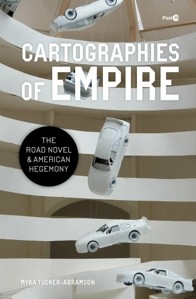
The Road Novel and American Hegemony
Myka Tucker-Abramson
The road novel is often dismissed as a mundane, nostalgic genre: Jack, Sal, and other tedious white men on the road trying to recapture an authentic youth and American past that never existed. Yet, new road novels appear every year, tackling unexpected questions and spanning new geographies, from Mexico, Brazil, Bulgaria, Palestine, Ukraine, and former-Yugoslavia. Why did the road novel emerge and why does it persist? What does it do and why has it traveled so widely?
Myka Tucker-Abramson draws from an archive of more than 140 global road novels from over twenty countries, challenging dominant conceptions of the road novel as primarily concerned with American experiences and subjectivities. Grounding her analysis in materialist theories of genre, world-ecology and commodity frontier frameworks, and post-45 American literary studies, Tucker-Abramson persuasively argues that the road novel is a genre specific to, coterminous with, and revealing of US hegemony's global trajectory. Shifting our focus from Americanness to the fraught geopolitics of US Empire, from the car to the built environment through which it moves, and from passengers to those left behind, Tucker-Abramson remaps the road novel, elucidating the genre's unique ability both to reveal the violent and vertiginous processes of capitalist modernization and to obfuscate these harsh truths through seductive narratives of individual success and failure.
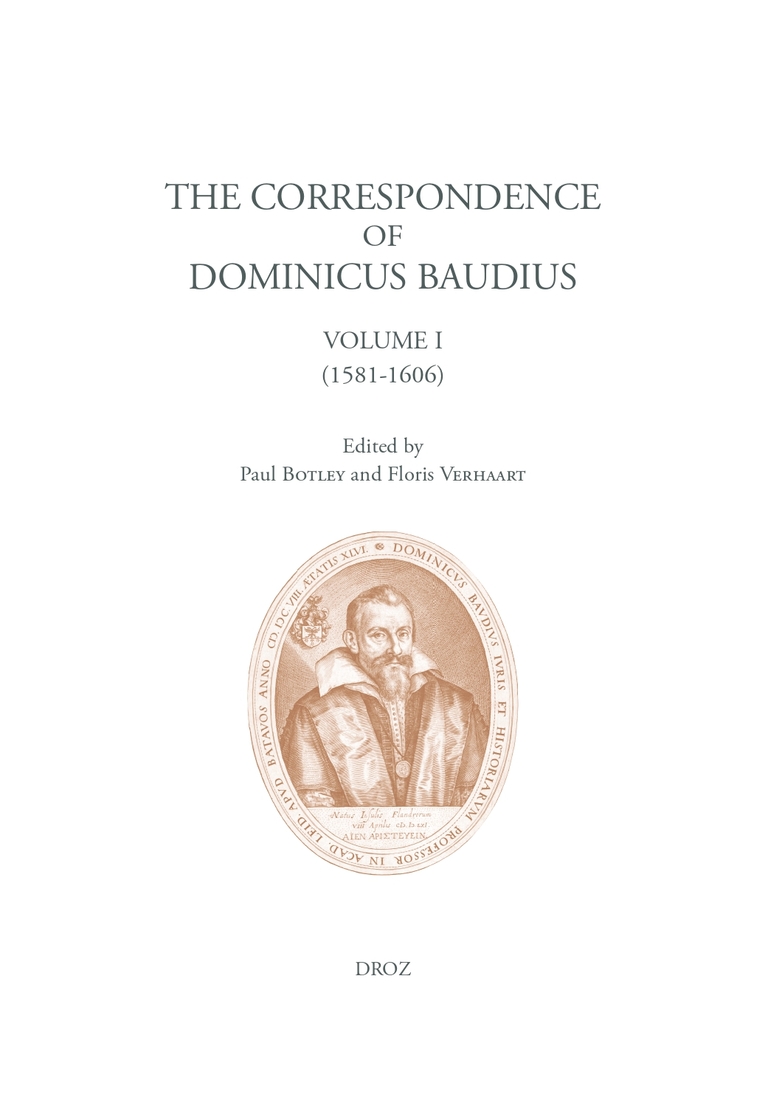
The Correspondence of Dominicus Baudius
Volume 1
Paul Botley
This is the first critical edition of the letters of the northern European poet, rhetorician and historian Dominicus Baudius (1561-1613). It contains 463 letters, many published here for the first time. Baudius' Latin correspondence was printed fourteen times between 1615 and 1662, making it one of the most widely read letter-collections of the seventeenth century, but his habitual frankness ensured that his printed letters were heavily censored. The present edition restores many missing passages, and it relegates the numerous conjectural supplements of seventeenth-century editors to the apparatus, where they can be studied as phenomena in their own right. Three-quarters of all the censorship which appeared in 1615 is reversed in the present edition, and much of what remains has been tentatively resolved. The restoration of the collection transforms a frustrating and sometimes misleading set of documents into a reliable and substantial source.
Crossings
Migrant Knowledges, Migrant Forms
Natalya Din-Kariuki
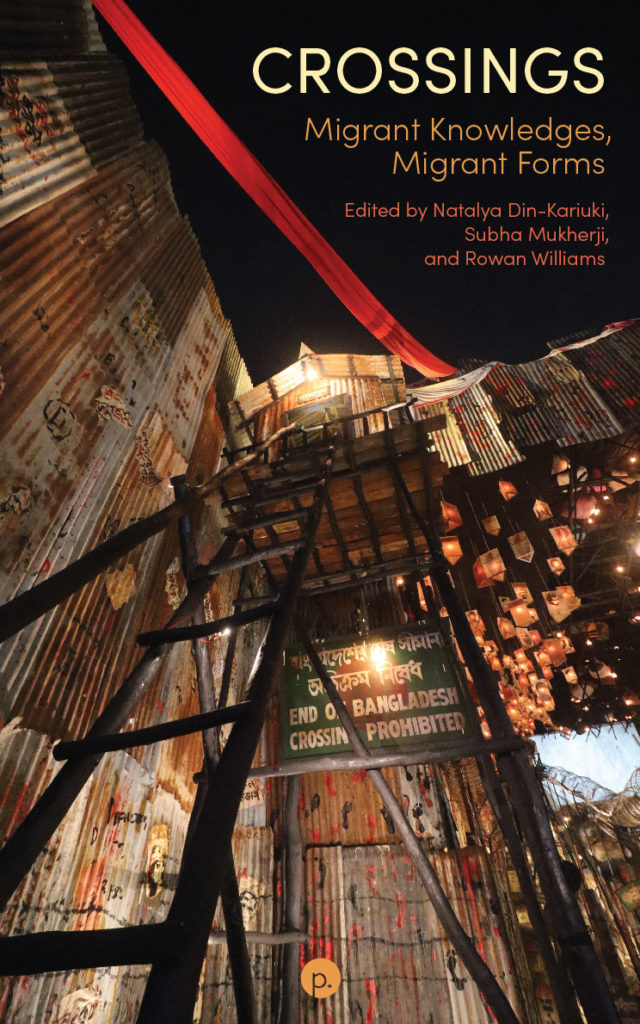
Crossings: Migrant Knowledges, Migrant Formsbrings together activists, artists, scholars, and migrants with diverse histories to explore what the experience of migration does with, and to, knowledge, and how its own ways of knowing find expressive form. As the volume’s authors think about physical and imaginative crossings, and the traversals and transactions of knowledge they entail, the book itself crosses and complicates disciplinary and formal boundaries and the barriers between critical and creative intervention. Crucially, it brings together voices and forms emerging out of the experience of dislocation with responses to the encounters it generates.
The volume’s discussions begin in the early modern world, and move freely across periods to dwell on the urgent experience of migrancy in our own times, while also responding to an urgent need to connect the local with the global experience of migrant knowledge and migrant aesthetics.Crossingsstakes the claim that creative art, backed by humanities-based thinking, can meet the imaginative and ethical demands that the unknowable reality of mass displacement places on us, in a way that governments, institutions, and public discourse have calamitously failed to do. But aesthetic practice itself needs to be re-positioned if it is to rise to these political and human challenges, negotiating the points of friction between its own predilections and the matter of migration.
Crossingsoffers “migrant forms” – art about migration, objects from migrant life shaped into artifacts, and migrant self-expressions – as the means of this imaginative re-orientation, and a tool for activating a radical alternative to economic models of social benefit. Crossingstakes its place in an emergent ecology of migrant forms, both speaking to and participating in that ecology.
This Distracted Globe
Attending to Distraction in Shakespeare's Theatre
Jen Edwards
This Element attends to attention drawn away. That the Globe is a 'distracted' space is a sentiment common to both Hamlet's original audience and attendees at the reconstructed theatre on London's Bankside. But what role does distraction play in this modern performance space? What do attitudes to 'distraction' reveal about how this theatre space asks and invites us to pay attention? Drawing on scholarly research, artist experience, and audience behaviour, This Distracted Globe considers the disruptive, affective, phenomenological, and generative potential of distraction in contemporary performance at the Globe.
Subscription Theater
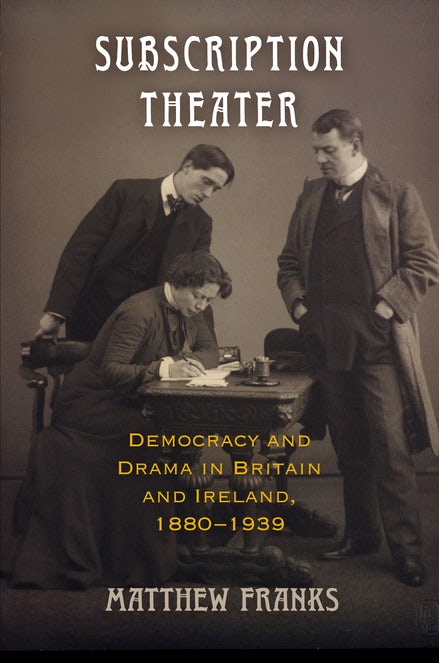
Democracy and Drama in Britain and Ireland, 1880-1939
Matt Franks
Subscription Theater asks why turn-of-the-century British and Irish citizens spent so much time, money, and effort adding their names to subscription lists. Shining a spotlight on private play-producing clubs, public repertory theaters, amateur drama groups, and theatrical magazines, Matthew Franks locates subscription theaters in a vast constellation of civic subscription initiatives, ranging from voluntary schools and workers' hospitals to soldiers' memorials and Diamond Jubilee funds. Across these enterprises, Franks argues, subscribers created their own spaces for performing social roles from which they had long been excluded. Whether by undermining the authority of the Lord Chamberlain's Examiner of Plays and London's commercial theater producers, or by extending rights to disenfranchised women and property-less men, a diverse cast of subscribers including typists, plumbers, and maids acted as political representatives for their fellow citizens, both inside the theater and far beyond it. Citizens prized a "democratic" or "representative" subscription list as an end in itself, and such lists set the stage for the eventual public subsidy of subscription endeavours.
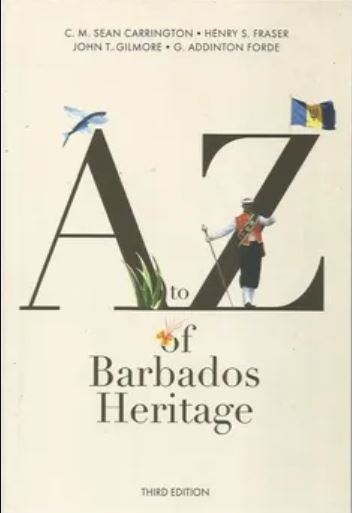
A to Z of Barbados Heritage
Third Edition
John Gilmore
This third edition of the A to Z of Barbados Heritage covers almost every aspect of the island from its geological birth, its colonisation by the indigenous peoples of the Caribbean, the arrival of Europeans and Africans and their transformation of this rock to a modern-day nation state.
It is an encyclopaedic introduction to our rich cultural heritage, from the indigenous flora and fauna to the unique architecture and historic artefacts, the forgotten games and the ‘immortal’ traditions and cuisine; the national heroes and the sporting heroes. In short, as the late literary icon John Wickham wrote of the first edition, it is a cultural vocabulary of a ‘Singular Island’. It’s completely revised with 40 new entries and magnificent photos.
The Cambridge Companion to American Horror
Mark Storey & Stephen Shapiro
Opening up the warm body of American Horror – through literature, film, TV, music, video games, and a host of other mediums – this book gathers the leading scholars in the field to dissect the gruesome histories and shocking forms of American life. Through a series of accessible and informed essays, moving from the seventeenth century to the present day, The Cambridge Companion to American Horror explores one of the liveliest and most progressive areas of contemporary culture. From slavery to censorship, from occult forces to monstrous beings, this book is essential reading for anyone interested in America's most terrifying cultural expressions.
The Poetry of Jack Spicer
Daniel Katz
In the years since his death from alcohol poisoning, Jack Spicer (1925-1965) has gradually come to be recognized as one of most intriguing of the so-called 'New American Poetry' poets. This study places Spicer s work in the context of the San Francisco Renaissance and contemporary movements with which he was in dialogue such as the Beats, the Black Mountain poets, and the 'New York School'. It also explores his relationship to the major modernists from whom his innovative poetics derived. Informed by archival material only recently made available, the book examines Spicer's post-Poundian translation projects, his crucial theories of the 'serial poem' and inspiration as 'dictation', his contrarian take on queer poetics, his insistently uncanny regionalism, and his elaboration of an epistolary poetics of interpellation and address.
Commemorative Modernisms
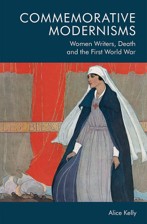
Women Writers, Death and the First World War
Alice Kelly
Reconsiders the relationship between the Great War and modernism through women's literary representations of death Provides the first sustained study of death and commemoration in women's literature in the wartime and postwar period Offers a reconsideration of the relationship between the First World War and literary modernism through the lens of women's writing Considers the literary impact of the vast mortality of the First World War and the culture of war commemoration on British and American women's One of the key questions of modern literature was the problem of what to do with the war dead. Through a series of case studies focusing on nurse narratives, Edith Wharton, Katherine Mansfield, H.D., and Virginia Woolf, as well as visual and material culture, this book provides the first sustained study of women's literary representations of death and the culture of war commemoration that underlies British and American literary modernism. Considering previously neglected writing by women in the war zones and at home, as well as the marginalised writings of well-known modernist authors, and drawing on international archival research, this book demonstrates the intertwining of modernist, war, and memorial culture, and broadens the canon of war writing.
Christina Rossetti
Poetry, Ecology, Faith
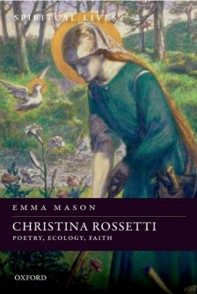
Emma Mason
Christina Rossetti (1830-94) is regarded as one of the greatest Christian poets to write in English. While Rossetti has firmly secured her place in the canon, her religious poetry was for a long time either overlooked or considered evidence of a melancholic disposition burdened by faith. Recent scholarship has redressed reductive readings of Christian theology as repressive by rethinking it as a form of compassionate politics. This shift has enabled new readings of Rossetti's work, not simply as a body of significant nineteenth-century devotional literature, but also as a marker of religion's relevance to modern concerns through its reflections on science and materialism, as well as spirituality and mysticism.
Emma Mason offers a compelling study of Christina Rossetti, arguing that her poetry, diaries, letters, and devotional commentaries are engaged with both contemporary theological debate and an emergent ecological agenda. In chapters on the Catholic Revival, Pre-Raphaelite Brotherhood, contemporary debates on plant and animal being, and the relationship between grace and apocalypse, Mason reads Rossetti's theology as an argument for spiritual materialism and ecological transformation. She ultimately suggests that Rossetti's life and work captures the experience of faith as one of loving intimacy with the minutiae of creation, a divine body in which all things, material and immaterial, human and nonhuman, divine and embodied, are interconnected.
Of Land, Bones, and Money
Toward a South African Ecopoetics
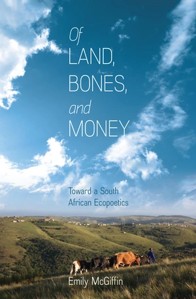
Emily McGiffin
The South African literature of iimbongi, the oral poets of the amaXhosa people, has long shaped understandings of landscape and history and offered a forum for grappling with change.Of Land, Bones, and Moneyexamines the shifting role of these poets in South African society and the ways in which they have helped inform responses to segregation, apartheid, the injustices of extractive capitalism, and contemporary politics in South Africa.
Emily McGiffin first discusses the history of the amaXhosa people and the environment of their homelands before moving on to the arrival of the British, who began a relentless campaign annexing land and resources in the region. Drawing on scholarship in the fields of human geography, political ecology, and postcolonial ecocriticism, she considers isiXhosa poetry in translation within its cultural, historical, and environmental contexts, investigating how these poems struggle with the arrival and expansion of the exploitation of natural resources in South Africa and the entrenchment of profoundly racist politics that the process entailed. In contemporary South Africa, iimbongi remain a respected source of knowledge and cultural identity. Their ongoing practice of producing complex, spiritually rich literature continues to have a profound social effect, contributing directly to the healing and well-being of their audiences, to political transformation, and to environmental justice.
Property and Finance on the Post-Brexit London Stage
We Want What You Have
Michael Meeuwis
A guide to the contemporary London stage as well as an argument about its future, the book walks readers through the city’s performance spaces following the Brexit vote.
Austerity-era London theatre is suffused with the belief that private ownership defines full citizenship, its perspective narrowing to what an affluent audience might find relatable. From pub theatres to the National, Michael Meeuwis reveals how what gets put on in London interacts with the daily life of the neighbourhoods in which they are set.
This study addresses global theatregoers, as well as students and scholars across theatre and performance studies—particularly those interested in UK culture after Brexit, urban geography, class, and theatrical economics.
World Literature and Ecology
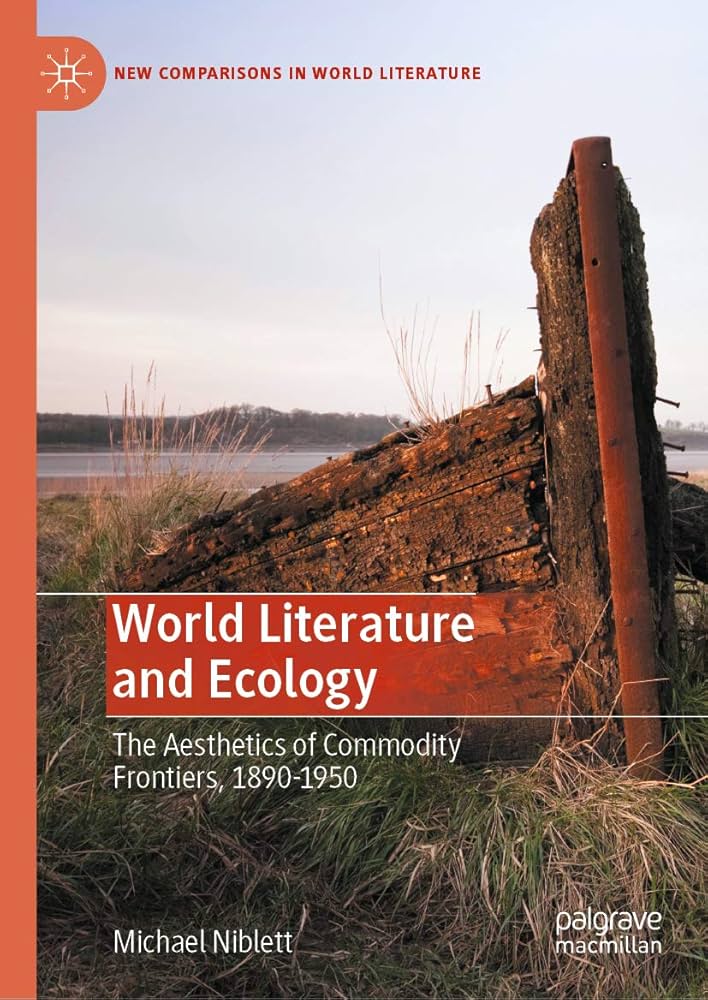
The Aesthetics of Commodity Frontiers, 1890-1950
Michael Niblett
Located at the intersection of world-literary studies and the environmental humanities, this book analyses how fiction and poetry respond to the ecological transformations entailed by commodity frontiers. Examining the sugar, cacao, coal, and oil frontiers in Trinidad, Brazil, and Britain,
World Literature and Ecology shows how literary texts have registered the relationship between the re-making of biophysical natures and struggles around class, race, and gender. It combines a materialist theory of world-literature with the insights of the world-ecology perspective to generate compelling new readings of writers such as Rhys Davies, Yseult Bridges, Lewis Jones, José Lins do Rego, Ellen Wilkinson, Jorge Amado, Gwyn Thomas, and Ralph de Boissière. The book represents a timely intervention into a series of field-defining debates around peripheral realisms and modernisms, ecocriticism, and the energy humanities.
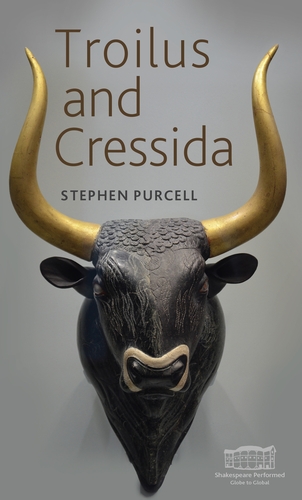
Troilus and Cressida
Stephen Purcell
A history of Shakespeare’s play in performance, from John Dryden’s Restoration adaptation to the rediscovery of the play in the twentieth century. What made this play so relevant to audiences who had lived through the horrors of two world wars and the rise of fascism? Why did it speak so directly to the ‘angry young men’ of the post-war generation and to the countercultural movements of the 1960s? This book investigates the many ways in which modern directors and actors have found their own world reflected in the play, from anti-war protests and the sexual revolution to feminism and postcolonialism. In doing so, it explores the play’s own complexity and its refusal to give easy answers.
The Plays of Charles Dickens
Jo Hofer-Robinson
This groundbreaking book offers the first complete scholarly edition of Dickens’s dramatic works. It challenges the previous neglect of these plays, recognising that his fascination with theatre, his playwrighting, and stage management of lavish amateur productions all had a formative impact on his professional identity and literary imagination. This pioneering critical edition of seven plays, single- and co-authored by Dickens, places his theatrical writing centre stage to encourage further critical work and interest in Dickens the dramatist – and, perhaps, new productions of the plays.
Tracking Capital
World-Systems, World-Ecology, World-Culture
Michael Niblett & Stephen Shapiro
Tracking Capital introduces new ways to understand the entanglement of cultural forms and practices in economic, social, and ecological crises and struggles. Building on the fundamental insights of world-systems analysis, the book offers readers a series of rubrics, keywords, and concepts-such as zemiperiphery, registration, and commodity chains-to enable more integrated, transdisciplinary methods of literary and cultural study. Throughout, Sharae Deckard, Michael Niblett, and Stephen Shapiro foreground the role of culture in both consolidating and contesting the classism, racism, sexism, and ecocide constitutive of the modern world-system. In the context of capitalism's ongoing bloody war against the poor, the powerless, and the planet,
Tracking Capital provides tools with which to diagnose the morbid symptoms of the present, as well as to plot possible steps on the road to a better future.
Time and Antiquity in American Empire
Roma Redux
Mark Storey
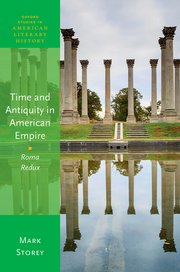
The book takes in a wide scope, from theories of historical time and imperial culture, through the twin political pillars of American empire―republicanism and slavery―to the popular genres that have reimagined America's and Rome's sometimes strange orbit: Christian fiction, travel writing, and science fiction. Through this conjunction of literary history, classical reception studies, and the philosophy of history, however,Time and Antiquity in American Empirebuilds a more fundamental inquiry: about how we imagine both our politics and ourselves within historical time. It outlines a new relationship between text and context, and between history and culture; one built on the oscillating, dialectical logic of the analogy, and on a spatialising of historical temporality through the metaphors of constellations and networks. Offering a fresh reckoning with the historicist protocols of literary study, this book suggests that recognizing the shape of history we step into when we analogize with the past is also a way of thinking about how we have read―and how we might yet read.
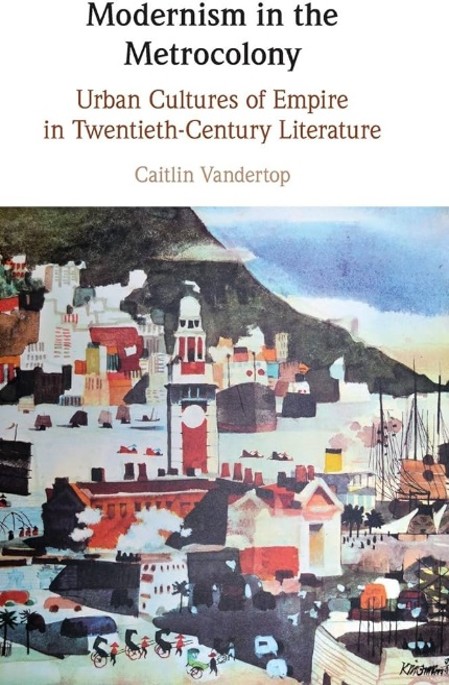
Modernism in the Metrocolony
Urban Cultures of Empire in Twentieth-Century Literature
Caitlin Vandertop
While literary modernism is often associated with Euro-American metropolises such as London, Paris or New York, this book considers the place of the colonial city in modernist fiction. From the streets of Dublin to the shop-houses of Singapore, and from the botanical gardens of Bombay to the suburbs of Suva, the monumental landscapes of British colonial cities aimed to reinforce empire's universalising claims, yet these spaces also contradicted and resisted the impositions of an idealised English culture. Inspired by the uneven landscapes of the urban British empire, a group of twentieth-century writers transformed the visual incongruities and anachronisms on display in the city streets into sources of critique and formal innovation. Showing how these writers responded to empire's metrocolonial complexities and built legacies, Modernism in the Metrocolony traces an alternative, peripheral history of the modernist city.
Dryden and Enthusiasm
Literature, Religion, and Politics in Restoration England
John West
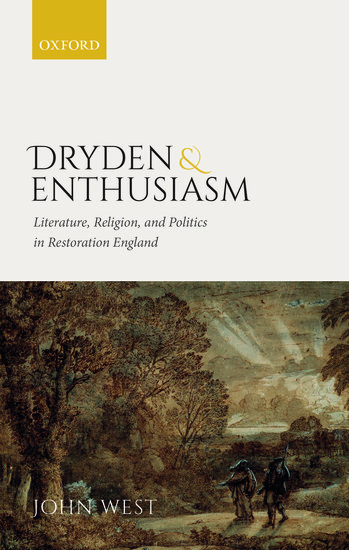
In Dryden's writing, enthusiasm is a source of literary authority. It signals divinely inspired literary creativity. It is central to Dryden's theoretical defences of the relationship between literature and the passions. It is also crucial to his poetic practice in a variety of genres, from odes to religious poems to translations. Enthusiasm, for Dryden, ultimately enables literature to break into regions of knowledge beyond rational human comprehension. Yet after the rise of radical sectarianism in the 1640s and 1650s, where claims of inspiration legitimised challenges to established political authority, enthusiasm also carried dangerous theological and political connotations. In Dryden's writing, enthusiasm is thus also a pejorative term. It is used to attack political radicals and religious dissenters. In the aftermath of the Civil Wars, it is at the root of many perceived threats to the stability of the Restoration state.This book explores the paradoxical place of enthusiasm in Dryden's writing and the role he conceived for it in art and society after the violent upheavals of the mid seventeenth century. Works from across his oeuvre are explored, from his early essays and heroic plays to his translations, via new readings of his famous political and religious poems. These are read alongside other major writers of the period, like Milton, and less well-known authors, such as John Dennis. The book suggests new ways of conceptualising the relationship between literary practice and ideological allegiance in Restoration England. It reveals Dryden to be a writer who was consistently interested in the limits of what literature could express, what feelings it could provoke, and what it could make people believe at a time when such questions were of uncertain political importance.
Piers Plowman and its Manuscript Tradition
Sarah Wood
The first full survey of crucial witnesses to the reception of Piers Plowman. The fifty-plus surviving manuscripts of William Langland's Piers Plowman cast important light on the early public life of this central Middle English work, but they have been relatively neglected by scholarship. This first full study of the subject examines the textual variants, marginal rubrics and companion texts in the manuscripts. It illuminates a reception quite distinct from the reformist poems written by Langland's imitators in "the Piers Plowman tradition". It reveals how the earliest scribes devised various traditional forms of presentation that proved remarkably durable in the poem's subsequent reception, even surviving into the age of print. Exploring Piers Plowman's appearances in the manuscripts, paired unexpectedly with such genres as romance, hagiography and travel literature, the book demonstrates the surprisingly affective responses of medieval readers to the represented lives of the narrator Will and the title figure Piers the Plowman. At the same time, it shows that the evidence for individual scribal agendas in particular copies is more ambiguous than often assumed, with each book reflecting the activities of an unknown number of hands and an uncertain mixture of design and accident. By drawing on evidence from textual scholarship as well as codicological and literary approaches, the author offers fresh insight into Piers Plowman's place in literary history and proposes new ways of understanding the late medieval manuscript as a multi-layered, collaborative product.