
The Enlightenment
The eighteenth century is often remembered for the Enlightenment, an intellectual movement that ranged widely across Europe and beyond. In this lecture block we use ideas as a starting-point for exploring eighteenth-century history as a whole. The first lecture focuses on the ideas themselves. Many of these ideas—such as free trade, experimental science, and a European Union—seem surprisingly modern. But we can only make sense of the Enlightenment as a whole by recalling the events of the preceding centuries. Eighteenth-century thinkers were responding to the events in religious, political, economic and global history that we have covered so far in this module.
The seminar looks at a famous novel by the French thinker Voltaire, first published in French in 1759. The novel is a commentary--both intentional and unintentional--on wider events in European and American history. This is one of a number of 'philosophical novels' published in eighteenth-century Europe. In these works, philosophers used a relatively new literary genre (the novel) to get their ideas across to a wide audience.
ESSENTIAL READING
Colin Jones, 'Enlightenment,' in The European World 1500-1800: An Introduction to Early Modern History, ed. Kûmin.
Voltaire, Candide, chapters 1 to 19. There are numerous library and other online editions, as well as several hard-copies on floor 3 of the library, classmark PQ2082.C2.
Giovannetti-Singh, Gianamar. 'Racial Capitalism in Voltaire's Enlightenment,' History Workshop Journal 94 (2022): 22-41
PRIMARY SOURCE QUESTIONS
- which passages in the novel do you find most powerful, and why?
- why did Voltaire choose to put his ideas into the form of a novel, rather than (say) a dialogue or a scholarly treatise?
- 'Candide was a product of racial capitalism.' Discuss.
GENERAL QUESTIONS
- what was the single most important idea in the Enlightenment?
- were women included or excluded from the Enlightenment?
- was the Enlightenment a global phenomenon?
RECOMMENDED READING
Conrad, Sebastian, ‘Enlightenment in Global History: A Historiographical Critique’, The American Historical Review 117, no. 4 (2012): 999–1027
Israel, Jonathan, A Revolution of the Mind: Radical Enlightenment and the Intellectual Origins of Modern Democracy (2009)
Outram, Dorinda. The Enlightenment (2019).
FURTHER READING
Bevilacqua, Alexander. The Republic of Arabic Letters: Islam and the European Enlightenment (2018).
Blanning, Tim, The Pursuit of Glory: Europe 1648-1815 (2008)
Clark, J. C. D. The Enlightenment: An Idea and Its History (2024)
Corfield, Penelope, The Georgians: the Deeds and Misdeeds of 18th-Century Britain (2022)
Darnton, Robert. The Business of Enlightenment: a Publishing History of the Encyclopedie (1979)
Fitzpatrick et al, The Enlightenment World (2004)
Melton, J. Van Horn, The Rise of the Public in Enlightenment Europe (2001)
Muthu, Sunkar. Enlightenment Against Empire (2003).
Porter, Roy, and Mikuláš Teich. The Enlightenment in National Context (2009)
Statman, Alexander. A Global Enlightenment: Western Progress and Chinese Science (2023).
Whatmore, Richard. The End of Enlightenment: Empire, Commerce, Crisis (2023).
Withers, Charles W. J. Placing the Enlightenment: Thinking Geographically About the Age of Reason (2007).
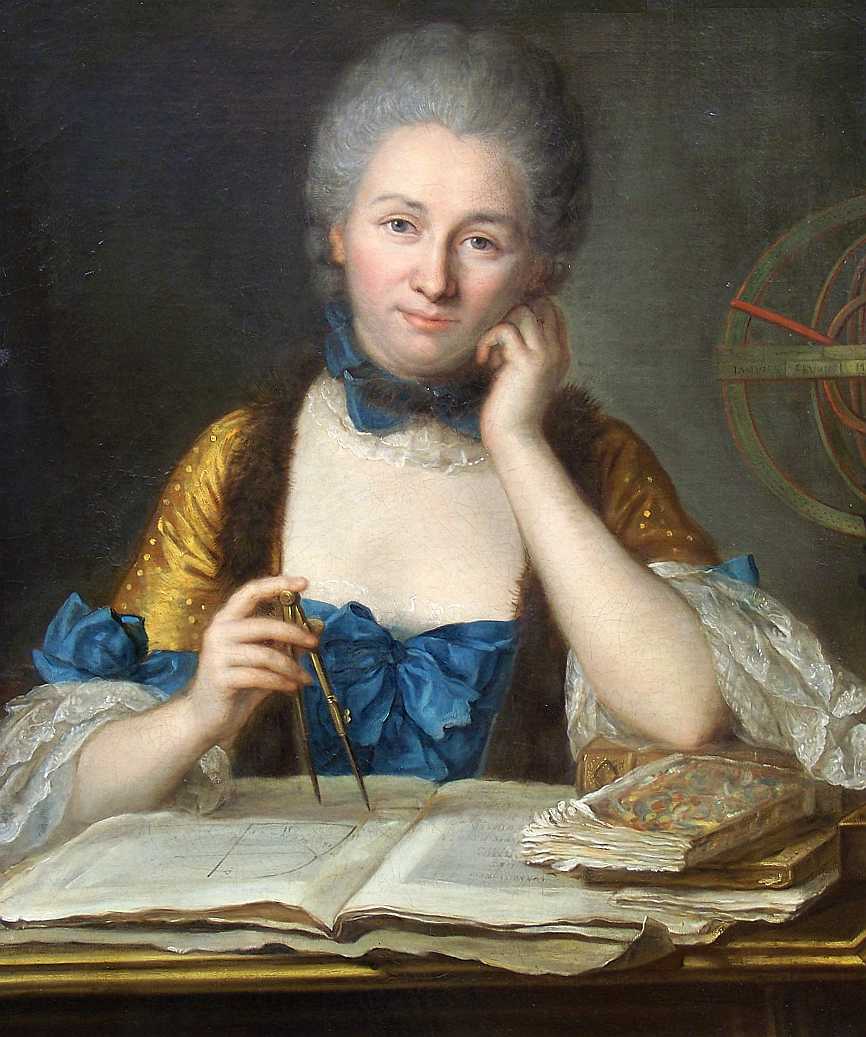
Image credit: Wikimedia Commons.