
Lecture and Seminar Programme
Lecture slides will be posted here on the morning of the lectures.
Virtual lectures available through Moodle.*
| Week | Lecture |
Lecturer |
Seminar |
|---|---|---|---|
| 1.1 | Journal abstracts | ||
| AGE OF REFORMATION, c. 1500-1650 | |||
| 1.2 | Primary source: images | ||
| 1.3 | Penny Roberts | Introductions | |
| 1.4 | Popular Culture and Witchcraft |
||
| 1.5 | Catholic Christianity in Global Context |
Anne Gerritsen | |
| reading week | |||
| AGE OF EXPANSION, c. 1450-1600 |
|||
| 1.7 | The Atlantic World |
Michael Bycroft | Primary source: maps |
| 1.8 | The Mediterranean World
ARTICLE REVIEW DUE
|
Aysu Dincer | Primary source: travel narratives |
| 1.9 | The Indian Ocean World |
Guido van Meersbergen | |
| 1.10 | The Global Renaissance |
James Poskett | Revision quiz |
| winter break | |||
| AGE OF CRISIS?, c. 1600-1700 |
|||
| 2.1 | States and Absolutism |
||
| 2.2 | Popular Politics and Protest |
||
| 2.3 | Violence |
||
| 2.4 | Rival Empires |
||
| 2.5 | Environmental Crises |
||
| reading week | |||
| AGE OF REASON, c. 1660-1780 | |||
| 2.7 | The Enlightenment |
||
| 2.8 | Work
ARGUMENT ESSAY DUE
|
[details coming soon] |
|
| 2.9 | Race and Slavery |
||
| 2.10 | Gender and Sexuality |
||
| spring break | |||
| EARLY MODERNITY NOW | |||
| 3.1 | Public Early-Modern History |
Panel lecture |
|
| 3.2 | The Research Project in Theory |
Michael Bycroft |
|
| 3.3 | The Research Project in Practice |
Panel lecture |
|
| 3.4 | no lecture or seminar | ||
| 3.5 |
RESEARCH PROJECT DUE
|
||
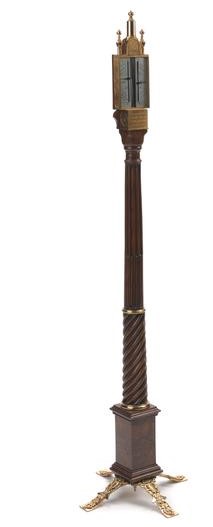
According to radical thinkers at the time, the barometer showed that a vacuum (a space devoid of air) was possible. This contradicated the received wisdom that a vacuum was impossible.
There were many skilled instrument-makers in London in the period. Quare was a clockmaker at a time when clocks were in demand as luxury goods, aids to navigation, and instruments for exact science.
Image credit: Science Museum Group Collection.
*Look for the 'lecture capture' block in the top right-hand corner. You may need to click the white/blue arrow to view the block. After clicking, look for this year's module under the 'Courses' tab.