
Dr Khetam Al Sharou
Assistant Professor in Language Technologies and AI Governance
Office 4.55 Faculty of Arts Building,
University of Warwick
Coventry CV4 7AL
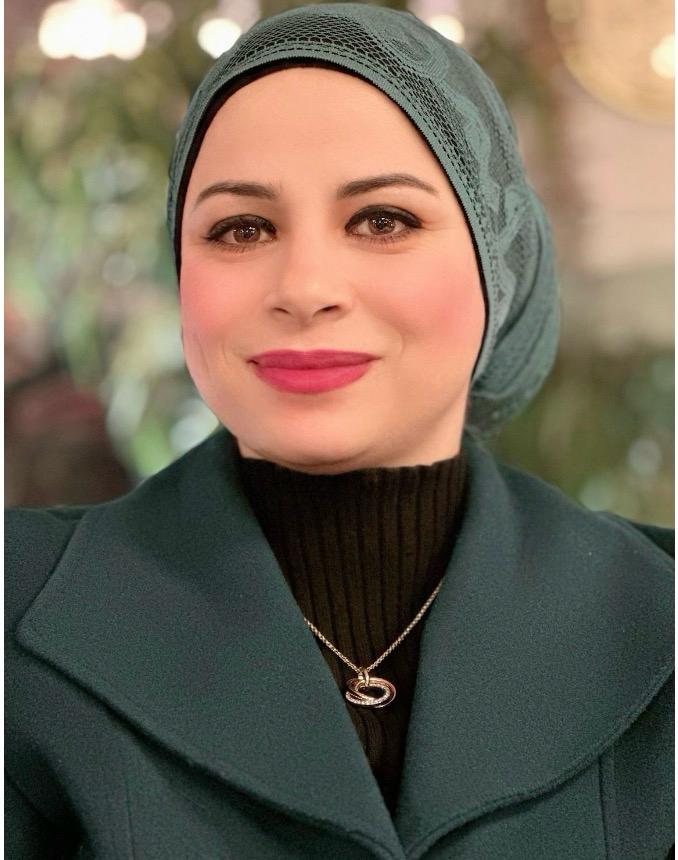
Dr Khetam Al Sharou is an Assistant Professor in Language Technologies and AI Governance. She also serves as a PGR Admissions Advisor (TTS). Her research and teaching sit at the intersection of artificial intelligence (AI), language technologies, translation, cultures and ethics, producing work with academic and industrial impact in tool development and user-experience. Her work covers human-machine interaction and their wider applications, translation pedagogy, didactics in Higher Education, multilingual communication in healthcare and crisis settings, machine translation quality evaluation and the ethical and governance challenges of AI, including the responsibilities of organisations that develop and deploy AI systems.
Dr Al Sharou holds a PhD in Translation Studies from University College London (UCL), where her doctoral research bridged Translation Studies, Computer Science, and NLP to examine the use of machine translation in translator education. She has held teaching and research positions at UCL, Imperial College London, the University of Antwerp, Dublin City University, the University of Surrey, and the University of Damascus, giving her an interdisciplinary view of language technologies, multilingual communication, and the societal implications of AI. She has extensive experience in higher education teaching, research supervision, and translation technology training, and is a Senior Fellow of the Higher Education Academy (SFHEA).
Research Interests
Dr Al Sharou's research has evolved alongside the technology itself, moving from translator education and machine translation toward broader questions of AI governance, multilingual communication, misinformation, and information integrity. A central concern in her current work is how AI-mediated communication affects people across different linguistic and social contexts. This includes not only whether AI systems produce accurate results, but how their outputs are understood, trusted, and acted on, particularly where errors, bias, or limitations can restrict access to vital information.
She is Principal Investigator of the Transitude project, funded by the Irish Research Council, which examined how AI translation shapes public discourse and information distortion, with a particular focus on refugee communities in Ireland. Her recent work extends this into the relationship between AI-generated mistranslation, misinformation, corporate responsibility, and emerging AI governance and regulatory frameworks.
Her multilingual, interdisciplinary background is central to this research. As a scholar working between Arabic and English, and across Translation Studies, language technologies, and AI, she brings both linguistic and technical perspectives to the study of multilingual communication. This approach also shapes how she teaches and supervises students interested in language, translation, AI, and cross-cultural communication.
Teaching and Supervision
Dr Al Sharou is passionate about helping students understand both the technical possibilities and the wider societal implications of AI and language technologies. Drawing on her interdisciplinary background, she connects ideas across AI, NLP, translation, communication, cultures and ethics, while encouraging students to think critically about how technologies are designed, evaluated, governed, and used in practice.
Teaching
Postgraduate: LN913-15 Translation, Technology and Automation
Undergraduate: LN230-15 Translation in the Digital Age: Tools and Technologies
Supervision
She welcomes opportunities to supervise research projects in the following areas:
- Artificial intelligence and Governance of multilingual AI
- Language technologies and machine translation
- Machine translation quality evaluation
- Multilingual communication and AI
- Responsible and ethical AI
- AI, misinformation, and information integrity
- Translation technology and translator education
- Technology-enhanced multilingual communication in healthcare and crisis settings
- Human-centred approaches to language technologies
- Accessibility and Digital Inclusion
Publications
Dr Al Sharou has an established record of publishing through internationally recognised journals, publishers, and conferences. She also contributes to shaping scholarship at the intersection of Translation Studies and technology through editorial leadership, peer review, and academic service. She serves as a reviewer for journals in translation and language technology and as a scientific committee member for international conferences, including EAMT and IATIS. These roles reflect international recognition of her expertise and demonstrate her ability to contribute to the development of the field through internationally recognised publications and academic networks:
Papers in International Peer-reviewed Conferences
Al Sharou, K., (2026). “#MTFails to #MTWins: Investigating User Perspectives on Machine Translation in Social Media”, New Trends in Translation and Interpreting Technology Conference, Dubrovnik, Croatia, June 24 – 27.
Al Sharou, K., Jamei, M. K., Ben Khalifa, I., Missaoui, S., Ben Messaoud, M. & Moorkens, J. (2024) “UEwMT: Leveraging User Experience and Deep Learning-driven Methodology for Evaluating Machine Translation Services”, Service-Oriented Computing for AI Applications” workshop, International Conference on Service-Oriented Computing (ICSOC), Tunis, Tunisia, December 3-6, 2024.
Al Sharou, K. & Moorkens, J. (2024). Transitude: Machine Translation on Social Media: MT as a potential tool for opinion (mis) formation. In Proceedings of the 25th Annual Conference of the European Association for Machine Translation (Volume 2) (2-3).
Al Sharou, K. & Specia, L. (2022). “A Taxonomy and Study of Critical Errors in Machine Translation”. In Proceedings of the 23rd Annual Conference of the European Association for Machine Translation, 171–180, https://aclanthology.org/2022.eamt-1.20/.
Al Sharou, K., Li, Z. & Specia, L. (2021). “Towards Better Understanding of Noise in Natural Language Processing”. In Proceedings of the International Conference on Recent Advances in Natural Language Processing, 53–62.
Peer-reviewed Journal Papers
Al Sharou, K. (2026). When Machine-generated Mistranslation in Socia Media Becomes Misinformation: Risks to Users, Corporate Responsibility, and Legal Implications, in Soltan, A., Rousi, R. and Rosendo, L. R. (eds.) Language, Law and Rights: Balancing AI Driven Technology and Equity, Journal of Linguistics and Law/Linguagem e Direito.
Butler, C. & Al Sharou, K. (2018). “Beyond medical practice: cultural and linguistic training of refugee doctors for integration and employment in the United Kingdom”. European Journal of Public Health, (28): 71-71, Oxford University Press.
Federici, M. F. & Al Sharou, K. (2018). “Moses, Time, and Crisis Translation”. The Journal of the American Translation and Interpreting Studies, 13(3): 486-508.
Chapters in Peer-reviewed Volumes
Al Sharou, K. (2024). “Open-source Statistical Machine Translation Technology: Shifting Roles in Translator Training from MT Receivers to MT Creators”. In Winter, M., Deane-Cox, S., Wurm, S. & Böser, U, (eds). Communicating across languages in times of technological change, Bloomsbury.
Al Sharou, K., (2025). “Language Technology and its Impact on Translation and Interpreting Practices in Armed Conflicts”, Todorova, M. & Ruiz Rosendo, L., (eds). Routledge Handbook in Translating and Interpreting Armed Conflicts.
Al Sharou, K., Vandenbroucke, M. & Vercauteren, G. (2025). “Communication, Information and Translation Automation in Crisis Situations”. Baumgarten, S. and Tieber, M. (eds). The Routledge Handbook of Translation Technology and Society.
Braun, C., Al Sharou, K. & Temizöz, Ö. (2023). “Technology use in language-discordant interpersonal healthcare communication”. In Gavioli, L. & Wadensjö, C. (eds). Routledge Handbook of Public Service Interpreting, Routledge, 89-105.
Butler, C. & Al Sharou, K. (2019). ''Voices of (Unemployed) Refugee Doctors in the UK: An Exploration of their Linguistic and Cultural Needs & Aspirations''. In Declercq, C. & Federici, M.F. (eds). Intercultural Crisis Communication: translation, interpreting and languages in local crises, Bloomsbury Academic, 173-190.
Vandenbroucke, M., Vercauteren, G., Al Sharou, K., Reviers, N. & Jankowska, A. (2024). “Accessible government crisis communication: recommendations based on the case of COVID-19 in Belgium”. In Kerremans, K. & Declercq, C. (eds). Routledge Handbook of Translation, Interpreting and Crisis, 45-58.
Vieira, L. N. & Al Sharou, K. (2025). “Everyday machine translation: websites, social media, and the blurred boundaries between virtual and physical spaces”. In Baumgarten, S. and Tieber, M. (eds). The Routledge Handbook of Translation Technology and Society.
PhD Thesis
Al Sharou, K. (2019). Training Translators on Open-source MT Technology: An Empirical Assessment of Learning Using a Task-based Syllabus (University College London).
Qualifications
PhD in Translation Studies, University College London (UCL), 2019.
MSc in English-Arabic Translation and Computer Assisted Translation Tools, Heriot-Watt University, 2014
BA in English Language and Literature, University of Damascus, 2008
Diploma in Arabic Language Teaching, Institute of Teaching and Education, 2004
Professional Associations
Senior Fellow of the Higher Education Academy (SFHEA)
Office hours
Mondays 12-15:00 and by appointment
Room 4.55 Faculty of Arts Building
Please book your appointment via email.
Teaching
Postgraduate: LN913-15 Translation, Technology and Automation
Undergraduate: LN230-15 Translation in the Digital Age: Tools and Technologies