
WMG News - Latest news from WMG
Voi and Bumblebee Power partner on UK’s first wireless e-scooter charging trial launched at the University of Warwick
- Time-consuming and resource-intensive charging processes could be replaced by wireless charging for e-scooter rental fleets
- The ease of use for consumers and a reduction in operating costs through wider adoption of this technology would be a big advantage for the UK’s biggest rental scheme operator, Voi
- Trial in partnership with Bumblebee Power and WMG on the University of Warwick campus allows real-world testing in a ‘mini-city’ environment
- A successful trial will pave the way for seamless and convenient charging of e-scooters
Voi Technology, the UK’s largest e-scooter rental operator, has partnered with Bumblebee Power and WMG to trial the use of Bumblebee’s wireless e-scooter charging at the University of Warwick campus over a 6-month period potentially changing the future of the micromobility industry.
As with the charging of electric cars, the charging of e-scooters is a challenge for the operators of extensive rental schemes. The batteries powering their zero-emissions e-scooters are currently charged safely at their warehouse; however, they are replaced when vehicles are either receiving their regular in-house inspections or by the company’s in-field team who visit each e-scooter to perform fresh battery swaps.
These processes can lead to high operating costs for their business as the processes can be both time-consuming and often resource-intensive by requiring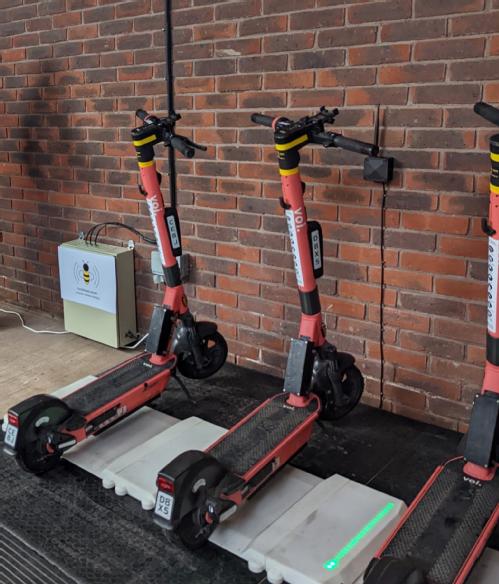 additional warehouse infrastructure for safe battery charging as well as transportation costs. Therefore, Voi began exploring new charging methodologies as a result that could provide the same excellent user experience whilst also delivering a similar vehicle efficient and effective battery performance. The potential solution: wireless charging.
In partnership with Bumblebee Power, the wireless charging pads make it possible to charge e-scooters where they are parked, reducing not only operational costs but make their integration into the street and transport infrastructure more streamlined, making the modal shift to a convenient and flexible mode of transport easier for new and existing riders.
The University of Warwick campus ‘mini-city’ environment has been selected for this trial and provides an excellent, safe test bed for testing transport innovations. Available to estate staff only, a busy environment with a large population of students, staff, and industrial partners means the University of Warwick is an ideal ‘living lab’ environment to enable sustainable research and development of this technology.
The trial will provide data on the wireless system performance as well as user behaviour and interaction with the technology, which is crucial to any future large-scale deployment. If the trial proves successful it could be expanded to cover more of the Voi fleet across the UK.
David Yates, CTO of Bumblebee Power explains:
“The Bumblebee patented technology, which originated from Imperial College London, provides automatic connection via a very efficient wireless charging system, saving operational expenditure for the fleet operator by eliminating battery swaps. In addition, it makes possible the ability to extend the battery’s life, by controlling the charging regime whilst maximising vehicle availability.”
Sam Pooke, Senior Policy Manager at Voi UK and Ireland, said:
“We’re delighted to be partnering with Bumblebee Power to develop wireless charging for our e-scooters, an innovation that could change the whole micromobility industry.
“Applying this technology has the potential to not only reduce the operational impact of how we charge batteries for our vehicles but also in making an already convenient and flexible service even more accessible for new and existing riders. Over the coming months, we’ll look forward to working with our partners to maximise the innovative potential of this technology.”
David Evans, Lead Engineer at WMG, University of Warwick, said:
“Wireless charging technology for micromobility has the potential to reduce operational costs for fleet operators and provide a convenient charging solution for users. The University of Warwick campus is an ideal location to trial transport innovations such as these, providing a real world, mini city environment with world class teaching and research facilities.”
WMG backs campaign to encourage more young people to consider technical careers
According to recent reports, the UK needs around 800,000 more technicians and apprentices to meet the demand in the economy for the sort of practical science jobs to boost innovation and economic growth. This is why WMG, University of Warwick, is supporting the Gatsby Charitable Foundation’s Technicians: We Make the Difference campaign.
Technicians are making a difference across society, doing exciting and interesting jobs in almost all industries; from making a life-saving vaccine to working behind the scenes at a music festival. It's their balance of scientific, engineering, or technological knowledge, along with skills such as attention to detail and critical thinking, that makes technicians special.
WMG employs more than 50 technicians, including Engineering Technician, Bethany Haynes and Battery Technician, Divyesh Mistry who feature as case studies on Gatsby’s new Technicians: We Make the Difference website.
You can hear more from Bethany here: Bethany Haynes, Engineering Manufacturing Technician | Technicians and Divyesh here: Divyesh Mistry, Battery Technician | Technicians as they share their experiences with the aim to inspire more young people to consider technical careers.
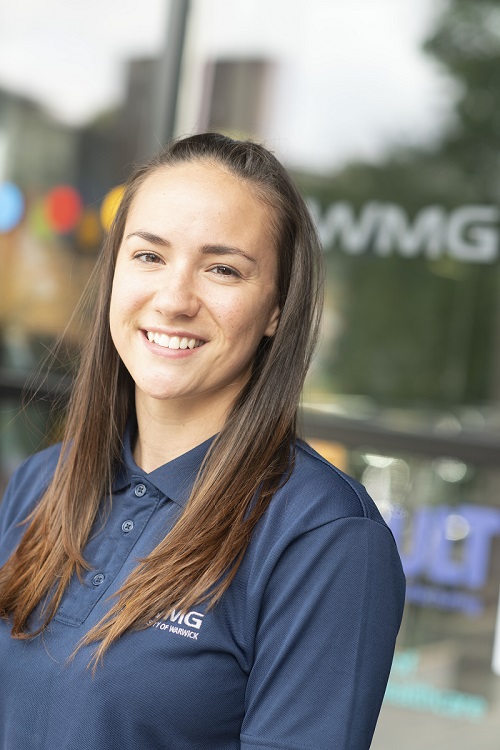 Bethany Haynes, Engineering Technician based in WMG, at the University of Warwick’s SME Team, says: “This is such an amazing project to be a part of as it is so important for young people to be aware of the technical roles out there. I love the fact that there is a technical role that will harness and encourage the majority of skillsets, especially practical skills. I have always been a technician and genuinely love my job, yet at school I was always told I needed to go to university and have a degree to have a good job.
“Technicians: We Make the Difference shows that you can have a career with or without a degree. I’m looking forward to visiting the Science Museum next weekend and seeing all the cool things other technicians are doing.”
Divyesh Mistry, Mechanical Technician based at WMG at the University of Warwick’s Energy Innovation Centre, adds: “It was a privilege and an honour to take part in the Gatsby project. Each technician has their own skills and abilities, which allow for fundamentals of their profession to thrive. It’s great to see the technician career path be advertised, and I recommend it as a fulfilling career with lots of opportunities.”
Paul Johnson, Technical Services Manager at WMG explains: “It’s great to see our technical staff involved in this crucial initiative. I say crucial because the skill shortage, that we now see across the educational and research landscape, has to be addressed now. To do that we need to engage the next generation of technicians, and those young people that we reach out to need to be inspired. Hearing from early career technical professionals, through outreach programmes such as this, can only help to galvanise the desire that young technicians have and drive them to pursue a career in science and technology.”
Research by Gatsby shows that while parents are becoming more supportive of technical education routes and qualifications, such as T-Levels, many (40%) still don’t understand what a technician is. Furthermore, two thirds (66%) say their child has expressed an interest in a future career that they know very little about.
Together with Gatsby, WMG wants to help parents and young people learn more about technician careers options and routes available (many of which young people can reach via T-levels, apprenticeships and other more practical, work-based routes).
Find out more about WMG’s Technician Commitment here: Technician Commitment (warwick.ac.uk)
ENDS
For more information on Gatsby’s Technicians: We Make the Difference campaign, please contact technicians@kindredagency.com.
Sources:
· Parents and young people survey – A survey, carried out by Censuswide, of 2,004 parents of children aged 11-16, and their children. The survey was conducted between 27th July – 1st August 2022.
· Parents survey – A survey carried out by Censuswide of 2,000 parents of 11–18-year-olds who attend non-fee-paying schools. The survey was carried out in March 2022.
About Technicians: We Make the Difference
Technicians: We Make the Difference is a campaign by the Gatsby Charitable Foundation that aims to educate parents and young people alike on technician careers.
While some technicians work in a lab, most don't. Technicians are making a difference across society, doing exciting and interesting jobs in almost all industries.
It's their balance of scientific, engineering, or technological knowledge with skills like attention to detail and critical thinking that makes technicians special. That can be almost anything - from making a life-saving vaccine to working behind the scenes at a music festival.
And with thousands of other interesting technician roles across almost every kind of industry - there's a good chance that there will be one out there that you would enjoy.
Find about more about how technicians make a difference every day via www.technicians.org.uk.
Researchers use smart roadside infrastructure and Vehicle-to-Everything technology to support connected and automated vehicles with motorway merging
As part of the AutopleX (Autonomous Cars Negotiating Complex Environments Using V2X) project consortium, researchers at WMG, University of Warwick,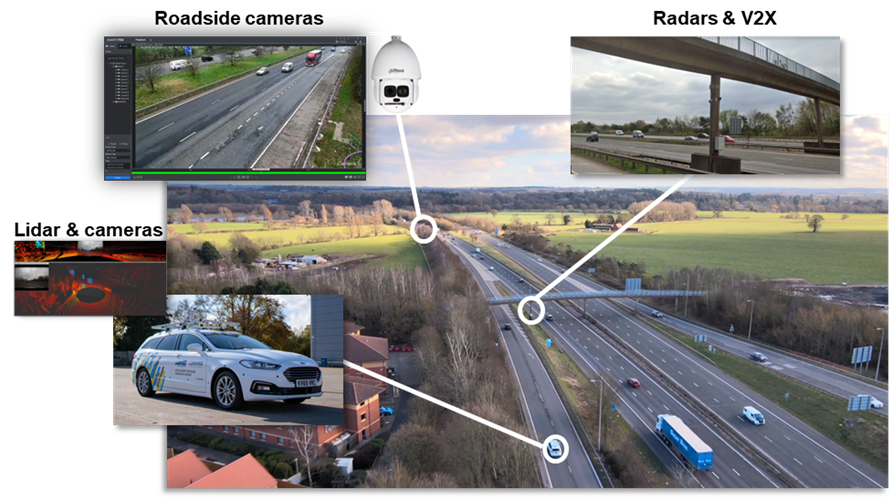 have used a connected smart roadside infrastructure and onboard vehicle systems to demonstrate how to enhance the vision and perception of future autonomous vehicles to achieve safer and more comfortable manoeuvres along high-speed junctions, such as motorway merges.
The Centre for Connected and Autonomous Vehicles (CCAV) and Innovate UK have jointly funded £2.6m for the collaborative R&D project AutopleX between March 2019 and September 2022.
AutopleX brought together WMG and leading automotive and mobility management partners Jaguar Land Rover (JLR) and Yunex Traffic, as well as public bodies such as Transport for West Midlands (TfWM) and National Highways.
Supported by the WMG Centre High Value Manufacturing Catapult, engineers and researchers at WMG have built a proof-of-concept demonstrator, where technology within a test vehicle (also known as “the EGO vehicle”) including Global Navigation Satellite Systems (GNSS), LiDAR and cameras, was fused with infrastructure-based sensing received over a Vehicle-to-Everything (V2X) communication system. This created a more comprehensive understanding of the environment in which the vehicle was travelling.
Colin Teed, AutopleX Project Manager at Jaguar Land Rover, stressed that: “Merging at high-speed junctions will be a standard action autonomous vehicles must perform and constitutes an important step in realising the vision of connected and automated mobility.”
Professor Mehrdad Dianati, Head of Intelligent Vehicles Research at WMG, added: “Onboard sensors may suffer from several limitations such as occlusions, limited range, and other forms of impairments. Especially at motorway junctions, where the speed of vehicles is usually high, undetected traffic objects by the onboard sensor suite can impose severe threats on safety. Onboard perception can, therefore, become insufficient as a standalone solution for level 4 autonomy. In this regard, the AutopleX project has developed a proof-of-concept solution that combines, in real-time, the onboard perception of a connected vehicle approaching a motorway with infrastructure-based sensing for supporting a safe merge.”
The AutopleX showcase demonstration took place via a live road traffic environment at Junction 15 of the M40 in March 2022. Yunex Traffic developed the roadside perception system, including three radars and V2X communication technology, while National Highways ensured its safe installation and effective operation.
Jet Feng, Project Engineer at WMG, explained: “The roadside perception including the locations, speed and steering angle of motorway vehicles was continuously broadcast (in the form of collective perception messages (CPMs)) and received by the vehicle’s onboard communication unit (OBU) on the Open Innovation Vehicle Platform whilst approaching the merging point of the junction. The received information was then combined with the onboard perception to improve the overall understanding of the environment and was visualised in real-time via a bird’s eye view map of the junction, allowing the passengers to observe road traffic objects along the M40, which were not otherwise visible due to occlusions.”
Furthermore, WMG and Jaguar Land Rover researchers jointly developed intelligent trajectory-planning algorithms, which utilised the combined perception to design a high-speed merging manoeuvre that is efficient, smooth, and safe.
Dr Konstantinos Koufos, Senior Research Fellow at WMG, commented: “While the Open Innovation Vehicle Platform was driven by a human driver, the calculated trajectory, including speed and steering, of a hypothetical vehicle using the combined perception was visualised in real-time on the in-vehicle monitors. This allowed the passengers to compare the trajectory of the hypothetical (or ghost) vehicle with the actual trajectory of the human-driven vehicle. Key performance indicators (KPIs) associated with road safety and passenger comfort were also calculated and compared during the merging manoeuvre. The next major step would be to engage the calculated trajectory of the ghost vehicle with the drive-by-wire system of the Open Innovation Vehicle Platform.”
The project successfully implemented and demonstrated the developed technology, collecting, annotating and processing vast datasets including over eight months of road traffic data using 10 infrastructure cameras and three RADARs. These datasets could be made available to selected organisations outside of the AutopleX consortium for user trials and feedback. In addition, it constitutes valuable R&D data that can be used in WMG’s Doctoral Training Centre in Future Mobility Technologies, as well as WMG’s MSc programme in Smart Connected and Automated Vehicles (SCAV).
Learn more about the vehicle used in the demonstration: https://warwick.ac.uk/fac/sci/wmg/research/cav/ivfac/catapult-open-innovation-vehicle/
Explore research in WMG’s Intelligent Vehicles Group: https://warwick.ac.uk/fac/sci/wmg/research/cav/
Innovate UK: https://www.ukri.org/councils/innovate-uk/
Centre for Connected and Autonomous Vehicles: https://www.gov.uk/government/organisations/centre-for-connected-and-autonomous-vehicles
WMG High Value Manufacturing Catapult:
https://hvm.catapult.org.uk/centre/wmg/
WMG PhD student heads to COP27
A PhD student, from WMG at the University of Warwick, is heading to Egypt this week for COP27.
Shravani Sharma, who is studying for a PhD in Travel Choices and Wellbeing, is heading to the climate summit as the Youth Transport Fellow for High Level Climate Champions UNFCCC, a role centred on building momentum towards an accelerated transition to zero emission vehicles.
Shravani’s work has always focused on the transport sector (which is responsible for a quarter of global greenhouse gas emissions), and on persuading policymakers, operators and the public of the benefits of cleaner and healthier modes of transport supported by evidence-based research and analysis.
She will be sharing her expertise at the “Youth on the move: Young people and transport in the 21st century” session on 10th November and at several other events.
Shravani, who is part of WMG’s Intelligent Vehicles Research Group, explained: "In a world where we are striving to adopt more sustainable forms of transport, it is paramount that our transportation systems and policies are designed to enable modal shift and promote positive travel behaviour.
“I was not even aware that transport planning was a career! I fell into it by accident after taking a module on planning infrastructure and found it not only fascinating, but so rewarding as it impacts the real world and real life. I I grew up watching TV shows about doctors in hospital environments and law firms where the protagonists save the world, which made me want to be a doctor or lawyer coming from an aspirational cultural background. I feel there should be more movies and TV shows made to inspire the upcoming generations to showcase the importance of city and transport planners, and use the power of media for positive drum rolling.
“If our towns and cities are the hearts of the nation, contributing to most of the economic activities, then transport infrastructure is our arteries. Therefore, to ensure good health of the nation we should ensure these arteries are clear of congestion, pollution, accidents etc. “
You can register for ‘Youth on the move: Young people and transport in the 21st century’ here: Youth on the move: Young people and transport in the 21st century (oecd-events.org)
Read more about WMG’s latest sustainability news here: WMG :: News (warwick.ac.uk)
£1.5m gift from TVS Motor Company helps create new Lord Bhattacharyya Chair in Engineering Education at WMG, University of Warwick
A substantial gift of £1.5 million from TVS Motor Company will help create a crucial new Professorial post in WMG, University of Warwick - the Lord Bhattacharyya Chair in Engineering Education.
The gift celebrates TVS Motor Company’s close relationship with WMG and will continue the legacy of the late Professor Lord Kumar Bhattacharyya,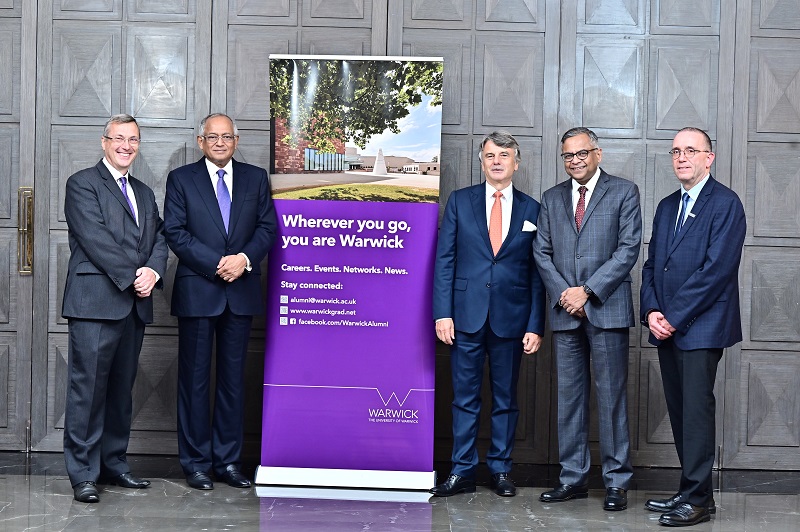 enhancing WMG’s academic expertise in the understanding, development and teaching of engineering and manufacturing internationally.
The news was announced in Mumbai yesterday (Monday, 7 November) at a reception for University of Warwick graduates hosted by Professor Stuart Croft, Vice-Chancellor and President of the University.
Warwick has a close network of more than 5,500 alumni in India and is the most successful Russell Group university for recruiting students from India. This is Professor Croft’s first visit to the country for the purposes of encouraging support from alumni and friends for the University’s vision.
Professor Lord Bhattacharyya sadly passed away on the 1 March, 2019. To celebrate his legacy in global manufacturing and innovation, the new Chair will drive forward innovations in research-led teaching and scholarship. Just as Professor Lord Bhattacharyya played a significant role in building relationships between India and the UK, the appointee will be responsible for establishing connections for UK higher education and WMG in Asia, particularly in India and Hong Kong.
This will include new ways to inspire young people from different backgrounds to pursue engineering careers through the WMG Academies for Young Engineers, degree apprenticeships, and professional skills programmes delivered by the WMG Skills Centre, along with an opportunity to explore innovation in the higher education space more widely.
Sir Ratan Tata, former Chairman of Tata Sons, said he was delighted to hear about the gift.
“I deeply valued my friendship with Kumar and know the philanthropy of TVS Motor Company will continue his vison of creating innovative, engaging, and authentic learning opportunities for a diverse range of students. Strong industry links were so important for Kumar and it’s exciting that WMG is working closely in partnership with this prestigious motorcycle company.”
Mr Venu Srinivasan, Chairman Emeritus of TVS Motor Company and Director of Tata Sons, said: “WMG excels because it has the momentum created by Kumar. It wouldn’t have happened without him, but it continues after him. Kumar always said a true legacy was an institution that does better after your time. We are delighted to make a gift that continues this ambition.”
Mr N. Chandrasekaran, Chairman of Tata Sons, said: “Lord Bhattacharyya created a world class, leading-edge capability at WMG. The new Chair in Engineering Education will be a crucial addition to their academic leadership, ensuring the next generation of engineering leaders are inspired through the highest levels of teaching. I’m thrilled the Chair will also work to enhance international connections for both WMG and the University of Warwick.”
Warwick alumnus Professor Sir Ralf Speth (EngD Engineering, 2004-08), Chairman of TVS Motor Company, Director of Tata Sons, and former CEO of Jaguar Land Rover, said:
“Kumar was very keen on creating top talents and innovative break-throughs. He liked curious, younger people. He believed in the powerful momentum resulting out of a special atmosphere of new technologies and curious, passionate talents.”
Mr Sudarshan Venu (MSc International Technology Management, 2010-12), Managing Director of TVS Motor Company, said: “I am grateful for having been mentored by Lord Bhattacharyya, who had a tremendous impact on me and taught me a lot about the global automotive industry. TVS has had a strong partnership with WMG covering the areas of education, research, and joint projects. We look forward to building on this in the future as well.”
In 2016, WMG was awarded a Regius Professorship in Manufacturing, which was bestowed by Her Majesty Queen Elizabeth in recognition of the transformational contributions that Professor Lord Bhattacharyya made to UK manufacturing. The new role will complement the Regius Professorship and celebrate Lord Bhattacharyya’s impact on engineering and manufacturing internationally.
The Chair in Education role was initially established in 2021 thanks to a private philanthropic donation of £1.5 million, gifted by a Warwick alumnus. The additional gift from TVS Motor Company will help future-proof the post for generations to come and help the University achieve its goals for the Chair. The University intends to recruit for the role in 2023.
Professor Stuart Croft, Vice-Chancellor and President of the University of Warwick, said: “We are extremely grateful to TVS for making this generous gift to support WMG in enhancing and exceeding educational standards. The new role of Lord Bhattacharyya Chair in Engineering Education will continue Professor Lord Bhattacharyya’s legacy, and help us thrive in connecting education, research and industry, setting up our graduates for successful futures.
“Warwick has a fantastic network of alumni in India, and I’m delighted to have the opportunity to meet many of our graduates this week to explore how they can support the University’s vision for the future in the world’s largest democracy.”
Professor Robin Clark, Dean of WMG, University of Warwick, who is visiting India this week alongside Professor Croft, said: “We would like to thank TVS Motor Company for their generous gift. Their support will enable the new Lord Bhattacharyya Chair in Engineering Education role to preserve and expand Professor Lord Bhattacharyya’s pursuit of excellence in education, whilst further developing the relationships between our teaching and research.
“We anticipate that the successful appointee will further extend WMG’s teaching partnerships with industry and our international partners in Asia, enabling us to facilitate high quality and meaningful professional, international and intercultural learning opportunities that broaden the global perspectives of our students and provide the skills needed for current and future industry requirements.”
ENDS
Notes to Editors
WMG, University of Warwick
WMG is a world leading research and education group, transforming organisations and driving innovation through a unique combination of collaborative research and development, and pioneering education programmes.
As an international role model for successful partnerships between academia and the private and public sectors, WMG develops advancements nationally and globally, in applied science, technology and engineering, to deliver real impact to economic growth, society and the environment.
WMG’s education programmes focus on lifelong learning of the brightest talent, from the WMG Academies for Young Engineers, degree apprenticeships, undergraduate and postgraduate, through to professional programmes.
An academic department of the University of Warwick, and a centre for the HVM Catapult, WMG was founded by the late Professor Lord Bhattacharyya in 1980 to help reinvigorate UK manufacturing and improve competitiveness through innovation and skills development. Taking a partnership approach with Indian collaborators, aiming to understand their requirements from both technical and skills-based perspectives, means WMG provides a holistic approach to truly benefit industry and academia. This has led to long-term, valued relationships.
WMG engages with Indian industry and academic partners across the breadth of its research, including advanced materials and sustainable manufacturing, electrification, visualisation, and metrology. Routes to collaboration include tailored industry-facing skills courses, training industry-based Master’s students, collaborative PhD studentships, and joint research projects.
Highlights from TVS relationship:
- Two-year MSc by research programme delivered to TVS staff
- Joint EngD programme
- On-site delivery of short courses on electric vehicle technology
- Research and testing programme for automotive batteries and electrification
- Over 10 years of active partnership
Highlights from TATA relationship:
- WMG hosts the Tata Steel Professor of thermo-mechanical processing, Professor Claire David, who leads our engagement with TATA Steel
- WMG Catapult has a two-year programme with TATA Steel UK around advanced forming, welding, and coatings for steels
- WMG with TATA Steel UK and Swansea University form the EPSRC-funded SUSTAIN Future Manufacturing Hub, developing advanced route to greener, more sustainable, high-performing steels
- An EPSRC Prosperity Partnership project in which fundamental research is deployed to answer business-led challenges. The partnership is developing new routes for rapid alloy processing
- The European branch of TATA Steel is a co-partner in the National Automotive Innovation Centre with WMG and JLR – the centre, based at WMG, co-locates industry and academic partners to develop the research and skills base for pioneering future mobility solutions
Wider University of Warwick collaborations in India include a partnership with IIT Kharagpur designed to meet challenges of importance to the UK and India.
New Chief Technology Officer appointed at the WMG centre for High Value Manufacturing Catapult (HVMC)
WMG centre for High Value Manufacturing, at the University of Warwick, has welcomed its new Chief Technology Officer (CTO), Simon Webb.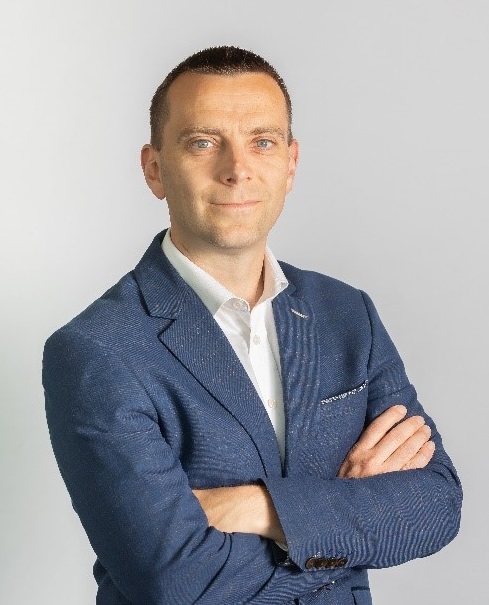
Simon, who was previously Head of Zero Carbon Strategy for the Aerospace Technology Institute (ATI), has over 20 years’ experience in aerospace engineering, technology and strategy leadership.
Prior to this, he was the Chief of Technology and Digital (Civil Aerospace) at Rolls-Royce, responsible for a portfolio of technology strategy and execution programmes globally.
Simon has a background in leading the development, design and manufacture of aerospace engines including the engineering teams on the world’s most efficient large aero-engine, the Trent XWB, and more recently the Rolls-Royce Titanium-Composite Fan System development activity.
He also sits on the board of directors for the JetPerfect Foundation, focusing on zero carbon flight technologies; and the technical advisory board of the ENABLE-H2 hydrogen research programme led by Cranfield University.
With his extensive industrial and technical background, Simon will help continue WMG’s work to accelerate new concepts in manufacturing into commercial reality, helping businesses tackle challenges with innovations in technologies, processes and materials.
Simon Webb comments: “I’m delighted to be joining WMG as Chief Technology Officer and by extension being part of the University of Warwick. I’m looking forward to further developing and applying the technologies and capabilities WMG has to offer into industry, and in doing so improving the sustainability of our transportation network and beyond. I expect to work closely across the High Value Manufacturing Catapult network to integrate our capabilities and so maximise the benefits to industry, the UK, and our global partners.”
Professor David Greenwood, CEO of WMG centre High Value Manufacturing Catapult says: “We are delighted to welcome Simon to the team. He brings with him a wealth of experience in aerospace and digital manufacturing, centred around zero carbon propulsion. Simon’s aerospace expertise broadens our depth of knowledge at WMG, and we are looking forward to learning more from him.”
Professor Chris Dungey, High Value Manufacturing Catapult CTO, says: “Simon is joining the HVMC family at an exciting time. We are entering a new chapter which will see the Centres across the network working more collaboratively than ever before, and I am looking forward to working with Simon and the wider CTO team to help the Catapult deliver industrial transformation for the UK.”
Find out more about the High Value Manufacturing Catapult centres here: https://hvm.catapult.org.uk/
WMG student recognised for outstanding engineering talent
 A student from WMG, at the University of Warwick, has been recognised for his hard work by the Institution of Engineering and Technology (IET).
Ezra Cunningham, who is employed by Jaguar Land Rover, has now completed the final year of his Applied Engineering Programme degree apprenticeship at WMG.
The IET Prize is awarded annually to outstanding students who are completing a course of study which has been accredited by the IET. Prize winners are nominated by their university based on having shown distinction in their course leading to the award of a first class degree.
As part of his win, Ezra will receive a certificate and two years free student membership of the IET.
Ezra Cunningham explains: “Thanks to the help of my lecturers, peers and colleagues at work, I have broadened my understanding of engineering. I’m looking forward to using this award to progress my career and target of studying an MBA in the next two years.”
WMG Associate Professor and Ezra’s mentor, Dr Tara Schiller adds: “I think it's a great achievement to come first in a cohort but to also achieve this award from the IET is well-deserved. I wish Ezra a wonderful future and look forward to following his career.”
Sir Julian Young, IET President, said: “Our IET Prizes are a terrific means for talented engineering students to be recognised for their outstanding ability in the early stages of their engineering journey. IET Membership provides early-career professionals with the valuable opportunity to connect with a global community, grow their networks and develop their technical knowledge.
“The IET is passionate about promoting engineering excellence and our awards and prizes showcase some of the finest engineering talent. All the winners should be justifiably proud of their achievements. I wish them all the best for a long, fulfilling and successful engineering career: they are all difference makers of the future!”
To find out more information about the range of prizes and awards available to young and aspiring engineers through the IET, please visit: www.theiet.org/awards
Find out more about WMG’s Degree Apprenticeships here: Degree Apprenticeships : WMG, University of Warwick
How to move fast (and safe): enabling automated transport by land, sea and air
Dr Siddartha Khastgir, Head of Verification and Validation of Connected and Autonomous Vehicles (CAVs) at WMG at the University of Warwick, is working on a series of workshops to define a universal framework for autonomous vehicle safety that can apply to any mode of transport.
Dr Khastgir’s workshops, in partnership with the Department for Transport and Lloyds Register, focus on identifying the differences and similarities in safety scenarios faced by different sectors to create a cohesive safety framework.
Watch How safe is safe enough? : land, sea and air and read the Cross Domain Safety Assurance Framework for Automated Transport Systems report: to find out more.
University of Warwick wins £1 million grant to help UK get ready for electric vehicles
- The funding will be used to launch a new programme called the Warwick Electrification Deployment (WELD)
- WELD will be contributed to by WMG's Power Electronics, Machines and Drives (PEMD) Group and the School of Engineering's Power Electronics group
- These two world class research groups will use Warwick’s unique facilities, as well as the university’s manufacturing and testing capability to help in the new education programme
- WELD is one of the winners of the ‘Driving the Electric Revolution: Building Talent for the Future 2’ competition, run by Innovate UK
- The new initiative will include industry workshops, outreach activity in school and increased teaching provision within PEMD
New content in power electronics, eMachines and drives will also be created at the University to use current expertise to both up-skill the existing workforce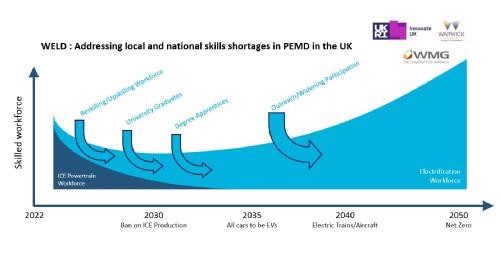 and support the pipeline of talent for future generations.
Finally, WELD will also focus on the design of IP-free eMachines, with parts manufacture, assembly and testing on campus to allow for hands-on learning.
As both transport and industrial equipment pivots from combustion technology to electrical power, skills for the design, manufacture and maintenance of electric drivetrains are increasingly in demand.
WELD will benefit from the two ‘Driving the Electric Revolution Industrialisation’ (DER-IC) facilities at the university: the Winding Centre of Excellence and the power electronics reliability and failure analysis space, both launching in Autumn 2022. The trained workforce will help UK businesses to develop and scale new PEMD technologies and manufacturing processes.
Dr Juliette Soulard, Associate Professor Electric Machines at WMG says: “Through our close collaboration with UK industry, we witness the huge difficulties faced when trying to recruit people with the right skills for PEMD research and development projects.
“The expertise exists in the UK, but the knowledge and skills transfer needs dedicated and urgent actions which normal higher education courses cannot deliver. WELD’s industry workshops with unique, hands-on learning about manufacturing and device testing aims to address this issue.”
Prof. Peter Gammon, Professor of Power Electronic Devices, Head of Research and Deputy Head of the School of Engineering says: “We are extremely proud to be leading the WELD project, which will help meet a national and international PEMD skills shortage.
“Our activities will also help increase the flow of engineering graduates into the industry via new PEMD and Automotive Electrification MScs, while an extensive outreach programme will help educate and inspire the next generation of engineers.”
ENDS
Note to Editors:
Useful Links:
Driving the Electric Revolution - Industrialisation Centres
WMG, University of Warwick
WMG is a world leading research and education group, transforming organisations and driving innovation through a unique combination of collaborative research and development, and pioneering education programmes. As an international role model for successful partnerships between academia and the private and public sectors, WMG develops advancements nationally and globally, in applied science, technology and engineering, to deliver real impact to economic growth, society and the environment.
WMG is one of the founding partners of the High Value Manufacturing (HVM) Catapult and leads HVM Catapult activities on Transport Electrification and Connected and Autonomous Mobility. The Catapult network’s mission is to leverage research and educational expertise to de-risk innovation for UK manufacturing, to improve business resilience, productivity, competitiveness and sustainability.
School of Engineering, University of Warwick
The School of Engineering benefits from its multidisciplinary approach, with research covering a broad range of topics. Key themes of Energy, Biomedical Engineering, and Future Cities, Materials and Manufacturing, and Technology and Society provide a framework to the research efforts, which are underpinned by four discipline streams and fourteen research groups. The School employs some of the leading engineers in their field, who regularly publish papers in top ranking journals. There are currently over 150 students undertaking postgraduate research degrees and 55 65 research post-doctorate staff.
DER-IC
DER-IC (Driving the Electric Revolution Industrial Centres) is building a globally recognised, sustainable UK-wide network with the relevant skills and capabilities to deliver the PEMD (power electronics, machines, and drives) necessary for a net zero future in all relevant applications. The network of DER-IC is instrumental in the UK’s progress towards its 2050 net zero target and a world leading response to the realisation of the industrial technology (IDT) revolution.
DER-IC is funded by UK Research and Innovation and was set up in 2020 as part of the Driving the Electric Revolution challenge.
DER-IC provides open access facilities to over £300 million worth of state-of-the-art equipment, bringing together the UK’s technology and manufacturing expertise in electrification research and development.
§ DER-IC is creating cost-effective, UK-based technologies and solutions, with export market opportunities, to help address and support climate change
§ DER-IC is educating about the art of what’s possible for governments, industry, academia, and schools
§ DER-IC is an industry led project which has so far engaged with 400 industrial organisations, as well as having 30+ academic institutions and RTO’s in its network
WMG welcomes guests from UTeM Malaysia
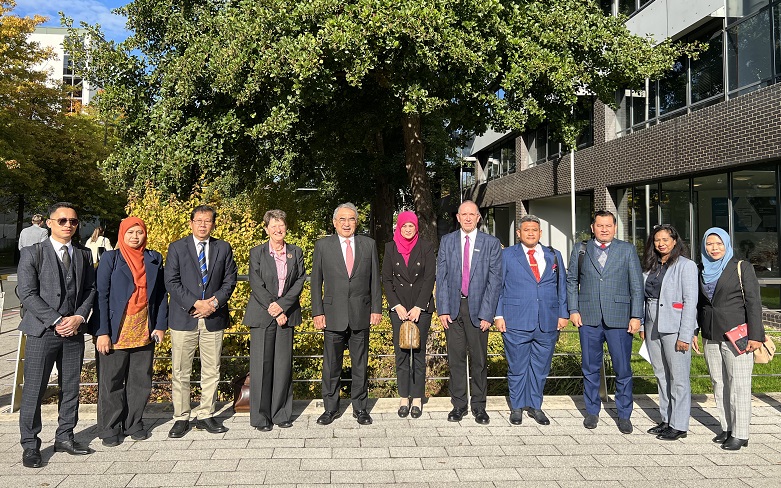 It was a pleasure to welcome guests from the Universiti Teknikal Malaysia Melaka (UTeM) to WMG at the University of Warwick on Wednesday 12th October 2022.
UTeM Chancellor cum Melaka State Governor, His Excellency Tun Seri Dr Mohd Ali Mohd Rustam; UTeM’s Vice Chancellor, Professor Dr Massila Kamalrudin; and UTeM’s Deputy Vice Chancellor (Research & Innovation) Professor Dr Ghazali Omar; were met by Dean of WMG Professor Robin Clark, University of Warwick Provost, Professor Christine Ennew; and WMG’s Director of Client and Business Development (East Asia) Dr Kogi Balakrishnan,
His Excellency was particularly interested to hear more about WMG’s research addressing net zero including energy innovation, very light rail, smart cities and the future of engineering.
The guests were then given a guided tour of WMG’s world class battery research facilities in the Energy Innovation Centre (EIC), before being given a demonstration of the 3xD Simulator in the International Manufacturing Centre, the world's first immersive, simulated environment for smart and connected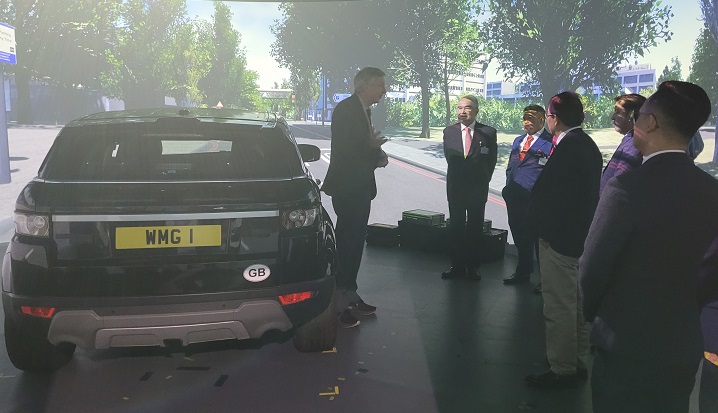 vehicles.
Finally, the delegation was taken to WMG’s Centre for Imaging, Metrology and Additive Technologies (CiMAT) where the group learnt more about scanning technologies for the 3D characterisation and validation of complex internal and external architectures, including high resolution laser scanning, micro-CT and advanced 3D visualisation.
Professor Robin Clark, Dean of WMG at the University of Warwick said: “It was a pleasure to welcome our guests from UTeM and to share the work we are doing here at WMG. What became apparent at the outset was the synergy between the two institutions with respect to the applied way in which we both view our work, whether education or research. I look forward to further discussions and I hope some form of future collaboration.”
His Excellency Tun Seri Dr Mohd Ali Mohd Rustam said: “In line with UTeM’s vision and mission, it is hoping that WMG and UTeM can start fostering collaborations in research and training. WMG’s broad experience and innovation output may lead UTeM to become the leading innovative and creative technical university in the region. Gratitude to WMG for the warm welcome and hospitality during UTeM’s visit to WMG.”
UTeM was established in December 2000, and boasts strengths in technical fields – namely Engineering, IT, and Management Technology. UTeM has cemented a reputation of being a source of high-quality engineering graduates with the capability of meeting the requirements of high-tech industries.
Find out more about UTeM here.