
WMG News - Latest news from WMG
New programme launches in Westminster which aims to put the UK at the forefront of hydrogen innovation
An initiative which is designed to support and foster the creation of a new hydrogen economy in the Midlands has been formally launched at the House of Lords, to an audience of MPs, peers, businesses, academics and senior civil servants.
‘HyDEX’ brings together the university partners in the Energy Research Accelerator (ERA), including WMG at the University of Warwick, with multinational businesses, SMEs and other partners, in order to accelerate innovation in hydrogen, build markets and the supply chain, and support the skills needed for the new hydrogen economy.
The aim of HyDEX is to address the challenge of building a thriving new business, industrial and manufacturing sector in hydrogen, where very little currently exists. The programme allows businesses to accelerate the development and viability of new hydrogen products and associated intellectual property, while supporting the transition from declining industrial sectors and enabling the training and re-skilling required.
The £4.99 million, three-year programme, funded via the RED Fund scheme and run by Research England (part of UK Research and Innovation - UKRI), will see the ERA university partners making available their £111m worth of hydrogen facilities, large scale demonstration programmes, and research capabilities to regional businesses.
HyDEX is being supported by the expertise of leading industrial partners in transport, heating and manufacturing technologies, these include Worcester-Bosch and Cadent (hydrogen boilers and gas networks); Intelligent Energy (fuel cells); Toyota (hydrogen vehicles); FAUN Zoeller (heavy vehicles); Cenex, EQUANS (Hydrogen Networks); Progressive Energy, ITM Motive (hydrogen generation and transport respectively); Siemens and ENGIE (hydrogen production and storage).
The universities involved in the programme include Keele (project lead), Aston, Birmingham, Cranfield, Loughborough, Nottingham and Warwick. Civic partners such as the Midlands Engine, LEPs, local government and local authorities, will also add their weight to support the creation of a market for low-carbon hydrogen solutions as part of the net-zero transition.
There is also an international dimension to HyDEX, which is facilitating links with growing international markets in countries such as China, Australia and South Korea, where ERA partners have strong connections, in order to build commercial opportunities that reach beyond the Midlands and the UK.
The event at the House of Lords on Wednesday 15th June included presentations from Lord Teverson, Professor Trevor McMillan, Vice-Chancellor of Keele University, Professor Martin Freer Director of the Energy Research Accelerator, and Dennis Hayter, Vice-President of Intelligent Energy.
Speaking about HyDEX, Professor Trevor McMillan, Vice-Chancellor of Keele University, which is leading the programme, said: “We are very excited to be launching the HyDEX programme and leading it from Keele University. At Keele we have been leading the way in researching the use of hydrogen in the domestic gas heating system and in smart energy systems.
“This experience and expertise, when combined with the wealth of knowledge in the ERA partnership and our collaborators will enable HyDEX to make a significant impact on the use of hydrogen in the future.”
Professor Martin Freer, Director of the Energy Research Accelerator, added: “The ERA universities have invested significantly in hydrogen infrastructure, creating an array of great facilities and demonstration projects. The HyDEX programme will see experts from our universities, working with Midlands’ businesses to use these facilities to develop new, innovative products.”
Dr Sharon George of Keele University, Principal Investigator for HyDEX, commented: “I am looking forward to leading the HyDEX programme. It will be a great challenge - we are seeking to support the building of a hydrogen economy where one currently doesn’t exist. I am confident that with our academic, industrial and public sector partners, we will be able to demonstrate the commercial potential of hydrogen technologies, support businesses to create products, and build the skills base needed to support the transition to hydrogen.
 Alok Choudhary, Professor of Supply Chain Management and Head of Supply Chain Research Group, at WMG, University of Warwick said, “We are thrilled to be working with the HyDEX group of Midlands universities, businesses, and international partners. At WMG, our work stream will focus on establishing and strengthening the supply chain of hydrogen production, developing business models, and ensuring its sustainability for transitioning to the hydrogen economy in specific sectors. The UK government's Hydrogen Strategy is a significant step in the low carbon hydrogen development and is central to the UK's net zero strategy."
Dennis Hayter, Vice President of Intelligent Energy, said: “For Intelligent Energy and the other business partners involved in the programme, HyDEX provides a unique opportunity for us to develop and test our technologies and prove the worth of hydrogen as a crucial green energy source for the UK and world, as we transition to a net-zero society.”
More details about HyDEX can be found at: http://www.hydex.ac.uk/
ENDS
For more information about this press release, please contact Nick King, Marketing and Communications Manager for the Energy Research Accelerator on 07974 690632 or email mailto:nick.king@era.ac.uk
About the Energy Research Accelerator (ERA)
ERA consists of the partner universities of Midlands Innovation (Aston, Birmingham, Cranfield, Keele, Leicester, Loughborough, Nottingham and Warwick), and also the British Geological Survey (BGS). ERA aims to harness the Midlands’ combined research excellence and industry expertise to play a critical role in tackling some of the biggest challenges facing the UK. Via Innovate UK, the government committed an initial capital investment of £60m, and ERA has secured additional co-investment of £120m. This has been invested in 23 state of the art facilities which are being used by university and industrial researchers to develop new energy innovations.
Specialist electric motorcycle project hailed a great success
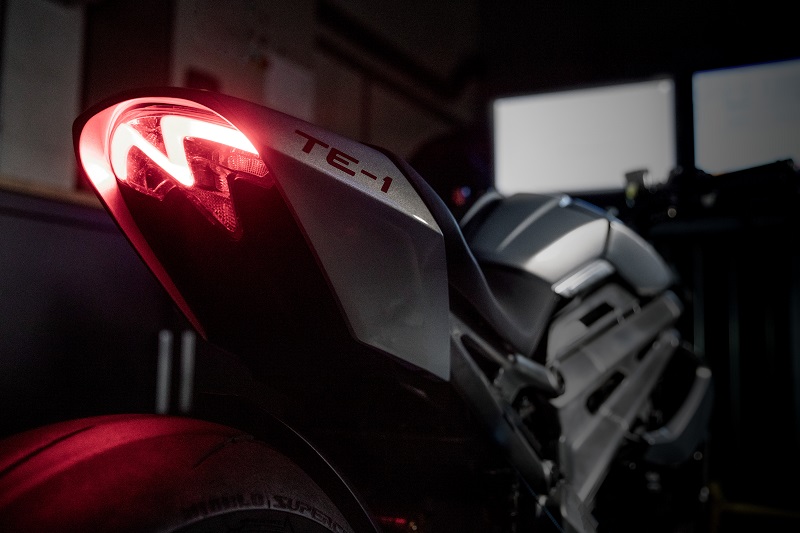 Today (Tuesday 12th July 2022), marks the official completion of the Triumph TE-1 electric development project, a unique four-way partnership between WMG at the University of Warwick, Triumph Motorcycles, Williams Advanced Engineering and Integral Powertrain Ltd e-Drive Division.
The TE-1 project was funded by the Office for Zero Emission Vehicles through Innovate UK, and was set up to create ground-breaking developments in specialist electric motorcycle engineering and innovative integrated technology design. The project provides an input into Triumph’s future electric motorcycle offering, driving innovation, new standards, capability, and new intellectual property, whilst enhancing the credibility and profile of British industry and design.
Driving lower environmental impact transportation, and delivering against the UK’s focus on reducing emissions, the project also aimed to develop strong, commercially viable and sustainable partnerships with UK industry manufacturers and supply chains, whilst building expertise and capability within the UK workforce.
Nick Bloor, CEO, Triumph Motorcycles, said: “We are incredibly proud to be able to share such positive outcomes from the completion of Project Triumph TE‑1, where the prototype demonstrator has exceeded many of our initial targets and expectations. Everyone on the team is thrilled with the results we have achieved with our partners, and how the outcomes of the project will feed into the electric future to come from Triumph.”
Released today, the final testing results show how the TE-1 prototype has delivered on all targets and objectives following an extensive live testing programme which involved numerous assessments of the bike’s performance on a rolling road as well as on track.
WMG’s role in the project was to provide electrification expertise, and the critical vision to drive innovation from R&D to commercial impact, through modelling and simulation based on future market needs.
Highlights from the testing results include a standing start acceleration of 0-60mph in 3.6 seconds, peak power of 130kW (177PS / 175bhp) as well as peak torque of 109Nm (80 lb-ft), a 20-minute charge time (0-80%) and a 161km / 100-mile range based on official testing and projections. At 220kg (485 lb), the TE-1 prototype is also lighter than the equivalent electric bikes available currently by up to 25%.
Professor David Greenwood, CEO of the High Value Manufacturing Catapult at WMG, University of Warwick, explained: “To meet our ambitious emission reduction targets in the UK we will have to rethink the way we travel, not only transitioning from ICE to electric propulsion vehicles, but also encouraging a modal shift away from private cars. Electric two wheelers have a pivotal role to play in the transport revolution as a zero-tailpipe emission option.
“In our partnership with Triumph, WMG used our research experience in electrification to demonstrate manufacturers can deliver products with a lower emission burden as well as outstanding performance-offering customers an EV that is great fun to ride.”
Read more about WMG’s Transport Electrification research here: Energy (warwick.ac.uk)
UK closer to net-zero steel thanks to new WMG and Tata Steel partnership
More sustainable, low-carbon steel and electric vehicle batteries are the target of a new two-year technology development programme between WMG at the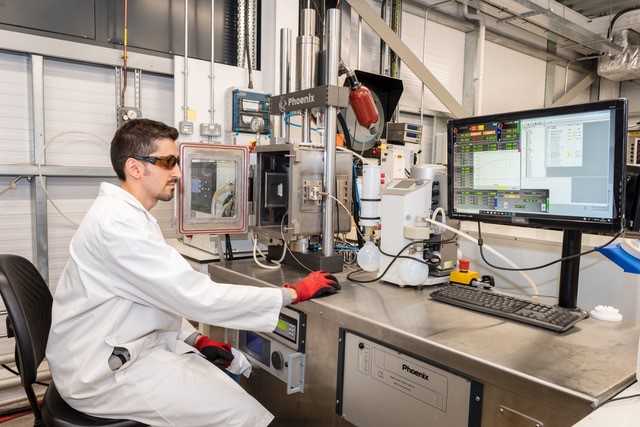 University of Warwick and Tata Steel, as part of the High Value Manufacturing Catapult.
The two major partners will come together to focus on developing new environmentally-friendly steel grades, coatings, films, and battery structures – enabling the growth of steel application across key industrial sectors as the UK advances towards a net-zero future.
This partnership builds on the long-standing relationship between both parties and will see them collaborate to make steel cleaner, greener and more responsive to the fast-changing needs of customers across a variety of sectors.
Researchers, led by Professor Claire Davis, at WMG, University of Warwick, will be working alongside experts at Tata Steel in the UK to translate and apply outputs from the early-stage research across key UK manufacturing priority areas including advanced materials and light-weighting, electrified propulsion system applications, digital manufacturing and net-zero manufacturing including circular supply chains.
The initial research activity will be focused across five core themes: Product metallurgy; Surface state optimisation; Non-metallic coatings; Future material applications and Material forming/joining and associated characterisation.
Professor David Greenwood, CEO of the High Value Manufacturing Catapult at WMG, University of Warwick, explained, “WMG has worked with Tata Steel on projects for many years, and this partnership will see the collaboration grow across key research themes, including decarbonising the supply chain and enabling future applications of steel across zero carbon propulsion systems and transport vehicles. This activity will include identifying new collaborative relationships and developing world-class technology for the future of the UK steel industry.”
Dr. Sumitesh Das, Director of R&D, Tata Steel, explained: “This is a critical partnership for us to help support new product development with low carbon footprints across various market segments. It also strengthens our ongoing work including building technology capability and expertise in the UK in manufacturing.”
-ENDS-
Notes to Editors
Press Contacts:
Simmie Korotane. Media Relations, University of Warwick, Email: mailto: Simmie.korotane@warwick.ac.uk
Tim Rutter, Head of Public Relations, Tata Steel UK, M: +44 (0)7850 990755, E: mailto: tim.rutter@tatasteeleurope.com
Battery tech pioneer Britishvolt strengthens partnership with WMG, University of Warwick, to ramp up UK electric vehicle battery production
- The multi-million-pound [£] project with WMG, University of Warwick, is pioneering battery technology in the UK
- Research from WMG, University of Warwick, will help Britishvolt to ramp up the availability of batteries for electric vehicles, and other applications, in the UK and beyond
- The project is accelerating Britishvolt’s business plan to deliver a 38GWh battery Gigaplant, one of the largest industrial investments ever undertaken in the UK
- Britishvolt recently announced exciting plans for a scale-up production centre in the epicentre of the automotive industry located at Hams Hall, West Midlands, creating what it calls a “Battery Corridor” – linking the Northumberland site with the UK’s automotive heartland
- The Gigaplant will build enough cells each year for well over 300,000 electric vehicle battery packs, equivalent to [c]25% of current UK vehicle manufacture, securing Global Britain’s position on the sustainable battery production map
WMG has partnered with leading sustainable, low-carbon battery manufacturer, Britishvolt on a two-year multi-million-pound project which is pioneering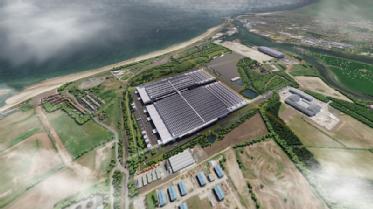 battery technology in the UK.
More batteries for electric vehicles will become available in the UK thanks to research from WMG, at the University of Warwick and its partnership with battery tech pioneer Britishvolt.
The project is helping Britishvolt to deliver a 38GWh battery Gigaplant, one of the largest industrial investments ever undertaken in the UK. The facility, located in the North-East of England, will quickly increase the availability of batteries required at commercial scale for the electric vehicle market – playing a key role in helping the UK reach its carbon net zero target by 2050.
Following an initial 12-month project, Britishvolt and WMG are now embarking on a two-year programme of work. WMG’s research will assist with battery cell development and optimisation including small-scale manufacturing to produce battery electrodes and cells using Britishvolt target materials sets, formulations and cell designs. These will then be tested according to Britishvolt’s agreed protocols.
Professor Dave Greenwood, CEO of the High Value Manufacturing Catapult at WMG commented: “WMG is delighted to be supporting Britishvolt as they set up large scale battery manufacturing and research facilities in the UK. This industry will be critical for the future of the UK automotive and energy sectors. WMG has been investing over the last decade in the research and development capabilities needed to help Britishvolt and other battery companies to be internationally competitive now and in the future”
 Dr Allan Paterson, Chief Technical Officer, Britishvolt, concluded: “Britishvolt are delighted to extend and expand our relationship and programme of work with WMG. The battery science, advanced materials and cell prototyping expertise and capability at WMG has directly, and positively, supported our battery technology development programme. This gives us not only an excellent basis to progress from, as we seek to scale and commercialise our technologies, but the relationship also enables Britishvolt to continue to develop our products further, as we continually strive to deliver best-in-class, market-leading, cell technologies to our customers.”
Britishvolt: Power with Purpose
The Northumberland Gigaplant – Britishvolt’s first large, full-cycle Gigaplant in the UK - will have a total capacity of over 38 Gigawatt Hours by the end of the decade and will produce enough cells far in excess of 300,000 electric vehicle battery packs per year, intended primarily for use in the automotive industry. The development is a major boost for Northumberland, and the UK, delivering around 3,000 direct skilled jobs and another 5,000-plus in the associated supply chains.
Britishvolt’s collaborations with academia, industry and private enterprise will also help transition the UK from fossil fuels to a low carbon, battery-based electric future.
The release of an official A-sample battery cell to customers, which is scheduled later in 2022, will help to further accelerate commitments.
Britishvolt recently announced that it will develop its UK battery cell scale-up facility in the West Midlands, home to the internationally renowned battery ecosystem With a budget exceeding £200m, the plan looks to create upwards of 150 highly skilled, well-paid jobs; unifying the Britishvolt Northumberland Gigaplant with a centrally located scale-up/technology hub
The Hams Hall site will spearhead new cell formats and electro chemistries to create higher performance, production ready, batteries of the future whilst helping lower cell costs for more affordable EVs, aiding mass adoption
Britishvolt is one of the fastest growing battery technology companies in Europe and globally. The company is also in discussions with the Canadian Government regarding its expansion plans in the country.
Watch Britishvolt’s Battery Research video: https://www.youtube.com/watch?v=3UlDcUjMhiE
WMG supports a national employability programme
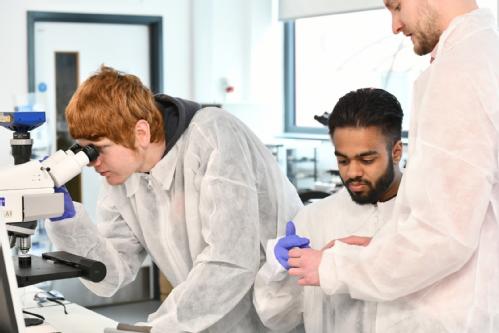 Staff from WMG, at the University of Warwick, were proud to support the EY Foundation’s Beyond Your Limits employability programme, helping care-experienced young people with their future careers.
The new partnership between Warwick, led by the University’s Social Inclusion Group, and the EY Foundation has been made possible with funding through a UKRI Higher Education Innovation Fund.
Beyond Your Limits aims to develop key skills that are essential for helping young people reach their true potential as they take their first steps into a career, apprenticeship, or further education. A total of eight young people enrolled on the 2021/22 programme with the University of Warwick.
Part of the programme required the young people to take part in a workplace experience, so the Social Inclusion Group worked to align the young people with departments that would support their career aspirations and interests.
The Beyond Your Limits programme has been specifically designed for care-experienced young people in education, aged 16-19. On the programme they receive paid employability training, work experience placements, a personal development grant, a business mentor and progression coach.
Three of the eight students were allocated to a WMG Research Fellow, Dr Craig Carnegie, who acted as a business host, providing five and a half days of structured work experience, facility tours and opportunities to network within WMG.
Craig explained: “I created tailored individual programmes for the students; taking into account their personal interests of aerospace, manufacturing and photography. They completed the various tasks on campus during the Easter and May school holidays. This project gave them the opportunity to experience real world research and engineering, at a time when they are choosing their paths to take for their future careers.
“It was a very rewarding experience, and although the placements have now finished, I’m still available for contact if they need support with job applications, helping them to improve their employability and professional networks. They were a remarkable group of young people, and I am looking forward to seeing what they go on to achieve in the future.”
Professor Margaret Low, WMG’s Director of Outreach and Widening Participation, explained: “Craig’s contribution to this project will have made a marked impact on these young people. It is so important that universities provide role models and support to the people who will make up the workforce of the future to ensure that science and engineering roles are accessible to people from all backgrounds. Thanks to Craig’s efforts with the EY Foundation WMG has been able to further support widening participation in higher education.
“We hope to be able to work with the EY Foundation and Warwick’s Social Inclusion Group again in the future."
Read more WMG Outreach news here: Public engagement and Outreach (warwick.ac.uk)
WMG supports Norton Motorcycles as they announce plan to build electric motorcycles in the UK
WMG, at the University of Warwick, is supporting Norton Motorcycles in its intention to begin developing electric motorcycles in the UK after winning significant investment through a government scheme.
The iconic British motorcycle brand has been awarded funding by Advanced Propulsion Centre (APC) 19, an initiative which aims to assist businesses in the automotive sector in advancing their low-carbon offering while helping to accelerate the UK towards a net-zero automotive future, a future that Norton fully embraces.
As demand for electric motorcycles and micro-mobility solutions grow, the project, Zero Emission Norton, will expand Norton’s ever-growing electric vehicle engineering capabilities and develop world class electric motorcycles.
To deliver this ambitious project, Norton will work with specialist project partners who have the same vision for innovation in production of world-class electric motorcycles. The team encompasses Delta Cosworth, HiSpeed Limited, Formaplex Technologies, M&I Materials, INDRA and academic partner WMG at the University of Warwick.
Each partner on the project will have a specialist part to play in project Zero Emission Norton. Delta Cosworth will design the battery pack, while HiSpeed Limited bring motor design and manufacturing skills. Formaplex Technologies have expertise in precision composites manufacturing and M&I Materials will support on applications of dielectric cooling oils. INDRA specialise in vehicle to home charging technology and WMG major on battery technology, modelling and toolchain development.
Norton will work alongside these partners to develop world-class technology and products that will enhance the UK supply chain for all the critical components in electric vehicle (EV) technology including batteries, motors, chassis, cooling oils and vehicle to home chargers.
As a result, the 30-month project is expected to create a significant number of jobs in the UK in manufacturing and R&D as well as upskilling existing staff to be capable of electric motorcycle engineering. This in turn will help address the UK skills shortfall in that space while returning the UK to the position it last enjoyed in the 60’s, as the global technology leader for motorcycles.
Andrew McGordon, Reader, Energy Applications Group at WMG, University of Warwick, said: “WMG is excited to be a partner in this project exploiting our research in battery and systems modelling to develop a zero-prototype modelling and validation methodology, including predictive smart charging and Vehicle to Grid technology. We will bring extensive electrification experience to this project having worked across many sectors already.”
Robert Hentschel, CEO Norton Motorcycles commented: “This significant funding investment is a momentous milestone for the brand as it marks the beginning of our electrification journey and fulfilling our ten-year product plan.Norton is an exemplar of modern luxury and unafraid to challenge the status quo, innovating for the future of mobility while staying true to our British heritage. It also brings into focus our desire to support the UK in its mission for a net-zero automotive future.
“Working alongside our world class partners, we’re confident that project Zero Emission Norton will eliminate the current dispute between a conventional and electric motorcycle to create EV products that riders desire – motorcycles that blends Norton’s uncompromising design DNA with racing performance, touring range and lightweight handling.”
Ian Constance, Chief Executive of the APC said: "The projects receiving today’s investment highlight the breadth of technologies needed to help the UK accelerate to net zero emissions. They’re reimagining not just vehicles, but transport in general.
"Norton are an iconic British brand with a proud history. From making motorcycles to support the second world war effort to developing the world’s first production superbike, they are now looking to the future with an electric bike that will deliver both performance and range radiating from a UK manufacturing base and strengthening highly-skilled jobs and green growth."
Ends
For any enquiries, please contact Stephanie Staff at Performance Communications on
07798 897 692 or email norton@performancecomms.com
Website: www.nortonmotorcycles.com
Carbon, cost and battery conditioning benefits calculated for vehicle-to-grid chargepoints
Vehicle-to-grid chargepoints can improve battery life in electric vehicles and reduce carbon emissions and costs of charging, a government-funded project has found.
Research from the EV-elocity project shows that, by careful charging and discharging, EV battery degradation can reduce by one-eighth, and, in some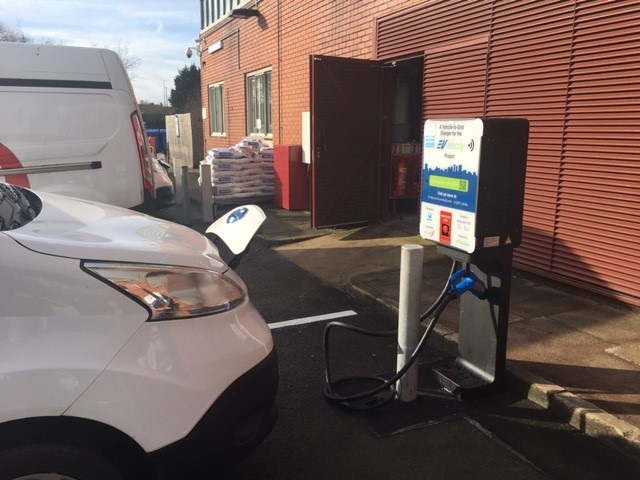 situations, up to 450 kg of emitted carbon dioxide (CO2) or £400 could be saved per vehicle each year.
Vehicle-to-grid (V2G) can balance the calendar and cycling aging (both of which affect the rate of battery degradation) to optimise the battery condition and improve its health by 8.6 – 12.3% over one-year’s operation, compared to conventional charging alone - equivalent to one extra year of use.
In cost-terms, V2G tariff optimisation can save around £100 per year per charge point on normal business electricity tariffs, with up to £400 saved on a smarter tariff.
If managed to maximise the environmental benefit, nearly half a tonne of annual CO2 emissions can be saved, and significant savings (over 180 kg) can be made even when reducing cost is the main goal.
Chris Rimmer, Infrastructure Strategy lead at Cenex and the project’s lead project manager, said: “Our conclusions show that it is not necessary to trade-off financial, environmental and asset lifetimes when charging Electric Vehicles. Cost, carbon, and conditioning benefits can all be gained when V2G is used intelligently with fleet vehicles.”
Professor Lucelia Rodrigues of the University of Nottingham added “a key challenge for an optimum application of V2G technology is to synchronize the needs and requirements of the users and the energy and transport systems. Our work correlated variables such as user needs, mobility patterns and renewable electricity generation to evolve different possible scenarios for the application of V2G chargers, with a view of maximizing local renewable energy consumption, lowering costs for the user, improving battery life and reducing carbon emissions from the whole system.”
“Our experimental research highlighted the potential to extend battery life by exploiting the unique capability of V2G chargers to both charge and discharge the vehicle battery”, commented Professor James Marco of WMG, University of Warwick. “By careful optimisation of this process and knowing how the battery performance may degrade over time, it is possible to condition the battery to extend its life in a number if situations when compared to conventional methods of vehicle charging.”
The EV-elocity Project was funded by Innovate UK, the Department for Business, Energy and Industrial Strategy, and the Office for Zero Emission Vehicles between September 2018 and January 2022; it was led by Cenex and comprised CrowdCharge, Leeds City Council, Nottingham City Council, University of Nottingham and University of Warwick in a second phase from January 2020.
The project deployed 15 chargepoints across nine sites - including West Midlands Police, Leeds City Council and the University of Nottingham Creative Energy Homes campus. Two of charger from eNovates and Nichicon were managed by a technology-agnostic operating system, demonstrating V2G across the different trial sites within the UK.
The final report presents the findings and lessons learned for future vehicle-to-grid deployment.
Ends
Notes to editors:
The EV-elocity project is part of the Vehicle-to-Grid (V2G) competition, funded by the Department for Business Energy and Industrial Strategy (BEIS) and the Office for Low Emission Vehicles (OLEV), in partnership with Innovate UK, part of UK Research and Innovation.
In January 2018, OLEV and BEIS announced that 21 projects (8 feasibility studies, 5 collaborative research and development projects, and 8 real-world v2g trial projects) were to receive funding of £30m to develop the business proposition and the core technology to support Vehicle 2 Grid deployment in the UK, including its demonstration with large scale trials.
The projects involve more than 50 industrial partners and research organisations from both the Energy and Automotive sector, marking the largest and most diverse activities on V2G in the world, and trialling more than 1,000 vehicles and V2G charger units across UK.
The V2G projects represent a significant step towards the transition to a low carbon transportation and a smart energy system. Allowing EVs to return energy to the Power Grid when parked and plugged for charging, will increase Grid resilience, allow for better exploitation of renewable sources and lower the cost of ownership for EV owners, leading to new business opportunities and clear advantages for EV users and energy consumers.
WMG appoints new Pro-Dean
 Professor Gill Cooke has been appointed as the new Pro-Dean (Education) at WMG, University of Warwick, bringing a wealth of knowledge and experience from both academia and industry.
Professor Cooke joins WMG from the School of Engineering, where she was Head of Teaching for almost six years. Prior to that she spent many years in various teaching and management roles at Coventry University including Associate Dean.
Gill left school at 16 to embark on an Engineering Technician Apprenticeship at Dunlop Aviation in Coventry. After completing her apprenticeship Gill qualified as a Quality Engineer working at Dunlop Aviation, Alvis Aerospace, and Jones and Shipman.
At WMG, Gill will develop and oversee the department’s strong education portfolio from undergraduate degrees and degree apprenticeships; to postgraduate degrees; overseas programmes; and professional education courses at the WMG Skills Centre, focusing on both the quality of the provision and the student experience.
Professor Cooke comments: “I’m incredibly passionate about apprenticeships and developing skills. I firmly believe that companies need diverse workforces that represent an inclusive society.
“Industrial demand for new skills and emerging talent is high. Companies are constantly looking to develop solutions to the complex challenges facing society, the economy and the environment. Now more than ever, bridging the gap between academia and industry is crucial in providing a student educational experience that meets industry needs.
“WMG’s approach to bridging this gap resonates strongly with me, and I’m really excited to be joining the team.”
Professor Robin Clark, Dean of WMG comments: “Gill’s appointment is an important step forward for WMG’s Education work. Her student centred and creative approach to learning and teaching will help guide the department as it seeks to enable learners from a diverse range of contexts to realise their aspirations. Gill is also passionate about the development of her colleagues and I am sure they will all benefit from her leadership.”
Find out more about WMG’s education programmes here: Education (warwick.ac.uk)
Researchers develop technology solutions to enhance the safety and efficiency of connected and autonomous vehicles in complex road junctions
Researchers at WMG, University of Warwick have developed technology solutions for safer and more efficient automated driving when navigating complex road junctions such as roundabouts.
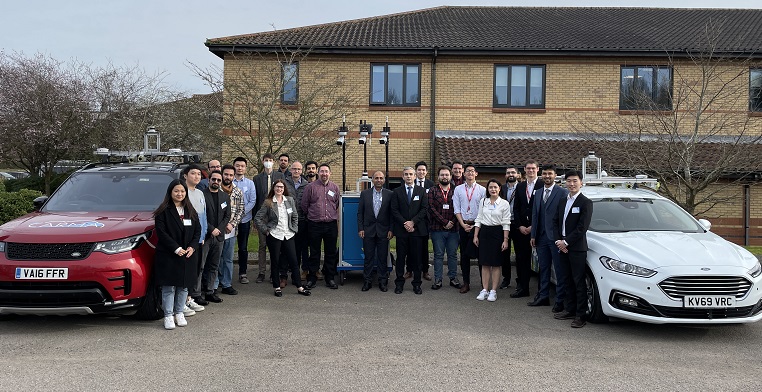 Working in partnership with Jaguar Land Rover, TRL and the University of Surrey, researchers from the Intelligent Vehicles directorate at WMG, University of Warwick have implemented a Proof of Concept demonstrator. This demonstrator focusses on unleashing the power of Edge and Cloud Computing, using a “connected roundabout” at the University of Warwick’s main campus.
The Cloud Assisted Real-time Methods for Autonomy (CARMA) project, is part of the £11m TASCC programme funded by the Engineering and Physical Sciences Research Council (EPSRC) and Jaguar Land Rover. Supported by WMG’s Centre High Value Manufacturing Catapult, the CARMA project was established with the intention to create secure and resilient cloud-based platforms to enable safe and robust semi-autonomous functions on future cars in the short term, and with the vision of achieving fully autonomous vehicles.
Professor Mehrdad Dianati, Head of Intelligent Vehicles Research at WMG, University of Warwick said: “We expect autonomous vehicles to be much safer, much more efficient and much more comfortable than human driven vehicles. Unfortunately, with existing sensor and computing technologies, it is difficult and expensive to achieve the level of accuracy and reliability of the perception of the environment that’s expected.”
“CARMA not only demonstrates how these concepts could be implemented in practice, but also highlights what the impact of such technologies might be. This research will help manufacturers, technology developers, policy makers and road operators to make informed decisions on how they will adopt technologies in future road infrastructure, regulations, products and services.”
CARMA researchers installed eight infrastructure cameras, as off-board sensors, at the roundabout to monitor the environment and stream video to a base station called ‘Edge’. Using two-way communication, the Edge processes its own live information with information received from nearby connected vehicles. This processed data containing object, traffic, road layout and lane availability information is broadcast and received by the vehicles.
Dr Graham Lee, Principal Engineer at WMG, University of Warwick, added: “At complex road junctions, the CARMA platform can help enable on-road autonomy by providing additional real time data about the environment through the use of off-board sensors and computing. This gives vehicles the ability to navigate complex road junctions safely and efficiently.”
Dr Saber Fallah, Director of the Connected Autonomous Research Lab at the University of Surrey commented: “This technology enables new business models for the transportation system in alignment with the rise of shared mobility. In addition, autonomous vehicle technology also highlights the potential for how elderly people or disabled people can benefit from the joy of driving from point A to point B safely.”
The testing infrastructure was supported by the Midlands Future Mobility project, Innovate UK and the Centre for Connected and Autonomous Vehicles of the UK Government. The Open Innovation Platform research vehicle used within the project was developed with support from the High Value Manufacturing Catapult and used alongside the CARMA research vehicle provided by JLR.
Over ten follow-on projects have been inspired by CARMA, as technological, regulatory and business challenges are to be overcome before the concept can be deployed on a mass scale. Through the project 23 early career scientists and engineers were trained and three patents were granted along with 40 publications on the work carried out.
WMG hosts visit from the Zambian Government
On Friday (27th May), Professor Robin Clark, Dean of WMG, at the University of Warwick, was pleased to welcome representatives from the Zambian Government.
A total of five delegates led by the Minister of Education, Hon. Douglas Siakalima, enjoyed a tour of WMG’s world-class research and education facilities. Mr Siakalima was joined by Permanent Secretary at the Ministry of Education, Joel Kamoko; Director at the National Science Centre at the Ministry of Education, Dr Benson Banda; Director at the British Council Zambia, David Pardoe; and Acting Zambian High Commissioner to the UK, Patricia Chanda.
The tour began in the International Manufacturing Centre (IMC) where the guests had a chance to see student engineering projects, before Professor Paul Jennings, Pro-Dean (Research) introduced WMG’s 3xD Simulator for Intelligent Vehicles – the world's first immersive, simulated environment for smart and connected vehicles.
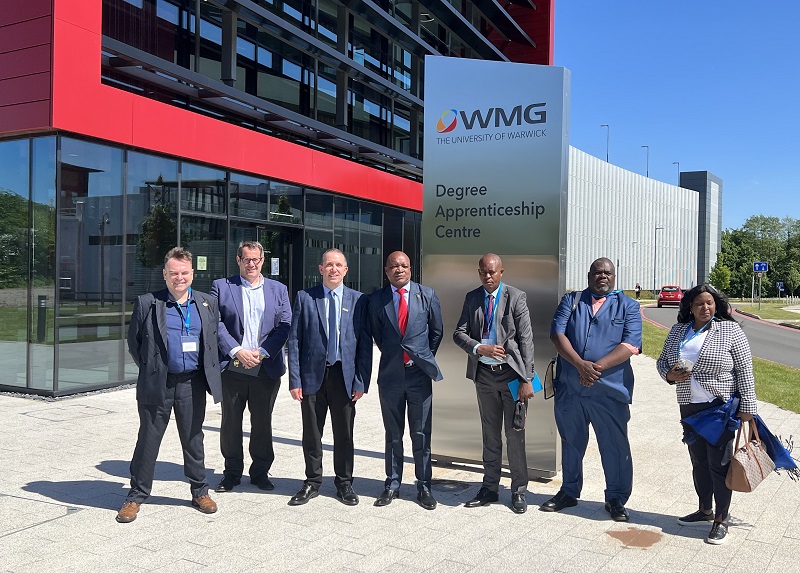 The delegation was then given a guided tour of the Degree Apprenticeship Centre, by Professor Robin Clark. The new Centre helps to bridge the skills gap by providing apprentices with the opportunity to study on degree programmes to develop the skills needed by advanced engineering and manufacturing companies.
Professor Robin Clark, Dean of WMG, said: “It was an honour to meet Mr Siakalima and his colleagues, and to demonstrate how we are helping to drive technology, engineering and manufacturing forward through impactful research and innovative approaches to education.
“The ability of an organisation to equip its workforce with relevant skills will largely determine how well it responds to rapidly evolving requirements. By welcoming the Zambian Government, we were able to share best practices around skills provisions with a view to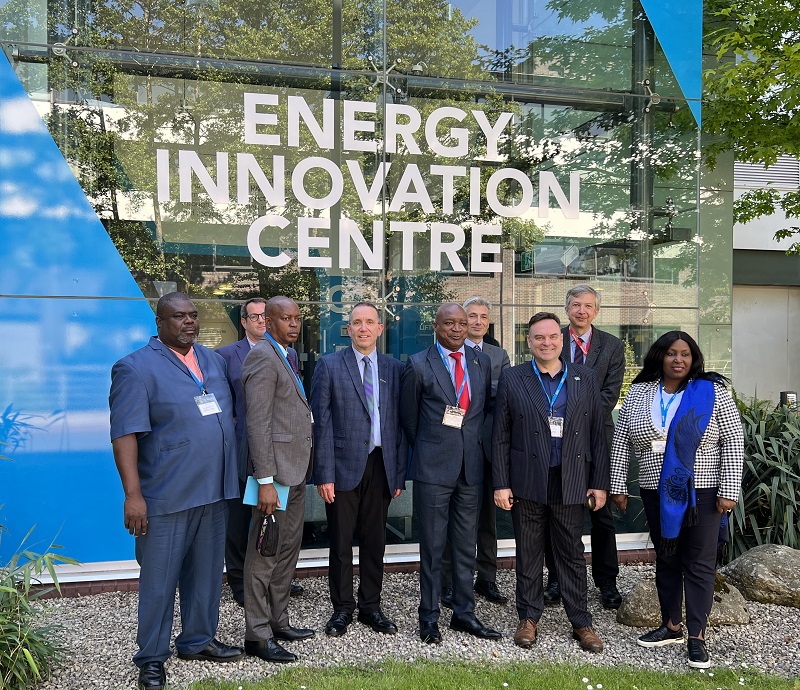 maximising societal, economic and environmental opportunity for future generations.”
Finally, the delegation visited the Energy Innovation Centre (EIC) where Chief Engineer, Mark Amor-Segan demonstrated the facilities used to research, develop and test the latest technologies at the forefront of energy storage including electric vehicles. Professor James Marco, Head of the Energy Directorate, and Professor Daniel Branch (Co-Academic Director, Africa in the International Relations and Strategy Group at Warwick) also joined the tour and subsequent discussion.