
WMG News - Latest news from WMG
Reusable and customised facemask to keep healthcare workers safe thanks to digital supply-chain
 Throughout the pandemic the filtering facepiece 3 respirator (FFP3) mask was heavily in demand, as it is the most widely used respiratory protective equipment in UK healthcare system. However, according to a study with health workers from 32 hospitals, the overall fit-testing pass rates had a mean pass rate of 81%.
MyMaskFit with their NHS Nurse co-Founder saw this statistic in reality in setting up the COVID-19 Wards, and with inspiration from the Ventilator Challenge UK they have created a reusable, customised facemask to protect medical workers during and after the pandemic.
The mask is unique as it has:
§ Fully customised fit according to individual’s face. This will ensure a high fit-testing pass rate and better protection.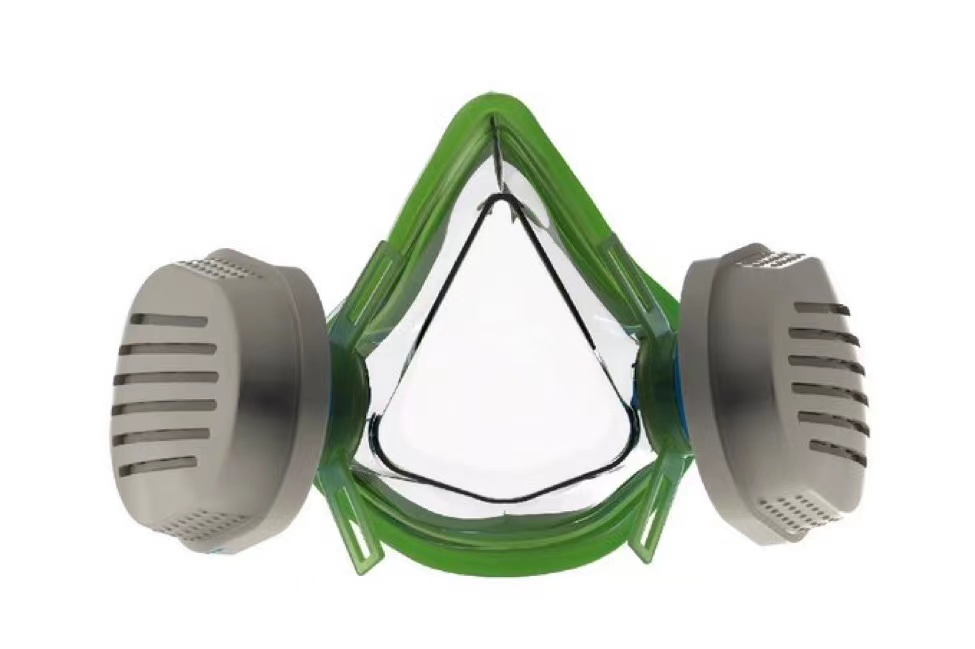
§ Different from the traditional one fits all masks, customised mask will also provide the most comfortable wearing experience that enable clinical workers wearing them for long time.
§ Local 3D printing supply chain to ensure a fast and flexible reaction to the demand with short lead time.
However, to ensure MyMaskFit could be rolled out and mass produced it was important to secure a sustainable supply chain. This is where the WMG Supply Chain Research Group stepped in and helped MyMaskFit to create a digital solution, taking advantage of emerging distributed manufacturing.
Distributed manufacturing consists of using global and remote expertise, producing parts locally and diversifying supplier network productions, researchers from WMG decided to use distributed manufacturing to create a digital supply-chain marketplace, which is attractive to buyers and suppliers, as it uses the insight gained from other marketplace examples to address known barriers and issues. This means that companies can transform customer feedback into designs and products that can be achieved within days through such a dynamic and distributed supply chain.
The WMG Accelerator Team also helped, by leveraging their existing knowledge learned from UK Collaborative Commerce Marketplace (UKCCM). UKCCM is a digital marketplace created by WMG Accelerator Team, which aims to increase sales and lower costs through providing easy access to the core competences and capabilities of small and medium-sized enterprises.
MyMaskFits was then able to meet the classification of cloud-additive manufacturing with a touch of the platform's support (marketplace) to amplify the on-demand supply chain to a larger scale.
Carl Che from the WMG SCRG at the University of Warwick comments: “We are glad that our distributed manufacturing archetype and marketplace archetype helped MyMaskFit to form their business model from academic side. It feels great knowing a better mask can potentially help more NHS workers or even save more lives.
“From a macro perspective, two separated models (distributed manufacturing and B2B marketplace) perfectly help each other out. This project can potentially sketch out an emerging pattern of the future manufacturing in the UK.”
Paul Perera from MyMaskFits comments: “Our mask is unique as it is reusable and customisable, however in order for it to be mass produced and manufactured easily we needed a sustainable supply-chain in place.
“WMG at the University of Warwick have helped us meet our customer’s needs and expectations by helping us secure a sustainable and digital supply-chain, this means we can easily check our suppliers availability and prices and provide MyMaskFit quickly and at a competitive price.”
ENDS
NOTES TO EDITORS
High-res images available at:
https://warwick.ac.uk/services/communications/medialibrary/images/november_2021/mask_on_face.jpg
Caption: The MyMaskFit reusable and customised facemask
Credit: MyMaskFit Photographer: Ed Felton

https://warwick.ac.uk/services/communications/medialibrary/images/november_2021/mask_1.jpg
Caption: The MyMaskFit reusable and customised facemask
Credit: MyMaskFit Photographer: Ed Felton

https://warwick.ac.uk/services/communications/medialibrary/images/november_2021/mask_4.png
Caption: The MyMaskFit reusable and customised facemask
Credit: MyMaskFit Photographer: Ed Felton

5 April 2022
The University of Warwick supports RIFT Technology with a greener cost-effective electric motor
A cheaper and more environmentally friendly electric motor for electric vehicles is a step closer to market with the support of WMG at the University of Warwick.
WMG has provided valuable knowledge and expertise in developing a UK focused, cost-effective production and supply chain for RIFT (Reduced 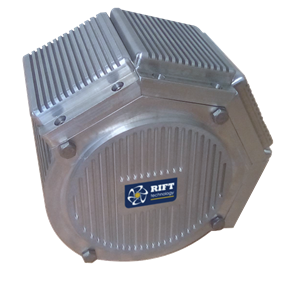 Induction Field Torque) Technology’s development of RIFT-10; a design for electric motor drives that reduces copper and magnet weight reduction by around 50% and lower cost by 75%.
The aim of the project was to help RIFT Technology; an R&D company bringing a product to market for the first time, advance RIFT-10 to a higher manufacturing readiness level (MRL 7), to get the motor closer to production, by rooting the supply chain in the UK, rather than abroad (given the disruption to supply caused by the pandemic) and supporting production of trial units.
WMG, is committed to delivering UK economic impact and achieving net-zero by supporting industry in accelerating new concepts to commercial reality. This supports the University of Warwick’s approach to sustainability - the Way to Sustainable – which focuses on the real-life implications of creating a sustainable future and the practical challenges of getting there - prioritising research expertise, sustainability in the curriculum, and developing solutions for the benefit of industry and society.
The team of experts at the University has facilitated the RIFT-10 project to deliver on creating revenue, jobs, CO2 reduction, and supply chain growth in the UK.
RIFT Technology has developed the RIFT 10-30 kW motor (RIFT-10) by taking an exciting innovation from their sister business (RIFT Actuators) and working with APC and the Niche Vehicle Network to get the motor to working prototype stage (installed on a G-Whiz). The novel electric motor configuration is proven to generate 10-30kW of power, torque from 0-400Nm and up to 10,000RPM as demonstrated with a prototype vehicle.
The RIFT 10 motor demonstrated unique advantages over conventional EV motors:
Environmental benefits of the project:
· The low sales cost and attractive features of RIFT-10 enable greater/earlier market adoption of EUV’s, resulting in a reduction of CO2 production over ICE vehicles.
· A RIFT-10 weight saving and efficiency over competing EV motor designs increase vehicle range, resulting in less energy usage over alternatives.
· With RIFT-10, equivalent power output is achieved using fewer raw materials (i.e., 85% reduced copper weight and ~85% reduced magnet volume), resulting in less earth material usage as well as fewer material costs.
· Less materials usage results in an estimated 75% reduction in CO2 produced during manufacture. Planned production efficiencies also lead to further CO2 reductions. An estimated 612,000 Tonnes of CO2 would be saved by year 5.
· Development of an EV motors supply chain in the UK for a UK and EU market reduces international shipping of components thus reduces related CO2 production.
Social benefits of the project:
· RIFT-10 creates/safe-guards 50+ much needed and good-quality manufacturing, sales, administration and R&D jobs in the Malvern area with an estimated X14 more UK jobs across the supply chain (over 5-years).
· Growth of RIFT-10 addresses the government’s priority area of ‘Smart Cities’ by allowing smart monitoring of vehicle fleets efficiency performance, usage and other data points. The use of the Internet of Things and resulting analysis can only be as strong as the data input. Traditional alternatives offer no smart functionality.
James Black, WMG Innovation Manager at the University of Warwick said, “The Covid-19 pandemic has been particularly difficult for SMEs and R&D-focused organisations that have previously relied on face-to-face networking events to find new partners, investors, and customers.
“WMG’s network means we’re in a great position to connect UK companies together to help them accelerate their product to the market, and we’re delighted that RIFT Technology has benefited from our extensive background for practical supply chain solutions that have delivered economic and societal value to the project.”
James O’Donnell, Technical Manager from RIFT Technology said, “As a research and development company bringing a product to market for the first time, RIFT Technology needed to bridge the gap between prototype and small-scale production. We had to answer difficult questions such as what to make and what to buy, high level questions such as how to develop a supply chain strategy and practical questions such as how best to select suppliers.
“With a unique blend of academic expertise and industrial experience from the University of Warwick, WMG’s Supply Chain and Operations Group were able to support us in our journey.”
The project took place during the pandemic, meaning several online workshops were carried out targeting topics such as strategic management, supplier selection and decision-making, and end-of-life strategies.
For further stories, click here.
ENDS
4 April 2022
New report outlines the need for cross domain transport safety standards
- New report outlines the need for a Cross Domain Safety Assurance Framework for Automated Systems to ensure the safe introduction of automated transport systems
- Adoption of this framework would enable faster and safer national roll-out of the technologies in the UK, projected to be worth £700 billion globally by 2030
- The findings recommend the need for an industry-government and academia body responsible for safety assurance as well as scenarios available for stakeholders and regulators
- The report calls for a codified set of rules to define safe and acceptable behaviour for automated transport systems as well as a scalable safety assurance framework
A new report launched by WMG, University of Warwick’s Dr Siddartha Khastgir identifies the need for a Cross Domain Safety Assurance Framework to ensure the safe introduction of automated transport systems across land, air and marine.
The report outlines three key building blocks of research, standards, and regulations required for the safety framework: test scenarios, test environment, and safety evidence and safety argument.
The transport sector is worth over £100 billion to the UK economy, but with over 2,000 deaths and over 120,000 injuries every year. Safety remains a key priority.
Connected and autonomous transport, set to be worth over £700 billion by 2030, not only has the potential to make travel safer but also faster and more efficient, contributing to both national health and carbon emissions goals.
To support the development and adoption of a cross-domain safety assurance framework, the findings of the report recommend the need for a government - industry and academia body responsible for safety assurance of autonomous transport systems. This will enable fertilisation of ideas across land, air and marine as each work to solve the same set of research and engineering questions.
The report identifies the need for a centralised scenario library to draw on to support testing to standards. It also highlights the importance of developing a Virtual Test Environment (VTE) for use by regulators as well as a qualification process for VTE and enhancing the UK’s National Digital Twin Programme to realise this. The findings also call for a codified set of rules to define safe and acceptable behaviour for automated transport systems on land, air and sea as well as a scalable safety assurance framework.
Dr Siddartha Khastgir commented: “If we’re serious about the safe introduction of automated transport systems, we need to focus on setting high standards for safety assurance and ensuring we’re not competing on safety. Collaboration will be key to our success.”
“Taking a cross-domain approach to safety assurance offers various opportunities and benefits to the ecosystem. Firstly, it enables us to learn from the strengths of individual (land, air, and sea) domains. Then, on a more practical note, the associated tools, and procedures in implementing the safety assurance framework such as databases and virtual test environments can be used across all domains, making it cost effective. Finally, and importantly, it helps to avoid triplication by translating learnings and helping foster relationships across these traditionally siloed and independent domains – altogether making research and deployment of autonomous transport systems more efficient.”

Andrew McKeran, Business Director, Maritime Performance Services at Lloyd’s Register Group said: “There is a significant opportunity for the UK to be a global leader in maritime autonomy, developing a long term, hi-tech ecosystem.
“From a maritime perspective, we need a robust, reliable and usable global assurance framework for the safe operation of autonomous ships. The result will be confidence in the data, confidence in the decision-making, and confidence in the systems that are needed to exploit the safety and economic benefits that autonomy can bring.”
"We see great opportunity to collaborate with the other sectors, primarily aviation and automotive to learn lessons, mature thinking, and most importantly develop virtual test environment capabilities for maritime technology applications.”
Michael Gadd, Head of Airworthiness, Blue Bear commented: “Aviation has a global perspective and within this sector the UK has considerable innovative capabilities and technologies. These advancements are supported by pioneering safety and regulatory frameworks which continually install the trust and confidence that enables the economic benefits the sector delivers, from leading-edge research and development to the wide range of aircraft operations and everything in between.
“The development of a cross-sector safety assurance framework will empower the wider sharing of experience and best practices and help deliver the tools and techniques that are necessary to build confidence and trust in high authority automation and autonomous systems in a common way irrespective of the end use case.”
“This collaborative approach between sectors will develop key skills and knowledge whilst accelerating the assurance process to deliver demonstrably safe products to market, maximising opportunities for economic growth and also developing experience-based leadership in a globally competitive area.”
To read the full report, please visit: https://warwick.ac.uk/fac/sci/wmg/research/cav/vandv/ukriflf/cross_domain_safety_assurance_framework_for_automated_systems.pdf
ENDS
NOTES TO EDITORS
About WMG, University of Warwick
WMG is a world leading research and education group, transforming organisations and driving innovation through a unique combination of collaborative research and development, and pioneering education programmes.
As an international role model for successful partnerships between academia and the private and public sectors, WMG develops advancements nationally and globally, in applied science, technology and engineering, to deliver real impact to economic growth, society and the environment.
WMG’s education programmes focus on lifelong learning of the brightest talent, from the WMG Academies for Young Engineers, degree apprenticeships, undergraduate and postgraduate, through to professional programmes.
An academic department of the University of Warwick, and a centre for the HVM Catapult, WMG was founded by the late Professor Lord Kumar Bhattacharyya in 1980 to help reinvigorate UK manufacturing and improve competitiveness through innovation and skills development.
WMG has been successfully leading and participating in national and international collaborations such as OmniCAV, Midlands Future Mobility, Safety PoolTM Scenario Database as well as working on CCAV and Innovate UK funded Collaborative R&D projects. WMG’s research is helping to influence international standards and regulations with active participation at ISO, ASAM, SAE and UNECE forums.
PHOTO CAPTIONS (hi res available on request):
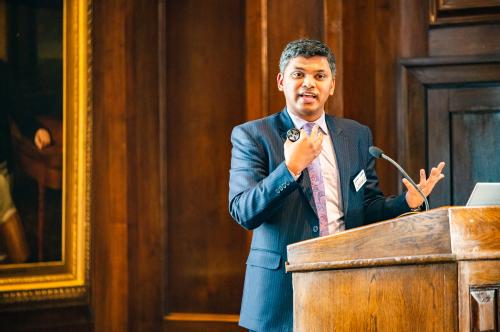
1. Dr Siddartha KhastgirLink opens in a new windowLink opens in a new window presents his report
2.L to R: Prof Paul Jennings, Research Director at WMG; Sarah Gates, Wayve; Andre Burgess, National Physical Laboratory; Andrew Macmillan, Vertical Aerospace; Michael Gadd, Blue Bear; Jane Fenn, BAE Systems; Ali Chegini, RSSB; Dr Siddartha Khastgir, WMG.
CONTACT
Sheila Kiggins
Media Relations Manager
University of Warwick
07876 218166
Celebrating British Science Week 2022
The WMG team had a busy, fun-packed British Science Week, taking part in six special STEM events reaching out to more than 2015 young scientists and engineers.
British Science Week is a ten-day celebration of science, technology, engineering and maths; and is a chance to look into the future and celebrate the impact scientific ideas can make on society. In support, the Team took part in the University of Warwick’s ‘Slice of Science;’ attended the Royal Institution’s Powering our Sustainable Future event, where Rohin Titmarsh and Phil Jemmett shared their expertise on battery tech and robotics; and conducted experiments at a library science fair in Staffordshire.
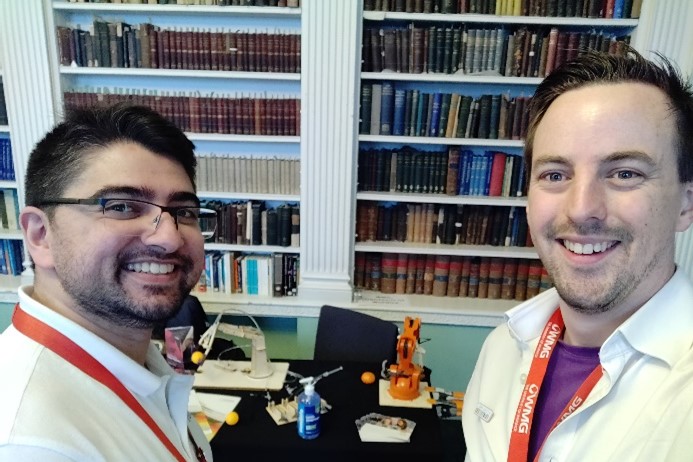 Dr Phil Jemmett, Outreach Project Officer at WMG, said: “Presenters at the events noticed students building in confidence as they engaged with our staff, and we have received some really positive feedback from both organisers and parents.”
The team at Perton Library said the ‘experiments were great – excellent explanations for the children.’
A parent at the Ri event said it was an ‘excellent event. Having the booths from universities/companies after the event was a great bonus for my son. He had the chance to discuss not only about batteries but about different courses to study as he is still undecided as to which course to choose.’
Another parent added: ‘It gave my 17-year-old a frame of reference to where a career in STEM could lead.’
Phil explained: “For the UK to remain at the forefront of innovation, a strong and diverse workforce will be needed. We believe that events such as these can give youngsters the information and the inspiration, they need to pursue a STEM career.”
The Outreach team would like to say a huge thank you to Bethany Haynes; Rebecca Swan-McAdam; Mucahit Ozden; Veronika Majherova; Yiduo Wang;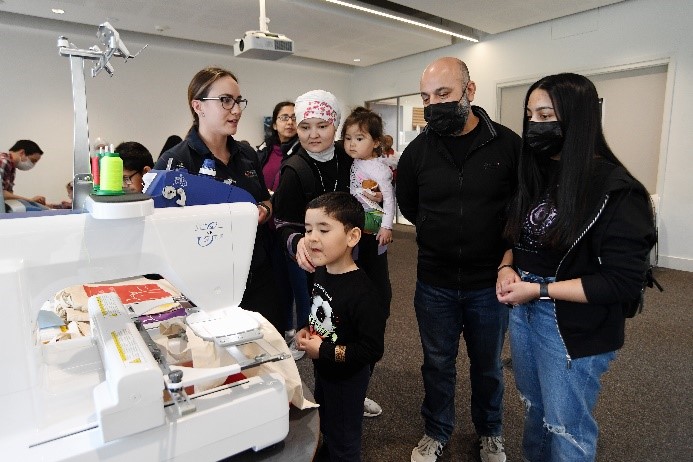 Zeina Rihawi; Jianhua Yang; Rohin Titmarsh; Tom Goodman; Rachael Kirwan; Eugene Prout; Nilavan Thipaharan; Bianca Agapito; and Claire Davis, for their help and support at the events.
Find out more about WMG’s Outreach programme, including the Lord Bhattacharyya Engineering Education Programme and the Resonate Festival, taking place in April, here: Public engagement and Outreach (warwick.ac.uk)
Members of the Slovakia government visit WMG
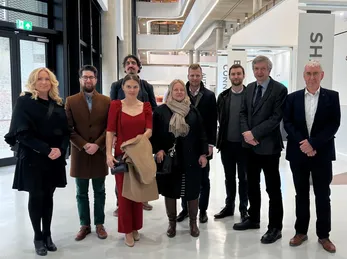
Delegates from the Slovakian government visited WMG, University of Warwick for an introduction into the department’s ground-breaking battery R&D and a discussion on the importance of industry and academia collaboration.
A total of eight delegates led by State Secretary, Ministry of Economy, Ján Oravec enjoyed a tour of the Energy Innovation Centre (EIC) by Chief Engineer, Mark Amor-Segan who demonstrated EIC’s facilities to research, develop and test the latest technologies at the forefront of energy storage.
Professor Paul Jennings, Director of Research at WMG, University of Warwick who hosted the visit said: “It was great to be able to meet the delegation and showcase the power of academia and industry working together, demonstrating how we are helping to drive the sector forward through impactful research and new education and skills offerings.”
Find out more about WMG’s energy research here: https://warwick.ac.uk/fac/sci/wmg/research/energy/
WMG launches EV battery recycling facility
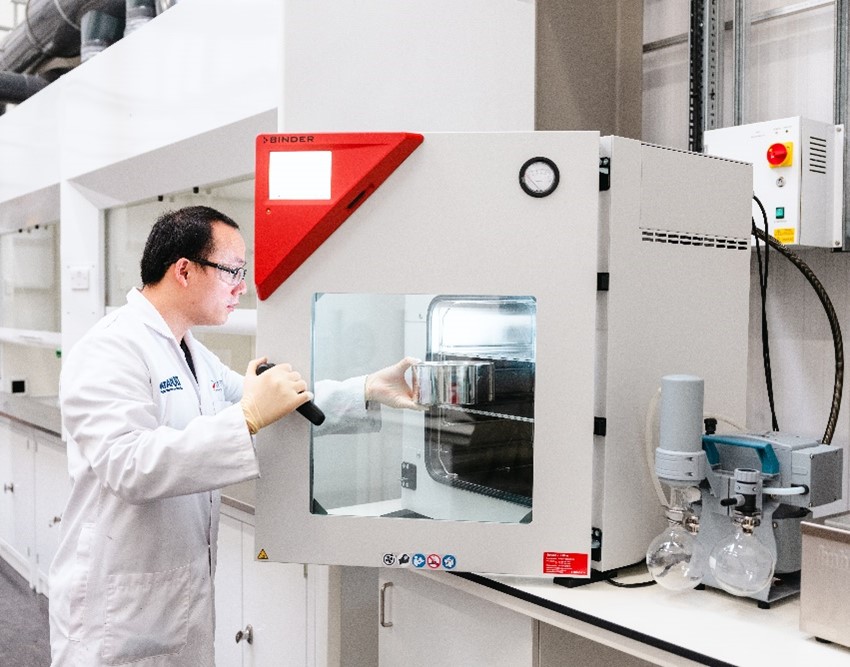 WMG, at the University of Warwick, has revealed its new EV battery recycling scale-up facility, the first of its kind in the UK.
The adoption of electric vehicles has created a huge demand for battery metals such as lithium, nickel and cobalt; and this will accelerate each year as electric vehicles replace conventional vehicles. UK-based OEMs pay hundreds to recycle end-of-life lithium-ion batteries that are then exported abroad for material recovery, with the material later repurchased. Recycling of batteries in the UK will provide a stable and sustainable supply of indigenously sourced metals that will be vital for the UK’s automotive needs.
Anwar Sattar, Lead Engineer at WMG, explains: ‘‘The UK has some of the best research organisations in the world, and this facility will now enable us,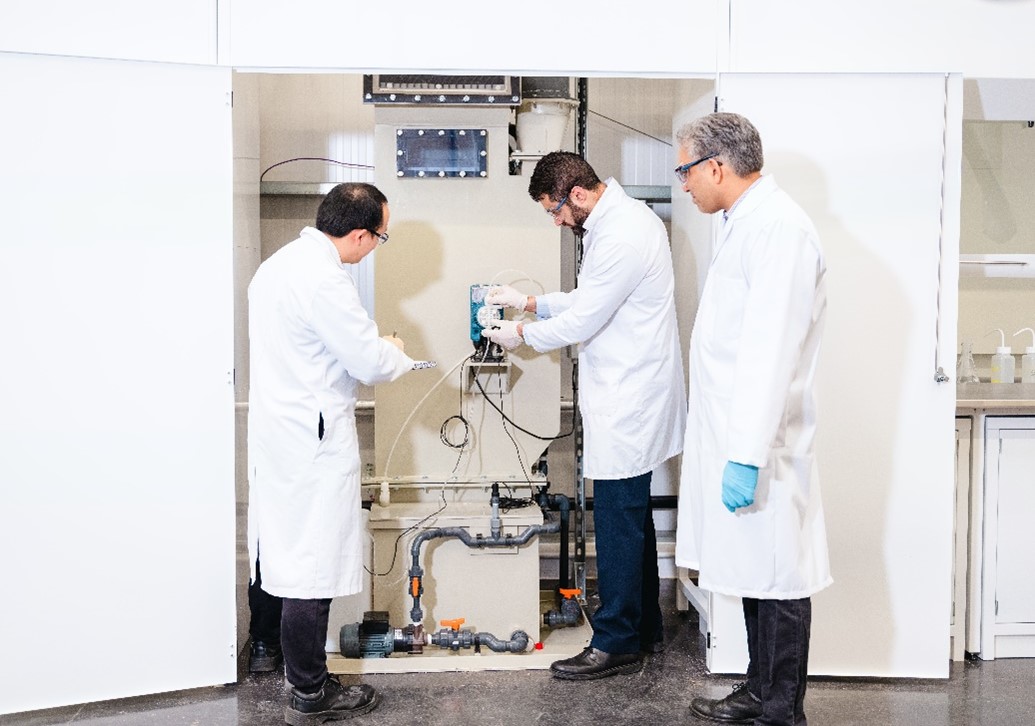 like our international peers, to take our innovations to the EV market direct.
“We can now carry out kilogramme scale research which will allow us to attain data that is much more valuable to the UK industry, allowing them to make informed decisions about issues such as material handling and separation, scalability, product quality and waste production.’’
Professor David Greenwood, CEO of the WMG Centre HVM Catapult and Director of Industrial Engagement adds: “Batteries are a key enabler to the use of zero carbon energy, and they are a great industrial opportunity for the UK. Making them uses significant quantities of valuable materials, so it is essential that they are safely collected and recycled at the end of their useful life – providing the material feedstock for future generations of batteries. Today’s processes recover as little as 50% of the mass of the battery, and require large quantities of energy and chemicals as inputs. This new facility at WMG will allow us to research new recovery techniques which are more effective, cleaner and cheaper to operate.”
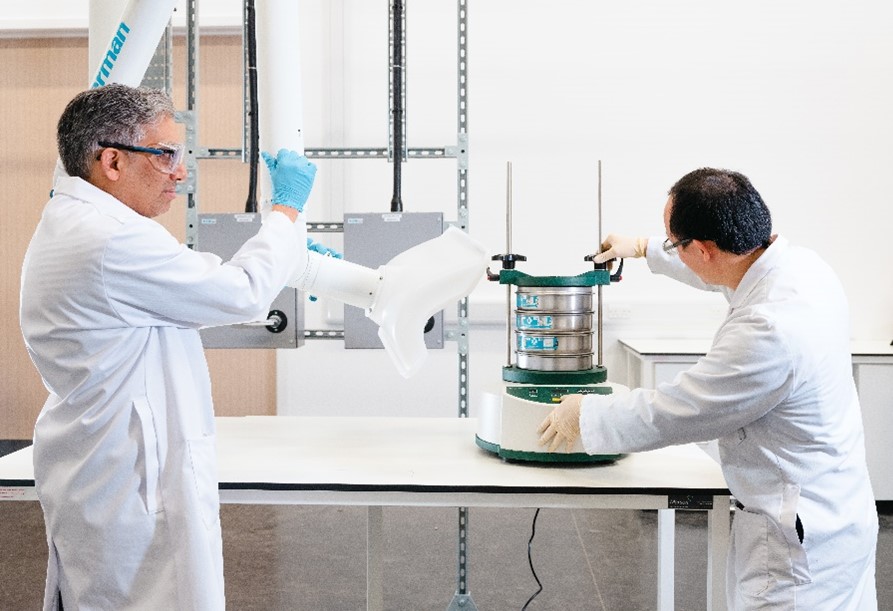 The new recycling facility, funded by the High Value Manufacturing Catapult, is situated within the Advanced Materials Manufacturing Centre. It is equipped with state-of-the-art equipment such as a wet alkaline scrubber which will enable researchers to safely carry out experiments that are not possible elsewhere. It is designed to accommodate pilot scale recycling machinery including dryers, furnaces, separators, and various reactors for the chemical recovery of metals. The facility will also host a scaled-up version of WMG’s novel lithium recovery process which will be able to recover over 90% of the lithium in a battery at very high purities.
Various projects are already underway at the facility including an £8.9m project ‘Recycling of EV Cells from Obsolete Vehicles at Scale’ (RECOVAS). Supported by the Advanced Propulsion Centre, the project will create a circular supply chain for electric vehicle batteries in the UK.
Find out more about WMG’s battery research here: Energy (warwick.ac.uk)
WMG researchers head to the Palace of Westminster
Researchers from WMG and the School of Engineering, at the University of Warwick, attended two bespoke Parliamentary Seminars at the Palace of Westminster in March.
A total of 18 researchers enjoyed a guided tour of the Central Lobby before observing live sessions with MPs and Lords in both the House of Commons and the House of Lords.
The visits were hosted by the Industry and Parliament Trust (IPT) and facilitated by Huw Edwards, Parliamentary and Government Training Consultant and former MP.
Huw provided an overview of the work of UK Parliament, the legislative process, and the scope for research in the Government.
Sarah Wilson from WMG Research Office, who organised the visits, explained: “The aim of these visits was to empower our researchers to share their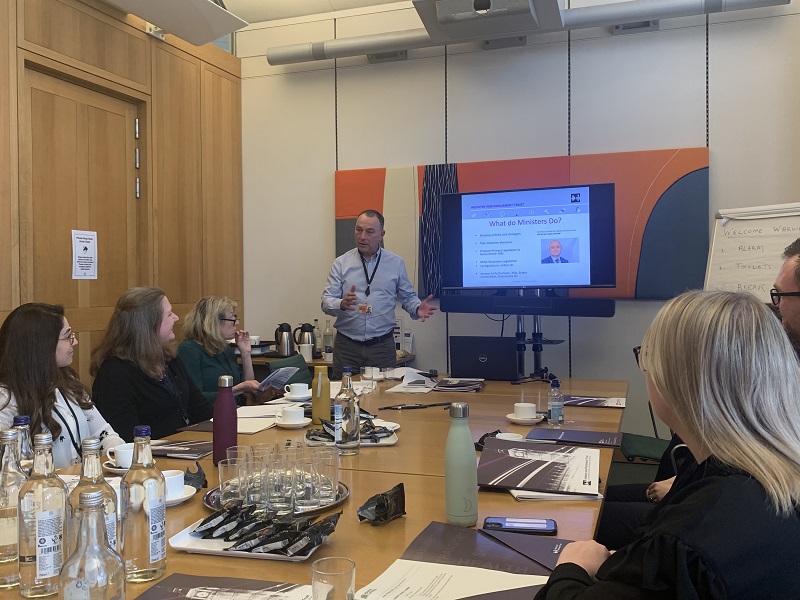 knowledge and expertise with key policymakers, influence and inform relevant policy, and support parliamentary scrutiny processes.
“It was an invaluable experience - they heard about various engagement points, and the means to liaise with key government departments and Parliamentary Select Committees.”
Find out more about WMG’s breath of research here: Research (warwick.ac.uk)
WMG’s Professor Margaret Low awarded an MBE
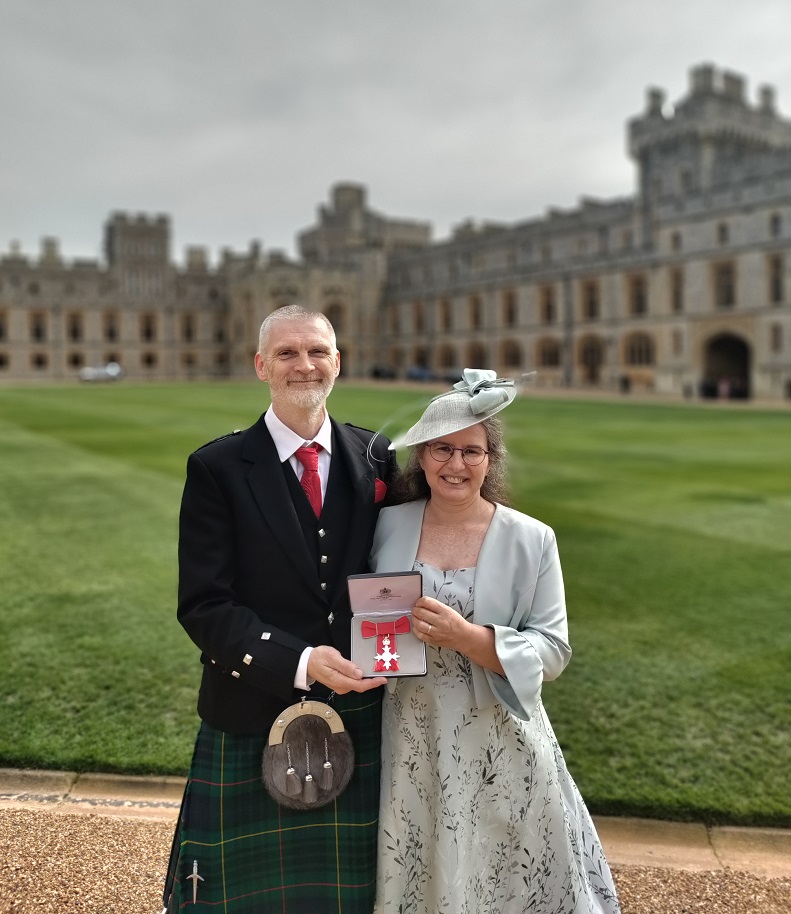 WMG’s Professor Margaret Low was presented with an MBE, for her services to public engagement and widening participation, on Tuesday 15th March by HRH The Princess Royal at a special ceremony at Windsor Castle.
Professor Robin Clark, Dean of WMG, and Director of Education explains: “Margaret joined WMG back in 1988, and for many years she has made it her mission to inspire young people from all backgrounds in STEM subjects and into higher education. We are all so proud of her many achievements.”
Margot James, Executive Chair at WMG adds: “Margaret’s MBE is a true testament to her hard work and dedication in connecting the local community with academia and, promoting STEM in an engaging way. I send her my warmest congratulations.”
Professor Margaret Low said: “It’s lovely, if a little overwhelming and totally unexpected, to be recognised in this way. Everything I’ve achieved has been in collaboration with fantastic colleagues and friends at WMG and across the University. None of this would have been possible without their hard work and dedication.
“I’ve also had the good fortune to work with some brilliant students through Warwick Volunteers who’ve been instrumental in bringing outreach activities into schools.”
Working with Warwick Volunteers, Margaret collaborates with University of Warwick students to run Scratch workshops in local primary and secondary schools reaching more than 250 children each year through the Technology Volunteers project. During the Covid-19 pandemic, Margaret and her team also developed invaluable resources to help support home-schooling.
In 2016 Margaret was awarded an HEA National Teaching Fellowship. The Fellowships recognise and celebrate the absolute highest standards of learning and teaching across higher education.
More than a decade ago she pioneered the use of Scratch in the UK, a user-friendly programming tool, for outreach work in schools.
Read more about the WMG Public Engagement and Outreach Programme here: Public engagement and Outreach (warwick.ac.uk)
Partnership between WMG and The Blair Project to deliver electrification skills training in the north

WMG has partnered with The Blair Project, a social enterprise based in Manchester, to deliver the Emerging Skills Project in the north, a programme funded by the Department for Education (DfE).
The Emerging Skills Project will create a highly skilled workforce that will enable industries including automotive, energy and food and drink, to take advantage of electrification and hydrogen-power to deliver Net Zero.
The course provided by The Blair Project will specifically address technologies related to electric vehicles. This will include the assembly and maintenance of battery modules and packs, recycling and second life, the manufacturing and installation of motors, drives and power electronics and the designing and testing of vehicle and software systems.
Developed in conjunction with businesses who were invited to a series of workshops with DfE, the course will directly respond to the demand for wider adoption and deployment of transport electrification technologies.
The course will be held at the new Manchester Innovation Activities Hub (MIAH) – launching in Spring 2022. Dedicated to the rapid upskilling, reskilling and retraining of more than 5,000 local residents over the next five years, MIAH is set to become a centre of excellence in Greater Manchester and a hub for electrification skills training in the north.
Ben Silverstone, Associate Professor and Head of WMG Skills Centre, said:
“As important as it is to train up the younger workforce in green tech, there is a significant workforce primed for reskilling now. It’s the combination of both that will ensure we are well-equipped to meet the UK’s ambitious Net Zero targets.
“We are pleased to partner with an organisation like The Blair Project to deliver the Emerging Skills Project, meeting the UK-wide demand for electrification skills and giving people in the region the opportunity to upskill or reskill in this area.”
Nile Henry, Founder and CEO of The Blair Project, said:
“The UK is facing a huge skills gap in green tech, particularly electrification, and this is only set to increase as we power towards Net Zero and the demand for a highly skilled workforce grows. Partnering with WMG to become a delivery partner for the Emerging Skills Project is a huge milestone for The Blair Project, and it’s brilliant to see this focus from Government on upskilling adults in green tech.”
WMG expert contributes to Micromobility Whitepaper
WMG’s Head of Human Factors for Future Mobility, Dr Roger Woodman, has shared his expertise in a whitepaper entitled ‘Navigating new technologies and the safety and business risks.’
The whitepaper, produced by DriveTech UK, from The AA, the world leader in fleet risk and driver safety management; including driver training, aims to inform businesses about the challenges and risks of micromobility, as well as their corporate obligations.
It also anticipates a wider and likely legalised use of private e-scooters, in the near future, and recommends a serious need to focus on training to keep all users safe.
Dr Roger Woodman explains: “It’s highly likely that rental and private e-scooters will be legalised in the next year or so. Undoubtedly there will be restrictions on these vehicles for both speed and weight. Rental e-scooters will be relatively easy to maintain control of, and from what I have witnessed, the trials have been broadly successful.
“However, the legalisation of private e-scooters is where issues will arise and will quickly become a big social and safety problem if certain things aren’t considered. The most important of which is people will modify e-scooters to make them go faster.
“Consequently, we need to introduce rules similar to car and motorbike ownership, which makes people more aware that they are responsible for what they do with the vehicle and importantly there is a link between them, the vehicle and law enforcement. Psychologically this is very important and is one of the reasons the e-scooter rental trial has made it a requirement that riders must have at least a provisional driving license.
“I believe we need several legal rules imposed with the legalisation of private e-scooters. Firstly, all private e-scooters (including rental), should require a registration plate. Secondly, e-scooters should be taxed and insured in the same way as motorbikes. This requirement greatly reduces the number of people who can own and operate an e-scooter, and I expect this will be dropped for both rental and privately owned e-scooters. However, there will be greater emphasis put on training, which will include safe riding and the Highway Code.”
Read the report in full here: DriveTech-E-Scooter-White-Paper.pdf
WMG is in the process of creating a Micromobility Roadmap, in consultation with users and industry, which will be made public later this year. Read more about WMG’s Intelligent Vehicles research here: Intelligent vehicles (warwick.ac.uk)