
WMG News - Latest news from WMG
WMG staff recognised by Ventilator Challenge UK
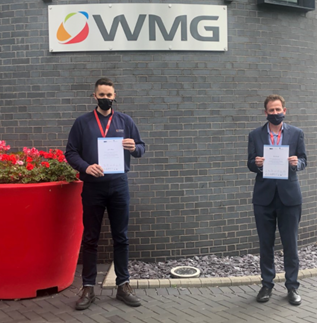 A group of WMG staff have been presented with personalised certificates of appreciation from the Ventilator Challenge UK in recognition of their hard work during the Covid19 pandemic.
In summer 2020, WMG was part of a consortium that helped to produce a total of 13,437 Penlon ESO 2 and Smiths paraPAC ventilator devices for the NHS.
WMG staff operated a quality control facility in an automotive parts warehouse in Solihull with colleagues from other High Value Manufacturing Catapult centres - the National Composites Centre (NCC) and the Manufacturing Technology Centre (MTC). Together they worked around the clock tirelessly inspecting over eight million parts.
Dr Mark Swift, Head of WMG SME Group, said: “It’s once again great to see WMG involved in such a nationally important project. The team have done a fantastic job of showcasing our continuous ability to collaborate and support business. This recognition is well deserved and is a testament to our capabilities.”
The 12 strong team included Dave Cooper, Paul Charlton, Ricky Nestor, Lee Oldham, Divyesh Mistry, Max Raybone, Joe Ward, Luke Millage, Myles Vale, Simon Fox, Steve Leemoon and Mark Swift.
Read more about the WMG SME Group here: WMG SME Group | How can we help you? (warwick.ac.uk)
Electric vehicles could be powered by Hydrogen harvested from sewage
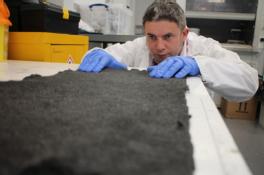 Hydrogen is valuable as it is a renewable source, and could be sold to the chemicals and plastics industry or used in hydrogen fuel cells for energy storage or electric vehicles
- The ability to take hydrogen from waste water provides a new economic and environmental opportunity, however until now it has been incredibly expensive to suffice
- Using a recycled carbon fibre mat, researchers from WMG, University of Warwick, have been able to produce Hydrogen from wastewater for Severn Trent
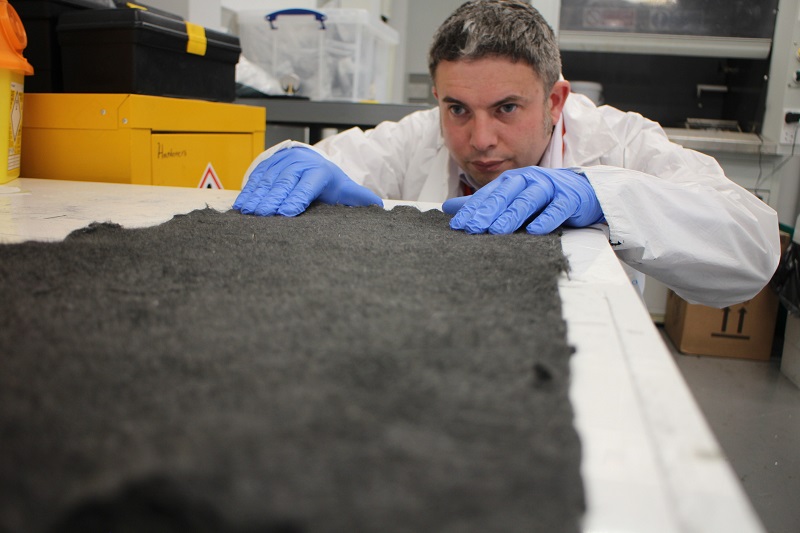
Wastewater treatment is vital to remove pathogens, but is incredibly energy intensive. The ability to treat it more sustainably is a challenge researchers from WMG, University of Warwick have been able to achieve, using recycled carbon fibre mats to produce hydrogen from waste water.
Treating wastewater is a vital process, as it removes pathogens and protects the environment, however this comes at its own environmental cost, as it is highly energy intensive, using around 3% of energy use in the UK – the equivalent to 13 billion kilowatt hours.
The water and waste company Severn Trent set researchers from WMG, University of Warwick, the challenge of finding a more energy efficient way to treat wastewater, with the team successfully building on research into Microbial Electrolysis Cells.
Microbial Electrolysis Cells involves using electromagnetic microorganisms to break down organic pollutants in waste water, producing clean water and hydrogen gas. The ability to produce Hydrogen gas is valuable in itself as it can be sold to chemical and plastics industry, or for use in hydrogen fuel cells for energy storage or electric vehicles.
Although this all sounds promising it hasn’t been developed on an industrial scale, as the anode materials - which are used in the reaction to breakdown the organic pollutants – are made of graphite or carbon, and cost several hundred pounds per square metre, and produce low rates for Hydrogen.
Dr Stuart Coles and his team therefore took on the challenge of refining the technique by looking at alternative anode materials and processing methods, and successfully identified recycled carbon fibre mats as an alternative anode, which costs only £2 per square metre, making it significantly cheaper than existing anode materials.
After testing the carbon fibre mats on synthetic wastewater and real wastewater, researchers found the bacteria developed on the recycled carbon fibre anode, which had better temperature tolerance and produced more hydrogen than previously used materials.
They then decided to pilot their techniques at Severn Trent’s Minworth waste treatment site, where they successfully processed up to 100 litres of wastewater per day and managed to remove 51% of organic pollutants and up to 100% of suspended solids from the water while producing 18 times more hydrogen (at 100% purity) than the graphite material.
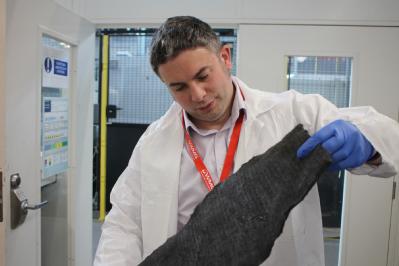 Dr Stuart Coles, from WMG, University of Warwick comments:
“We are really excited about this technology. By taking waste from the automotive and aerospace sectors, we have developed a circular solution to a longstanding problem. Instead of just treating the wastewater, we are now able to extract value from it in the form of hydrogen at a lower cost than ever before.
“The next phase of this work is look at optimising the design of the microbial electrolysis cells and further reduce the level of pollutants in the water. This in turn should help produce even more hydrogen!”
Bob Stear, Chief Engineer at Severn Trent adds:
“The performance boost and cost savings demonstrated from this research mean that MEC technology is one step closer to being cost competitive with existing wastewater treatment assets. WMG have also demonstrated that this technology has the potential to create a more circular wastewater treatment process which will be essential to delivering on our long term sustainability goals and Net Zero plans. We’re currently scoping scaling up the technology at our test-bed plant in Redditch.”
ENDS
2 NOVEMBER 2021
NOTES TO EDITORS
High-res images available at:
https://warwick.ac.uk/services/communications/medialibrary/images/september_2021/img_1054.jpg
Caption: Dr Stuart Coles from WMG, University of Warwick with graphene
Credit: WMG, University of Warwick

https://warwick.ac.uk/services/communications/medialibrary/images/september_2021/img_1054.jpg
Caption: Dr Stuart Coles from WMG, University of Warwick with graphene
Credit: WMG, University of Warwick
https://warwick.ac.uk/services/communications/medialibrary/images/september_2021/img_1043.jpg
Caption: Dr Stuart Coles from WMG, University of Warwick with graphene
Credit: WMG, University of Warwick

https://warwick.ac.uk/services/communications/medialibrary/images/september_2021/img_1058.jpg
Caption: A sample of a roll of graphene
Credit: WMG, University of Warwick

For further information please contact:
Alice Scott
Media Relations Manager – Science
University of Warwick
Tel: +44 (0) 7920 531 221
E-mail: alice.j.scott@warwick.ac.uk
Exercise fell during lockdown particularly for groups most at risk
· During the COVID-19 March-June 2020 lockdown in the UK everyone was encouraged to stay at home and only leave the house once a day to exercise
· A study of UK residents has found that groups including those who are BAME, obese and/or city dwellers reported a greater reduction in physical activity during the lockdown than other groups
· The research highlights the need for targeted interventions to ensure that physical and mental health impacts of sedentary behaviour are not exacerbated over the long-term by significant reductions in physical activity identified in groups who are more vulnerable to COVID-19
 A study of UK resident’s exercise patterns during the COVID-19 lockdown in March-June 2020, has found that groups that were most at risk to the adverse effects of COVID-19 were impacted the most in terms of reducing their levels of exercise. Researchers led by WMG, University of Warwick say targeted interventions are required to ensure physical and mental health impacts of sedentary behaviour do not exacerbate the risks to these groups.
When the first UK lockdown was announced in March 2020 to prevent the spread of COVID-19, all UK residents were permitted to leaving the house to exercise once a day. Researchers from WMG, University of Warwick decided to investigate which population groups had reduced or increased physical activity levels during the lockdown.
In the paper, 'Stay at Home and Stay Active? The impact of the stay-at-home restrictions on physical activity routines in the UK during the COVID-19 pandemic' , published in the Journal of Sports Sciences, researchers led by WMG, University of Warwick have found that in some of the most at-risk groups their level of physical activity was substantially decreased.
Researchers surveyed UK residents through a rewards-for-exercise app called Sweatcoin, and an online panel. The Sweatcoin app users provided data of their daily step count prior to and during the March-June 2020 lockdown.
Researcher’s key findings show that there was a particular reduction in physical activity in those classed as obese, gym users, and people living in urban areas. All groups had a decreased step count during the restrictions, however this was particularly prominent in BAME (Black, Asian and Minority Ethnic) groups and urban dwellers.
Dr Mark Elliott from WMG, University of Warwick comments:
“Our study wanted to determine which groups had managed to exercise more during the 2020 lockdown and which had struggled to maintain their usual exercise routines. It became clear that people living in rural areas were more likely to have increased levels of physical activity, compared to city dwellers. However, groups that were particularly vulnerable to COVID-19, such as BAME and obese, had significantly reduced their physical activity during the lockdown compared to before the restrictions were put in place.
“The long duration of the lockdowns can mean it is difficult for people to return to their old routines, and therefore, there should be targeted interventions to ensure that the already significant issue of sedentary behaviour doesn’t become exacerbated by the effects of the pandemic.”
Inspiring young engineers with STEM masterclasses

The WMG Outreach Team has successfully completed another series of Royal Institution Engineering Masterclasses.
This series was a little different to those in years gone by with the Masterclasses forced online by the Covid 19 pandemic.
Professor Margaret Low, WMG’s Director of Outreach and Widening Participation said: “WMG has supported the Ri with masterclasses, since 2013, with workshops and activities that put our cutting-edge engineering research into context for young people. Our masterclasses have been run in person each year since 2013 so we were determined not to miss a year for 2021, finding a way to deliver the activities online instead.
“These experiences allow students to see how their school learning applies to complicated and world-changing technologies. Through our outreach programmes we hope to inspire young people to pursue careers in STEM, widen participation in Higher Education and make the STEM workforce more diverse.”
The project was run virtually, by WMG staff and students, for two local schools; Nicholas Chamberlaine in Bedworth, and Northleigh House in Warwick, with a special focus on intelligent vehicles.
The WMG team used Kitronik project boxes to introduce the ideas of intelligent vehicles, calibrating components, coding, algorithms, and to explore how design technology is used to balance the pros and cons of any creation.
The children were tasked with making, testing and then improving a car that a computer can control.
The teacher said: “The students were really engaged and got so much out of it. Considering it was video link and the first event they've been able to do like that in ages.”
Rachel Dorris, Masterclass Programme Manager at the Royal Institution added: “The Royal Institution (Ri) has been collaborating with Warwick University for many years to bring hands-on workshops to school students, and we are very pleased to be working with Northleigh and Nicholas Chamberlaine schools this year. Ri Masterclasses offer students an engaging, collaborative taste of STEM subjects involving mathematics, engineering and technology. We aim for Masterclasses to increase interest and confidence in STEM subjects, creating a sense of engagement to last throughout students’ school careers and beyond.”
Find out more about the WMG 2021 Ri Engineering Masterclasses here: Ri Engineering Masterclasses 2021 (warwick.ac.uk)
Scottish steel industry needs to be revived to thrive
- · The Scottish steel using sectors currently employ just under 1/3 of the Scottish working population, and accounts for 31.2% of Scotland’s turnover
- · With an ever-growing population the need for steel is increasing, meaning an opportunity is there for the Scottish steel sector
- · If investment in the sector happens it could result in making new types of steel such as crude, which is the most in demand but is currently the least manufactured in Scotland
The value of the Scottish steel using sectors in relation to the rest of the world and also the UK specifically has been analysed by researchers from WMG, University of Warwick, who have found investment could be the key to reviving the industry into a thriving industry.
Steel has played an important part of Scotland’s economy since 1751. The nation’s industrial heritage has relied upon steel, which has been a key part of shipbuilding, energy, rail and civil engineering industries. There have been 12 iron and steel works in Scotland with the last major one to close being Ravenscraig in 1992.
There are currently 266,500 people employed in Scottish steel using industries, while indirect employees in the supply chains can be estimated at around 800,000, making a total of 1.06 million people – around a third of Scotland’s working population. The steel markets account for 31.2% of Scotland’s turnover, essentially meaning just under 1/3 of the population rely on Steel for income.
Between 2015 and 2030 the steel market across the UK is set to increase by 1.5 million tonnes, worth a total of £3.8billion to the UK economy, with the demand expected to increase in construction, machinery and engineering, and yellow goods (earth moving equipment).
However whilst the demand for steel is increasing, it is predominantly increasing for crude steel, which Scotland does not produce a significant amount of, in fact the largest steel plant in Scotland is Liberty Steel Dalzell in Motherwell, which doesn’t produce any crude steel.
In 2018 a total of 1.816 billion tons of crude steel was produced globally using blast furnace (BF) + basic oxygen furnace (BOF) and electric arc furnace (EAF) techniques. The United Kingdom produced 7.3 million tons of crude steel in 2018, 0.004% of global production. Scotland has produced less than 6000 tons of crude steel per year in the last three years. Global crude steel production is dominated by Asia, in particular China, which produced 928 million tons of crude steel alone in 2018.
In fact in 2018 there was £371.4m of imports of iron and steel into Scotland whereas their total iron and steel product exports stood at £313m, with £159m of that being exported to the EU.
Dr Russell Hall, from WMG, University of Warwick comments:
“The world’s population is set to increase from 7.7bn people in 2020 to 9.7bn in 2050, therefore the demand for steel will continue to increase, this provides an opportunity for Scotland to revive their steel industry and boost their income, however this will require coordinated government intervention and leadership into steel making capability, this could be in the form of direct investment, indirect support such as the reduction of energy costs or increase in skills provision for steelmaking.
“This could mean that Scotland could manufacture new steel types, expand current steel making capabilities, and reduce the operating costs for steel makers.
"If investment were to happen it could mean lower CO2 emissions, as it enables lower energy steel processing, it also enables the sector to work with existing supply chain and customer demands, and put state of the art equipment into Scottish steel manufacturing. In combination with Scotland’s renewable energy agenda it could see green steel production at the heart of Scotland’s manufacturing industry”.
ENDS
25 OCTOBER 2021
NOTES TO EDITORS
High-res images available at: https://warwick.ac.uk/services/communications/medialibrary/images/september_2021/9652258404_7a8c8e9679_b.jpg

Caption: Forth Rail Bridge over the Firth of Forth in Scotland
Report available to view at: https://warwick.ac.uk/fac/sci/wmg/research/materials/wmg_scottish_steel_sector_report_final.pdf
For further information please contact:
Alice Scott
Media Relations Manager – Science
University of Warwick
Tel: +44 (0) 7902 531 211
E-mail: alice.j.scott@warwick.ac.uk
Margot James, Executive Chair, comments on the Government’s new Net Zero Strategy
Expert comment from Margot James, Executive Chair at WMG, in response to the Government’s Net Zero Strategy.
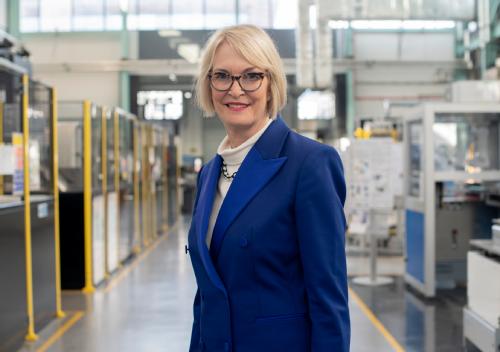
"The decarbonisation of personal transport, by moving to Electric Vehicles (EVs), will be a major contributor to delivering on this target as EVs become a viable option for the majority of consumers. Viability depends upon EVs being affordable and drivers having access to a reliable network of fast charging in urban and rural networks"
UK Government Net Zero Strategy
Find out more about the new National Skills Framework that has been created by WMG, The Faraday Institution and the High Value Manufacturing Catapult: New National Electrification Skills Framework and Forum could put the UK at the forefront of the green revolution News
Dr Ben Silverstone comments on the Government’s new Net Zero Strategy
Expert comment from Dr Ben Silverstone, WMG’s National Electrification Skills Framework and Forum Programme Lead, in response to the Government’s Net Zero Strategy.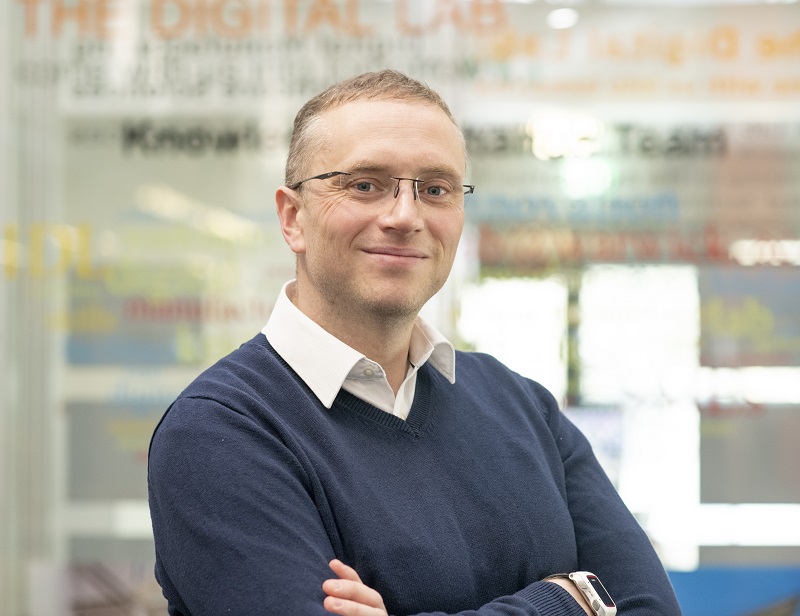
“We welcome the Government’s Net Zero strategy and the commitment to reform the skills system to allow providers to be more responsive to industry need, which is what we have called for in the recently launched National Electrification Skills Framework. Our focus is to re-skill, up-skill and new-skill working with the automotive sector to ensure their workforce has the necessary skills to be able to meet the 2035 and 2050 targets set by government.”
Find out more about the new skills framework that has been created by WMG, The Faraday Institution and the High Value Manufacturing Catapult here: New National Electrification Skills Framework and Forum could put the UK at the forefront of the green revolution - WMG :: News (warwick.ac.uk)
WMG Professor shares expertise in key parliamentary report
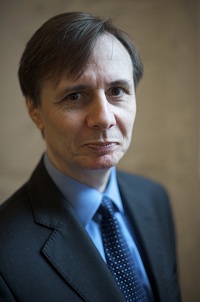 Professor Tim Watson, Director of WMG’s Cyber Security Centre, has shared his expertise in a key parliamentary POSTnote focusing on Smart Cities.
A POSTnote helps members of the House of Commons and the House of Lords, and UK parliament staff navigate complex topics and research in science, technology and social sciences.
This POSTnote looks at smart city innovation in the UK and technologies involved. It considers the factors driving adoption of smart city technologies, and the potential benefits, barriers and risks associated with their implementation.
Professor Tim Watson explains: “Smart cities use data and digital technology to make better decisions and improve the quality of life of people in the community. Local councils and governments can get more comprehensive, real-time data to understand how demand patterns are changing. This data can then be analysed to help with better decision making.”
Throughout the UK cities are, using this data, adopting strategies to boost their economy following the pandemic, allowing them to ‘build back better.’
Read more about Smart Cities here: https://post.parliament.uk/research-briefings/post-pn-0656/
Metal forming to be cleaner and greener thanks to UKRI fellowship
§ Dr Ed Brambley at the University of Warwick has been awarded a UKRI Future Leaders Fellowship to investigate how mathematics might make metal forming cleaner and greener
§ There is an industrial need for smarter metal forming to create new products, reduce scrap, compensate for more variable materials (e.g. recycled metals), reduce costs, and reduce energy usage. The project partners with Tata Steel and Primetals Technologies for industrial guidance and impact.
§ Smarter metal forming requires precise computer control, and the computer controller needs a theoretical model to predict what would happen if it were to make a change. These theoretical models are what is currently missing.
§ Dr Bramley will investigate using techniques from mathematical modelling of continuum solid mechanics and plasticity to produce theoretical models that are fast enough and accurate enough for real-time computer control of various industrial metal forming processes.
The future of smart metal forming will be investigated by Dr Ed Brambley at the University of Warwick thanks to his award of a UKRI Future Leaders Fellowship. The fellowship enables him to perform blue-skies research in mathematical modelling in continuum solid mechanics and plasticity, the outcome of which could be used to provide predictive theoretical models to make industrial metal forming greener and cleaner.
Dr Ed Brambley is an Associate Professor at the University of Warwick, at both the Maths and WMG departments. He is one of 97 scientists in the UK to receive a UKRI Future Leaders Fellowship in the 5th round, and over the next four years he will perform blue-skies research to investigate new mathematical modelling techniques that can make industrial metal forming cleaner and greener, thanks to £780k funding from UKRI and £230k funding from the University of Warwick.
Metal forming is the shaping of metal; examples from manufacturing include rolling metal to create thin sheets and stamping flat sheets of metal to form car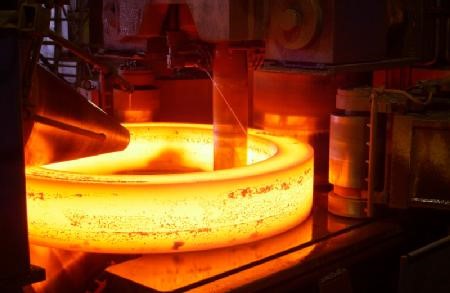 body panels. There is currently an industrial need for smarter metal forming in order to create new products, to reduce scrap, to compensate for more variable materials (e.g. recycled metals), to reduce costs, and to reduce energy usage.
With current 21st century technology most people would expect computer-controlled metal forming processes, which would monitor the metal work piece during the forming process and adapt the process to correct any problems to obtain the desired end result.
However, the computer controller needs a theoretical model to predict what would happen if it were to make a change, in order to find the right changes to make, and such theoretical models are currently unavailable; and computer simulations are too slow for use in real-time.
The current state of the art is to use computer finite element simulations during process development or to diagnose problems, and then to use simple controllers (such as PID controllers) to blindly follow the pre-prescribed forming procedure.
New modelling techniques could give a substantial improvement, hence why Dr Ed Brambley will investigate techniques from mathematical modelling of continuum solid mechanics and plasticity, the outcome of which could be used to provide predictive theoretical models for industrial metal forming.
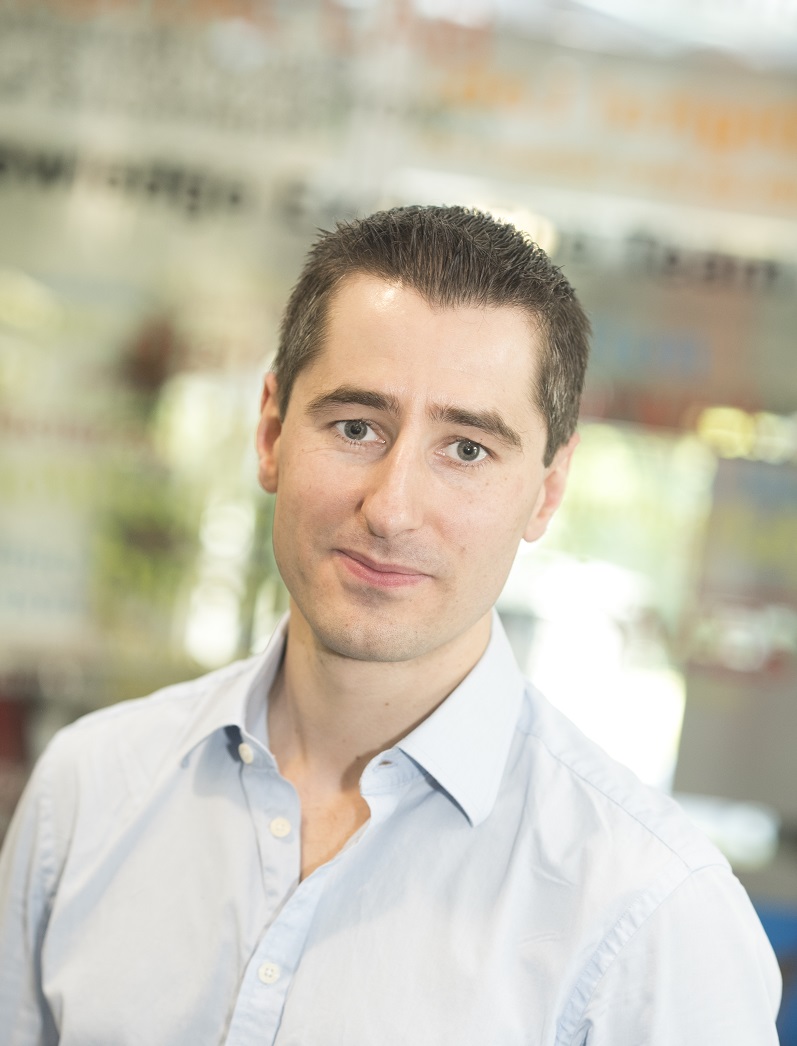 Dr Ed Brambley, from the University of Warwick, comments:
“Unlike existing computer simulations which work in all situations but are slow, my aim here is to take advantage of properties of particular metal forming processes, such as symmetry, or small parameters such as thin sheets, small deformations, and so on, and create bespoke simplified models specific to each of these processes.
“By accounting for these properties in a rigorous way, and using best practice mathematical techniques, I could produce quick-to-compute models with a guaranteeable accuracy. Such models would be exactly what is needed for online control of the metal forming process, and in the long term could create new products, reduce scrap, compensate for more variable materials such as recycled metals, reduce costs, and reduce energy usage.”
Not only will the funding help Dr Brambley’s research, it will also be used to support a post-doctoral researcher, and several PhD students from existing Warwick CDT’s will be involved in the research. Meaning Dr Brambley will be training a new generation of mathematicians and engineers to use these new mathematical modelling skills in industry.
ENDS
15 OCTOBER 2021
NOTES TO EDITORS
High-res images available at:
https://warwick.ac.uk/services/communications/medialibrary/images/september_2021/ring_rolling.jpg
Caption: Ring rolling metal forming
Credit: Hammerwerk Erft

https://warwick.ac.uk/services/communications/medialibrary/images/september_2021/ed_brambley.jpg
Caption: Dr Ed Brambley, WMG/Maths University of Warwick
Credit: WMG, University of Warwick

For further information please contact:
Alice Scott
Media Relations Manager – Science
University of Warwick
Tel: +44 (0) 7920 531 221
E-mail: alice.j.scott@warwick.ac.uk
WMG experts to present at key EV battery conference
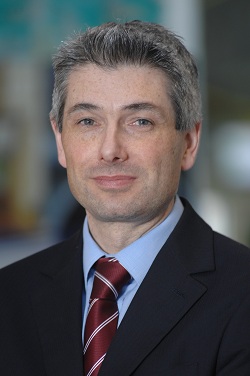 WMG’s Professor James Marco, Dr Ben Silverstone and Dr Anwar Sattar will be sharing their expertise at the IMechE’s International EV Batteries 2021: Cost-Effective Engineering for Hybrid and Electric Vehicles next month.
The two-day event which takes place on 9-10 November at Kia Oval, London, explores the latest developments in battery design, testing, thermal management, charging and integration right across the lifecycle of the battery with the aim of creating more resilient and cost-effective systems.
On day one, Professor James Marco, WMG’s energy storage expert will present ‘Smart battery development for improved EV safety characterisation,’ and Ben Silverstone, WMG’s UK Electrification Skills Framework Programme Lead, will explain more about the 'National Battery Skills Framework: Collaborating to Elevate UK Industry.’
On the final day, Lead Engineer in Battery Recycling, Anwar Sattar will be presenting ‘Establishing a lithium-ion battery recycling industry in the UK,’ discussing types of waste material found along the supply chain, recycling processes required to deal with material streams, and explaining more about the RECOVAS research project.
Find out more about the conference and book your place here: International EV Batteries 2021: Cost-Effective Engineering for Hybrid and Electric Vehicles | London | CMP7333 (imeche.org)