
WMG News - Latest news from WMG
WMG’s Professor Margaret Low awarded MBE
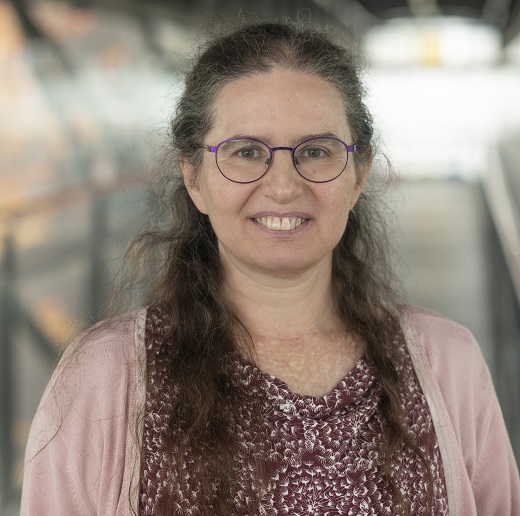 Many congratulations to WMG’s Professor Margaret Low as she receives an MBE for her services to public engagement and widening participation.
Margaret joined WMG back in 1988, and for many years she has made it her mission to inspire young people from all backgrounds in STEM subjects and into higher education.
She has dedicated her time to develop innovative outreach activities for young people - connecting the local community with academia and promoting STEM in an engaging way.
Professor Margaret Low said: “It’s lovely, if a little overwhelming and totally unexpected, to be recognised in this way. Everything I’ve achieved has been in collaboration with fantastic colleagues and friends at WMG and across the University. None of this would have been possible without their hard work and dedication.
“I’ve also had the good fortune to work with some brilliant students through Warwick Volunteers who’ve been instrumental in bringing outreach activities into schools.”
About Professor Low
Working with Warwick Volunteers, she collaborates with University of Warwick students to run Scratch workshops in local primary and secondary schools reaching more than 250 children each year through the Technology Volunteers project.
During the Covid-19 pandemic, Margaret and her team also developed invaluable resources to help support home-schooling.
In 2016 Margaret was awarded an HEA National Teaching Fellowship. The Fellowships recognise and celebrate the absolute highest standards of learning and teaching across higher education.
More than a decade ago she pioneered the use of Scratch in the UK, a user-friendly programming tool, for outreach work in schools.
The Prof. Lord Bhattacharyya building crowned best workplace in the UK
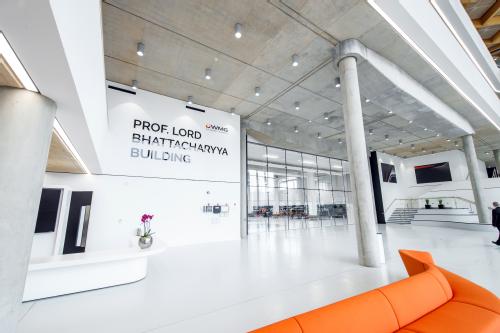 The Prof. Lord Bhattacharyya building, home to the National Automotive Innovation Centre, at the University of Warwick, has been crowned the best workplace in the UK, in the Innovation category, at the prestigious British Council for Offices (BCO) awards.
The BCO Awards, recognises the highest quality developments in the UK and sets the standard for excellence in both the regional and national office sector.
As a Midlands and Central England regional award winner, the building was then crowned the national Innovation Award winner, at a virtual ceremony last night (Thursday 10th June).
Named in honour of Britain’s first ever Professor of Manufacturing, the Prof. Lord Bhattacharyya Building houses the National Automotive Innovation Centre; a multimillion-pound centre, founded by WMG, Jaguar Land Rover and Tata Motors which is well timed, arriving when a global mobility revolution is underway, and aiming to be a stimulus to the rebirth of an optimistic new age of manufacturing in the Midlands to develop future vehicles and mobility solutions.
Fronted by a dramatic elevation, the 33,000m2 building has been sensitively designed for engineers, designers and academics to work together in, with a variety of spaces allowing for both privacy and collaboration. A timber roof spans the structure of the building, demonstrating the sustainable credentials of a facility that cannot but inspire.
Executive Chair of WMG, Margot James comments: “I’m thrilled that the Prof. Lord Bhattacharyya Building has been recognised in this way, it is a great tribute to the late Professor Lord Bhattacharyya’s vision. Having a building that inspires designers, engineers and academics to develop the next generation of transport is excellent news for our partners and the region. The Midlands is the beating heart of automotive in the UK, and the National Automotive Innovation Centre, will be the driving force behind future innovation in transport mobility.”
James Breckon, Director of Estates, at the University of Warwick, comments: “It is great to see this new building being recognised by other professionals and is testament to the wealth of architectural and engineering talent that was brought together to deliver this exemplary sustainable building. It brilliantly draws Industry and Academia together providing an inspirational environment to innovative within. As a landmark building it has transformed the campus at the University of Warwick and is a fitting legacy to the late Prof Lord Bhattacharyya.”
Carol Costello, Practice Leader at Cullinan Studio who led on the interior and workplace design added: “It’s been our pleasure to engage with all the organisations using the NAIC. We had deep discussions about how to create an environment that would foster innovation, creativity and collaboration. The finished building is the result of many passionate conversations to create a truly inspiring place.”
Lead-acid battery lifespan to be increased for use in energy storage systems
· Lead-acid batteries are an established alternative to Li-ion batteries as they are simpler safer to use and are recyclable
· How to increase the lifespan and health of batteries will be researched by WMG, University of Warwick, in collaboration with Loughborough University. This research will make lead acid batteries stronger contender for both commercial and domestic energy storage systems
· Researchers will be using AI to optimise the batteries for energy storage solutions rather than focusing on the battery chemistry
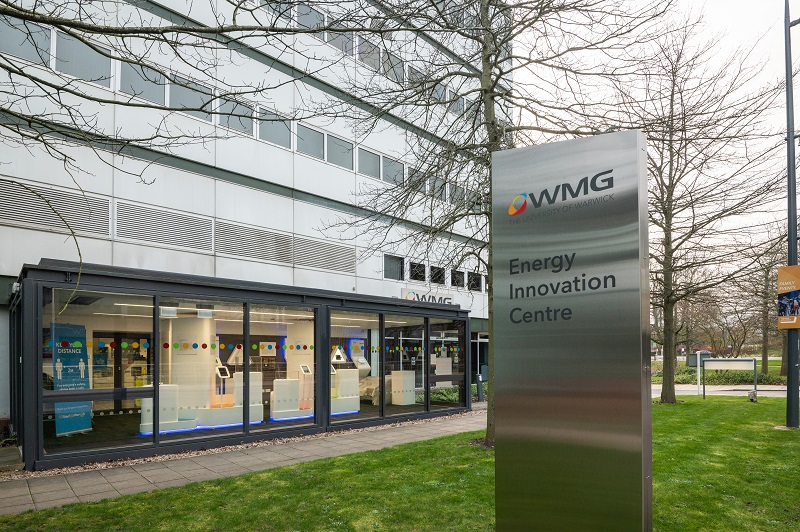 Energy storage systems (ESS) are used in decentralised and complex electricity networks; lead-acid batteries could be a clean and green option for ESS. Researchers from WMG University of Warwick and Loughborough University will investigate how to optimise the management of lead-acid batteries in ESS use.
Europe’s energy storage transition over the last few years has witnessed tremendous growth, increasing from 0.55 GWh 2016 to 5.26 GWh by the end of 2020, with front-of-the-meter deployments such as those by utilities leading the way, representing more than 50% of installed capacity.
These energy storage systems require high-performing, reliable and affordable batteries to ensure the smooth generation and storage of energy for regional and national electrical grids.
The health and lifespan of lead-acid batteries will be optimised in the project HALO-SMART-ESS-LAB (Health and Lifespan Optimization with Smart Manager Algorithms and Recuperative Testing of Energy Storage Systems of Lead-Acid Batteries).
The aim of the project, which is funded by the Consortium for Battery Innovation (CBI), is to achieve significant improvements in cycle life and operational health of lead-acid batteries in energy storage systems (ESS), thereby opening new doors in integrating renewable energy sources into low carbon energy systems.
Extending the lifespan of the batteries will reduce the cost of the overall system, making lead batteries more attractive for domestic, commercial and industrial applications. As well as being cost effective, lead batteries are much safer than Li-ion batteries in terms of health and safety and fire hazards risks, and are widely and fully recyclable.
Researchers from WMG at the University of Warwick will be working with Loughborough University, to focus on application and system operation levels, rather than on internal battery chemistry or technology levels. Existing state-of-the-art battery types such as VRLA AGM batteries will be tested under different cycling profiles to explore in-depth:
· The use of appropriately spaced recuperative charging (overcharging)
· Deeper understanding of the ripple current effect on the ESS
· The use of additional on-line battery voltage monitoring or full BMS
· Applying deep learning algorithms and AI to achieve optimised control strategies decreasing wear-out and failure of battery modules.
Principal Investigator, Professor Richard McMahon from WMG, University of Warwick comments: “Energy Storage Systems are a key solution to more decentralised and complex electricity networks, as they can support their stability and maximise the utilisation of renewable generation capacity. We are therefore looking at how we can maximise the cycle life of lead-acid batteries to get the most out of them and make them cheaper and greener for all kinds of renewable energy uses.”
Professor Dani Strickland from Loughborough University adds:
“The availability of low-cost powerful microprocessors is fuelling an explosion in our capability to monitor, understand and impact battery degradation in real world situations at low cost. This project is exciting because it will use expertise in the partner organisations to transition lead acid batteries to the world of big data and smart energy storage.”
CBI’s Technical Manager, Dr Matt Raiford, said: “This kind of collaborative research with universities is exactly what the lead battery industry needs. Working with leading institutions to deliver new insights and modelling techniques for lead battery energy storage is critical for the wider industry to continue their foray into the utility grid storage market.”
ENDS
7 JUNE 2021
NOTES TO EDITORS
High-res images available at:
https://warwick.ac.uk/services/communications/medialibrary/images/may_2021/mcmahon_1.jpg
Caption: Isolated multichannel battery and cell voltage measuring circuit for use in series strings
Credit: WMG, University of Warwick

Video available to view at: https://biteable.com/watch/2966892/32fa5ade7e8821ec12ec53c21b9b57e4
For further information please contact:
Alice Scott
Media Relations Manager – Science
University of Warwick
Tel: +44 (0) 7920 531 221
E-mail: alice.j.scott@warwick.ac.uk
Promotions for WMG staff across research and education
WMG has recently announced promotions for 14 key members of staff in both research and education. These include:
· Three promotions to Readers for Jane Andrews (teaching focused), Stuart Coles (research and teaching focused); and Andy McGordon (research focused)
· Freeha Azmat, Matt Sokola, Ali Ahmad and Edwina Jones have all been promoted to Associate Professors – teaching focused
· Neil Reynolds, Erik Kampert and Hiren Kotadia have been promoted to Associate Professors with a research focus
· Devon Allcoat and Lauren Schrock have both been promoted to Senior Teaching Fellows
· Elspeth Keating and Connie Qian have been promoted to Senior Research Fellows
Professor Robin Clark, Dean of WMG said: “Congratulations to all the staff who have received much deserved promotions, these are a real testament to their dedication and hard work.”
The staff will take up their new positions from the 1st August 2021.
WMG cyber security team help shape the future of IoT security
WMG’s cyber security research team, led by Professor Carsten Maple and Associate Professor Dr Gregory Epiphaniou, have been advising the Department for Digital, Culture, Media and Sport (DCMS) on new regulations designed to make ‘smart’ products – like televisions, cameras and household appliances that connect to the Internet – more secure for consumers to use.
 The consumer sector is highlighted as being of immediate concern due to users’ security knowledge gaps, overwhelming evidence provided by researchers and media headlines highlighting industry poor practices.
The DCMS’s new regulation will include three major requirements:
1. Customers must be informed at the point of sale the duration of time for which a smart device will receive security software updates
- 2. A ban on manufacturers using universal default passwords, such as ‘password’ or ‘admin’, that are often pre-set in a device’s factory settings and are easily guessable
- 3. Manufacturers will be required to provide a public point of contact to make it simpler for anyone to report a vulnerability.
Carsten Maple, Professor of Cyber Systems Engineering explains: “As a member of the IoT Security Foundation (IoTSF) Executive Strategy Board, I welcome the announcement as a significant step towards ‘making it safe to connect’ to the Internet of Things. WMG are proud and active members of the IoTSF, and we have long championed the need for fit-for-purpose security across all market segments.”
Digital Infrastructure Minister Matt Warman said: “From the offset, we have been proud to offer industry a major role in the development of the government’s approach to boosting the security of smart devices. With IoTSF ‘s support, I am confident that both the wider industry and consumers will continue to welcome our proposals that will help the UK build back safer. I look forward to our further collaboration on this important issue.”
Read more about the regulation here:
https://www.iotsecurityfoundation.org/uk-government-update-on-plans-for-consumer-iot-security-regulation/
WMG research is acknowledged at important industrial awards
 WMG Professor Ton Peijs’s paper entitled: “Turning low-cost recycled paper into high-value binder-free all-cellulose panel products” has been awarded the prestigious Green Materials Journal Prize by IEC Publishing, part of the Institute of Civil Engineers.
The IEC Awards recognise research of exceptional quality and benefit to the civil engineering, construction and materials science community.
Professor Peijs will be officially presented with the award at a ceremony in London in October.
Ton Peijs is a Professor of Polymer Engineering and Director of the National Polymer Processing Centre at WMG. His research focuses mainly on materials and processing innovations in polymers and composites. Ton has made notable contributions to areas such as hybrids, multifunctional materials, damage tolerance and durability, natural fibres and bio-based materials, polymer fibres and nanocomposites. He has also pioneered the development of sustainable composites, including the development of fully recyclable all-polymer composites.
Read Professor Peijs’s paper in full here: Turning low-cost recycled paper into high-value binder-free all-cellulose panel products | Green Materials (icevirtuallibrary.com)
Read more about WMG’s plastics research here: Plastics (warwick.ac.uk)
Join WMG for a Stitch In Time this half term
Join the WMG Outreach Team on Tuesday 1st June for a free science based workshop, inspired by Coventry’s textiles history, at The Herbert Art Gallery and Museum.
Stitch In Time is a collaborative project between WMG and local primary schools for Coventry UK City of Culture 2021.
 Taking inspiration from Coventry’s textiles history, children will create patterns using TurtleStitch, and these designs will then be stitched onto fabric by a digital embroidery machine.
The educational workshop will introduce the children to fun science activities while building their maths and computing skills.
Director of Outreach and Widening Participation for WMG, Professor Margaret Low, explains: This project aims to give children an insight into how technology can be used creatively to design and make physical objects.”
The event is aimed at 9+ year olds . Book your child’s free place here: Stitch In Time - The Herbert Art Gallery & Museum
Increasing shared E-scooter service life from 3 months to 3 years
- Rental e-scooters are a rising trend in cities across the world, although they do not produce CO2 when used, their typical service life is 2-5 months, after which they are scrapped
- Scrapping of scooters has a huge environmental impact, which will only get worse over time
- To decrease the number of scooters being scrapped researchers from WMG, University of Warwick, want to increase their lifespan from three months to three years, making them more eco-friendly
The current lifespan of a rental e-scooter is on average three months, after which they are scrapped, which isn’t environmentally friendly despite the scooters not producing any CO2 when in use. Researchers from WMG, University of Warwick, aim to increase their lifespan from three months to three years, making them more eco-friendly.
Shared, or rental e-scooters are quickly becoming a popular mode of transport across the world, being trialled in numerous cities across the UK. Their usage has accelerated rapidly since 2020 in response to COVID-19, as people seek alternative options from public transport.
With the rise in number of e-scooters deployed, there has been an increased focus of their environmental impact. Although e-scooters do not produce any CO2 at the point of use, which can help to promote cleaner air in the places they are deployed, the typical service life is only 2-5 months, after which point they are scrapped. This has a huge environmental impact, which is only going to get worse over time.
Thanks to funding from WMG centre High Value Manufacturing Catapult, over the next two years researchers from WMG, University of Warwick will seek to increase e-scooter service life from three months to three years, through innovative human factors engineering processes in collaboration with leading e-scooter companies.
The researchers are taking a deployment view of rental e-scooters, considering not only the e-scooter vehicle, but every aspect of the service design. This includes analysis of the environment e-scooters operate in and how both riders and non-riders engage with the service.
Dr Roger Woodman, from WMG, University of Warwick explains:
“Thanks to funding from WMG centre High Value Manufacturing Catapult, we are able to take a human factors approach to look at how e-scooters are constructed and operated, to find areas for improvement in both the service and vehicle design, to increase their usable lifespan and make them more eco-friendly.”
“This massive increase of the average service life has the potential to greatly reduce environmental impact and make e-scooters a truly sustainable form of transport.”
The project has also bought more opportunities for students, as there is a PhD opportunity within the team focussing on micromobility transport modelling.
ENDS
19 MAY 2021
NOTES TO EDITORS
High-res images available at:
https://warwick.ac.uk/services/communications/medialibrary/images/april_2021/launch_pic_1_-_uow_-_voi_edited.jpg
Caption: An e-scooter on campus
Credit: University of Warwick

https://warwick.ac.uk/services/communications/medialibrary/images/april_2021/wmg_midlands_future_mobility_2021_21.jpg
Caption: An e-scooter on campus with an autonomous pod
Credit: WMG, University of Warwick

https://warwick.ac.uk/services/communications/medialibrary/images/april_2021/wmg_midlands_future_mobility_2021_23.jpg
Caption: An e-scooter on campus with an autonomous pod
Credit: WMG, University of Warwick

https://warwick.ac.uk/services/communications/medialibrary/images/april_2021/wmg_midlands_future_mobility_2021_16.jpg
Caption: An e-scooter on campus with an autonomous pod
Credit: WMG, University of Warwick

For more information on Micromobility research at WMG visit: https://warwick.ac.uk/fac/sci/wmg/research/cav/humanfactors/projects/micromobility
To find out more about the PhD visit: https://warwick.ac.uk/fac/sci/wmg/research/cav/humanfactors/projects/phd-in-micromobility-transport-modelling
For further information contact:
Alice Scott
Media Relations Manager – Science
University of Warwick
Tel: +44 (0) 7920 531 221
E-mail: alice.j.scott@warwick.ac.uk
Ground-breaking science will help illustrate Coventry’s last hanging story in pop-up museum
· On International Museum Day (18 May) we’re revealing an inspiring partnership between WMG at the University of Warwick and West Midlands Police
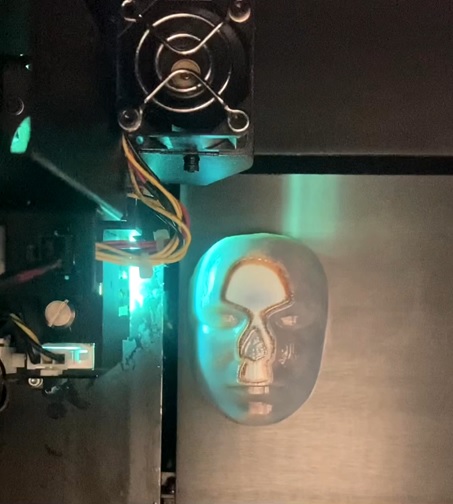
· Experts from WMG, University of Warwick have created a 3D copy of the death mask of Mary Ball, the last woman to be hung in Coventry.
· It’ll go on display in the pop-up museum opening as part of Coventry UK City of Culture
The ‘Forensic Centre for Digital Scanning and 3D printing’, an innovative partnership between West Midlands Police and world-leading researchers at WMG, University of Warwick, is helping to make history more accessible to museum-goers in Coventry.
Having already established a long term relationship with WMP through ground-breaking forensic work, in which researchers from WMG apply cutting edge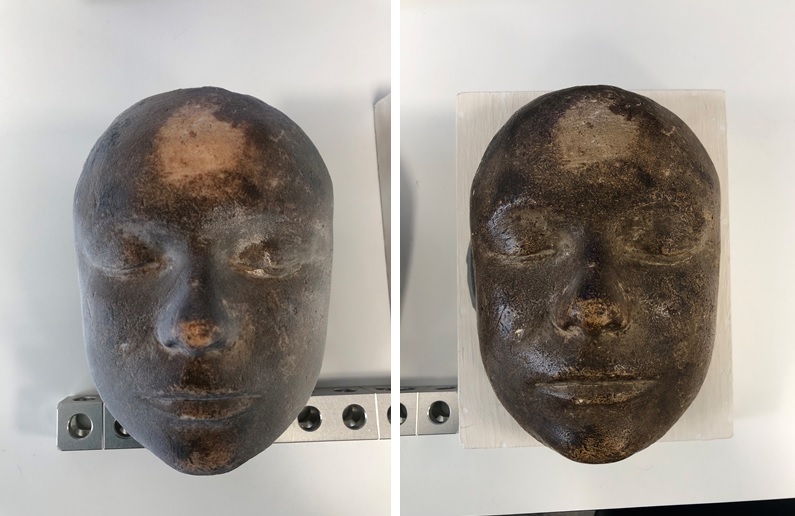 3D Scanning and Additive Manufacturing technology normally used in Automotive and Aerospace industries to support Homicide investigations, researchers can use the same technology to help illustrate one of Coventry’s most famous criminal cases, that of Nuneaton housewife Mary Ball who was the last women to be publicly hung in the city, on 9 August 1849.
The WMG researchers have created a digitally-scanned 3D replica of Mary’s death mask which will go on display in a pop-up museum West Midlands Police are opening in Coventry city centre as part of the city’s year as UK City of Culture.
Professor Mark Williams, from WMG, University of Warwick says projects like this help provide digital archives and preserve important history:
 “It is a real privilege to support West Midlands Police. The opportunity to apply state-of-the technology to support murder investigations, and secure justice for victims and their families, is very exciting.
“But projects like the Mary Ball death mask are incredibly rewarding too. We’re delighted to play our part in preserving Coventry’s history and making it accessible to everyone in support of the city of culture celebrations.”
Michelle Painter, assistant director of our forensics team, approached the team at WMG to help produce the copy:
“We’ve worked with the team on many high-profile criminal cases but I knew the science could be used for other things too.
“During a visit I saw a replica the team had created of the Queen’s favourite wedding cake which had been vandalised with red paint while on display in a museum. It was incredible.
“I knew they’d be able to do justice to Mary Ball’s death mask so I asked them to help us bring her story to life for the museum.”
The replica is an exact copy of the death mask and by putting the 3D version on display, it means museum visitors will be able to touch and hold the mask, making it more accessible, especially to those who are blind or partially-sighted.
Mary Ball’s story is a sad one. She was in a violent marriage and five of her six children had died. One day when her husband Thomas came home from fishing he ate a bowl of stew and bread. He later fell ill with stomach pains and died the next day. The doctor ruled he’d died of natural causes as a result of inflammation of the bowels. However, gossip spread about his death. Mary was said to have suffered enough at the hands of her violent husband and was accused of buying arsenic which she mixed with salt for the stew. A post mortem later found arsenic in Thomas’ stomach and Mary was charged with murder. She was convicted by a sympathetic jury who recommended mercy. However, they could offer no legal reason for leniency because at the time, having a violent husband was no defence. The judge sentenced her to death by hanging.
Awaiting her punishment, Mary was visited by the prison chaplain. Frustrated with Mary’s refusal to confess he held a lit candle to her arm causing blisters and burns. The governor of Coventry prison heard about the torture and dismissed the chaplain. The following day, Mary reportedly confessed. She put the change of heart down to having suffered enough already.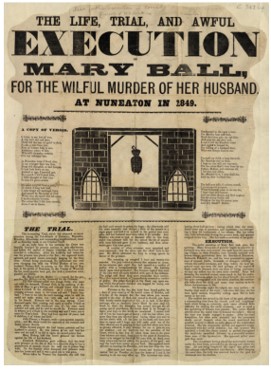
Mary was buried within the grounds of Coventry prison.
Corinne Brazier, West Midlands Police’s heritage manager said:
“The death mask is an incredibly emotive object telling the story of Mary Ball, a story that would have had a very different ending if it had taken place today.
“The 3D scanning process has allowed us to capture finer details of Mary’s face and might give us more of an idea of what she would have looked like.
“Whilst it might seem a bit macabre to have such an object on display, it’s an important story that needs to be told and no photographs exist of Mary to bring the very personal side of her story to life.”
The pop-up museum is due to open to the public in June.
ENDS
18 MAY 2021
NOTES TO EDITORS
High-res images available at:
https://warwick.ac.uk/services/communications/medialibrary/images/may_2021/mary_ball_1_.jpg
Caption: Images of the scans conducted by researchers at WMG, University of Warwick
Credit: WMG, University of Warwick

https://warwick.ac.uk/services/communications/medialibrary/images/may_2021/mary_ball_3.jpg
Caption: 3D printing the death mask
Credit: WMG, University of Warwick

https://warwick.ac.uk/services/communications/medialibrary/images/may_2021/mary_ball_2.jpg
Caption: Left is the 3D print, right is the original death mask
Credit: WMG, University of Warwick

https://warwick.ac.uk/services/communications/medialibrary/images/may_2021/mary_ball_5_.jpg

Caption: The newspaper article about Mary Ball’s execution
Credit: WMG, University of Warwick
https://warwick.ac.uk/services/communications/medialibrary/images/may_2021/mary_ball_4.jpg
Caption: The plaque were Mary Ball’s execution took place
Credit: WMG, University of Warwick

To see the progress of the museum follow @WMPHistory on Twitter or ‘The Lock Up’ on Facebook.
To find out more about WMG’s work, visit https://warwick.ac.uk/fac/sci/wmg/ and https://warwick.ac.uk/fac/sci/wmg/about/facilities/forensic/
To find out more about Coventry City of Culture visit their website.
For further information please contact:
Alice Scott
Media Relations Manager – Science
University of Warwick
Tel: +44 (0) 7920 531 221
E-mail: alice.j.scott@warwick.ac.uk
Charging ahead with battery research
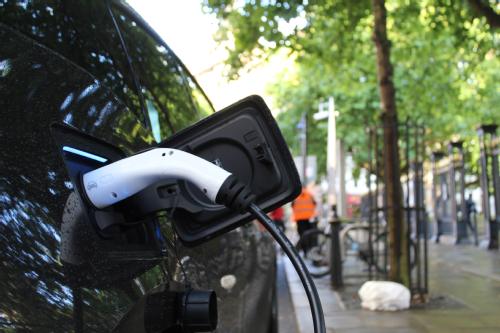 WMG has been named as a partner in five key battery research projects funded by the Faraday Institution.
The Faraday Institution has committed £22.6m to battery research projects involving a consortium of universities around the UK.
Research will progress over the next two years to 31 March 2023. The projects, involving WMG, are:
· SOLBAT. The solid-state battery (SSB) is one of the most important challenges in battery R&D. As well as increasing energy density, lifetime and transforming safety, SSBs will enable step changes in the safety, driving range and longevity of electric vehicles. Read more here: SOLBAT – Solid state metal anode batteries – The Faraday Institution
· SafeBatt – the science of battery safety. Safety control and countermeasures are built into the design of today's Li-ion batteries (LiB) systems, but this adds complexity, cost and weight. As the use of LiBs expands further into automotive, stationary storage, aerospace and other sectors, there is a need to decrease the risk associated with battery usage further and to enable the simplification of safety systems. This can only be achieved through enhanced understanding of the “science of battery safety.” Read more here: SafeBatt – Science of Battery Safety – The Faraday Institution
· Battery Degradation. Although mass manufacture has made lithium-ion batteries cheaper, cost and durability remain obstacles to the widespread adoption of battery electrical vehicles. The lifetime of the batteries falls well below the consumer expectation for long-term applications such as transport. The automotive industry wants to better understand the causes and mechanisms of degradation to enable improved control and prediction of the state of health of battery systems. Read more here: Battery Degradation – The Faraday Institution
· Multi-scale modelling. The performance and lifetime of a battery depends on how the cells are combined into a pack large enough to power an electric vehicle (EV), an aeroplane or even an electricity grid. The mechanism controlling the local environment of each cell within that pack also influences lifetime and performance. The first challenges to be tackled include fast charging of batteries, low temperature operation and thermal management of cells within battery packs. Read more here: Multi-scale Modelling – The Faraday Institution
· Nextrode Electrode Manufacturing. Nextrode focuses principally on manufacturing research into how to engineer a new generation of battery electrode structures. Novel developments in electrode structuring will be drawn from basic science understanding of the current slurry casting manufacture of Li-ion electrodes along with predictive modelling to suggest how control of electrode microstructure can deliver improved energy storage characteristics. Nextrode will support UK manufacturers and supply chain companies, draw on cutting edge scientific and technological knowledge to produce increased cell performance, add value in electrode processing, and improve safety and sustainability. Read more here: Nextrode – electrode manufacturing – The Faraday Institution
Meet the team and read more about WMG’s Energy research here.