
History News
History of Science and Technology Hub launched
We’re delighted to announce the launch of the History of Science and Technology Hub at the University of Warwick.
The University of Warwick has a wealth of expertise in the history of science and technology. We cover the full range of scientific disciplines, from physics to anthropology to economics, as well as the technologies associated with them. Our teaching and research in this area is distinctive. It links up the history of scientific theories with wider historical phenomena such as war, religion, globalisation, ideology, social and environmental change, and the rise and fall of states and empires. This work is integrated into various projects in the History Department and is connected to other Warwick research centres in the sciences, humanities and social sciences.
The History of Science and Technology Hub is a portal to the people, teaching, research and events related to the history of science and technology at Warwick.
To find out more please visit our website or follow us on Twitter.
Dr Sarah Richardson awarded Honorary Fellowship of the Historical Association
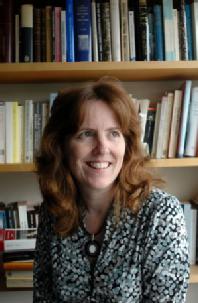 We are delighted to announce that Dr Sarah Richardson has been awarded an Honorary Fellowship of the Historical Association. Each year the Historical Association awards a small number of Honorary Fellowships to recognise and celebrate outstanding contributions to history and to the Historical Association.
Professor Mark Knights features on BBC Radio 4's In Our Time to discuss The Gordon Riots
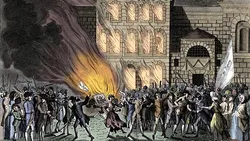
Professor Mark Knights recently joined Melvyn Bragg on BBC Radio 4's In Our Time, to discuss why a Westminster protest against 'Popery' in June 1780 led to widespread rioting across London, lethally suppressed.
The show was originally broadcast on Thursday 2 May, but now available as a podcast on the BBC Radio 4 website.
Materials of the Mind: Phrenology, Race, and the Global History of Science, 1815-1920
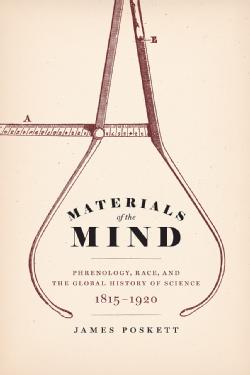
Materials of the Mind: Phrenology, Race, and the Global History of Science, 1815-1920, by Dr James Poskett (University of Warwick), is a new monograph published by University of Chicago Press.
Phrenology was the most popular mental science of the Victorian age. From American senators to Indian social reformers, this new mental science found supporters around the globe. Materials of the Mind tells the story of how phrenology changed the world—and how the world changed phrenology.
This is a story of skulls from the Arctic, plaster casts from Haiti, books from Bengal, and letters from the Pacific. Drawing on far-flung museum and archival collections, and addressing sources in six different languages, Materials of the Mind is an impressively innovative account of science in the nineteenth century as part of global history. It shows how the circulation of material culture underpinned the emergence of a new materialist philosophy of the mind, while also demonstrating how a global approach to history can help us reassess issues such as race, technology, and politics today.
Details of all the monographs and edited collection of the Warwick University History Department's current academic staff are available online, and the details of all the monographs and edited collection of the Warwick University History Department's emeritus academic staff are also available online.
University Staff Awards 2019 - History Department

Congratulations to those History Department staff and students who are on the longlist for this year's University Staff Awards:
- Inspirational Leadersip: Benjamin Redding, Claudia Aoraha
- Outstanding Contribution: Claudia Aoraha
- Public Engagement Contribution: Rachel Bennett
- Research Contribution: Claire Shaw
- Unsung Hero: Colin Storer, Sheilagh Holmes
For the full longlist, please see the University Awards 2019 webpages.
Menstruation and the Holocaust
Former undergraduate student Jo-Ann Owusu turned her excellent BA dissertation from the ‘HI31Z Sexualities, Ethnicity, Class: Reinterpreting the Holocaust’ module into an essay in History Today.
British Conference of Undergraduate Research - James Piggott
 James Piggott, undergraduate student at the Warwick University History Department, has been selected to present at the British Conference of Undergraduate Research this April. James has provided the following information regarding his forthcoming presentation:
My presentation presents two related ideas. Firstly, video-games should be considered a historically-relevant medium, through their capacity to both generate narratives and lessons of the past. Subsequently, the issue of censorship – the doctoring of the past when creating said narratives – is equally detrimental to history within video-games as in alternative formats. The historical significance of censorship within video-games, however, has been largely ignored, due to the ‘trivial’ or ‘ludified’ nature of video-games. As a result, the trivialisation and undermining of the historical practice remains within video-games.
These arguments are covered over three sections. The first unpacks several criticisms of video-games, in turn showing the medium’s historical capacity. The second uses the example of Nazism to describe and explain the presence of censorship within video-games. The final section links these two ideas, discussing the historical impact of censorship within video-games, and why the ‘ludic frame’ of video-games seemingly shadows their equally significant ‘historical frame’.
I hope that, with this paper, video-games will be taken more seriously within academia. I hope to demonstrate their potential utility for the historical practice, and, subsequently, why protecting them from censorship is important. The historical field will be greatly enhanced when developers and historians are not fearful of presenting their novel or controversial arguments. If censorship is abhorrent in alternative historical formats, so should it be in video-games.
This will entail providing a brief 10 minute presentation to a variety of different undergraduate researchers and experts; there will then be time for a short Q&A afterwards to answer any queries or loose ends.
BCUR - the British Conference of Undergraduate Research - is a yearly conference aimed at promoting and sharing undergraduate research in all disciplines. It is a fantastic opportunity to receive feedback and interest in one's work, and to meet with fellow researchers and academics. This year, the conference is being hosted at the University of South Wales, and consists of both oral and poster presentations.
Venice had its own ‘Airbnb problem’ during the Renaissance – here’s how it coped
 |
The Conversation has published an article by Dr Rosa Salzberg of the Warwick University History Department on the accommodation issues faced by Venice during the Renaissance. Please see the full article on The Conversation's website.