
History News
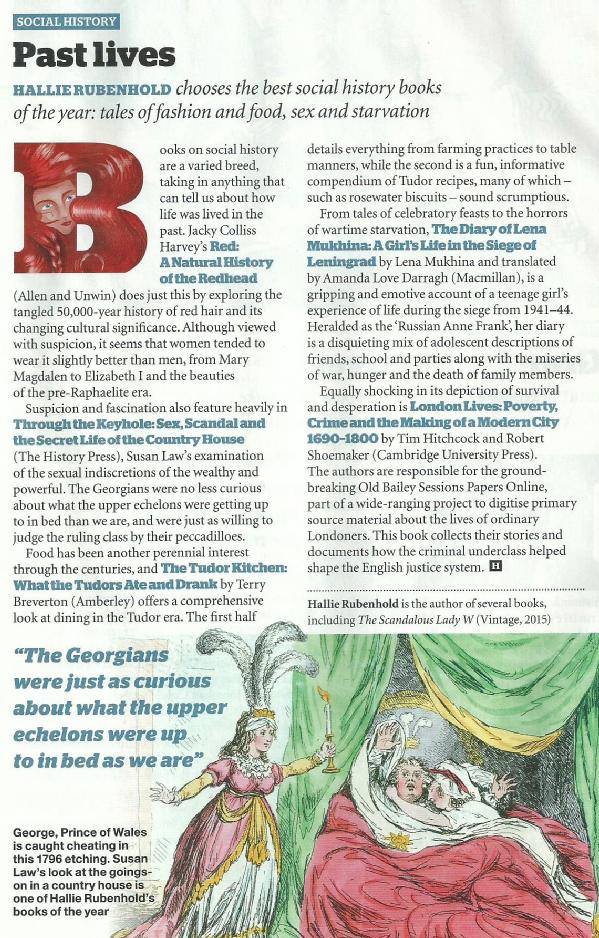
Through the Keyhole: Sex, Scandal and the Secret Life of the Country
|
Please see the Warwick University History Department's Directory of Former PhD Students for details of Dr Susan Law and other doctoral graduates. |
 |
Showing and discussion of the corruption and conflict in 'Seven Days in May'
On Friday 4th December 2015 there will be a showing and discussion of the corruption and conflict in Seven Days in May, led by Warwick University PhD student and film historian Hannah Graves and hosted by Institute of Advanced Studies Junior Research Fellow Ellen Filor. Written by The Twilight Zone's Rod Serling and starring some of the foremost actors of the era (Kirk Douglas, Burt Lancaster and Fredric March), this film follows an attempted military coup to overthrow the American president because he supports a nuclear disarmament treaty. Pederson-Graves will unpick the Cold War paranoia of the era and show how outside events impacted its reception by examining how Kennedy's assassination shortly before the release led to a new strategy for the premiere.
 |
Publication of 'From Here to Eternity' and Finalist for the 2014 Richard Wall Memorial Award
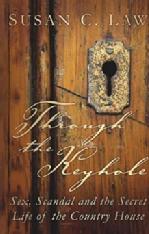
Dr J E Smyth's new book, From Here to Eternity, has just been published by Palsgrave Macmillan and the British Film Institute. Dr J E Smyth was also a finalist for the 2014 Richard Wall Memorial Award for her book, Fred Zinnemann and the Cinema of Resistance.
 |
 |
Franz Kafka’s favorite sister Ottla in the Holocaust
Dr Anna Hájková's article on Franz Kafka’s favorite sister Ottla in the Holocaust has been published in the German national daily newspaper, Süddeutsche Zeitung.
 |
Publication of Lemberg, Lwów, L'viv, 1914‒1947: Violence and Ethnicity in a Contested City
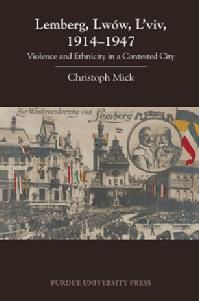
Lemberg, Lwów, L'viv, 1914‒1947: Violence and Ethnicity in a Contested City by Professor Christoph Mick has been published by Purdue University Press.
Known as Lemberg in German and Lwów in Polish, the city of L’viv in modern Ukraine was in the crosshairs of imperial and national aspirations for much of the twentieth century. This book tells the compelling story of how its inhabitants (Roman Catholic Poles, Greek Catholic Ukrainians, and Jews) reacted to the sweeping political changes during and after World Wars I and II. The Eastern Front shifted back and forth, and the city changed hands seven times. At the end of each war, L'viv found itself in the hands of a different state.
While serious tensions had existed among Poles, Ukrainians/Ruthenians, and Jews in the city, before 1914 eruptions of violence were still infrequent. The changes of political control over the city during World War I led to increased intergroup frictions, new power relations, and episodes of shocking violence, particularly against Jews. The city’s incorporation into the independent Polish Republic in November 1918 after a brief period of Ukrainian rule sparked intensified conflict. Ukrainians faced discrimination and political repression under the new government, and Ukrainian nationalists attacked the Polish state. In the 1930s, anti-Semitism increased sharply. During World War II, the city experienced first Soviet rule, then Nazi occupation, and finally Soviet conquest. The Nazis deported and murdered nearly all of the city’s large Jewish population, and at the end of the war the Soviet forces expelled the city’s Polish inhabitants.
Based on archival research conducted in L’viv, Kiev, Warsaw, Vienna, Berlin, and Moscow, as well as an array of contemporary printed sources and scholarly studies, this book examines how the inhabitants of the city reacted to the changes in political control, and how ethnic and national ideologies shaped their dealings with each other. An earlier German version of this volume was published as Kriegserfahrungen in einer multiethnischen Stadt: Lemberg 1914‒1947 (2011).
Please also see the full list of the monographs and edited collections of the current academic staff of the Department, which includes this publication.
Dr Camillia Cowling interviewed in the Globo
Dr Camillia Cowling, Assistant Professor of Latin American History in the Warwick University History Department, is interviewed regarding her work by one of Brazil's main newspapers, the Globo. The full article is available online.
 |
Recruitment of an Assistant Professor in 19th Century European History
The University of Warwick History Department seeks to appoint an Assistant Professor in the field of European History in the 19th Century. Applicants who work on the United Kingdom must demonstrate substantial and ongoing research on at least one other European country. Applicants may be interested in a wide range of European topics – the consolidation of Napoleonic and/or post Napoleonic Europe, the negotiation of Great Power dominance by weaker states, cross-European migration, social and intellectual movements, western and Ottoman/North African relations, Mediterranean colonialism, etc. Disciplinary interests are likely to bring together elements from different strands of intellectual, cultural, social and political history. It is expected that the successful applicant will participate in negotiating and challenging boundaries between scholars of the early modern and modern period.
Applicants should demonstrate a substantive commitment to the study of some area of 19th century Europe not centered on the UK; an academic background appropriate to contributing courses in 19th century European history; a strong interest in working with the History Department’s research centres, especially the European History Research Centre, to promote research with a strong European dimension, and the Global History and Culture Centre, examining relations of the European metropole with the wider world; and a good record of publication (appropriate to career stage) of high standard in the field of European History.
The University of Warwick History Department has a long tradition of strength in European History. This currently lies especially in the early modern period, the 18th Century, and the modern period. It also has considerable strengths in North and Latin American history, and wider world and global history. The Department believes that the field is ripe for development as new perspectives from transnational history to intellectual and cultural history re-engage our connection with 19th century Europe.
Please direct all informal inquiries to Professor Daniel Branch, Head of Department, at D.P.Branch@warwick.ac.uk.
The closing date for applications is 26th November 2015, and interviews are to be held on Friday 15th January 2016. Full advert and how to apply are available online.
Applications for a Leverhulme Early Career Fellowship (2016)
Candidates interested in applying for a Leverhulme Early Career Fellowship with the Warwick History Department must submit their preliminary application to the Department by midnight GMT on Thursday 6th January 2016. Please check the details of what is required from potential applicants.