
Computer Science News
Professor Feng Hao provided Royal Society International Collaboration Award

Royal Society has provided an International Collaboration Award of £225,000 to Professor Feng Hao in the Department of Computer Science, University of Warwick to build an international collaboration with Professor Bimal Kumar Roy of the Indian Statistical Institute on “strengthening e-voting in India”. The project will run from December 2018 to December 2021.
India is the largest democracy in the world by population. As of today, Electronic voting machines (EVMs) have replaced paper ballots in all national and general elections in the country. The aim of this international collaboration is to develop an electronic voting process that will be fully verifiable, hence providing stronger guarantees on the tallying integrity of an election. This builds on the UK team’s leading research on end-to-end verifiable e-voting without tallying authorities (also known as "self-enforcing e-voting") and the India team's strength on cryptography and statistics research. The success of this project will not only provide an invaluable case study, but also a potentially portable solution for other countries that face similar development problems in deploying e-voting securely (e.g., Brazil, Nigeria).
About Royal Society International Collaboration Award
The Global Challenges Research Fund (GCRF) is a £1.5 billion fund announced by the UK Government to support cutting-edge research that addresses the challenges faced by developing or Low and Middle Income countries (LMICs). As part of the GCRF, the Royal Society has launched an International Collaboration award to enable outstanding UK research leaders to develop international collaborations with the best leading researchers from around the world. The award is for three years and offers an exciting opportunity to foster and promote international collaboration between outstanding research groups in the UK and overseas, with a view to supporting work on global challenges and problems facing developing countries.
More details about this award can be found at: https://royalsociety.org/grants-schemes-awards/grants/international-collaborations/
£14.7m industry partnership to boost engine research

Image ©Rolls Royce Plc
Scientists at the University of Warwick’s Department of Computer Science are to benefit from an initiative that seeks to build links between industry and researchers, as part of a project with Rolls-Royce to create a detailed simulation of a gas-turbine engine in operation.
The research aims to lead to the virtual certification of gas turbine engines, with the researchers also seeking to develop the next generation of engineering simulation and modelling techniques during their project.
Their challenge combines fundamental engineering and computational science research and will tackle a level of detail never before attempted in such a simulation.
The project, to be carried out over five years, involving the universities of Warwick, Bristol, Cambridge and Oxford and led by Edinburgh and is one of seven across the UK to benefit from a £42 million programme that aims to build links between the UK’s research base and industry partners.
This is one of two projects the University of Warwick has been granted money for by the Engineering and Physical Sciences Research Council (EPSRC) Prosperity Partnership, as WMG at the University of Warwick was also granted £7m for development of Rapid Alloy Prototyping. See: https://warwick.ac.uk/newsandevents/pressreleases/the_virtual_factory/
Commenting Professor Stephen Jarvis, Deputy Pro Vice-Chancellor for Research at the University of Warwick and the Warwick Principal Investigator on the Rolls-Royce Prosperity Partnership, said:
“The University of Warwick has been working with Rolls-Royce for the past ten years, investigating ways in which high performance computing can boost the productivity of aircraft engine design and engineering.
“We are delighted to be working with such a strong team of university and industry partners to deliver next generation engineering simulation and modelling capabilities."
Professor Philip Nelson, EPSRC’s Executive Chair said:
“Our first round of Prosperity Partnerships are proving a great success. They are bringing universities and industry together and applying the creative energies of both to engineering and scientific challenges.
“We are confident that these projects will deliver real benefits to all their partners and help the UK research, discover and innovate.”
The research project will begin in October 2018 and will be led by Professor Jarvis and Dr Mudalige from the Department of Computer Science.
Welcome to our new students who have joined us this week!

We welcome our new students who have joined the department this week and congratulate them for their excellent results prior to coming here! For the first time ever, they are joining us for a Welcome Week before lectures start next week. We are excited to have so many outstanding new students and are looking forward to seeing them become excellent Computer Scientists in the coming years!
Dr Claire Rocks is a new WIHEA Fellow
Many congratulations to Dr Claire Rocks on her election to a Fellowship of the Warwick International Higher Education Academy.
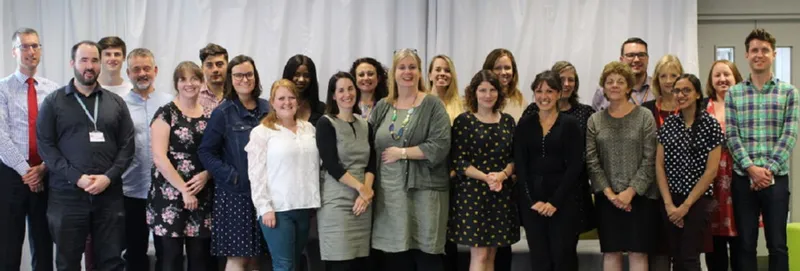
A WIHEA Fellowship recognises and rewards outstanding achievements in learning and teaching and is an exceptional opportunity to engage with colleagues across the university, improve the student experience and make a genuine difference to Warwick through research, debate and policy formation.
Warwick Computer Science Tops Russell Group Institutions in National Student Survey 2018

In the recently published National Student Survey (NSS) 2018, Computer Science at Warwick ranked 4th of the 108 computing departments in the UK, with an overall student satisfaction rate of 94%. Among the Russell Group, an elite group of research-led universities in the UK, Computer Science at Warwick is ranked 1st for overall student satisfaction for the second consecutive year.
The NSS canvasses student satisfaction across all departments at all universities and remains the biggest survey of student satisfaction in the UK. Students are asked to respond on topics including teaching quality, learning opportunities, academic support, and organisation and management. Among the Russell Group, Computer Science at Warwick ranked first or second in almost all major categories.
Investment in new teaching and laboratory facilities is well underway, with Warwick’s new Mathematical Sciences Building soon to open and staff eagerly preparing for an exceptionally talented student intake for the 2018-19 academic year.
Warwick Postgraduate Colloquium in Computer Science 2018
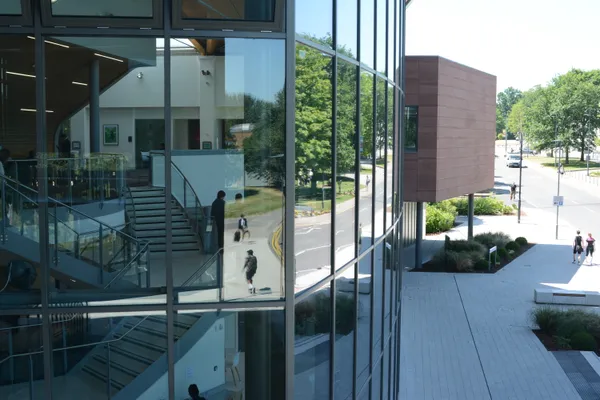
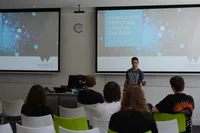
This year’s Warwick Postgraduate Colloquium in Computer Science, WPCCS 2018, took place on Friday 29th June. The colloquium, an annual student-run event, showcased research performed by the postgraduate research (PGR) students in Computer Science, the Centre for Discrete Mathematics and its Applications (DIMAP) and the CDT in Urban Science and Progress.
Continuing a new tradition for the colloquium, this year’s event was held in The Oculus, University of Warwick. In addition to presentations from students in each of the department’s research areas, staff and external speakers offered guest talks. These centred on language design patterns in 2018, the evolution and horizons of Field Programmable Gate Arrays (FPGAs), and WebEXR, an online high dynamic range image viewer.
Florin Ciucu, the director of postgraduate research studies in the Department of Computer Science, said of the event:
WPCCS is an excellent opportunity for our students to widely expose where they currently stand in their research. It’s a fantastic way for them to contribute by sharing their research experiences, ideas and visions with their peers and the wider research community.
WPCCS 2018 showcased over 45 presentations and 25 posters of the latest research in the Department of Computer Science. WPCCS aims to foster an air of collaborative research amongst the department’s PGR students and open many conversations between the department’s postgraduate researchers and others. Thank you to all who attended and participated, we look forward to seeing you again next year.
To find out more about WPCCS 2018 or to provide feedback, please visit https://warwick.ac.uk/wpccs18.
Promotions for two academic staff
 We are delighted to report that Dr Theo Damoulas and Dr Gihan Mudalige have successfully completed their probations early, and become Associate Professors at the start of this month. Quoting from their probationary review reports,
Gihan has had a number of successes with attracting substantial research funding, most recently for two projects with AWE PLC, and one with Rolls Royce PLC. A further major success is Gihan’s Royal Society Industrial Fellowship, which will run over the next 4 academic years at 50% of Gihan’s time. ... Dr Gihan Mudalige is an outstanding and valuable member of the department’s academic staff, whose many likely future contributions to both research and teaching we are looking forward to.
and
Dr Theo Damoulas is a valuable asset to both Computer Science and Statistics departments in all of the research, teaching, administration and collegiality areas. Theo is already a next-generation research leader at the national and international levels, in particular enhancing the university's partnerships with the Alan Turing Institute, CUSP London, King's College London, and New York University.
it remains to say many congratulations!