
Computer Science News
Best paper at ICALP 2013 (Track B) for John Fearnley and Marcin Jurdzinski
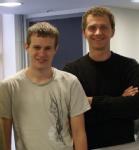
Congratulations to our staff member Dr Marcin Jurdziński, for winning the best paper award at the main European conference in Theoretical Computer Science ICALP 2013 (Track B), for the paper Reachability in Two-Clock Timed Automata is PSPACE-complete he co-authored with Dr John Fearnley (a Warwick PhD, currently at the University of Liverpool).
John and Marcin's paper is one of six Warwick papers accepted for presentation at ICALP. Moreover, two of the 2007 Warwick BSc Computer Science graduates have papers at ICALP 2013 (John Fearnley and Dominic Orchard). Congratulations are in place for all Warwick authors at ICALP!
DCS algorithm research helps to understand plant genetics
An interdisciplinary team of researchers from Warwick's School of Life Sciences, Centre for Systems Biology and the Department of Computer Science have discovered hundreds of regions in plant DNA that have been preserved across different species through 100 million years of evolution. These regions are not part of any genes, but may be responsible for turning individual genes "on" and "off". The discovery will help biologists to understand better the genetics of plants, leading to potential applications in agriculture and food security. This research has been made possible by a computational analysis of the DNA in several plant species, based on algorithms developed by a DCS academic Dr Alexander Tiskin and his former PhD student Dr Peter Krusche (now working at Warwick's Centre for Systems Biology). The research was published in the journal Plant Cell.
Warwick University's press release
Interview with the team's leader Dr Sascha Ott
Dr Mike Joy given award for best personal tutor
Dr Mike Joy has been awarded 'Best Personal Tutor' in the STARS of Warwick awards. The student-led teaching awards recognise and celebrate staff members who have gone the extra mile for the benefit of students.
The Awards were launched in 2012 and are run by students, nominated by students and judged by students. From choosing categories to nominating and presenting awards, STARS is a completely student-led scheme giving students the chance to reward staff they feel have gone above and beyond for the sake of their students.
Warwick Computer Science Graduates Enjoy Top Employment Prospects
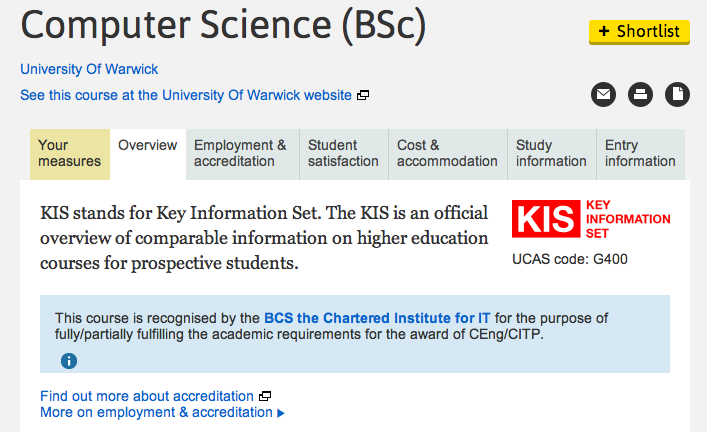
Recent results on the official Unistats website show that of those Computer Science graduates from Warwick who have gained employment within 6 months following graduation, 100% are employed in professional or mangerial roles.
The Department of Computer Science at Warwick is in the top tier of computer science departments with respect to graduate employability. Known for its strong links with industry leaders in the technology, finance and consultancy sectors, the department is actively targeted by a range of top graduate employers, many of whom are involved with ongoing teaching and research activites at Warwick.
Rob Procter joins the Department as a new Professor
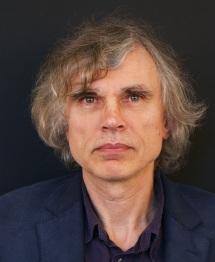
Rob will join the Department as a Professor associated with the Centre for Urban Science and Progress (CUSP).
Rob is a computer scientist with a strong inter-disciplinary background, focusing on social informatics. In general terms, his research aims are to understand how cognitive, organisational and social factors shape processes of appropriation (design, development and adoption) of innovations in information and communication technologies (ICTs). Rob's particular interests are in: computer-supported, collaborative work; dependability of ICTs; social media and health informatics. Currently active areas of research include research infrastructures, tools and methods, studies of innovation in the NHS and methodologies for the co-development of assistive living technologies.
At Manchester University, Rob was Director of the Manchester eResearch Centre, a multi-disciplinary group working on innovative research infrastructures, tools and methods. He also leads the Analysing Social Media Collaboration (ASMC) a multidisciplinary group of researchers based at several UK universities. ASMC focuses on analysing data from social media platforms such as Twitter with the aim of understanding the role they play in social phenomena. ASMC conducted the analysis tweets sent during the August 2011 riots for the Guardian/LSE ‘Reading the Riots’ project. The group is now developing a Twitter analysis workbench.
Rob has been Principal or Co-Investigator on over 50 projects. He has published over 180 papers in peer-reviewed journals and conference, is co-editor with Peter Halfpenny of ‘Innovations in Digital Research Methods’ to be published by Sage in 2013 and has been editor of the Health Informatics Journal since 2004.
For more information about Rob’s research please see his web page at http://www2.warwick.ac.uk/fac/sci/dcs/people/Rob_Procter
Students learning about Algorithmic Trading
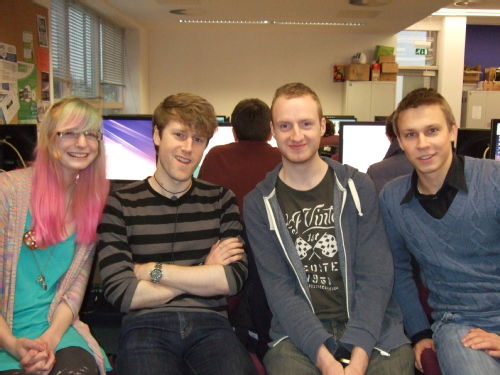
Barclays Capital has sponsored a programming competition amongst our students, to help them learn about the intricacies of investment banking and the complexities of the software behind large, fast, and highly critical transactions underlying currency trading. The remit was to develop programs that emulated the real processing behind quantitative analytics, and create optimal trades by processing large, complex data.
Four students (Ruth, Kim, David and Donatas, pictured above) were awarded prizes both in cash as well an opportunity to attend the next Grace Hopper Conference for Women in Computing. Moreover, participants in the competition reported that they appreciated the chance to get a detailed look at the complex computing behind investment banking.
The Department is grateful to Barclays Capital for providing this opportunity.
Andrzej Murawski joins the Department as a new Associate Professor
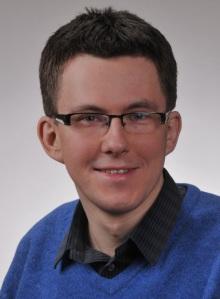
Andrzej Murawski joined the Department in January 2013 as an Associate Professor. His doctoral degree is from the University of Oxford, where he was also a Junior Research Fellow (St John's College) and subsequently an EPSRC Advanced Research Fellow. Before coming to Warwick he held a Lectureship at the University of Leicester.
Andrzej's research concerns the semantics of programming languages and its applications to program verification. In particular, he has extensive expertise in modelling logical systems and programming languages using games, an area known as game semantics.
Andrzej has served on program committees of international conferences such as FOSSACS, ICALP, LICS and POPL. He is a member of the EPSRC Peer Review College and Publicity Chair of LICS. His research has been supported by EPSRC, LMS and the Royal Society.
Andrzej teaches CS245 Automata and Formal Languages and CS246 Further Automata and Formal Languages in Term II.
For more information about Andrzej’s research please see his web page at http://warwick.ac.uk/amurawski/.