Rob Buchanan

Rob Buchanan is one of the 2026 recipients of Dr Mrytle Pridgeon's scholarship, which is awarded to two postgraduate students working in Medical Sciences. He is a PhD student in Warwick Medical School.
Rob's project is called 'The role of the cGAS-STING pathway in acute senescence associated with the implantation window'
He is supervised by Dr Alexiane Decout and Prof Jan Brosens.
Project Summary
Infertility affects 1/7 couples in the UK, and, together with miscarriage, causes psychological trauma for families as well as increased demand on health services. Consequently, understanding the fundamental mechanisms involved in human embryo implantation - the establishment of pregnancy - is essential to address certain reproductive health disorders, and my project investigates a key aspect of this process.
The menstrual cycle prepares the body for potential pregnancy through hormonally-controlled changes to the uterine lining (the ‘endometrium’). The endometrium consists of endometrial stromal cells (ESCs), and, following menstruation, oestradiol promotes the rapid proliferative growth of ESCs to regenerate the endometrium. After ovulation, progesterone drives tissue remodelling in the endometrium via an inflammatory reaction termed decidualisation, to create a transient, optimal environment for implantation – ‘the implantation window’. Decidualisation transforms ESCs into two cell types: decidual cells (DCs) that form a decidual matrix into which an embryo implants, and decidual-like senescent cells (DLSCs) which are distributed throughout the decidual matrix and are crucial for successful pregnancy.
Senescence is a biological state in which cells stop dividing while remaining metabolically active. Acute senescence, as seen in DLSCs, promotes dynamic tissue remodelling through secretion of extracellular matrix proteins and proteinases. In the endometrium, this senescence-induced remodelling produces a flexible decidual matrix that supports embryo expansion. Insufficient amounts of senescence lead to a stiff decidual matrix, the embryo becoming entrapped, and implantation failure. Despite its key role in implantation, the mechanism which promotes senescence in DLSCs remains unknown.
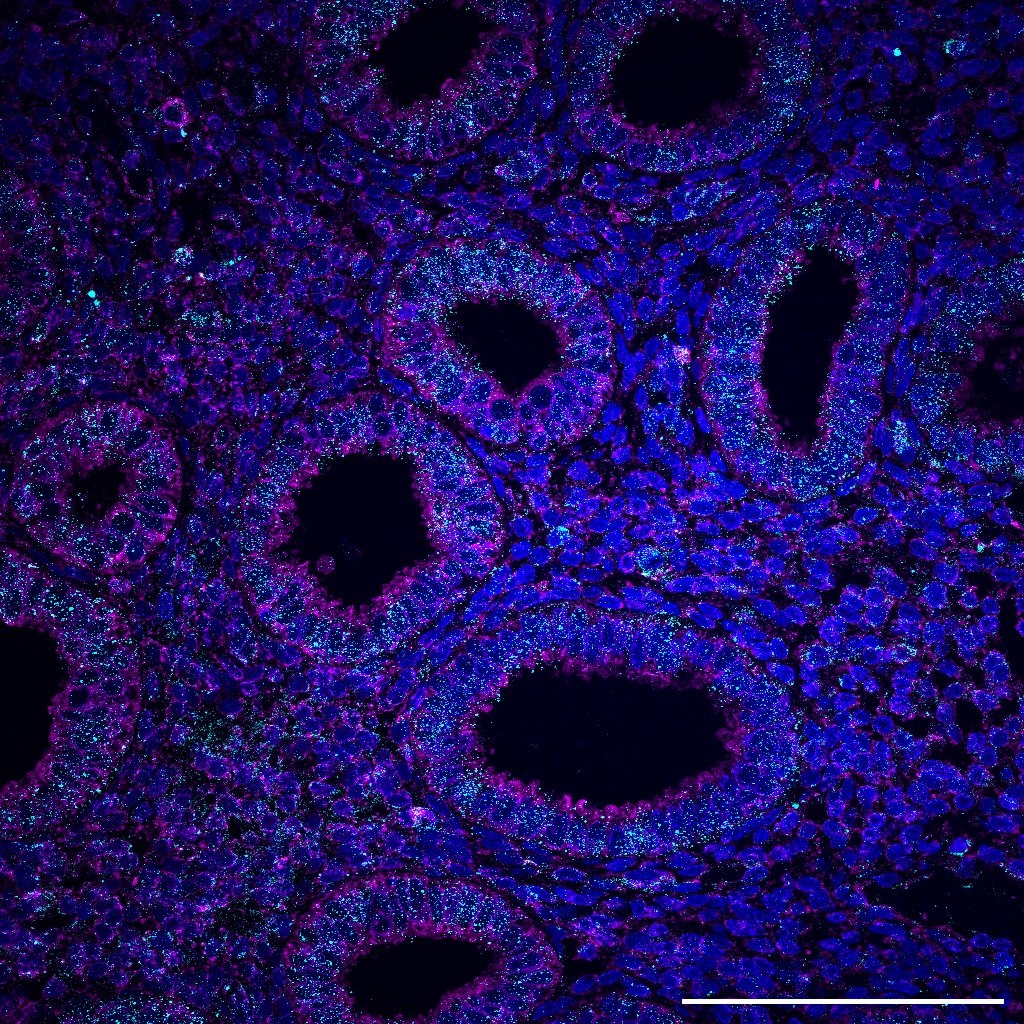
Our preliminary data indicate that the innate immune cGAS STING pathway, a known driver of senescence, is a key controller of uterine senescence. Thus, my project aims to 1) use primary human ESCs to establish the cGAS-STING pathway as the driver of endometrial senescence; 2) delineate the regulation of the pathway; and 3) identify its role in endometrial remodelling by utilising 3D endometrial assembloids and whole endometrial explants.
Identifying the immune pathways regulating the menstrual cycle and embryo receptivity will provide new insights into endometrial biology, and could guide the development of innovative diagnostics and therapeutics for women at risk of infertility and miscarriage.