
Life Sciences News
See our Latest Journal Publications
Brassicas on BBC Radio 4
Warwick Crop Centre researcher, Dr Graham Teakle, spoke about the Vegetable Genetic Improvement Network (VeGIN) on BBC Radio 4 - Farming Today this morning. Graham described a research project at the University of Warwick which aims to help plant breeders produce new strains of brassicas.
Listen at http://www.bbc.co.uk/programmes/b04tlqzp (starts around 10:38)
Young Business Brains Compete to become 2014’s Science Entrepreneurs
On December 17, students from local sixth form colleges will compete before a Dragon’s den-style panel of judges, presenting their business concepts in the hope of being crowned ‘2014 Science Entrepreneurs’ and securing investment for their colleges’ science department.
Organised by the School of Life Sciences, the event aims to cultivate the next generation of scientific entrepreneurs.
What is Synthetic Biology?
Warwick Centre for Integrative Synthetic Biology (WISB) researchers Orkun Soyer and Declan Bates feature in a short video called ‘What is Synthetic Biology?’. The video, which was commissioned by the venture capital fund the Rainbow Seed Fund, highlights the field’s potential as a significant driver for UK business.
Pathfinder Award for bee project
Prof David Evans has received an award from BBSRC’s Pathfinder Follow-on Fund for a project on antiviral therapies for honeybees. The Follow-on Fund supports the translation of fundamental research into practical application, including commercialisation, and aims to help researchers maximise the societal and economic benefits of their research.

Getting agricultural information to smallholder farmers can help improve food security
BBSRC-funded PhD student Andrew Tock, from Warwick Crop Centre, explores 'plant clinics' in Uganda where farmers can receive objective and impartial advice on how to best treat their crops to protect them from pests. The diary is based on a three-month project in Uganda, and part of the Midlands Integrative Biosciences Training Partnership (MIBTP), a BBSRC-funded Doctoral Training Partnership. Find out more in Andy's blog.
Video courtesy of BBSRC
Prof. David Evans - Possible that a successful GSK Ebola vaccine might help in this outbreak due to underestimating the number of cases
Following the announcement of GlaxoSmithKline (GSK) that a, currently under development, Ebola vaccine may not be ready for the current outbreak, Professor David Evans of the University of Warwick's Department of Life Sciences argues that it is "still possible that a successful GSK Ebola vaccine might help in this outbreak" due to the World Health Organisation (WHO) prediction that - by Christmas - new cases could number 10,000 per week.
Scientists benefit from funding initiatives to protect soils and safeguard global food security
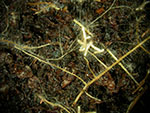 The School of Life Sciences will lead one of four projects, with combined funding of £5 million, supported by a BBSRC led initiative known as SARISA (Soils and Rhizosphere Interactions for Sustainable Agri-ecosystems). SARISA was developed with NERC under the Global Food Security (GFS) programme. Researchers will investigate the factors affecting soil microbial communities and the consequences for crop growth.
Soil is fundamental to our life support system, providing food, storing and filtering water, cycling nutrients and providing a habitat for many species. It is at the heart of our interaction with the environment and central to the responsible management of our planet. The world will need to produce 50% more food by 2030 to feed a growing world population and soil science is crucial to meeting this challenge.
Dr Gary Bending’s team will use advanced genetic sequencing methods to derive new understanding of the factors which shape the composition of the rhizosphere microbial community (i.e. its ‘microbiome’), and its consequences for crop growth. Using field crops of oilseed rape as a model system the researchers will determine the roles of soil biodiversity, local climate, soil properties, rotation and geographical distance in shaping the rhizosphere microbiome. Oilseed rape suffers 6-25 % annual losses, termed yield decline, because of the development of a detrimental rhizosphere microbiome, for which there is no treatment. The project will identify shifts in microbial composition and both microbial and plant gene expression associated with a change from a healthy to a diseased rhizosphere. They will use this data to investigate the potential to manipulate recruitment of detrimental and beneficial soil biota into the rhizosphere microbiome in order to promote crop growth and yield. Dr Graham Teakle is a Co-Investigator on the project.
Prof Elizabeth Wellington is the Warwick principal investigator in a second SARISA funded project led by Dr John Hammond at the University of Reading. This study will use a variety of approaches to better understand the role plants and microbes living in the rhizosphere play in making phosphorus available for plant growth and how these roles change during plant development under field and laboratory conditions. Other Life Sciences contributors to the project are Dr Gary Bending, Prof Dave Scanlan and Dr Alex Jones.
Minister for Universities, Science and Cities Greg Clark said
'Forging these strong partnerships between research councils and the three innovative new initiatives announced today are vital in addressing major challenges facing our society like feeding a growing population. By working together, the research councils can bring a range of perspectives to bear on these issues, ensuring that that excellent UK research is translated into tangible economic and societal benefits.'
Professor Melanie Welham, BBSRC Executive Director of Science, said:
'Soil research is an area of strategic importance for BBSRC, NERC and all the Global Food Security programme partners, particularly in relation to the 'sustainable enhancement' of agriculture. These initiatives are great examples of UK public funders working in partnership through GFS to support excellent interdisciplinary research in this area.'
'Good management of land and soils is vital to maintain soil health, nutrient cycling and biodiversity - essential to help provide enough food for a growing global population while protecting ecosystems in the wider environment and the other benefits they provide.'
Legacy of Warwickshire’s first Woman High Sheriff helps University of Warwick tackle global food security
A trust set up by Elizabeth Creak, a leading Warwickshire farmer who was the first woman to be High Sheriff of Warwickshire, has announced that it has agreed to fund a Chair in Food Security at the University of Warwick’s School of Life Sciences. The announcement has just been made by The Elizabeth Creak Charitable Trust.
Leading virologist Prof Andrew Easton comments on Ebola
In a TV interview with Good Morning Britain earlier this week, virologist Prof Andrew Easton comments on Ebola, saying the risk of it entering the UK is small.
University of Warwick welcomes £13m bioresearch funding
The University of Warwick has welcomed £13m of government funding to support bioresearch projects. It will fund about 260 researchers to look at global problems connected with agriculture and horticulture.
Liz Fullam awarded Sir Henry Dale Fellowship
Dr Liz Fullam has recently been awarded a Sir Henry Dale Fellowship of £822,993, jointly funded by the Wellcome Trust and the Royal Society, to investigate the role of nutrient transporters in Mycobacterium tuberculosis, the causative agent of TB. The five-year Fellowship, with the possibility of an additional three year extension, will provide an excellent opportunity to establish this area of research in the School of Life Sciences, and builds on Liz’s current research project, which was funded by a Leverhulme Trust Early Career Fellowship.
Warwick leaps up 38 places in the Times Higher Education World University Rankings
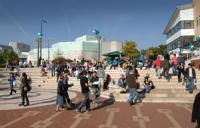 The Times Higher Education World University Rankings published today, Thursday 2nd October 2014, reveal that the University of Warwick has leapt up 38 places in that table to now be ranked 103rd in the world.
Warwick named University of the Year 2014/15
 We're delighted to report that Warwick has been named the Times' and Sunday Times' University of the Year 2014/15. We've also risen two places to eighth in the UK in the Good University Guide 2015 league table, which will be published this Sunday. These are outstanding achievements of which all our staff and students can be proud.
UK Plant Science: Current Status and Future Challenges
Prof Jim Beynon is Chair of the UK Plant Sciences Federation Executive Committee. Find out about the current status and future challenges of UK plant science by watching his presentation from the UK PlantSci 2014 meeting held earlier this year in York.
UK Plant Science: Current Status & Future Challenges
(JXB YouTube)
Christmas lecture: 'Talk Amongst Your Cells' - book now
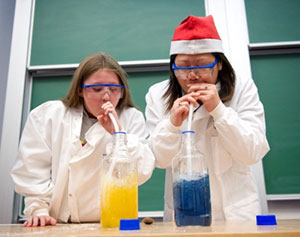 Warwick is hosting a series of six engaging and accessible lectures, open to all, over the festive period from 3-10 December 2014. Join our academics for fantastic new ideas, explosions and experiments.
Dr Miriam Gifford, representing the School of Life Sciences, will present a lecture entitled 'Talk Amongst Your Cells' on Monday 8 December. Animals and plants are made up of many different cells that have to work together to enable living things to grow… So cells have to talk to each other, even the cells in slime mould! Come with us to play ping pong and Chinese whispers to give you a cell’s eye view of trying to make yourselves heard! Book your tickets
Prof David Evans: Zmapp tests 'an extremely encouraging result'
Professor David Evans comments upon the results, published by Nature, of the tests of new drug ZMapp for the treatment of Ebola.
Focus on naturally occurring protein to tackle dementia
Researchers led by Dr Sonia Correa have provided the first evidence that the lack of a naturally occurring protein is linked to early signs of dementia.
Published in Nature Communications, the research found that the absence of the protein MK2/3 promotes structural and physiological changes to cells in the nervous system. These changes were shown to have a significant correlation with early signs of dementia, including restricted learning and memory formation capabilities.
Experimental drugs were used for HIV, but Ebola is a riskier bet
Life Sciences academics, Prof Andrew Easton and Dr Keith Leppard, comment on the use of experimental drug therapies to treat the Ebola virus.
Engineering Synthetic Microbial Communities for Biomethane Production
A BBSRC-funded team led by Prof Orkun Soyer is investigating how to use methane-producing microbes, known as methanogens, to generate renewable biofuels.
