
Guest Post: Turnabout Intruder
Sometimes the strange ideas to be found in science fiction can shed light on aspects of the world around us. Here Jan Eldridge, Professor at the University of Auckland in New Zealand takes a look at the science and fiction behind the mind and body swap which occurred in the 1960s Star Trek episode “Turnabout Intruder”.
[Note: Jan’s guest post is based on an interview with Brian Crump broadcast by Radio New Zealand in April 2022 as part of their regular Sci Fi/Sci Fact podcast feature. We’d encourage you to listen to the podcast, which includes Crump’s informed and entertaining input, here, while noting that perspectives, including Jan's, do evolve over time and this discussion is slightly modified from that of a few years ago.]
The final Star Trek episode “Turnabout Intruder” was first broadcast in June 1969 (dir. Wallerstein; screenwriter. Arthur H Singer, based on an idea by Gene Roddenberry). As usual, the starship Enterprise turns up on a planet and the crew beam down… and, as we’ve come to expect, the trouble starts. On the planet, they find Doctor Janice Lester, who has got together an archaeological expedition to explore ruins on this alien world… and she knows Kirk from previous encounters.
Doctor Lester has found a machine that she uses to effectively swap bodies with Captain Kirk, so that Kirk's mind ends up in Doctor Janice Lester's body and Lester's mind ends up in Captain James Kirk's body. Understandably, Kirk has trouble convincing anyone of this:
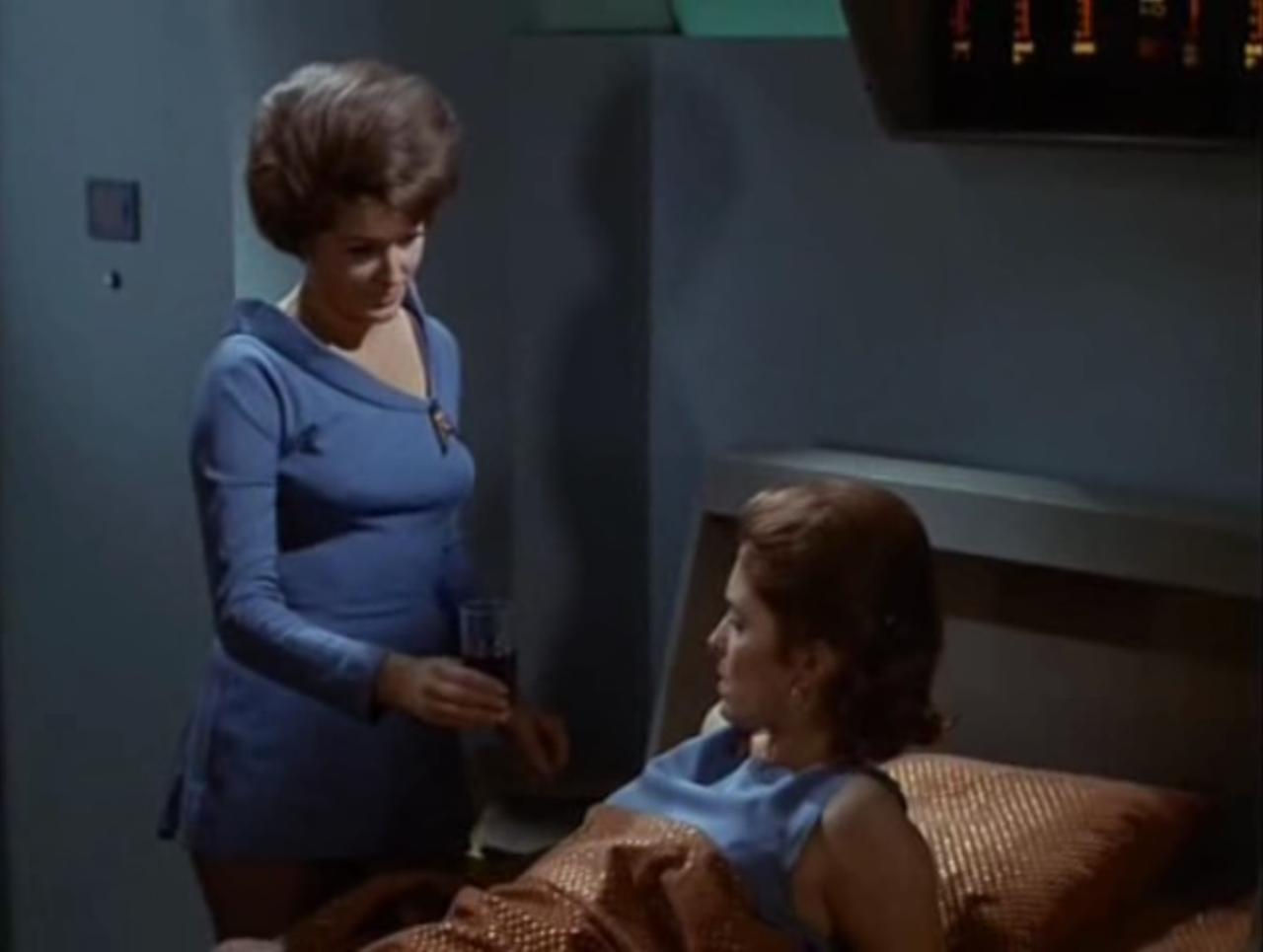
Kirk (as Lester): I am not Janice Lester. She did this to me. Now how can I make you understand? Janice has driven herself mad with jealousy, hatred and ambition. Nurse Chapel, bring Mr. Spock and Doctor McCoy to me at once. Now. They must believe I am not Janice Lester. I am imprisoned in her body, but I am not Janice Lester.
Dr Coleman (to Chapel): She is suffering from the delusion of being Captain Kirk.
Kirk (as Lester): I am not Janice Lester.
Dr Coleman: The paranoia has been developing for the past six months. The radiation seems to have intensified it. She must be kept sedated.
Nurse Chapel: Shall I prepare a mild sedative, Doctor?
Dr Coleman: Of course.
We’re never told how the device works. It is just some ancient piece of technology that they've discovered. This is typically what you see in this trope within science fiction (because it's come up time and time again): it's just something they find, because making it lies beyond the technology even of the twenty-fourth century.
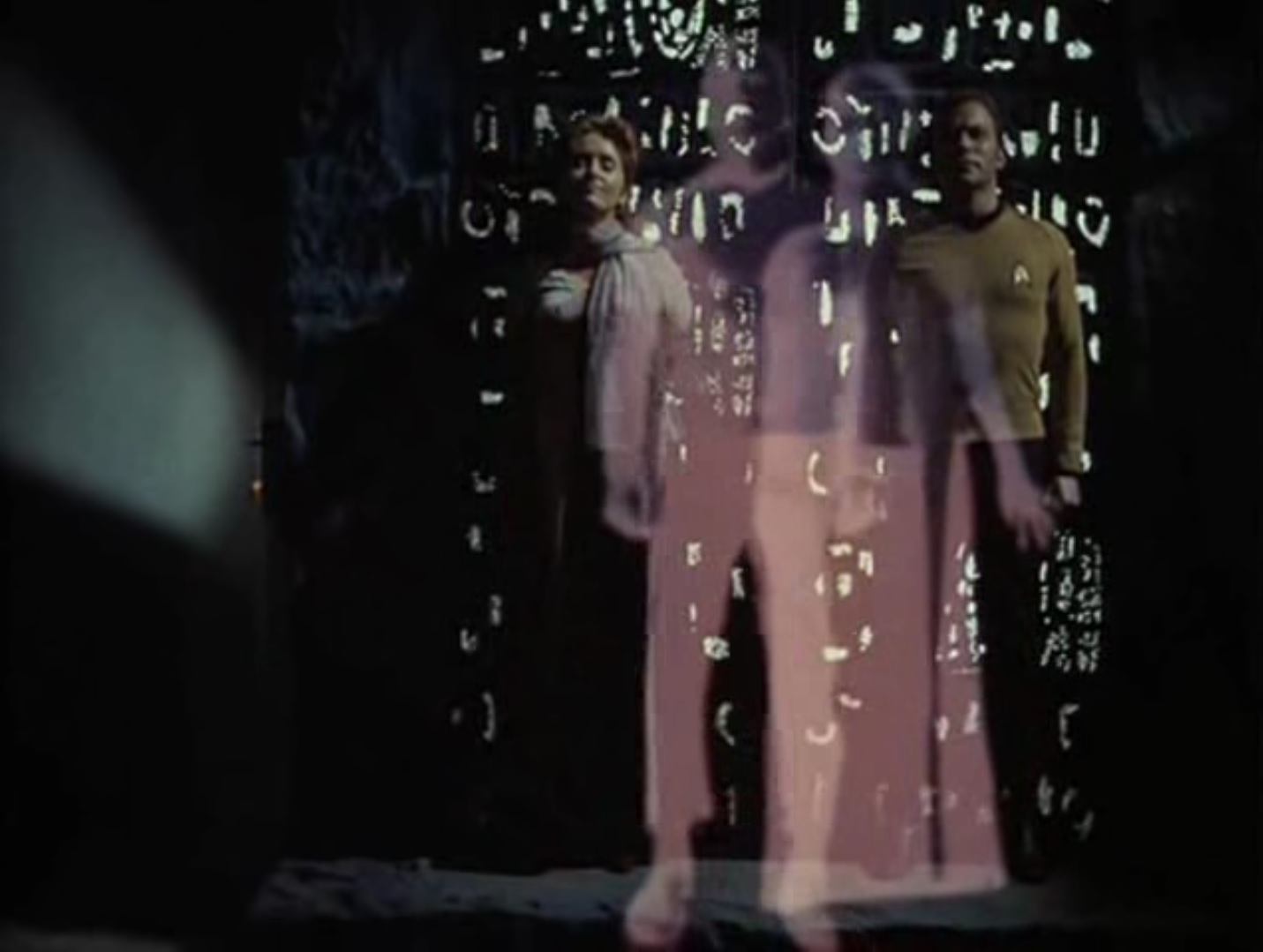
Why is it so complicated? Well, to put this simply: who are you in your brain? You're a bunch of neurons, with chemicals stored between the neurons, which form your memories. Your brain is structured in such a way to shape all the other things that make you who are: how you speak, how you listen, how you look. Other parts of the brain run the various plumbing and mechanisms in your unique body. So to carry out a mind swap, you would have to measure all the atoms within your brain, and then transfer those structures to somebody else's brain without direct contact with the other brain. And while you're doing this, you've got to store the structure of the personality that’s being displaced, which is a challenge. We probably don't have enough computing power or memory on the planet to actually store that much information. Once you've transferred the first person over, you’ve got to then transfer the second back.
So let’s accept this ancient civilisation’s technology as “a kind of magic” [1]. The result is that we get perhaps the best actor ever to have played Captain Kirk, Sandra Smith, in that role.
The two people, Kirk and Janice Lester, have changed their sex. What do I mean by sex? Broadly, people tend to take biological sex to mean the body and the reproductive capability of that person's body, whereas gender is your identity and does not have to be the same. Your gender identity is very much who you are, how you express yourself and how you interact with others. Gender identity is highly varied and there may be as many individual experiences and understandings of gender as there are people in the world. Even two people in one of the two most familiar binary genders could have very different experiences and identities within the categories of male and female.
Sex, biologically speaking, is more complex than most people assume. There are several ways of measuring it with the main three being: hormonal sex, chromosomal sex and gonadal sex - which do not always align together. It’s important to note that all three of those are not necessarily equal so it is in fact very difficult to define a “biological sex”. Given this complexity it is perhaps surprising that so many humans do fall into one of the two binary sexes, but we have to note there is significant diversity introduced in this space by intersex people who are born not fitting into the binary sexes naturally. Then there are transgender people who can undergo medical treatment that changes aspects of their physiology, particularly hormone levels and secondary sex characteristics.
Importantly, sex and gender don't have to be the same. We can sometimes get caught up in the fact that for many people they are the same but it’s not true for all. In Turnabout Intruder, the two characters have changed their sex in quite a dramatic way: Janice Lester inside Kirk's body goes around expressing the idea that “Oh! I feel so strong! I feel so, like, powerful because I've got a man’s body!” and Kirk as Janice Lester instead goes “Oh. I feel so weak and tired”. This seems unlikely. Both bodies are quite fit and the brain in each is still the one accustomed to their bio-chemical and neural feedback. And so it seems likely that they wouldn't suddenly feel any different. With a mind swap, you wouldn't suddenly feel like you've got you're less or more strong. Your brain would not know, if you've transferred it correctly. Even so, they do have these problems with the assumed (and culturally significant) differences between the sexes, that one is inherently weaker than the other, and, in the context, it was quite dramatic.
But might any of this body-swapping be feasible in any way?
The crux of the matter is about the brain itself and our bodies. They're probably some of the most complex structures in the universe, and it's an interesting question: can you actually take what someone is and sort of suck it out of them, without taking their brain or anything out, and transfer it into another body? Scientists and science fiction writers have investigated the philosophically less complex idea of transferring brains, rather than the minds within them:
We’ve seen a head transplant or a brain transplant in episodes of The X-Files (TV series, 1993-2002), for instance, and there's also a terrible book by Heinlein called I Will Fear No Evil (novel, 1970), where the entire premise is a sex-swapping brain transplant. But in the real world such experiments haven't been done on humans. Whether or not there’s anything to be gained by them, any such experiments are very dubiously ethical. But head transplants have been attempted in animals (I would not recommend people with a queasy stomach to actually try and look these up, but it is possible). The problem is that even if you know you can transfer a head, how do you connect that head up to the rest of the body so you can keep the heart pumping and you can actually use that body? We know that where there are cases where people are injured and the spinal column is disrupted, you lose all sense of and motion within your body. We don't know how to repair and make those connections again. So how on Earth do you connect the brain up to the new body? That's something we just have no idea about.
Even if the body was kept functioning on life support, the brain would be in isolation - unable to control it or receive stimulus, …effectively a brain floating in a tank. So, if you wanted to choose between a brain and a head transplant, a head transplant might be better because at least you'll be able to talk and see and hear. But you wouldn't be able to use your body unless we come up with some magical way to reconnect the neurons, which is difficult to imagine.
But in Turnabout Intruder we’re not talking about a brain transplant [2], but a mind swap.
Spock : Sir, there is only one issue here: is the story of life-energy transfer believable? This crew has been to many places in the Galaxy. They've been witness to many strange events. They are trained to know that what seems to be impossible often is possible given the scientific analysis of the phenomenon.
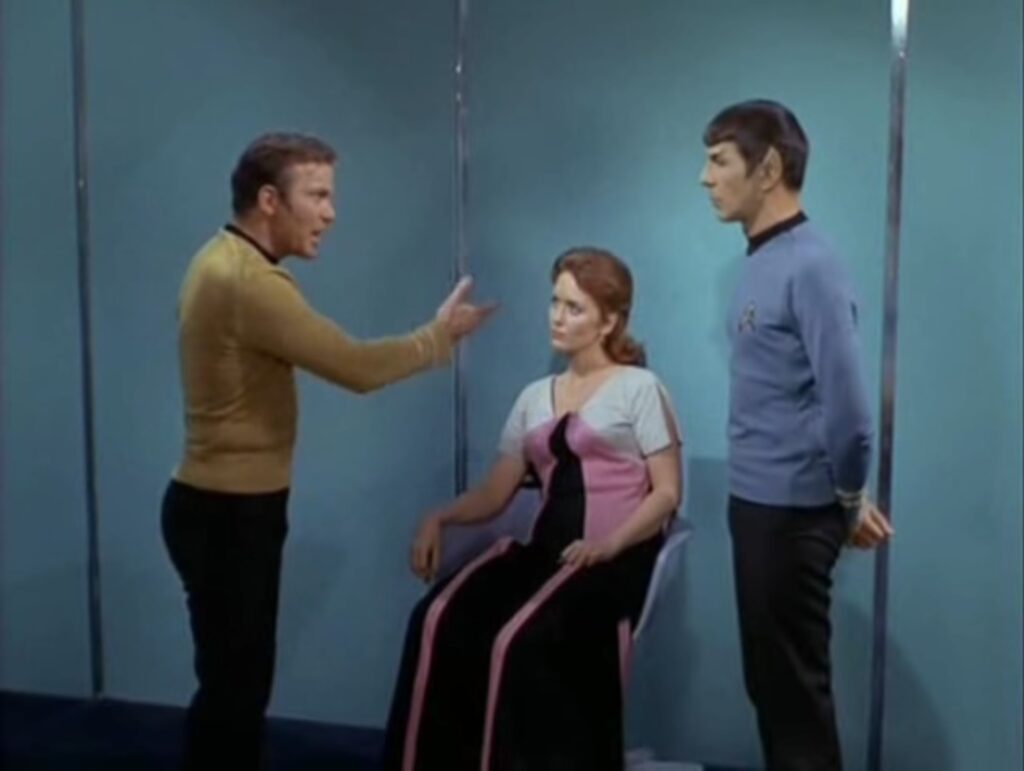
Lester (in Kirk’s body): And Mr. Spock, have you ever heard of a case such as described by Doctor Janice Lester?
Spock: Not precisely, no.
Lester (as Kirk): Assuming that you are correct in your belief. Do you expect Starfleet command to place this... this person in command of the Enterprise?
Spock: I expect only to reveal the truth.
So what is the mind? ... We need a philosopher.
More seriously, this is something we really want to understand. We have people constantly trying to work out how to make a computer-brain interface, for example, and so people are actively trying to look at this and at how our memories formed. In some ways we're actually just a combination of our memories. How do we make these very different memories, which are stored basically between neurons as different chemicals in the prefrontal cortex? And even if those are chemically stored, an interesting question is where our creativity comes from. How do we, or our processing system, work?
Even looked at as a biological computer, the cortex is an extremely complicated material, but as you go deeper down through the brain structure, you find that you end up at the brain stem where a lot of the stuff about living - the breathing and bodily functions - is done. And the brain is connected to the body. We're affected by the hormones that flow through us, you know. Why do we get angry? If our brains were just on their own, there wouldn't be anything that would make us irate. There wouldn’t be any adrenaline to get us wound up. So any brain transfer between two people would need to transfer the motor cortex and brain stem as well, and understand the complex way of connecting up the memories to the brain. And that makes my head hurt a little bit.
But even setting aside the biology, Star Trek’s “Turnabout Intruder” contains some interesting assumptions about gender, which, as a trans person, I have some thoughts about.
I can’t remember the first time I saw this episode, but I can remember a lot of similar television episodes because it's a trope that's appeared in many things, like Stargate or Farscape, for example. Actually the earliest similar idea that I can remember is a Mission: Impossible (TV series, 1966-1973) episode where they did the cheap version of a mind swap. There was always one character that would pretend to be someone else, and, of course, they achieved it with these realistic face masks that you see even now in the Mission: Impossible and Marvel movies. That person would have also had to learn the mannerisms and get into their subject’s mind to imitate them. In fact, there’s a form of mind swap in the way that actors can learn to pretend to be someone else by looking at the mannerisms and trying to change their voice. As a trans person, the idea that you can change your appearance is quite interesting.
And when you look at the swap in "Turnabout Intruder", it has an unusual feature: if Janice Lester had killed her old body, she would have stayed in Kirk's body. But because the other body was still alive, it results in a temporary swap, and the characters suddenly, magically, even though they're not in the same room, switch back over before the end of the episode.
From the crew’s point of view this is a positive result, but what we’ve not discussed so far is the other reason why Janice has done this. Lester wanted to be a starship captain, and she thought it was her gender, rather than her instability, which prevented her from being a starship captain. She was looking for the position, responsibility and recognition, rather than the gender for its own sake. But it's an interesting question: would she, if she was stuck in Kirk's body, actually had been happy in that body? We can’t say. But when you look at Captain Kirk, if he was stuck in a woman's body, I think we'd all probably agree that he would be pretty unhappy and would actually then start to actually try and transition to change his body back to being masculine. This is a detail normally ignored in all cases of sex swaps associated with mind swaps. If the people were stuck in their bodies they would almost certainly seek medical treatment to align their sex with their gender.
There are other details that show that the treatment of gender in "Turnabout Intruder" is overly simplistic.
At birth, a doctor typically records a baby's sex based on visible anatomy. For most people this aligns with later development, but for some people it does not, and biological sex itself involves multiple characteristics including chromosomes, hormones and reproductive anatomy. The sex assigned is either male, female, or intersex because for some people, about 1% of births, there is no clear cut decision whether they're male or female [3]. Not only are our brains complicated, our entire bodies are complicated. By contrast, gender is the social construct in which we interact with each other: are you a man, woman or outside that binary? The common terms we use now are non-binary or gender diverse. That isn’t to say someone is half way between male and female. You can always find someone who experiences gender in a different way, or understands it in a different way, so it can be complex to understand where you sit in this gender space. It doesn’t have to align with either of the binary genders. I'm sure many of us know men and women who show a range of choices in how they wish to express what their gender is. It would be a pretty boring world if we were all the same.
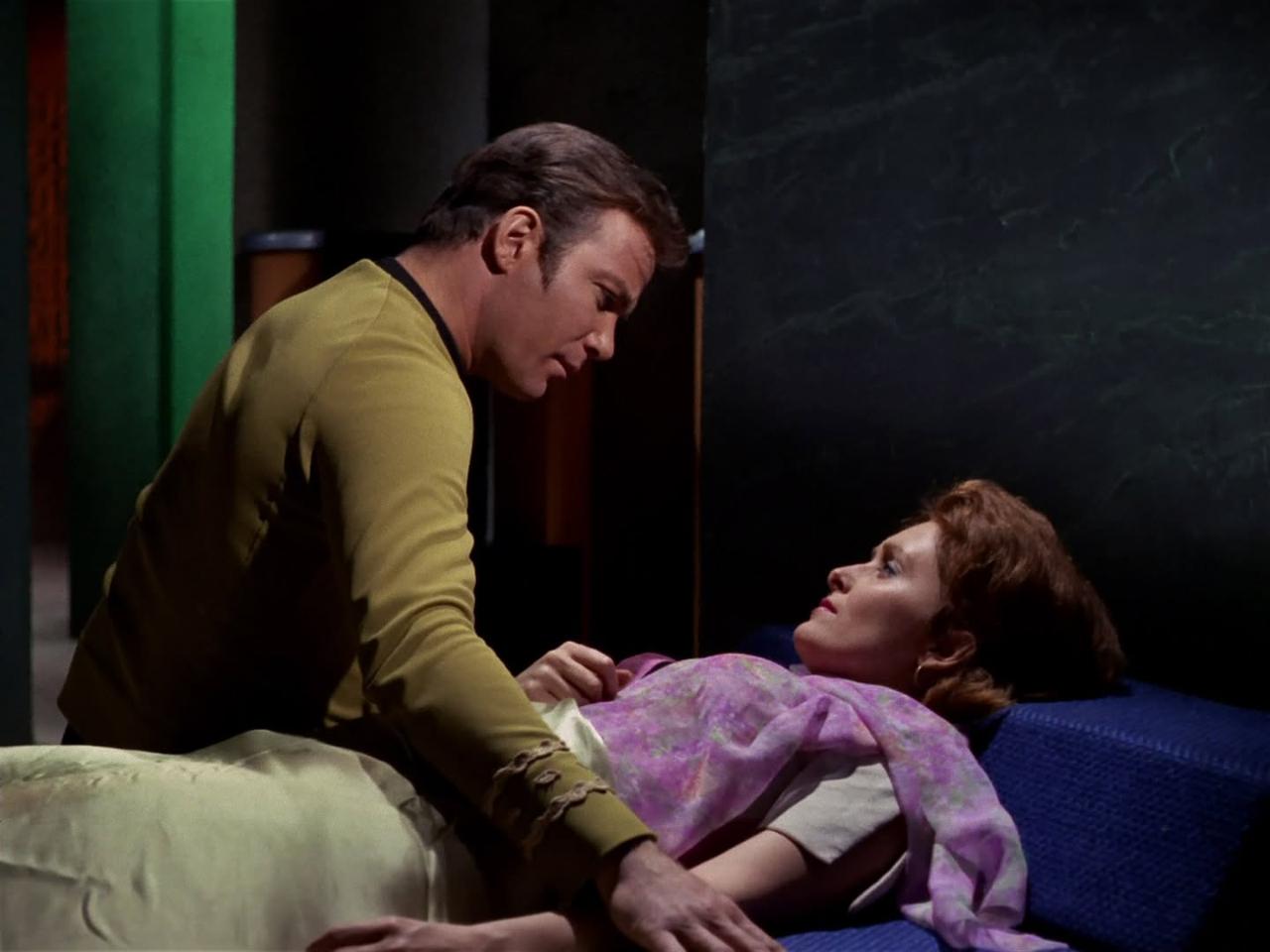
Lester: I hoped I wouldn’t see you again.
Kirk: I don’t blame you
Lester: The year we were together at Star Fleet is the only time in my life I was alive.
Kirk: I never stopped you from going on with your space work.
Lester: Your world of starship captains doesn’t admit women... It isn’t fair.
When Doctor Janice Lester reaches the conclusion that she couldn’t be a starship captain because she’s female, that reflects society’s ideas about gender in 1969 as much as it does the character. Whenever you're looking at science fiction, you need remember that the social norms of the time are reflected in those shows.
You can actually see the progression of such norms in Star Trek from this episode to an episode from Star Trek: The Next Generation (“The Outcast”, 1992). At the moment the majority of people are in the male and female genders and a few percent that are in the bit in between. This episode considers the reverse of that, where you've got a society were nearly everyone is genderless because they've evolved beyond gender. But a few percent of people still feel they're one of the binary genders. Because this is Star Trek: The Next Generation, it's Commander Riker who develops a relationship with one of these gender-identifying characters, who will become an outcast if anyone learns of it. So even after just about 20 years, Star Trek was trying to move on and explore gender in a bit more detail. By the time you get to Voyager, you have Captain Janeway: probably one of the best, or if not the best, starship captain in my opinion and living out the dream Janice Lester thought would be denied to her sex. And in Deep Space 9, you've got a character - Jadzia Dax - that's a combination of genders. She has male past personalities, even though she's female now. When you take them apart, you know that because our real-world society has moved on between these episodes being made, you are able to explore these things in much more detail.
Maybe one day mind swaps will be an actual technology. It’s perhaps even more likely that brain transplants will one day occur. But the problem with this is where do you find a donor body? An interesting recent development in technology is 3D printing and researchers are attempting to develop biological 3D printers. Spinning this technology into the future one could conceive that individual organs could be printed for future transplants. The 1979 novelette Options by John Varley has an interesting idea: that people are able to change sex by “growing” a cloned body based on their DNA but of a different sex. Maybe we can change the growing to “printing” in future.
Sex and gender are much more complicated than we normally experience every day. This diversity and complexity goes throughout the animal kingdom and humans are not unique in our complexity. Science fiction can take very simplistic views of sex and gender sometimes but it’s interesting to see how it has developed through time. For example, Star Trek Discovery includes transgender and non-binary characters, with this not ever taken to be an important part of the story line. The characters are more than just avatars for their gender, with far more interesting adventures to worry about.
Perhaps, in summary, it’s worth reflecting that all stories that explore sex and gender and experiencing life as someone else reveal something. That is, given that we can’t swap minds/bodies, we need to listen to each other, to people that are different to us otherwise we cannot learn how they experience the world and so we can make the world better for all.
"Guest Post: Turnabout Intruder", Elizabeth Stanway, Cosmic Stories blog, 18th October 2026.
Notes:
[1] Editor’s note: this is what I usually call a Clarke’s Third Law situation: “any sufficiently advanced technology is indistinguishable from magic”.
Jan adds: but as the Seventh Doctor pointed out, the reverse is also true: “any sufficiently advanced magic is indistinguishable from technology”. [Return to text]
[2] Editor’s note: that would be another early Star Trek episode earlier in the same season, “Spock’s Brain” (1968)... also notoriously one of the worst episodes of the Original Series. [Return to text]
[3]The exact prevalence depends on how intersex conditions are defined, with reported rates varying. About 1 in a thousand children who show obvious genital anomalies at birth, whereas with a broader range of variations included this rises to 1 to 2 per cent. Intersex is also a range of conditions, some more significant than others, and some people can go through life without realising they are intersex. [Return to text]
If you enjoyed this, an earlier Cosmic Stories guest post from Jan explores the question "Is there Anything We Can't Teach with Doctor Who?"
The views and opinions expressed here are those of the author and do not necessarily reflect those of the University of Warwick. Images have been sourced online and are used here for commentary and criticism.