
Ancient History and Classical Archaeology with Study in Europe (UCAS VV18)
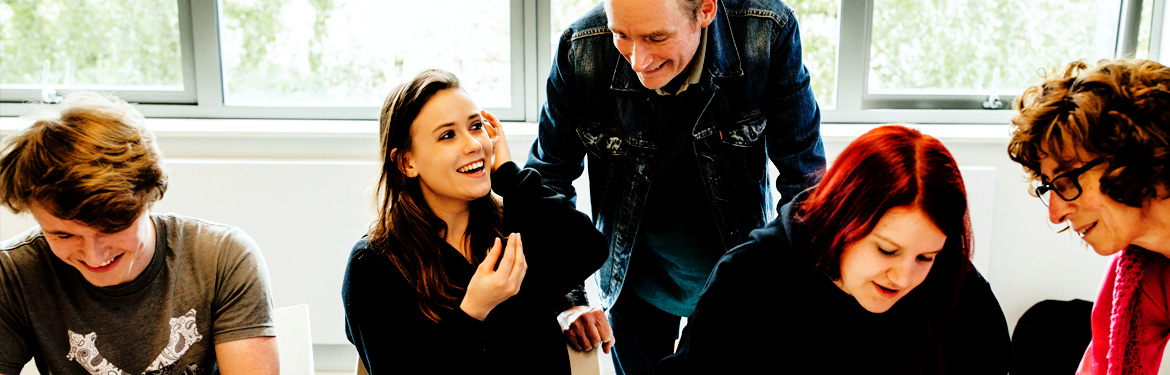
Explore our Ancient History and Classical Archaeology with Study in Europe degree at Warwick
A degree in a classical subject offers a rich and versatile training which develops advanced skills in critical analysis, communication and creative thinking. This course will enable you to pursue your interest in the history, archaeology and art of the ancient world. You will spend your third year studying abroad at one of our partner universities.
General entry requirements
A level typical offer
AAB. You will also need a foreign language (modern or ancient) at A Level grade B or GCSE grade A or grade 7, and grade C or grade 4 in GCSE Mathematics (or equivalent).
A level additional information
We would also consider a range of other qualifications as evidence of language learning. Please send us an email to ask about your circumstances at ugadmissions@warwick.ac.uk or visit our contact centre.
A level contextual offer
We welcome applications from candidates who meet the contextual eligibility criteria and whose predicted grades are close to, or slightly below, the contextual offer level. The typical contextual data offer is BBB. You will also need a foreign language (modern or ancient) at A Level grade B or GCSE grade A or grade 7, and grade C or grade 4 in GCSE Mathematics (or equivalent). See if you're eligible.
General GCSE requirements
Unless specified differently above, you will also need a minimum of GCSE grade 4 or C (or an equivalent qualification) in English Language and either Mathematics or a Science subject. Find out more about our entry requirements and the qualifications we accept.
We advise that you also check the English Language requirements for your course which may specify a higher GCSE English requirement. Please find the information about this below.
IB typical offer
34. You will also need a foreign language (modern or ancient) at Higher Level 5 or Standard Level 6, or GCSE grade A or grade 7.
IB additional information
We would also consider a range of other qualifications as evidence of language learning. Please send us an email to ask about your circumstances at ugadmissions@warwick.ac.uk or visit our contact centre
IB contextual offer
We welcome applications from candidates who meet the contextual eligibility criteria and whose predicted grades are close to, or slightly below, the contextual offer level. The typical contextual offer is 30. You will also need a foreign language (modern or ancient) at Higher Level 5 or Standard Level 6, or GCSE grade A or grade 7. See if you're eligible.
General GCSE requirements
Unless specified differently above, you will also need a minimum of GCSE grade 4 or C (or an equivalent qualification) in English Language and either Mathematics or a Science subject. Find out more about our entry requirements and the qualifications we accept.
We advise that you also check the English Language requirements for your course which may specify a higher GCSE English requirement. Please find the information about this below.
We welcome applications from students taking BTECs alongside A levels.
You will also need to meet the foreign language requirements above.
General GCSE requirements
Unless specified differently above, you will also need a minimum of GCSE grade 4 or C (or an equivalent qualification) in English Language and either Mathematics or a Science subject. Find out more about our entry requirements and the qualifications we accept.
We advise that you also check the English Language requirements for your course which may specify a higher GCSE English requirement. Please find the information about this below.
International qualifications
English Language requirements
All applicants have to meet our English Language requirements. If you cannot demonstrate that you meet these, you may be invited to take part in our Pre-sessional English course at WarwickLink opens in a new window.
This course requires: Band B
Learn more about our English Language requirementsLink opens in a new window
Frequently asked questions
Warwick may make differential offers to students in a number of circumstances. These include students participating in a Widening Participation programme or who meet the contextual data criteria.
Differential offers will usually be one or two grades below Warwick’s standard offer.
All students who successfully complete the Warwick IFP and apply to Warwick through UCAS will receive a guaranteed conditional offer for a related undergraduate programme (selected courses only).
Find out more about standard offers and conditions for the IFP.
We welcome applications for deferred entry.
We do not typically interview applicants. Offers are made based on your UCAS form which includes predicted and actual grades, your personal statement and school reference.
Course overview
This course will enable you to pursue your interest in the history, archaeology and art of the ancient world. It looks at the societies and cultures of the ancient Mediterranean through their written texts, visual art and material remains, from grand temples, monuments and villas to the humble residues of everyday life.
You will benefit from many hands-on learning experiences, including handling authentic ancient artefacts, recreating the experience of a Greek symposium using replica vases, archaeological fieldwork opportunities in and around the Mediterranean region, including Crete, visiting historical sites and museums in the UK, and taking part in our annual classical play, which is staged at a professional theatre and played to a public audience of over a thousand people.
You will have the opportunity to study topics such as Greek democracy, the Roman cultural revolution under Augustus, visual representations of Greek myth, or the Roman Near East, in modules specifically focused on Greco-Roman history, art, archaeology and architecture.
Core first-year modules provide a grounding in approaches to Greek and Roman History and Material Culture while optional modules allow you to explore a range of other topics, including the option to learn an ancient language.
This four-year Ancient History and Classical Archaeology with Study in Europe degree has a similar structure to the three-year course, but alongside learning about the ancient world you will study a modern European language (current options are Italian or German) and spend your third year studying classical subjects at one of our partner universities in Europe.
Currently, placements are available in Bologna, Padua, Rome or Venice, with recent confirmation of new placements in Berlin and Tübingen, Germany. Confirmation of available placements will be made in your second year.
Core modules
All our degrees involve core modules in your first year, alongside a choice of optional modules, which broaden your knowledge of the ancient world and also allow you the chance to acquire knowledge in Greek or Latin, if desired. In subsequent years, you build on what you have learnt through a choice of modules, which allow you to engage in your own way with the civilisation of the Ancient Mediterranean.
In their second and final years, students may take one 30-CAT module or two 15-CAT modules from outside the department (e.g. from the Institute for Advanced Teaching and Learning or another academic department) in place of an optional module.
Year One
Introduction to Greek and Roman History
You will be introduced to the central themes of Greek and Roman history, from the Greek Archaic Period to the beginning of the Roman Empire. You will gain a broad chronological understanding of the ancient world, and good knowledge of the range of evidence and methodologies used to analyse its historical events and cultural practices. You will also develop advanced skills in analysing evidence, crafting an argument and presenting your ideas coherently and fluently.
Read more about the Introduction to Greek and Roman History moduleLink opens in a new window, including the methods of teaching and assessment (content applies to 2022/23 year of study).
Encounters with Material Culture: Objects and Archaeology
This module provides you with the tools you need to approach and interpret the material culture of the ancient world, including buildings, art-works, inscriptions and everyday objects. We look at objects and buildings from their creation to their use and rediscovery, considering issues such as the materials used, production and consumption; style, form and iconography, and contexts of discovery and use. We explore the many questions we can ask of material culture, and the insights it provides into the history and society of the ancient Mediterranean.
Read more about the Encounters with Material Culture: Objects and Archaeology moduleLink opens in a new window, including the methods of teaching and assessment (content applies to 2022/23 year of study).
Greek Culture and Society/Roman Culture and Society
You will study both these modules, which explore the central features of Greek and Roman culture, including aspects such as religion and festivals, political institutions, women and the family, and death. This grounding will allow you to delve further into specific topics in your Honours modules, as well as encouraging you to consider the degrees of continuity and difference between ancient Greek and Roman culture and our own beliefs and practices.
Read more about these modules, including the methods of teaching and assessment (content applies to 2022/23 year of study):
A Modern European Language
You will take one module studying a Modern European Language (currently ItalianLink opens in a new window or GermanLink opens in a new window).
Year Two
Hellenistic World
The campaigns of Alexander the Great transformed the Greek world, creating an empire that stretched from the Adriatic to the Himalayas. Through this module, you will explore the political histories, power structures, cultural developments and ideologies of the period, and gain critical insight into the evidence from which our understanding of Hellenistic culture and history is constructed. This will lead to an increased appreciation of how the Hellenistic world helped shape the Roman world and beyond.
Read more about the Hellenistic World moduleLink opens in a new window, including the methods of teaching and assessment (content applies to 2021/22 year of study).
A Modern European Language
You will continue study of the modern language studied in Year One.
Year Three
Optional modules
Optional modules can vary from year to year. Example optional modules may include:
- The Transformation of Roman Society under Augustus
- The Roman Near East
- Democracy and Imperialism
- Domestic Space in the Roman World
- Food and Drink in the Ancient Mediterranean
- Art and Architecture of Asia Minor
- The Roman Empire from Tiberius to Hadrian
- Sexuality and Gender in Antiquity
- Greek Religion
Assessment
You will take 120 CATS each year (through a combination of 15 and 30 CAT modules). Assessment methods include coursework submitted during the year (e.g. essays, blog posts, learning logs) and exams in the summer (100% exam for language modules).
Your second and final years contribute equally to your final degree classification.
Teaching
You will study Ancient History and Classical Archaeology in a variety of ways; through lectures, seminars, and language classes, and, in your final year, through a dissertation on a topic of your own choice, with guidance from your departmental supervisor.
Class sizes
Your class sizes will vary from 6 to 80 students. Honours modules are capped at 60.
Typical contact hours
You will take four modules per term, each with 2-3 contact hours per week.
Tuition fees
Scholarships and bursaries
Your career
Graduates from Classics courses have gone on to work for employers including:
- Acturis
- Cancer Research UK
- Comic Relief
- English Heritage
- EY
- John Lewis and Partners
- KPMG
- Teach First
- The British Museum
- Waitrose and Partners
They have pursued roles such as:
- Business and related associate professionals
- Conference and exhibition managers and organisers
- Finance and investment analysts and advisors
- Legal associate professionals
- Management consultants and business analysts
- Marketing associate professionals
- Teaching and other educational professionals
Helping you find the right career
Our department has a dedicated professionally qualified Senior Careers Consultant. They offer impartial advice and guidance together with workshops and events throughout the year. Previous examples of workshops and events include:
- What can you do with a Classics and Ancient History degree?
- Careers in the Creative Industries
- Warwick careers fairs throughout the year
- Next steps after your classics degree ... hear from alumni
- Networking for Classics students
Classics and Ancient History at Warwick
Take your fascination with the ancient world further.
Our Classics and Ancient History department is tailor-made for a community of curiosity. Work closely with award-winning academics while carving your own path through the varied disciplines we study - from literature and history, to philosophy and art.
Share your observations, opinions and developing interests. Develop critical and creative thinking that will prove valuable for your future – wherever in the world this might take you.
Find out more about us on our websiteLink opens in a new window
Explore our new Faculty of Arts building
The department recently moved into the brand new £57.5 million Faculty of Arts building.
This means, as an Arts student at Warwick, you’ll find your home amongst brand new teaching, learning and social spaces, including specialist facilities, all designed to support collaborative working and to enable your creativity and innovation to flourish.
The sustainably built, eight-storey building is located next to the newly refurbished Warwick Arts Centre in the heart of the University’s creative and cultural arts quarter.
Explore our new Faculty of Arts building further.
Our courses
- Ancient History and Classical Archaeology (BA)
- Ancient History and Classical Archaeology with Study in Europe (BA)
- Classical Civilisation (BA)
- Classical Civilisation with Study in Europe (BA)
- Classics (BA)
- Classics (Ancient Greek) with Study in Europe (BA)
- Classics (Latin) with Study in Europe (BA)
- Classics and English (BA)
- English and Classical Civilisation (BA)
Related degrees

Life at Warwick
Within a close-knit community of staff and students from all over the world, discover a campus alive with possibilities. A place where all the elements of your student experience come together in one place. Our supportive, energising, welcoming space creates the ideal environment for forging new connections, having fun and finding inspiration.
Find out how to apply to us, ask your questions, and find out more.

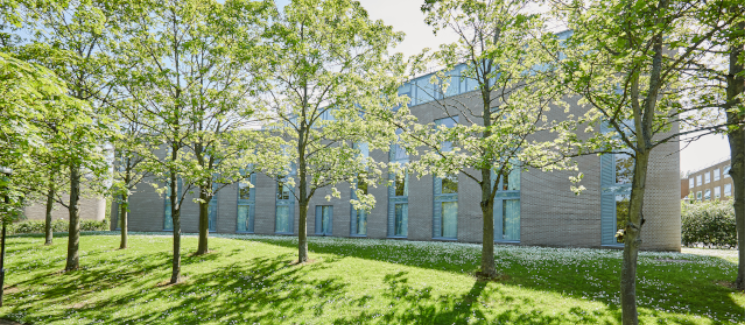
Warwick Accommodation
Finding the right accommodation is key to helping you settle in quickly.
We have 12 self-catering undergraduate halls of residence on campus.
Our student property management and lettings agency manages more than 8,000 rooms both on and off campus, and provides advice to all full-time undergraduates.

Our campus
You won't be short of ways to spend your time on campus - whether it's visiting Warwick Arts Centre, using our incredible new sports facilities, socialising in our bars, nightclub and cafés, or enjoying an open-air event. Or if you need some peace and quiet, you can explore lakes, woodland and green spaces just a few minutes’ walk from central campus.

Food and drink
We have lots of cafés, restaurants and shops on campus. You can enjoy great quality food and drink, with plenty of choice for all tastes and budgets. There is a convenience store on central campus, as well as two supermarkets and a small shopping centre in the nearby Cannon Park Retail Park. Several of them offer delivery services to help you stay stocked up.
And don't miss our regular food market day on the Piazza with tempting, fresh and delicious street food. Soak up the atmosphere and try something new, with mouth-watering food for all tastes.

Clubs and societies
We currently have more than 300 student-run societies.
So whether you’re into films, martial arts, astronomy, gaming or musical theatre, you can instantly connect with people with similar interests.
Or you could try something new, or even form your own society.
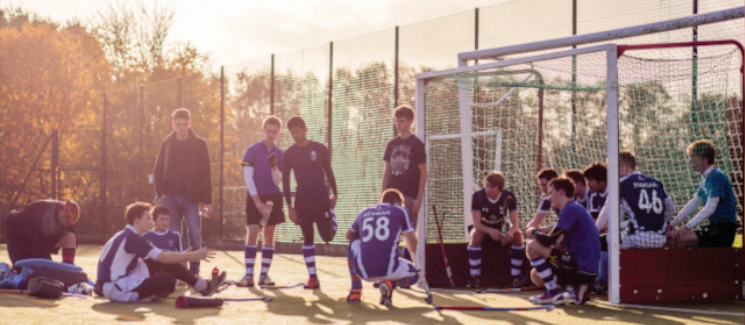
Sports and fitness
Staying active at Warwick is no sweat, thanks to our amazing new Sports and Wellness Hub, indoor and outdoor tennis centre, 60 acres of sports pitches, and more than 60 sports clubs.
Whether you want to compete, relax or just have fun, you can achieve your fitness goals.


Studying on campus
Our campus is designed to cater for all of your learning needs.
You will benefit from a variety of flexible, well-equipped study spaces and teaching facilities across the University.
- The Oculus, our outstanding learning hub, houses state-of-the-art lecture theatres and innovative social learning and network areas.
- The University Library provides access to over one million printed works and tens of thousands of electronic journals
- Three Learning Grids offering you flexible individual and group study spaces.
Travel and local area
Our campus is in Coventry, a modern city with high street shops, restaurants, nightclubs and bars sitting alongside medieval monuments. The Warwickshire towns of Leamington Spa and Kenilworth are also nearby.
The University is close to major road, rail and air links. London is just an hour by direct train from Coventry, with Birmingham a 20-minute trip. Birmingham International Airport is nearby (a 20-minute drive).
Wellbeing support and faith provision
Our continuous support network is here to help you adjust to student life and to ensure you can easily access advice on many different issues. These may include managing your finances and workload, and settling into shared accommodation. We also have specialist disability and mental health support teams.
Our Chaplaincy is home to Chaplains from the Christian, Jewish and Muslim faiths. We provide regular services for all Christian denominations and a Shabbat meal every Friday for our Jewish students. There is also an Islamic prayer hall, halal kitchen and ablution facilities.
How to apply
Learn more about our application process.
Key dates
Key dates for your application to Warwick.

Writing your personal statement
Make an impression and demonstrate your passion for your course.

After you've applied
Find out how we process your application.
Our Admission Statement
Read Warwick's Admission Statement
3 ways to connect
Talk to us
Join us at a live event. You can ask about courses, applying to Warwick, life at Warwick, visas and immigration, and more.
Warwick Experience
Take a virtual, student-led campus tour. Then join an interactive panel session, where you can hear from and chat to our current students and staff.
Student blogs
Explore our student blogs in OurWarwick. You can read about campus life from students themselves, and register to post questions directly to students.
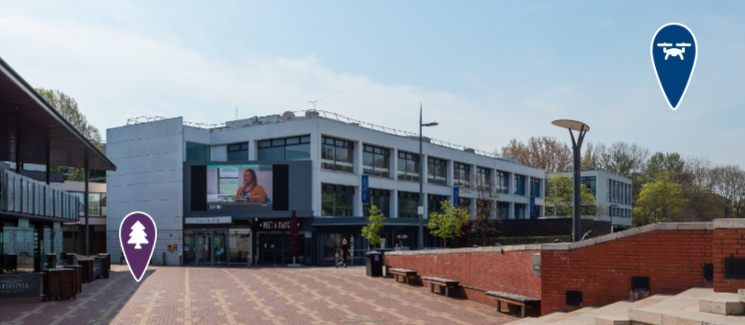
Explore campus with our virtual tour
Our 360 tour lets you:
- Watch student videos
- View 360 photography and drone footage
- Learn about facilities and landmarks
Explore our campus virtually through our 360 campus tour now
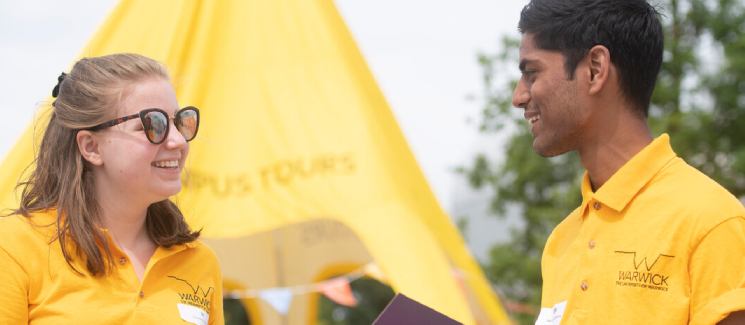
Come to an Open Day
Don’t just take it from us, come and see for yourself what Warwick is all about. Whether it's a virtual visit or in-person, our University Open Days give you the chance to meet staff and students, visit academic departments, tour the campus and get a real feel for life at Warwick.