Skip to main content Skip to navigation

Computer Science News

Select tags to filter on

And now for something green ...

energy-aware high-performance computing

Research highlights the future of energy-aware high-performance computing

Leipzig, June 18, 2014. As reported in Inside HPC.

With energy costs a growing concern for High Performance Computing, Allinea Software will demonstrate its vision of a greener future with a preview of new tool extensions for application energy usage optimization at this year's International Supercomputing Conference (ISC'14) in Leipzig.

With larger numbers of data centers consuming over 1MW of power or having electricity bills topping $1M, energy is focussing the minds of the system sponsors and managers, says David Lecomber, CEO of Allinea Software.

Allinea Software worked with application performance experts at the University of Warwick to investigate novel energy and power measuring techniques for scientific application workloads.

Energy usage data is increasingly available at the system level, and our research also explored proxies for energy such as hardware counters to see where they could give deeper insight, said Professor Stephen Jarvis of University of Warwick’s HPC Performance Analysis Group.

The research supported the view that in many cases applications can reduce energy costs without adversely impacting actual run time.

Improving the green credentials of hardware and data centers is vital, and progress is good, but applications must also play their part. Energy optimization is a natural fit for our performance tools, adds Lecomber.

With the variety of workloads that HPC centers have, a ‘one size fits all’ strategy is a costly error – and so Allinea Performance Reports will provide information for application users and system managers to enable them to tune system and application parameters such as CPU frequency for optimal energy use for each application.

Our developer-centric tool, Allinea MAP, will allow scientific code developers to focus energy optimization down into the source code – making changes to the application to drive faster performance and lower energy consumption at the same time.

This research has been supported by the Technology Strategy Board's Emerging Technologies Energy Efficient Computing Programme.

Thu 19 Jun 2014, 14:47 | Tags: Conferences Grants Research

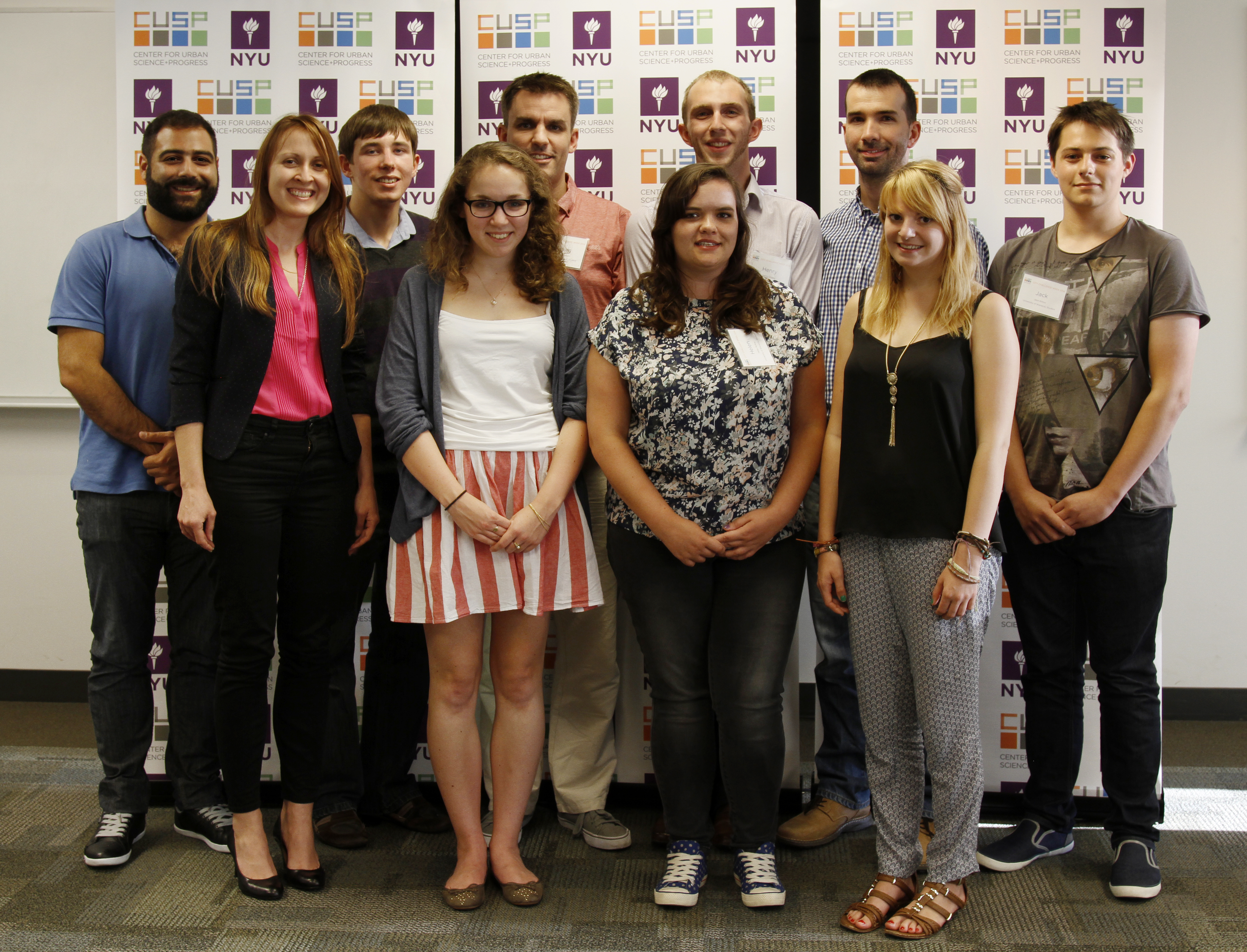
Warwick and King’s College London to establish London-based Centre for Urban Science and Progress

Warwick and King’s College London, in partnership with New York University, plan a major initiative in collaboration with the GLA and the London Borough of Southwark to launch 'CUSP London', a branch of NYU’s Center for Urban Science and Progress, to be based at Canada Water from 2018. The announcement was made on Monday 17 June 2014 by Boris Johnson, Mayor of London, at an event organised by Bloomberg to mark the start of London Technology Week.

London will be the first city to build upon the success of CUSP in New York, which was launched in April 2012 by Mayor Bloomberg and of which Warwick is an academic partner. In developing CUSP London, the partners will benefit from the experience in New York City, where CUSP is now established as a leader in the new field of urban science and informatics.

Professor Nigel Thrift, Vice-Chancellor of Warwick commented: "I welcome the launch of CUSP London, both as a researcher of the dynamics of cities, and as Vice-Chancellor of Warwick which is a partner both in the CUSP London initiative and the original CUSP in New York. CUSP London will be a significant engine of applied urban science research, innovation and education that will work with London as a living laboratory applying research to the needs of our capital and to other great cities."

CUSP London will bring together researchers, businesses, local authorities and government agencies to apply urban science to improving public health and wellbeing. It will draw on the real experience and ‘big data’ available in cities, thereby using the cities themselves as living laboratories to tackle their most significant issues. CUSP London will complement the MedCity initiative which the GLA recently launched with King’s and other academic partners, and the Mayor of London’s Smart London plan.

Experts at CUSP London will use data to develop deeper understanding and practical solutions to a wide range of challenges affecting people’s everyday lives. The international partnership will also train a new generation of postgraduate and PhD level urban scientists with the skills and knowledge to benefit London and other major UK and global cities.

Professor Sir Richard Trainor KBE, Principal of King’s, commented: "If we are to tackle the increasingly complex challenges facing London and other cities, we need initiatives like CUSP London. It will train a new generation of urban scientists, and harness expertise, research insights and big data from across the public and private sectors in order to enhance health and efficiency in increasingly populated and fast changing cities."

It is anticipated that CUSP London would generate around 180 construction jobs for two years, and once fully operational, to accommodate around 100 researchers and 500 students. CUSP London will seek development funding from public, industry and philanthropic sources.

Steve Koonin, Director of New York University’s Center for Urban Science and Progress, said: "We are delighted to welcome London to the CUSP family. We are honored by their strong support of our work and the steps taken to build on our successes in New York City. Our New York team stands ready to work with Kings College and the University of Warwick as the CUSP model is expanded abroad."

Tue 17 Jun 2014, 15:47 | Tags: People Jobs and studentships Grants Research

DIMAP Algorithms Day 2014

photo_2.jpg

On May 21 2014, our Division of Theory and Foundations, jointly with DIMAP, organized DIMAP Algorithms Day 2014. The goal of the event was to bring together the UK community of researchers and graduate students interested in the study of Algorithms, Data Structures, and Complexity.

The event had an outstanding list of invited speakers from the leading academic institutions and research labs (Alexandr Andoni (Microsoft Research Silicon Valley), Graham Cormode (Warwick), Edith Elkind (Oxford), Leszek Gąsieniec (Liverpool), Aleksander Mądry (EPFL)) presenting the recent advances in Algorithms and its applications, and attracted over 60 participants from over the UK and from abroad.

Sun 25 May 2014, 01:47 | Tags: Conferences Research

IT firms hope to benefit from big data research with Warwick University partnership

Big Data

As reported in 'Computer Business Review' and 'Computer World' (14/5/2014)

A new partnership between the University of Warwick and Bull Information Systems has been announced supporting IT developments in Big Data. The new partnership will allow leading research scientists from the university to work alongside business consultants and developers from one of Europe’s foremost suppliers of computing hardware, software and consulting services.

“So much has been discussed about the possibilities of big data yet few businesses have the advanced expertise needed to go beyond this,” said Andrew Carr, CEO of Bull UK and Ireland.

“They may already have a vision but be unsure about how to get there - or they may not even be aware of what they could achieve with the data they hold and need help to identify the opportunities.

“By taking this challenge beyond the mainstream business environment and engaging the best brains possible on the subject, we can help organisations start to realise big data implementations by injecting a new dynamism into high performance project development that will enable them to be the first to market with their initiatives.”

Professor Stephen Jarvis, who is leading the partnership at Warwick, stated that "Bull is committed to open standards and 'open ICT solutions' which allows users, including ourselves, to gain real insight and expertise in developing data analytics infrastructures as well as developing skills in using that infrastructure.”

“Organisations are bombarded by data in diverse forms from social media to connected sensors, but few know how to combine structured and unstructured forms and convert data to information to give real value. We aim to help them overcome these barriers and to develop great commercial applications that will significantly improve the experience of their customers.”

Wed 14 May 2014, 20:52 | Tags: Research Faculty of Science

Ebrahim Ardeshir-Larijani completes his PhD

Ebrahim Ardeshir-Larijani

Ebrahim Ardeshir-Larijani has passed his PhD viva and his thesis has been approved, subject to minor corrections. His thesis is titled "Automated Equivalence Checking of Quantum Information Systems". Quantum information processing is an emerging technology and verification of quantum protocols is important for the design and development of quantum communication and cryptographic systems. Ebrahim's thesis presents languages (sequential and concurrent) for describing quantum systems and techniques for checking equivalence. The work has resulted in two joint papers (with Simon Gay and Rajagopal Nagarajan) in good conferences, TACAS 2013 and TACAS 2014.

Ebrahim was supervised by Dr. Ranko Lazic and Prof. Rajagopal Nagarajan, the external examiner was Dr. Ross Duncan (Strathclyde) and his internal examiner was Dr. Jane Sinclair.

Thu 01 May 2014, 17:02 | Tags: People

Opening: Professor of Computer Science

DCS logo

The Department of Computer Science at the University of Warwick invites applications from candidates with proven excellence in research in computer science for the new opening as Professor in Computer Science.

Candidates are required to have a PhD in Computer Science or related discipline, should be able to demonstrate excellent research in computer science, should be capable of research leadership (to demonstrate an ability to secure funded research grants and co-supervising MSc and PhD students in Computer Science), and should have excellent teaching skills. Candidates should be able to demonstrate a commitment to excellence in research and teaching, and the ambition to play a leading role in the Department of Computer Science. Special considerations will be given to candidates with interdisciplinary interests and industrial research experience.


Contact Information for the Department of Computer Science: Professor Artur Czumaj (Head of Computer Science) at A.Czumaj@warwick.ac.uk.

To apply, please follow the instructions available on the official University web-page.

Please quote job vacancy reference number 71077-044.

Closing date for applications: 22 May 2014.

Thu 17 Apr 2014, 20:17 | Tags: Jobs and studentships

First Cyber Security Challenge Schools Champion awarded to Stockport School

Cyber Crime

The inaugural Schools Cyber Games, part of the Cyber Security Challenge’s programme for schools, saw Stockport School emerge victorious as the first ever UK Schools Cyber Security Champions. The Cabinet Office-backed competition aims to raise awareness of the excitement of a career in cyber security amongst a new generation of young people in order to address a growing skills shortage in this sector.

Facing five other teams from schools around the country, the group of Key Stage 4 students overcame a series of fun code-breaking and cyber security themed challenges to claim top prizes including a cash prize of £1,000, Raspberry Pi computers and a Lego Mindstorms kit.

Arriving at the University of Warwick’s School of Computer Science, the teams were immediately confronted with a ‘murdered’ body mannequin and tasked with identifying the culprit through a series of cyber clues scattered through a series of themed challenges throughout the building. Each challenge was devised by experienced cyber security experts at Cyber Security Challenge sponsors and partners BT, Bletchley Park, CompTIA, e-skills, Lancaster University, MWR/Dataline and Think Forensic.

Each challenge required high levels of ingenuity from the young candidates and included:

  • Gathering and analysing forensic details from the ‘victim’

  • Cracking codes using a Bletchley Park enigma machine

  • Remotely navigating a camera robot through a maze in the dark and avoiding a NERF-firing trap

  • Compromising an industrial water pumping station to gain access and disable communication links to a water tank in order to drain it and reveal a clue

  • Using digital forensics to identify threats to a fictional Global Games opening ceremony, in a challenge that called on students to identify how social engineering can be used in cyber attacks

  • Guiding a robot with limited directional instructions through a complicated maze to reach a clue

  • Combining elements of physical and online security to pick locks to reveal online passwords that would lead them to an encrypted video revealing a clue

On completion of these challenges, the candidates had to overcome one final code to crack against the clock and reveal the identity of the murderer in their midst. The other schools to participate were The Kings School Chester, King Edward IV School (Chelmsford), Stockport School, Christ College Brecon and St James Senior School (London). Each was selected after finishing as the highest-scoring schools from over 560 who registered for the first stage of the Cyber Security Challenge’s Schools Programme, an online code-cracking competition.

Jane Sinclair, University of Warwick School of Computer Science: “ Days like this show just how fun the cyber security area can be, and that’s been a very important message to get across to the youngsters. They’ve all really enjoyed themselves and it’s been a pleasure seeing them learn and adapt to these new skills so quickly. Hopefully we’ll be seeing some of them again when they begin to apply for a place at University.”

Launched last year, the Schools Programme is delivered in association with major employers to ensure it develops practical and usable skills, in demand from industry. Its teaching resource packs are designed to spark students’ interest in code-breaking and start to hone their skills by not only teaching them how to crack codes, but also encouraging them to work in teams to develop their own.

The Event was covered by BBC West Midlands Today

Wed 26 Mar 2014, 16:53 | Tags: Faculty of Science

Latest news Newer news Older news

Let us know you agree to cookies