
Computer Science News
Warwick mathematician awarded prestigious mathematics award

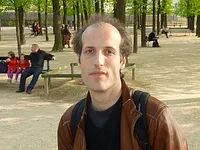 We offer our warmest congratulations to Professor Martin Hairer, Regius Professor of Mathematics in Warwick’s Mathematics Institute, who has has been awarded the Fields Medal, the world’s most prestigious mathematics award, for his "Outstanding contributions to the theory of stochastic partial differential equations, and in particular for the creation of a theory of regularity structures for such equations."
The Fields Medal is awarded every four years on the occasion of the International Congress of Mathematicians to recognize outstanding mathematical achievement for existing work and for the promise of future achievement. The Medal is internationally regarded as the world’s most prestigious award in the field of mathematics.
Lei Shi receives top award at UMAP'14
Lei Shi, a doctoral student in the Department of Computer Science at Warwick, has received a top award for his work at UMAP, the premier international conference for researchers and practitioners working on systems that adapt to individual users.
UMAP 2014 was held in Aalborg, Denmark on the 7-11 July 2014. The conference spans a wide scope of topics related to user modeling, adaptation and personalization, and was sponsored by Microsoft Reasearch and the NSF.
Lei will begin a Warwick Institute of Advanced Study (IAS) Early Career Fellowship in October. More information on his work can be found at http://www.shilei.io
Xin Lu wins Science Faculty Prize
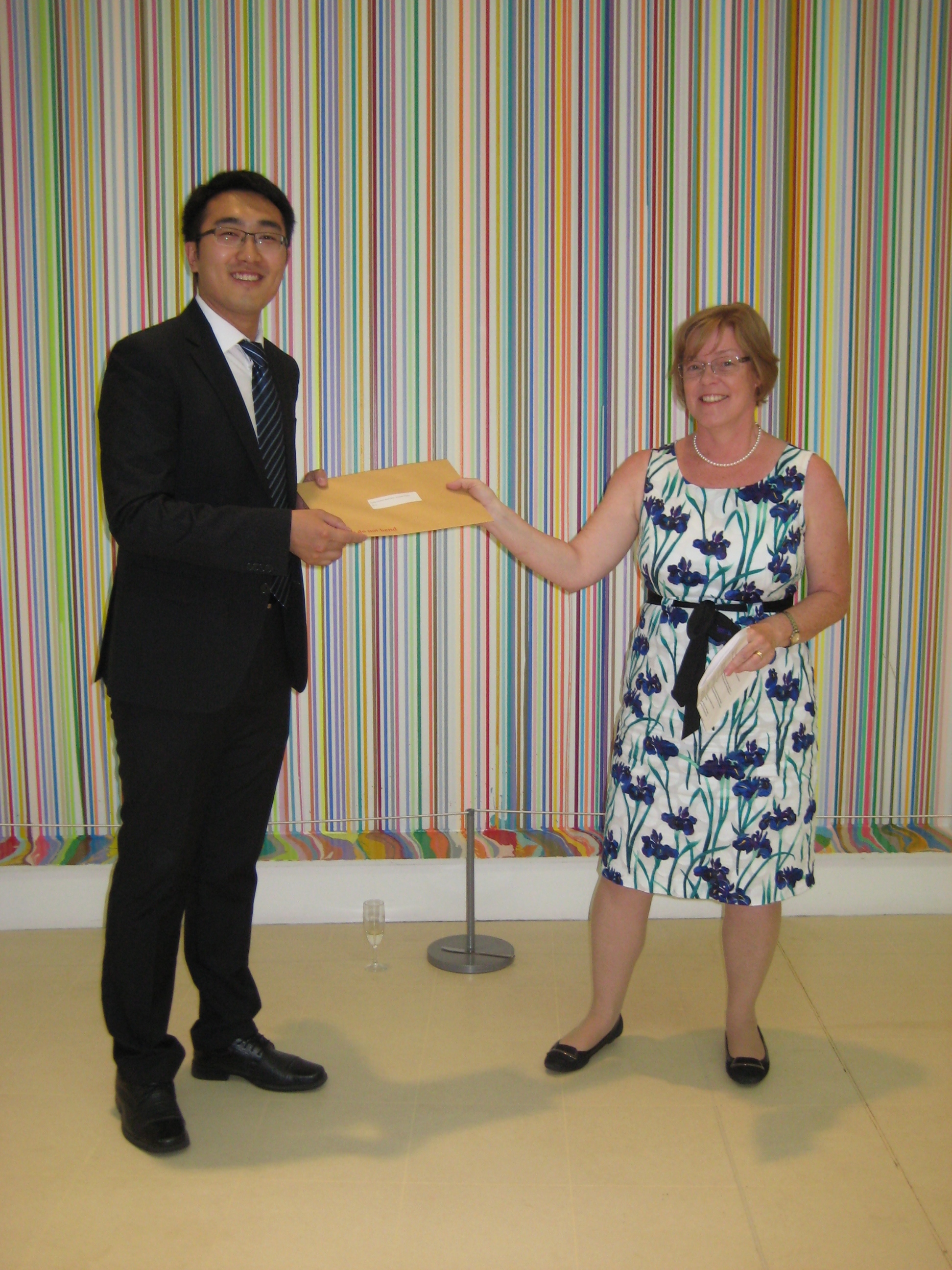
We congratulate Xin Lu who has been awarded the Science Faculty Prize for the Best PhD Thesis in Computer Science. Xin’s thesis, entitled “Efficient algorithms for scalable video coding” and supervised by Graham Martin, was examined by Professor Mohammed Ghanbari, a leading international authority and IEEE medal winner for his pioneering work on scalable video coding. Professor Ghanbari acknowledged that Xin’s research output represented a significant contribution to the field. The results have also been published in a number of international conference and journal papers, including the IEEE Transactions on Circuits and Systems for Video Technology.
Xin Lu’s PhD degree was conferred by the University Chancellor at the Degree Congregation last Friday, and the Faculty Prize was presented by Professor Pam Thomas, Chair of the Faculty of Science, at a special event held in the Zeeman building on 23rd July. Xin Lu has now returned to China to continue his work as a lecturer at the Harbin Institute of Technology, one of the top ten universities in the country.
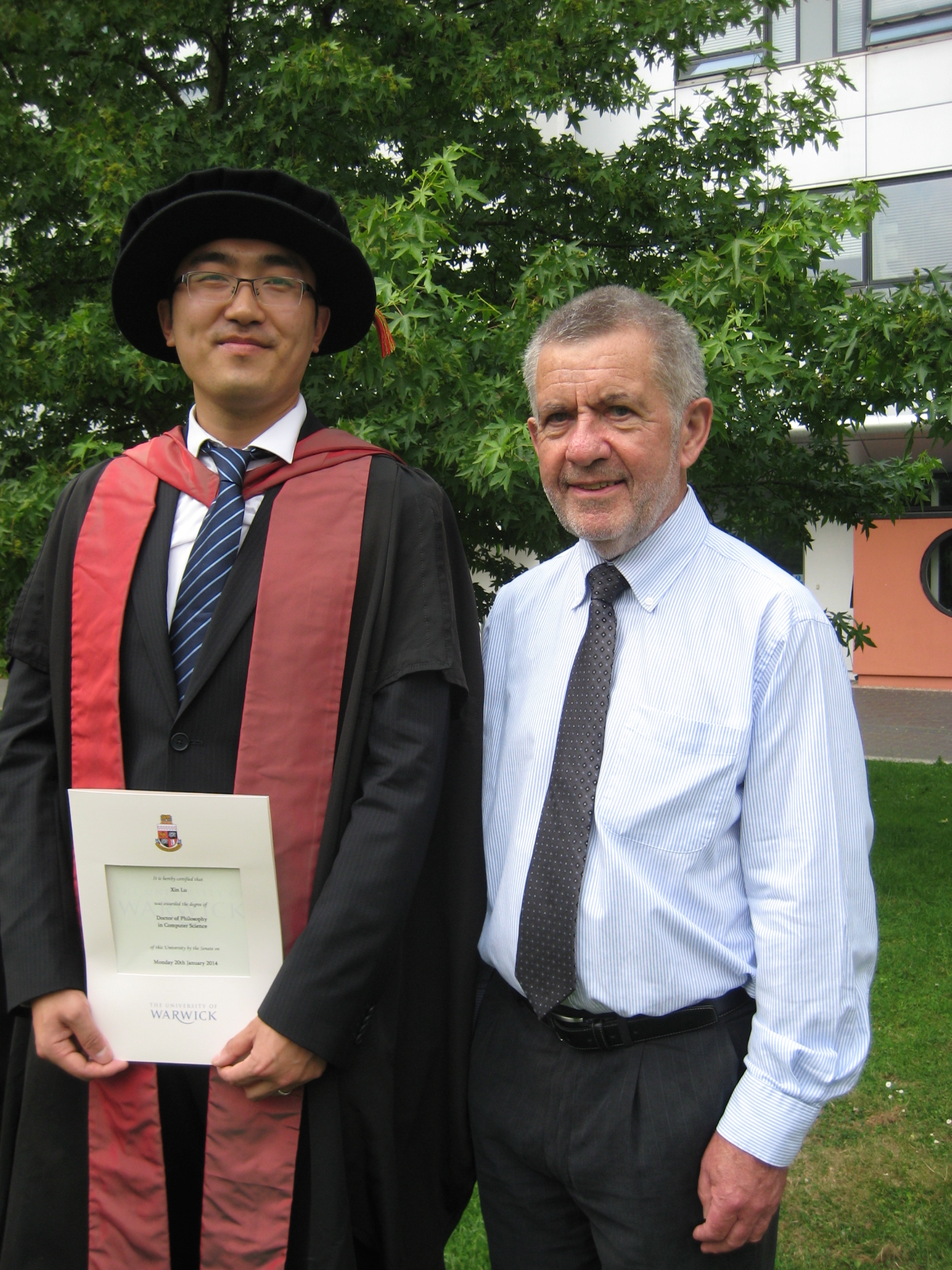
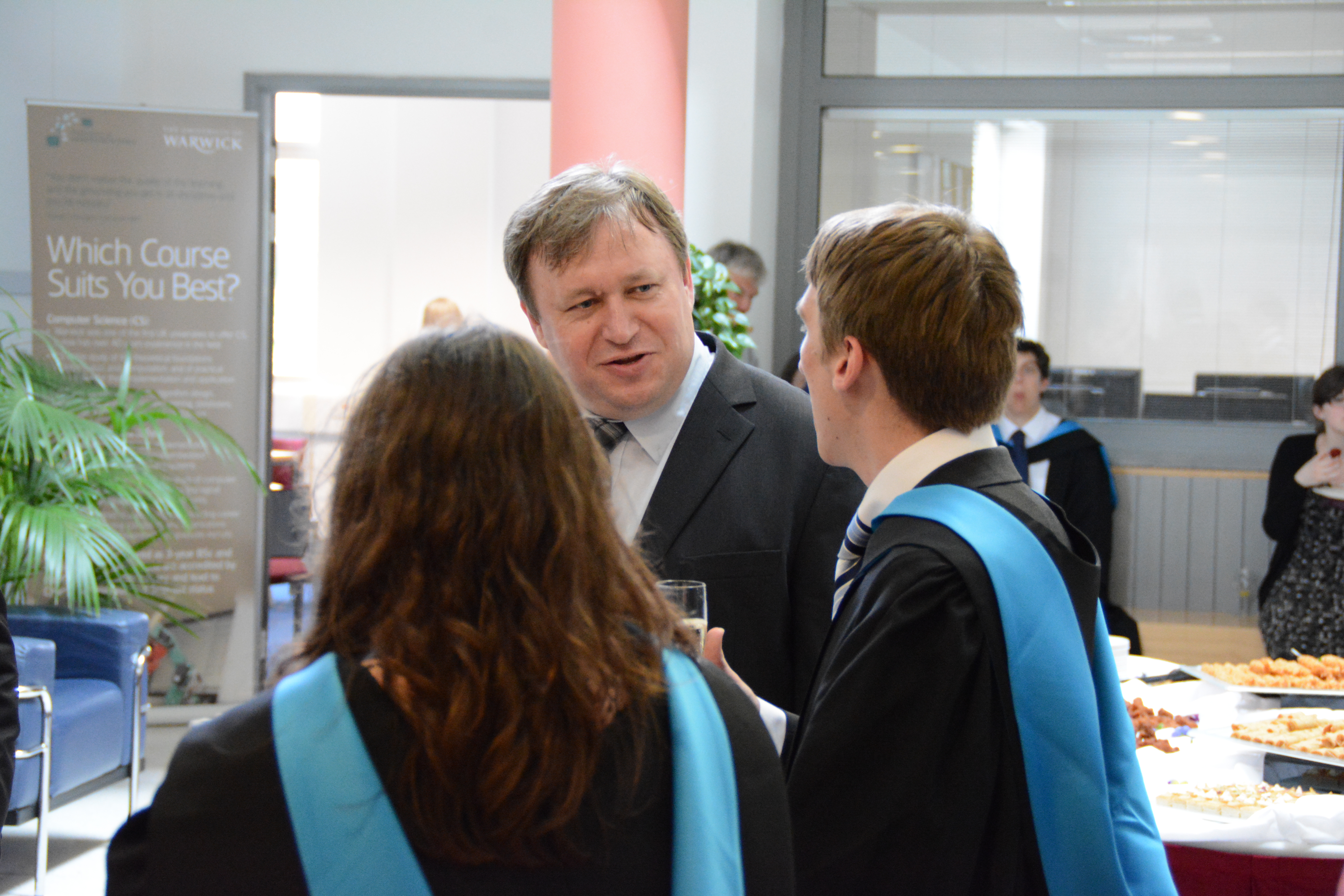
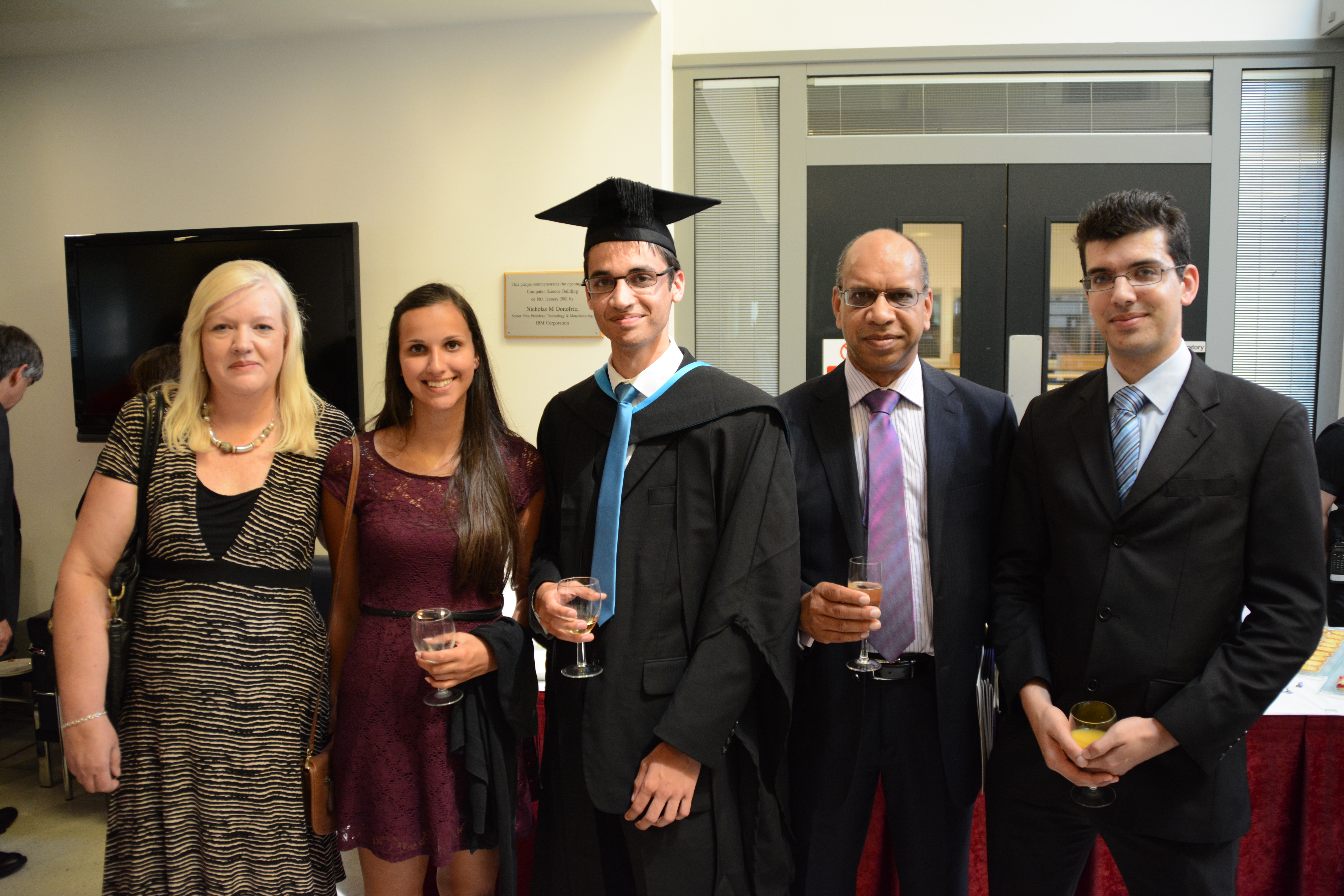
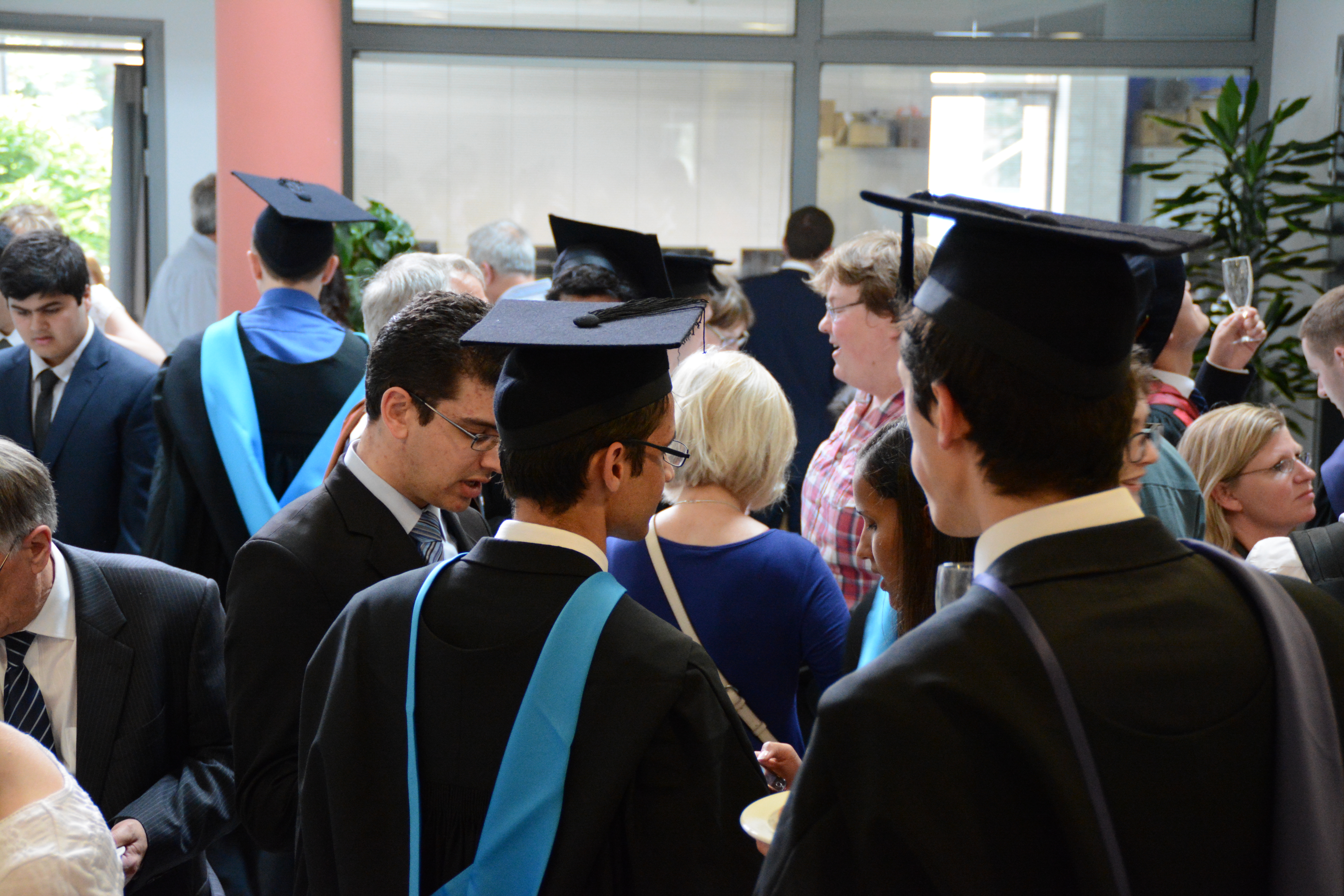
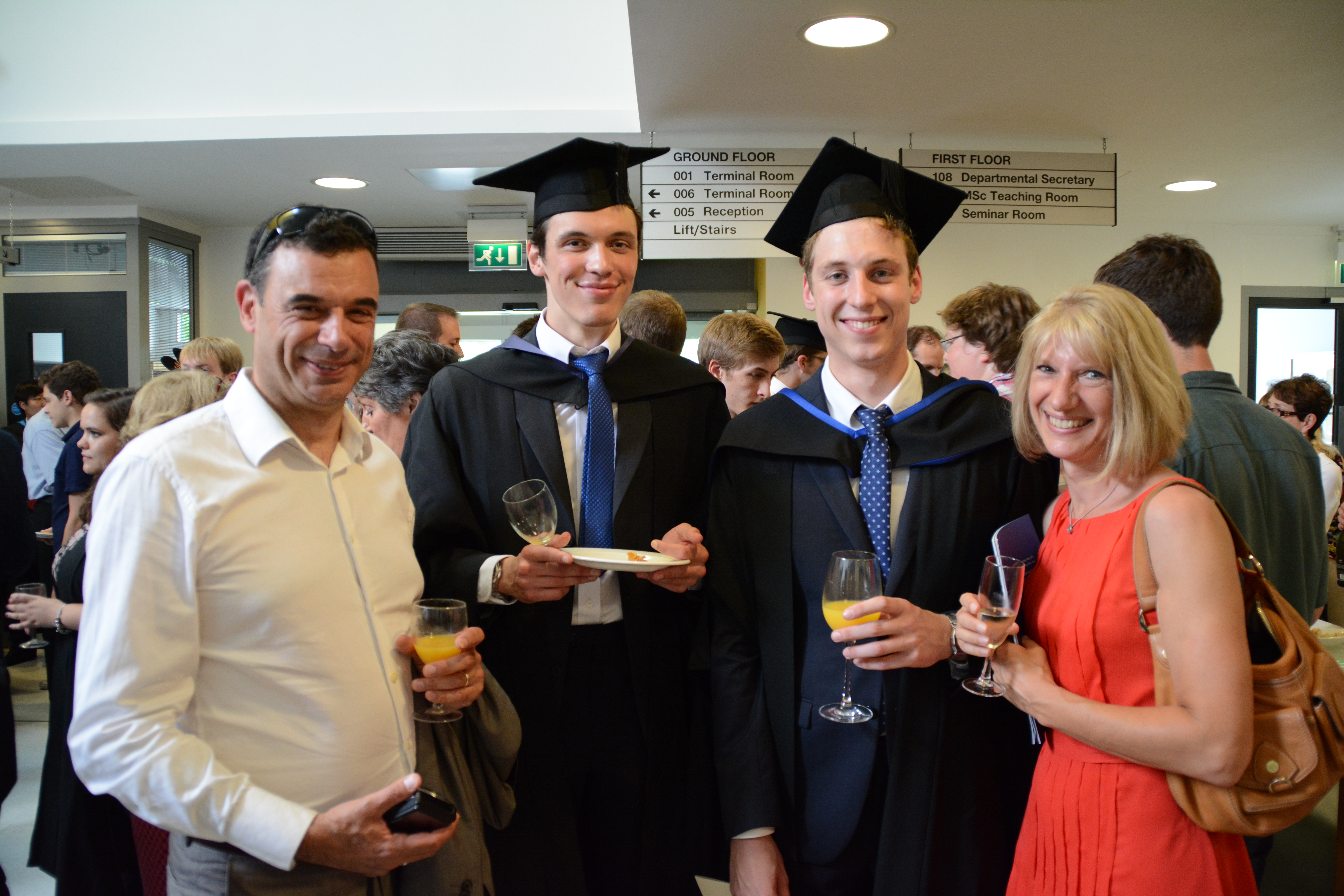
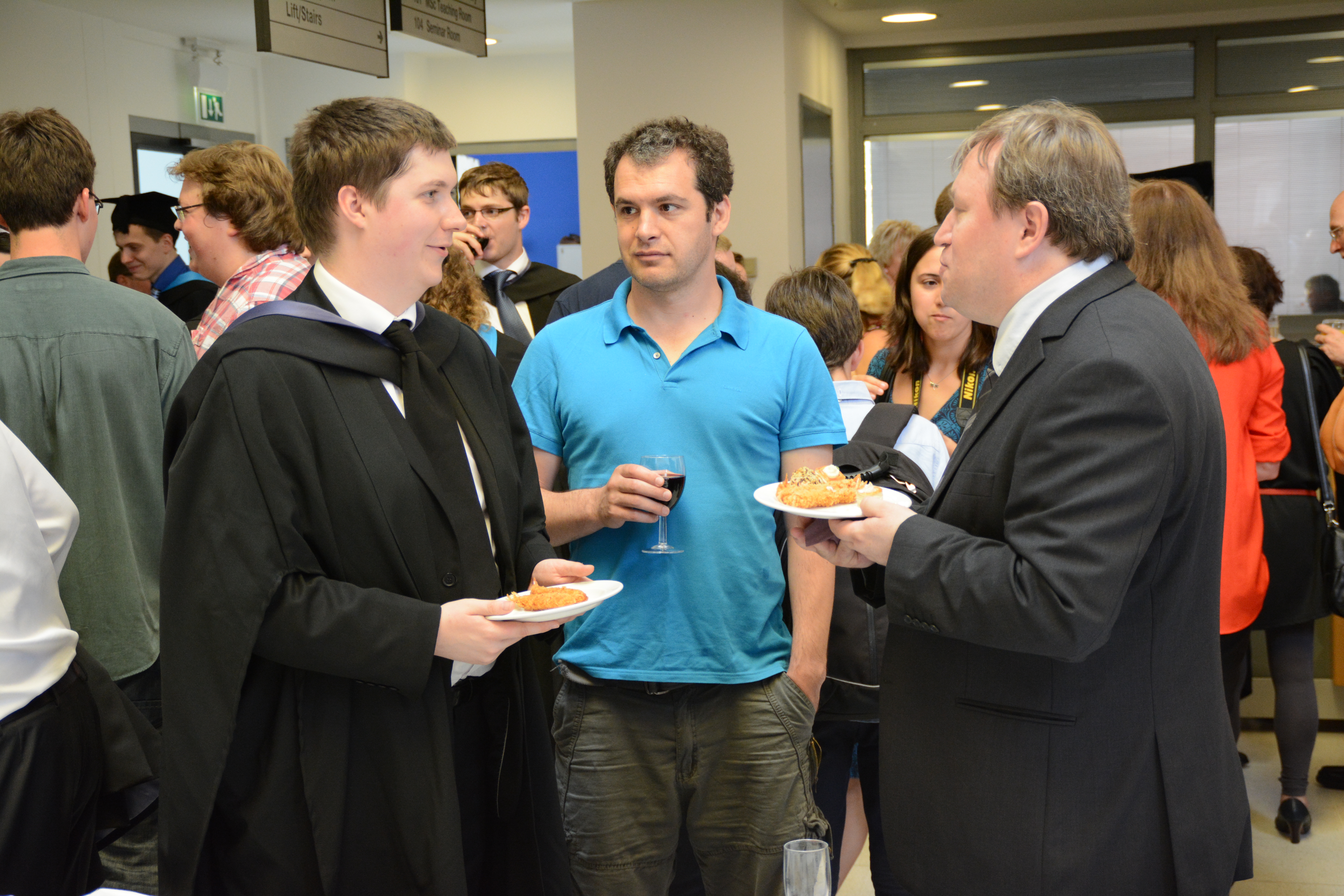
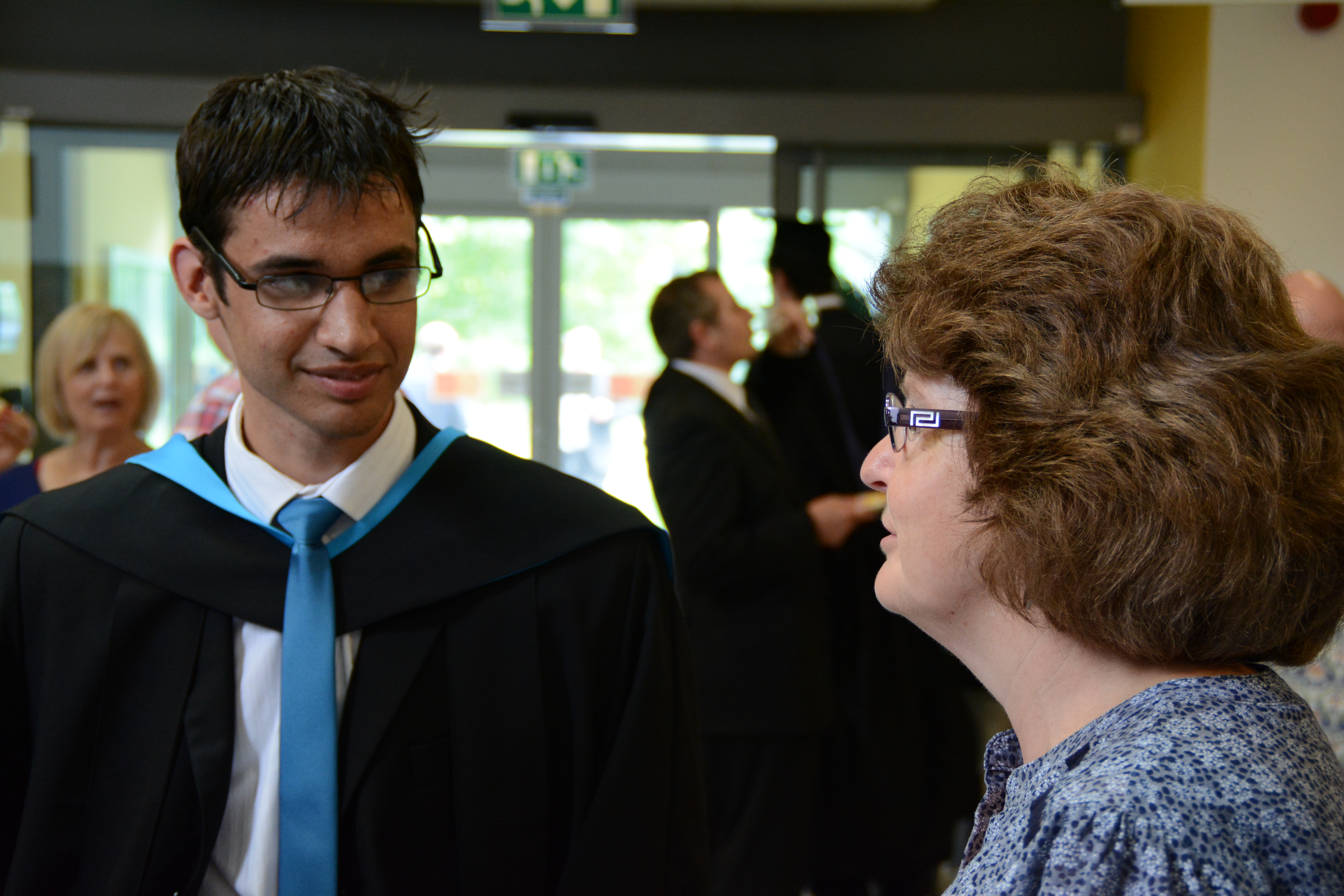
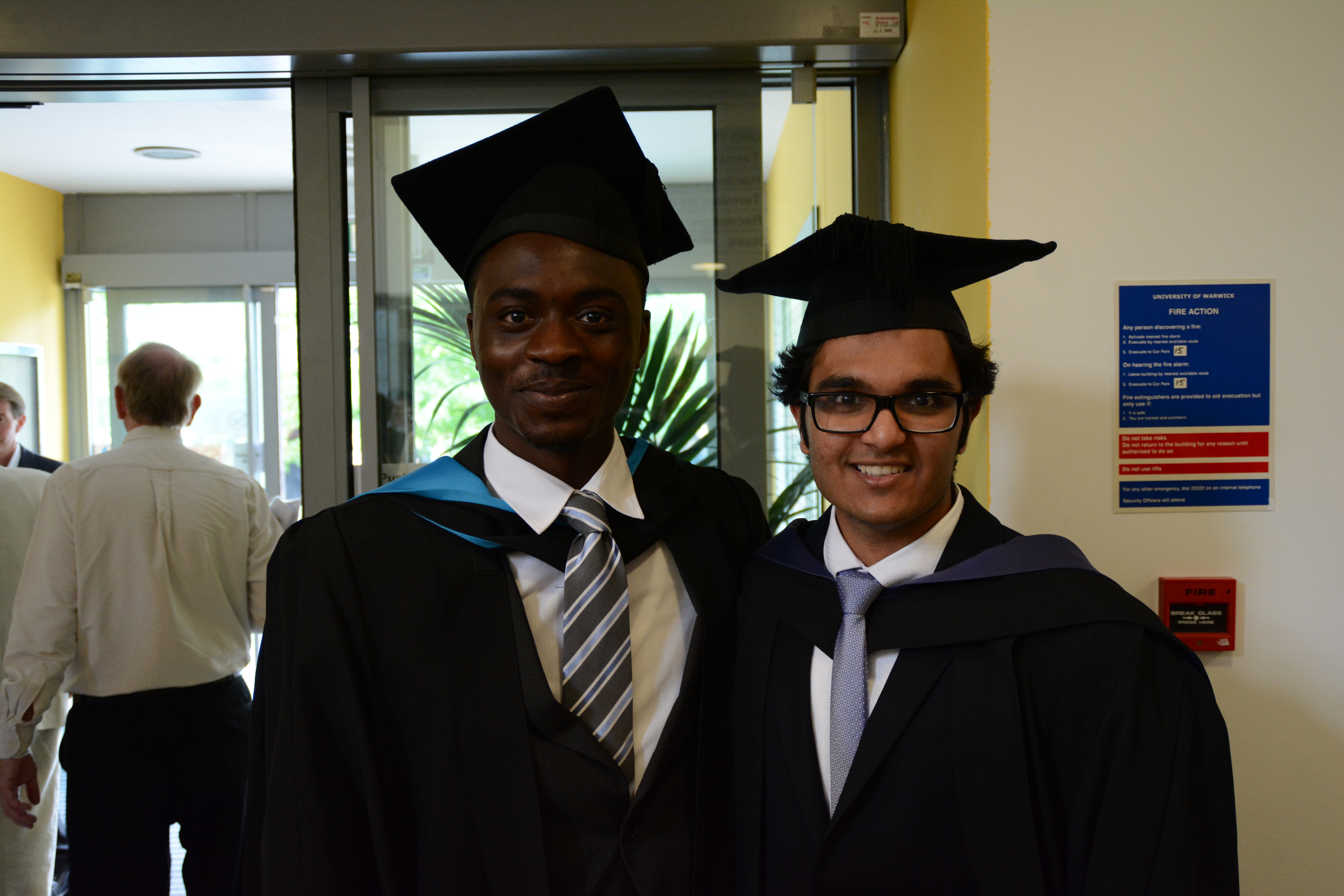
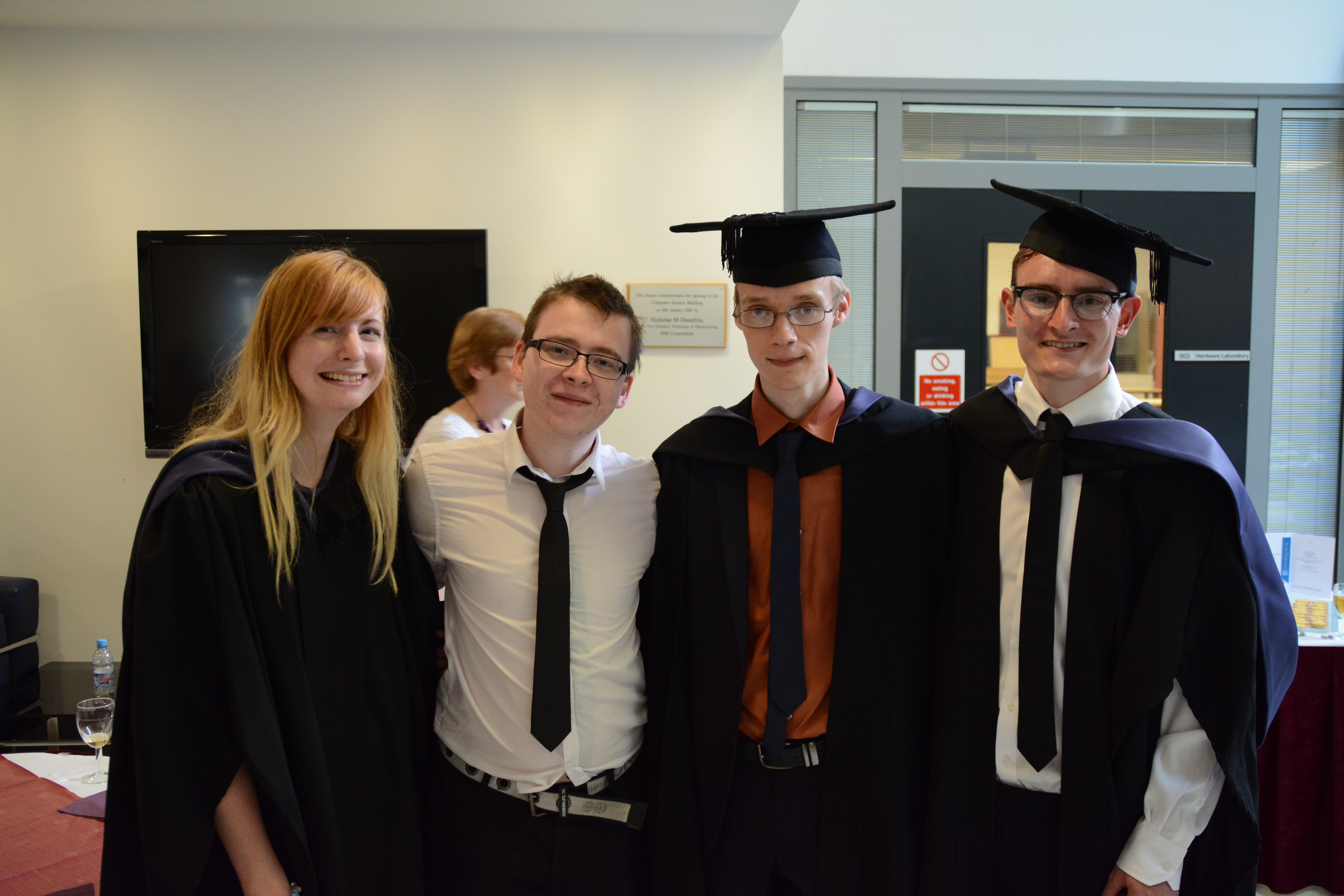
Class of 2014: Graduation
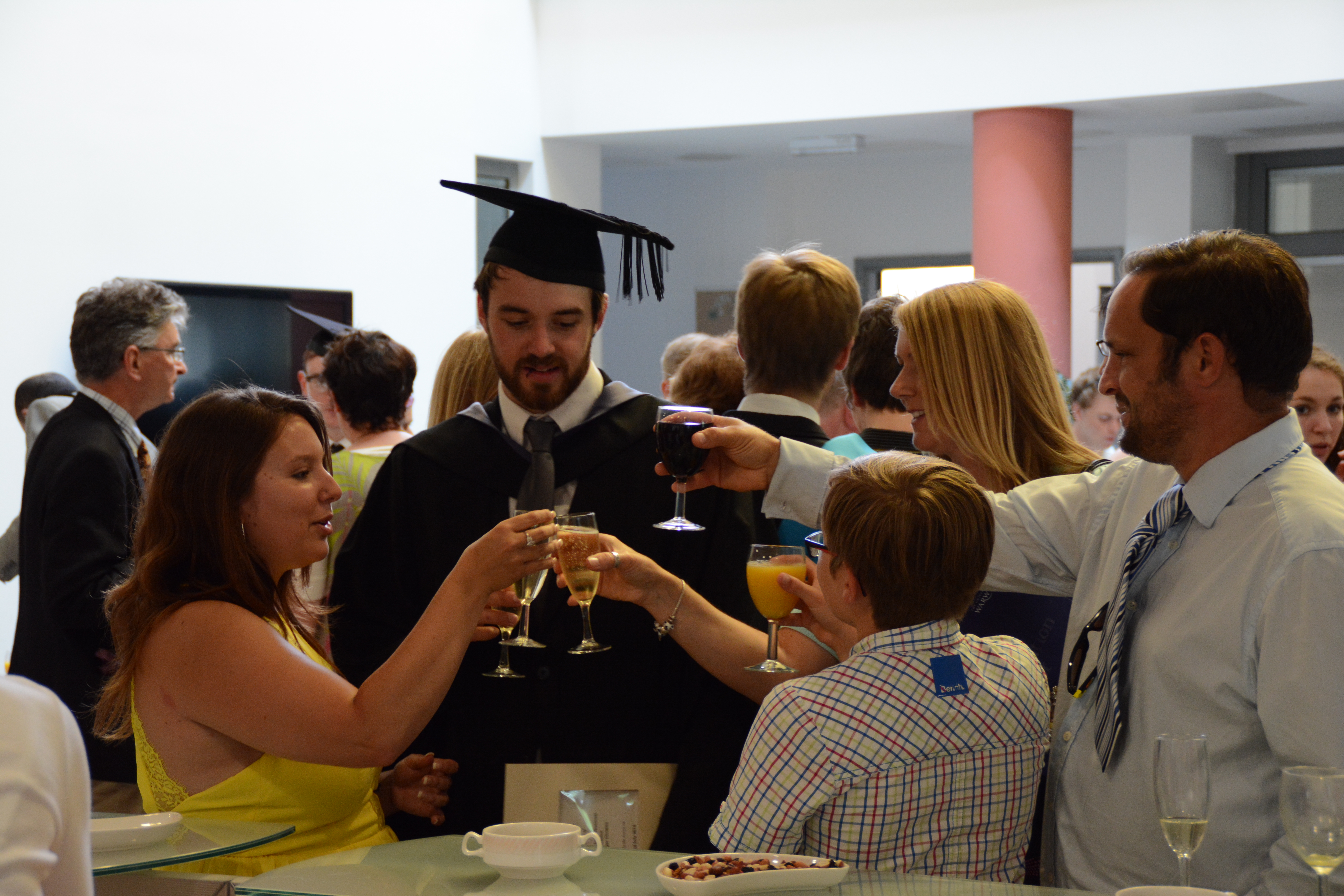
Congratulations to all our graduands receiving their degrees today!
More info:
DCS teaching staff commended in the WATE & WATEPGR awards

We congratuate Dr Matt Leeke, who was commended for his teaching in the Warwick Awards for Teaching Excellence this year. Matt is a module organiser for CS132 Computer Organisation and Architecture, CS240 Software Engineering Principles, and CS257 Advanced Computer Architecture.
We also congratulate Robert Bird who was commended in the WATEPGR awards. Robert has taught on more than 10 modules in his time at the university, including being invited to teach outside of his department. He is known for his ability to build strong relationships with students to encourage them in their learning.
This year's awards have been one of the most successful ever. Record numbers of nominations were received from staff, students and alumni, which resulted in over 70 individuals being nominated for the hard work they put into their teaching.
And now for something green ...

Research highlights the future of energy-aware high-performance computing
Leipzig, June 18, 2014. As reported in Inside HPC.
With energy costs a growing concern for High Performance Computing, Allinea Software will demonstrate its vision of a greener future with a preview of new tool extensions for application energy usage optimization at this year's International Supercomputing Conference (ISC'14) in Leipzig.
With larger numbers of data centers consuming over 1MW of power or having electricity bills topping $1M, energy is focussing the minds of the system sponsors and managers, says David Lecomber, CEO of Allinea Software.
Allinea Software worked with application performance experts at the University of Warwick to investigate novel energy and power measuring techniques for scientific application workloads.
Energy usage data is increasingly available at the system level, and our research also explored proxies for energy such as hardware counters to see where they could give deeper insight, said Professor Stephen Jarvis of University of Warwick’s HPC Performance Analysis Group.
The research supported the view that in many cases applications can reduce energy costs without adversely impacting actual run time.
Improving the green credentials of hardware and data centers is vital, and progress is good, but applications must also play their part. Energy optimization is a natural fit for our performance tools, adds Lecomber.
With the variety of workloads that HPC centers have, a ‘one size fits all’ strategy is a costly error – and so Allinea Performance Reports will provide information for application users and system managers to enable them to tune system and application parameters such as CPU frequency for optimal energy use for each application.
Our developer-centric tool, Allinea MAP, will allow scientific code developers to focus energy optimization down into the source code – making changes to the application to drive faster performance and lower energy consumption at the same time.
This research has been supported by the Technology Strategy Board's Emerging Technologies Energy Efficient Computing Programme.
Warwick and King’s College London to establish London-based Centre for Urban Science and Progress
Warwick and King’s College London, in partnership with New York University, plan a major initiative in collaboration with the GLA and the London Borough of Southwark to launch 'CUSP London', a branch of NYU’s Center for Urban Science and Progress, to be based at Canada Water from 2018. The announcement was made on Monday 17 June 2014 by Boris Johnson, Mayor of London, at an event organised by Bloomberg to mark the start of London Technology Week.
London will be the first city to build upon the success of CUSP in New York, which was launched in April 2012 by Mayor Bloomberg and of which Warwick is an academic partner. In developing CUSP London, the partners will benefit from the experience in New York City, where CUSP is now established as a leader in the new field of urban science and informatics.
Professor Nigel Thrift, Vice-Chancellor of Warwick commented: "I welcome the launch of CUSP London, both as a researcher of the dynamics of cities, and as Vice-Chancellor of Warwick which is a partner both in the CUSP London initiative and the original CUSP in New York. CUSP London will be a significant engine of applied urban science research, innovation and education that will work with London as a living laboratory applying research to the needs of our capital and to other great cities."
CUSP London will bring together researchers, businesses, local authorities and government agencies to apply urban science to improving public health and wellbeing. It will draw on the real experience and ‘big data’ available in cities, thereby using the cities themselves as living laboratories to tackle their most significant issues. CUSP London will complement the MedCity initiative which the GLA recently launched with King’s and other academic partners, and the Mayor of London’s Smart London plan.
Experts at CUSP London will use data to develop deeper understanding and practical solutions to a wide range of challenges affecting people’s everyday lives. The international partnership will also train a new generation of postgraduate and PhD level urban scientists with the skills and knowledge to benefit London and other major UK and global cities.
Professor Sir Richard Trainor KBE, Principal of King’s, commented: "If we are to tackle the increasingly complex challenges facing London and other cities, we need initiatives like CUSP London. It will train a new generation of urban scientists, and harness expertise, research insights and big data from across the public and private sectors in order to enhance health and efficiency in increasingly populated and fast changing cities."
It is anticipated that CUSP London would generate around 180 construction jobs for two years, and once fully operational, to accommodate around 100 researchers and 500 students. CUSP London will seek development funding from public, industry and philanthropic sources.
Steve Koonin, Director of New York University’s Center for Urban Science and Progress, said: "We are delighted to welcome London to the CUSP family. We are honored by their strong support of our work and the steps taken to build on our successes in New York City. Our New York team stands ready to work with Kings College and the University of Warwick as the CUSP model is expanded abroad."