
Computer Science News
DIMAP Algorithms Day 2014
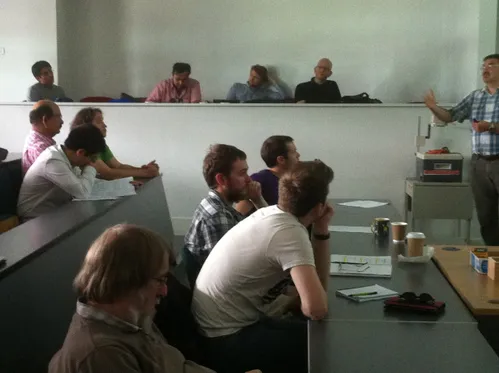
On May 21 2014, our Division of Theory and Foundations, jointly with DIMAP, organized DIMAP Algorithms Day 2014. The goal of the event was to bring together the UK community of researchers and graduate students interested in the study of Algorithms, Data Structures, and Complexity.
The event had an outstanding list of invited speakers from the leading academic institutions and research labs (Alexandr Andoni (Microsoft Research Silicon Valley), Graham Cormode (Warwick), Edith Elkind (Oxford), Leszek Gąsieniec (Liverpool), Aleksander Mądry (EPFL)) presenting the recent advances in Algorithms and its applications, and attracted over 60 participants from over the UK and from abroad.
IT firms hope to benefit from big data research with Warwick University partnership

As reported in 'Computer Business Review' and 'Computer World' (14/5/2014)
A new partnership between the University of Warwick and Bull Information Systems has been announced supporting IT developments in Big Data. The new partnership will allow leading research scientists from the university to work alongside business consultants and developers from one of Europe’s foremost suppliers of computing hardware, software and consulting services.
“So much has been discussed about the possibilities of big data yet few businesses have the advanced expertise needed to go beyond this,” said Andrew Carr, CEO of Bull UK and Ireland.
“They may already have a vision but be unsure about how to get there - or they may not even be aware of what they could achieve with the data they hold and need help to identify the opportunities.
“By taking this challenge beyond the mainstream business environment and engaging the best brains possible on the subject, we can help organisations start to realise big data implementations by injecting a new dynamism into high performance project development that will enable them to be the first to market with their initiatives.”
Professor Stephen Jarvis, who is leading the partnership at Warwick, stated that "Bull is committed to open standards and 'open ICT solutions' which allows users, including ourselves, to gain real insight and expertise in developing data analytics infrastructures as well as developing skills in using that infrastructure.”
“Organisations are bombarded by data in diverse forms from social media to connected sensors, but few know how to combine structured and unstructured forms and convert data to information to give real value. We aim to help them overcome these barriers and to develop great commercial applications that will significantly improve the experience of their customers.”
Ebrahim Ardeshir-Larijani completes his PhD
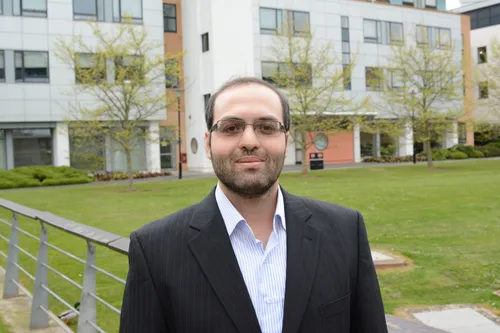
Ebrahim Ardeshir-Larijani has passed his PhD viva and his thesis has been approved, subject to minor corrections. His thesis is titled "Automated Equivalence Checking of Quantum Information Systems". Quantum information processing is an emerging technology and verification of quantum protocols is important for the design and development of quantum communication and cryptographic systems. Ebrahim's thesis presents languages (sequential and concurrent) for describing quantum systems and techniques for checking equivalence. The work has resulted in two joint papers (with Simon Gay and Rajagopal Nagarajan) in good conferences, TACAS 2013 and TACAS 2014.
Ebrahim was supervised by Dr. Ranko Lazic and Prof. Rajagopal Nagarajan, the external examiner was Dr. Ross Duncan (Strathclyde) and his internal examiner was Dr. Jane Sinclair.
Opening: Professor of Computer Science

The Department of Computer Science at the University of Warwick invites applications from candidates with proven excellence in research in computer science for the new opening as Professor in Computer Science.
Candidates are required to have a PhD in Computer Science or related discipline, should be able to demonstrate excellent research in computer science, should be capable of research leadership (to demonstrate an ability to secure funded research grants and co-supervising MSc and PhD students in Computer Science), and should have excellent teaching skills. Candidates should be able to demonstrate a commitment to excellence in research and teaching, and the ambition to play a leading role in the Department of Computer Science. Special considerations will be given to candidates with interdisciplinary interests and industrial research experience.
Candidates are required to have a PhD in Computer Science or related discipline, should be able to demonstrate excellent research in computer science, should be capable of research leadership (to demonstrate an ability to secure funded research grants and co-supervising MSc and PhD students in Computer Science), and should have excellent teaching skills. Candidates should be able to demonstrate a commitment to excellence in research and teaching, and the ambition to play a leading role in the Department of Computer Science. Special considerations will be given to candidates with interdisciplinary interests and industrial research experience.
Contact Information for the Department of Computer Science: Professor Artur Czumaj (Head of Computer Science) at A.Czumaj@warwick.ac.uk.
To apply, please follow the instructions available on the official University web-page.
Please quote job vacancy reference number 71077-044.
Closing date for applications: 22 May 2014.
First Cyber Security Challenge Schools Champion awarded to Stockport School
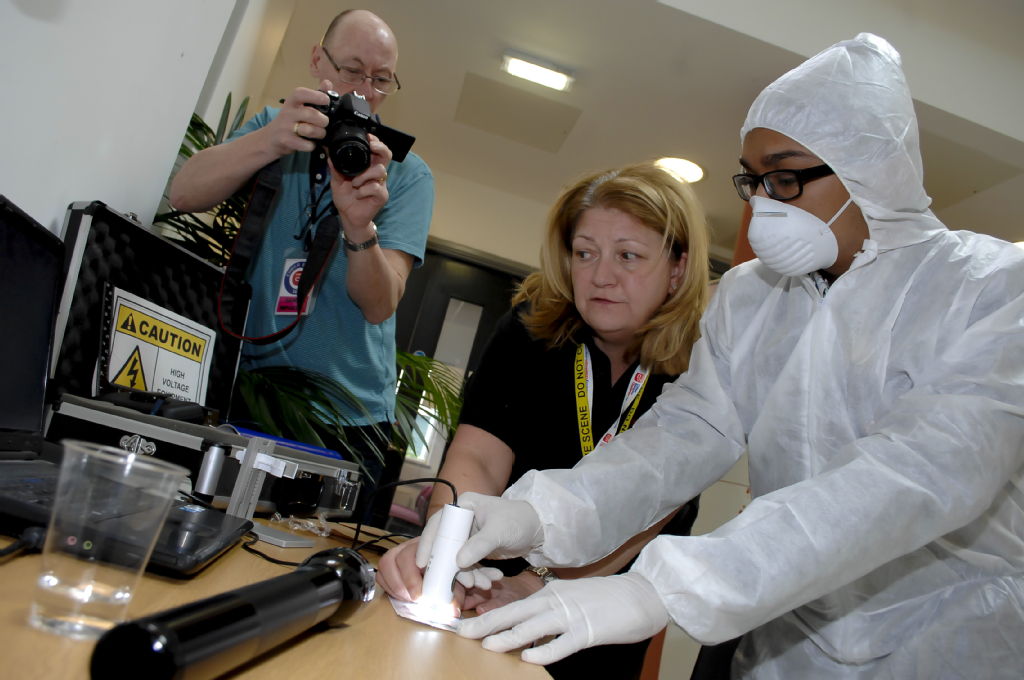
The inaugural Schools Cyber Games, part of the Cyber Security Challenge’s programme for schools, saw Stockport School emerge victorious as the first ever UK Schools Cyber Security Champions. The Cabinet Office-backed competition aims to raise awareness of the excitement of a career in cyber security amongst a new generation of young people in order to address a growing skills shortage in this sector.
Facing five other teams from schools around the country, the group of Key Stage 4 students overcame a series of fun code-breaking and cyber security themed challenges to claim top prizes including a cash prize of £1,000, Raspberry Pi computers and a Lego Mindstorms kit.
Arriving at the University of Warwick’s School of Computer Science, the teams were immediately confronted with a ‘murdered’ body mannequin and tasked with identifying the culprit through a series of cyber clues scattered through a series of themed challenges throughout the building. Each challenge was devised by experienced cyber security experts at Cyber Security Challenge sponsors and partners BT, Bletchley Park, CompTIA, e-skills, Lancaster University, MWR/Dataline and Think Forensic.
Each challenge required high levels of ingenuity from the young candidates and included:
-
Gathering and analysing forensic details from the ‘victim’
-
Cracking codes using a Bletchley Park enigma machine
-
Remotely navigating a camera robot through a maze in the dark and avoiding a NERF-firing trap
-
Compromising an industrial water pumping station to gain access and disable communication links to a water tank in order to drain it and reveal a clue
-
Using digital forensics to identify threats to a fictional Global Games opening ceremony, in a challenge that called on students to identify how social engineering can be used in cyber attacks
-
Guiding a robot with limited directional instructions through a complicated maze to reach a clue
-
Combining elements of physical and online security to pick locks to reveal online passwords that would lead them to an encrypted video revealing a clue
On completion of these challenges, the candidates had to overcome one final code to crack against the clock and reveal the identity of the murderer in their midst. The other schools to participate were The Kings School Chester, King Edward IV School (Chelmsford), Stockport School, Christ College Brecon and St James Senior School (London). Each was selected after finishing as the highest-scoring schools from over 560 who registered for the first stage of the Cyber Security Challenge’s Schools Programme, an online code-cracking competition.
Jane Sinclair, University of Warwick School of Computer Science: “ Days like this show just how fun the cyber security area can be, and that’s been a very important message to get across to the youngsters. They’ve all really enjoyed themselves and it’s been a pleasure seeing them learn and adapt to these new skills so quickly. Hopefully we’ll be seeing some of them again when they begin to apply for a place at University.”
Launched last year, the Schools Programme is delivered in association with major employers to ensure it develops practical and usable skills, in demand from industry. Its teaching resource packs are designed to spark students’ interest in code-breaking and start to hone their skills by not only teaching them how to crack codes, but also encouraging them to work in teams to develop their own.
Alan Turing book wins prestigious prize
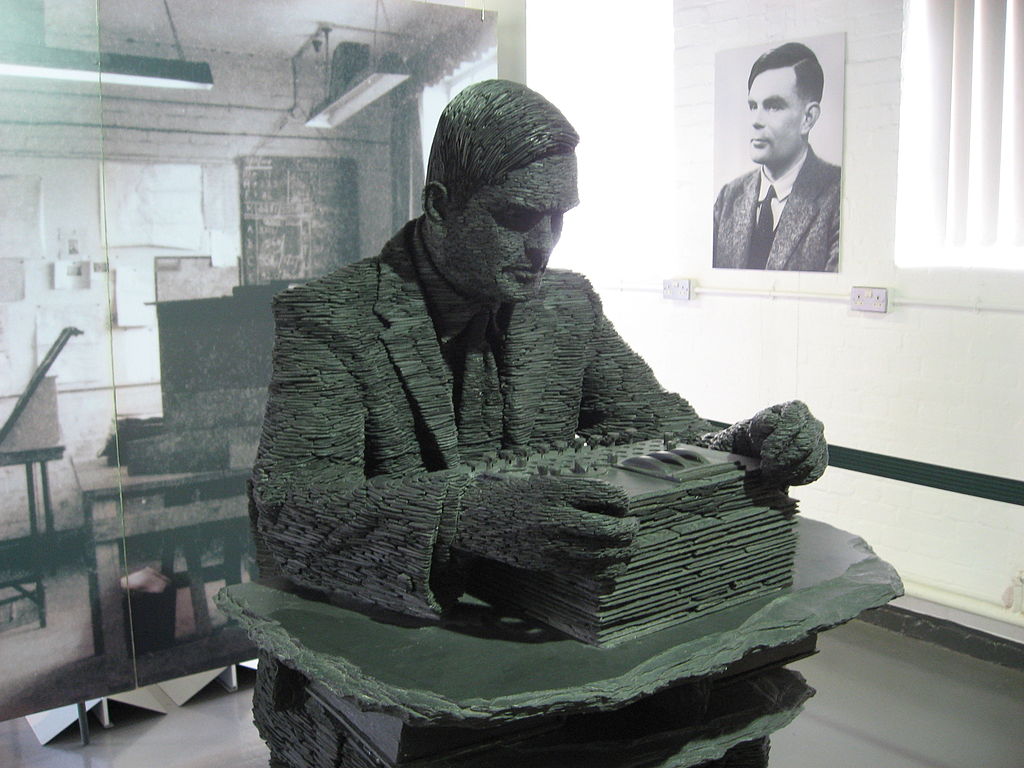
Alan Turing book takes top prize at PROSE Awards with RR Hawkins Award. The book won top prize in each of the two categories in which it was entered and it won the overall prize across all 40 of the categories. The book, which includes a contribution from Warwick's own Meurig Beynon, was edited by Barry Cooper and Jan van Leeuwen. With seventy distinguished contributors together with a generous selection of Turing’s own texts the volume offers a wonderful panorama of the range and the depth of Turing’s thought and activity.
In the words of Myer Kutz, President of Myer Kutz Associates and a Mathematics Judge for PROSE:
This remarkable volume contains not only a selection of more than two dozen of Turing's most important writings, lectures and broadcasts, from 1936 to 1954, but also extensive commentaries from researchers and practitioners, whose intellectual and personal lives Turing's persona and work have influenced profoundly. The breadth of Turing's interests is astonishing. The products of this unique mind are made accessible to both specialists and general readers by this touching and learned book – a fitting recipient of 2013 RR Hawkins Award.
Alan Turing was a British mathematician, logician, cryptanalyst, computer scientist and philosopher. He was highly influential in the development of computer science, giving a formalisation of the concepts of "algorithm" and "computation" with the Turing machine, which can be considered a model of a general purpose computer. Turing is widely considered to be the father of theoretical computer science and artificial intelligence.
How to tell if a tweet is telling the truth
How to tell if a tweet is telling the truth, The Times, Pages 1-2, 19 February, 2014.
Information we find through social media cannot always be trusted. A study of social media during the Boston bombing of 2013 concluded that 29% of the most viral content were rumours. This is clearly a major problem and, given the volume – Twitter users send 500 million tweets per day – requires the use of automated techniques to solve it. Research has already identified a number of tell-tale features in the digital ‘signatures’ of social media postings and the sources that produce them that are correlated with trustworthiness. These include posting history and connections with other social media users. The Pheme project, a new £3.5M European Union funded research project involving Computer Scientists from the University of Warwick, will build on this research and will also develop ways to analyse topics in postings, their consistency with other sources and distinguish the different ways in which social media users respond to them.
By combining these different approaches, Pheme will create computer tools with improved ability to discriminate between trustworthy and untrustworthy sources and with the capacity to process the large volumes of information circulating in social media daily. These tools will be made widely available for news media, government agencies and community organisations to use. By providing the means to amplify natural self-correction mechanisms in human communication, Pheme will help people to be more confident in assessing the veracity of information they find in social media.
See: http://www.thetimes.co.uk/tto/technology/internet/article4009691.ece
Rob Procter is Professor of Social Informatics in the Department of Computer Science, University of Warwick. He led a multidisciplinary team to work with the Guardian/LSE on the ‘Reading the Riots’ project, analysing tweets sent during the August 2011 riots. This work won the Data Visualization and Storytelling – National/International category of the inaugural Data Journalism Awards sponsored by Google, the 2012 Online Media Award for the ‘Best use of Social Media’. He is a founder member of the Collaborative Online Social Media Observatory (Cosmos), a multidisciplinary group of researchers in England, Scotland and Wales that is building a platform for social media analytics.