
Computer Science News
Congratulations to Tim Davidson for completing his PhD
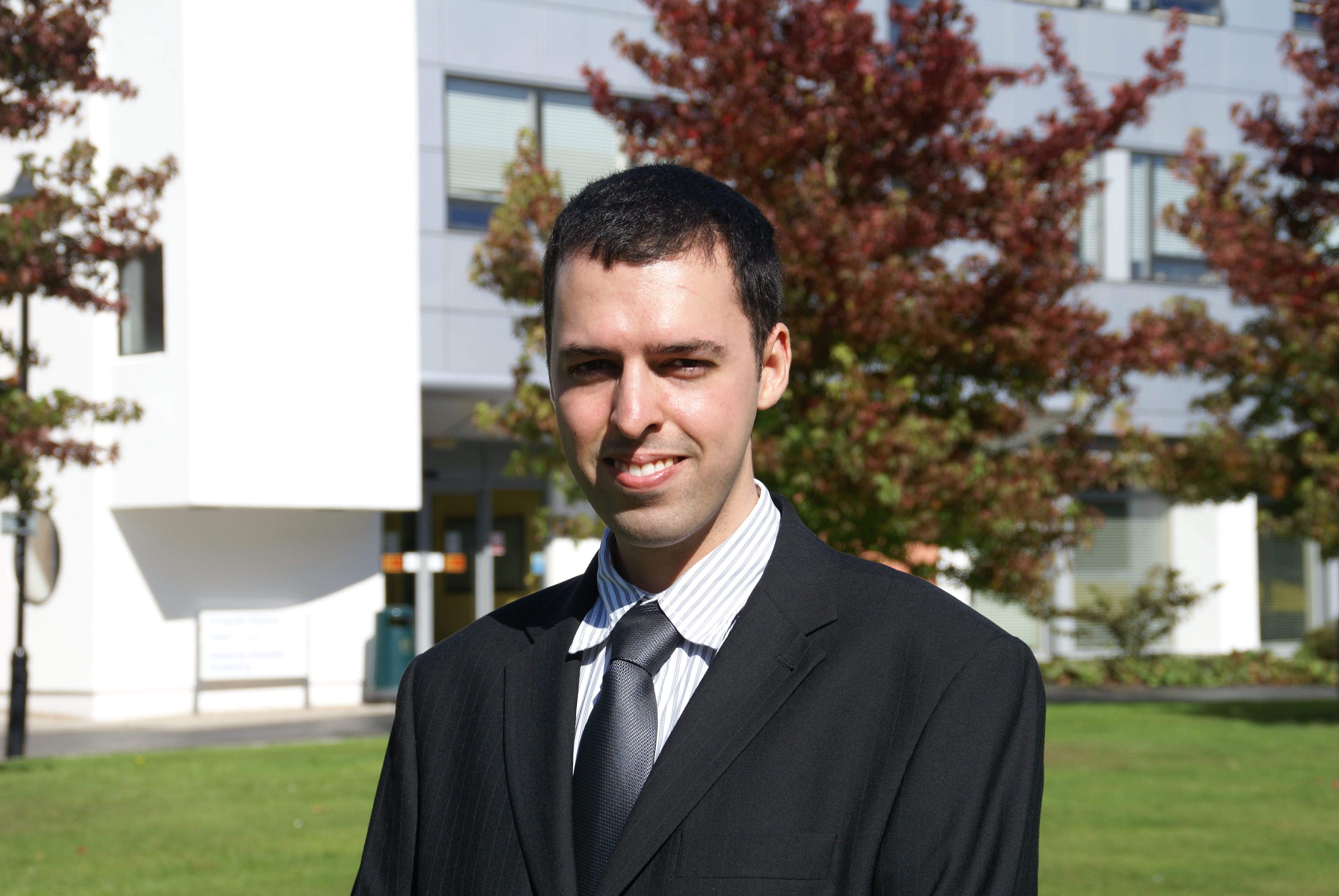
Tim Davidson successfully completed his PhD titled "Formal Verification Techniques using Quantum Process Calculus" under the supervision of Dr Rajagopal Nagarajan. Quantum information processing is an emerging technology and formal modeling of quantum protocols is important for the design and development of quantum communication and cryptographic systems. Tim's thesis contributes to the development of the quantum process calculus CQP, proposed by Gay and Nagarajan in POPL'05. In particular, it investigates process equivalence and solves an open problem by proposing a suitable congruence. Tim's external examiner was Dr Paulo Mateus (Lisbon) and his internal examiner was Dr Jane Sinclair.
Tim is currently attending interviews for jobs in information security.
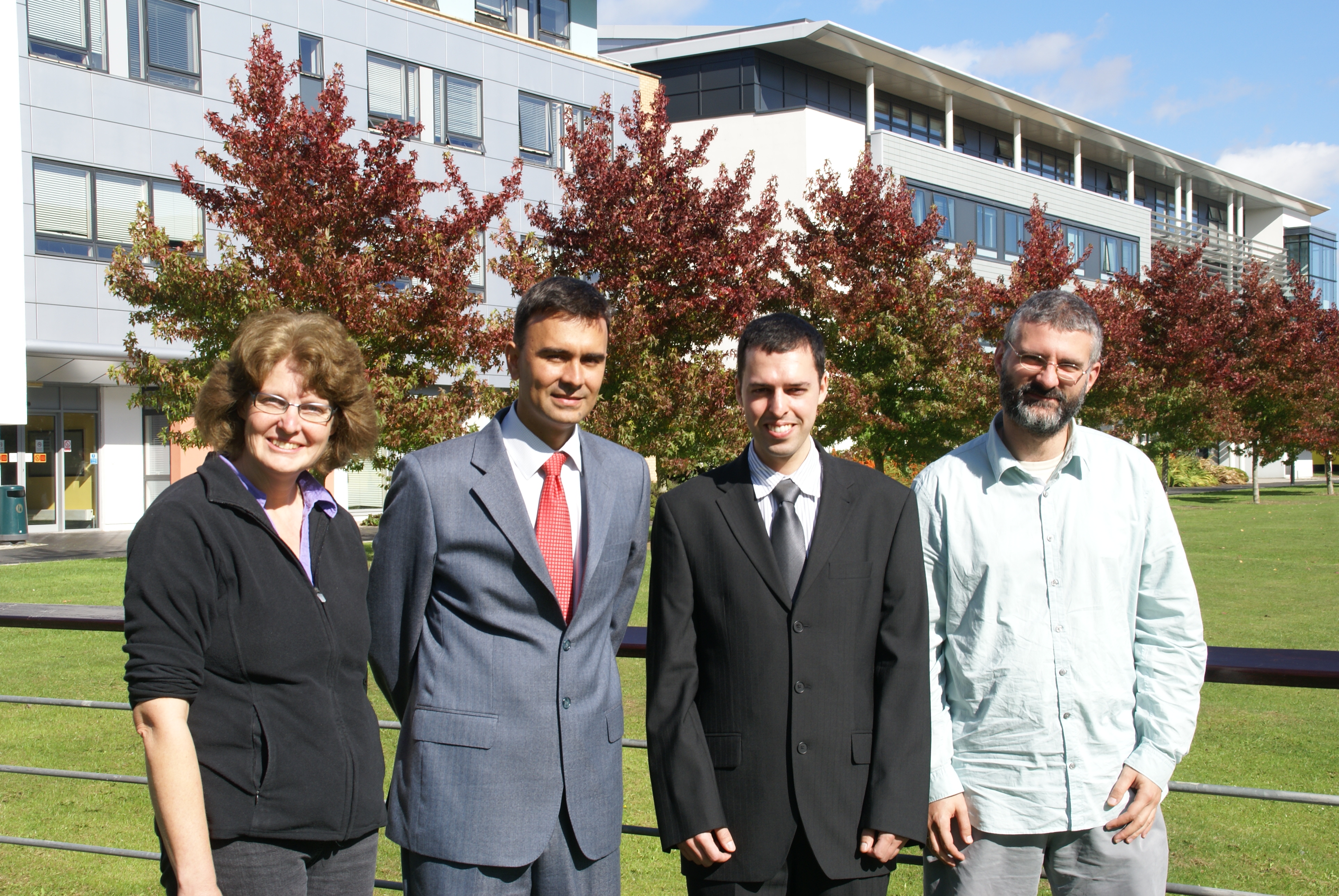
Warwick Computer Science tops Unistats table for graduate-level employment
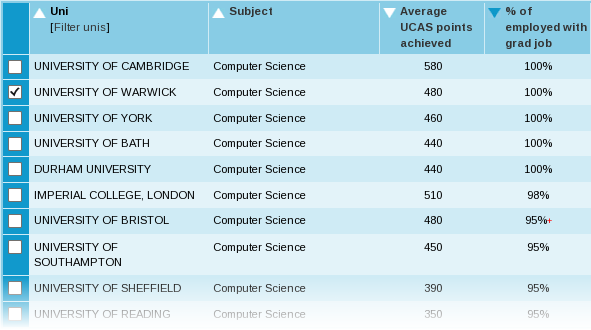
Recent results on the Unistats official website show that of those Computer Science graduates from Warwick, who have gained employment 6 months after graduation, 100% are in working in graduate level employment.
Warwick Computer Science is in the top tier of computer science departments (with four other universities) with respect to graduate employability. It is also the second most targeted by graduate employers for graduate recruitment programmes in the UK - second only to Cambridge.
Prof Jianfeng Feng receives Royal Society Wolfson Research Merit Award
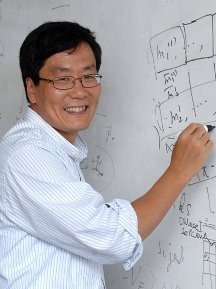
Professor Jianfeng Feng from the Department of Computer Science, has been awarded a Royal Society Wolfson Research Merit Award.
The Wolfson Research Merit Award is one of the most prestigious UK awards, supported by the Royal Society, the UK's national academy of science. The scheme provides up to 5 years’ funding after which the award holder continues with a permanent post at the host university. Jointly funded by the Wolfson Foundation and the Department for Business, Innovation and Skills (BIS), the scheme aims to provide universities with additional support to enable them to attract to this country or to retain respected scientists of outstanding achievement and potential.
The Wolfson Foundation is a grant-making charity established in 1955. Funding is given to support excellence and the focus of the award is a salary enhancement. More information is available from http://www.wolfson.org.uk.
Professor Feng will be working on a project entitled "Bridging the gap between fMRI and Genome-wide data with applications in diseases".
News on some of Professor Feng's more recent work can be found at: http://edition.cnn.com/2011/10/04/health/depressed-brains-hate-differently/?hpt=he_c2
(See also The Royal Society announcement.)
Dr Amin Coja-Oghlan receives ERC Starting Grant

Dr Amin Coja-Oghlan, Associate Professor (Reader) in the Department of Computer Science and Warwick Mathematics Instititue, has been awarded the ERC Starting Grant.
ERC Starting Grant is one of the most prestigious grants awarded by the European Research Council for world-class researchers, and Amin is one of the very few researchers in Warwick to receive this grant. His new ERC Starting Grant, worth over a million of euros for the period of five years, has been awarded for his project »Phase Transitions and Computational Complexity«.
Dr Coja-Oghlan's main research area is in the Theoretical Computer Science, with special focus on the study of Algorithms and Complexity via rigorous mathematical methods, on the boundary of computing, combinatorics, and probability. He published pver 30 papers in refereed journals (eight as a sole author) and a similar number of papers in the proceedings of international Computer Science conferences. He is the winner or the EATCS Award for the best paper in Track A at the 36th International Colloquium on Automata, Languages and Programming (ICALP 2009), and he has been an invited speaker at numerous international conferences in computer science and in mathematics.
Open Days Autumn Term 2011
We welcomed over 200 visitors to the Department at the Open Day at Warwick on 24th September. There was a full programme of talks, demonstrations and displays with staff, students and alumni also participating. The next University Open Day is on Saturday 12th May 2012. For further details of that, and of Warwick Visits and Campus Tours this term, see
http://www2.warwick.ac.uk/study/undergraduate/visits/opendays/
There is also a Virtual Tour linked from that page. If you are making a Warwick Visit, or an independent visit, and give us advance notice, we shall try and arrange for someone to show you around the Department and have a chat. We can usually do this on a Wednesday or a Friday in the afternoon, but also other times are possible. Please contact Gillian Reeves-Brown on 02476 523193 to make arrangements.
Welcome Dr Matthias Englert! New Assistant Professor of Computer Science
Dr Matthias Englert joined our department as a new Assistant Professor in September 2011.

A short bio:
Matthias received his undergraduate degree in Computer Science at the TU Dortmund and then his PhD in Computer Science in 2008 from the RWTH Aachen University, Germany. In 2008 he won the prestigious EPSRC Postdoctoral Research Fellowship in Theoretical Computer Science, hosted by our department in Warwick; title of his project was »Randomisation in Online Algorithms, Load Balancing and other Dynamic Problems«. In September 2008, he joined the Department of Computer Science and DIMAP at the University of Warwick as a Postdoctoral fellow.
His current research interest lies in Theoretical Computer Science, in the area of the analysis of algorithms, more precisely in online algorithms, metric embeddings, load balancing, probabilistic input models, and algorithmic game theory.
For more information please see his page at http://www.dcs.warwick.ac.uk/~englert/ ... or stop by in his office CS2.23.
We're very happy to welcome Matthias in our department!
Synthetic biology meets Computer Science
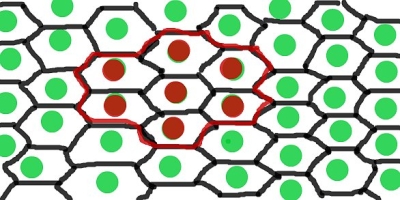
Dr Sara Kalvala has been awarded a grant towards developing tools for Synthetic Biology. The multidisciplinary project, funded by EPSRC and involving colleagues from Nottingham and Sheffield, aims at developing programmable defensive bacterial coatings and skins.
Scientific and technical advances mean that it is practically feasible to insert external genes into bacteria; the difficulty is in making sure the modified bacteria do something useful. For this, it is useful to approach the cell as a machine and its genetic engine as made up of brick-like components that can be combined in different ways. This is the idea behind the new and exciting discipline of Synthetic Biology.
Sara's experience in compilers and formal logics will inform the development of tools which will help assemble genetic networks and model their interactions with host genes. Then, the whole procedure to perform this genetic engineering in an efficient and robust way will be addressed. Then we will be ready to actually manipulate the bacteria and create useful bacterial coatings and skins.
The project is due to start in early 2012, and research staff will be recruited at all three sites. At Warwick we will be looking for a post-doctoral researcher with expertise in both computer science and biology. For further information please contact Sara Kalvala.