Biomedical Data Analytics News
Reflection on the 1st ESDIP-MICCAI-ASDP Summer School, Graz 2026
It was a real pleasure to co-lead the 1st ESDIP-MICCAI-ASDP Summer School, held this year in Graz, Austria, delivered ahead of the ECDP 2026 conference.
Having attended ECDP for several years, I was inspired to join the ESDIP Educational Committee in 2025. This has provided a great opportunity to connect with new colleagues and contribute to initiatives such as the ESDIP webinar series. Building on this, and in collaboration with MICCAI (led by Dr Spyridon Bakas) and ASDP (Dr Sangjeong Ahn), we launched this first summer school with the goal of bridging disciplines, taking pathologists from “zero to hero” in AI/computational pathology, while introducing computer scientists to the fundamentals of pathology.
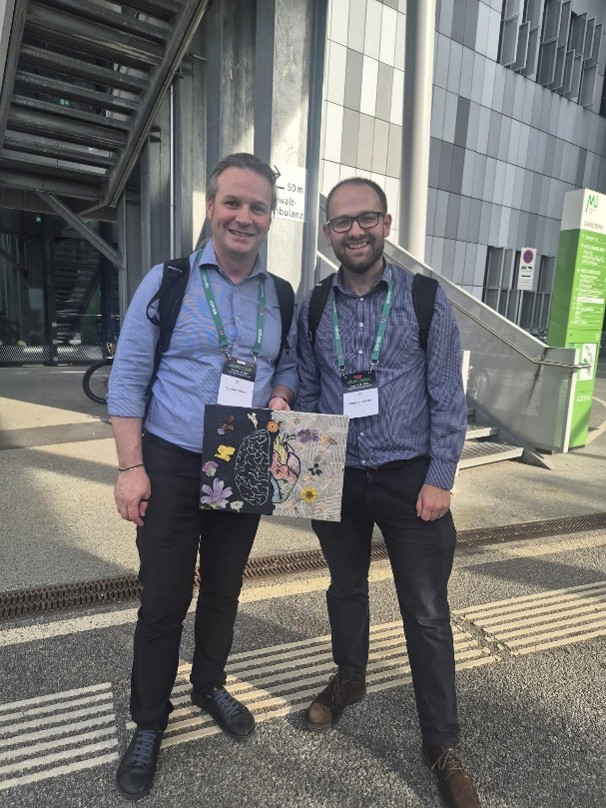
The summer school was hosted at the excellent Medical University of Graz, with beautifully sunny (and very warm!) weather throughout the week. The event sold-out, welcoming 76 attendees from 25 countries, ranging from Canada and the United States to China and Australia, making it a truly global event. Approximately 75% of participants were clinicians, laboratory scientists, or basic science researchers, with the remaining 25% comprising computer science students, creating a rich, interdisciplinary learning environment.


We were fortunate to host a fantastic line-up of speakers from across academia, including Tom Bisson, Francesco Ciompi, Anne Martel, Sertac Kip, Johanna Palacios Ball, Nadieh Khalili, Yosep Chong, Rachel Fincham, Sangjeong Ahn, Spyridon Bakas, Norman Zerbe, Jan Obdržálek, and many others. We were also proud to have contributions from the TIA Centre, including Shan Raza and myself.
The programme combined lectures and hands-on practical sessions, with a particular focus on creating learning pathways for attendees from very different backgrounds. This inevitably meant that terms considered completely routine by one group occasionally produced expressions of mild panic in the other. Our aim was not only to provide an introduction to computational pathology, but also to ensure that all participants, regardless of their background, would be well equipped to attend the ECDP conference immediately afterwards and fully engage with the scientific presentations, discussions, and emerging research being showcased.
Clinicians, pathologists, and biomedical researchers followed an introductory “Machine Learning 101” track designed to demystify key AI concepts, while computer scientists were introduced to “Pathology 101”, covering the fundamentals of tissue preparation, diagnostic workflows, and the role of pathology in clinical practice.


Once participants had established this common foundation, the groups rejoined for a series of practical computational pathology sessions. We began with the basics of QuPath before exploring popular plugins such as StarDist for nuclei segmentation and the integration of TIA Toolbox workflows within the QuPath environment. Participants then progressed to applying AI models directly to whole-slide images, demonstrating how modern computational pathology tools can be used at scale within routine digital pathology workflows.
The practical training then progressed to Python-based coding of computational pathology pipelines using Google Colab and TIA Toolbox, enabling attendees to gain experience with coding workflows for image analysis and AI model deployment. These sessions were complemented by lectures covering foundation models, explainability and interpretability, multimodal AI, and emerging directions in computational pathology.
While the schedule was intensive, it was incredibly rewarding. The opportunity to bring together clinicians and computer scientists from diverse backgrounds led to valuable discussions, new perspectives, and the seeds of future collaborations. By the end of the summer school, the pathologists were confidently discussing foundation models, while the computer scientists had largely stopped referring to every tissue structure as "some kind of purple cell", which felt like success on both sides.
Personally, it was also great to finally meet in person many colleagues I had previously only known through seminars (including the TIA Centre Seminar series) or online collaborations. The evenings in Graz offered a chance to enjoy Austrian hospitality, including some excellent schnitzel and local beer, while continuing discussions on pathology, AI, and future collaborations.
The feedback from attendees was overwhelmingly positive, alongside constructive suggestions that will help us improve future editions. We are delighted that the summer school has already been confirmed for return in 2027, taking place ahead of ECDP in Rotterdam. Following the success of this inaugural edition, we look forward to welcoming an even larger and more diverse cohort next year. Whether you are a pathologist looking to develop AI skills or a computer scientist interested in digital pathology, we hope to see you in Rotterdam in 2027.
A huge thank you goes to the entire organising team and local hosts in Graz for making this event such a success.
By Adam Shephard
The Summer School in Computational Pathology is an initiative organised by ESDIP, ASDP, and MICCAI, with lead contributions from Norman Zerbe, Sangjeong Ahn, Spyridon Bakas, and Adam Shephard. This initiative is further supported by Jordi Temprana-Salvador, Sertac Kip, Tom Bisson, Vincenzo Della Mea, Mostafa Jahanifar, Johanna Palacios Ball, Petr Holub, Jana Lipkova, Tomas Brazdil, Daniel Pinto, Markus Plass, and Nadieh Khalili.