
Life Sciences News
See our Latest Journal Publications
Prof Michael VanNieuwenhze joins Life Sciences as an IAS Visiting Fellow
The School of Life Sciences is pleased to welcome Prof Michael VanNieuwenhze , Associate Professor in the Department of Chemistry at Indiana University. Prof VanNieuwenhze, an expert in peptide antibiotics and bacterial cell wall biosynthesis, will spend eight weeks at Warwick as an IAS Visiting Fellow, hosted by Dr David Roper (Life Sciences) and Prof Tim Bugg (Chemistry).
During the Fellowship Prof VanNieuwenhze will spend time with researchers at Warwick, sharing his knowledge of methods and techniques and participating in a series of lectures and workshops, which will also involve academics from other institutions. His expertise will provide great synergy with members of the research community at Warwick, enabling the consolidation of existing collaborations and the initiation of new partnerships to drive forward research in the globally important area of antimicrobials.
Researchers secure £3.19m boost to tackle superbugs
Life Sciences researchers have been awarded £3.19m in funding to support a flagship project into antimicrobial resistance (AMR).
The funding will enable multi-partner collaborations in order to tackle the growing threat of superbugs as part of a co-ordinated multi-disciplinary effort to fight their prevalence.
Awarded by a cross research council ‘war cabinet’ on AMR comprising the Medical Research Council (MRC) and the Biological Sciences Research Council (BBSRC), the funding marks one of the largest UK public grant investments in AMR research.
Researchers Prof Chris Dowson, Dr David Roper, Dr Adrian Lloyd from the School of Life Sciences and Prof Matthew Turner of the Department of Physics, will investigate a vital link in the chain of antimicrobial resistance – the bacterial cell wall. The main component of the wall is called peptidoglycan, which is the key target of penicillin and other similar antibiotics.
School of Life Sciences in Brussels for Warwick's 50th Anniversary Celebrations
The University of Warwick is running an exciting programme of research-led events in 2015 as part of its 50th anniversary celebrations.
Members of the School of Life Sciences will be taking part in events in Brussels in the week beginning 8th June as part of these celebrations focusing on:
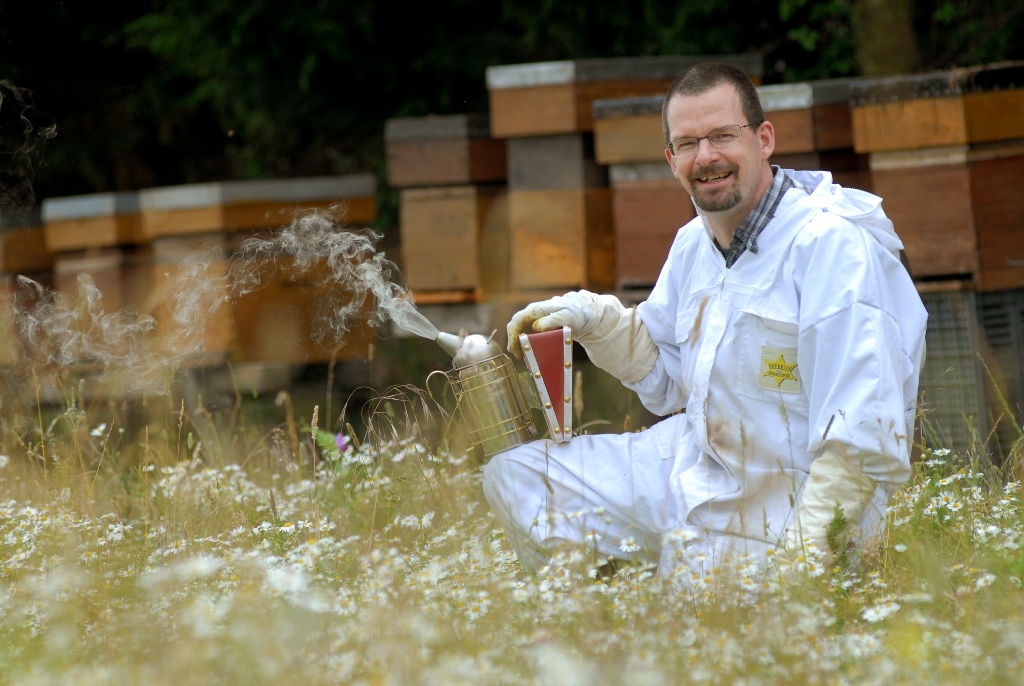
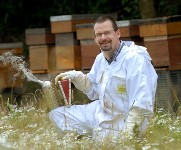 Bee health
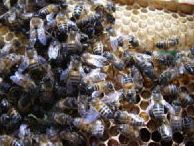
The European honeybee is the world's most important commercially-managed pollinator. Its associated pests and pathogens are becoming increasingly worrying factors that have seen the decline of honeybee stocks, causing concern about the future availability of honeybee pollination.
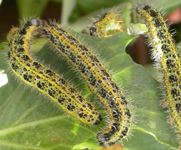 Sustainable use of pesticides
The tools that are available to farmers and growers to implement sustainable use of pesticides in a way that is practical and viable economically.
Nick Dale, Professor of Neuroscience awarded £755,273 from BBSRC for his project 'Amino acid sensing by hypothalamic tanycytes'
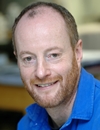 Nick Dale, Professor of Neuroscience in the School of Life Sciences, has been awarded £755,273 from BBSRC for his project on ‘Amino acid sensing by hypothalamic tanycytes’.
The research will focus on specialised cells known as tanycytes, which play a crucial role in detecting the levels of important metabolites such as amino acids and glucose in the brain.
This sensing mechanism helps the brain to regulate the balance between energy storage and expenditure, leading to the gain and loss of body weight, so understanding the biological factors involved in these processes could lead to major impacts on health and wellbeing.
First UK Autophagy Network Meeting held at Warwick and hosted by the School of Life Sciences
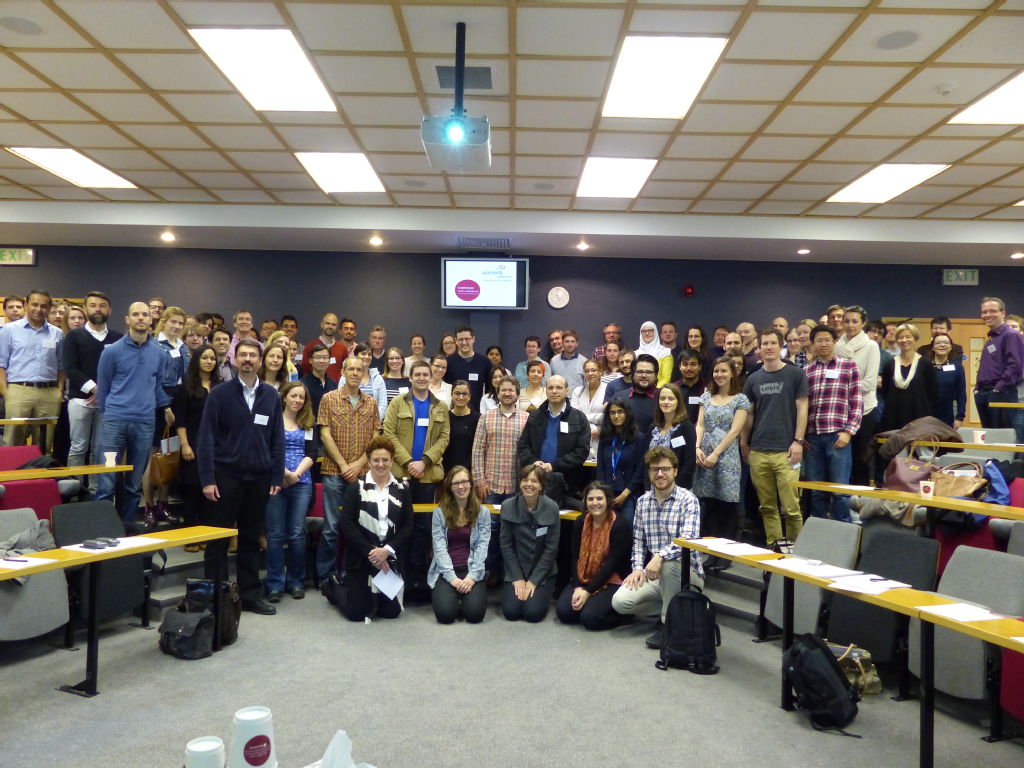 On the 6th & 7th May the University of Warwick held a highly successful first UK Autophagy Network Meeting entitled Autophagy in Health and Disease.
The symposium was organised by Dr Ioannis Nezis of the School of Life Sciences and Professor Sharon Tooze from The Francis Crick Institute and was generously sponsored by the Company of Biologists, British Society for Cell Biology, Science AAAS, Abcam Plc, Enzo Life Sciences and Abgent Ltd.
The delegates discussed the latest advances in Autophagy Research, from basic molecular and cellular mechanisms to pathophysiology of diseases such as cancer, neurodegeneration and other ageing-related diseases, studied in several model organisms (yeast, fruit flies and mice). The programme also included two poster sessions.
A number of collaborations are planned as a result of the meeting, and plans are already in place for a second meeting, possibly in Edinburgh next year.
Around 100 delegates attended from across the UK, including two overseas speakers, Professor Tom Neufeld (University of Minnesota, USA) and Professor Terje Johansen (University of Tromso, Norway).
Other invited UK speakers were Professor David Rubinsztein (University of Cambridge), Professor Katja Simon (University of Oxford), Dr Ian Ganley (University of Dundee), Dr Oliver Florey (Babraham Institute, Cambridge), Dr Rupert Beale (University of Cambridge), Dr Stephanie Kermorgant (Queen Mary University), Dr Sovan Sarkar (University of Birmingham), Dr Michelangelo Campanella (The Royal Veterinary College, University of London), Dr Niccolo Pengo (UCL) and Dr Elaine Dunlop (Cardiff University).
IAS Fellowship success in SLS
 John Sidda has been awarded an Early Career Fellowship from the University of Warwick’s Institute of Advanced Study (IAS).
John, who recently completed a PhD under the supervision of Dr Chris Corre in the School of Life Sciences and the Department of Chemistry, will build on his previous research on the regulatory mechanisms involved in bacterial natural product biosynthesis, which led to the discovery of new natural products from Stremtomyces venezuelea.
His Fellowship project, which was co-funded by the School of Life Sciences’ Pump Priming Fund, aims to develop the methodology used for natural product discovery in other Streptomyces species.
PhD student Vincent Poon takes his science to Parliament
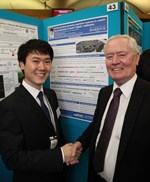 Vincent Poon, a PhD student in Dr Chris Corre’s group in the School of Life Sciences, attended Parliament to present his research on exploiting soil bacteria to unlock the production of novel antibiotics.
Vincent presented to a range of politicians and a panel of expert judges as part of a SET for Britain event.
SET for Britain aims to encourage, support and promote Britain's early-stage and early-career research scientists, engineers, technologists and mathematicians who are an essential part of continuing progress in and development of UK research.
BBSRC award for research on antibiotics
 Dr Christophe Corre, Assistant Professor in the School of Life Sciences and Department of Chemistry, has been awarded funding from BBSRC for his project on ‘Novel inducible gene expression systems based on furan inducers and the MmfR transcriptional repressor’.
The research will focus on investigating the mechanisms that control antibiotic production in Streptomyces bacteria, and how this can be exploited to generate new tools for use by the biotechnology industry. Chris was also recently awarded a three-year extension to his Royal Society University Research Fellowship to undertake a project on ‘Decrypting and exploiting new signalling systems that control antibiotic biosynthesis’.
Insecticide-based brassica seed treatment to help protect against Turnip yellows virus, estimated to save the industry £58M in 2015
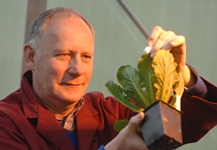 Research by Dr John Walsh from the School of Life Sciences, funded by the Horticultural Development Company, has provided the scientific evidence required to justify an Emergency Crop Protection Authorisation enabling the use of an insecticide-based seed treatment in the UK.
John’s research demonstrated the role played by peach-potato aphid in carrying Turnip yellows virus (TuYV), the most damaging of all viruses transmitted by aphids in brassica crops, which results in yield losses and tipburn after storage. The seed treatment technique protects plants from aphid attack for up to ten weeks after planting and effectively reduces and delays TuYV infections.
The Brassica Growers Association estimated that this has saved the industry around £58M in 2015 due to the reduced requirement for additional insecticide treatments, and prevention of yield and storage losses. Current research funded by BBSRC is based on developing an integrated strategy for control of TuYV in crops.
BBSRC award £601,861 to study Footrot in sheep
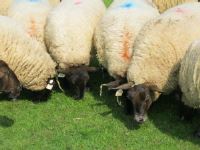
Professor Laura Green and Dr Kevin Purdy from the School of Life Sciences and Professor Matthew Keeling from the School of Life Sciences and the Mathematics Institute, at the University of Warwick have been awarded £601,861 to study the issue of Footrot in sheep.
The Biotechnology and Biological Sciences Research Council's (BBSRC) Animal Health Research Club (ARC) announced the award on Friday 27th March 2015 as part of a range of new research projects to improve the health of livestock.
Professor Laura Green, Head of the School of Life Sciences at the University of Warwick said:
“Footrot is very common in sheep in the UK, affecting more than 95% of sheep flocks. Footrot is caused by Dichelobacter nodosus, a bacterium that causes inflammation of the skin of the foot which leads to lameness. Using swab samples collected from the feet of sheep kept under different managements, the study will determine which molecular factors in Dichelobacter nodosus and which managements in sheep are most important in disease progression and how these lead to disease spread and persistence, informing on potential approaches to improve flock resilience to the disease."
Dr Celia Caulcott, BBSRC Executive Director, Innovation and Skills, said:
"By targeting these livestock diseases the Animal Health Research Club projects have the potential to protect farmed animals and food supplies and save UK farmers and the wider economy millions of pounds a year.”
“The Club shows that the public sector and private industry can work together to fund and support excellent research tackling important research challenges.”
Press release
HDC funded PhD student discusses issues facing the daffodil industry with Midlands Today
 James Syrett, an HDC funded PhD student from the Warwick Crop Centre discusses issues facing the daffodil Industry with BBC Midlands Today
  (24th March) and BBC Radio 4, Farming Today
  (25th March). The price of a bunch of daffodils has remained fixed for a number of years despite significantly rising production costs.
His research project is looking at identifying technologies and growing practices to maintain the industry’s profitability.
Nick Dale, Professor of Neuroscience awarded a prestigious Royal Society Wolfson Research Merit Award
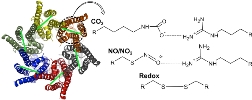 Nick Dale, Professor of Neuroscience in the School of Life Sciences, has been awarded a prestigious Royal Society Wolfson Research Merit Award, which recognises experienced researchers with a track record of outstanding achievements and the potential to make further significant contributions to their field of research.
The funding will support Nick’s research on the role of CO2 sensing mediated by connexin-26 in health and disease. Connexin-26 is a protein that forms a channel between neighbouring cells, allowing them to communicate with one another via the movement of signalling molecules; it is found in specialised nerve cells in the brain and has been implicated in the regulation of breathing.
This pioneering study has the potential to make very significant advances in the understanding of CO2-mediated signalling in the brain by linking the structural biology of connexin-26 channels and cell signalling to neurophysiological function, offering the prospect of major impacts on human health through the advanced understanding of the regulation of cerebral blood flow and the roles of this novel CO2-signalling mechanism.
Sedimentary DNA from a submerged site reveals wheat in the British Isles 8000 years ago
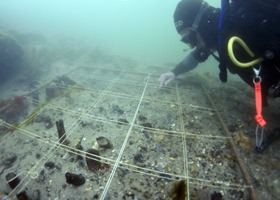 A research team led by Dr Robin Allaby of the School of Life Sciences has found evidence of wheat reaching Britain 2000 years before the arrival of farming in the UK.
This has a significant impact on our understanding of Britain in pre-Neolithic times, indicating that the ancient British were not cut off from mainland Europeans on an isolated island 8,000 years ago as previously thought with the most plausible explanation for the wheat reaching the site being the existence of social and trade networks. It is thought that these networks might have been assisted by land bridges that connected the south east coast of Britain to the European mainland, facilitating exchanges between hunters in Britain and farmers in southern Europe.
Evidence for a variety of wheat known as Einkorn was found from sedimentary DNA at a submerged archaeological site off the south coast of England (picture above by Roland Brookes, The Maritime Archaeology Trust).
The research work was completed in collaboration with co-leads Professor Vincent Gaffney of the University of Bradford and Professor Mark Pallen of Warwick Medical School, the Maritime Archaeology Trust, the University of Birmingham and the University of St. Andrews.
This research has been published in the academic journal Science, February 2015
More Information
School of Life Sciences contributes expertise to Government review on antimicrobial resistance
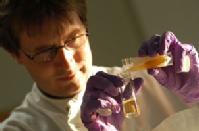 Chris Dowson, Professor of Microbiology in the School of Life Sciences, was one of a panel of experts who gave extensive input and advice during the preparation of a Government review on antimicrobial resistance.
The review was commissioned by the Prime Minister to address the growing global problem of drug-resistant infections and was Chaired by Jim O’Neill and supported by the Wellcome Trust and the UK Government.
It is estimated that antimicrobial resistance will cost the world an additional 10 million lives a year by 2050, more than the number of people currently dying from cancer annually. The paper identifies several key areas where immediate action should be taken, including an increase in funding for early-stage research into antimicrobials and greater investment in skilled people who can help to solve the problem.
This paper is the second in a series that works towards global and sustainable solutions; a final package of actions will be recommended to the UK Prime Minister and Governments across the world by the summer of 2016.
Warwick awarded over £5 million grant from the Bill and Melinda Gates Foundation
Warwick has been awarded over £5 million grant from the Bill and Melinda Gates Foundation to be a part of the global effort to reduce the burden of infectious diseases amongst the poorest billion in the world.The focus of the grant will be neglected tropical diseases (NTDs), a diverse group of infections which thrive mainly among the poorest populations of the world.
Dr Deirdre Hollingsworth, who is leading the consortium from the School of Life Sciences and the Mathematics Institute, said:
"It is fantastic to be involved with such an exciting and worthwhile project that gives the international modelling community the opportunity to demonstrate its expertise and commitment to NTDs. There are significant scientific challenges to producing quantitative frameworks that can support the effort to control NTDs but through this unique partnership we will be ready for them.” Further information
New £12 million Synthetic Biology Centre to help drive advances in biotechnology, medicine and food security
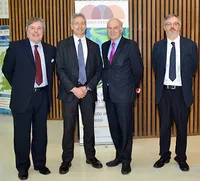 Researchers at the Warwick Integrative Synthetic Biology Centre (WISB), University of Warwick, that brings together disciplines including Life Sciences, Engineering, Chemistry, Computer Science, Education, and Law, have won a £12 Million award to create a new Centre to develop advanced technologies in synthetic biology.
Vince Cable, the Secretary of State for Business, Innovation and Skills announced the new Centre as part of a £40M investment in UK synthetic biology, at the Manchester Institute for Biotechnology on Thursday 29th January.
Professor John McCarthy, Director of WISB and from the School of Life Sciences (pictured above with Vince Cable), said:
" We are delighted to receive this strategically important UK Synthetic Biology Centre Award. Synthetic biology has huge potential to generate valuable processes and products for biotechnology and medicine, as well as new understanding of the fundamental principles that underpin living systems. WISB is building a globally recognized presence as a centre of excellence in research and training in Synthetic Biology, and this grant from BBSRC and EPSRC will help us enormously in achieving our goals.”
Liz Wellington awarded £450,000 by NERC as part of strategic initiative on Environmental Microbiology and Human Health
Liz Wellington has been awarded £450,000 by NERC for ‘Using next generation sequencing to reveal human impact on aquatic reservoirs of antibiotic resistant bacteria at the catchment scale’.
The three-year project was funded through NERC’s strategic initiative on Environmental Microbiology and Human Health, which aims to provide the scientific evidence to support fast and efficient identification of pathogenic/allergenic microorganisms and biological material in environmental media which can be used in appropriate tools and models for the protection of public health.
Learn more about your vegetables
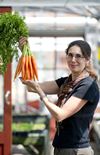 On Tuesday 6 January, Dr Charlotte Allender from Warwick Crop Centre shared her vegetable knowledge with BBC Coventry and Warwickshire's Phil Upton.
Listen on iPlayer at http://www.bbc.co.uk/programmes/p02fqlqy (from approx 2:17)
Twelve things you probably won’t know about your Christmas dinner
Most of us won’t think twice about the scientific make-up of our Christmas dinner but there’s more to that plate of festive food than meets the eye!
To celebrate being ranked second in the UK for Agriculture, Food and Veterinary research this week, Dr Graham Teakle and Dr Charlotte Allender from the School of Life Sciences are sharing their vast vegetable knowledge in a bid to help families truly appreciate this year’s festive feast.
School of Life Sciences ranked second in UK for Agriculture, Food and Veterinary research
The School of Life Sciences has been ranked second in the UK for Agriculture, Food and Veterinary research in the Government's 2014 research ranking exercise. Overall more than 80% of life sciences research was rated as 'World Leading or Internationally Excellent'.
The ranking exercise known as the 'Research Excellence Framework (REF)' is run by the UK’s higher education funding bodies, to assess the quality of UK research and to inform the distribution of public funds for research until the next ranking exercise in 2020.
The University of Warwick was ranked as the 7th highest university.
To find out more visit www.warwick.ac.uk/research/excellence