
Opportunities to work or study with me
If you are interested in working or studying with me, please see the opportunities below.
PhD Projects
Expression of Interest Deadline: 16 Nov 2026
I selectively take on postgraduate research students for PhD projects. My PhD research projects are centred on fundamental questions in astrophysics, particularly:
How do black holes grow?
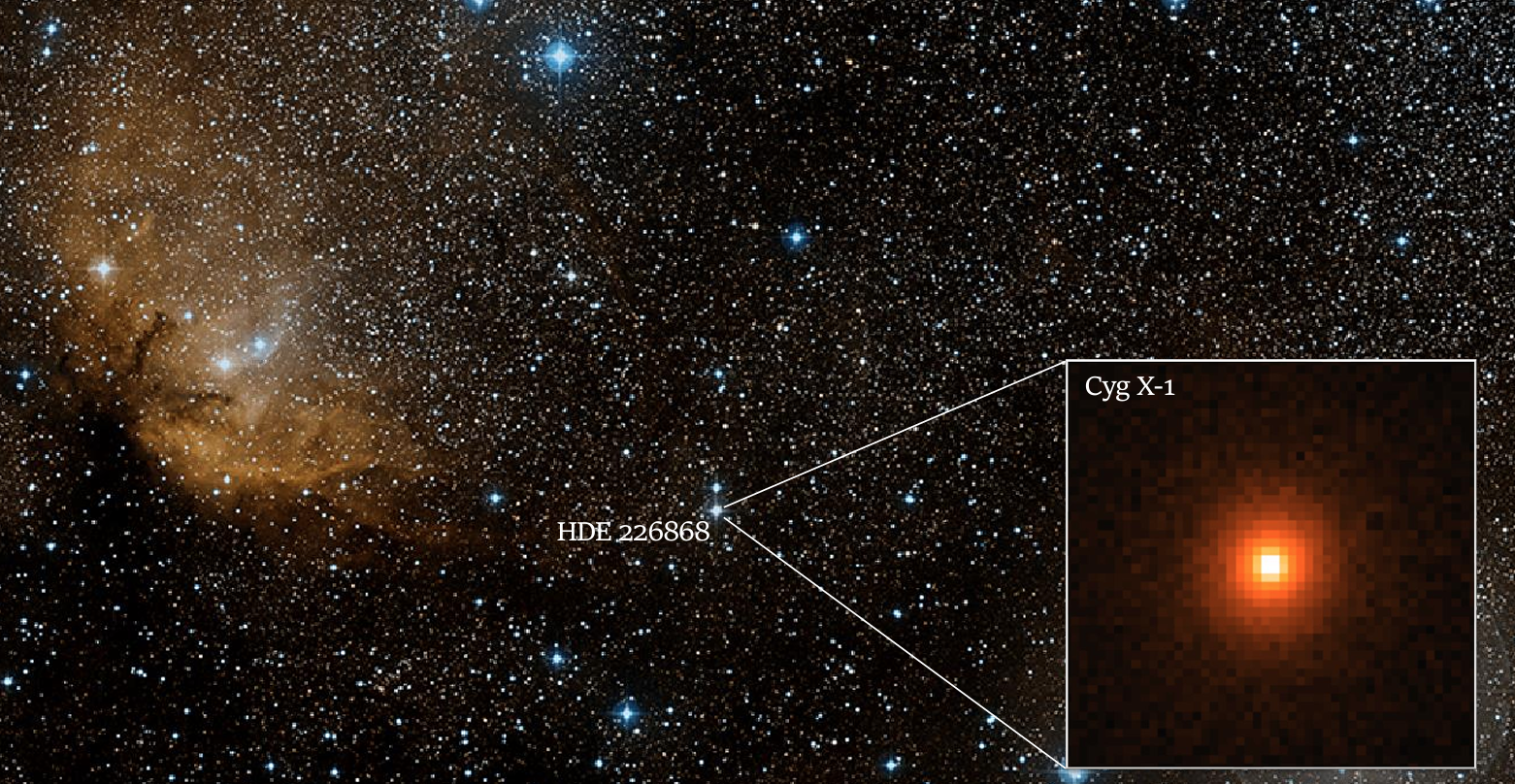
You will investigate black-hole accretion using multi-wavelength observations, with a particular focus on data from X-ray telescopes such as eROSITA, XMM-Newton, Chandra, Swift, NICER, XRISM, NuSTAR and others. Depending on the project, targets may include active galactic nuclei (like in the image), X-ray binaries, tidal disruption events, and other accreting systems.
In addition, I am the Principal Investigator of the future X-ray telescope mission AXTS. Students may have the opportunity to contribute to developing the scientific cases that will motivate this future mission.
You can find details of
here. If you have relevant skills in astronomical data analysis, I would be happy to tailor the project to your strengths and support you in preparing a competitive scholarship application.
For PhD applicants, please refer to this page for information on the application requirements and procedures. My PhD projects require students to apply separately for funding or scholarships. You can find a list of scholarship opportunities for which you may be eligible here. You can also find the Warwick PGR Scholarship Competition here and the instruction on Warwick Astrophysics page.
If you are planning to apply through a funding route that is not listed on these pages, please do get in touch with me.
If you are interested in my PhD projects, please email me with the following:
-
CV
-
Academic transcript, demonstrating that you meet the minimum academic entry requirements outlined on the admissions page.
-
IELTS results, if applicable.
-
A brief statement of interest, explaining your research interests, why you are interested in the project
-
Most importantly, which scholarship you intend to apply for or all the scholarships for which you believe you are eligible.
Image credit: ESA/Hubble and NASA
Summer Research Projects
Expression of Interest Deadline for URSS applications: 15 Jan 2027
Expression of Interest Deadline for RAS summer bursary applications: 20 Jan 2027
I am selectively looking for undergraduate students interested in summer research projects in astrophysics.
You can find details of
here for summer 2027.
If you are based at the University of Warwick, I may be able to host your URSS application. If you are based elsewhere, or at Warwick but are interested in applying for a summer research internship through another funding scheme, check out my page for these opportunities on my page and please feel free to get in touch.
My summer research projects are primarily focused on observational astronomy, using real data from X-ray and/or optical telescopes. These projects are designed to give students first-hand experience working with telescope data and exploring real astrophysical research questions.
If you are interested, please get in touch with a brief introduction about yourself, your research interests, and the summer funding scheme you are considering
Postdoctoral Fellowships
I selectively host postdoctoral fellows through external fellowship schemes.
A list of postdoctoral fellowship schemes that can be hosted in the Department of Physics at the University of Warwick can be found here.
Expression of Interest Deadlines: All year round. Please check the internal deadlines on this page.
Your research interests and proposed project do NOT need to align directly with my own research. I am particularly interested in supporting fellowship applications from researchers who:
-
Are interested in accretion physics and/or high-energy astrophysics; or
-
Make extensive use of X-ray telescope data in their research; or
- Numerical simulations of accretion systems.
If your research fits either of these areas, please feel free to get in touch to discuss a potential fellowship application.
MSc projects
Expression of Interest Deadlines: All year round
1. Studying the accretion discs of stellar-mass black holes using Insight-HXMT data
This project explores accretion physics: how black holes accrete matter and grow, and how the accretion process shapes the observed X-ray emission.
2. Spectrally resolving AGN and their host galaxies using XMM-Newton RGS data
This project focuses on AGN feedback and the interplay between supermassive black holes and their host galaxies. By analysing high-resolution X-ray spectra, you will investigate the physical properties of the gas surrounding AGN and learn how to constrain the properties of their host galaxies. An example of high resolution X-ray spectra is shown on the right from Buhariwalla, ..., Jiang, et al. (2023).
Skills you will develop
Depending on the project, you will gain experience in:
-
Astronomical research: X-ray data reduction and analysis, including CCD-resolution and high-resolution spectroscopy.
-
Physical interpretation: Accretion physics, atomic physics, and the physics of AGN feedback.
-
Statistical methods: Statistical inference and Markov chain Monte Carlo (MCMC) methods.
These skills are valuable for further research in astrophysics and other fields involving scientific data analysis and statistical modelling.
MSc Projects
I selectively take on postgraduate students for one-year MSc degrees by research.
My supervision goes beyond the MSc project itself. I will also support you in preparing PhD applications, helping you develop a competitive application for the next stage of your research career.
My MSc projects expect to start in October, the start of an academic year. However, if you have a different starting date in your mind, feel free to let me know.
Before contacting me, please check the minimum academic and English-language requirements, where applicable, and the application procedure:
If you are interested in either project, please email me with the following:
-
Your CV
-
Your academic transcript that shows you have met the minimum academic requirement
-
Your IELTS results, if applicable
-
A very brief statement explaining your research interests and why you are interested in the project
- Your funding situation (e.g., self funding or a specific scholarship you wish to apply for). These two projects have no financial support for either tuition or living cost.