
Changing Everything
As exploratory probes have explored the many and varied environments of our Solar System, one thing has become increasingly clear: humanity has evolved to be uniquely suited to life on Earth, and will face an uphill struggle for survival anywhere else in the Solar System, or beyond. Science fiction, confident in humanities urge - or even need - to expand beyond our planet’s horizons, has explored a range of solutions to this problem.
Here I take a look at one of the most ambitious - the idea that humans themselves might be modified to fit their new environments, changing everything.
Last and First Men
The idea that humanity might need to adapt to its environment, rather than adapt its environment to suit itself, has a long history in science fiction, rooted in the Darwinian revolution which introduced the concepts of evolution and survival of those individuals most suited to successfully reproduce. In The Time Machine (novel, 1895), H G Wells explored a possible future for humanity in which different environmental pressures and the elapse of great stretches of time had caused Homo sapiens to bifurcate into different species: the Eloi and Morlocks.
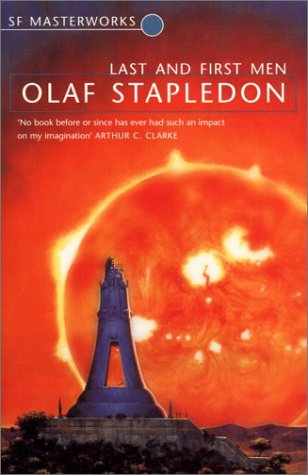
Still more sweeping in both scope and timescale, spanning two billion years, was Olaf Stapledon’s Last and First Men (novel, 1930), which traced the entire history of humanity through settlement on and adaptation to different worlds, evolving through many distinct species as civilisations on Earth waked and waned. In this novel, the first few species of humans arose through natural mutation and natural selection. However from the Fourth Men onwards, the species took on adaptation (at first for intelligence) as a conscious task:
“Those who desired to produce the super-brain employed four methods, namely selective-breeding, manipulation of the hereditary factors in germ cells (cultivated in the laboratory), manipulation of the fertilized ovum (cultivated also in the laboratory) and manipulation of the growing body. At first they produced innumerable tragic abortions. These we need not observe. But at length, several thousand years after the earliest experiments, something was produced which seemed to promise success.”
In Stapledon’s narrative, the adaptation of humanity doesn’t extend to fitting them for other worlds until the rise of the Sixth Men (who relocate from Earth to Venus), and that is a long painful and largely natural process during which humanity almost goes extinct, and is forced to naturally adapt to an ocean-dominated vision of Venus:
“It is perhaps surprising that man was still capable of spontaneous variation; but the fifth human species was artificial, and had always been prone to epidemics of mutation. After some millions of years of variation and selection there appeared a very successful species of seal-like submen.”
Stapledon goes on to describe the Ninth Men, scientifically adapted to live on Neptune in order to escape the effects of the Sun’s evolution. Much later, the Last (or Eighteenth) Men, still resident on Neptune, are described from the point of view of a First Man:
“Some of these fantastic men and women he would find covered with fur, hirsute, or mole-velvet, revealing the underlying muscles. Others would display bronze, yellow or ruddy skin, and yet others a translucent ash-green, warmed by the under-flowing blood. As a species, though we are all human, we are extremely variable in body and mind, so variable that superficially we seem to be not species but many.”
Finally, with the Sun dying, Stapledon describes a final conscious and still more ambitious effort at adaptation:
“Only within the last few years have we succeeded in designing an artificial human dust capable of being carried forward on the sun’s radiation, hardy enough to endure the conditions of a trans-galactic voyage of millions of years, and yet intricate enough to bear the potentiality of life and spiritual development. We are now preparing to manufacture this seminal matter in great quantities and to cast it into space at suitable points on the planet’s orbit.”
Throughout Stapledon’s narrative there is a great weight of time passing, making it clear that none of the processes described here are rapid or easy, and also a clear recognition that the results of human intervention in evolution will be unpredictable, resulting in failure and the collapse of civilisation, or in random mutation and the development of ‘sub-men’ at several points. Stapledon’s views of Venus and Neptune, and of solar evolution, while informed by the scientific knowledge of the time, now appear significantly outdated and implausible. However there is also the clear message that something indescribably human persists throughout the evolutionary process and that it is worth preserving and propagating.
Pantropy
The existence of “hereditary factors in germ cells” had long-since been recognised and exploited through selected breeding. In the early twentieth century, this was contextualised in the developing science of cell biology, and the recognition, by Oswold Avery in 1944, that DNA was the protein most likely to carry information between generations, and the identification, by Crick, Watson and Franklin in 1953, of its double helix structure. This provided, for the first time, a tangible process which could be modified or manipulated - either in real life or in fiction - to undertake genetic engineering.
Published in 1957, the fix-up novel The Seedling Stars by James Blish collected together five related short stories and explored the concept of pantropy - a term which was coined by Blish to describe human adaptive modification.
The Sunken Universe, published in Super Science Stories in May 1942 (as by Arthur Merlyn), described a microscopic underwater world in which a form of mankind fought against harmful microbes to win domination of a new environment. Their origins were obscure - to the miniature Men as well as to the reader - but there are hints in an undeciphered record that readers can interpret as the history of an interstellar expedition.
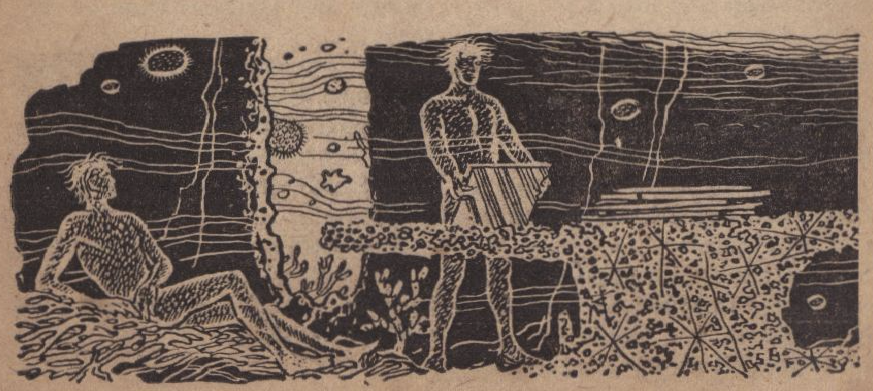
This was made more explicit in Blish’s novella Surface Tension (published in Galaxy SF Magazine, Aug 1952) which provided the original short story with a prequel in which a shipwrecked exploration crew developed the new life form to perpetuate their legacy, and a direct sequel in which the microscopic humans fight against the bounds of surface tension and the risk of dehydration to launch a mission of their own into outer space.
Three further stories expanded on the underlying premise and made the pantropy process more explicit.
The Thing in the Attic (Worlds of If, July 1954) described a diminutive, tree-dwelling race of men living in the treetops of a hostile world, with legends of the giants who had created them and given them the basics of civilisation and who would one day return.
Watershed (Worlds of IF, May 1955) considered a far future which explores the prejudice of a spaceship crew towards the adapted race which they are transporting to recolonise the long-since abandoned dead homeworld of humanity.
Finally, A Time to Survive (Fantasy and SF, Feb 1956, a.k.a Seeding Programme) explored the establishment of pantropy and some of its moral consequences. This narrative, which formed the opening section of The Seedling Stars is told from the perspective of Sweeney, a young man who has been engineered since before birth to exist naturally on the surface of the Jovian moon Ganymede. Raised alone in a base on Earth’s Moon, Sweeney has bones made of a high pressure form of water ice and he drinks liquid ammonia - the biological solvent for life on the cold planetoid. [1]
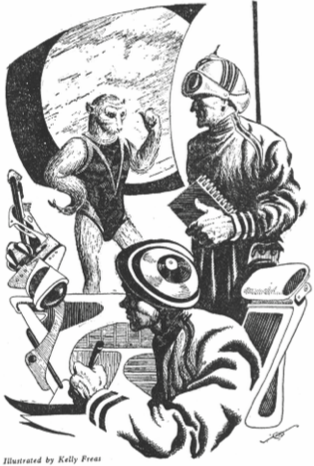
“He had always been this way. What had made him so had happened to him literally before he was conceived: the application, to the germ cells which had later united to form him, of an elaborate constellation of techniques - selective mitotic poisoning, pinpoint X-irradiation, tectogenic micro-surgery, competitive metabolic inhibition, and perhaps fifty more whose names he had never even heard - which collectively had been christened ‘pantropy’. The word, freely translated, meant ‘changing everything’ – and it fitted.”
As gradually becomes clear, his entire creation was an attempt to betray and destroy an earlier generation of adapted humans already settled on the planet-sized moon. As the leader of those early settlers explains, the commercial and political history of Earth has led to enormous pressure towards domed settlements, and highly commercialised resource transport. The idea of adapting to environments, rather than existing within them, presents such a threat to commercial interests that it was made illegal, and its advocates persecuted. Despite that, the few survivors of that persecution remain determined to launch the concept of settlement-through-adaptation out to the stars.
As the other stories describe, in this universe this process of pre-natal adaptation of humanity to new worlds becomes the standard process of settlement of Earth-like worlds in the Galaxy, with only gas giants left as the rightful territory of some alien species to colonise. As explained in The Thing in the Attic:
“There are men on many worlds, Honath. They differ from one another, because the worlds differ, and different kinds of men are needed to people each one. Gerhardt and I are the kind of men who live on a world called Earth, and many other worlds like it. We are two very minor members of a huge project called a “seeding programme” which has been going on for thousands of years now. It’s the job of the seeding programme to survey newly discovered worlds, and then to make men suitable to live on each new world.”
“To make men? But only gods…”
“No, no. Be patient and listen,” said Jarl Eleven. “We don’t make men. We make them suitable. There’s a great deal of difference between the two.”
However, as the entire sequence, and particularly Watershed (which forms the epilogue to the compilation), makes clear, the expansion of the definition of humanity to encompass many forms does not change the fundamentals of sentient, intelligent human nature.
Joe Plus
While Blish undoubtedly led the way in exploring the possibilities, physical and moral implications of human adaptations, he was far from alone in doing so. Numerous authors, including Heinlein, Herbert and others, explored the idea of deliberate genetic manipulation for intelligence or to otherwise ‘optimise’ humanity. However others also seized the idea that xenoforming people might be far easier than terraforming planets.
Call Me Joe is a short story by Poul Anderson which appeared in Astounding magazine in April 1957. This describes an effort to explore the surface (described in the story as solid, although we now know this cannot be true) of Jupiter. Frustrated by the hostile atmosphere and the many probes lost in it, this turns to developing a form of intelligent surface life able to report back on surface conditions. The initial plan is to do this through the use of artificially-created pseudo-Jovians mentally controlled by telepathic humans, enhanced by technological psi-projectors. The prototype individual, Joe, is described as:
“a feline centaur with a thick prehensile tail — The torso was squat, longarmed, immensely muscular; the hairless head was round, wide-nosed, with big deep-set eyes and heavy jaws, but it was really quite a human face. The overall color was bluish gray.”
More importantly, the creature was designed to use a liquid methane solvent for its biology and exist at a surface gravity of 3g. Equipped with a theoretically-capable human-like brain, its every waking moment is remote-controlled by a human who was himself crippled and left paralysed in an earlier incident. After an initial production run, further examples are expected to be a mixture of psi-controlled puppets like Joe and self-reproducing and independent ‘natives’ who can be ‘educated’ by the puppets. However the project faces disaster when Joe’s empty but adult brain proves to have been imprinted with the thoughts, memories and ultimately personality of its controller, leading to increasing feedback loops in the psi-technology.
The moral implications of creating a new sentient species are rather brushed aside in this story, as are those of overwriting a potentially-sentient mind with an adult human consciousness. The closest to discussion on this topic is an aside to the effect that “Somehow, there were always penalties for everybody, when men exceeded the decent limits.”. The confidence in the writing that such creations will be possible remains striking.
A more modest but still impressive modification can be found in Frederic Brown's short story Keep Out (Amazing Stories, March 1954). This describes a drug known as daptine which, when administered to prospective parents, allows their offspring to adapt gradually to extreme conditions. The story is told from the point of view of one of a group of children who spend the first twenty years of their lives being slowly adapted from Earth conditions to those of Mars, developing much larger chests, more efficient lungs and downy skin. However their creators fail to predict how these new Martians are likely to feel about their parent race.
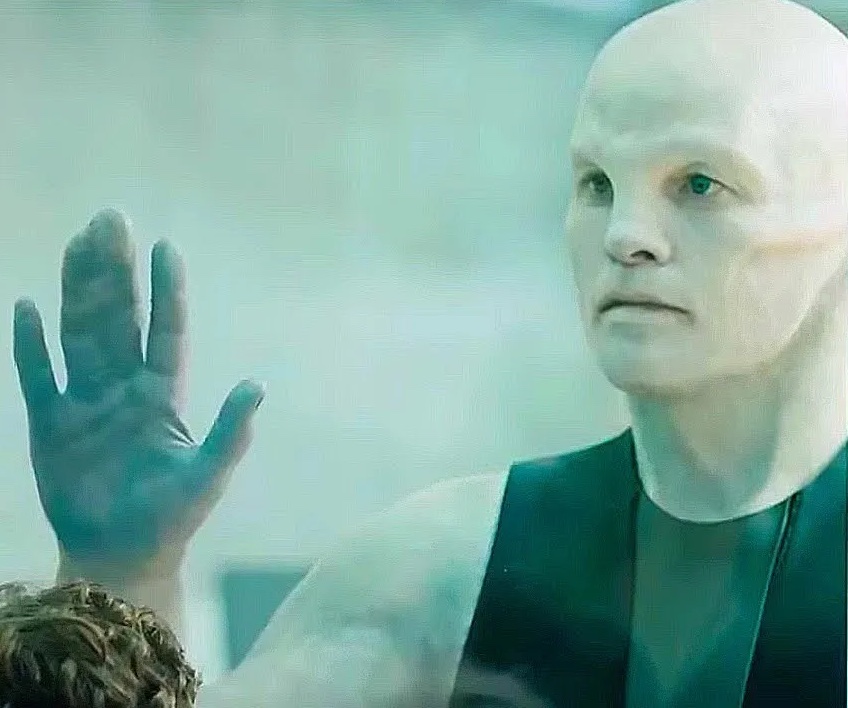
More recently, the theme recurred in an interesting feature film. The Titan (2018, dir. Ruff) describes the transformation of Rick Janssen, an air force pilot who is selected for an unethical programme of surgical and DNA treatments, into a creature suitable for life on the surface of Saturn’s moon Titan. As the subjects in the programme are killed or driven insane by the process, Rick undergoes substantial physical and mental changes, shedding his hair, developing a tough outer skin, developing webbing membranes and losing the ability to communicate since his ears and voice are now adapted for the much thicker atmosphere of Titan. By the time the unethical nature of the experiments are laid bare, Rick is so Titan-adapted that he is dying in Earth conditions. The scientific accuracy of the film, including the transformation of an adult rather than genetic engineering at the embryonic stage, is rather questionable, but it echoes many of the questions raised by the earlier stories regarding the ethics of the transformation, the limits of humanity, and the degree to which environment shapes perception.
As an aside, another interesting novel in this context is Frederik Pohl’s Man Plus (novel, 1976). Like Keep Out, this also follows an attempt to modify a human to survive on the surface of Mars through technology - replacing skin, heart, lungs and effectively other organ except the brain with cybernetic devices, and providing software to help the brain interpret feedback from those new organs. While the resulting cyborg is unable to reproduce and will never populate the planet, a key theme throughout the story is how his modified perceptions affect his sense of reality - and also about the extent to which that perception is susceptible to distortion, intentional or otherwise.
Free Fall
Adaptation to planetary surfaces with different temperatures, compositions and atmospheres presented challenges in fiction, but other authors considered an alternative - adapting people to humanity to life in the free-fall of deep space.
John Varley’s Eight Worlds saga featured a group known as symbs - adult humans bonded in symbiosis with a form of bioengineered life that could survive in deep space, acting as a solar energy collector, space suit, waste reprocessor and life support system. The relationship between humans and their symbiotes is complex, with the symb using the human nervous brain system to do its thinking, but allowing the human to soar freely, mostly amidst the ice rings of Saturn. Several of the short stories in the series, notably Equinoctial (short story, 1977; first published in anthology Ascents of Wonder, ed. Gerrold & Goldin) and Gotta Sing, Gotta Dance (short story, Galaxy, July 1976), have symb pairs as central characters and explore the relationship. However an interesting detail is that the human half of a symb pair typically undertakes surgical modification:
“Barnum was a human, physically unremarkable except for a surgical alteration of his knees that made them bend outward rather than forward, and the over-sized hands, called peds, that grew out of his ankles where his feet used to be.” (from Gotta Sing, Gotta Dance)
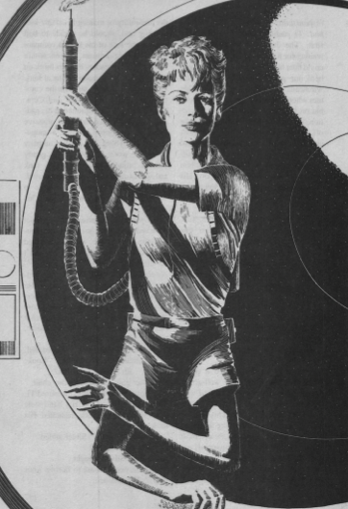
This idea - that an extra pair of arms and gripping hands would be fundamentally more useful for life in a free-fall environment than effectively-useless legs and feet - became a major feature of Lois McMaster Bujold’s novel Falling Free (novel, 1988; also serialised in Analog from Dec 1987). This describes an experiment by an interstellar engineering company, GalacTech, to create new workers who are more efficient in free-fall and do not have to return regularly to a planetary surface for ‘gravity leave’ in order to protect their health. These experimental workers, known as quaddies, have been bioengineered before birth to suppress problems with human internal systems which are expected to occur in the absence of planetary gravities. However their most obvious adaptation is the replacement of legs with a second pair of muscular arms and hands which they can use in parallel to the upper limbs - hence their nickname. The set-up is explained by a more-than-usually objectionable company executive:
“The extra arms are the wildest part - ”
"I’ve often wished I had four hands, in free fall,” Leo murmured, trying not to sound too dubious out loud.
“ - but most of the changes were this bunch of metabolic stuff. They never get motion sick - something about rewiring the vestibular system - and their muscles maintain tone with an exercise regime of barely fifteen minutes a day, max - nothing like the hours you and I would have to put in during a long stint in null-gee. Their bones dont deteriorate at all. They’re even more radiation-resistant than us. Bone marrow and gonads can take four and five times the rems we can absorb before GalacTech grounds us - although the medical types are pushing for them to do their reproducing early in life, while all those expensive genes are still pristine. After that, it’s all gravy for us: workers who never require downside leave; so healthy they’ll go on and on, cutting high-cost turnover; they’re even,” Van Atta snickered, “self-replicating.”
Like many of the examples above, the quaddies are designed to self-replicate, breeding true. However the invention of practical anti-gravity technology renders the first thousand individuals, secretly bred in a space habitat and ranging in age from five to twenty and including the first few natural-born infants, an expensive and dangerous liability from GalacTech’s perspective, and without any form of legal rights. Indeed, they are classified as “post-fetal experimental tissue cultures” and liable to the same disposal requirements as any other tissue cultures. As a result, engineer Leo Graf is forced to confront his moral unease over their treatment and help decide their ultimate fate.
“Leo smiled slowly, in grim numbness. “I’m not sure… what one human being can do. I’ve never pushed myself to the limit. I thought I had, but I realise now I hadn’t. My self tests were always carefully non-destructive.”
This test was a higher order of magnitude altogether. This Tester, perhaps, scorned the merely humanely possible. Leo tried to remember how long it had been since he’d prayed, or even believed. Never, he decided, like this. He’d never needed like this before…”
Interestingly, the stakes are heightened here not just by the quaddies’ lack of legal recognition or basic human rights, but also by social mores. The story occurs in the same universe as Bujold’s Vorkosigan saga, in which humanity has been ravaged by nuclear fallout and a fear of genetic mutation is deeply held and of immediate impact on every family. Explaining that the quaddies are bio-engineered, rather than mutants, does little to ease the prejudice against them. The later novel, Diplomatic Immunity (novel, 2002), in which Bujold sends her protagonist Miles Vorkosigan to visit the quaddies some centuries later, nonetheless demonstrates that they have been able to build a functional, vibrant and artistic civilisation in the free-fall of a solar system equipped with asteroid belts but no Earth-like planets. Of particular interest are the forms of music and free-fall ballet enabled by their additional hands.
Changing Everything
As human beings, we face fundamental limits. Our biology is built on a solvent of liquid water - a fact that limits us to large scale environments with mean temperatures between 0 and 100 C. We require oxygen to provide the power supply for organic reactions within our cells. We are easily poisoned by a vast range of compounds common elsewhere in the Solar System - ammonia, carbon dioxide and cyanide to name just a few. Our systems have evolved in a gravitational field that shapes everything from fluid build up to bone density and balance, and which will likely prove essential for successful gestation.
The key questions science fiction has asked are which aspects of these limits can we change? And which aspects should we change? Underlying these is another pair of questions - how much can a human or race be changed before they are no longer human? And should that matter?
On a purely practical basis, some aspects of pantropy are likely to be easier to achieve than others. Reconfiguring limbs in individuals, especially in the embryonic stage as in the case of quaddies, for example, would be relatively straightforward, as apparent from the range of limb differences which arise naturally in a human population or which have resulted from accidental pre-natal chemical exposure. While the majority of such limb differences are developmental, some are potentially heritable.
Modifications to sight and speech, caused by changing the wavelengths to which organs are sensitive, as seen for example in The Titan, is also plausible - the existence of mammals with a very wide range of sensitivity to both sound and light suggests that this would cause no fundamental incompatibility - although the resultant sensory organs might look very different either in shape or size. Changes to some of our other internal systems, such as modifying the enzymatic or hormonal balances of the circulatory system, might also be plausible, although well beyond current technologies. Whether this would be sufficient to solve the leaching of calcium from bones and the loss of muscle tone experienced by astronauts in low gravities is hard to say but perhaps plausible. Certainly as the role and characteristics of DNA have become better mapped, the idea of modifying it (although perhaps not through the radical techniques described as Blish’s pantropy, and certainly not creating life from inert matter from scratch) has started to sound less like science fiction.
By contrast, changing the basic biochemistry of our systems - as would be essential to survive unprotected in the very different temperatures, pressures or toxic atmospheres of locations such as Ganymede or Titan (or Jupiter, as represented in Call Me Joe) - is a very different proposition. Since DNA is a carbon-based compound which interacts with proteins in a water solvent, any organism capable of surviving at cryogenic temperatures or drinking liquid ammonia or liquid nitrogen would have to be constructed not from Earth-like cells, but rather from entirely constructed DNA- and cell-analogues using different elemental bases. None are currently known which are comparable in their flexibility and reactivity to carbon-oxygen-hydrogen-based chemistry. Even if we were certain that life on any other basis (e.g. silicon or nitrogen compounds) were even possible, constructing such life to order, let alone giving it a human-analogue brain, would be extraordinarily hard and not just beyond any currently imaginable technology but akin to magic from our current perspective.
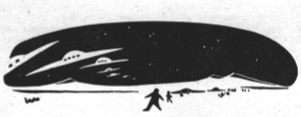
Regardless of the feasibility of the technology, an important matter for scientists, and the thought experiments that science fiction offers, is to consider the morality of embarking on such a programme. In A Time to Survive, Blish argues strongly that humanity’s future depends on spreading beyond Earth, and that adaptation is the only possible method to doing so, giving the entire effort the status of a moral imperative. Despite that, he presents a protagonist who wishes only to be made ‘normal’ - fit to live on Earth - at least until he meets others like him. Sweeney’s isolated childhood and the associated wish is subsequently modified by experience until he not only approves of the changes that were made to him before his birth, but becomes complicit in a plan to adapt a new generation of children to a still different environment. The later pantropy stories treat the moral uncertainties as resolved, presuming without question that adapted life was a gift and far to be preferred to no life at all.
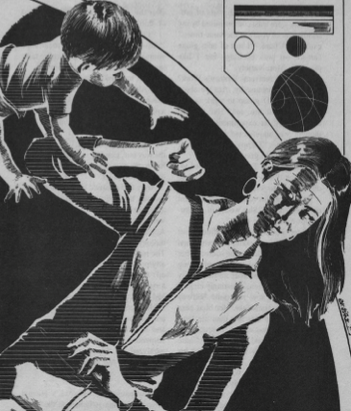
On the other hand, other narratives - notably Man Plus, Falling Free and The Titan - explicitly ask questions about the nature of informed consent, particularly as regards those adapted before their own birth, or born to previously-engineered parents, but also for those who cannot possibly understand the scope of the changes they have volunteered for or who have been tricked into accepting such treatments. As all these stories note, such adaptation is likely to be a one-way street, irreversible. A quaddie may be exceptionally well adapted to zero gravity, healthy, agile and graceful in their own environment, but becomes a helpless cripple in gravity fields, reliant on personal hover floaters. The microscopic humanity of Surface Tension may become masters of their shallow ponds, and develop a great civilisation, but will likely never reach the stars.
But even assuming that some moral imperative compels the creation of a new race, perhaps as the only surviving descendants of human root-stock, the question remains of where the boundaries of humanity lie. The idea that changes to emergent physical characteristics, such as replacing feet with hands or making cosmetic changes to skin and hair, would remove human rights is clearly abhorrent, and all too familiar from the prejudices shown against those with physical disabilities or different skin colours in the past and present. Indeed, many aspects of these narratives act as reflections on disability, race and its treatment by society. On the other hand, it is hard to imagine that any change which alters basic human biochemistry, perhaps even replacing DNA with other compounds, could be achieved without affecting the patterns and structure of human thought. In Blish’s vision of pantropy, achieving a fundamentally human thought pattern, regardless of physical size or organic structure, is presented as a basic assumption. In other examples, such as Call Me Joe, the bio-engineered brain of an artificial being is sufficiently close to human in structure to take the personality imprint of an Earth-born human. On the other hand, in examples such as The Titan (or indeed Man Plus), an initially-human brain whose sensory input is severely modified becomes sufficiently dissociated from the world around it that the original human personality is lost or subsumed by new compulsions.
At the heart of the dilemma is our failure to understand or articulate precisely what being human means - even here in un-engineered root humanity. While we can speak blithely about personality imprints and human minds, we are currently unable to translate the physical reality of measurable brain patterns and structures to the mystery of consciousness and personality. To imagine that it is possible to preserve or recreate such an imprint, without understanding what it is, let alone for it not to be affected by any physical substrate, stretches the bounds of possibility.
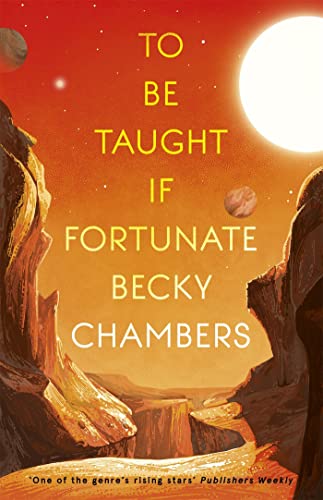
In recent years, narratives of human adaptation to alien environments have been increasingly absorbed into the broader category narratives of human modification for intelligence, longevity, beauty or integration with technology (either as cyborgs or as hosts for nano-machines) under a broader umbrella of post-humanism. This is largely because of the potential of nanotechnology to enact such modifications at the cellular or molecular level, and the gradual process being made in its development, as well as the possibilities opened up by the success of human genome mapping. In this context, aspects of adaptation are often presented simply as part of a much broader spectrum of elective (or occasionally imposed) and often reversible changes. In Becky Chambers’ 2019 novella To Be Taught If Fortunate, for example, astronauts routinely adopt fully-reversible alterations to the physical capabilities of their bodies (known as somaforming). This modification to adapt to the worlds they visit is presented as an unremarkable facet of the cryogenic freezing that exoplanetary explorers take for granted.
However, while today’s adults (or tomorrow’s, as in To be Taught, If Fortunate) might choose to experiment with cybernetic technologies and body modifications, deliberate modification through pre-natal bio-engineering of embryonic humans is banned by scientific and ethical authorities around the world. A key exception to this is in the case of genetic illnesses, which can be corrected in the first stages of cell division or in utero through gene therapy. This is not only a key theme of the use of external uterine replicator devices in Bujold’s Vorkosigan saga, but also a real-world technology which has enabled parents to raise children free of inherited conditions, or in an extreme case able to provide donations to an affected sibling. However the success of such therapeutic techniques has provided a strong indication that additional modification - whether cosmetic or more profound - might also be possible. And at the same time opened an ethical can of worms.
A child, and the adult they grow into, might be relieved to be spared from serious illness or an early death, but where would this stop? What about more minor defects, such as a tendency towards sub-average height or perhaps sub-average athletic or intellectual ability? And who decides what to consider a defect, if, say, a society decides that genetic indicators of an artistic talent were less important than numerical reasoning - or vice versa? Taken to a science fictional extreme, if a set of parents were to attempt to colonise a hostile environment, would their offspring welcome the increased freedom that came with being engineered for that, or lament the lost opportunities for return to their original homeworld and evolutionary environment [2]?
Even if the modification proves welcome, at what point might an adapted humanity’s priorities, mindset and experience of reality - as well as appearance - so diverge from that of Homo sapiens that it is no longer recognisable as human? We don’t have the answers to any of these questions. Perhaps fortunately, with today’s technologies and a global moratorium on genetic experimentation on humans, we can get by without them. For the more extreme cases described here, that will likely always be true. For others, the need for an open debate may be closer than we think. By opening our minds to some of these dilemmas, and providing a comfortably removed-from-reality setting in which to discuss them, science fiction undoubtedly has the potential to feed in to such debates.
“Changing Everything”, Elizabeth Stanway, Cosmic Stories, 28th June 2026
Notes:
[1] All life that is in any way analogous to our own must have a liquid solvent in which chemical reactions can be catalysed, stablised and otherwise promoted. For all known life, that is water, H2O, but another plausible solvent enabling similar chemistry is ammonia, H3N, which is only liquid at cryogenic temperatures. [Return to text]
[2] Similar questions about inherited decisions, of course, apply to other colonisation narratives, notably extreme examples such as generation ships. [Return to text]
The views and opinions expressed here are those of the author and do not necessarily reflect those of the University of Warwick. All images have been sourced online and are used here for commentary and comment.