Past CMP seminars
PREVIOUS SPEAKERS
Speaker: Professor Fabio DonatiLink opens in a new window (Center for Quantum Nanoscience (QNS), Institute for Basic Science (IBS) & Department of Physics, Ewha Womans University, Seoul)
Title: Electron Spin Resonance of Atomic and Molecular Spins on Surfaces
Date: 23rd June 2026, 13.00 - 14.00 (Week 38)
Room: MAS2.05/2.06
Atomic and molecular spins on surfaces offer a uniquely powerful platform to investigate magnetism and quantum behaviour at the ultimate length scale, where adsorption geometry, symmetry, and coupling to the environment can be engineered one building block at a time. This controllability makes surface spins an ideal testbed to explore coherent spin phenomena and identify practical strategies to preserve coherence while maintaining fast, local addressability and scalability.
In this talk, I will present how we drive and coherently control molecular and atomic spins on surfaces using electron spin resonance (ESR). First, I will introduce our surface-sensitive ensemble ESR spectrometer, which offers low-temperature X-band operation under ultra-high-vacuum conditions on single-crystal surfaces, with sensitivity reaching below a single molecular layer [1]. We employ this setup to explore how the spins of metal–organic complexes are altered when interfaced with solid-state surfaces. Using ESR and surface characterisation, we identify decoupling strategies to preserve the YPc₂ radical spin from quenching in close proximity to a metallic substrate, highlighting the central role of interfacial hybridisation in spin protection [2]. In contrast, for the molecular spin-qubit candidate FluTi(CoT) [3], where the spin is localised on the metal centre, we observe a robust spin response even in contact with metal surfaces. Moreover, the anisotropy of its g-tensor provides a direct spectroscopic fingerprint to distinguish molecular orientations within a single layer.
In the second part, I will move to the single-spin regime and discuss all-electrical ESR scanning tunnelling microscopy (ESR-STM) of individual Er atoms on MgO/Ag(100) [4], where the lanthanide ground state can be engineered to couple efficiently to microwaves [5]. We demonstrate coherent manipulation with sub-GHz Rabi frequencies, an unusually fast regime for a 4f spin system, establishing that atoms on surfaces can enable highly efficient coherent drive beyond traditional approaches. By exploiting atomic-precision assembly and symmetry control at the adsorption complex, this platform provides a clean route to study and optimise the microscopic mechanisms that set driving efficiency and coherence in surface-based atomic qubits.
References
[1] F. H. Cho et al., Rev. Sci. Instrum. 95, 063904 (2024). [2] S. Oh et al., Nanoscale 17, 22163 (2025). [3] S. Wisbeck et al., Chem. Sci. 15, 14390 (2024). [4] S. Reale et al., Nat. Commun. 15, 5289 (2024). [5] S. Reale et al., Phys. Rev. B 107, 045427 (2023).
Speaker: Dr Amr AbdelsamieLink opens in a new window (School of Physics and Astronomy, University of Leeds)
Title: Deterministic Control of Antiferromagnetic Textures in a Multiferroic Oxide: From Strain-Engineering to Voltage Switching
Date: 20th July 2026, 13.00 - 14.00 (Week 42)
Room: MAS2.05/2.06
With Moore’s law approaching its physical limit, beyond-CMOS concepts are needed to address the rising power demands of Internet of Things (IoT) and artificial intelligence (AI) systems [1]. Among these concepts, magnetoelectric spin-orbit (MESO) logic offers a promising route by harnessing electric-field control of magnetism via multiferroics [2]. The room-temperature multiferroic BiFeO3 is central to this approach as a magnetoelectric medium due to the coupling between its antiferromagnetic spin cycloid and ferroelectric polarization. However, the coexistence of multiple ferroelectric variants in bulk crystals [3] and thin films [4,5] leads to complex switching pathways. Achieving deterministic, energy-efficient operation therefore requires stabilization of ferroelectric-domain-wall-free, single-variant BiFeO3 that enables reproducible magnetoelectric control.
In this talk, I will present two parts. First, I will show how we simplified the multiferroic landscape of epitaxial BiFeO3 thin films by engineering them into single-domain variants through anisotropic-strain strategies. These single-domain systems allowed us to identify the fundamental limit of the magnetoelectric interaction and enabled narrow-band THz emission from this configuration [6,7]. The second part revolves around the deterministic electric-field control of ferroelectric polarization in substrate-vicinality-driven single ferroelectric variants (P) as well as single spin-cycloid propagation directions (k). In these heterostructures, we achieved nonvolatile, and deterministic toggle switching between two distinct antiferromagnetic states [8]. This heterostructure provides a promising platform for magnetoelectric-based devices, advancing the development of MESO technology toward practical applications.
References:
[1] G. E. Moore: Electronics 38, 8 (1965); [2] S. Manipatruni, et. al., Nat. Phys., 14, 338 (2018); [3] JT. Heron, et. al., Nat., 516, 370 (2014); [4] A. Haykal, et. al., Nat. Commun. 11, 1704 (2020); [5] P. Dufour*, A. Abdelsamie*, et. al., Nano Lett. 23, 9073 (2023).; [6] A. Abdelsamie, et. al., Appl. Phys. Lett. 24, 242902 (2024); [7] S. Massabeau, A. Abdelsamie, et. al., submitted (2025); [8] A. Abdelsamie, et. al., under review (2026).

Speaker: Dr Hangjuan RenLink opens in a new window (School of Chemistry, Monash University)
Title: Making Operando Electrochemical Characterisation Truly Representative of Working Conditions
Date: 26th August 2026, 11.00 - 12.00 (Week 47)
Room: MAS2.05/2.06
Operando electrochemical characterisation aims to reveal catalytic mechanisms under working conditions in reactions such as electrochemical CO2 reduction and water splitting. However, many operando measurements are still performed under conditions that differ substantially from those used for catalytic performance evaluation. First, operando measurements are often conducted at relatively low current densities, whereas product selectivity is evaluated at much higher, practically relevant current densities. Second, operando measurements are commonly performed in H-cells or modified flow cells, while catalytic selectivity is often assessed in fundamentally different reaction environments, such as practical flow-cell or membrane-electrode-assembly systems. As a result, the interface probed during operando measurements may not be the same interface that governs catalytic performance under realistic operating conditions. This presentation discusses strategies to make operando electrochemical characterisation more truly operando by bridging the gap between mechanistic measurements and practical reaction environments. I will highlight our first demonstration of operando proton-transfer-reaction time-of-flight mass spectrometry (PTR-TOF-MS) for electrochemical CO2 reduction and its subsequent development for quantitative, time-resolved detection of complex intermediates and products under operating conditions. I will then present recent advances in operando Raman spectroscopy under practically relevant electrochemical conditions, enabling direct observation of catalyst surface restructuring and evolution of the local interfacial chemical environment. Finally, I will discuss data analysis strategies developed for these measurements to more clearly resolve mechanistic evolution and improve the reliability of structure–performance interpretation under real operating conditions.

Speaker: Prof. Junning Li Link opens in a new window (School of Integrated Circuits, Hunan University, Changsha)
Title: Development of Lead-Free Barium Strontium Titanate-Based Multilayer Capacitors and Devices for Electrocaloric Cooling
Date: 17th September 2026, 11.00 - 12.00 (Week 50)
Room: MAS2.05/2.06
Electrocaloric cooling is an emerging solid-state refrigeration technology that offers low energy consumption, high efficiency, and operation without greenhouse-gas refrigerants. It relies on ferroelectric materials, in which an applied electric field induces a reversible phase transition, resulting in heat absorption and release. In recent years, multilayer ceramic capacitors, or MLCCs, have attracted significant attention as a promising platform for electrocaloric cooling because they can generate high electric fields within a compact geometry. However, high-performance EC devices still mainly rely on lead scandium tantalate, which contains toxic lead as well as relatively expensive elements such as scandium and tantalum. At the same time, commercial lead-free barium titanate-based MLCCs are not optimized for electrocaloric cooling, particularly in terms of their thermal mass, heat transfer, and electrocaloric performance. I will first present recent advances in electrocaloric cooling, including various materials and laboratory-scale prototypes. Then, I will show our recent progress in developing lead-free, manganese-doped barium strontium titanate MLCCs with a protective-layer-free architecture, using an industrially scalable fabrication process. The resulting device achieves both a higher regeneration factor and a higher specific cooling power compared with state-of-the-art lead scandium tantalate-based prototypes. These results demonstrate the potential of scalable, lead-free MLCC technology for high-performance electrocaloric cooling. Finally, I will discuss possible approaches to further enhance the cooling performance of electrocaloric systems and improve their compatibility with practical applications.
Speaker: Professor Xavier MoyaLink opens in a new window (Department of Materials Science & Metallurgy, University of Cambridge)
Title: Postponed until further notice
Date:
20th January 2026, 13.00 - 14.00
(Week 16)
Room: MAS2.05/2.06

Speaker: Professor Robert HadfieldLink opens in a new window ( James Watt School of Engineering, University of Glasgow)
Title: Superconducting photon detectors: status and future prospects
Date: 3rd February 2026, 13.00 - 14.00 (Week 18)
Room: MAS2.05/2.06
Superconducting detectors represent the gold standard for high efficiency, low noise infrared single photon detection. In the 21st century these devices underpin a host of scientific and technological applications. In this seminar I will survey current types of superconducting photon detectors and give case studies of emerging applications, including the search for dark matter, quantum communications and single photon LiDAR.

Speaker: Professor Angela DemetriadouLink opens in a new window (School of Physics and Astronomy, University of Birmingham)
Title: Light-matter strong coupling in extreme nanophotonic cavities
Date: 17th February 2026, 13.00 - 14.00 (Week 20)
Room: MAS2.05/2.06
Photonic cavities can be high-finesse, confining photons for very long times, but due to the diffraction limit usually have large mode volumes. On other hand, nanoplasmonic cavities achieve extremely sub-wavelength mode volumes that allowed us to bring strong-coupling at room temperature, but are very lossy (both radiative and material losses). In this talk I will present our work on two very different nanophotonic cavities(i) a nanoplasmonic cavity formed by tightly-coupling two nanometallic structures and (ii) a high-finesse photonic crystal cavity that also achieves sub-wavelength mode volumes.
Plasmonic nanocavities have the ability to significantly confine and enhance light, while at the same time efficiently radiate energy to the far-field. Due to these properties, unprecedented light-matter interactions have been realised at room temperature, such as light-matter strong-coupling. In this talk, I will first explain how the strong-coupling regime is achieved in these systems, and explain the complexities on building a quantization scheme for such systems. I will show that multiple quantum emitters placed within plasmonic nanocavities can produce sub-radiant entangled states that are long-lived.

Fig. 1:(a) The nanoparticle-on-mirror configuration with Methylene Blue within the plasmonic nanocavity and (b) the photonic crystal waveguide cavity.
However, Rabi oscillations do not survive for long periods of time in plasmonic nanocavities, due to their high losses. A high-finesse cavity on the other hand, retains photons within the cavity for long times. I will present photonic crystal waveguide designs that are both high-finesse (Q=107) and achieve sub-wavelength mode volumes (V~0.6 λ3). Our new designs operate at 780nm to couple with cold atoms, and easily reach deep within the strong coupling regime to form an ideal environment to realise quantum entanglement. Through the entropy dynamics of two emitters we demonstrate local multi-partite entanglement, which is very robust to atomic displacements. Such photonic cavity designs are easily scaled-up to construct large quantum networks with both local and global entanglement.
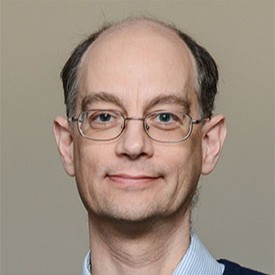
Speaker: Professor Manus HayneLink opens in a new window (Department of Physics, Lancaster University)
Title: Cavity-enhanced emission from type-II GaSb quantum rings for telecoms wavelengths applications
Date: 3rd March 2026, 13.00 - 14.00 (Week 22)
Room: MAS2.05/2.06
GaSb self-assembled quantum dots (QDs) and quantum rings (QRs) in GaAs are an unusual and interesting system with physics that is very different from type-I QDs because just one carrier, the hole, is confined [1], with the electron only bound by the Coulomb interaction, somewhat like a rather disordered atom. For example, we have previously reported redshifts and blueshifts of the emission with increasing excitation [2], Mott transitions [3] and competition between Coulomb binding and screening of ‘outer shell’ electrons [4]. GaSb QRs have very broad emission (>100 nm) with spontaneous emission times >1 ms [5], and are so strongly Type-II that quantum Monte-Carlo calculations of binding energies for exciton complexes have even approximated their electron-hole wavefunction overlap to zero [6]. They are thus a far from obvious candidate as the basis for light-emitting devices. However, their unusual physics justifies investigating this unconventional choice. Room-temperature emission is naturally at telecoms wavelengths, the 610 meV hole localisation energy [7] is advantageous for high-temperature operation and the broad emission is primarily a result of capacitive charging of the rings [8], not inhomogeneity, such that any QR is capable of emitting over a wide range of wavelengths. In this talk I will review the varied physics of GaSb QRs and motivate the thesis that their long spontaneous emission times can be taken advantage of in the development of novel cavity-enhanced devices such as vertical-cavity surface-emitting lasers (VCSELs) [9] and single-photon light-emitting diodes (SPLEDs) [10], even leading to the incorporation of a spinout, Photarix.
[1]Hayne et al., Appl. Phys. Lett. 82, 4355 (2003).
[2]Hayne et al., Phys. Rev. B 70, 081302(R) (2004).
[3]Bansal et al. Phys. Rev. B 77, 241304(R) (2008).
[4]Ahmad Kamarudin et al., Phys. Rev. B 83, 115311 (2011).
[5]Hodgson et al., J. Appl. Phys. 119, 044305 (2016).
[6]Thomas et al., Phys. Rev. B 99, 115306 (2019).
[7]Nowozin et al., Phys. Rev. B 86, 035305 (2012).
[8]Hodgson et al., J. Appl. Phys. 114, 073519 (2013).
[9]Jones et al., Proc. SPIE 12904, Vertical-Cavity Surface-Emitting Lasers XXVIII, (2024).
[10]Acar et al., Proc. SPIE 12906, Light-Emitting Devices, Materials, and Applications XXVIII (2024).
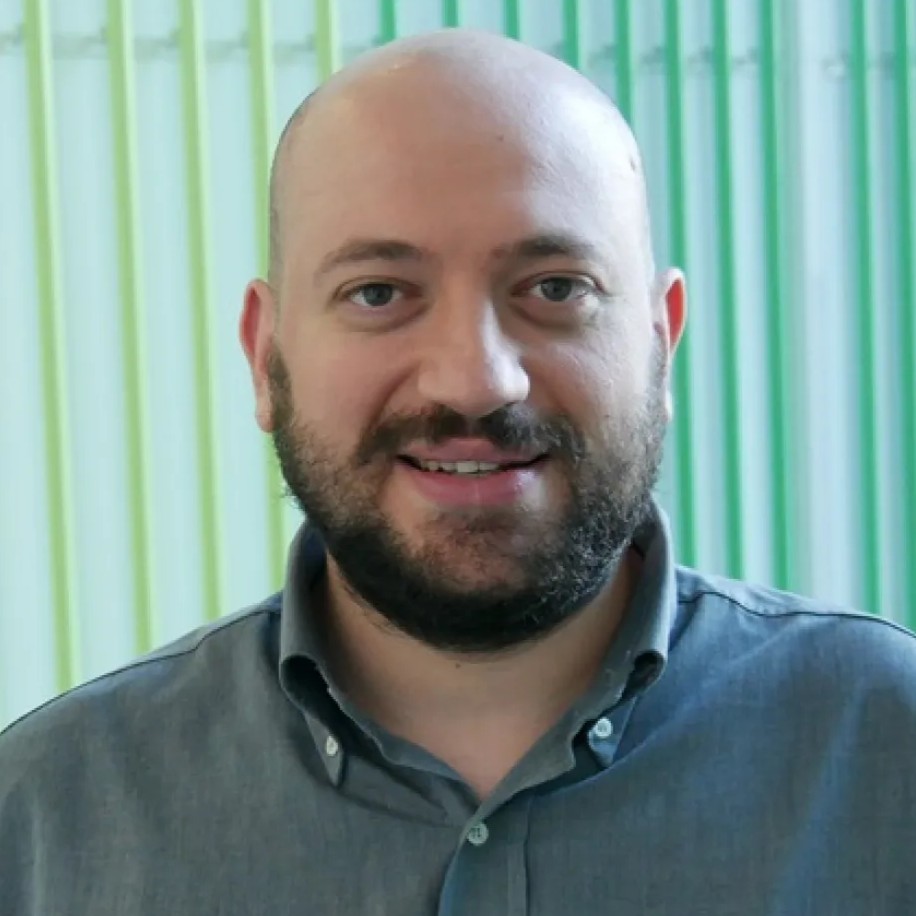
Speaker: Dr Fabio Novelli Link opens in a new window(School of Physics and Astronomy, University of Southampton)
Title: Terahertz and Water
Date: 17th March 2026, 13.00 - 14.00 (Week 24)
Room: MAS2.05/2.06
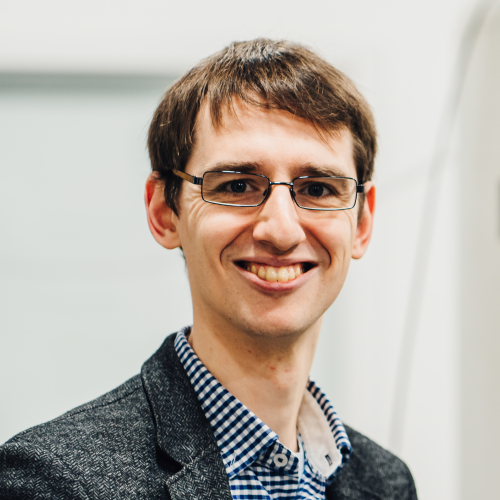
Speaker: Dr Michael Hope (Department of Chemistry, University of Warwick)
Title: Dynamic Nuclear Polarisation Using Gd(III): From NMR Enhancement to the Raser Effect
Date: 14th October 2025, 13.00 - 14.00 (Week 2)
Room: MAS2.05/2.06
Dynamic nuclear polarisation (DNP) is the transfer of the greater thermal spin polarisation of electrons to nuclear spins. This can dramatically increase the sensitivity of NMR experiments. DNP experiments today typically use stable organic radicals as the unpaired electron source, but spin-only Gd(III) ions can also give narrow EPR lines in symmetrical environments. I will show how the 17O DNP of Gd-doped CeO2 depends on the EPR properties, isotopic enrichment, and magic-angle spinning. When the nuclear hyperpolarisation is large enough, the system generates a spontaneous NMR signal, acting as a radiofrequency maser or “raser”. Finally, I will show an example of extending endogenous Gd DNP to 1H nuclei and the related challenges.
Refs: 10.1021/acs.jpclett.0c03457, 10.1021/acs.jpcc.1c04479, 10.1016/j.jmr.2023.107509

Speaker: Dr Matthew WatsonLink opens in a new window (Diamond Light Source)
Title: Micro-ARPES insights into charge density waves in natural heterostructures
Date: 28th October 2025, 13.00 - 14.00 (Week 4)
Room: MAS2.05/2.06
The Ta dichalcogenides are well known as prototypical charge density waves materials. Their chemistry allows for many different crystal structures, known as “polytypes”, all with the nominal composition Ta(S,Se)2 and tunable by subtle changes in the growth protocols. Here I will focus on the 4Hb polytype, which interleaves “T” and “H” -type layers, either of which can be the termination of the crystal in an ARPES measurement. With precise control of the spatial position, we resolve the different electronic structures on both types of termination. While resolving the electronic reconstructions on both, we find that the band filling at the surface differs from the bulk. The results constrain theoretical models for the currently active discussion of unusual superconducting signatures in 4Hb-TaS2.
Date, …, Watson. arXiv:2508.16411v1 (2025)
Watson, …, Da Como. Communications Materials 6, 24 (2025)

Speaker: Professor Julie StauntonLink opens in a new window (Department of Physics, University of Warwick)
Title: Putting a spin on models of electrons in magnets
Date: 11th November 2025, 13.00 - 14.00 (Week 6)
Room: MAS2.05/2.06
On the sub nanoscale, a material’s magnetic properties come from spin correlations of its septillions of interacting electrons.In many cases, this collective electron behaviour can be characterised in terms of atomic-scale, relatively long-lived magnetic moments. The moments determine the overall magnetisation and its resilience and response to magnetic fields, as well as affecting temperature dependent spin-polarised electronic structure. At high temperatures, the moments disorder so that there is no overall magnetisation in the paramagnetic state. As the temperature is lowered, they order into patterns describing magnetic phases whose structures and topologies depend on the nature of the local moment interactions. At T=0K, where magnetic order is complete, Density Functional Theory (DFT) calculations describe magnetic properties well and can be predictive. This talk will describe how the disordered local moment (DLM) theory [1,2] extends DFT to finite temperatures for magnetic materials and, together with experimental investigations, enables quantitative modelling of properties. It also produces input for further modelling and experimental analysis. Some aspects of earlier discussion on the electronic structure of ferromagnetic metals above their Curie temperatures will be given. The talk will then go on to discussa range of applications: magnetic order of the heavy rare earths [3], skyrmion lattices in Gd intermetallics [4], caloric effects in La(Fe1-x Six)13 [5] and the hard magnetic properties of the ubiquitous permanent magnet Nd2Fe14B [6].
[1] B L Gyorffy et al. J. Phys. F: Met. Phys. 15 1337 (1985); [2] J B Staunton et al., Phys. Rev. Lett. 93, 257204 (2004); [3] I D Hughes et al. Nature, 446, 650, (2007); [4] J Bouaziz et al. Phys. Rev. Lett. 128, 157206 (2022); [5] E Mendive Tapia et al., J. of Phys.: Energy 5, 034004 (2023); [6] J. Bouaziz et al. Phys. Rev. B 10, L020401 (2023).
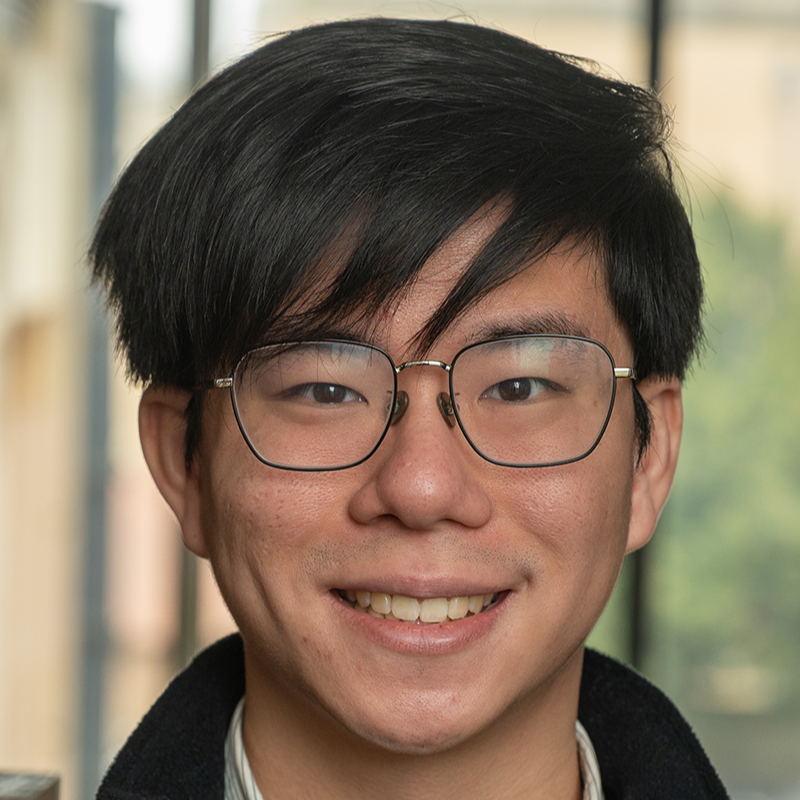
Speaker: Dr Junn KeatLink opens in a new window (Department of Physics, University of Oxford)
Title: Investigating Diamond Defects Using Ultrafast Two-Dimensional Infrared Spectroscopy
Date: 25th November 2025, 13.00 - 14.00 (Week 8)
Room: MAS2.05/2.06
Diamond defects have demonstrated immense promise in applications such as quantum computing, biomedical probing, and diamond treatment identification. Many of these functional defects, such as the nitrogen vacancy centre, demonstrate a spectral signature in the visible region of the electromagnetic spectrum1. However, many defects also exhibit vibrational resonances in the mid-infrared, although their energy structure and relaxation dynamics remain largely unexplored. Understanding both the energy structure of these defects and their interaction with the host crystalline environment is critical for finding new defect candidates for future diamond-enabled applications.
Ultrafast two-dimensional infrared (2DIR) spectroscopy is a powerful technique that examines the interplay between vibrating bonds in a molecular system, uniquely revealing its energy resonances, ultrafast mode-coupling, and interactions with the local environment2,3. For materials with coexisting vibrational systems, such as in diamonds which host multiple defects, 2DIR can enable assignment of vibrational resonances to each vibrational system. The energy relaxation lifetime and pathways of these systems can also be examined using this technique, with temporal resolution down to femtosecond timescales.
In this talk, I will discuss our latest results on using 2DIR to investigate the H1a absorption band and the Ns:H-C defect in diamond. The H1a has a unique structure with two orthogonal C-N-C bonds thought to be energetically independent of each other4. By resolving the excitation spectrum of this defect via 2DIR, we have unravelled vibrational coupling that would otherwise be obscured in transient absorption measurements. Meanwhile, the Ns:H-C defect serves as a diamond analogue of the bond-centred hydrogen defect commonly found in semiconductors5. By combining 2DIR and ab-initio calculations, we demonstrate the formation of a transient hot ground state caused by the generation of localised phonons during the relaxation of the defect’s vibrational stretch mode. This highlights the role of non-equilibrium phonons in the optical manipulation of defects in diamond, despite the superior thermal conductivity of diamond.
1. M. N. R. Ashfold, J. P. Goss, B. L. Green, P. W. May, M. E. Newton, and C. V. Peaker, Chem. Rev. 120, 5745 (2020).
2. P. Hamm and M. Zanni, Concepts and Methods of 2D Infrared Spectroscopy (Cambridge University Press, 2011).
3. S. H. Shim and M. T. Zanni, Phys. Chem. Chem. Phys. 11, 748 (2009).
4. S. Liggins, M. E. Newton, J. P. Goss, P. R. Briddon, and D. Fisher, Phys. Rev. B 81, 085214 (2010).
5. S. Liggins, Identification of point defects in treated single crystal diamond, Ph.D. thesis, University of Warwick (2010).
Speaker: Dr Jafar KhanLink opens in a new window (School of Digital and Physical Sciences, University of Hull)
Title: Photophysics of organic and perovskite based solar cells tracked by ultrafast spectroscopy
Date: 9th December 2025, 13.00 - 14.00 (Week 10)
Room: MAS2.05/2.06
Ultrafast transient spectroscopy is a vital tool to investigate the photophysical processes taking place in energy harvesting materials. In particular, the findings provide valuable insights into the efficiency limiting processes in solar cells. The focus of this talk will be on solution-processed metal-halide perovskite solar cells as they have received immense attention in the field of photovoltaic research due to their outstanding power conversion efficiency, which has surpassed 26% in a relatively short time. Understanding carrier losses at metal halide perovskite/charge transport layer interfaces is a pre-requisite to bring the efficiency closer to the Shockley-Queisser limit. Interfacial recombination can to some extent be accessed through time resolved techniques, however identifying this is often a challenge due to the complexity associated to the interpretation and modelling of the extracted charge carrier transients.
Our approach is to utilize complementary transient spectroscopic techniques, namely transient absorption spectroscopy and transient photoluminescence spectroscopy, not only to unravel the processes limiting the solar cell’s short circuit density and the open circuit voltage but also to evaluate different charge recombination channels and extraction. Herein, we focus on spectroscopic studies on the photoactive layer and the respective stacks containing the hole transport layers. Several different hole transport materials (PTAA, NiOx,,and 4PACz) are adjacent to the photoactive layer. We report on challenges faced during performing complementary spectroscopic techniques and interpretation of the extracted transients. Specifically, differentiation between photophysical processes such as charge extraction and interfacial charge recombination.
In addition, charge generation in non-fullerene acceptor (NFA) based organic solar cells (OSCs) have gained prodigious attention, and with this the critical role of the energetics at the donor/acceptor interface. Ionization energy (IE), upon optical excitation, drives the Foerster energy transfer from donor to acceptor and subsequently hole transfer (from acceptor to donor), prerequisite that the low bandgap component is the emitter in the organic photoactive blend. In this regime, the correlation between the cells’ internal quantum efficiency (IQE) and the photoluminescence quenching efficiency (PLQE) with the donor/acceptor offset is critical for this charge generation channel.
Speaker: Prof. Anindya DasLink opens in a new window (Department of Physics, Indian Institute of Science)
Title: Exploring Quantum Matter Through Transport Phenomena
Date: 28th May 2025, 1:00 - 2:00 PM
Room: PS0.17
Transport phenomena serve as a powerful tool for probing the quantum nature of solids, from single-particle behavior to many-body physics. In this talk, I will discuss how various transport measurements—such as electrical, thermal, and thermoelectric—are employed in our group to investigate diverse forms of quantum matter. Specifically, I will highlight our studies on anyonic quantum matter and twisted quantum systems based on two-dimensional materials.
The main research focus of the Quantum Transport Group @ IISc, Bangalore is on "Transport phenomena in emerging quantum nano-devices." The group utilizes advanced transport probes such as electrical conductance, thermal conductance, noise and thermopower to investigate new collective phases and quantum phenomena. Their studies are centered on van der Waals heterostructures of graphene, twisted bilayer graphene and other two-dimensional materials.
Speaker: Prof. Withawat WithayachumnankulLink opens in a new window (School of Electrical and Mechanical Engineering, University of Adelaide)
Title: Terahertz Technology: from Devices and Systems towards Sensing and Communications
Date: 25th September 2025, 1:00 - 2:00 PM
Room: MAS2.05/2.06
Recent advancement in terahertz technology has spurred an ongoing paradigm shift in the field from physics to engineering. Consequently, the field inches closer towards practical applications in sensing and communications. Soon, we can envisage deployment of terahertz systems for in-situ non-destructive evaluation, stand-off security screening, and 6G+ communications with terabit-per-second data rates. Here in this talk, I will provide an overview of latest research activities in my group, spanning broadly from devices and systems towards sensing and communications. We will delve into metasurfaces that break the limitations of natural materials in this frequency range. We will explore unorthodox antennas and our own proprietary integrated platform, specifically designed for terahertz waves. We will understand how terahertz waves can offer new sensing capabilities in security, defence, food, and agriculture. Our recent breakthroughs in communications over 300 GHz carriers will be discussed. Owing to the unique location of terahertz waves on the electromagnetic spectrum, techniques and tools from both the microwave and photonic domains have been adapted and enhanced by novel materials, fabrication, and design approaches. A forward-looking dimension will accompany all these research activities.
Spring Term 2025

|
Speaker: Dr Richard HillLink opens in a new window (School of Physics & Astronomy, University of Nottingham) |

|
Speaker: Professor Natalia AresLink opens in a new window (Department of Materials, University of Oxford) |
| Speaker: Dr Dmitry KhalyavinLink opens in a new window (ISIS Neutron and Muon Source, RAL) |
|
|
Speaker: Dr Emma McCabeLink opens in a new window (Department of Physics, University of Durham) |

|
Speaker: Dr David Duncan (Diamond Light SourceLink opens in a new window and Department of Chemistry, University of NottinghamLink opens in a new window) |
|
Speaker: Dr Max BirchLink opens in a new window (Strong Correlation Quantum Transport Research Team RIKEN Center for Emergent Matter Science) |
Autumn Term 2024

|
Speaker: Professor Daniel WolversonLink opens in a new window (Department of Physics, University of Bath) |
| Speaker: Dr Susan CoxLink opens in a new window (Randall Centre for Cell and Molecular Biophysics, King College London) |
|
| Speaker: Dr Rhea StewartLink opens in a new window (ISIS Neutron and Muon Source, RAL) |
|
|
|
Speaker: Dr Richard HillLink opens in a new window (School of Physics & Astronomy, University of Nottingham) |

|
Speaker: Dr Chris Woodgate (Department of Physics, University of Bristol) |
Easter Vacation 2024

|
Speaker: Dr Pavel MartonLink opens in a new window (Institute of Physics of the Czech Academy of Sciences) |

|
Speaker: Professor Laura H. LewisLink opens in a new window (Northeastern University, Boston, USA.)
Title: Rare earths in technology: Working with them, working around them ( click here for abstractLink opens in a new window)
Date: Wednesday 17th April 13.00 - 14.00 ( Week 29)
Room: A0.28 Millburn House
|
Spring Term 2024

|
Speaker: Professor Chiara CiccarelliLink opens in a new window (Department of Physics, University of Cambridge) |

|
Speaker: Dr Ray McQuaidLink opens in a new window (School of Mathematics Physics, Queen's Belfast) |

|
Speaker: Dr Philip DolanLink opens in a new window (Nu Quantum) |

|
Speaker: Professor Nigel CooperLink opens in a new window (Department of Physics, University of Cambridge) |

|
Speaker: Dr Matthew PearceLink opens in a new window - Department of Physics, University of Oxford |
Autumn Term 2023
|
Speaker: Dr Stefano AgrestiniLink opens in a new window (Diamond Light Source) |
|
Speaker: Professor Radu ColdeaLink opens in a new window (Department of Physics, University of Oxford) |

|
Speaker: Dr Adam WrightLink opens in a new window (Department of Physics, University of Warwick) |
|
Speaker: Dr Igor MarkovicLink opens in a new window (Department of Physics, University of Birmingham) |

|
Speaker: Dr Chris Hooley - MPI-PKS Dresden - Joint CMP and Theory Group seminar |
|
Speaker: Professor Paul KoenraadLink opens in a new window - Department of Applied Physics - Eindhoven University of Technology - CMP Seminar by Distinguished Visiting Professor |
|
Speaker: Dr Hannah SternLink opens in a new window (Department of Physics, University of Cambridge) |
|
Speaker: Prof. Kam Sing WongLink opens in a new window(Department of Physics, Hong-Kong University of Science and Technology) - CMP Seminar by Distinguished Visiting Professor |
ACADEMIC YEAR 2022/2023
Spring Term 2023
|
Speaker: Dr Marios HadjimichaelLink opens in a new window (Department of Quantum Matter Physics, University of Geneva) |

|
Speaker: Dr Pablo DocampoLink opens in a new window (School of Chemistry, University of Glasgow) |
|
Speaker: Dr Hungyen LinLink opens in a new window (School of Engineering, University of Lancaster) |

|
Speaker: Dr Rob WeatherupLink opens in a new window (Department of Materials, University of Oxford) |

|
Speaker: Prof. Susie SpellerLink opens in a new window (Department of Materials, University of Oxford) |
Autumn Term 2022

|
Speaker: Dr Alex RobertsonLink opens in a new window (Department of Physics, University of Warwick) |

|
Speaker: Prof. Edward LairdLink opens in a new window (Department of Physics, University of Lancaster) |
|
Speaker: Prof. Amalia ColdeaLink opens in a new window (Department of Physics, University of Oxford) Date: 8th November 13.00 - 14.00 (Week 6) |

|
Speaker: Dr Sam HoltLink opens in a new window (Department of Physics, University of Southampton) |

|
Speaker: Dr Ian FarrerLink opens in a new window (Department of Electronic and Electrical Engineering, University of Sheffield) Date: 6th December 13.00 - 14.00 (Week 10) |
Easter Vacation and Summer Term 2022

|
Speaker: Prof. John SingletonLink opens in a new window (NHMFL, Los Alamos National Laboratory) |

|
Speaker: Dr Wing Ying ChowLink opens in a new window (Department of Physics, University of Warwick) |

|
Speaker: Dr Mingmin Yang Link opens in a new window(Department of Physics, University of Warwick) |
Spring Term 2022
|
Speaker: Dr Sam HileLink opens in a new window (Department of Physics, University of Sussex) |

|
Speaker: Dr Jakes Ayres (Department of Physics, University of Bristol) |
|
Speaker: Dr Niels SchroterLink opens in a new window (Max Planck Institute of Microstructure Physics - Halle) Date: 15th February 13.00 - 14.00 (Week 20) |

|
Speaker: Dr John GriffinLink opens in a new window (Department of Chemistry, University of Lancaster) |

|
Speaker: Dr Dominik KubickiLink opens in a new window (Physics Department, University of Warwick) Date: 15th March 13.00 - 14.00 (Week 24) |
Autumn Term 2021

|
Speaker: Dr Clifford HicksLink opens in a new window (Department of Physics, University of Birmingham) |

|
Speaker: Dr Peng Wang Link opens in a new window(Dept of Physics, University of Warwick) Title: Electron Ptychography: An Emerging Imaging Technology for Physical and Biological Sciences - video is available clicking here Date: Wednesday 3rd November Refreshments 14.45 - Talk 15.00-16.00 (Week 5) Room: PLT (for first 30 to register) and Teams CMP Seminar |

|
Speaker: Dr James GottLink opens in a new window (Department of Physics, University of Warwick) |

|
Speaker: Dr Claire DonnellyLink opens in a new window (Max Planck Institute for Chemical Physics of Solids) Date: 23rd November 13.00 - 14.00 (Week 8) |

|
Speaker: Dr Audrey GrockowiakLink opens in a new window (Centro Nacional de Pesquisa em Energia e Materiais - Brazil) |

|
Speaker: Dr Rebecca ScatenaLink opens in a new window (Diamond Light Source) Date: 7th December 13.00 - 14.00 (Week 10) |
Summer Term 2021




Spring Term 2021


Autumn Term 2020




Summer Term 2019/20

|
Speaker: Dr David WalkerLink opens in a new window (Warwick University) |

|
Speaker: Dr Marc WalkerLink opens in a new window (Warwick University) Title: The locked-down scientist's guide to the photoemission facility Date: Tuesday 26th May, 13:30-14:00 Room: Teams CMP SeminarLink opens in a new window |

|
Speaker: Dr Arturo Hernandez-SerranoLink opens in a new window (Warwick University) |

|
Speaker: Dr Jonathan PetersLink opens in a new window (Warwick University) |

|
Speaker: Dr Matthew CoakLink opens in a new window (Warwick University) |
Spring Term 2019/20

|
Speaker: Professor Caterina DucatiLink opens in a new window (Cambridge University) |

|
Speaker: Professor Bruce D. GaulinLink opens in a new window (McMaster University) |

|
Speaker: Dr Mauro Brotons-GisbertLink opens in a new window (Heriot Watt University) |

|
Speaker: Dr Daniel O'FlynnLink opens in a new window (British Museum) |


|
Speakers: Dr Andrew Feeney and Dr Kathrin GoetzeLink opens in a new window (Warwick University) |
AutumnTerm 2019/20

|
Speaker: Dr Sian DuttonLink opens in a new window (Cambridge University) |
|
Speaker: Professor Amalia PataneLink opens in a new window (Nottingham University) |
|
Speaker: Dr Budhika MendisLink opens in a new window (Durham University) |
|
Speaker: Dr Timur KimLink opens in a new window (Diamond Light Source ) |
Summer Term 2018/2019

|
Speaker: Dr Dhiren KaraLink opens in a new window (Cambridge University) |

|
Speaker: Professor Laura LewisLink opens in a new window (North Eastern University) |
|
Speaker: Dr Ilie RaduLink opens in a new window (Max Born Institute Berlin) |

|
Speaker: Dr Gareth ParkinsonLink opens in a new window (Institute of Applied Physics, TU Wien, Vienna ) |

|
Speaker: Dr Jessica Marshall (Warwick University) |

|
Speaker: Professor Lukas EngLink opens in a new window (TU Dresden) |

|
Speaker: Dr Joe PaddisonLink opens in a new window (Cambridge University and ORNL) |
Spring Term 2018/2019
|
Speaker: Dr Laura FumagalliLink opens in a new window (Manchester University) Title: Probing dielectric constant on the nanoscale: from thin films to DNA and two-dimensionally confined water Date: Tuesday 26th February at 13:00 Room: MAS2.06 |

|
Speaker: Professor Simon BendingLink opens in a new window (University of Bath) Title: Vortices in Unconventional Superconductors Date: Tuesday 12th February at 13:00 Room: MAS2.06 |

|
Speaker: Dr Jessica BolandLink opens in a new window (Manchester University) Title: Terahertz lights up the nanoscale: Paving the way for nanotechnology via terahertz spectroscopy Date: Tuesday 29th January at 13:00 Room: MAS2.06 |


|
Speaker: Dr Emma MacPherson and Dr Rebecca Milot Link opens in a new window (Warwick University) Title: Terahertz research at Warwick from in vivo skin imaging to perovskite characterisation Date: Tuesday 15th January at 13:00 Room: MAS2.06 |