
Child stars and curated scripts
A Case Study of Clara St Casse
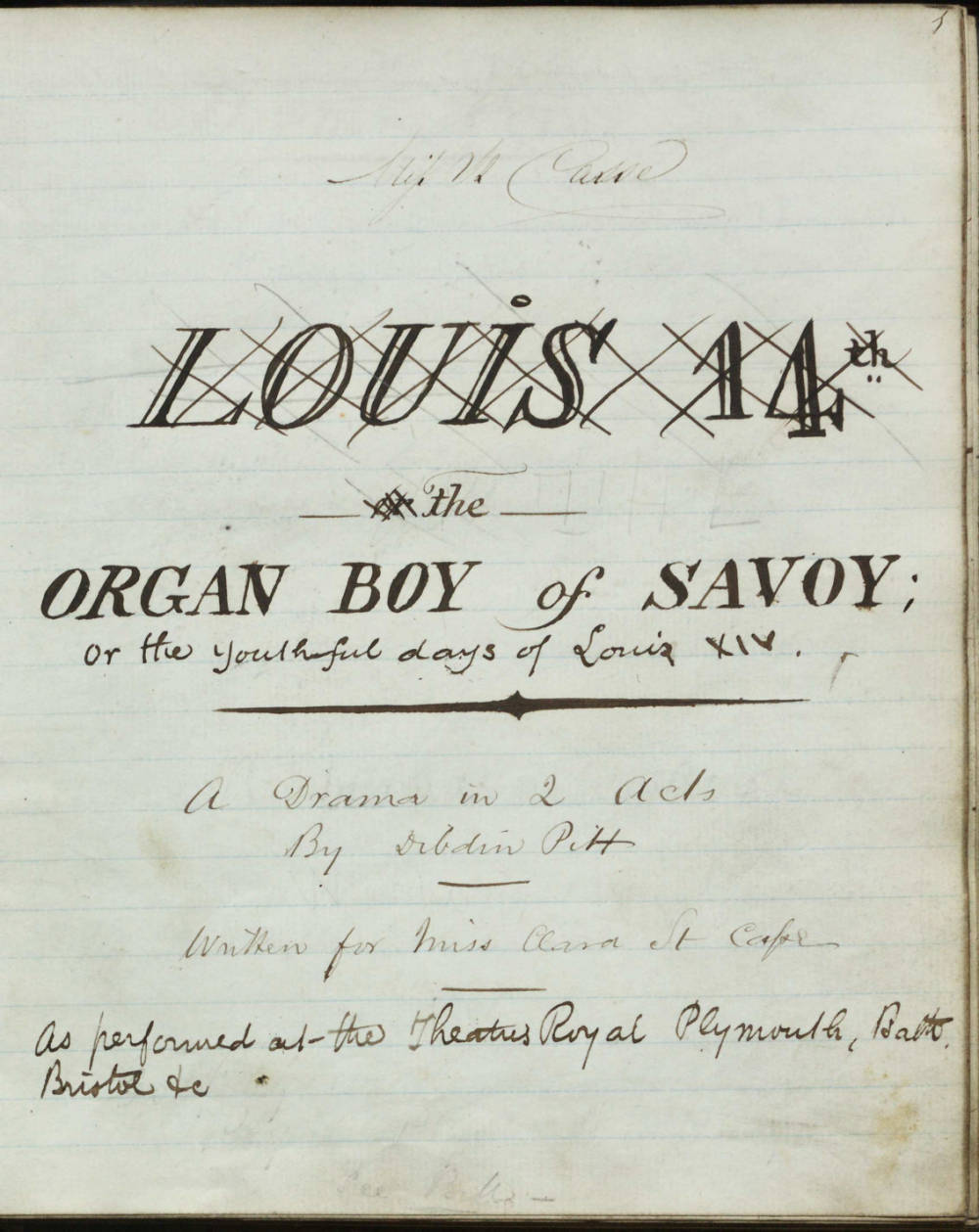
Front page of Louis IV or the organ boy of Savoy, G F Hall Collection
Child acting has a long tradition in the history of the theatre in England. In the Elizabethan and Jacobean periods, it was a practical workaround to the fact that women weren’t allowed to act on the stage. Apart from the inherent problematic elements within such a substitution, it does go partway to explaining why so many female characters in plays such as Shakespeare’s seem so one-dimensional, at least on the surface (think of Desdemona in Othello or Ophelia in Hamlet). Characters that by necessity were restrained by the capabilities of those that acted them, typically boys – except for the comedies, where the women were often disguised as men, leading to a practical excuse for adult male actors to take centre stage.
In the Victorian age, child actors themselves took centre stage, leading to an obsession with precocious children being idolised in the theatre. However, seldom does one have the chance to get to see how these child actors might have worked during their time on the stage – or indeed, what sort of people they might have been.
The G. F. Hall collection of prompt books and part books for plays, donated to the Library by Mrs G. F. Hall of Leamington Spa together with a collection of printed plays, are held at the Library and Archives and available at the Modern Records Centre and also via Warwick Digital CollectionsLink opens in a new window. The plays had belonged to Mrs Hall's father, originally given to him by a Professor Harrower, a lecturer at Glasgow University, under whom he had studied. Professor Harrower had obtained them from Graham Moffat (1866-1951), a Scottish actor and playwright. Apart from some of the later plays, which may have been added from different sources, it is assumed that the majority formed a 'stock in trade' or 'theatre library' of an actress, Miss Clara St Casse (1839-1922, née Henrietta Clara Cass), who has signed and annotated many of them. These copies were apparently acquired over the years from a variety of sources, including from other actors, as several other names appear in them.
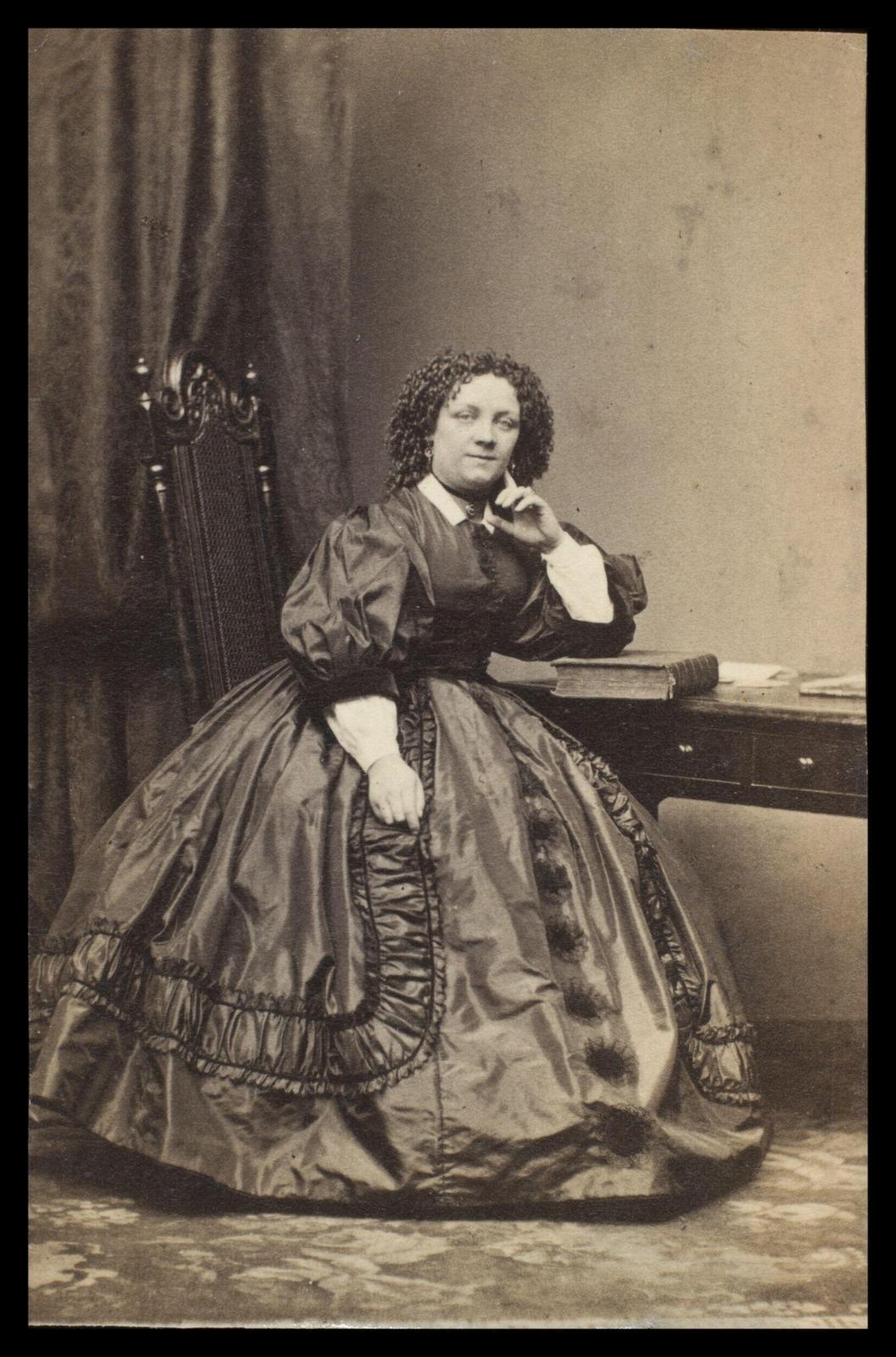
Photograph of Clara St Casse © Victoria and Albert Museum, London
I couldn’t find a great deal written about Clara St Casse except for a few newspaper clippings, and a small entry on a book titled Their Exits: Encore, by Henry Vivian-Neal and Alexander Bisset. St Casse is described as showing ‘an aptitude for singing from an early age and studied in Bath with George Frederick Perry’. When she hit the stage in November 1852, they had knocked two years off her actual age; the crowds loved her for her ‘wonderful vocal range’. In 1853, she starred in a new production of Uncle Tom’s Cabin as Eva, now apparently ten years old. From then on, she continually enjoyed success in touring the provincial areas of Britain. Later, once she was no longer a child, she successfully relaunched in opera, and then later in burlesque, working particularly well with actors and dancers such as Lydia Thompson and Sarah Lane. Far more than just a precocious child, St Casse was a precocious adult too, and enjoyed a successful career that spanned 17 years, which included having a child in-between.
Now, child acting on the stage, despite being very popular, was by no means considered unproblematic. Charles Dickens’s book Nicholas Nickleby did feature Miss Ninette Crummles, a harsh reality for children in the theatre. Certainly, there was significant with regards to “child prodigies” in theatre. Marah Gubar summarises it neatly in her book The Nineteenth-Century Child and Consumer Culture. She speaks of proponents of the trade such as “Mrs. Jeune” who separated performing children into two classes; those who ‘merely “walk on the stage and make one of a crowd” and another, more privileged, group of actors who [...] make a good living by acting, singing and dancing’. On the other hand, Gubar also recognises the fact that overworking did occur, and that there was indeed mistreatment in the theatre. Jeune’s description helps to illustrate that the issue was by far not as simple as Dickens might have put it. On a deeper level, it does underline the subtle importance of wealth and “privilege” that helped to differentiate the outcomes and overall success of the child prodigy.
Turning back to St Casse and our G. F. Hall Collection, it is obvious which of the two categories she fell under. Even if we didn’t have Vivian-Neal and Bisset’s research on the matter, there are several plays in the collection signed by her, including a manuscript written especially for her by a ‘Dibdin Pitt’ – who was likely George Dibdin Pitt, a prominent stage manager and playwright. The manuscript, being written especially for St Casse, does well to illustrate her precocity, and which roles she tended to play.
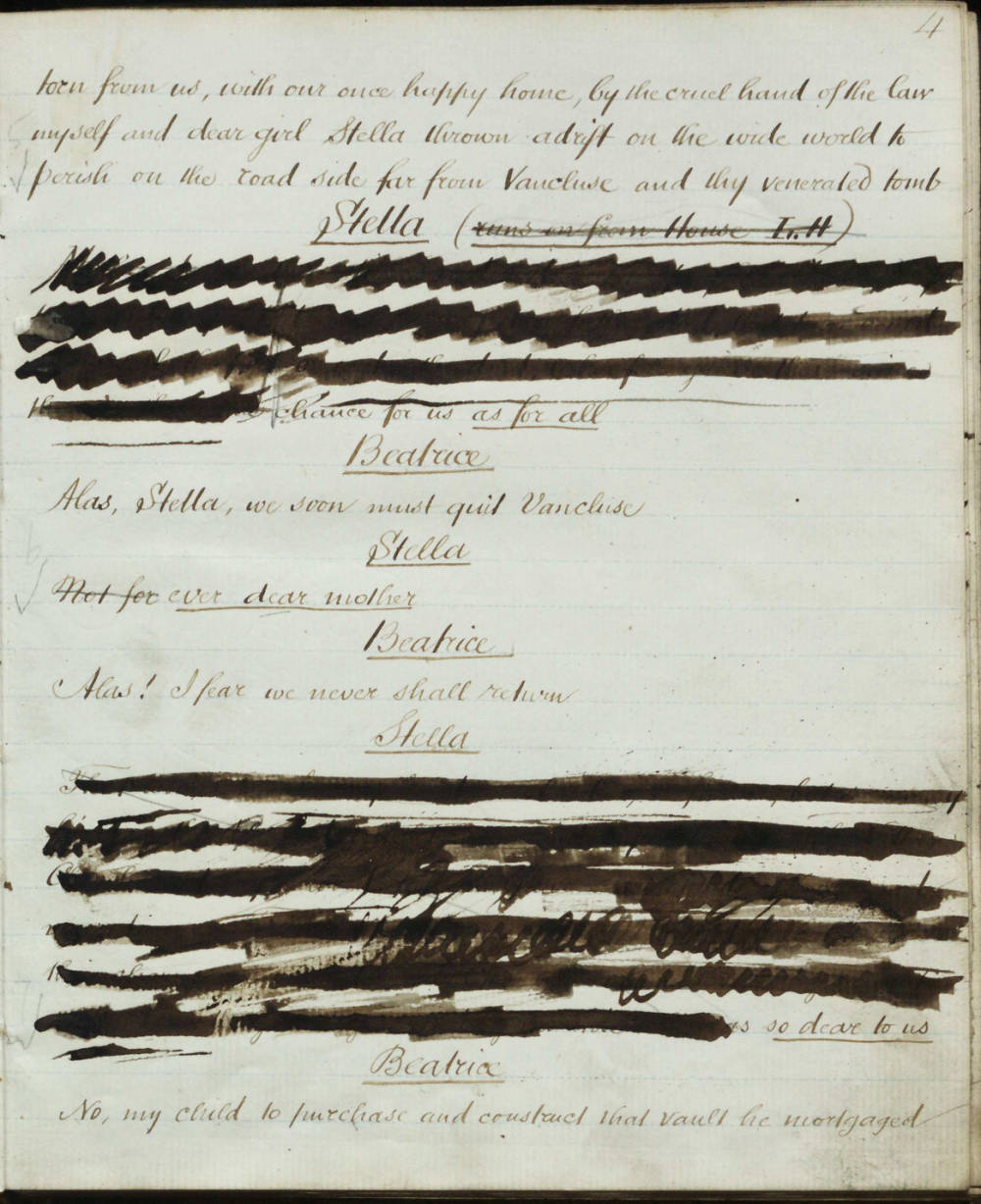
From Louis IV or the organ boy of Savoy, G F Hall Collection
In Louis XIV: Or, The Organ Boy of SavoyLink opens in a new window, an otherwise anonymous play, St Casse is likely to have played the role of Stella. The character of Stella serves as an interesting microcosm of St Casse’s early career. If it was the George Dibdin Pitt who wrote the play, we might be able to trust in his ability to time the length of his plays. With that in mind, the heavy editing of Stella’s lines might have been done by the actor herself, to cut time and make way for a song played by St Casse on a hurdy-gurdy at the end of the scene – to showcase, early on, her musical talents. The casting list contains another interesting detail: Stella, the daughter of Beatrice, takes the disguise of Jean, a Savoyard boy. This could have been done to accentuate the perceived androgyny of St Casse as a young girl, but it also could be seen to illustrate her acting range.
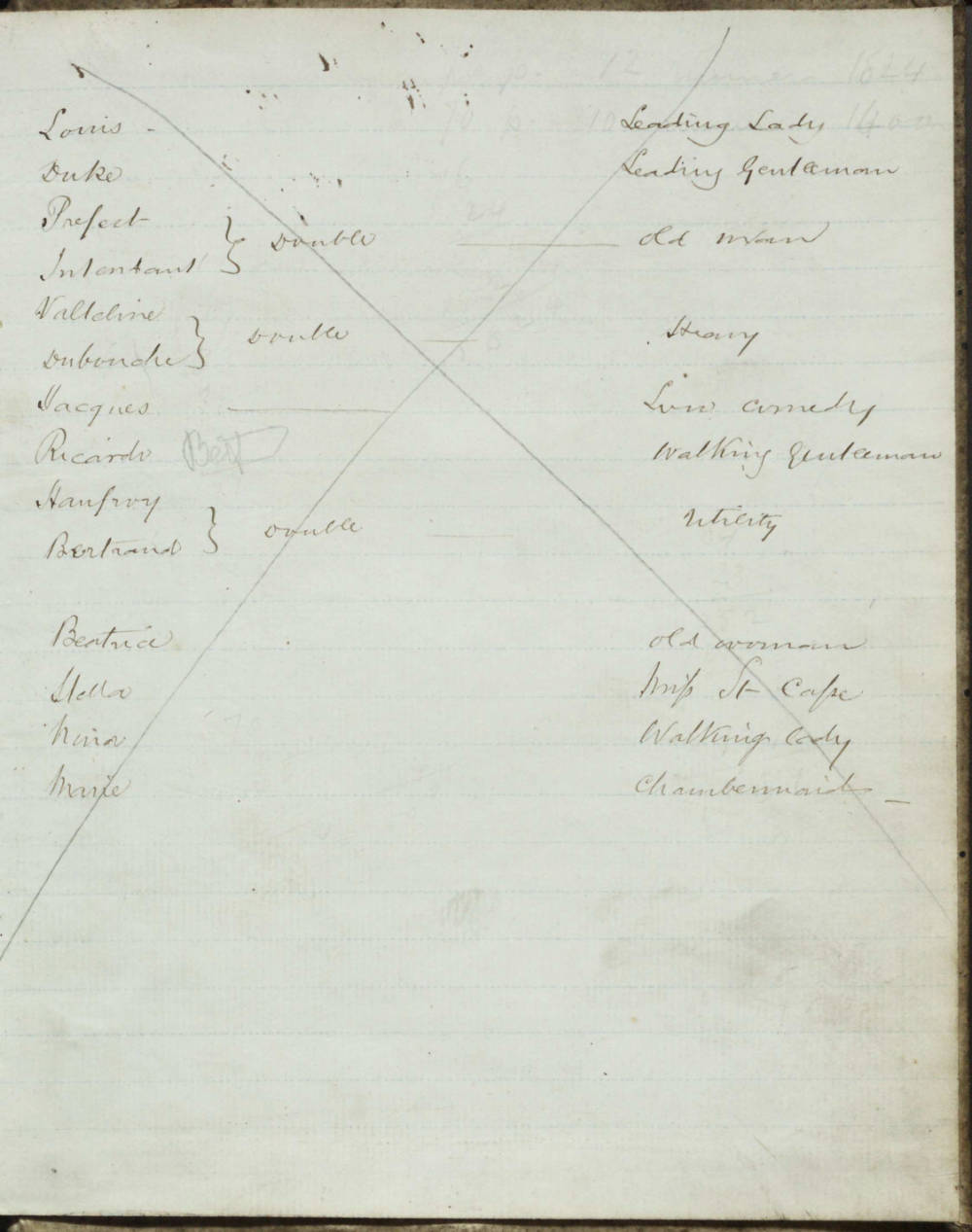
Cast list from Louis IV or the organ boy of Savoy. G F Hall Collection
Other books in the collection lend credence to both possibilities: she plays Ariel in her annotated version of The TempestLink opens in a new window ,and in a separate play called Double DealingLink opens in a new window, her character Angelina dresses up as volunteer soldier to try and scare her suitor out of a marriage with her, whilst the suitor dresses up as his aunt Sally to ‘find out how the land lies’ (p. 5). Central to both of these roles is much the same elements as The Organ Boy cross-dressing, singing, and somewhere in the middle, an element of farce.
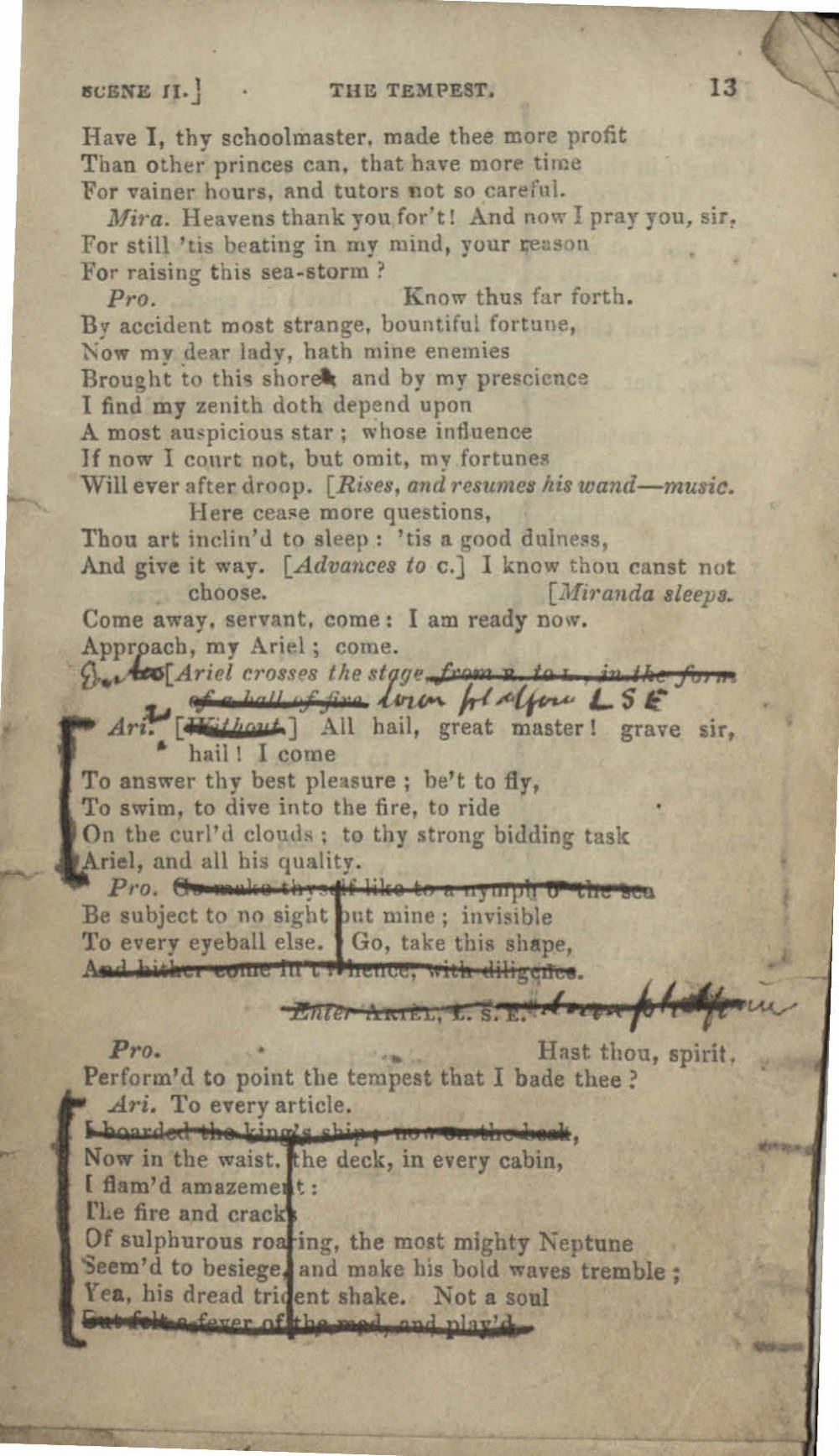
Page from The Tempest, G F Hall Collection
Taken together, these disparate sources help paint an interesting picture of Clara St Casse and her personality. Her early years see her consistently take roles that blur boundaries. Clara St Casse’s early career is in keeping with the idea that child prodigies were alluring because of their theatrical experience, both in playing girls and boys but also in singing and playing musical instruments. And far from there being ‘artless innocence’, the repertoire of annotated materials that Clara St Casse possessed suggests a competence typically reserved for the adults. As Marah Gubar concludes, such precociousness results in ‘blurring the line between innocence and experience’.
Angus Harker, Senior Digitisation Assistant
Further Reading:
Gubar, Marah, ‘The Drama of Precocity: Child Performers on the Victorian Stage’, in The Nineteenth-Century Child and Consumer Culture, 1st edition (Routledge, 2008), pp. 63-78.
McLuskie, Kathleen, ‘The Act, the Role, and the Actor: Boy Actresses on the Elizabethan Stage’, New Theatre Quarterly, 3.10 (1987), pp. 120-130, https://doi.org/10.1017/S0266464X00008617
Pitt, George Dibdin, The Organ Boy of Savoy; or the youthful days of Louis XIV ([1855?]). University of Warwick, Modern Records Centre, MSS.18/92/8i.
Shakespeare, William, The Tempest (London: G. Vickers, Holywell Street, Strand, [18--]). University of Warwick, Modern Records Centre, PN 2591.S4.
Suter, William, Double dealing; or, The rifle volunteer : a duologue in one act / by W. E. Suter, author of Sarah's young man...&c (London: Thomas Hailes Lacy, 1850). University of Warwick, Modern Records Centre, PN 2594.S8.
Varty, Anne, ‘Theatre and Cruelty’, in Children and Theatre in Victorian Britain (Springer Nature, 2008), pp. 220-233, https://doi.org/10.1057/9780230286061
Vivan-Neal, Henry, and Alexander Bisset, Their Exits: Encore (The Friends of Kensal Green Cemetery, 2020), pp. 296-297.