
Broadcasting the General Strike
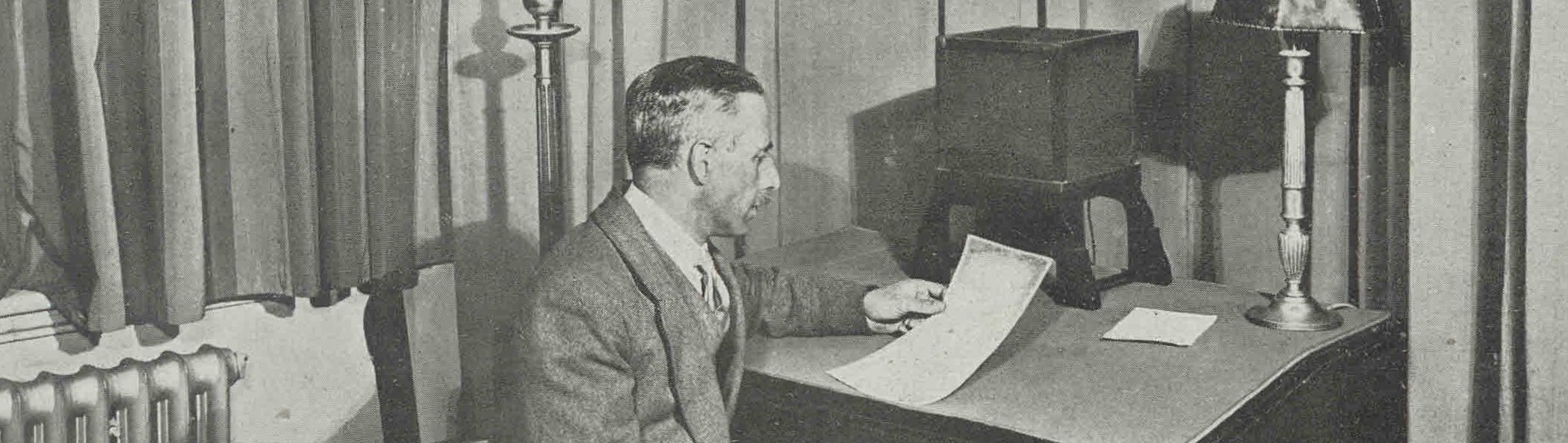
Our General Strike soundscape uses extracts from strike bulletins, radio transcripts and newspapers to tell a day by day story of the nine days in May.
In the chaos of a national emergency, whose voice will you believe?
The General Strike was the largest industrial dispute in Britain’s history and caused real fears (and hopes) of a revolution.
For the 19th and most of the 20th century coal was king. It was the fuel used to generate electricity and provide heating, it fuelled mass transport through steam powered trains and ships, and was a key part of industrial production. The industrial revolution, good and bad, was built on coal.
During the turbulent economic aftermath of the First World War, battle-lines were drawn between the miners who dug out the coal and the mine owners who managed the industry. On the 30th of April 1926 a nine-month government subsidy ended and coal owners locked out their employees, telling them that they could only work again if they accepted new conditions – a pay cut and longer hours. The miners went on strike rather than accept.
The following day, May the 1st, a conference of trade unions approved the Trades Union Congress’s proposal for a national general strike across crucial industries, including transport and printing, in support of the miners. Late on the 2nd of May, printers at the Daily Mail refused to print a critical article in the newspaper, the government claimed that this was a constitutional challenge and ended last ditch negotiations with the trade unions. The General Strike had started.
One of the key battles was over media and communications. Newspaper print workers were on strike, so makeshift emergency bulletins were produced and the BBC news broadcasts on the radio were a crucial source of information. Both the government and the Trades Union Congress produced their own competing newspapers – the British Gazette and the British Worker.
Modern Records Centre staff have used extracts from these competing sources to tell a story of the General Strike, combined with sounds from the BBC Sound Effects Archive and recordings from the Internet Archive.
Archive voices: James King, Rachel MacGregor, Martin Sanders, Liz Wood, Angus Harker, Lizzie Morrison, Eren Delaney, Jamie Orton.
Sound engineer: Lorenzo Prati.
BBC radio broadcast, 10amLink opens in a new window
The B.B.C. are co-operating with Reuter's to create a central news agency for the community. We have no opinions of our own and will only give objective news. If we are unable to give the news, panic will be created, rumours will be disseminated, and the position would be made more serious. We will do our best to maintain the tradition of fairness, and ask for fair play for ourselves.
All the French papers devoted the greatest space to the strike. The Echo de Paris says that the strike is a threat to the very existence of Great Britain. The Communist paper Humanité calls for the full support of the Proletariat to be given to the British workers.
The Women's Auxiliary Service announce that they are enrolling an Emergency Corps of women to do welfare work among women and children. Apply to 7, Rochester Row.
A very special and urgent appeal is made to compositors, monotype operators, linotype operators, machine minders and stereotypers. Men should present themselves at the local recruiting offices. The Government is prepared to give protection and to see that their future is not prejudiced.
The Daily Herald, newspaper of the Trades Union CongressLink opens in a new window
A struggle is upon us.
Nothing can prevent it but a last-minute change of attitude by the Government.
Up to the last the Trade Union Movement has consistently striven for an honourable peace.
The Government, equally consistent, has persistently itched for war, and Labour has been repeatedly rebuffed.
If war it be, so be it. The whole movement is ready.
If, however, wiser counsels prevail at Downing-street, Labour is still ready with its sound and reasonable way to peace.
The General Council of the Trades Union Congress last night issued the following final message: The trade unions are fighting in defence of the mine workers. The responsibility for the national crisis lies with the Government. With the people the trade unions have no quarrel. On the contrary, the unions are fighting to maintain the standard life of the great mass of the people. The trade unions have not entered upon this struggle without counting the cost. They are assured that the trade unionists of the country, realising the justice of the cause they are called upon to support, will stand loyally by their elected leaders until the victory and an honourable peace has been won. The need now is for Loyalty, Steadfastness and Unity.
Congratulations to the workers of Great Britain!
Nothing finer has ever been seen than the completeness of their response to the call of the General Council. The stoppage is complete. The wanton brutality of the Government and the coal owners in their combined endeavour to force a reduction of wages upon the already underpaid miners, has met the solid resistance of the whole class. And the gallantry of the printing workers in silencing the lying capitalist press with their last minute lies, made a splendid prelude to the greatest display of solidarity in British History. All it needs now, is for every man to stand fast, and the fight is won.
There is of course a danger - and already the Government’s policy makes it clear. They build upon the hope that the T.U.C. will be bamboozled into trying to induce (in the interests of "peace"!) the miners into retreating behind their minimum demands. This the miners cannot and should not do. And no T.U.C. leader can surely even think of such a thing. The Government forced the war - let the Government make the "peace" concessions.
HOLD FAST TO THE END.
EVERY MAN BEHIND THE MINERS!
NOT A PENNY OFF THE DAY! NOT A MINUTE ON THE DAY!
AN INJURY TO ONE IS AN INJURY TO ALL!
Spen and District Trades and Labour Council Strike Bulletin no.1Link opens in a new window
Workers of Durham & Northumberland.
The General Strike is ALREADY a SUCCESS.
Don’t believe the lies put out by the Capitalist press. The newspapers are trying to dope and deceive you into the belief that the General Strike will fail, and that the Government forces are bound to get the better of the workers. Nothing could be further from the truth.
From centre after centre of industry comes the news of the magnificent response to the call sent out by the General Council of the Trades Union Congress.
On Saturday a million miners were wantonly locked out, and the Government — which is supposed to represent the whole of the nation — put all its forces at the service of a small minority of profiteers and exploiters.
The organised trade unionists of Great Britain cannot suffer the miners to be beaten and starved into submission.
What happens to the miners will happen to you next. Your own wages, your livelihood, the welfare of your wife and children, are at stake.
That is why there is a General Strike. That is why you are called out.
That is why, fighting in such a cause, you are bound to win.
Be of good courage, and victory is ours.
BBC radio broadcast, 7pmLink opens in a new window
The first day of the Great Strike. Reports from every part of the country to-day reveal that the General Strike which began at midnight has caused an almost complete industrial paralysis. According to information which had reached the Government the country generally is very quiet. Food supplies are normal and the milk supply does not seem to have suffered since this morning.
There is no indication of any resumption of negotiations at present between the Government and the T.U.C. Industrial Committee.
Strike Items.
London - Thousands of workers walked to and from the city to-day, others went by bicycle and car. Underground stations closed, no trams. Work in the East and West London Docks at a complete standstill. The work of organisation of transport in Hyde Park is busily proceeding.
Manchester - Almost all trains stopped. No trams running.
Glasgow - Clyde shipyards carried on.
South Wales - Stoppage of all vital services is general.
Teesside - 30,000 iron and steel workers are idle.
Southampton - Partial tram and bus service. Channel Service - Two each day between Dover and Calais.
Hull - Tramway men struck. The Corporation have given men till Thursday to return to work, failing which they must return their uniforms.
Portsmouth - Tramway men struck. Given till Wednesday evening to return.
The League of Nations Union disarmament meeting for to-morrow night is cancelled. Instead a meeting of a religious nature is to be addressed by the Archbishop of Canterbury, Bishop of London, and Rev. Berry to appeal to the public to keep alive the spirit of peace.