'The Power of the Cinema': Film in the 1920s and 1930s
The rise of "talkies" from the late 1920s onwards led to a radical shake-up of the entertainment industry. Live entertainment went into decline and variety theatres became movie palaces, where eager punters could see exactly the same entertainment as their fellows in Los Angeles, Berlin or Bombay. The belief that films could influence behaviour was seen by some as an opportunity to get their message across to a mass audience, others feared that the next generation of children would be warped by the immorality of gangster flicks and movie violence. In Britain, the dominance of Hollywood at the box office led to concerns about a loss of national identity and the "Americanisation" of British culture.
The documents identified here reflect these concerns and show the growing influence of film as both a method of communication and form of entertainment. They are all taken from the archive of the Trades Union Congress, a collection which includes over 100 files on aspects of the film industry.
More information about archives relating to the history of film and the cinema is included in our online subject guide. Try searching our online catalogue to find more documents relating to these subjects.
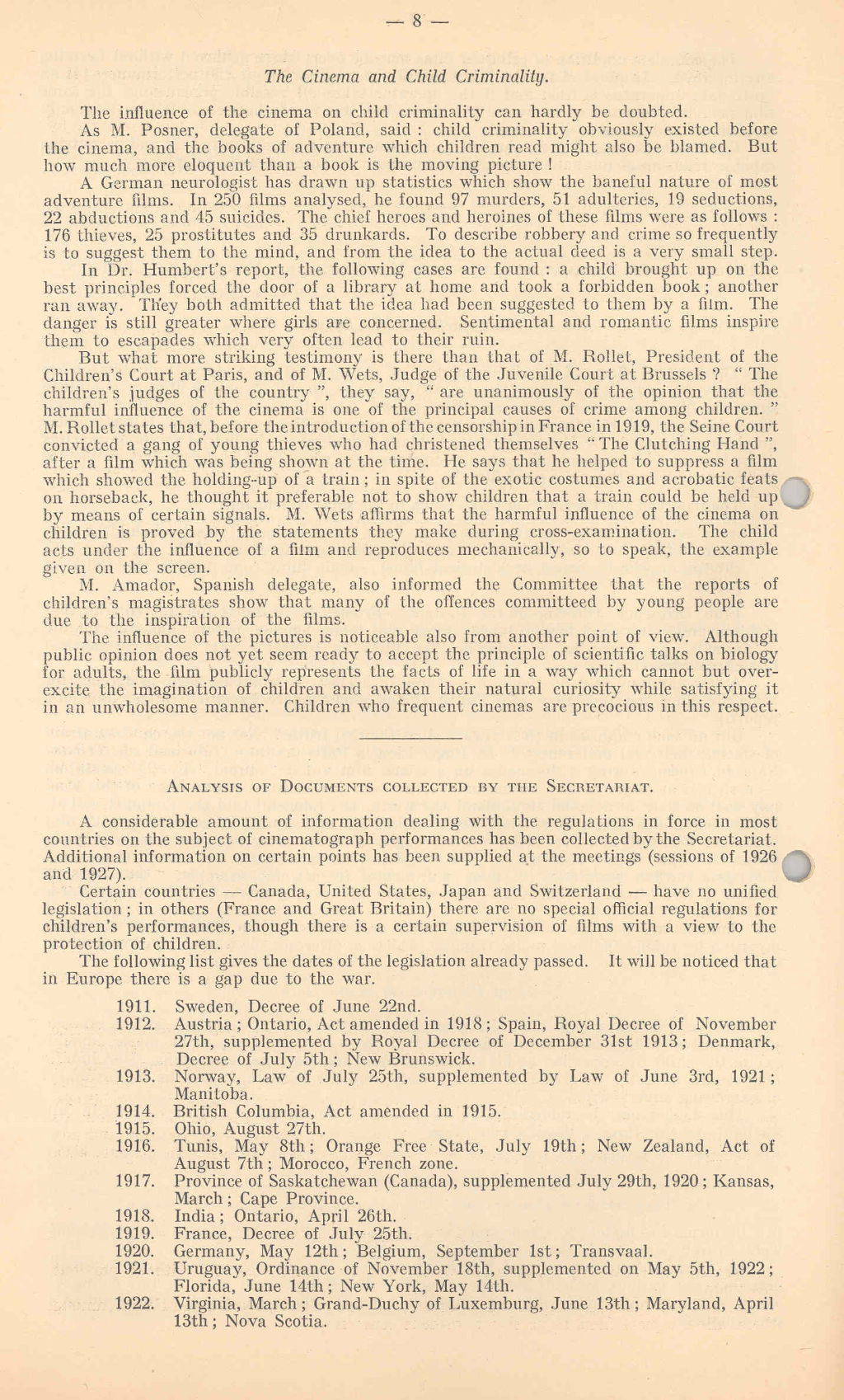
Report of the League of Nations Child Welfare Committee, 1928
The League of Nations Child Welfare Committee was established in 1919, in the aftermath of the First World War, to examine issues relating to child welfare in member states and make suggestions relating to best practice (as was then perceived).
In 1928 the Child Welfare Committee issued a report which examined the conditions of children employed in the film industry and looked at the effects of the new medium of cinema on children’s physical health and morals. The extracts reproduced here focus on "effects of the cinematograph on the mentality and morality of children", including concern over promiscuous behaviour in dark cinemas and the role of cinema as "one of the principal causes of crime among children".
Included in a file on 'Film Industry: Employment of Children', from the archive of the Trades Union Congress; document reference: MSS.292/675.1/5.
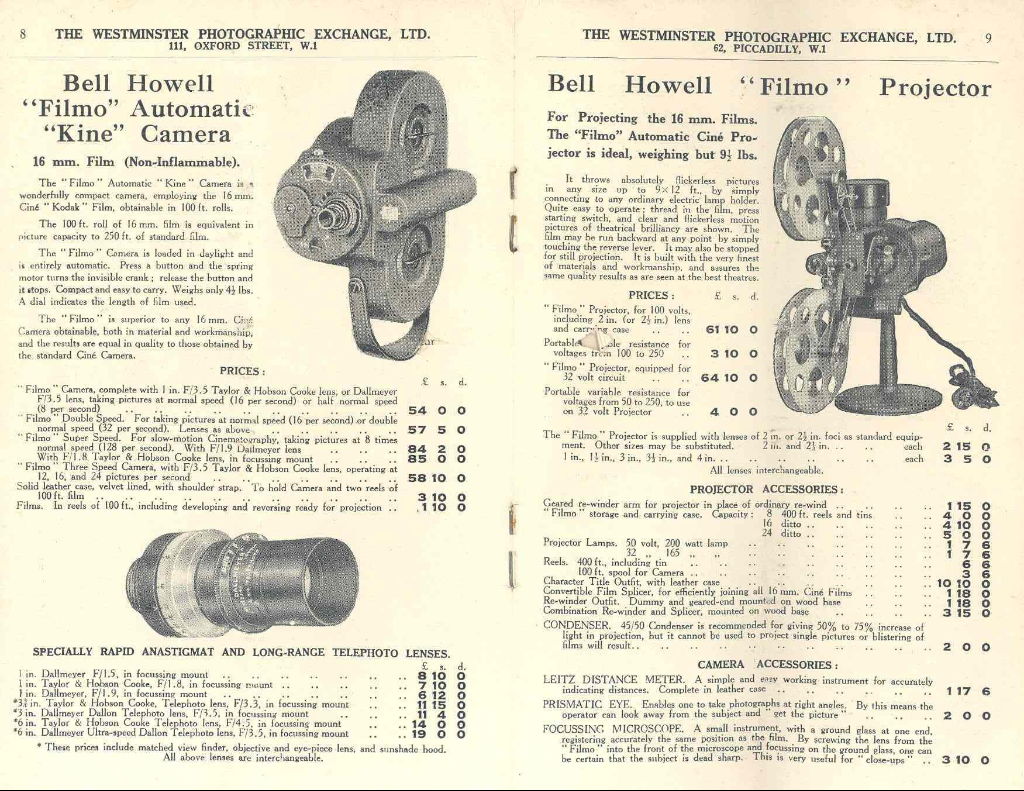
‘Amateur cine apparatus’, season 1927-8
Extract from a brochure produced by Westminster Photographic Exchange Ltd., a London-based retailer established in 1903. The brochure contains advertisements for essential film equipment for the interested (and wealthy) amateur. The Bell Howard 16mm. "Filmo" camera and projector are featured in the extract below.
Included in a file on 'Hire of films and equipment', 1928-1941, from the archives of the Trades Union Congress; document reference: MSS.292/675.5/3.
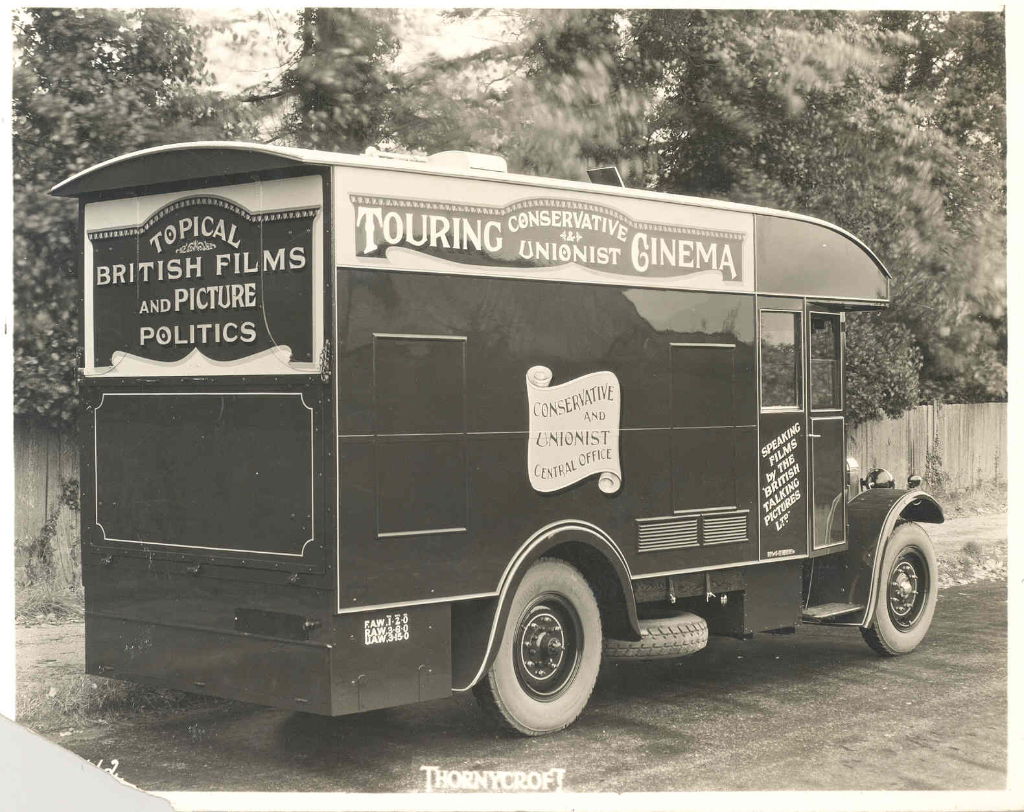
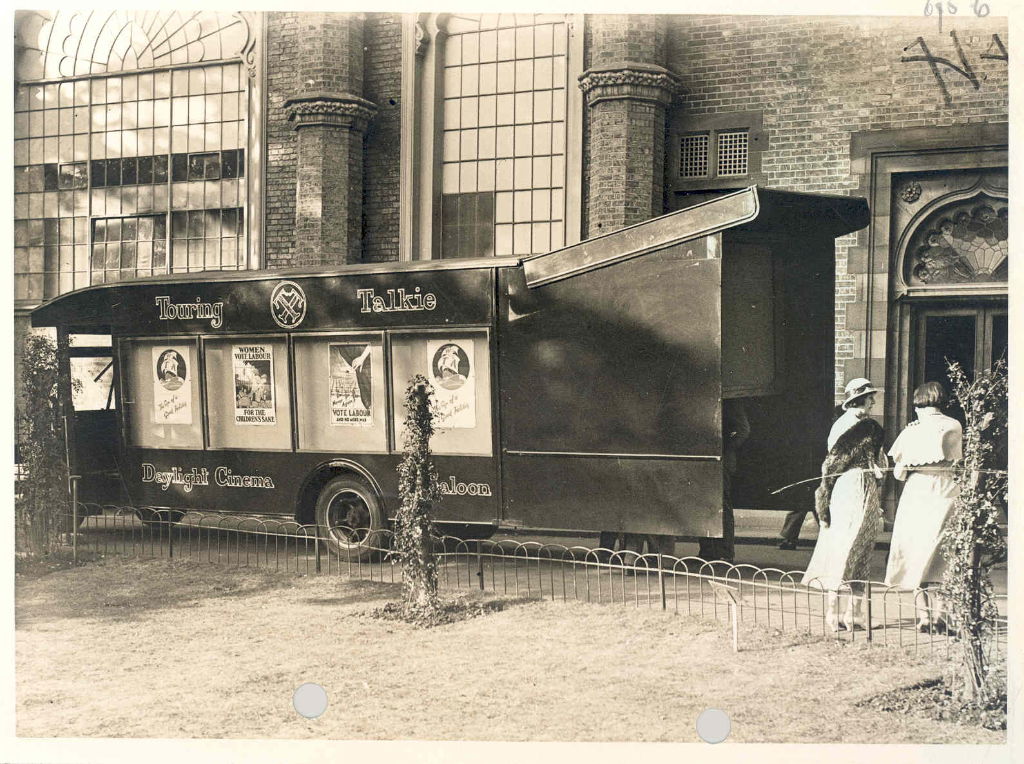
Photographs of mobile cinema, undated [1929?]
The "mobile cinema" was an adapted two ton lorry, which allowed "propaganda films" to be shown across the country. In 1929 a "daylight cinema van" from Thornycroft & Co. Ltd would have cost £896 for the vehicle alone (the cinema apparatus would have cost an additional £350-£400).
The photographs shown here are included with other related documents, including a blueprint plan for a mobile cinema, brochures for suitable lorries, estimates and correspondence. The vans in these publicity photographs were used by the Conservative and Unionist Central Office (the 'Touring Conservative Unionist Cinema') and the Labour Party (the 'Touring Talkie Daylight Cinema Saloon'), possibly as part of the 1929 general election campaign.
Included in a file on 'Film Industry: Cinema Van', from the archives of the Trades Union Congress; document reference: MSS.292/675.5/5.
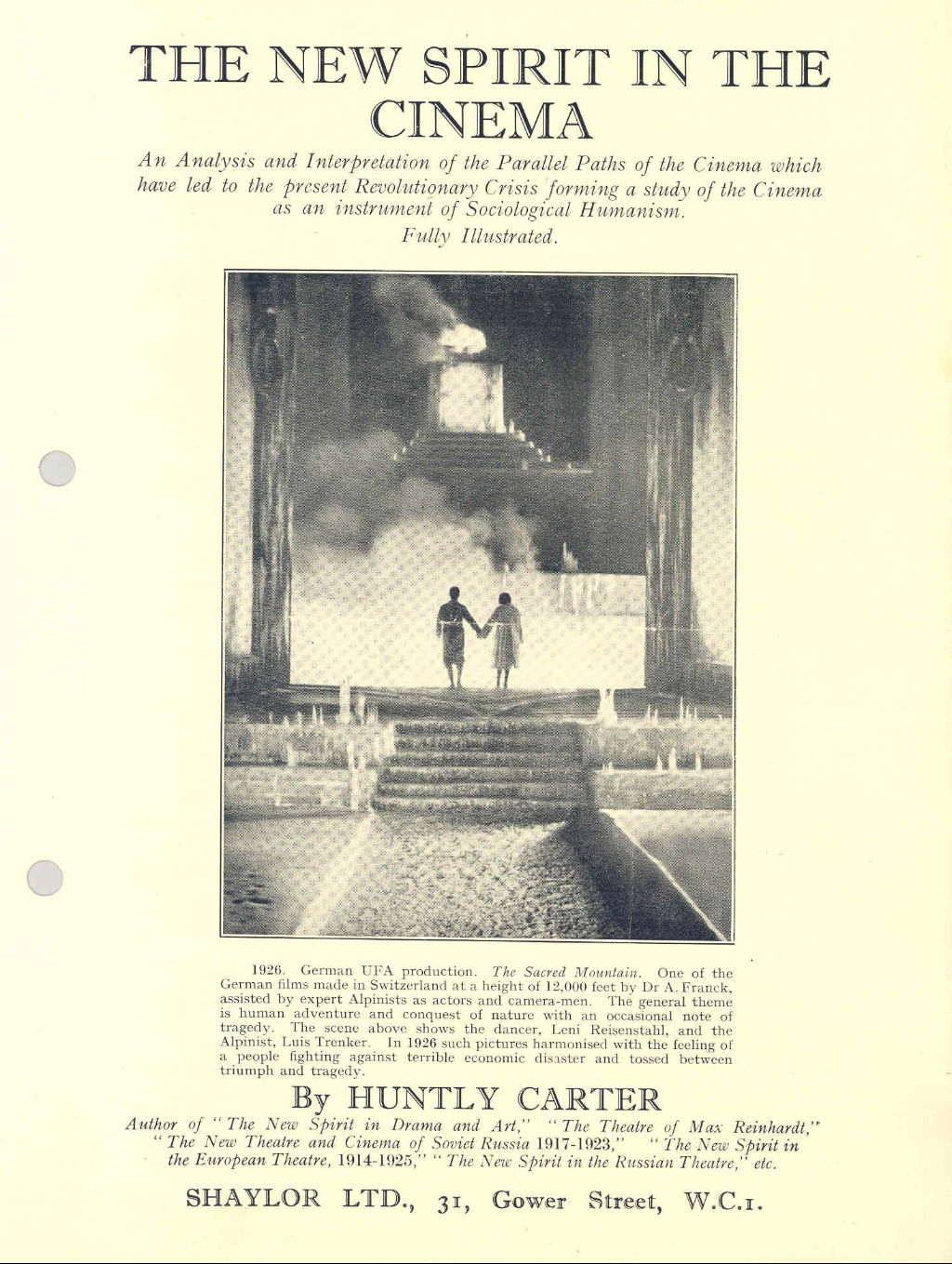
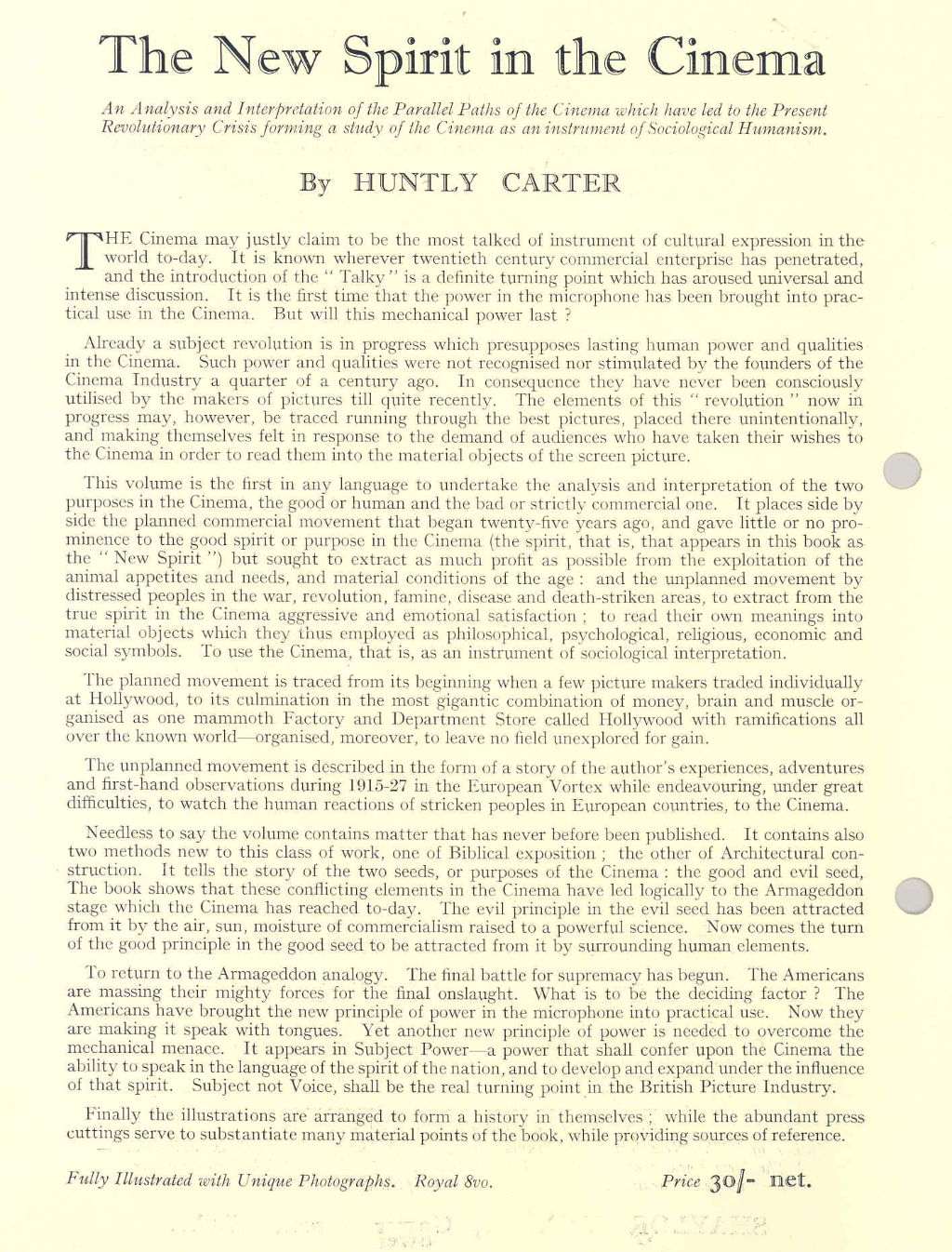
‘The New Spirit in the Cinema’, c1930
Promotional leaflet for a book by Huntly Carter. Carter's book contrasted the "planned commercial movement" of the Hollywood film industry with the "unplanned" European movement of "sociological humanism". He argued that the apocalyptic final battle between the two ("the good and evil seed") had begun. Carter's argument that European film is more humanist and morally good is perhaps undermined by his use of a still from 'The Sacred Mountain', a 1926 film featuring Leni Reifenstahl. Reifenstahl is now better known for her production of Nazi propaganda films during the 1930s.
Included in a file on 'Film: Huntly Carter', from the archive of the Trades Union Congress; document reference: MSS.292/674.94/4.
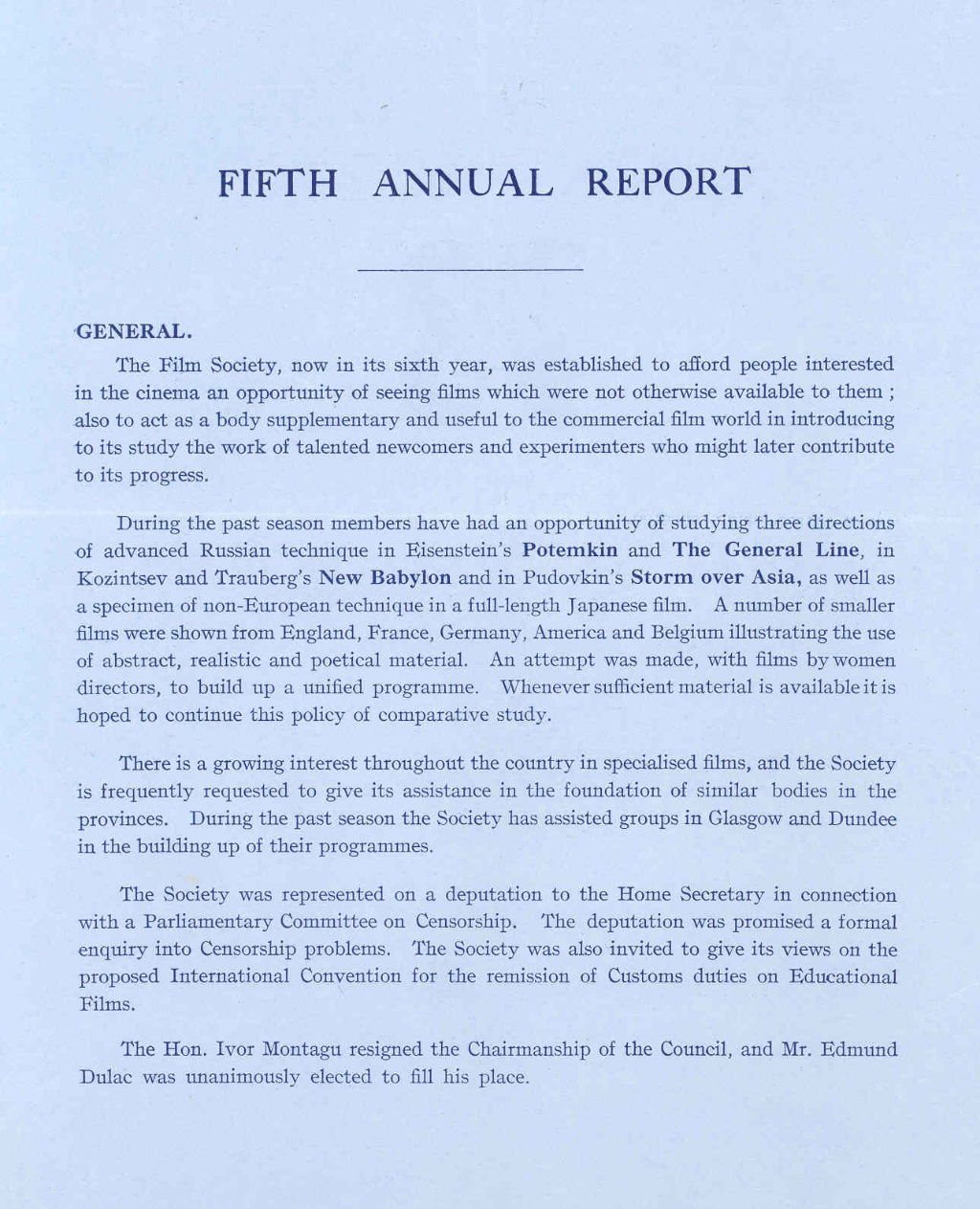
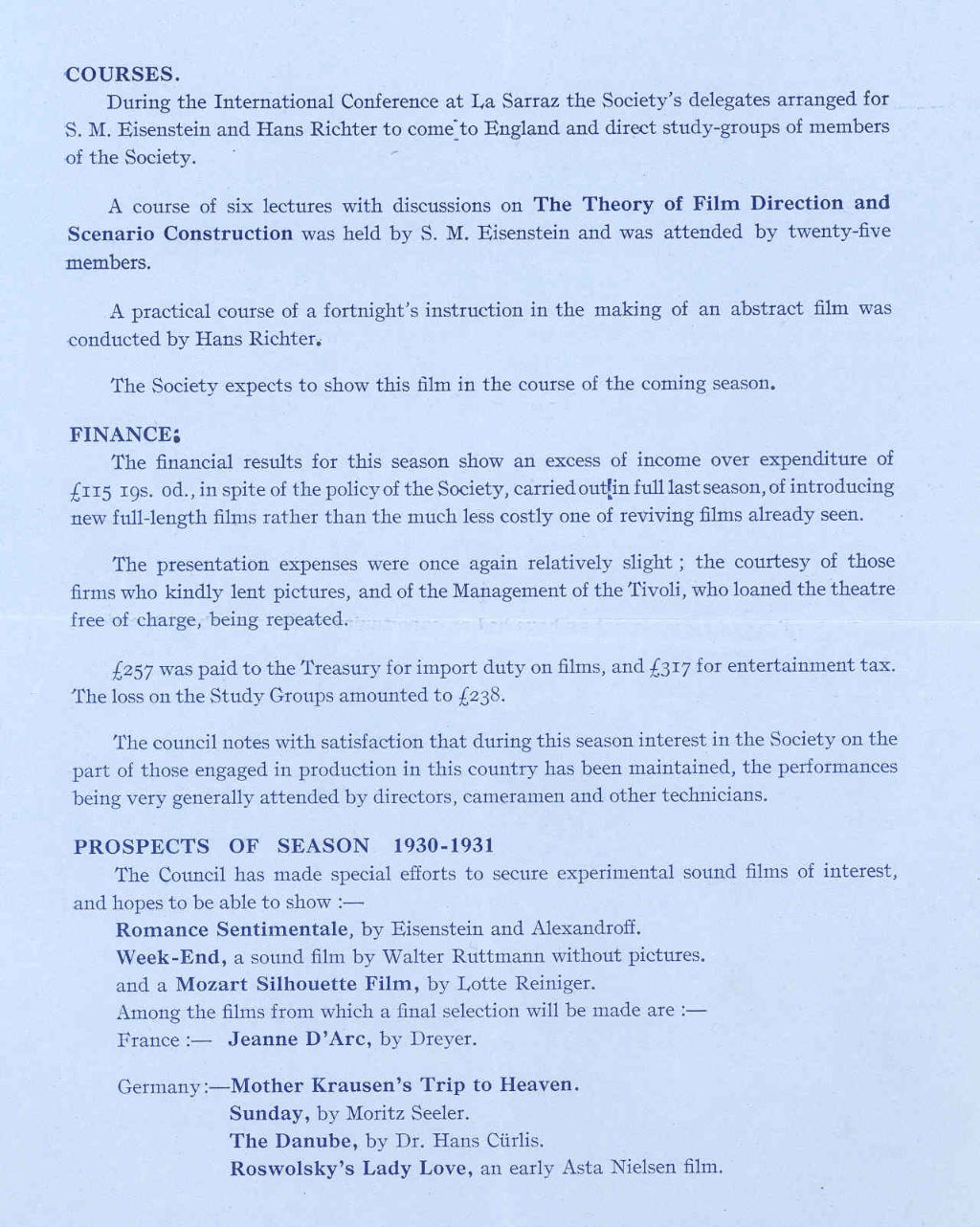
Fifth annual report of the Film Society, 1930
The Film Society in London was established in 1925 to enable "people interested in the cinema an opportunity of seeing films which were not otherwise available to them" through the commercial cinema - what might now be referred to as arthouse films. As well as screenings of European, US and Japanese films, the Society also ran study-groups on aspects of film theory - in the year that this report covers, the guest lecturers had been the pioneering Russian film director Sergei Eisenstein and the German avant-garde artist and experimental film maker Hans Richter.
Included in a file on 'Cinematograph Industry: Propaganda and Education Films', from the archive of the Trades Union Congress; document reference: MSS.292/675.63/2.
Suggested amendment to the Cinematograph Films Act, 1930
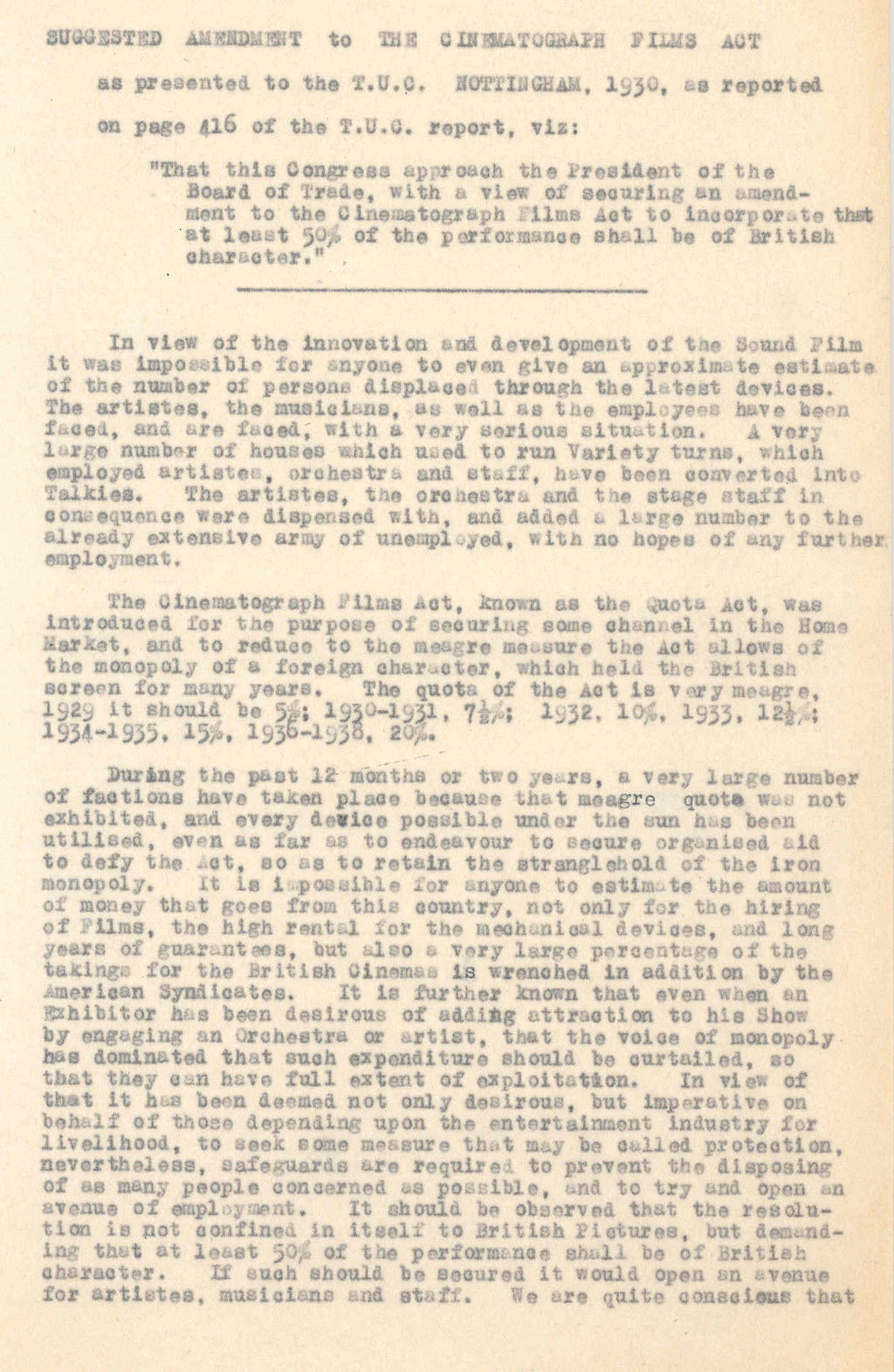
The 1927 Cinematograph Film Act required British cinemas to show a set minimum percentage of 'British' films (intended to be incrementally raised from 5% to 20% between 1929-1938), with the intention of encouraging investment into the struggling British film industry. One byproduct of the Act were the 'quota quickies', cheaply produced films which were quickly knocked out to fulfil the requirements (if not the intentions) of the legislation. The Act was repealed in 1960.
This statement was presented by the National Association of Theatrical Employees (NATE) to the 1930 Trades Union Congress (TUC) in support of a resolution to increase the minimum percentage of films "of British character" to at least 50%. NATE's suggested amendment argues that a quota system is needed to combat "iron monopoly", and prevent the majority of takings going to "American Syndicates". It also comments on the unemployment of artistes, orchestra members and stage staff caused by the "innovation and development of the Sound Film" and the decline of variety theatre.
Included in a file on an 'Enquiry into British film industry', 1927-1936, from the archive of the Trades Union Congress; document reference: MSS.292/675.8/2.
Wages sheet for cinema employees, 1931
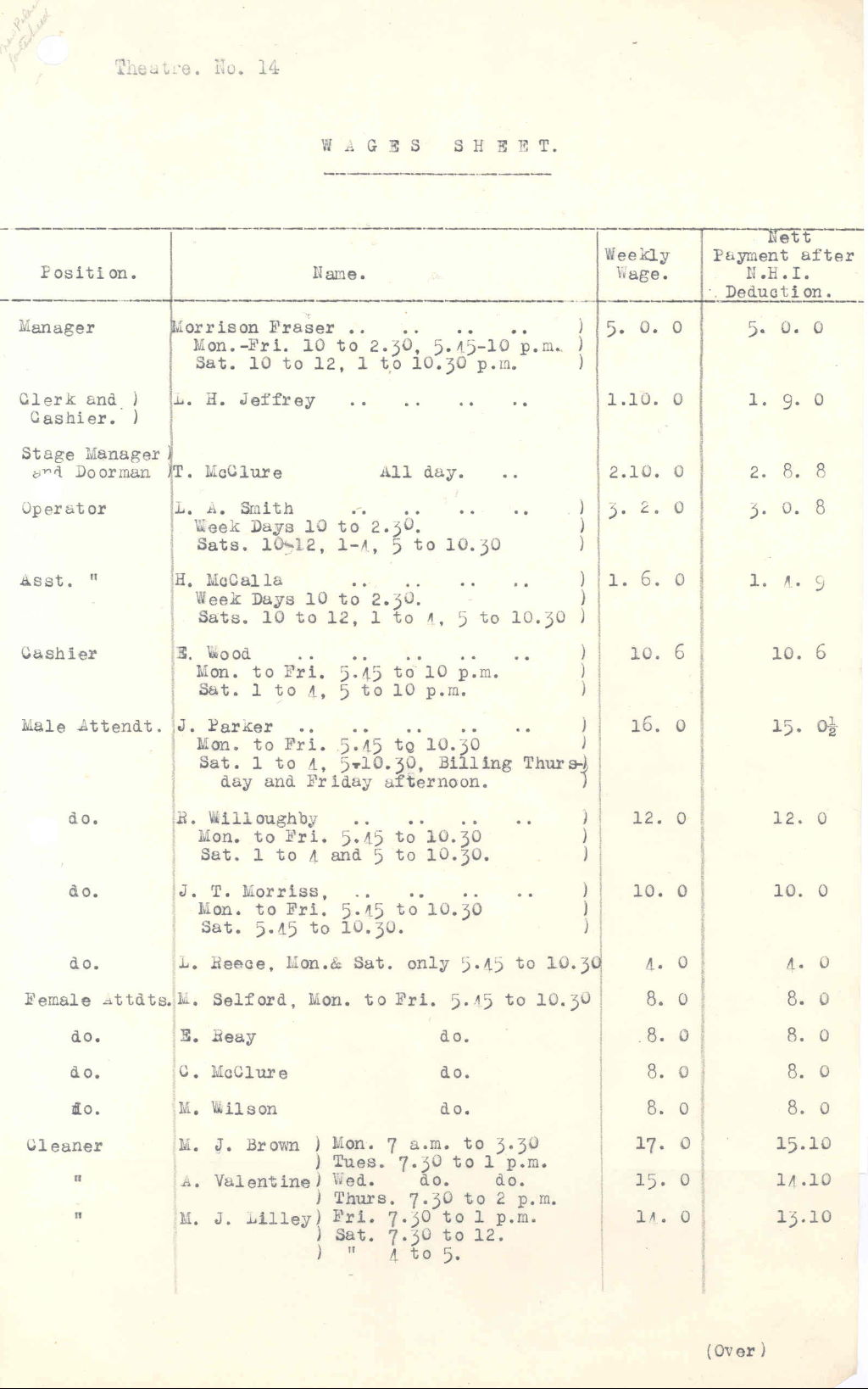
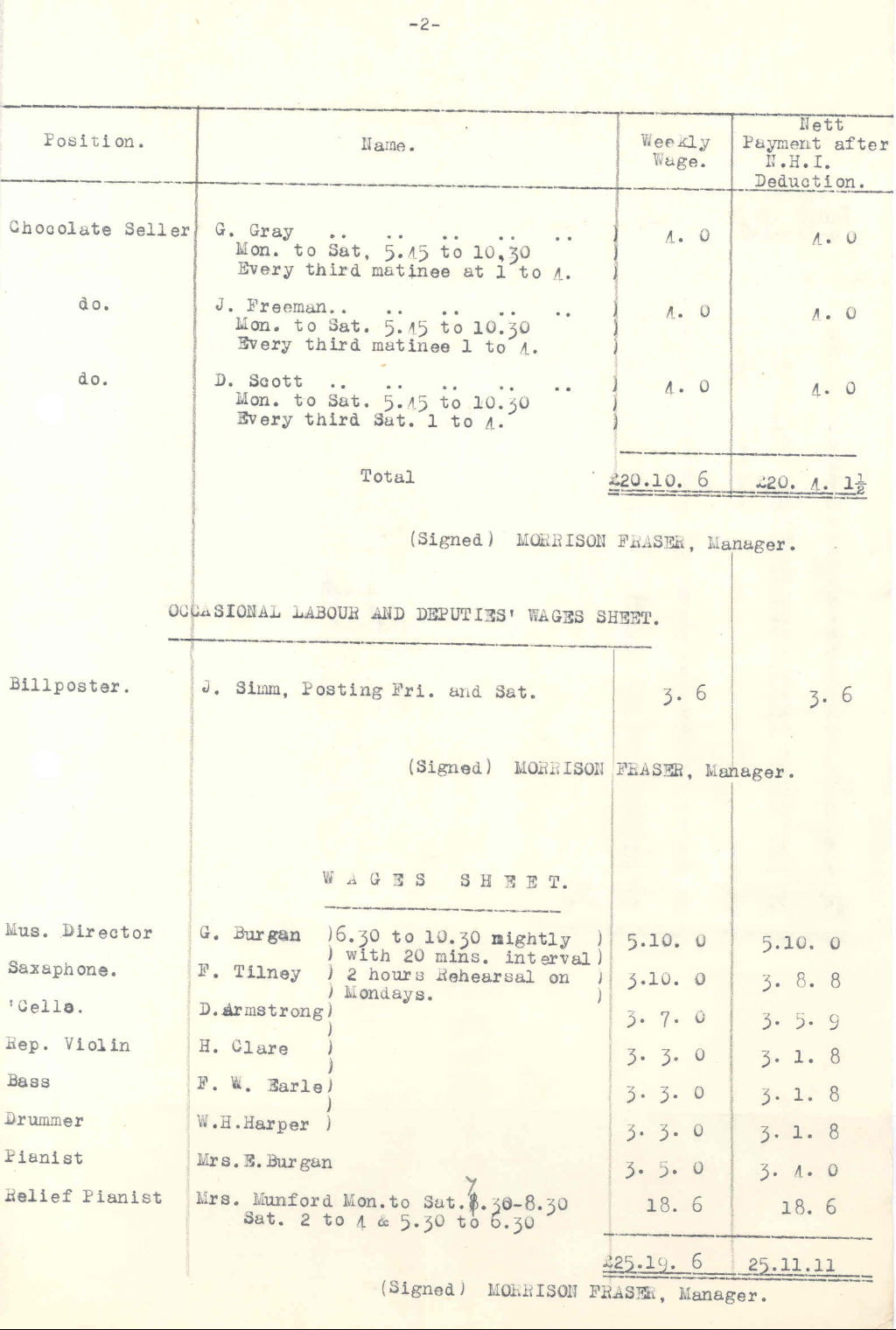
The sheet shown below lists the names, wages and shifts of all staff employed by the Palace Cinema, Gateshead, including male and female attendants, chocolate sellers, musicians and the person who pasted up the bill-posters. Statistics relating to rates of pay in 17 movie theatres in the North East of England were compiled for an inquiry into cinema conditions of employment and sent to the Trades Union Congress. The Palace Cinema is notable for the number of its employees - the majority of returns submitted in 1931 record a much smaller staff, likely to have been reduced as a result of the increasing popularity of 'talkies'.
Included in a file on 'Cinematograph Industry: Conditions', 1932-1937, from the archive of the Trades Union Congress; document reference: MSS.292/675.1/1.
‘Movieland goes Roman’, 1931
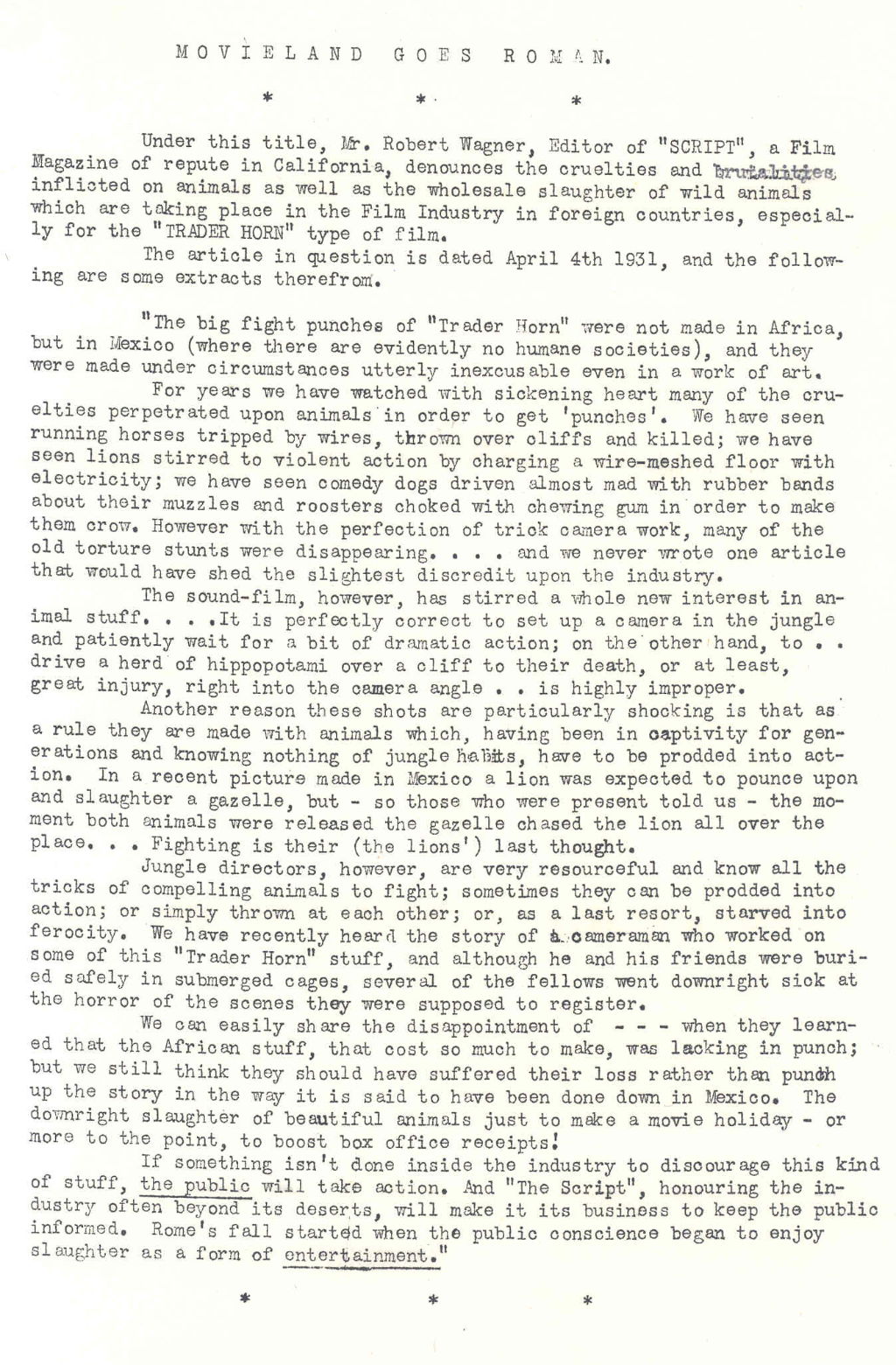
Circular which reproduces extracts from a 1931 article by Robert Wagner, editor of the Californian film magazine 'Script', condemning the wholesale slaughter of animals during the production of "jungle" pictures such as 'Trader Horn', filmed in Mexico. The circular was included in correspondence between the Performing and Captive Animals’ Defence League and the BBC - the PCADL had requested radio airtime to talk about cruelty in the film industry, the BBC refused to provide it.
Included in a file on 'Cinematograph Industry: Cruelty in Films', 1931-1932, from the archive of the Trades Union Congress; document reference: MSS.292/675.12/5.
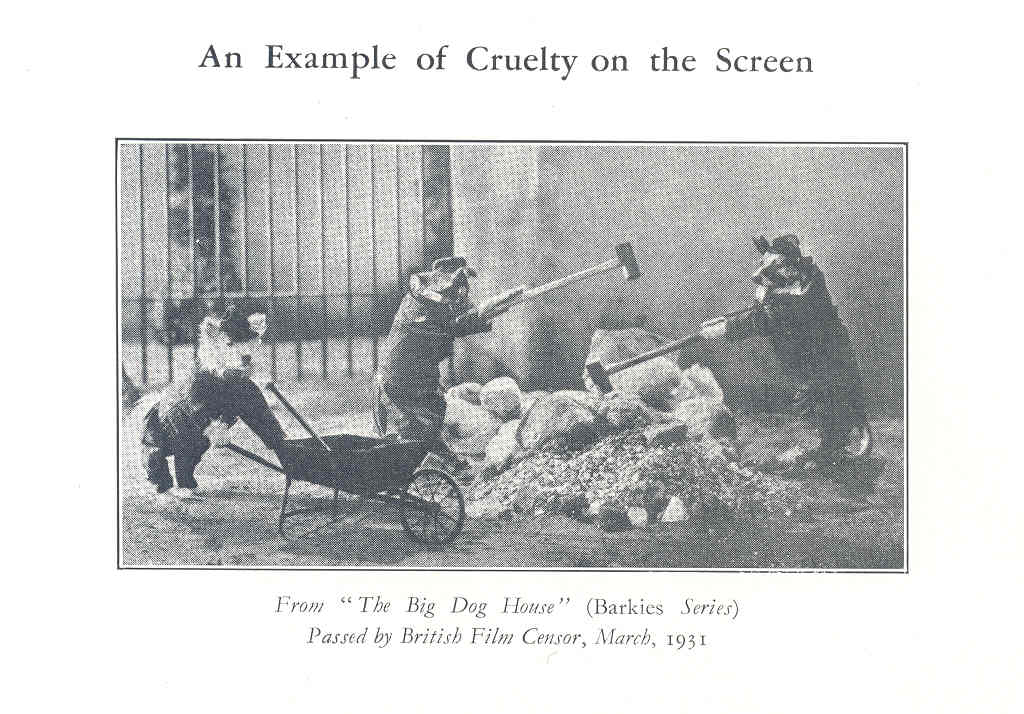
Still from “Barkies” film ‘The Big Dog House, 1931
The photograph accompanied copies of correspondence between the Performing and Captive Animals’ Defence League and the British Board of Film Censors. Several films in the "Barkies" series had been banned by the censor due to the cruel methods used to make the dogs perform.
Included in a file on 'Cinematograph Industry: Cruelty in Films', 1931-1932, from the archive of the TUC; document reference: MSS.292/675.12/5.
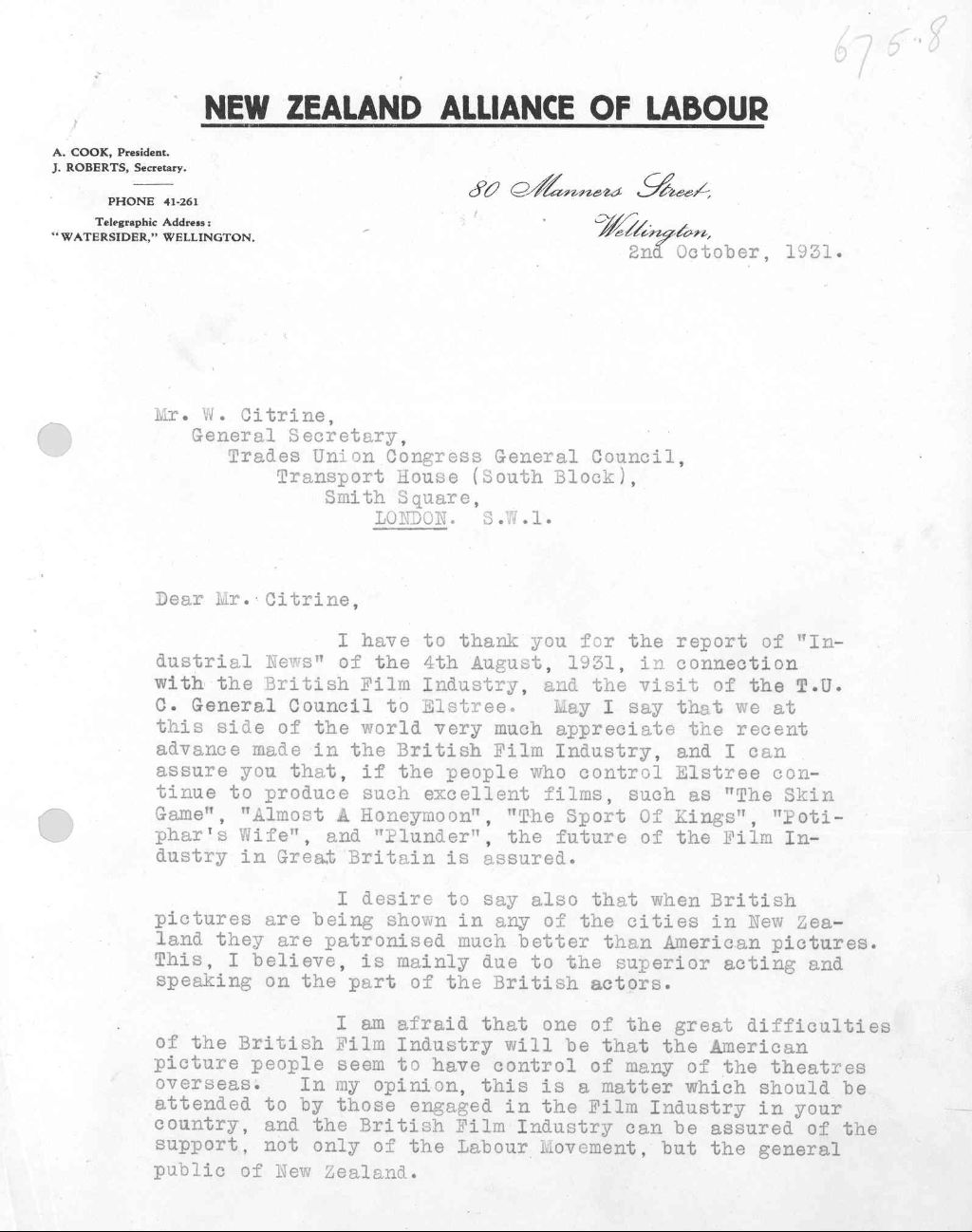
Differences in popularity between British and US films, 1931
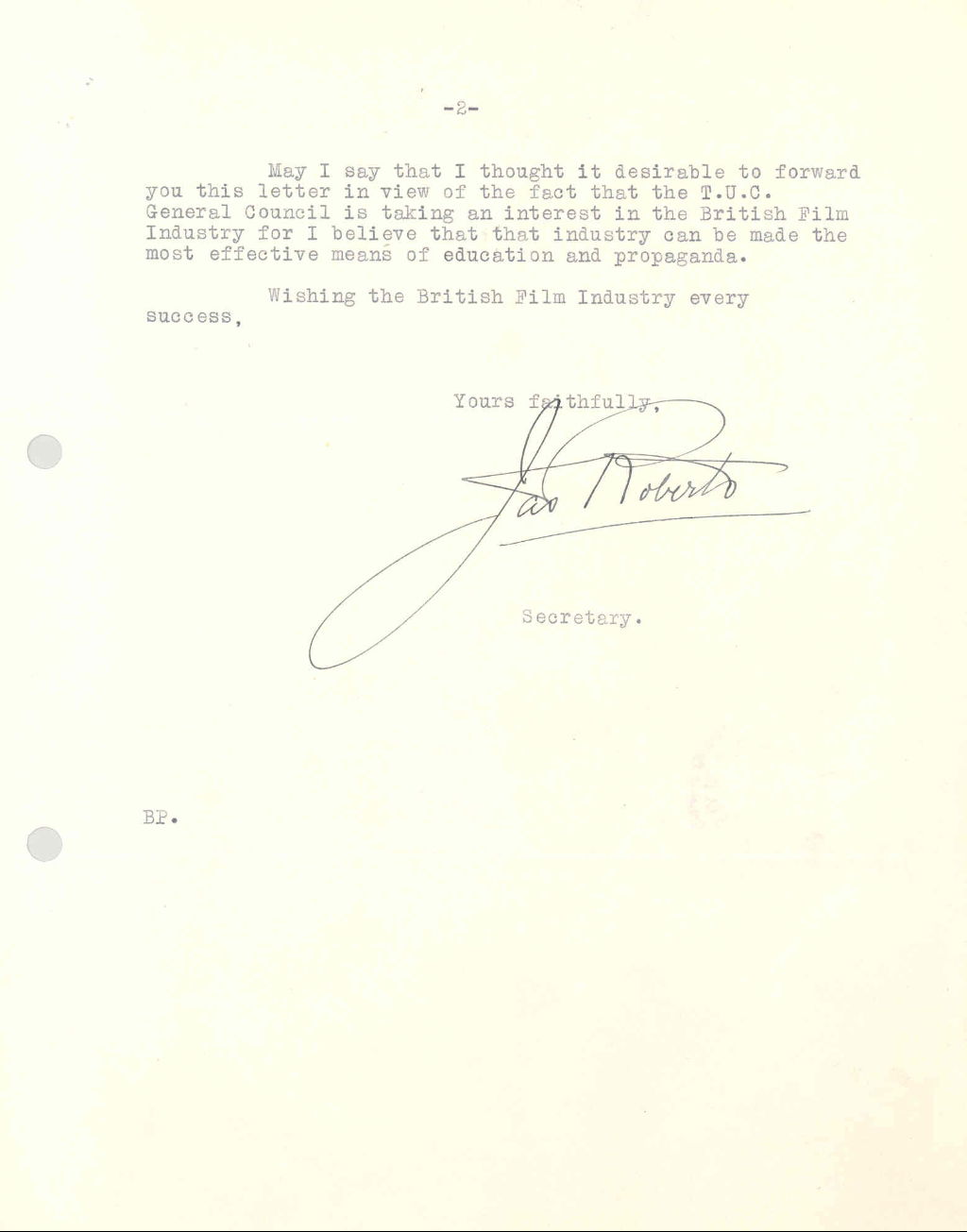
Letter from James Roberts, Secretary of the New Zealand Alliance of Labour, written after receiving a report of the Trades Union Congress General Council's visit to Elstree film studios. Roberts expresses his appreciation of British pictures, which he argues were better edited, acted and spoken, but suggests "that one of the great difficulties of the British Film Industry will be that the American picture people seem to have control of many of the theatres overseas".
Included in a file on 'Entertainment Industry: Cinematograph Industry', from the archive of the Trades Union Congress; document reference: MSS.292/674.94/3.
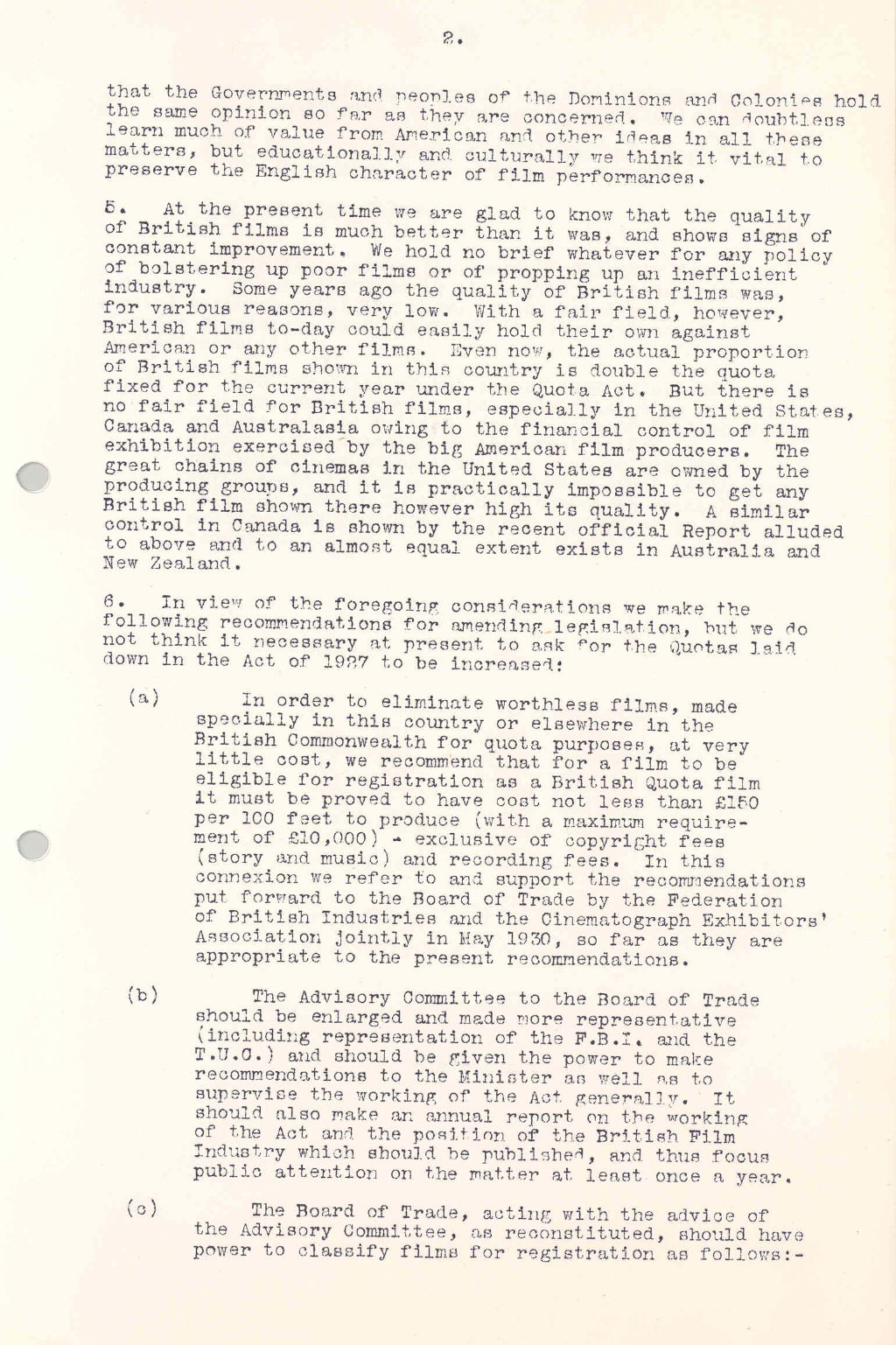
Memorandum on the state of the British film industry, 1932
The memorandum, to be submitted jointly to the government by the Federation of British Industries (representing British business) and the Trades Union Congress (representing British workers), expresses great concern about "the menace of Americanisation by means of the film". The extract reproduced below argues that Hollywood imports act as a threat to both Britain's financial interests and to "English speech, customs, and cultural standards".
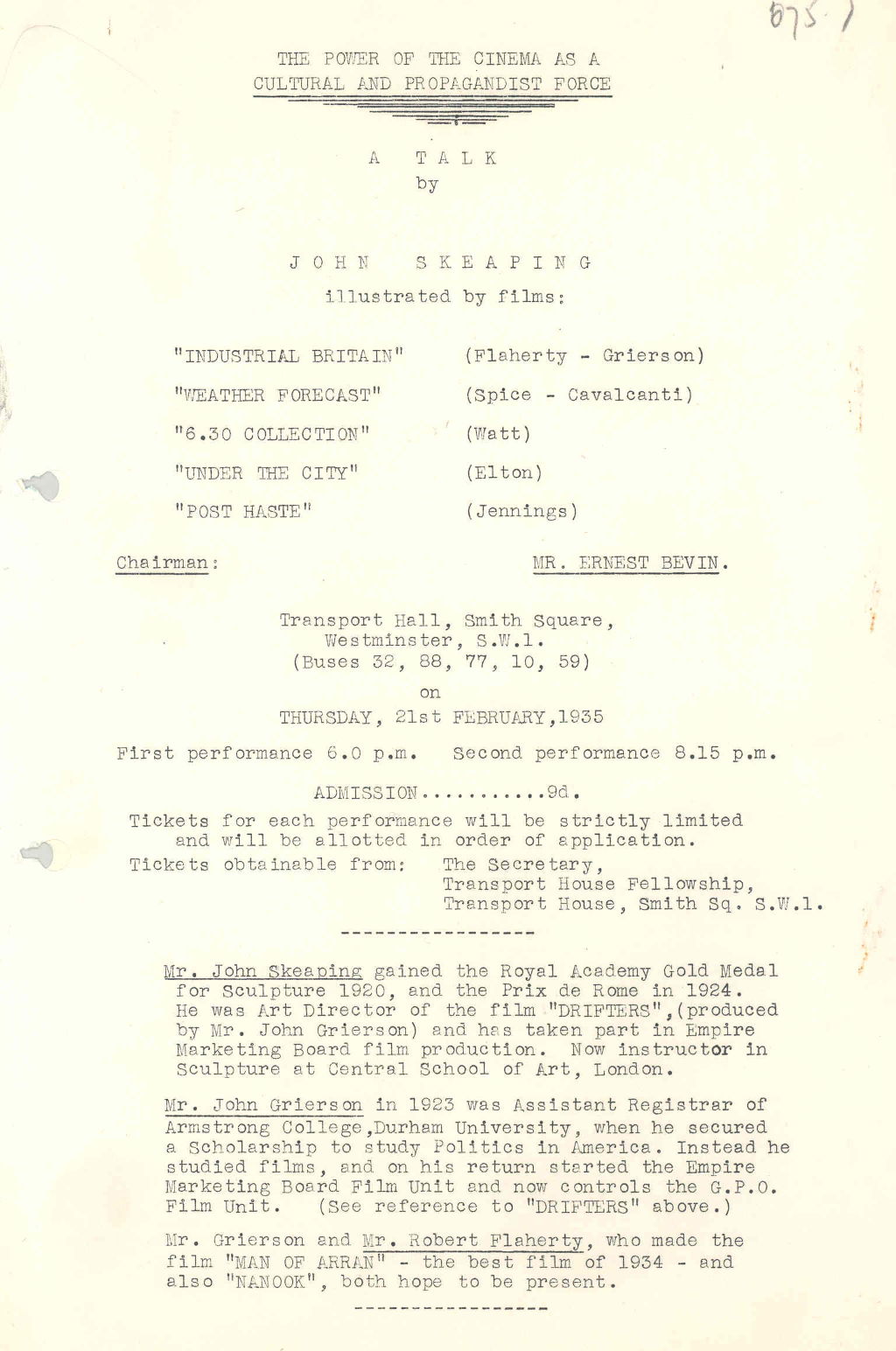
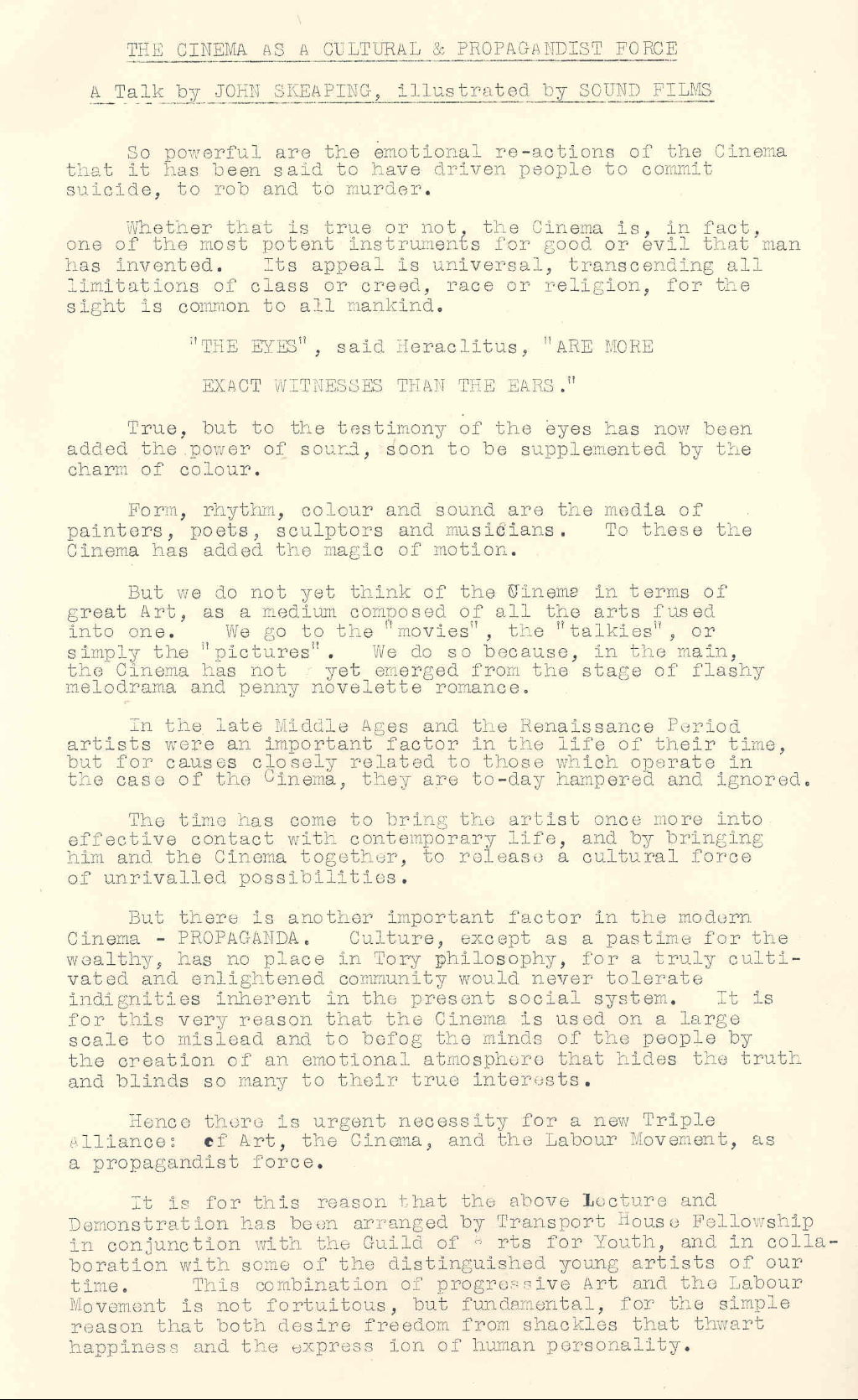
‘The power of cinema as a cultural and propagandist force’, 1935
Publicity leaflet for a talk by the sculptor John Skeaping, chaired by the trade union leader (and future Foreign Secretary) Ernest Bevin. An outline of Skeaping's argument is given on the reverse of the leaflet - he argues that "cinema is, in fact, one of the most potent instruments for good or evil that man has invented", "so powerful are the emotional re-actions of the Cinema that it has been said to have driven people to commit suicide, to rob and to murder", therefore, the progressive artist needs to work within film "to release a cultural force of unrivalled possibilities" and create political propaganda.
The talk was illustrated by five documentaries produced by the influential GPO Film Unit - 'Industrial Britain' (Robert Flaherty and John Grierson), 'Weather Forecast' (Evelyn Spice and Alberto Cavalcanti), '6.30 Collection' (Harry Watt), 'Under the City' (Alexander Shaw and Arthur Elton) and 'Post Haste' (Humphrey Jennings).
Included in a file on 'Trades Union Congress and labour movement propaganda films', 1930-1939, from the Trades Union Congress archives; document reference: MSS.292/675.752/4.
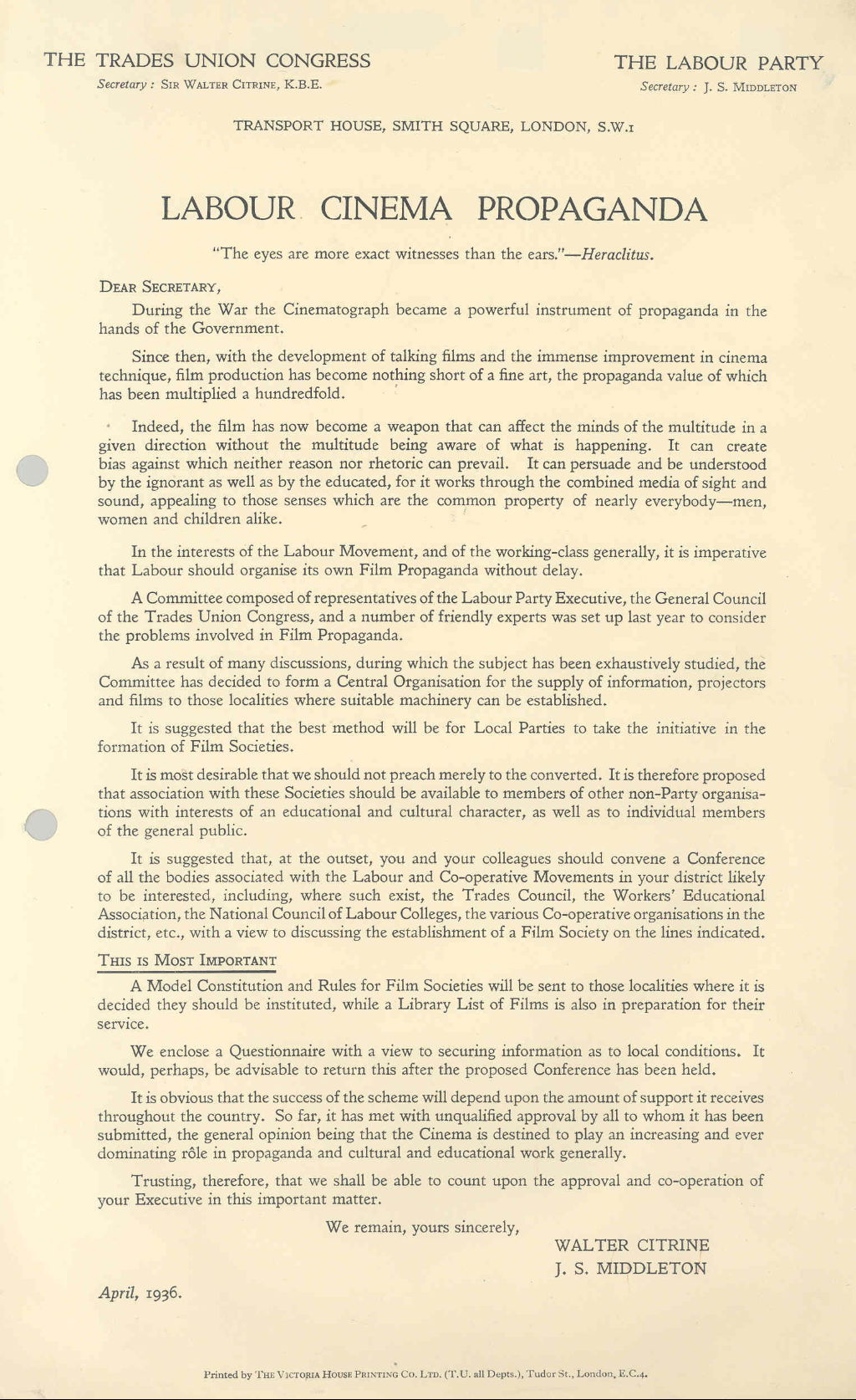
Circular on the question of labour cinema propaganda, 1936
This circular was issued jointly by the Labour Party and the Trades Union Congress. It argues that, since the First World War, "film has become a weapon that can affect the minds of the multitude" and "can create bias against which neither reason nor rhetoric can prevail". Therefore, "in the interests of the Labour Movement, and of the working-class generally, it is imperative that Labour should organise its own Film Propaganda without delay", and form local film societies to spread the political message.
Included in a file on 'Trades Union Congress and labour movement propaganda films, 1930-1939', from the Trades Union Congress archives; document reference: MSS.292/675.752/4.
Letter enquiring about the Charlie Chaplin film 'Modern Times’, 1936
In 1936 the General Secretary of the Amalgamated Society of Wire Drawers and Kindred Workers contacted the Trades Union Congress to request a showing of 'Modern Times' during the annual congress. The film is recommended, not for its comedy value, but for its ideologically sound view of the Bedaux system of labour management - for example "one of the workers, Charlie Chaplin, shows unmistakable signs of distress in the course of his employment and faints away under pressure of the new system".
Included in a file on 'Cinematograph Industry: Propaganda and Education Films', from the archive of the Trades Union Congress; document reference: MSS.292/675.63/2.
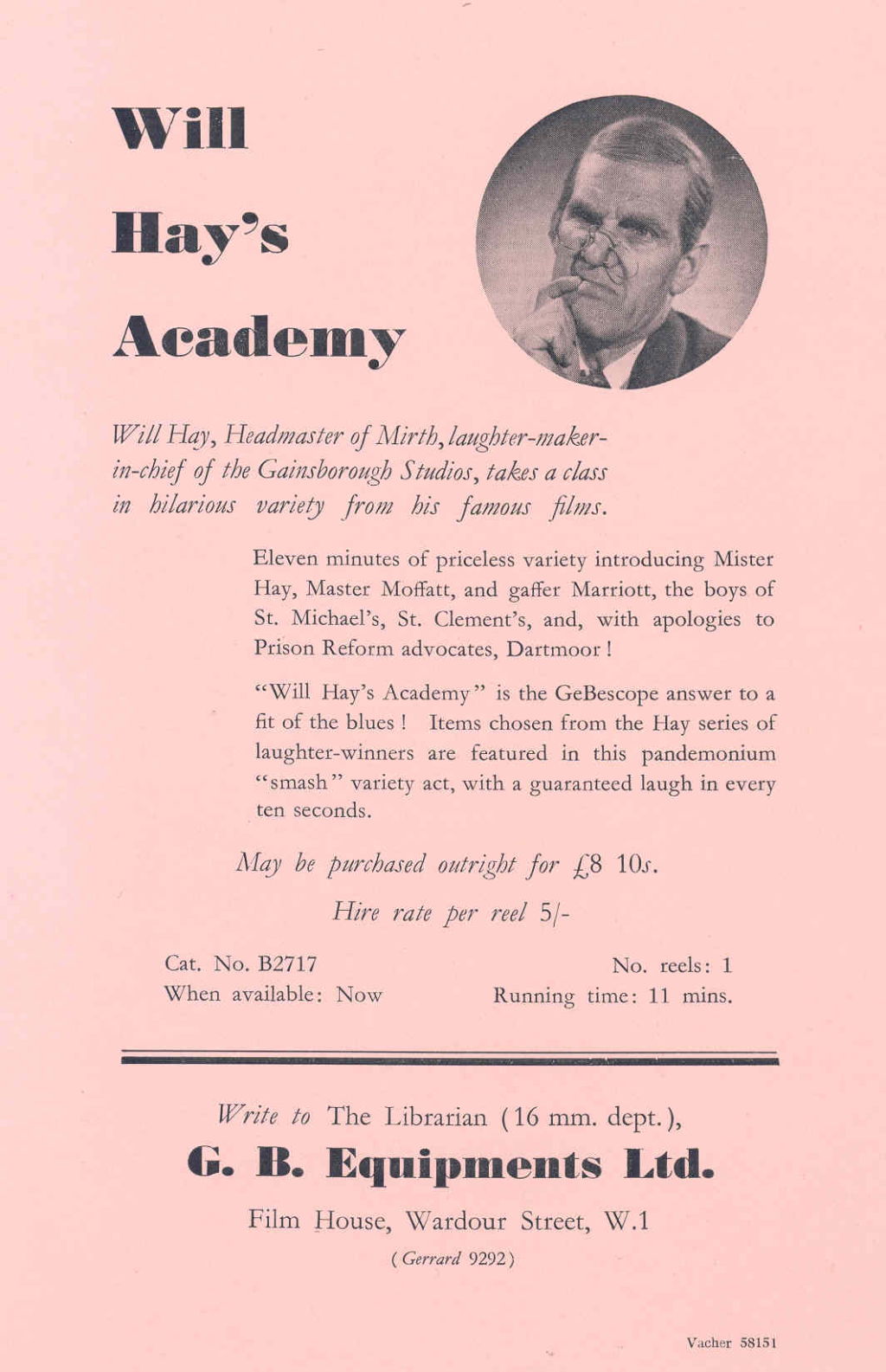
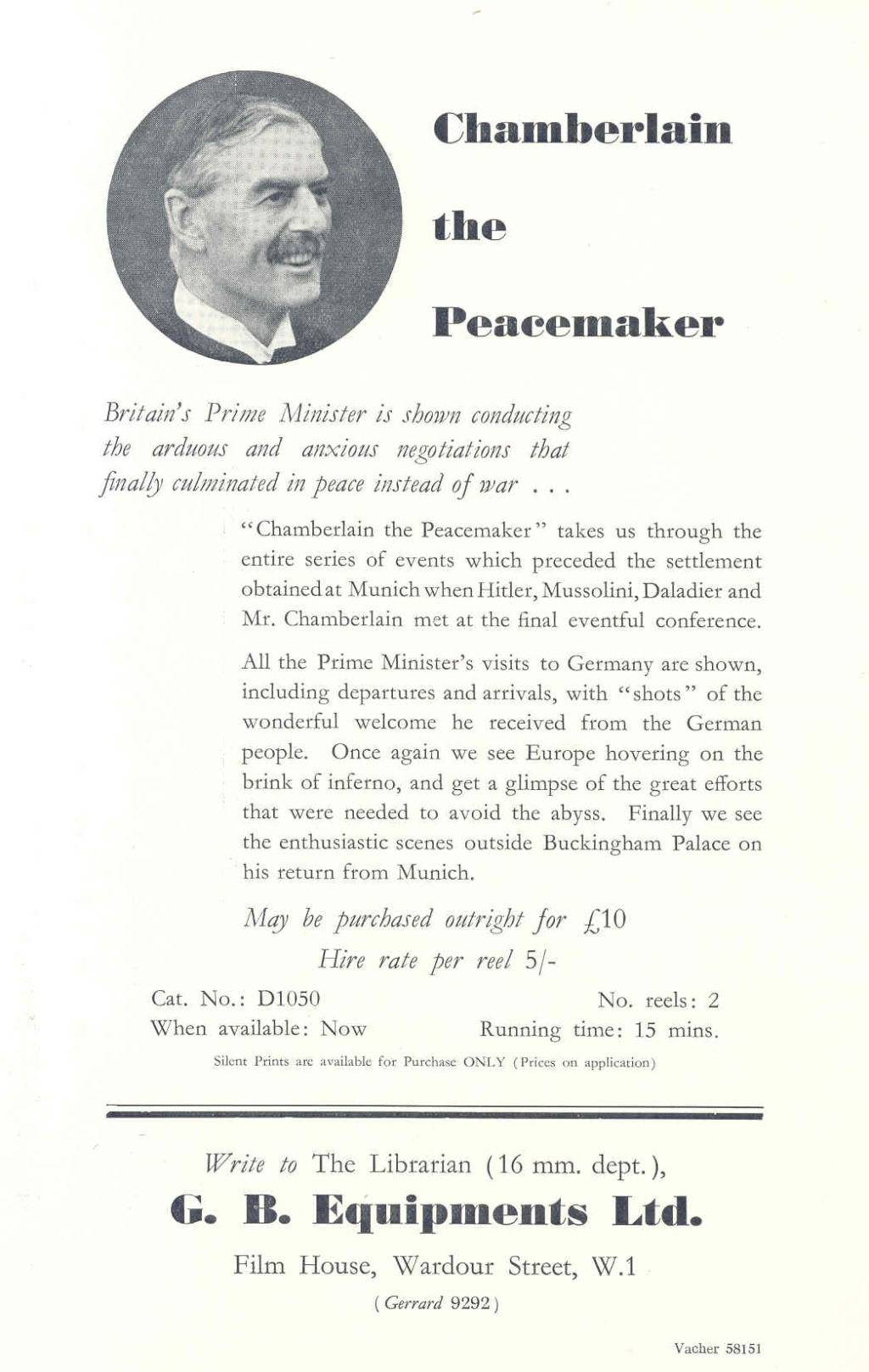
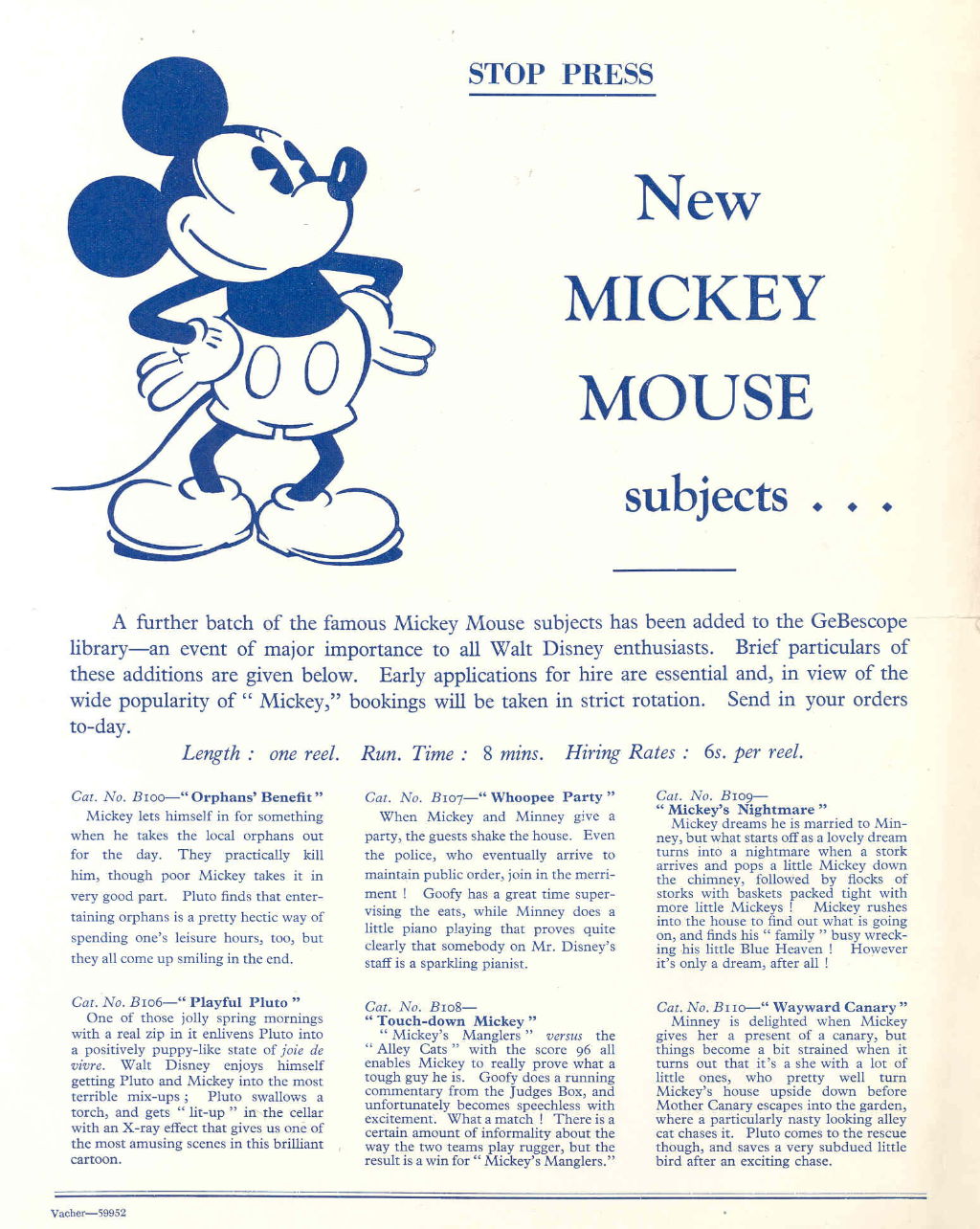
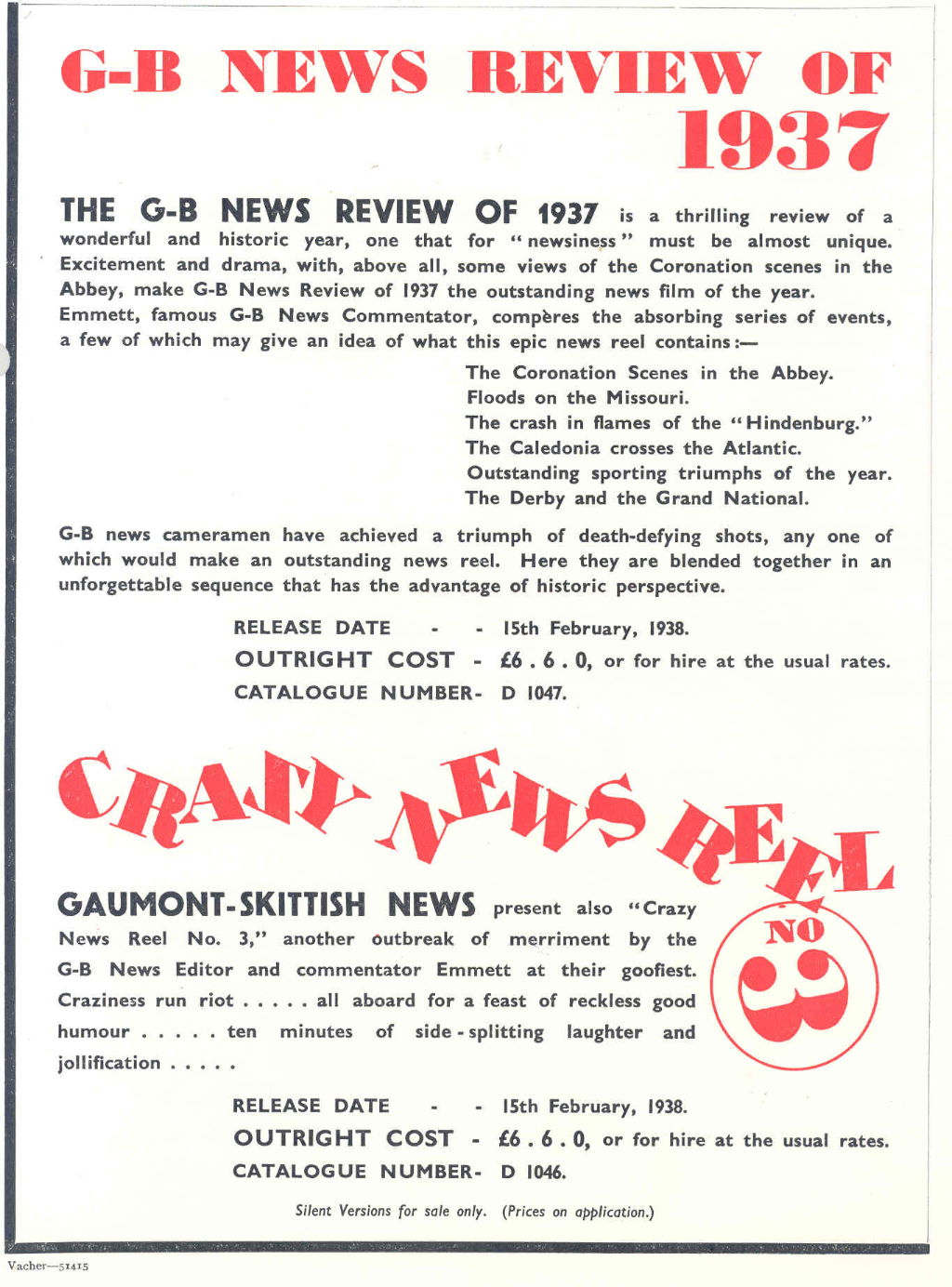
Leaflets from Gaumont British Equipment Ltd, promoting up and coming films, 1938-9
These leaflets advertise new films available for hire for private exhibition - an 11 minute reel featuring the popular comedian Will Hay ("with a guaranteed laugh in every ten seconds"); 'Chamberlain the Peacemaker', a 15 minute film about the Munich agreement with Hitler ("the arduous and anxious negotiations that finally culminated in peace instead of war"); a series of new Mickey Mouse cartoons; and a cinematic 'News Review of 1937', featuring events such as the coronation of George VI and the Hindenburg disaster.
Included in Trades Union Congress archive files on 'Cinematograph Industry: Hire of Films & Equipment', 1928-1941, document reference: MSS.292/675.5/3, and 'Films: Hire of Gaumont British Equipment Ltd', 1934-1940, document reference: MSS.292/675.63/1.
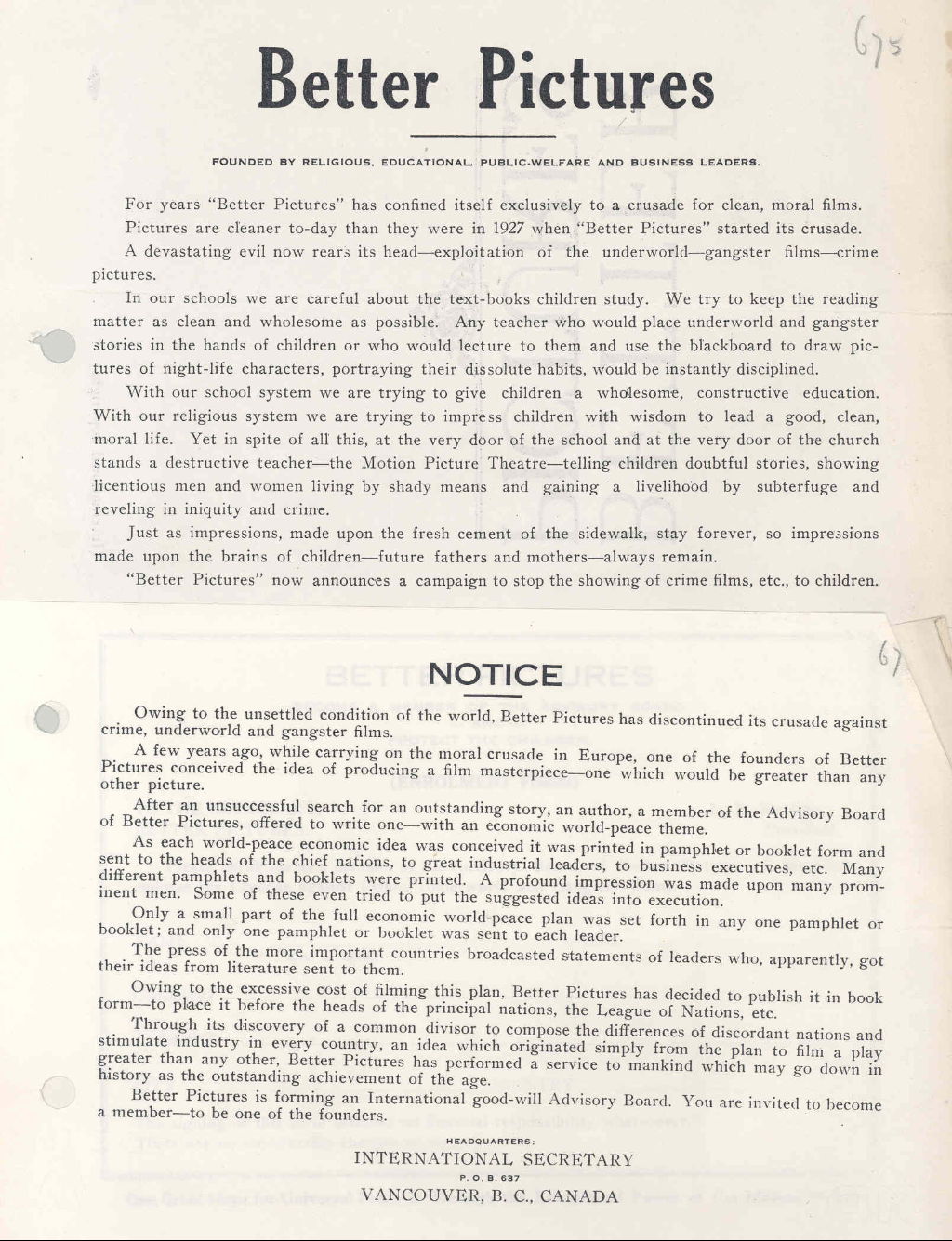
Publicity material for ‘Better Pictures’, c1940
'Better Pictures', a Canadian-based campaign group for "clean, moral films" was set up to protect children from the "devastating evil" of crime, underworld and gangster films. These leaflets announce a campaign against the showing of 'crime films' to children and refer to the organisation's plan to create a "film masterpiece... with an economic world peace theme".
Better Pictures' campaign was suspended "owing to the unsettled condition of the world" (i.e. the Second World War), whilst the vast cost of filming the "economic world peace plan" led to the proposed masterpiece being converted into book form ("a service to mankind which may go down in history as the outstanding achievement of the age").
Included in a file on 'Cinematograph Film Industry 1937', from the archive of the Trades Union Congress; document reference: MSS.292/674.94/7.