125 Years of the Beautiful Game: Football, Politics and Society

The documents in this online exhibition cover a range of footballing controversies and debates - from the dawn of the professional game in the 1880s to more recent discussions over the ownership of clubs by big business.
Additional football-related archives can be identified through a 'ready-made' search of our archive catalogue. The Modern Records Centre also has an exhibition on politics and sport at the Olympics available online.
'The best quality football outfits', 1884
Advertisement for the products of George Lewin, a London-based manufacturer of "athletic clothing", including "the very best quality football outfits". The illustration shows a sizeable scrum of players putting the boot in, whilst kitted out in striped flannel jerseys, knee-length hose and caps. As well as clothing, Lewin also supplied equipment, including goalposts for Association football ("painted and iron shod") and rugby.
Included in 'The Scottish Umpire', 25 Sep 1884, from the National Cycle Archive; document reference: MSS.328/C/5/SCU, vol.1-2.

The 'Drafting' controversy, 1884
Article from 'The Scottish Umpire' on the system of drafting (player transfers). It looks at the different reasons why players may change clubs and condemns the "despicable emissaries" of professionalism over the border, with the "chink of their English gold". It contrasts the rising players with those of "the good old days", "when men thought chiefly of "mens sana in corpore sane" [a healthy mind in a healthy body]" and "the good of the club which could claim them as her own".
Included in 'The Scottish Umpire', 25 Sep 1884, from the National Cycle Archive; document reference: MSS.328/C/5/SCU, vol.1-2.

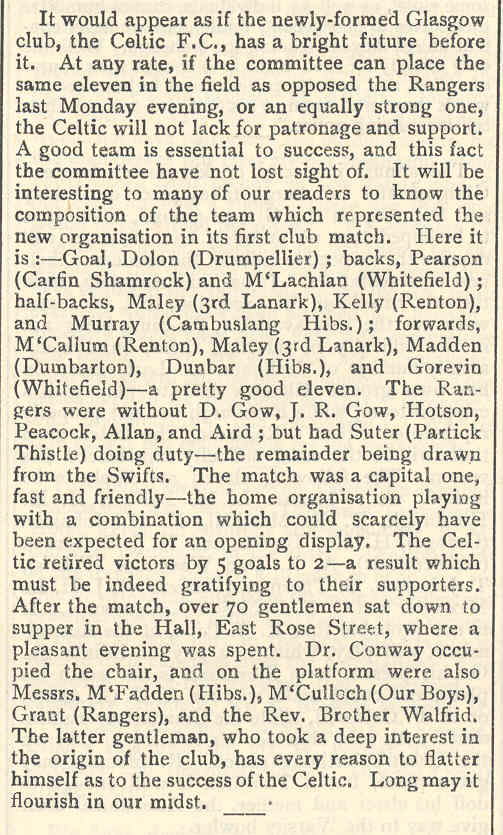
'A bright future', 5 Jun 1888
Report of the first official match (and first Old Firm derby) played by Celtic FC on 28 May 1888. Celtic beat Rangers 5-2 in what was described as a "fast and friendly" match which suggested that the Glasgow club might have "a bright future". The religious sectarian divisions between the two clubs is not referred to in the article, and a representative of Rangers is prominent on the platform during the evening celebrations.
Included in 'The Scottish Umpire', 5 Jun 1888, from the National Cycle Archive; document reference: MSS.328/C/5/SCU, vol.7-9.
Club adverts in the Scottish press, 23 October 1888
Advertisements for cup ties and exhibition matches (the Scottish Football League wasn't formed until 1890). The Rangers versus Celtic Glasgow Cup Tie is one of several matches offering free entry to women. The growth of professionalism in the game south of the border is represented by an advert from a "leading Lancashire Association Club" for "a First-Class Centre and Right Wing Player".
Included in 'The Scottish Umpire', 23 Oct 1888, from the National Cycle Archive; document reference: MSS.328/C/5/SCU, vol.7-9.

"Gentleman versus players", 1896
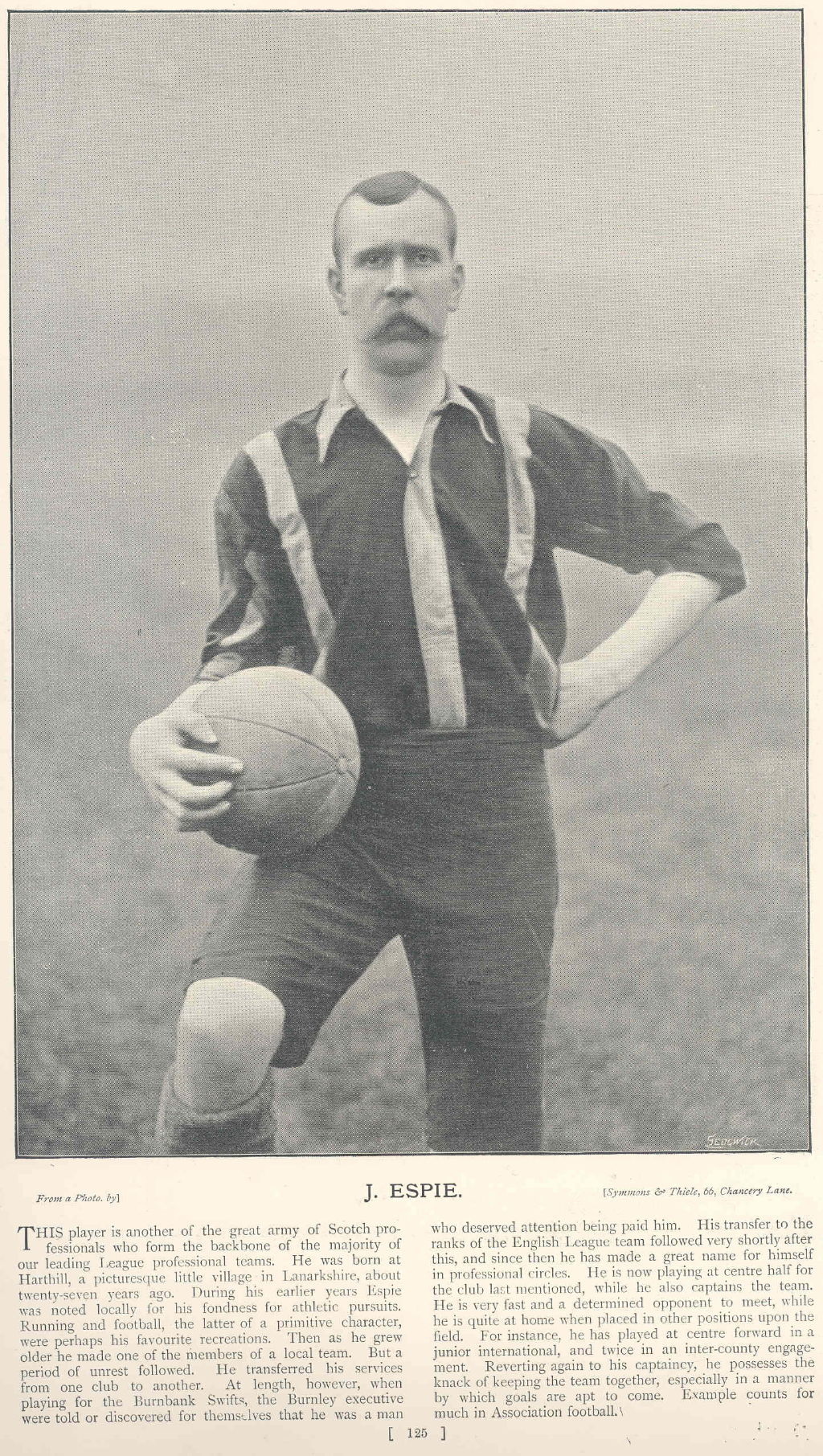
Photographs from 'The Sportfolio', a book filled with portraits of prominent sporting personalities. Football players for leading professional teams (including Bolton Wanderers, Millwall, Preston North End and the Woolwich Arsenal) are included, together with players for the amateur clubs, such as Corinthians, who often came from public school and university-educated backgrounds.
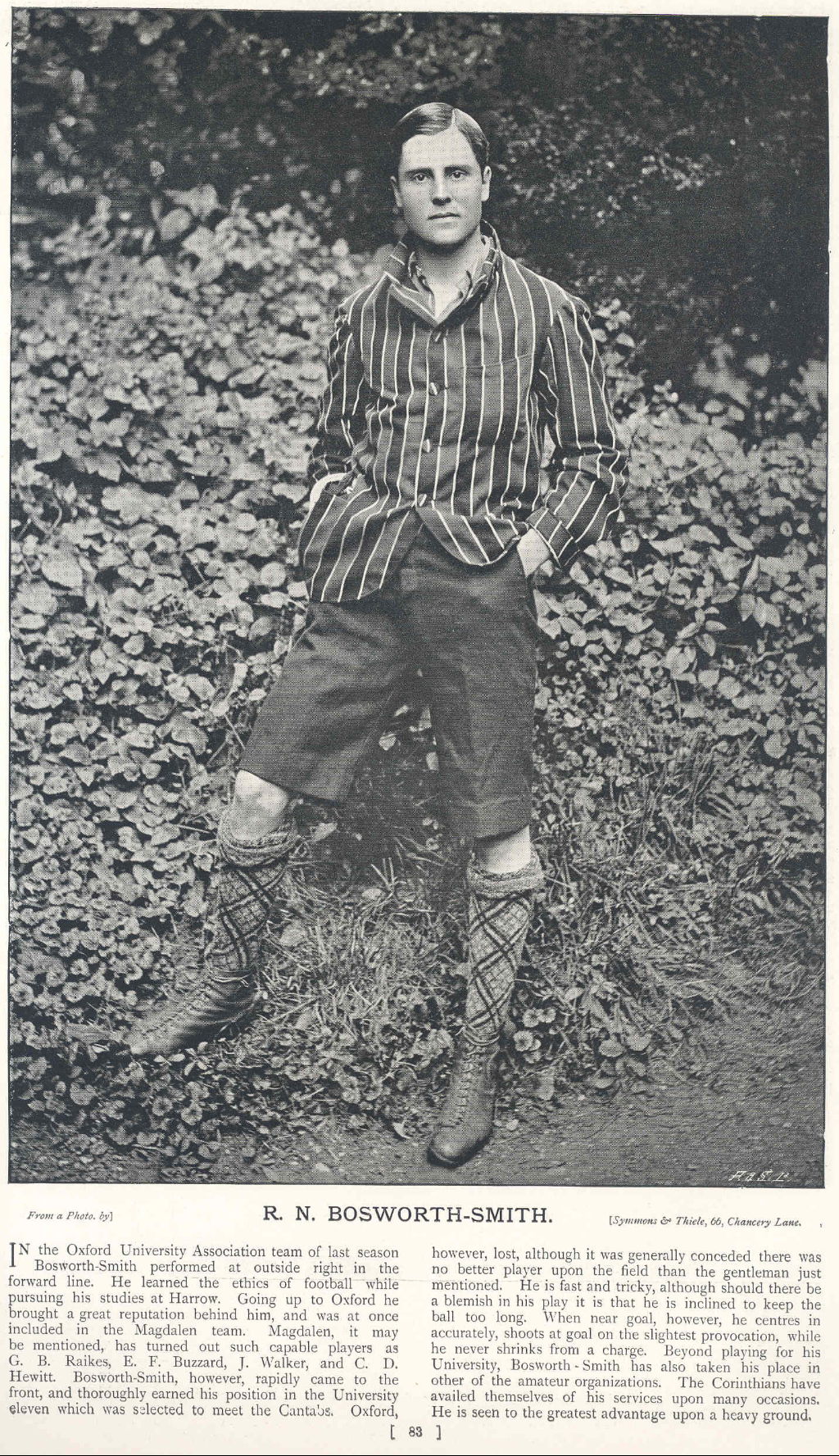
The players shown below are the impressively moustached John "Jock" Espie of Burnley, a Scottish defender for a professional club; and R.N. Bosworth-Smith, the Oxford University-educated forward for the Corinthians, who is described as having learnt "the ethics of football while pursuing his studies at Harrow".
From the National Cycle Archive; document reference: MSS.328/N10/S/P/1.
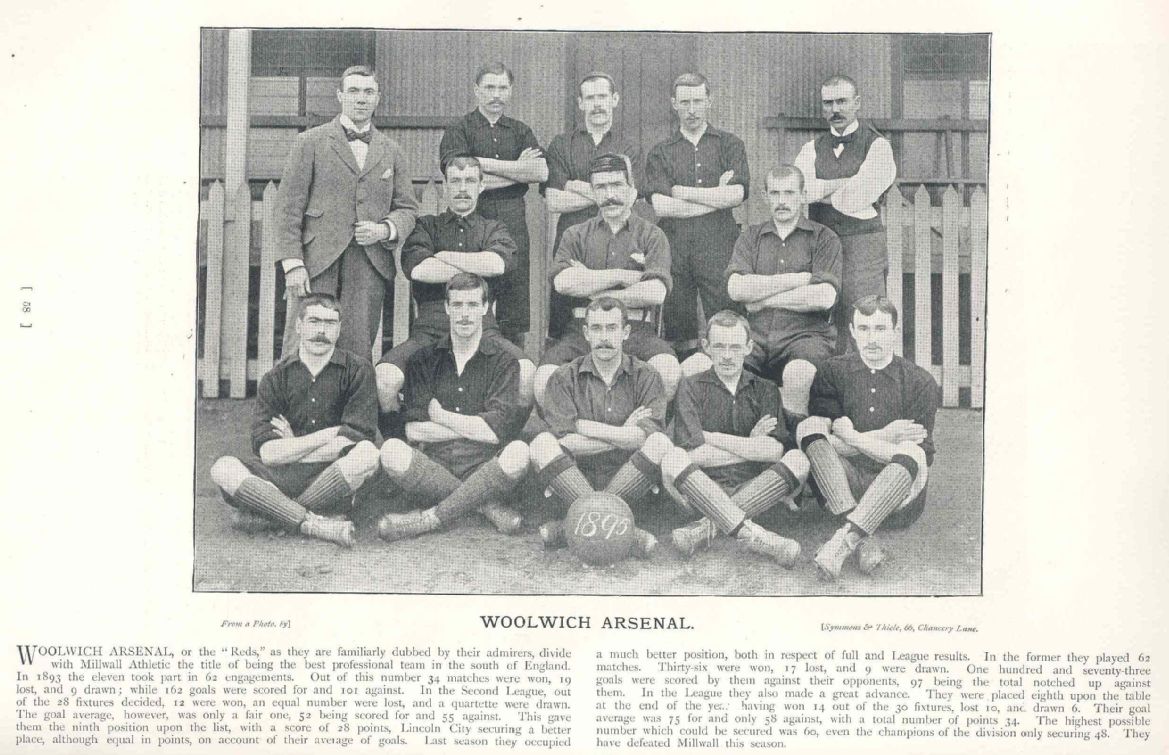
The Woolwich Arsenal, 1895
Team photograph of Woolwich Arsenal, or "the "Reds" as they are familiarly dubbed by their admirers". 'The Sportfolio' describes Arsenal as then sharing with Millwall Athletic "the title of being the best professional team in the south of England".
Like many other leading football teams (including West Ham and Manchester United), Arsenal was originally a works team, formed by workers at the Royal Arsenal, Woolwich, in 1886. The team turned professional in 1891 and moved to Highbury in north London in 1913.
From the 'The Sportfolio', included in the National Cycle Archive; document reference: MSS.328/N10/S/P/1.
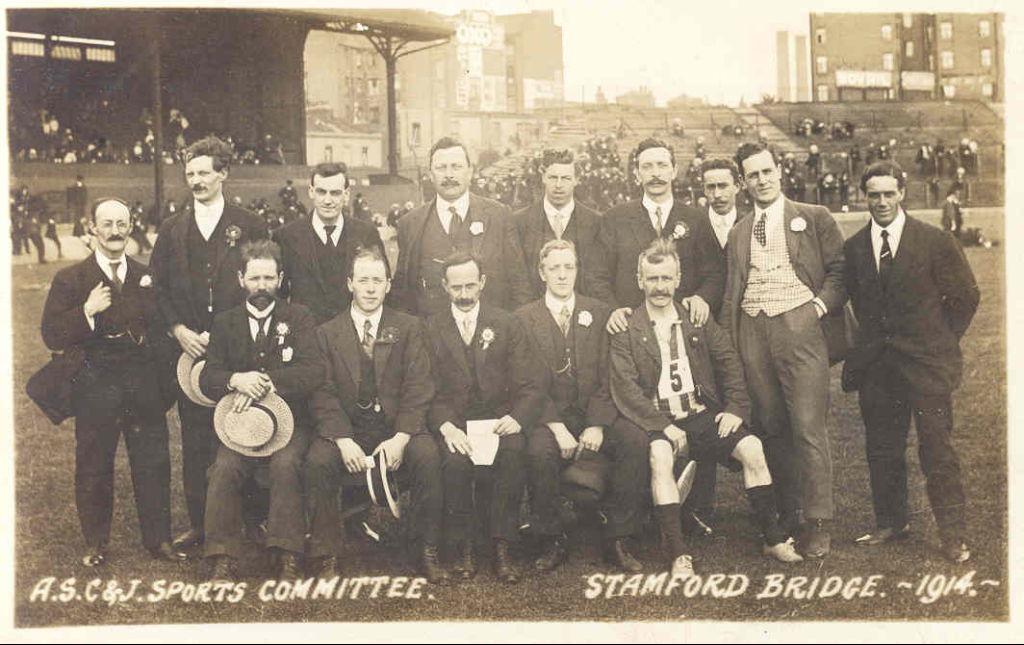
An outing to Stamford Bridge, 1914
Group photograph showing the Sports Committee of the Amalgamated Society of Carpenters and Joiners on the pitch at Chelsea's ground. Trade unions operated a variety of sporting and social clubs for their members.
Stamford Bridge was originally built as an athletics stadium, and became the home stadium of the newly formed Chelsea Football Club in 1905 (and one of the largest football grounds in the country). The terraces and some of the spectators can be seen in the background.
Included in the archives of the Amalgamated Society of Carpenters and Joiners; document reference: MSS.78/ASCJ/7/3/2.
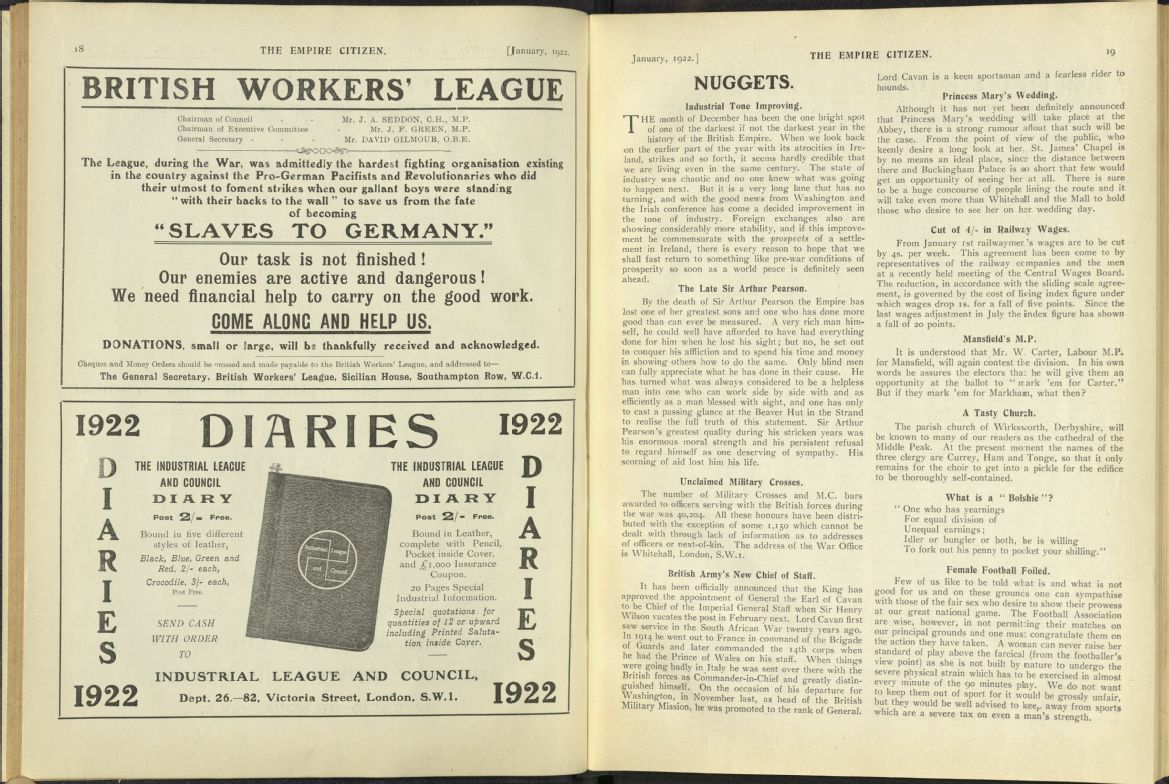
Female football foiled, 1922
Women's football came to the fore during the First World War, when the men's league was suspended and women's work teams grew huge crowds. This growth in the game was halted in 1921, when the Football Association banned women from playing football matches on the grounds of its members - an action which effectively outlawed women's football in England as a spectator sport.
These pages are from 'The Empire Citizen', magazine of the British Workers' League (tagline: "Down with the Bolshies - For Britain and Empire!"), which strongly approved of the FA's actions, arguing that women are "not built by nature to undergo the severe physical strain" of 90 minutes on the pitch and could only therefore be "farcical" as players.
'The Workers' Sports Movement', 1928
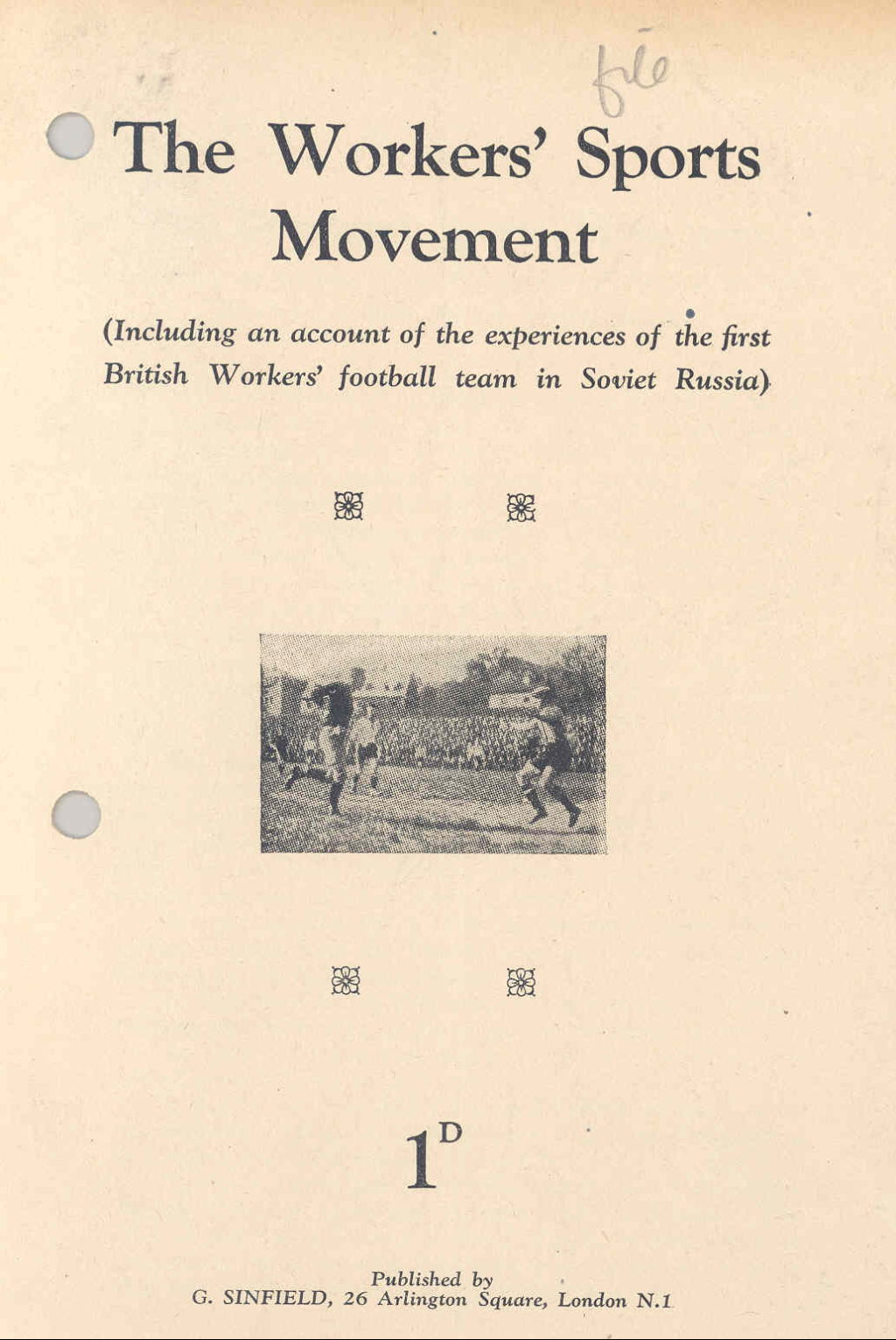
Pamphlet promoting the British Workers' Sports Movement, including a copy of the farewell declaration by the first British workers' football team to play in Soviet Russia (in 1927). The team played seven matches in Moscow, Leningrad, Kharkov, the Don Basin and Kiev in front of large crowds (30,000 in Moscow), and lost all but one match. The pamphlet variously identifies the reasons for the losses as the different Russian rules, the hot weather, the smaller than usual ball, poor refereeing, dubious interpretations of the offside rule, the amount of travelling, and, on occasions, superior playing by the opposition.
Included in a file on 'Workers' sports organisations, 1926-1945', from the archive of the Trades Union Congress; document reference: MSS.292/807.12/5. This document has been digitised and be read in full online.
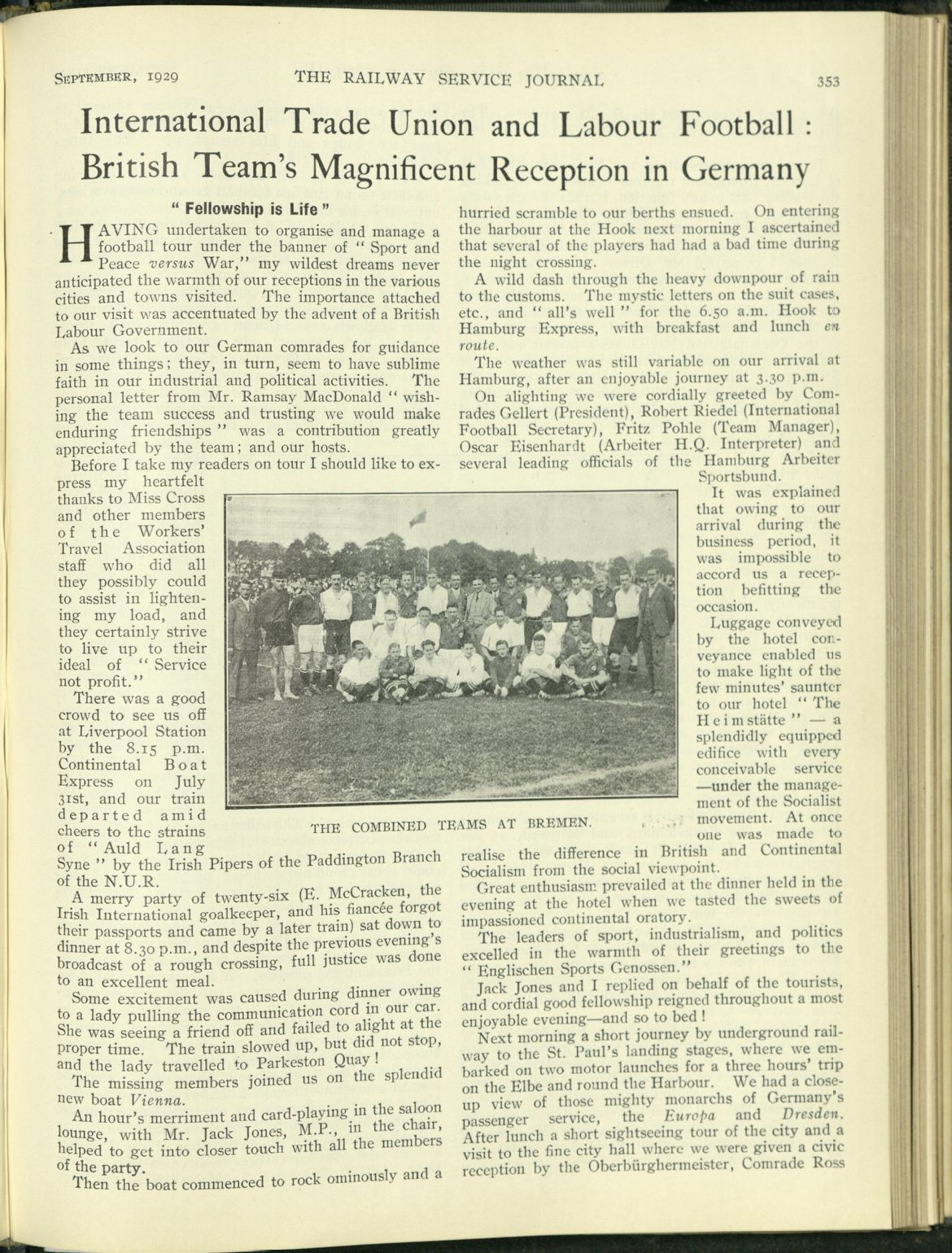
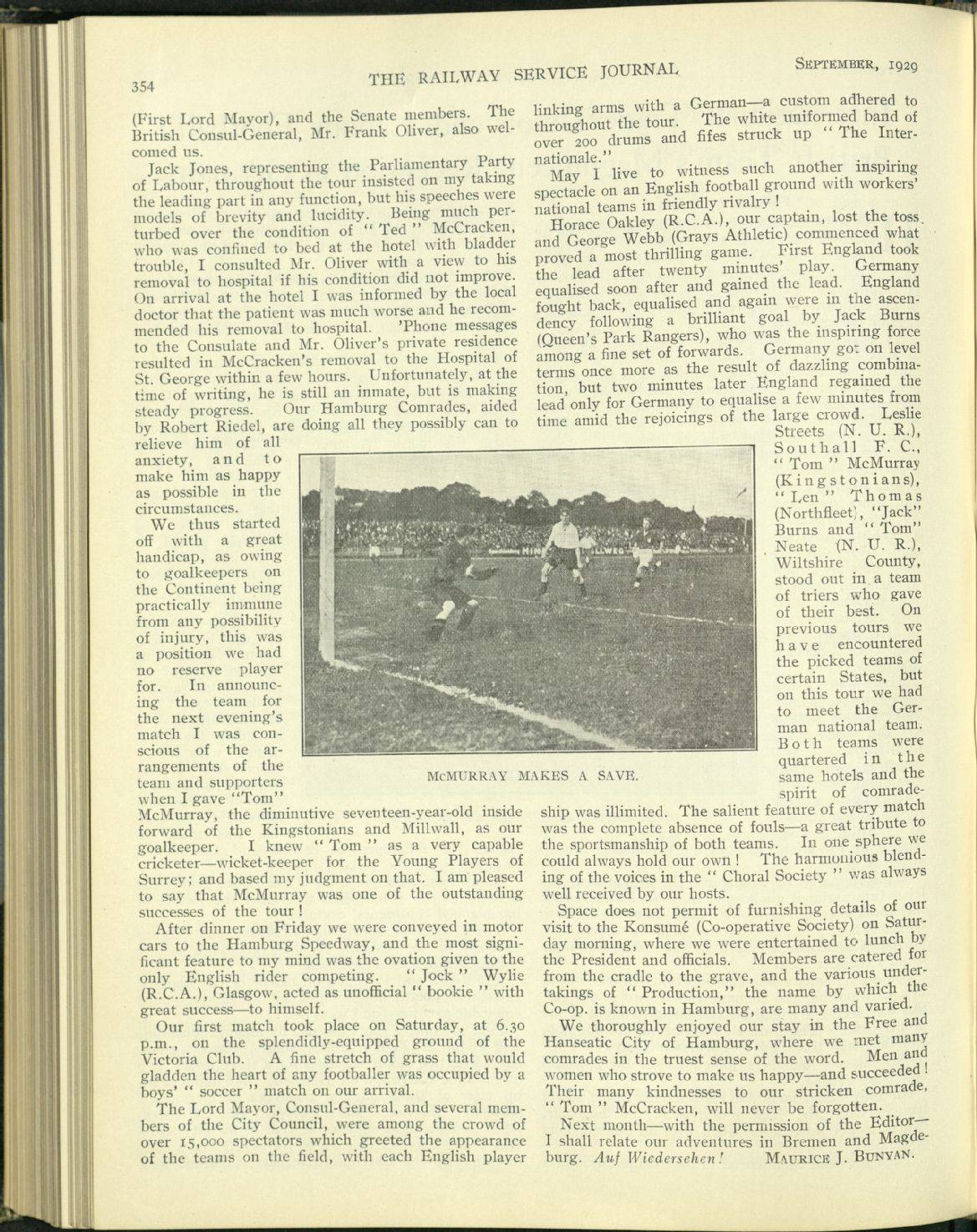
'Fellowship is life', 1929
In 1929 the British labour movement sent a football team to tour Germany as a post-war gesture of peace and goodwill. The team combined amateur footballers who played for trade union teams with several professionals, notably the Irish goalkeeper E. McCracken (hospitalised during the trip) and the Millwall player Tom McMurray.
The article reproduced below is from the Railway Service Journal and is one of a series of reports on the positive reception of the tour in Germany.
Included in the archives of the Transport Salaried Staffs' Association; document reference: MSS.55/4/PER/1/23.
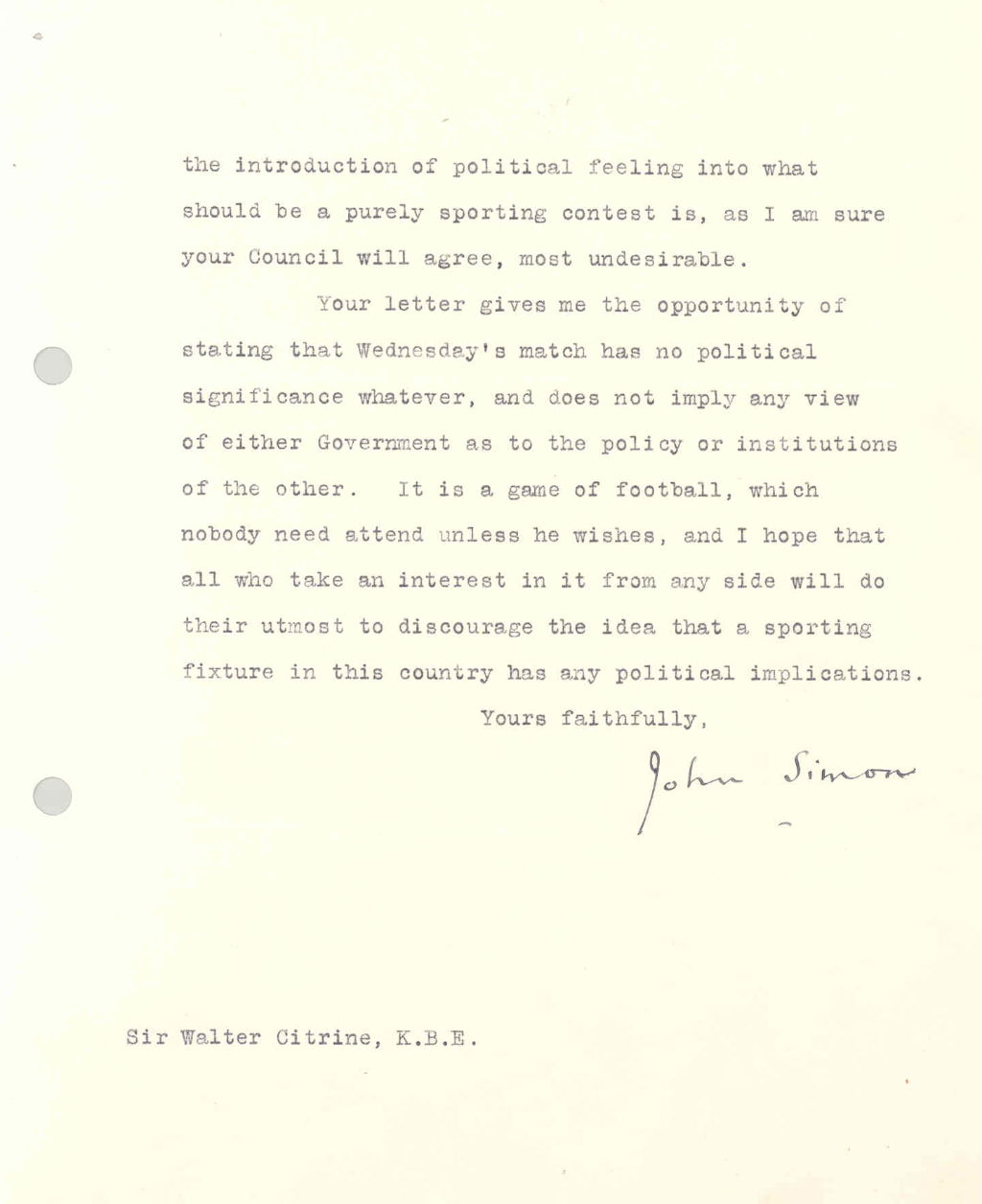
'No political significance whatever'?, 1935
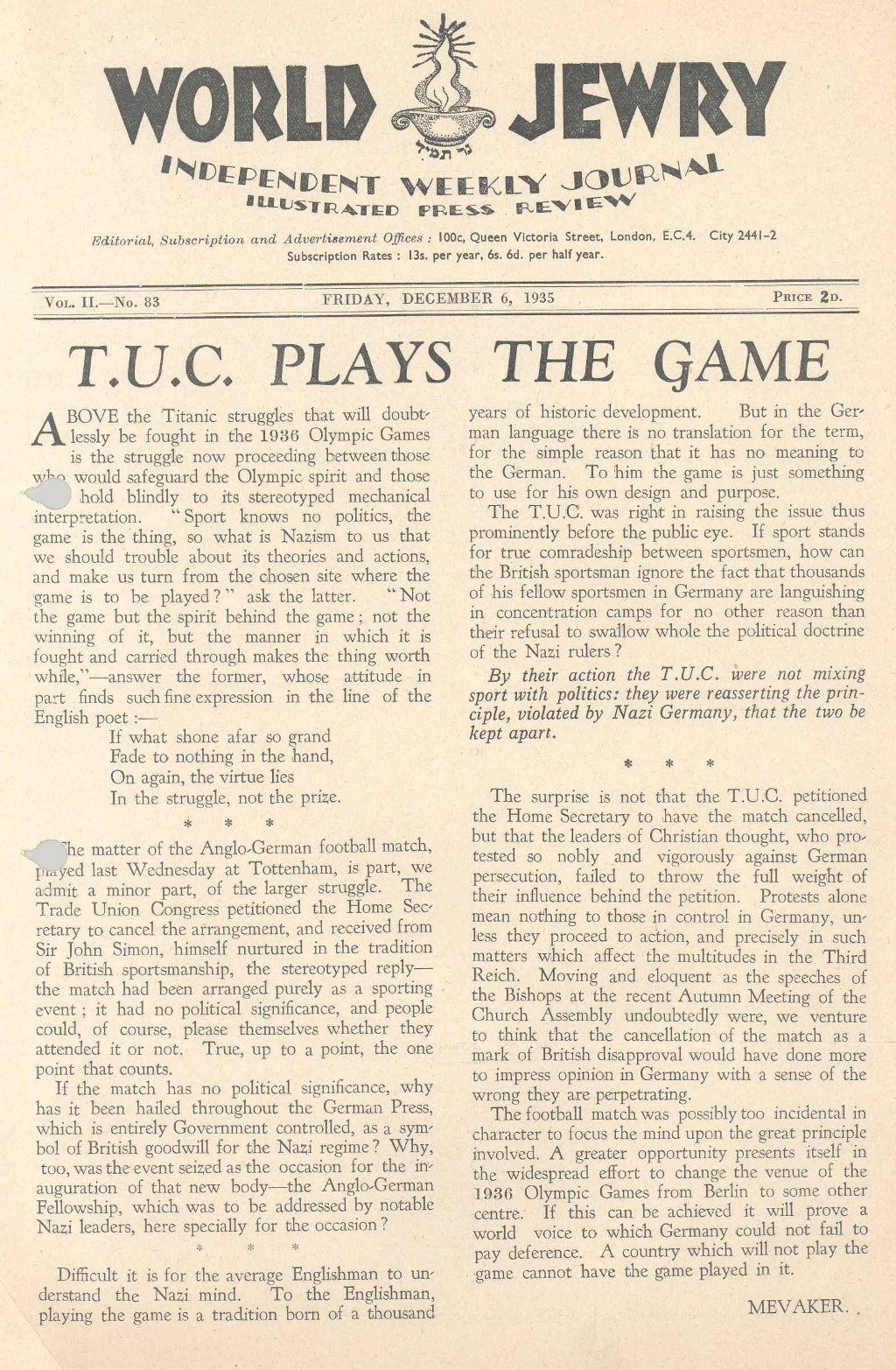
Documents relating to the protests of the Trades Union Congress, through their General Secretary Sir Walter Citrine, over the proposed Anglo-German football match arranged by the English Football Association. The match was played on 4 December 1935 at White Hart Lane, the north London home ground of Tottenham Hotspur, a club which then had a sizeable number of Jewish supporters.
The documents include a front page article from the London-based Jewish journal 'World Jewry' praising the opposition of the Trades Union Congress to the match. It argues that "by their action the TUC were not mixing sport with politics: they were reasserting the principle, violated by Nazi Germany, that the two be kept apart". In contrast, a letter from the Home Secretary, Sir John Simon, dismisses the view that the match could be seen as a symbol of British support for the Nazi regime.
Included in a file on 'Anglo-German Football Match, 1935', from the archives of the Trades Union Congress; document reference: MSS.292/808.91/2.

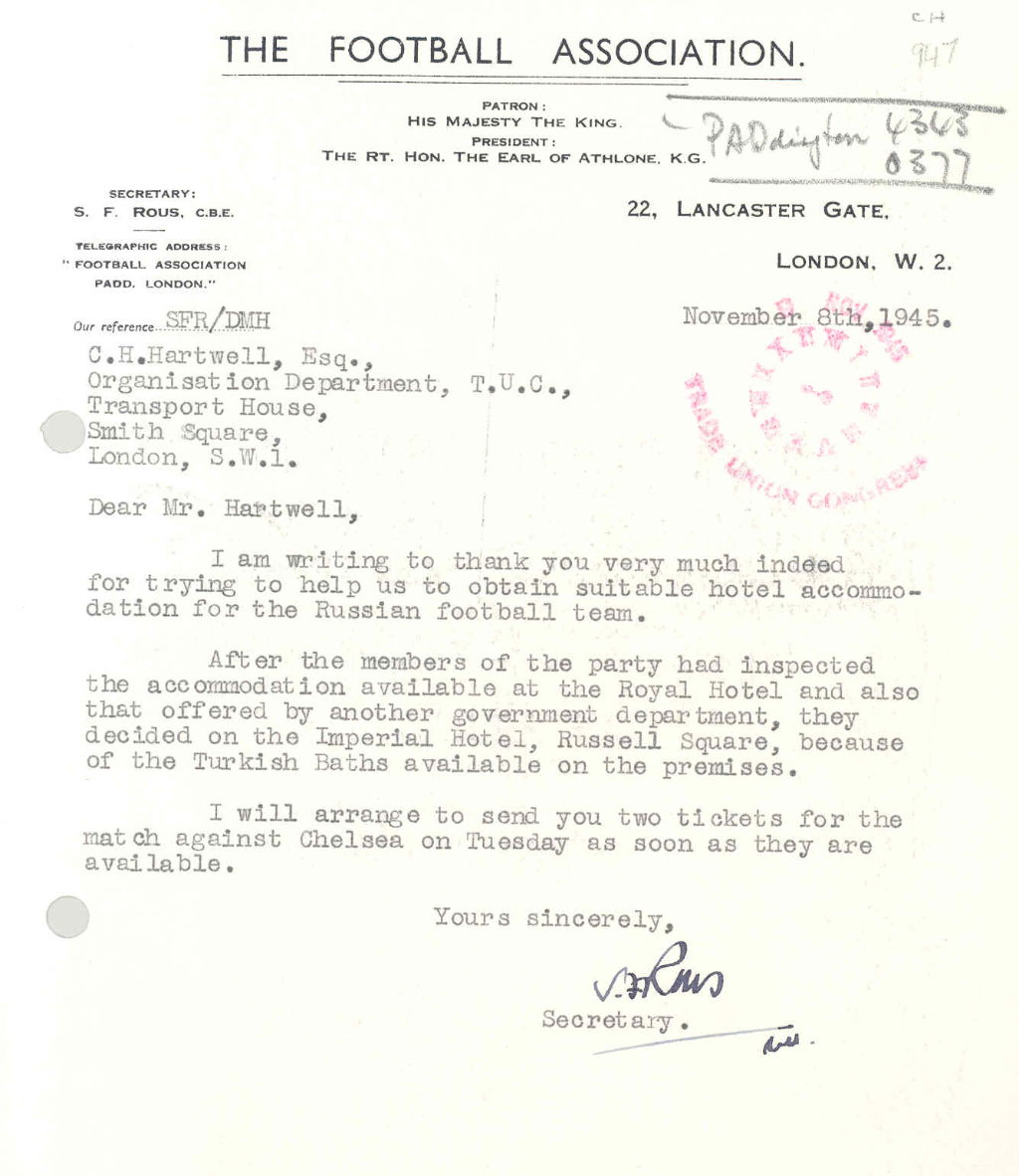
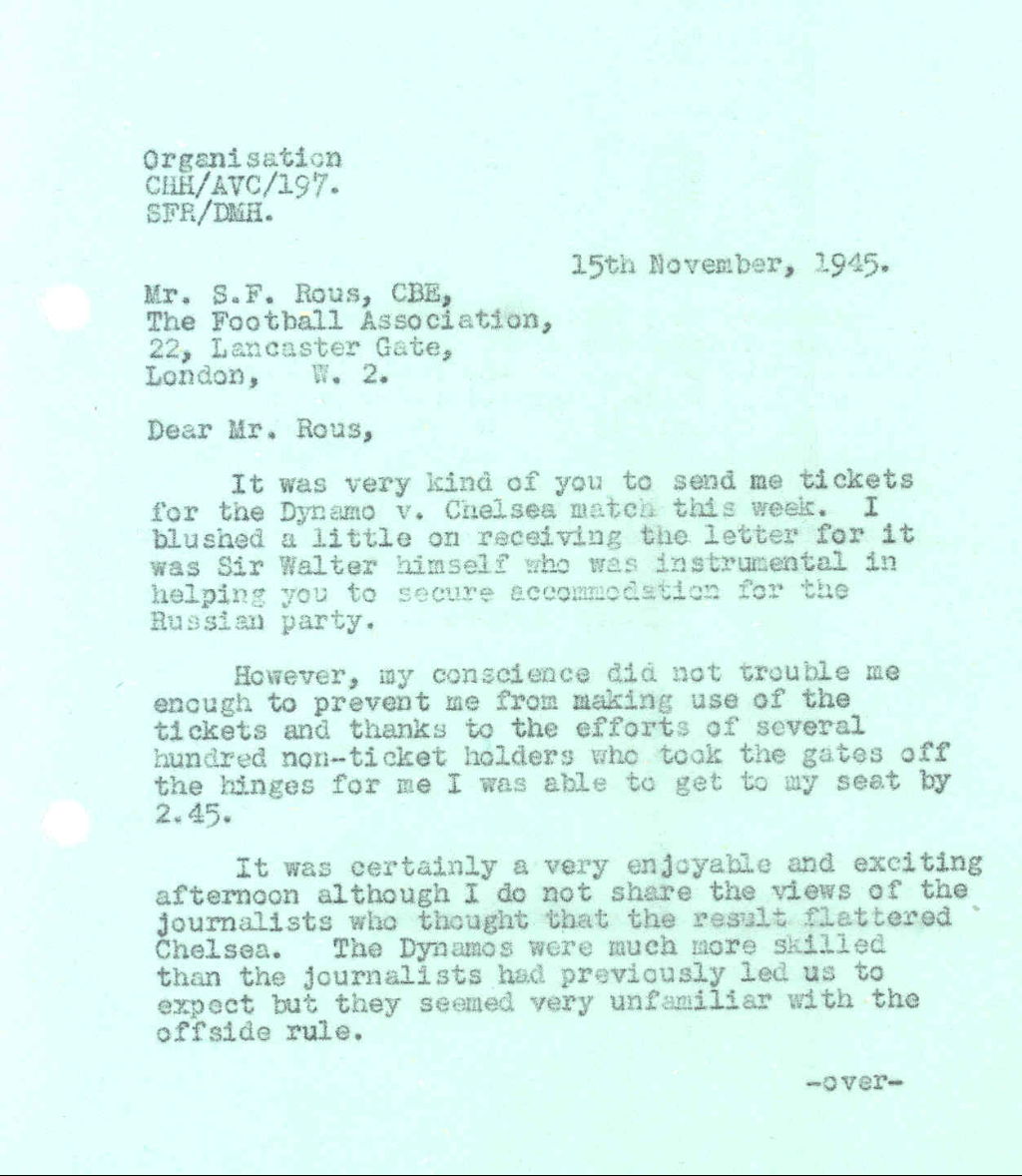
Dynamo Moscow in London, 1945
Extracts from correspondence between the Football Association and the Trades Union Congress regarding the organisation of Dynamo Moscow's British tour. Dynamo were the first professional Soviet team to play in Britain, and matches were played against Chelsea, Cardiff City, Rangers and an augmented Arsenal side. The tour was originally arranged during the Second World War as a gesture of solidarity between the two countries.
The popularity of the match as a spectacle is hinted at in the second letter, which refers to "several hundred non-ticket holders who took the gates off the hinges". It also refers to the two teams' different interpretations of the offside rule.
Included in a file on 'Russia: General, 1936-1945', from the archives of the Trades Union Congress; document reference: MSS.292/947/8.
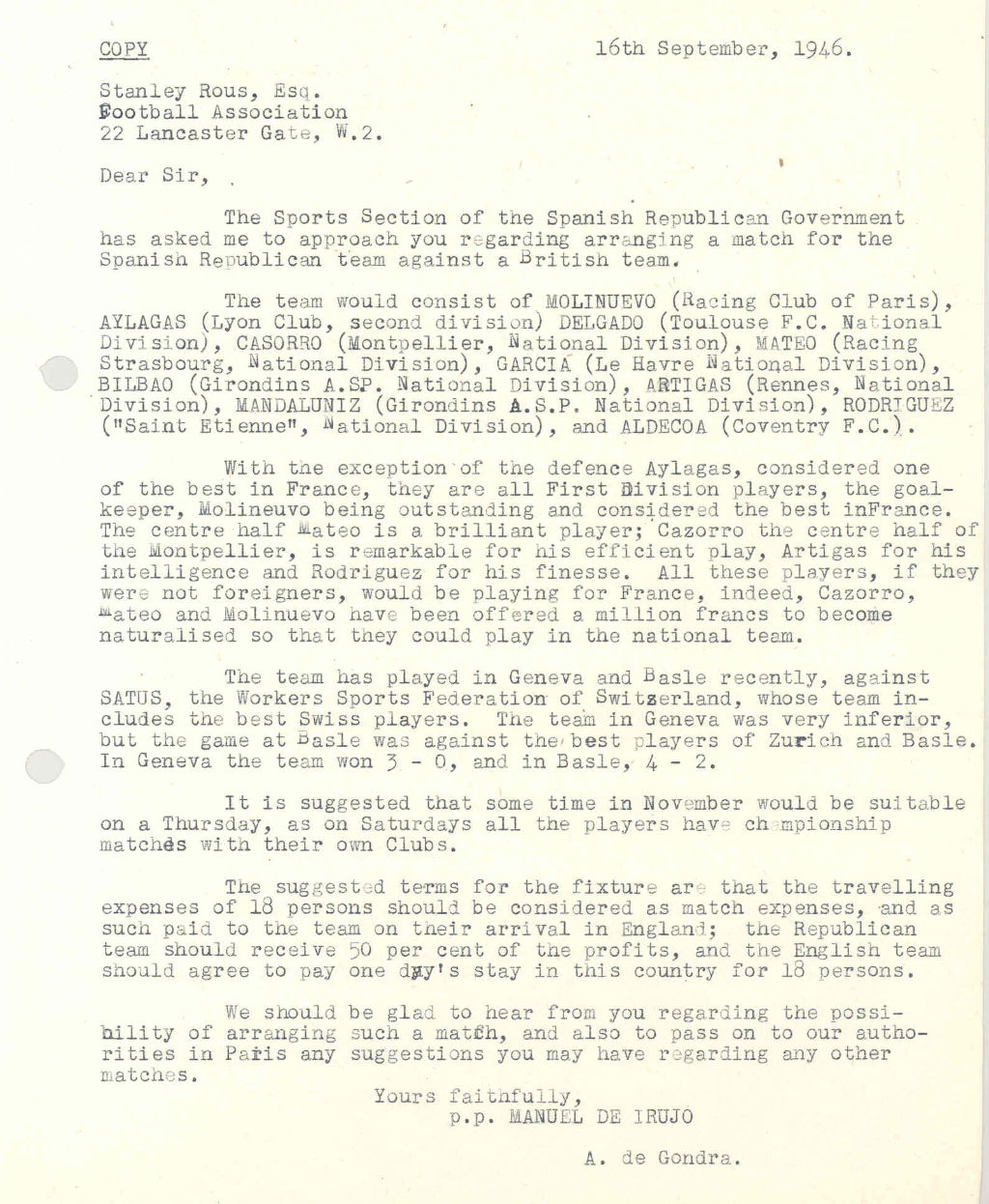
Players in exile, 1946
Copy of a letter to Stanley Rous, Secretary of the Football Association, sent on behalf of Manuel de Irujo, former head of the Basque government and a representative of the Spanish Republican Government in exile. Irujo asks for a match to be arranged between Republican footballers and a British team. The majority of the Republican players played for French teams, having fled Spain following Franco's victory in the Spanish Civil War in 1939. The exception was Coventry City's striker Emilio Aldecoa, who became the first Spanish player in the English league when he joined Wolverhampton Wanderers in 1943.
Included in a file on 'Spain, 1945-1948', from the archives of the Trades Union Congress; document reference: MSS.292/946/2.
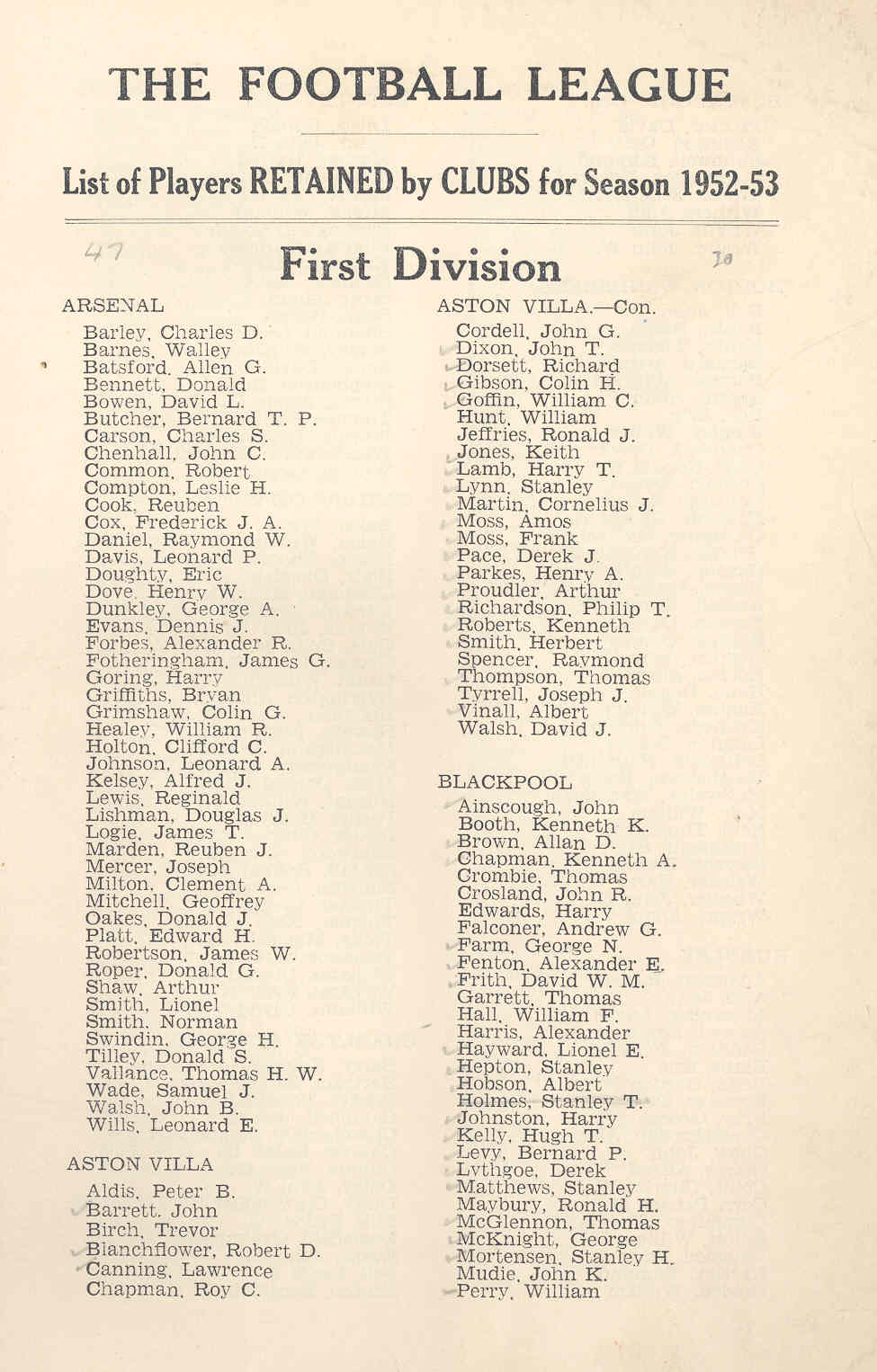
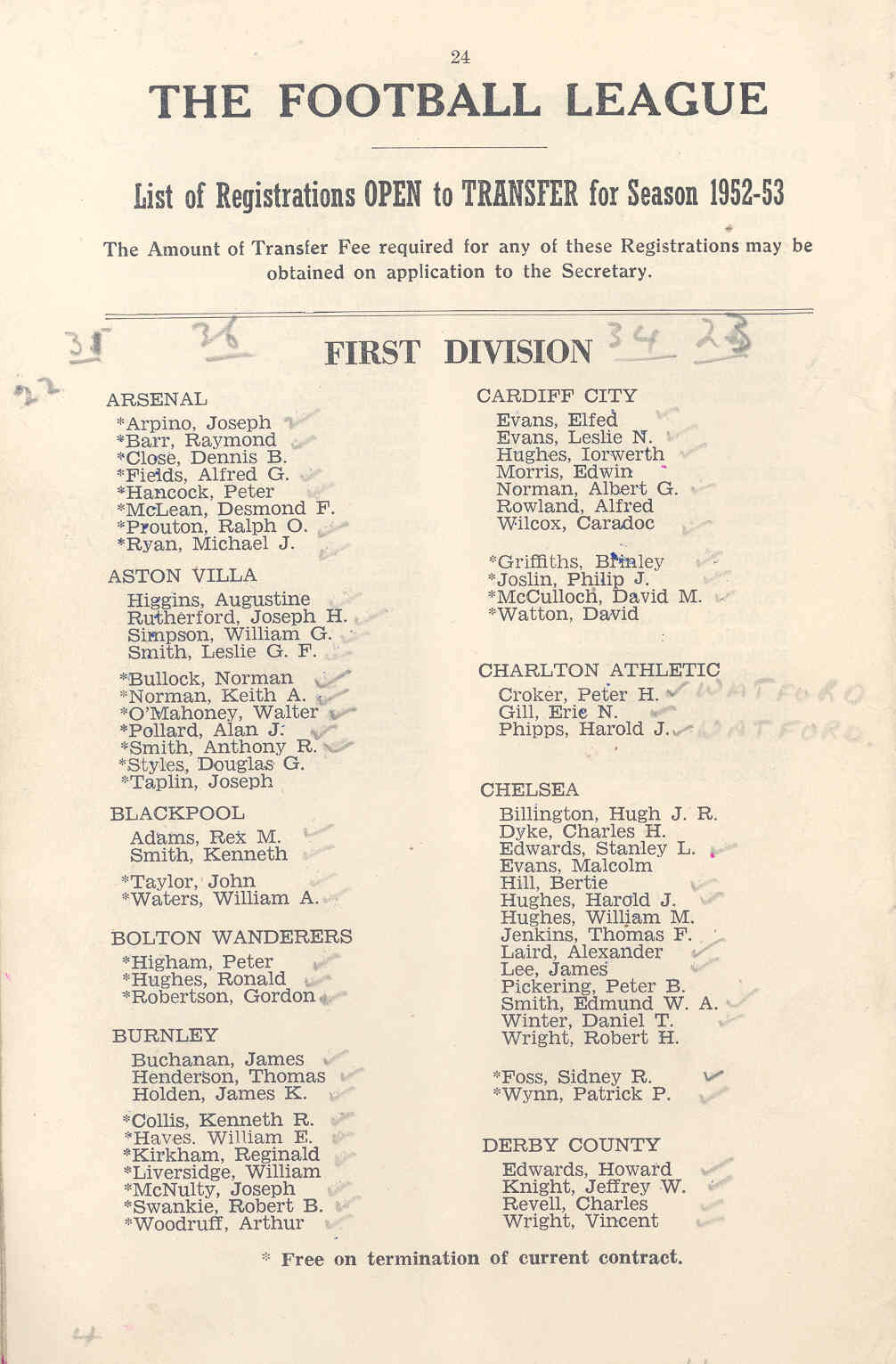
Football League retain and transfer list, May 1952
This retain and transfer list lists all players retained by League clubs (including Danny Blanchflower for Aston Villa and Stanley Matthews for Blackpool), and those who were available for transfer. The publication is one of a series of documents relating to conditions of employment in Association Football, which were collected by the Trades Union Congress during the 1950s.
Included in a file on 'Entertainment Industry: football, 1955-1956', from the archives of the Trades Union Congress; document reference: MSS.292/674.33/3.
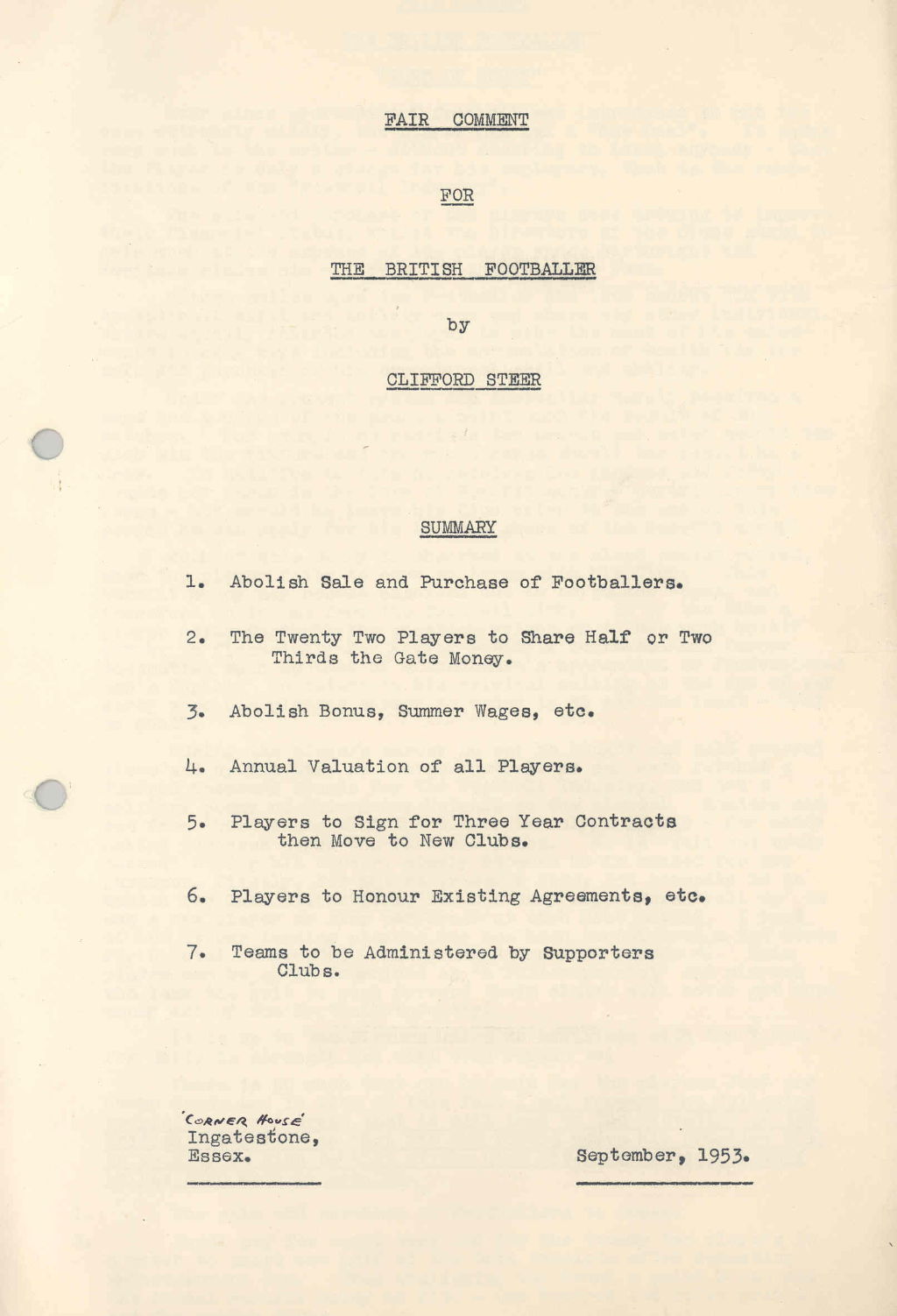
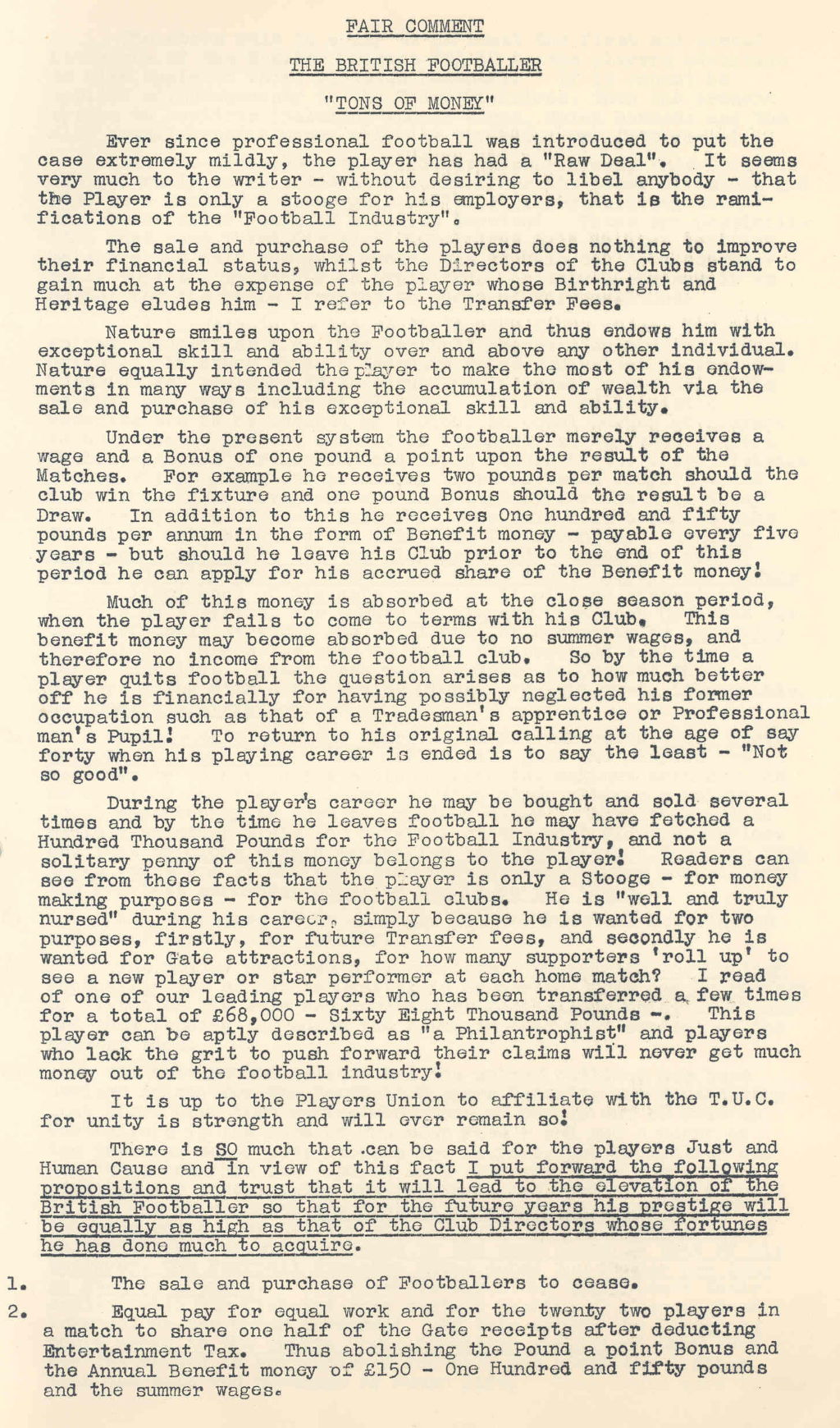
'Fair comment for the British footballer', 1953
Policy for the reorganisation of "the "football industry"" by Clifford Steer. Steer argues that "the player is only a stooge for his employers", who receives a tiny proportion of the money made out of him by his owners. Suggested remedies include the abolition of the sale and purchase of footballers, the 22 players to receive a minimum of half the gate, players to spend a maximum of three years at any one club, and teams to be administered by supporters' groups. The idea of "equal pay for equal work" is also suggested.
Included in a file on 'Entertainment Industry: football, 1955-1956', from the archives of the Trades Union Congress; document reference: MSS.292/674.33/3.
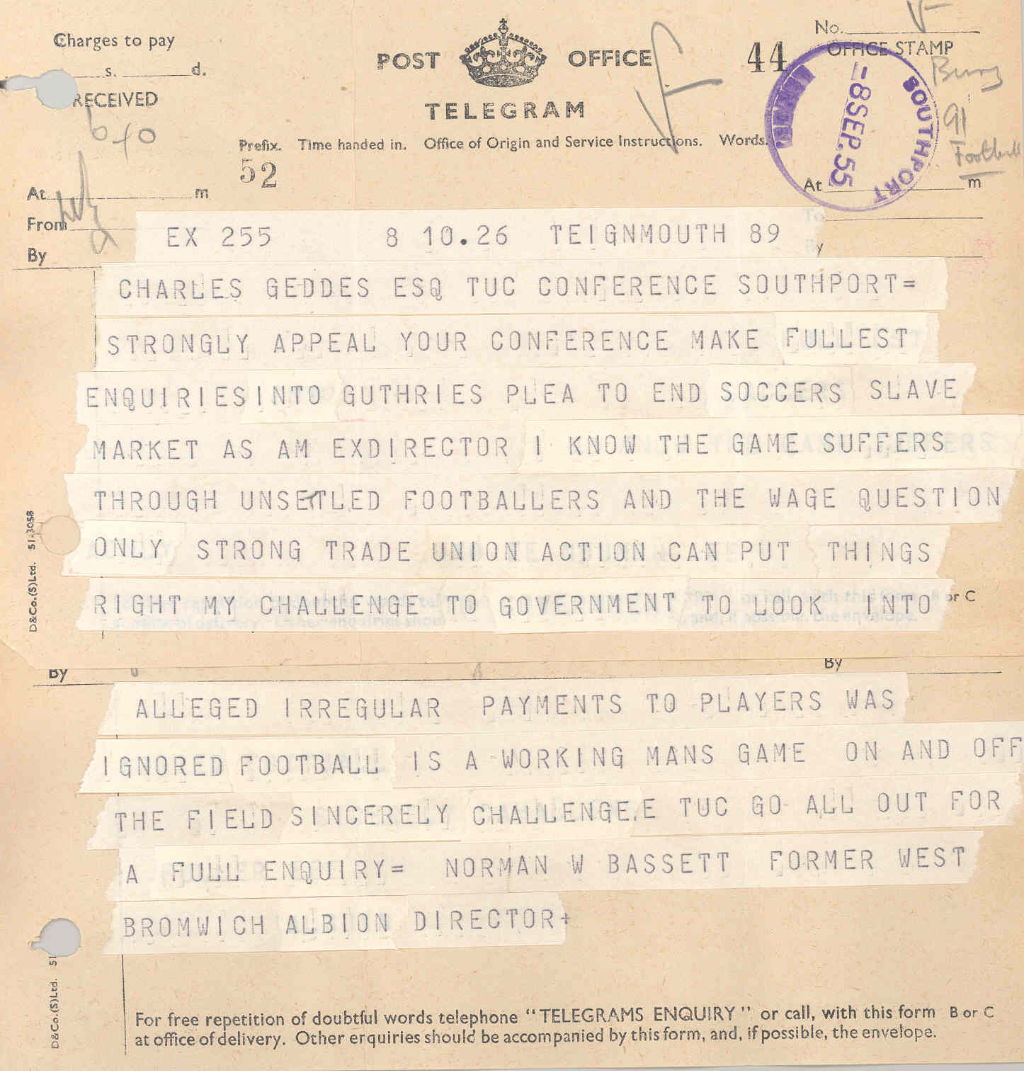
"Soccers slave market", 1955
Telegram from Norman W. Bassett, a former Director of West Bromwich Albion, to the Trades Union Congress conference. Bassett appeals for the TUC's support and "strong trade union action" to address the problems of professional football players. He argues that "football is a working mans game on and off the field" and comments on alleged corruption in the game.
Included in a file on 'Entertainment Industry: football, 1955-1956', from the archives of the Trades Union Congress; document reference: MSS.292/674.33/3.
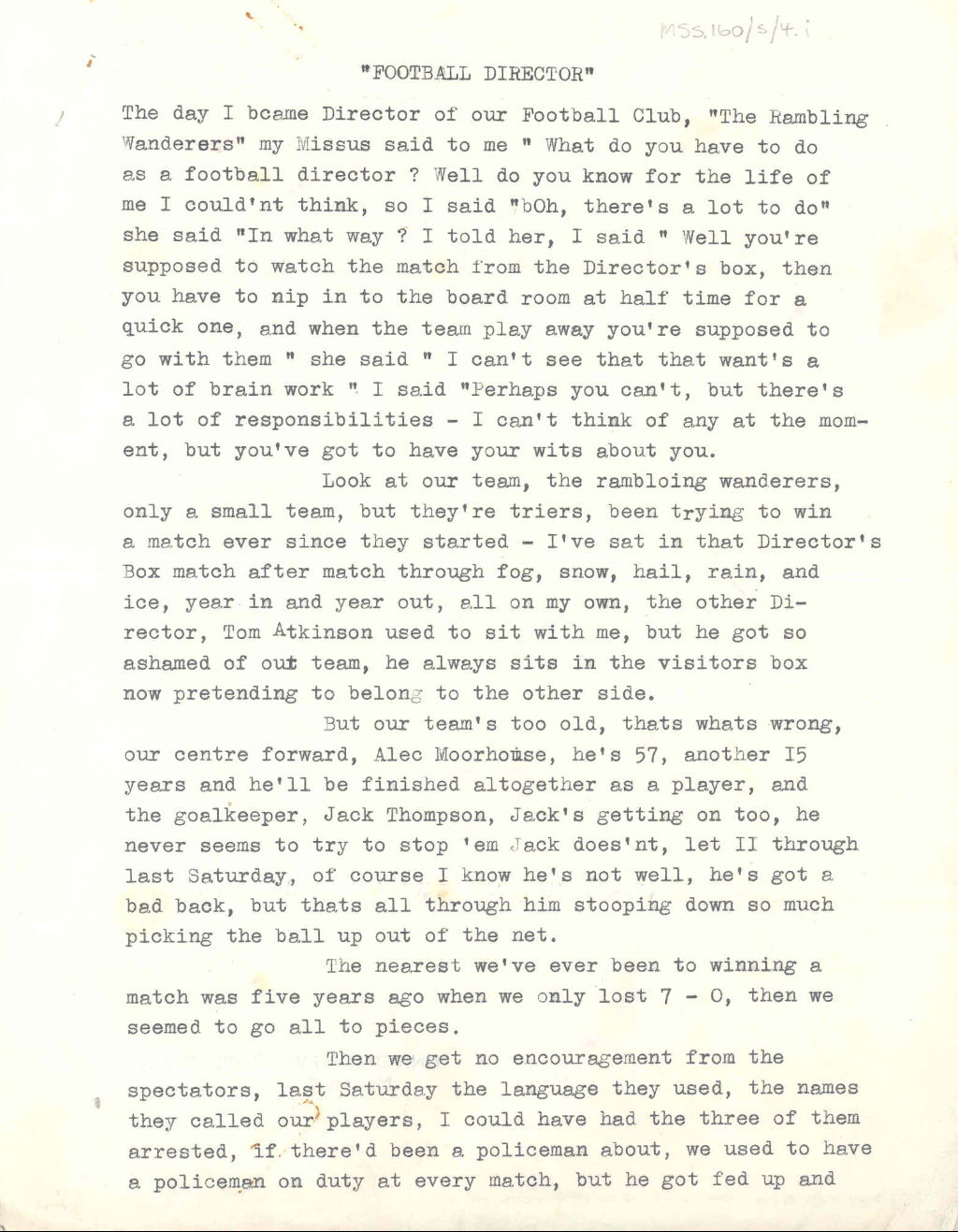
Robb Wilton's 'Football Director', undated [1950s]
Extract from script by the Liverpool-born music hall artist, and radio and variety comedian, Robb Wilton, on the fictional (and useless) 'The Rambling Wanderers' ("they're triers, been trying to win a match ever since they started"), his not very onerous responsibilities as the director of the club, the limitations of his players and the crowd trouble caused by his club's three supporters.
Included in the archives of Robb Wilton; document reference: MSS.160/S/4.
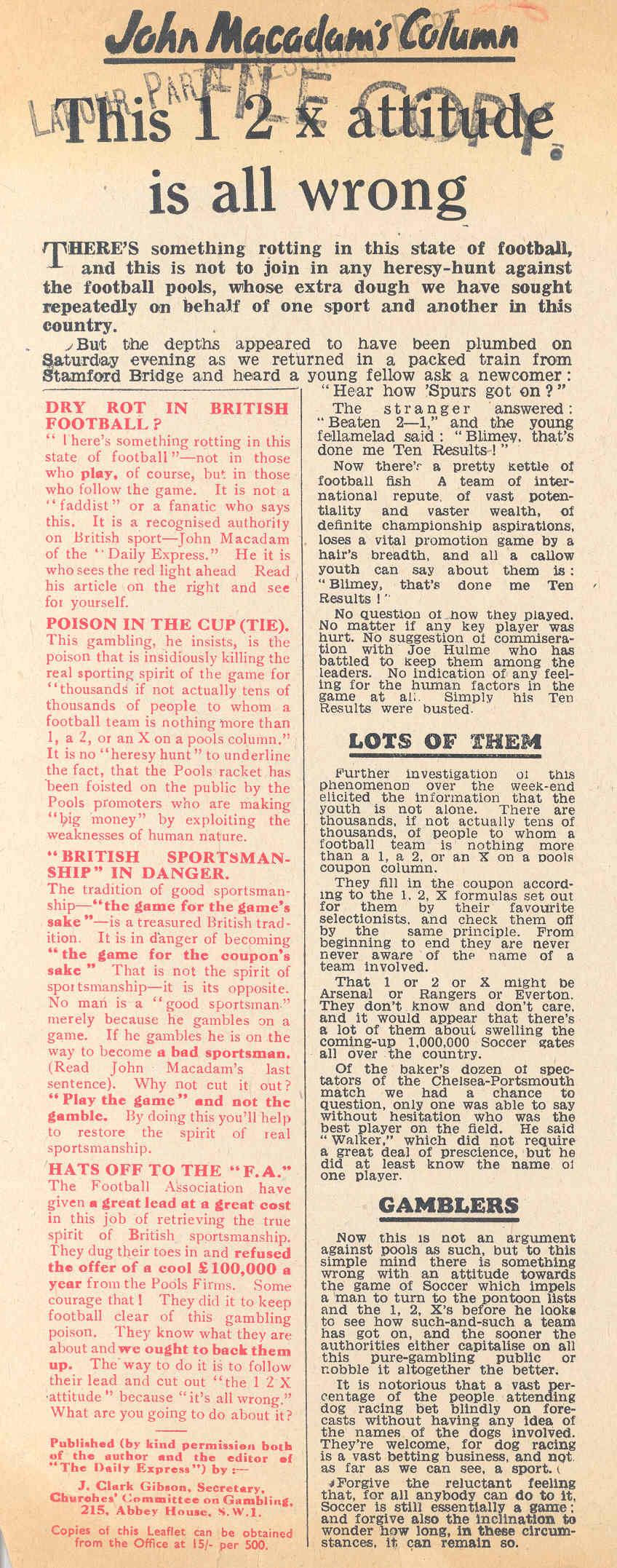
"Something rotting in this state of football...", undated
Leaflet from the Churches' Committee on Gambling, condemning the rise in football pools. The pools are condemned as endangering traditional "British sportsmanship", and reducing fans to "people to whom a football team is nothing more than a 1, a 2, or an X on a pools coupon column", and who focus only on the accumulation of results, rather than which players or teams played well.
Included in the 'Miscellaneous Collection'; document reference: MSS.21/1102.
'Liverpool football team looks in at the local', 1966
Photograph of the Liverpool team in a pub the day before "they were licking Everton five goals to one in the all important Merseyside derby". The shot was used as part of an advertising campaign by the Brewers' Society, featuring beer-drinking celebrities from the worlds of sport, film, television and literature (other adverts included Denis Law, Boris Karloff and Fred Trueman).
Included in the archives of the Brewers' Society; document reference: MSS.420/BS/6/5/21.

'Argentina '78: This game will be won by the people', 1978
Booklet produced for the 1978 World Cup in Argentina by Montonero Peronist Movement, Trade Union Branch. It focuses on the human rights abuses of the military dictatorship, and argues that the World Cup should go ahead to "allow the world to look into the real Argentina and peep at what goes on behind the tourist posters".
Included in the archive of the Iron and Steel Trades Confederation (ISTC); document reference: MSS.36/2000/99.


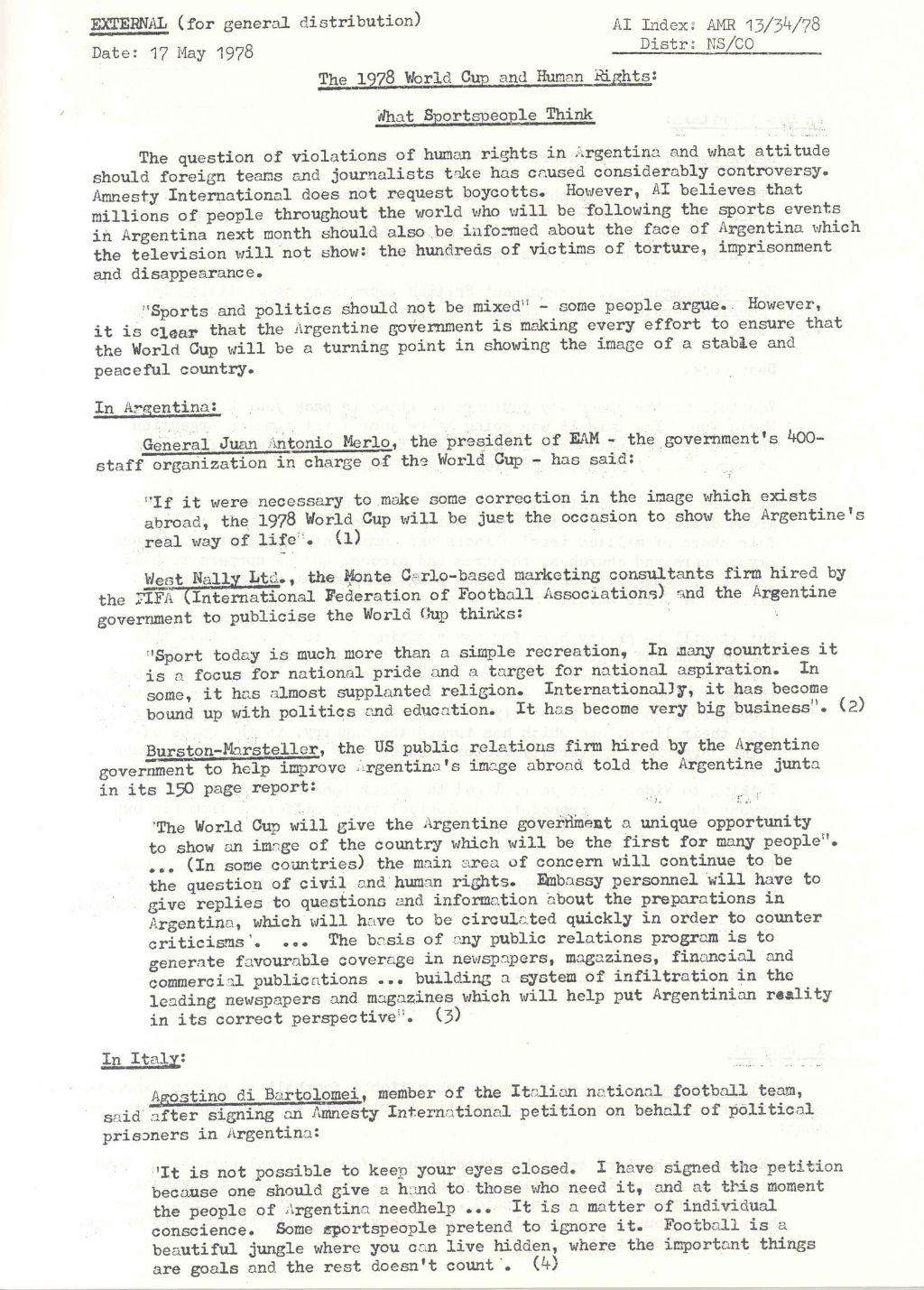
'The 1978 World Cup and human rights: What sportspeople think', 17 May 1978
Amnesty International bulletin on human rights violations in Argentina, hosts of the 1978 World Cup. Amnesty International responds to suggestions that sports and politics shouldn't be mixed, by arguing that the Argentinian government are using the World Cup to present an inaccurate "image of a stable and peaceful country" to the world's media.
The press release includes quotes from companies and individuals connected with sport, including from Italian player Agostino Di Bartolomei, who comments on the escapist nature of sport - "football is a beautiful jungle where you can live hidden, where the important things are goals and the rest doesn't matter".
Included in the archive of Amnesty International; document reference: MSS.34/4/1/AR27.
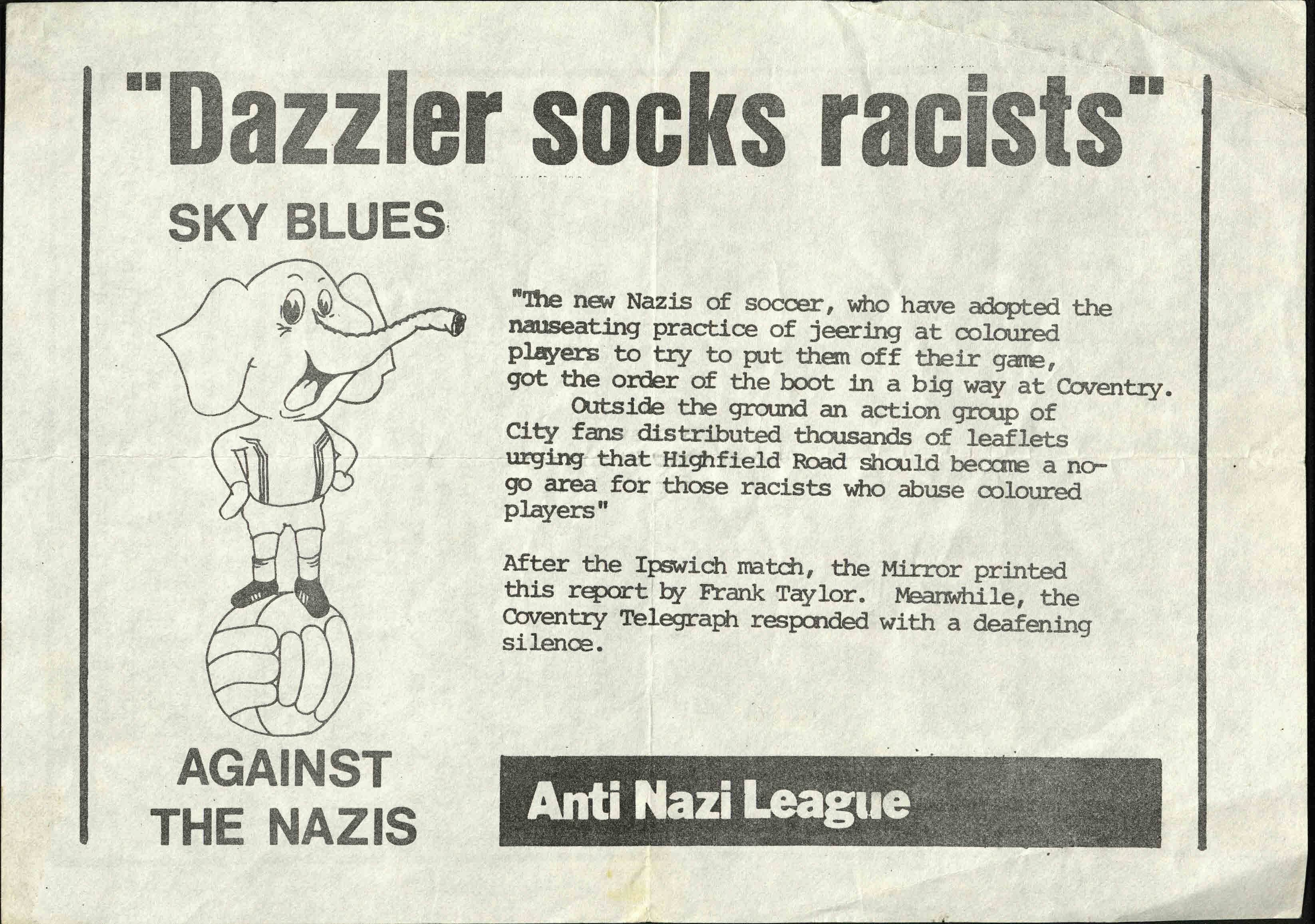
'Dazzler socks racists', 1978/9
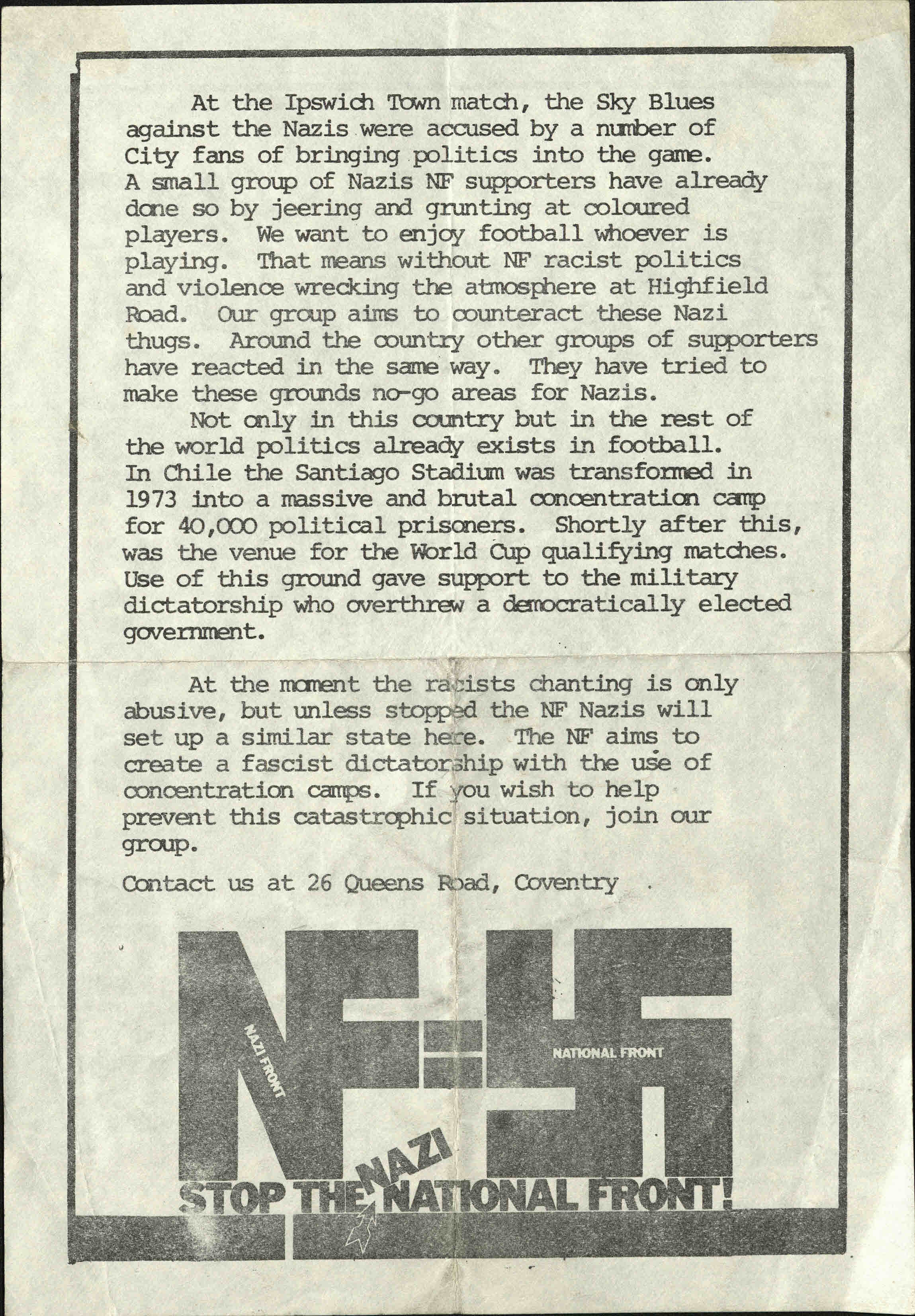
During the 1970s and 1980s, football became associated with hooliganism, violence on and off the terraces, and racist abuse against players. In the late 1970s the Anti-Nazi League and its youth offshoot School Kids Against the Nazis (formed to oppose the National Front and other prominent far-right groups) used popular culture to fight bigotry - most notably through Rock Against Racism. The groups tried to tackle extremism in football by asking prominent football players and managers to speak out against racism and producing a series of leaflets aimed at football supporters.
This leaflet - 'Dazzler socks racists' - features the Coventry City mascot dressed in classic 'egg timer' style shirt, and refers to the actions taken by some Sky Blues fans against "the new Nazis of soccer".
Included in a file of circulars and campaigning material from the archives of the Leamington Anti-Racist, Anti-Fascist Committee (with similar leaflets aimed at Leeds United and Tottenham Hotspur fans); document reference: MSS.247/11.
'Eh mate... what's the score?', 1989
Liverpool fanzine, mocking Manchester United's inability to win a title after the Manchester Evening News celebrated the club's top of the table position one game into the season. The Manchester club's apparent lack of local fans and angry new manager Alex Ferguson also get a mention. Manchester United began their string of league title winning seasons under Ferguson in 1992/3 (the first Premier League season), whilst the 1989/90 season was the last to be won by Liverpool for thirty years.
The fanzine also features more serious stories on the aftermath of Hillsborough (including proposed all-seater stadiums), racism in football and the proposed introduction of ID cards for football fans.
Included in the archive of the Socialist Party; document reference: 601/E/6/6.


'Reclaim the game', 1992
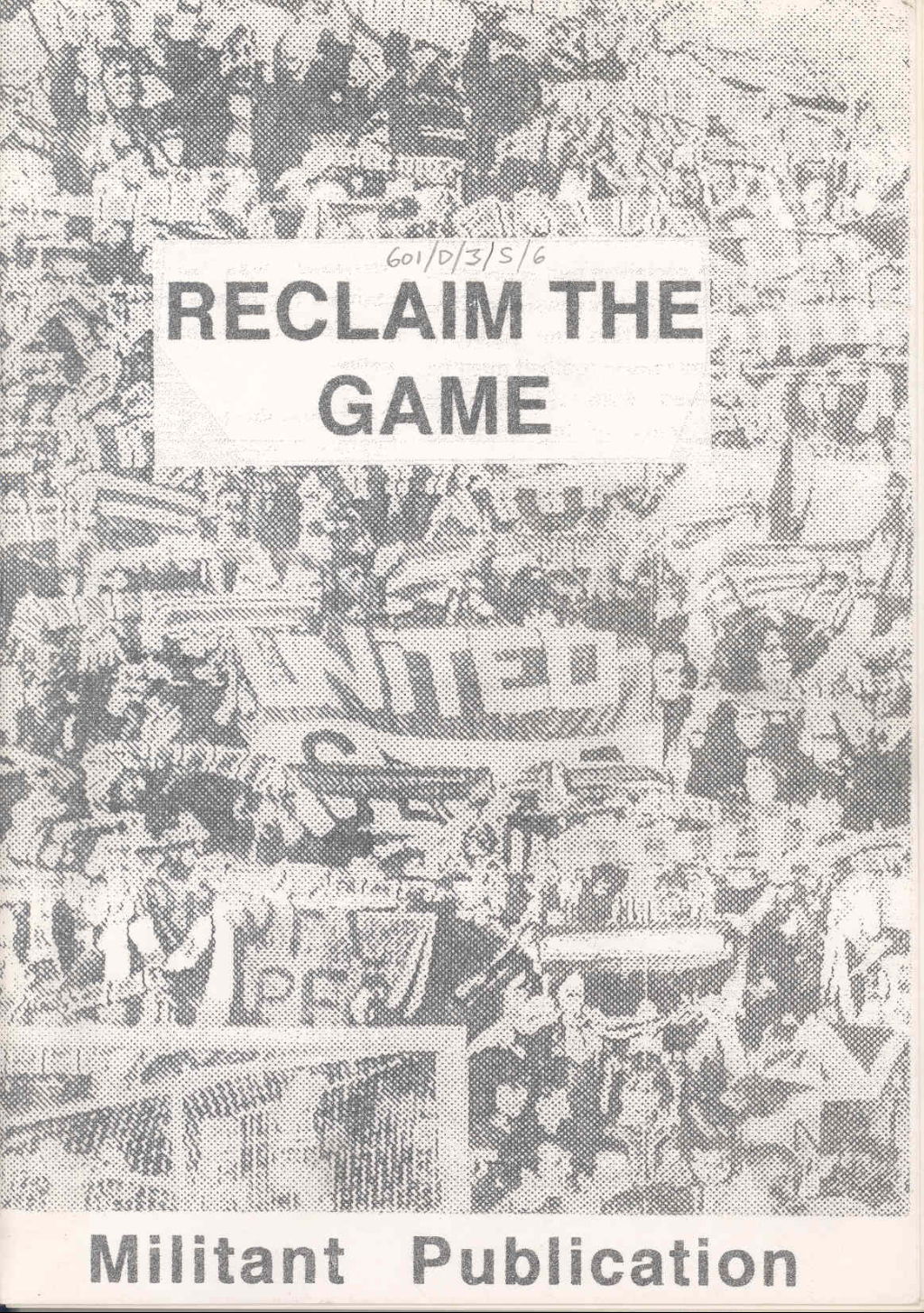
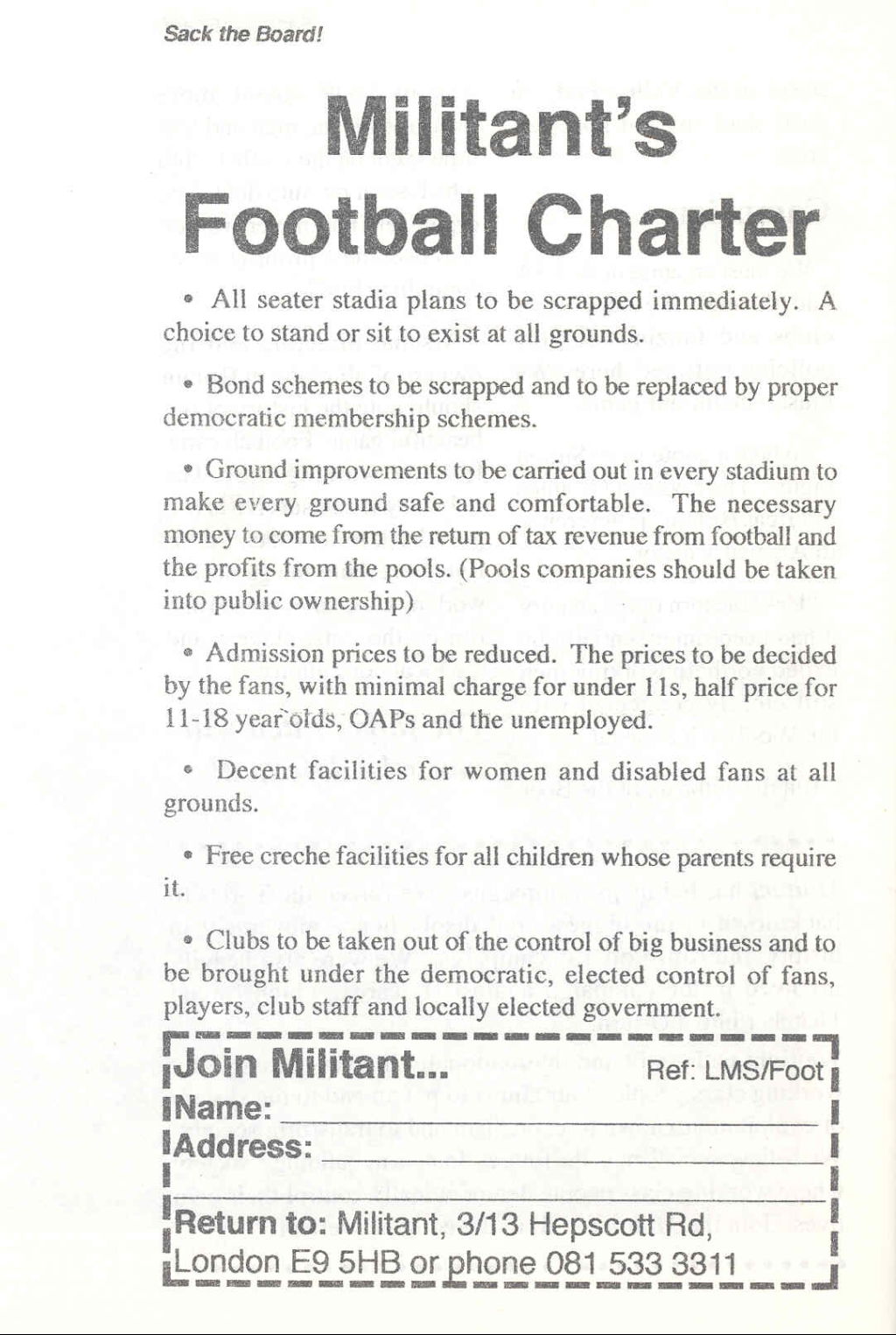
Militant Tendency pamphlet on ownership and control of football, and the distancing of the game from its working class roots. It argues that football has become separated from local communities and the fans by big business and property tycoons. One of the policies in 'Militant's football charter' is for clubs "to be brought under the democratic, elected control of fans, players, club staff and locally elected government". The post-Hillsborough introduction of all-seater stadiums is also criticised.
Included in the archive of the Socialist Party; document reference: 601/D/3/5/6.