
Selected sources on British healthcare, 1900-1948
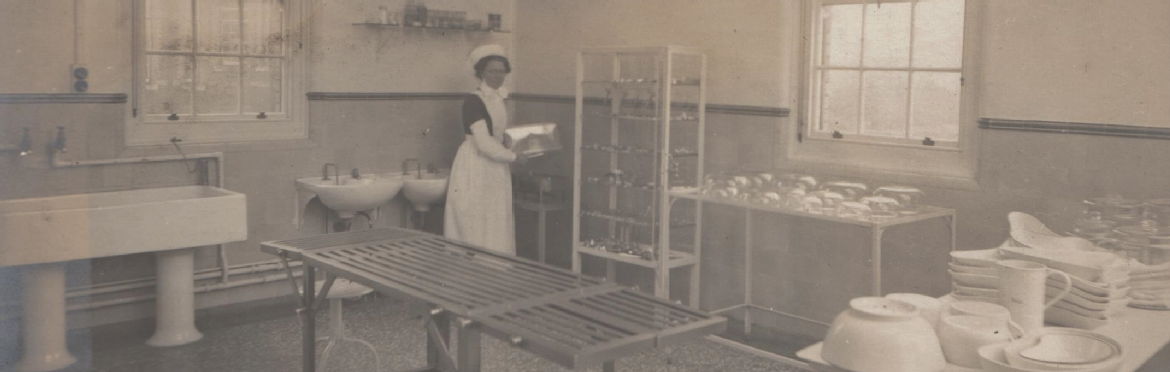
This digital collection contains a selection of primary sources relating to British healthcare before the foundation of the National Health Service (NHS) in 1948. It focuses particularly on the debate over how the health of the nation should be managed and the campaign for a state-run health service.
The documents are from archive collections held at the Modern Records Centre, University of Warwick, including the archives of the Trades Union Congress. Many, but not all, represent the views of the political left.
Selected sources by theme:
The Beveridge Report
The Inter-Departmental Committee on Social Insurance and Allied Services, chaired by the economist Sir William Beveridge, was appointed by the coalition government in 1941 to undertake a survey of Britain's social services. The committee's report was presented to parliament in November 1942, and proposed a new type of welfare state to banish "want", provide social insurance "from cradle to grave", and ensure that the type of social deprivation seen during the pre-Second World War economic depression could not happen again. One of the key assumptions of the Report ('Assumption B') was that in the new society there would be a comprehensive national health service available to all. The Beveridge Report received widespread support, and it is seen as the foundation document for the welfare state created by the Labour government of 1945-1951.
Our digital collection contains various documents from 1942-1944 which were produced in response to the Beveridge Report. A selection of these are linked to below.
Explanations:
- Beveridge Report: pictorial charts with explanatory notesLink opens in a new window, 1943. Attempt to summarise the proposals of the Beveridge Report in pictures, produced and sold by the Pictorial Charts Service. The charts were intended for display in the workplace and other public areas.
- News for Citizens: What is this "Beveridge Report"?Link opens in a new window, March 1943. Summary of the recommendations of the Report produced for its members by the Young Women's Christian Association.
- Notes of statement by Sir William Beveridge to the Trades Union Congress General Council at their meeting on 16 December 1942Link opens in a new window. Sir William outlines the similarities and differences between his own scheme and the proposals of the TUC, and answers questions from members of the General Council on aspects of the Beveridge Report.
- Social Security Guide: The White Paper and the Beveridge Report ComparedLink opens in a new window, 1944. This pamphlet, issued by the Social Security League, compares the contents of the Beveridge Report with the proposed reforms set out in the government's White Paper.
Reactions:
- What they say about the Beveridge ReportLink opens in a new window, January 1943. Summary of responses to the Report in the national press (reflecting all political opinions).
- Report on the Beveridge proposalsLink opens in a new window produced by a special committee of the Conservative Party, 19 January 1943. The committee had been quickly established "to analyse the merits of, and objections to, the main proposals and assumptions of the Beveridge Report", and to inform Party policy on the Report.
- British Employers' Confederation memorandum on the Beveridge ReportLink opens in a new window, 10 February 1943. The internal report attempts to analyse the Beveridge proposals and assess what their effects might be for the nation's employers.
- Abridged report of the Trade Union Regional Conference on the Beveridge ReportLink opens in a new window held in Birmingham on 16 January 1943, published by the Midland Federation of Trades Councils. It records the opinions of speakers at one of a series of twenty regional conferences of trade unionists organised to discuss the Beveridge Report and the policy of the Trades Union Congress towards it.
- Memorandum on the Beveridge ReportLink opens in a new window, published by the Communist Party of Great Britain, February 1943. It argues that the Report "falls short" of securing "freedom from want", and objects to government modifications of the proposals.
- Statement of conclusions on the Beveridge ReportLink opens in a new window, made by a special sub-committee of Sunderland Council of Social Service, 18 March 1943. It attempts "to indicate some outstanding points of interest, some doubts and some strong recommendations".
- Letter from a 'rank and file' member of the Fire Brigade Union to the Trades Union CongressLink opens in a new window, urging the complete rejection of the Beveridge Report, which he describes as "a typical Tory move to secure class collaboration and to return to pre-war conditions", 10 December 1942.
- Copy of resolution sent by the Woolwich Arsenal Shop Stewards' Committee to the Prime MinisterLink opens in a new window, February 1943. It protests against the government response to the Beveridge Report, arguing that it "removes the only real incentive to sustained war effort by the men we represent. In the winning of the war as an end in itself we have no interest whatever; but only in so far as victory may be a preliminary to a better social order."
- Copy of a resolution passed by a public meeting of women of Gilfach Bargoed, GlamorganLink opens in a new window, 26 February 1943. It protests against the government's "Go Slow" policy towards the Beveridge Report and calls for immediate action "ere the aged lose hope, and ere our own fighters and workers lose faith in the Atlantic Charter and their visions of a better world."
- Copy of resolution passed by an open air meeting of the Fallowfield Estate Discussion Group, CambridgeLink opens in a new window, 10 March 1943. It argues that "immediate application of the Beveridge Scheme is necessary for winning the War" and calls for government action.
- Copy of resolution passed by Newcastle on Tyne Trades CouncilLink opens in a new window, 14 February 1944. It calls for a "Beveridge Sunday", on which national demonstrations should be held in support of the Beveridge Plan.
- Postcard expressing support for the Beveridge ReportLink opens in a new window, to be sent to Members of Parliament, 1944. The card was produced by the Transport and General Workers' Union.
- Letter from the Honorary Secretary of the National Association of Medical Herbalists of Great BritainLink opens in a new window, expressing concern about the lack of recognition for alternative medicine - "those competent systems of medicine which are at present unrecognised" - in the Beveridge Report, 13 January 1943.
- Short poem mocking the proposals for a post-war welfare stateLink opens in a new window, sent to the British Employers' Confederation, 1 February 1943.
- The Beveridge report and the health servicesLink opens in a new window, leaflet published by the Socialist Medical Association, [1943?]. The SMA responds to 'Assumption B' by outlining its own proposals for a national health service.
The formation of the National Health Service
The idea of national co-ordination of the health services and the supply of free medical care to all gained popular and political support during the 1930s and 1940s, and was included in the recommendations of the 1942 Beveridge Report. In 1944 the Ministry of Health (under the war-time coalition government) published a White Paper on a National Health Service, which put forward detailed proposals for a system of free universal healthcare funded by central taxation. In 1945 the Labour Party won a landslide general election and the new Minister of Health, Aneurin Bevan, was given the task of creating a workable system and manoeuvring all the various vested interests into agreement. His National Health Service Act of 1946 established a structure for the NHS in England and Wales, and, unlike the earlier White Paper, proposed that the health service should be managed by central government rather than local authorities. Strong disagreement over the proposed service, particularly between the government and the British Medical Association (representing doctors), almost threatened to derail the implementation of the Act, but the new National Health Service was launched as planned in July 1948.
Our digital collection contains various documents which relate to the debate around the formation of the National Health Service. A selection of these are linked to below.
The 1944 White Paper:
- A National Health Service: The White Paper proposals in briefLink opens in a new window, 1944. Pamphlet containing an "official abridged version of the Government's proposals in their White Paper on a National Health Service".
- A National Health Service: Report of the Council of the B.M.A. to the Representative BodyLink opens in a new window, 1944. Draft statement of policy by the British Medical Association, to "be the basis of discussion at meetings of the whole profession called by the Divisions throughout the country".
- The White Paper - An analysisLink opens in a new window, March 1944. Statement of principles and analysis of the government's proposals from the British Medical Association.
- A national health service: draft memorandum on the government's proposalsLink opens in a new window, 14 April 1944. "Considered opinions" of the British Hospitals Association, produced in collaboration with King Edward's Hospital Fund for London, and following informal consultations with representatives of the British Hospitals Contributory Schemes Association and the British Medical Association.
- Resolution passed by Chorley Division Trades CouncilLink opens in a new window "repudiat[ing] the statements" of the British Hospitals Association and the British Hospitals Contributory Schemes Association on the White Paper, 19 June 1944.
- Statement in regard to the Minister of Health's White Paper on the establishment of "A National Health Service"Link opens in a new window, 1944. General review of the White Paper ("a most disappointing document") by the Hospitals and Welfare Services Union.
- A National Health ServiceLink opens in a new window, 6 June 1944. Letter from the National Union of Public Employees, criticising the White Paper's dismissal "in a cursory reference of a single sentence" of all medical staff who are not doctors.
- Resolution adopted at the Annual Delegate Meeting of the Association of Scientific WorkersLink opens in a new window, 27-29th May, 1944. It welcomes the government's proposals as an advance, but makes a series of criticisms about perceived failures and omissions in the White Paper.
- The Health Services White Paper: The Labour Party's policyLink opens in a new window, September 1944. Confidential memorandum produced by the Labour Party's Advisory Committee on Public Health.
- National Health Service: The Government's Policy (White Paper)Link opens in a new window, 1 March 1944. Confidential memorandum from the Trades Union Congress on the government's proposals.
- Minutes of Joint Sub-Committee of the Trades Union Congress, the Labour Party and the Co-operative CongressLink opens in a new window on the Government White Paper "A National Health Service", 5 September 1944.
- Common Wealth Information Bulletin. No. 4, The Health ServicesLink opens in a new window, May 1944. Pamphlet issued by the socialist political group Common Wealth, including criticism of the government White Paper.
The 1946 National Health Service Act:
- Proposals for a National Health ServiceLink opens in a new window, January 1946. Confidential version of the government's new proposals, sent to the Trades Union Congress by the Minister of Health, Aneurin Bevan, following his meeting with representatives of the TUCLink opens in a new window on 8 January 1946.
- National Health Service Bill: Summary of proposed new serviceLink opens in a new window, 1946. Outline of the government's proposals, presented to parliament by the Minister of Health in March 1946.
- British Medical Association and the National Health Service BillLink opens in a new window, 1946. Published response of the BMA to the proposed legislation, including an outline of the 'principles of the profession'.
- Your new health serviceLink opens in a new window, 1946. Socialist Medical Association leaflet summarising (and praising) the government Bill.
- National Health Service Bill: some initial notes on the provisions of the Bill as it affects the hospital services of the countryLink opens in a new window, April 1946. Memorandum produced by the British Hospitals Association. The BHA supported the idea of a free and comprehensive health service, but argued against the abolition of voluntary hospitals and the transfer of their administration to the national government.
- Report of meeting on the National Health Service BillLink opens in a new window between representatives of the British Hospitals Association and the Trades Union Congress, 25 April 1946.
- Trades Union Congress memorandum on the National Health Service BillLink opens in a new window, 24 May 1946.
- National Health Service: deputation to the Minister of Health on 17 June 1946Link opens in a new window. Report of a deputation to Aneurin Bevan by the Trades Union Congress to discuss the provisions of the new NHS Bill.
- National Health Service: You must decideLink opens in a new window, January 1948. Circular from the Medical Practitioners' Union, which contains "a few simple questions and answers [that] will make our present position clear and may help to clarify yours".
- Lord Horder on Medicine and "The State"Link opens in a new window, article published in the News Bulletin of the Society for Individual Freedom, June 1948. Lord Horder protests strongly against what he argues is an attack on the liberty of the individual through "domination of Medicine by the State" - "a greater disaster to the citizen than was its domination by the Church in the middle ages".
The new National Health Service:
- The New National Health ServiceLink opens in a new window, 1948. Government leaflet which explains the new service to members of the public.
- The National Health ServiceLink opens in a new window, 1948. Government booklet which provides an outline of the new service.
- Public health in 1948: Remarkable statistics. The first months of the National Health ServiceLink opens in a new window, 31 March 1950. Summary of the annual report of the Ministry of Health. It includes statistical information about changes to the national health during the first months of the NHS.
- Comments on editorial in American Medical Association JournalLink opens in a new window. The AMA journal of 25 September 1948 included a strong attack on the "folly" of the National Health Service. This response was produced by the British Trades Union Congress. It criticises the original article for inaccuracy and exaggeration, and puts forward a defence of the newly formed health service.
The hospital system
In 1948, before the launch of the National Health Service, "there were over 1,000 independent voluntary bodies providing hospitals, and an even greater number of separate local authorities with powers to provide hospitals of one kind or anotherLink opens in a new window".
The majority of general hospitals were independent 'voluntary hospitals'. The voluntary hospitals were originally built and maintained from charitable donations and provided care for the sick poor. By the early 20th century charity was no longer enough to fund a modern hospital service, and the voluntary hospitals increasingly relied for income on fee-paying patients, subscription schemes (i.e. if you paid a certain amount a week you were entitled to free treatment) and contributions from local authorities. The focus of the voluntary hospitals was on acute rather than chronic medical cases (i.e. it usually provided short term rather than long term care).
Hospital services were also provided by local or municipal authorities. At the start of the 20th century medical treatment could be obtained by those with limited incomes at workhouse infirmaries run by the Poor Law authorities. This system was abolished by the 1929 Local Government Act, which transferred the administration of workhouse infirmaries and fever hospitals to local authorities.
Selected sources:
- Regulations for the admission of out-patients, confidential inquiry sheet and voucherLink opens in a new window for admission to the Great Northern Central Hospital, London, 1902. The Great Northern Central Hospital was "intended for the relief of the Sick Poor only", and patients had to prove that their income was below a certain level in order to receive treatment.
- The First Labour HospitalLink opens in a new window, 1921. Leaflet produced by the Industrial Orthopaedic Society to promote the services of the Manor House Hospital, London. The hospital was established during the First World War to provide orthopaedic treatment for wounded soldiers and sailors. In peacetime it was converted to provide treatment for industrial workers "who [had] received a crippling accident" (as long as they were subscribers).
- The labour movement and the hospital crisis: a statement of policy with regard to hospitalsLink opens in a new window, 1922. Joint statement by the Trades Union Congress and the Labour Party. It argues that unified control over hospitals would be necessary in order for them to efficiently serve the community, identifies flaws in the existing system and puts forward the hospital policy of the organised labour movement.
- The Hospital Problem: the report of a special conference of labour, hospital, medical and kindred societiesLink opens in a new window, held in London on 28-29 April 1924. The conference was organised by the Labour Party to debate the advantages and disadvantages of the existing voluntary hospital system and the Labour Party's proposed system of state controlled hospitals. The opinions of representatives of voluntary hospitals, doctors, nurses and other interested parties are given, and are often strongly critical of the Labour recommendations.
- Towards a municipal medical serviceLink opens in a new window, Independent Labour Party weekly notes for speakers, 2 October 1924. The speakers' notes argue for council funded healthcare and include examples of the deaths of individuals caused by failures at voluntary hospitals.
- Reports on hospitals and the patient and a domestic workers' charterLink opens in a new window, to be presented by the Standing Joint Committee of Industrial Women's Organisations to the National Conference of Labour Women, June 1931. The report looks at general hospitals in an attempt to identify "some of the difficulties and the needs of patients, or, to put it in other words, to consider whether the hospitals are supplying what we want". Issues examined include waiting lists, overcrowding, shortage of nurses, and the distinction made between paying and non-paying patients.
- Appeal from the Chelsea Hospital for WomenLink opens in a new window, 1938. The circular (in this case sent to the Trades Union Congress) asks for money to fund "much needed additions and improvements", including more beds, single accommodation for private patients, an extension to the nurses' home, a new boiler, and modernisation of the sanitary blocks and kitchen.
- General Medical Service for the Nation: The question of medical institutions and hospitalsLink opens in a new window, 6 July 1938. Memorandum produced by the Social Insurance Committee of the Trades Union Congress. It examines the British Medical Association's proposals for hospital reform, as presented in their report 'A General Medical Service for the NationLink opens in a new window'.
- 4 good reasons whyLink opens in a new window, October 1938. Pamphlet issued by the Royal Infirmary, Leicester, appealing for subscribers to the Saturday Hospital Society to increase their weekly contributions, so that the hospital can build a casualty department and buy new x-ray equipment.
- Fundraising appeal from the Royal Eye HospitalLink opens in a new window, London, 9 May 1939. The letter from the Rebuilding Fund Appeal Office asks whether a representative can raise funds by bringing a tray of roses to sell at the offices of the Trades Union Congress, as "unlike those Hospitals on the other side of the River it has no rich friends".
- Financial difficulties of the Associated Voluntary Hospitals: The case for a revision of the rate of contributionsLink opens in a new window, 1939. Memorandum (with covering letter) sent by Merseyside Hospitals Council to the Trades Union Congress. It examines the growing financial deficit of the voluntary hospitals in Merseyside and sets out a case for an increase in the rates paid by patients.
- Resolution on hospital and medical servicesLink opens in a new window passed by Bradford Trades Council, 27 June 1941. In response to the "ever increasing calls made upon all workers for additional voluntary hospital contributions" and shortage of beds in voluntary hospitals, the resolution appeals for a state-run, centrally funded hospital service.
- Report of estimated costs for alterations and extensions at Birmingham Accident HospitalLink opens in a new window, Queen's Hospital, Birmingham, 1941. The alterations are to include rooms for new x-ray equipment, the installation of radiators and sanitary equipment such as sterilizing plant, sinks and toilets, and replacement of the "poor" electrical wiring.
- Hospital Contributory SchemesLink opens in a new window, memorandum from the Ministry of Labour and National Service, 1942. It examines the system of contributory schemes run by voluntary hospitals (e.g. subscriptions funded through deductions from wages which entitle the subscriber to treatment in certain hospitals).
- Staffing the hospitals: An urgent national needLink opens in a new window, 1945. Ministry of Health pamphlet which appeals for more hospital workers, as "the country stands in urgent need of nurses and midwives, and of domestic staff for hospitals and similar institutions".
- A plan for a national hospital serviceLink opens in a new window, 18 March 1946. Plan for a "National Hospital Service, within a National Health Service" submitted by the British Hospitals Association. It argues that voluntary hospitals should be retained in the new system.
- The National Health ServiceLink opens in a new window, 1948. Outline of the new co-ordinated hospital service to be established as part of the National Health Service, included in a pamphlet produced by the Ministry of Health.
Maternity and motherhood
Our digital collection includes documents which relate to maternity services, maternal mortality and birth control, particularly during the 1920s and 1930s.
Birth control:
- English methods of birth controlLink opens in a new window, [1915?]. Pamphlet written by Margaret H. Sanger, providing practical advice on birth control. It is based on advice sent by the Malthusian League of England to applicants (as long as they were "married or about to be married").
- Family LimitationLink opens in a new window, 1920. Pamphlet written by Margaret H. Sanger, providing practical advice on birth control. The introduction argues that there is a strong social need to educate working women about family limitation, as it is the "big battalions of unwanted babies that make life so hard for the working woman and keep her in poverty and stress from generation to generation". The pamphlet includes a statement that it should only be read by those over the age of 21 who consider "the Artificial Limitation of the Family justifiable on both individual and national grounds".
- Leaflet promoting the aims of the Workers' Birth Control GroupLink opens in a new window, 1927. The group campaigned for information about birth control to be provided by local authorities through maternity and child welfare centres for those who were unable to pay for private medical advice.
- 'To our men comrades'Link opens in a new window, leaflet issued by the Workers' Birth Control Group, [1928?]. It appeals for men to join the campaign for maternity and welfare centres to be "allowed to give birth control advice to working mothers", after the group had been informed that this would not be possible "(even if bearing another child will certainly cost the mother her life) without the express authority of Parliament".
- Leaflet publicising a conference on the giving of information on birth control by public health authoritiesLink opens in a new window, [1930]. The conference included a session on the "racial aspect" of birth control.
- Marriage and parenthood: a pamphlet addressed to those about to marryLink opens in a new window, 1934. Advice on married life, including birth control, issued by the Marriage and Parenthood Committee of the Society of Friends (also known as Quakers).
Maternity services, maternal mortality and advice for mothers:
- Achievements of the State in Health Services: The Work of Maternity and Infant Welfare CentresLink opens in a new window, January 1926. Private memorandum produced by the Trades Union Congress and Labour Party's joint Advisory Committee on Public Health. It provides an outline of the preventative medical work done by infant welfare centres, for example through weekly consultations with new mothers.
- Report on maternity insuranceLink opens in a new window by the British Section of the International Association for Social Progress, 1927. The report includes background information about the development of maternity care in Britain, information about infant mortality in 1925, and proposals for improvements.
- Notes on the present conditions as to midwiferyLink opens in a new window, [1928?]. Statistical information about the work, training and pay of midwives in Britain.
- Summary of child welfare services available in LiverpoolLink opens in a new window and the West Riding of Yorkshire, March 1928. The Liverpool services are described as "an almost complete co-ordinated scheme for looking after the health of children from birth to the school leaving age".
- Statistical data relating to Liverpool's Infant Welfare CentresLink opens in a new window, 1928. They include information about the provision of milk, school and home visits, enquiries regarding childhood illnesses, etc.
- Memorandum on maternal mortalityLink opens in a new window, July 1928. Internal memorandum produced by the Labour Party Public Health Advisory Committee. It includes a summary of relevant legislation, statistical data relating to the frequency and causes of neo-natal deaths, information about maternity services currently available, and proposals for a "complete maternity service".
- Draft precis of evidence to be given before the Departmental Committee on MidwivesLink opens in a new window, September 1928. Memorandum produced by the Standing Joint Committee of Industrial Women's Organisations, advocating better anti-natal care to help reduce maternal mortality.
- 'Motherhood'Link opens in a new window, leaflet issued by the Maternal Mortality Committee, [1931]. It contains basic advice to pregnant women, for example: "if you think you are going to have a baby, the first thing you should do is to find out from a doctor or a midwife whether you really are."
- Report of conference on maternal mortalityLink opens in a new window organised by the Maternal Mortality Committee in November 1932. The keynote speaker was Sir Hilton Young, Minister of Health.
- Leaflet summarising the powers of local authorities to provide maternity servicesLink opens in a new window under the 1918 Maternity and Child Welfare Act, issued by the Maternal Mortality Committee in c.1933.
- Report on maternal mortality issued by the Maternal Mortality CommitteeLink opens in a new window in 1934. It includes an outline of the committee's proposals for improvements in maternity services.
- Maternity BenefitLink opens in a new window, 1948. Government booklet which explains the new maternity benefit, introduced as part of the post-war welfare state.
'Can you afford to be ill?' - paying for treatment
Ill health was feared by many for financial as well as medical reasons. Medical fees, combined with the loss of the income of wage earners unable to work, could lead to destitution. Benefit societies and insurance policies were established to provide medical care for payers of subscriptions, provided that certain conditions were met. A system of National Health Insurance was established as part of the National Insurance Act in 1911, which used deductions from wages to fund a state insurance scheme. For those unable or unwilling to pay subscriptions, there was a possibility of free healthcare provided by charities (if the applicant was seen as a suitable candidate for assistance), or, if all else failed, the Poor Law Union workhouse.
Our digital collection contains various documents which relate to medical insurance, benefit society and charity schemes. A selection of these are linked to below.
National Insurance:
- National Insurance Against Sickness and Unemployment: Full explanation of Mr Lloyd George's great schemeLink opens in a new window, 1911. Outline of the government scheme published by The Daily News.
- National Insurance Act, 1911Link opens in a new window. Leaflet published by the National Health Insurance Commission shortly before the start of the scheme in 1912. It provides a summary of the measures included in the National Insurance Act.
- Family Guide to the National Insurance SchemeLink opens in a new window, 5th July 1948, prepared by the Central Office of Information for the Ministry of National Insurance. Outline of the changes to the National Insurance system which resulted from the introduction of the National Health Service, family allowances and National Assistance, and the abolition of the Poor Law.
Subscriptions and private insurance:
- Rules and regulations of the United Brothers' Birmingham Benefit SocietyLink opens in a new window, 1908. The local society was formed to financially "assist its members in sickness, and to provide for the payment of a sum of money at the death of a member or for the funeral expenses of a member's wife".
- Rules of the Sunlight Sick, Funeral and Medical Aid SocietyLink opens in a new window, [1909]. The scheme was open to employees of Messrs. Lever Brothers Limited, Port Sunlight, and "provided medical attendance (when in the Medical Officer's district), medicine, sick allowance, and payment on death of members, their wives, and children under fourteen years of age". Subscribers could be refused benefit if, whilst being ill, they visited a pub or a place of entertainment, or left their home during the hours of darkness or without telling people where they were going.
- Leaflet for the Manor House HospitalLink opens in a new window, Golders Green, London, undated. The leaflet was issued by the Industrial Orthopaedic Society, and sets out the rates and benefits for subscribing members (e.g. free access to orthopaedic care "subject to local rules and conditions").
- The "Anchor" Doctors' Bills Policy at Lloyd's for persons between the ages of 2 and 50Link opens in a new window, 1927. Rules and summary of press coverage of "the only insurance protection for the family against the financial terrors of serious illness". Middle class families were particularly targeted - "a most important class of the community which has in sickness neither the support of riches nor of the State".
- National Eye ServiceLink opens in a new window, National Ophthalmic Treatment Board, [1929]. Brochure which provides an outline of the service and explains some of the reduced financial charges for members of different societies.
- Leaflets from the Incorporated Association of Assistant Masters (a trade union for teachers) on the health insurance scheme available to its members: After X weeks - what then?Link opens in a new window and Good health: one friend's wish to anotherLink opens in a new window, [1930?].
- Memorandum on the Hospital Savings AssociationLink opens in a new window, 6 October 1932, circulated within the Trades Union Congress. It includes information about rates and benefits for subscribers to the HSA, formed "following the report of the Cave Committee, which recommended that the voluntary system of financing hospitals should be preserved".
- 4 good reasons whyLink opens in a new window, October 1938. Pamphlet issued by the Royal Infirmary, Leicester, appealing for subscribers to the Saturday Hospital Society to increase their weekly contributions, so that the hospital can build a casualty department and buy new x-ray equipment.
- Can you afford to be ill?Link opens in a new window, 1945-1946. Leaflets which explain the Hospital Service Plan of the London Association for Hospital Services Ltd. One leafletLink opens in a new window addresses the issue of the planned National Health Service directly - arguing that as the NHS won't be in place until 1948, readers should still insure their families against medical bills.
Charity:
- Regulations for the admission of out-patients, confidential inquiry sheet and voucherLink opens in a new window for the Great Northern Central Hospital, London, 1896-1902. The hospital was "intended for the relief of the Sick Poor only". The regulations set out how prospective patients were financially assessed before receiving treatment; the voucher was to be signed by the patient's doctor or employer, declaring them to be "a fitting case for gratuitous relief".
- The hospital almonerLink opens in a new window, September 1904. Article from the magazine 'Our Hospitals and Charities', September 1904, which outlines the role and responsibilities of the almoner (a precursor to the social worker). "The almoner's duty is systematically to interview the applicants for out-patient relief, "with a view to eliminate from among them those whose circumstances do not seem to entitle them to treatment, or who might be better provided for by a provident dispensary or by the Poor Law authorities.""
- Summaries of cases visited by the almonerLink opens in a new window, 30 December 1901. Report of some of the almoner's visits to assess the income and moral standards of applicants for free treatment at the Great Northern Central Hospital, London.
- Summaries of cases visited by the almonerLink opens in a new window, 28 September 1903. Report of some of the almoner's visits to assess the income and moral standards of applicants for free treatment at the Royal Free Hospital, London.
- Friendly visiting and partial enquiryLink opens in a new window, 1902. Recommendations of the Administrative Committee of the Charity Organisation Society for methods of assessing the eligibility of applicants for free medical treatment. Reports on the assessment of patients by Miss Brimmell, almoner at the Royal Free Hospital, London, are included as an appendix.
- Whitechapel Charity Organisation Committee: mock application for welfare on behalf of Jesus ChristLink opens in a new window, c.1886. Satirical send-up of the Charity Organisation Society's assessments of the suitability of candidates for charitable assistance. In this case the applicant (Jesus Christ) "was rebuked for his utter want of thrift, industry, temperance, and for the bad company he kept" and turned down by the Society.
- Memorandum by Mr. Sheppard respecting almoner's work from January to June 1903Link opens in a new window at the Royal Free Hospital, London. It includes comment on the "earnest attempts... to encourage thrift and providence among the poorer classes" to relieve "the already over-crowded Out Patients Department" and argues that "indiscriminate Medical relief is an open door to pauperism".
- Supplement to the Charity Organisation ReviewLink opens in a new window, July 1915. It includes appeals from local committees of the Charity Organisation Society for charitable donations to pay for the treatment of particular patients.
- The Fraud, Futility and Hypocrisy of Charity for the BlindLink opens in a new window, [1923?]. Leaflet produced by the London District Council of the National League of the Blind of Great Britain and Ireland. It attacks fraud and the amount spent on the salaries of charity officials, whilst "hundreds of of our Blind are incarcerated in London Workhouses, hundreds more are condemned to beggary, and those who are employed are compelled to work piece work".
Preventative medicine and promotion of healthy living
A growing interest in preventative medicine in the early 20th century saw the development of a range of campaigns and schemes to promote healthy living to the British people (particularly the working classes). The documents linked to here provide examples of some of these campaigns, the majority of which were run by voluntary organisations.
Healthy living and preventative medicine:
- Objects of the People's League of HealthLink opens in a new window, 1920. The League was formed to raise "the Standard of Health of the British Empire", by "disseminat[ing] knowledge on Health — how to obtain and preserve it", through public lectures, demonstrations and film shows. Themes covered by the lectures were to include personal hygiene, maternity, eugenics, food, alcohol, housing, physical education, tuberculosis and venereal disease.
- First annual report of the People's League of HealthLink opens in a new window, 1922. Illustrated with a statue of "science unveiling ignorance", the report sets out the objects of the League and includes "startling figures" on preventable disease, lists of League activities (including lectures, meetings, exhibitions and publications), accounts and reports. The report promotes the idea of preventative medicine with the phrase: "It is better to erect a strong fence at the top of the cliff than to maintain a working ambulance at the bottom."
- Health WeekLink opens in a new window, 1924. Circular issued by the Royal Sanitary Institute to promote the idea of a 'Health Week' (5-11 October) "to arouse that sense of personal responsibility for Health, without which all public work whether by the Government or Local Authorities, must fall far short of its aims." It provides general advice on organising the week, including suggested subjects for public lectures (e.g. 'Microbes: Our Secret Friends and Foes', 'Soap and Water', 'Clothing and Personal Hygiene').
- Report of Health Week CommitteeLink opens in a new window, 1924. Summary of achievements and events during 'Health Week' ("it would appear that the week was observed with even more enthusiasm than usual").
- Diagram showing some of the many voluntary or charitable organisations that provided healthcare adviceLink opens in a new window, 1924, adapted from a memorandum by the Chief Medical Officer of the Ministry of Health and of the Board of Education.
- Public education in healthLink opens in a new window, 1926. Memorandum addressed to the Minister of Health by the Chief Medical Office of the Ministry of Health and of the Board of Education. It looks at the growth in preventative medicine, the role of health education, and the work of central government, local authorities and voluntary organisations.
- 'Health is Wealth'Link opens in a new window, 1926. Annual report issued by the Industrial Health Education Council, on their programme "to educate Industrial Workers on the Sicknesses and Diseases to which they are liable, with the view to mitigating and preventing the same."
- 'Health is Wealth'Link opens in a new window, 1926. Examples of posters for meetings organised by the Industrial Health Education Council, targeting miners and women millworkers.
- 'Health hints to miners'Link opens in a new window, 1926. Example of a leaflet that was distributed free to miners (in the year of the General Strike) by the Industrial Health Education Council, providing advice on how to prevent ill health through good working practices, care of food, healthy hobbies, etc.
- 'Your teeth'Link opens in a new window, [1927?]. Dental Board of the United Kingdom leaflet, linking tooth decay to broader health problems, including tuberculosis, diabetes and cancer.
- 'Health in industry: a growing movement'Link opens in a new window, 1927. Industrial Health Education Society leaflet, promoting its work to improve the health of the worker (and industrial efficiency).
- 'Health and the Home: The King's physician talks to you on fitness'Link opens in a new window, 1928. Article by Sir Humphry Rolleston, Regius Professor of Medicine at Cambridge and Physician to the King, published in the Daily Express. He promotes the idea of health education amongst industrial workers.
- National 'Clean Throat' CampaignLink opens in a new window, 1929. Publicity material, with covering letter, for a campaign proposed by Arthur Corbett-Smith. He promotes an attack on diseases ranging from the common cold to tuberculosis through a campaign to keep a 'clean throat' and to prevent spitting and sneezing at people.
- 'The new home: a handbook for tenants'Link opens in a new window, 1937. Health and Cleanliness Council pamphlet, providing guidance for tenants on how to keep their property clean and healthy. It includes "homely hints" on cleaning, furniture, shopping, storage of clothing and the disposal of vermin.
- 'Health and cleanliness: a text book for teachers'Link opens in a new window, 1938. Pamphlet published by the Health and Cleanliness Council to provide an "outline for teachers who desire to impress the importance of cleanliness on their scholars and to inculcate in them cleanly habits".
- 'Hints for the busy housewife'Link opens in a new window, 1939. Pamphlet published by the Health and Cleanliness Council to provide guidelines for women on cleaning, care of food, washing, skin care, child welfare, etc.
- 'Health and Beauty: A Book for Girls'Link opens in a new window, 1939. Health and Cleanliness Council pamphlet which encourages young women to "be beautiful!" through cleanliness and good health.
- 'Women at War…Safeguard your Health'Link opens in a new window, 1942. Pamphlet published by the Communist Party of Great Britain, linking good health in women workers with the war effort ("Illness, not Hitler, made us lose all these extra weapons"). It includes advice on improving factory conditions.
- 'How to keep well in wartime'Link opens in a new window, 1943. British government pamphlet which provides advice on keeping the nation fit - "fit to hasten victory and to tackle the tasks that lie beyond", including suggestions to "be regular in your living habits", get enough sleep, go outside, keep active, eat healthily, be moderate and hygienic.
Food:
- Investigation of Workers' Food and Suggestions as to DietaryLink opens in a new window, 1917. Government report on the feeding of munition workers, produced by the Health of Munition Workers Committee of the Ministry of Munitions. It includes information about the nutritional value of specimen meals provided by works canteens and brought in by workers, and includes a special section on the food consumed by women workers. The report links the provision of nutritious meals by the factories to good production levels.
- Memorial to the Right Honourable Neville Chamberlain, MP, Minister of HealthLink opens in a new window, 1925. Appeal from the Bread and Food Reform League for local authorities to circulate leaflets to "spread information about healthy, nourishing, economical foods, and ... finely ground whole wheat meal bread".
- Objects of the New Health SocietyLink opens in a new window, 1926. The Society aimed to spread information about new scientific discoveries, and improve the provision and supply of good, uncontaminated and unadulterated food.
- Boric compounds as food preservativesLink opens in a new window, 1926. Trades Union Congress memorandum on the preservation of food stuffs, including a discussion of the merits of chemical and physical methods of preservation, and an examination of the arguments over the banning of boric acid as a preservative in milk and other food products.
- 'What do you know about it?'Link opens in a new window, 1927. Leaflet which reproduces an article from the Ladies' Home Journal on the health benefits of eating fresh (washed) fruit and vegetables - "if you would reach the good health goal, include fresh fruits in your everyday diet".
- 'Nutrition and Food Supplies'Link opens in a new window, 1936. Labour Party pamphlet which looks at malnutrition, the links between food and health, and the financial implications of having a balanced diet.
- 'Nutrition: The position in England to-day'Link opens in a new window, 1936. Pamphlet produced by the Industrial Christian Fellowship in response to the public "uneasiness" about the "nutritional state of the unemployed and lowly paid worker". It looks at the effects of malnutrition and the financial costs of a good diet.
National fitness:
- 'National fitness: The first steps', 1937Link opens in a new window. Pamphlet published by the National Advisory Council for Physical Training and Recreation, a body appointed by the government after the passing of the Physical Training and Recreation Act, 1937. It contains suggestions for local authorities, voluntary organisations and the general public on promoting "the way to fitness".
- National Fitness Council survey of local needsLink opens in a new window, 1937. Memorandum looking at the need for local facilities to allow people to engage in "physical training and recreation".
- National campaign for physical fitnessLink opens in a new window, 1938. Memorandum of interview between representatives of the National Fitness Council and the Trades Union Congress. It provides an outline of the planned work of the Council and includes the statement that "it was very far from the intention of the National Council that [physical activities] should take any militaristic turn". A memorandum of a later interview is also availableLink opens in a new window.
- 'Asked to leave Fitness Council'Link opens in a new window, 1938. Newspaper report on the removal of Sir Edward Grigg, former Governor of Kenya, from the National Fitness Council, after he advocated that fitness training for young men should be compulsory. Lord Aberdare, Chairman of the Council, contrasted the British initiative with the "compulsory systems of the totalitarian States" (i.e. Germany and the Soviet Union).