
History and Philosophy BA
Undergraduate
UCAS course code
Start date
27 September 2027
Study location
University of Warwick
Qualification
Bachelor of Arts (BA)
Department
Department of History
Duration
3 years full-time (4 years full-time with study abroad or work placement)
Course overview
What sort of knowledge is historical knowledge? How much of what we understand and feel about the world around us is the direct result of the particular history of our own culture? Should we understand philosophical ideas as merely reflecting the world in which they are developed, or do they play a leading role in changing it?
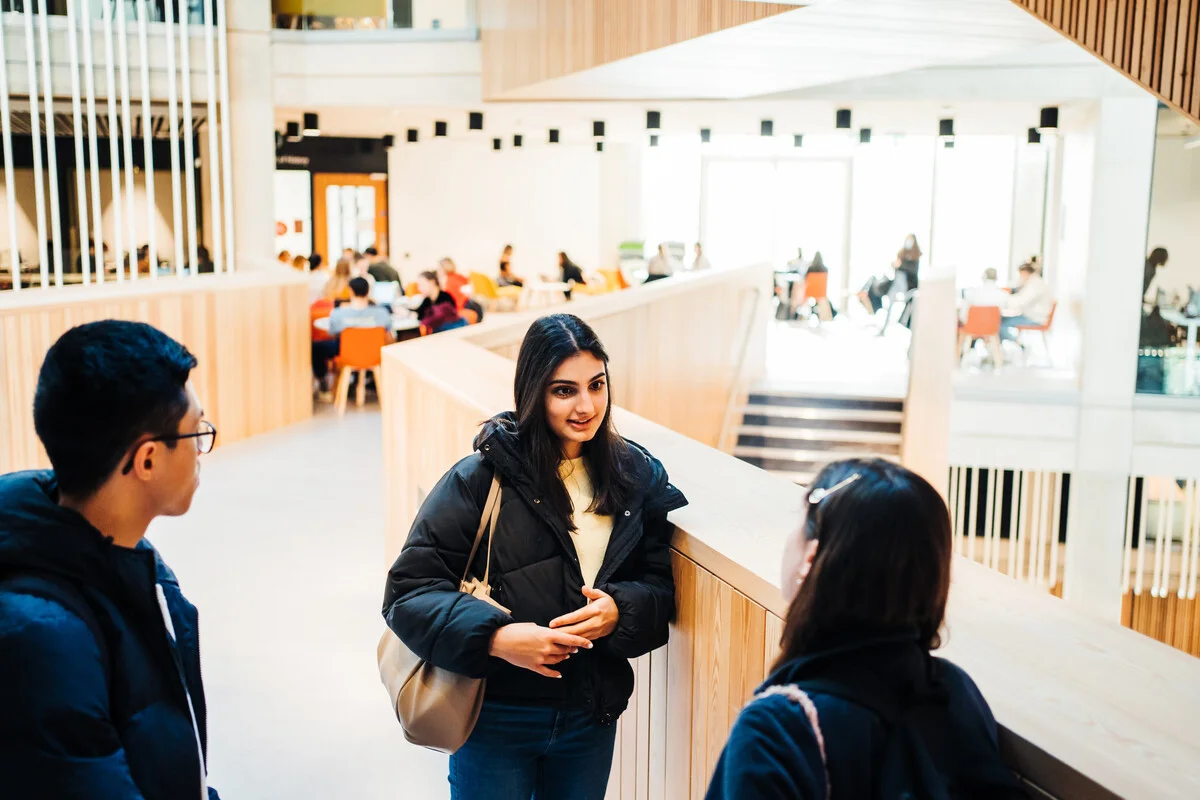
This course will help you understand the importance of thinking critically about how we know and experience the world, and recognise the importance of linking precision in thought and analysis to a grounded understanding of different historical periods.
You'll learn to consider ideas for their own sake, while recognising that they are developed in particular contexts, for particular purposes, and reflect the conditions under which they are produced.
Students will be offered the opportunity at the start of their second year to apply for an optional intercalated year. Following the application process, those students who are offered and take up an intercalated year place transfer to a four-year degree, with the intercalated year as the third of the four years.
Important information
We are planning to make some exciting changes to this course for 2027 entry. We continually review our curricula to reflect developments in the relevant disciplines to deliver the best educational experience, integrating transferable and employability skills through our degrees to improve our graduate outcomes. The core and optional modules will undergo approval through the University's rigorous academic processes. As modules are approved, we will update the course information on this webpage. It is therefore very important that you check this webpage for the latest information before you apply and prior to accepting an offer. Sign up to receive updates.
Entry requirements
A level typical offer
AAA to include History.
A level contextual offer
We welcome applications from candidates who meet the contextual eligibility criteria and whose predicted grades are close to, or slightly below, the contextual offer level. The typical contextual offer is ABB including grade B in History. See if you're eligible.
General GCSE requirements
Unless specified differently above, you will also need a minimum of GCSE grade 4 or C (or an equivalent qualification) in English Language and either Mathematics or a Science subject. Find out more about our entry requirements and the qualifications we accept.
We advise that you also check the English Language requirements for your course which may specify a higher GCSE English requirement. Please find the information about this below.
Unless specified differently above, you will also need a minimum of GCSE grade 4 or C (or an equivalent qualification) in English Language and either Mathematics or a Science subject. Find out more about our entry requirements and the qualifications we accept.
We advise that you also check the English Language requirements for your course which may specify a higher GCSE English requirement. Please find the information about this below.
International Baccalaureate (IB) typical offer
36 with at least a 6 in Higher Level History.
International Baccalaureate (IB) contextual offer
We welcome applications from candidates who meet the contextual eligibility criteria and whose predicted grades are close to, or slightly below, the contextual offer level. The typical contextual offer is 32 including 5 in Higher Level History. See if you're eligible.
General GCSE requirements
Unless specified differently above, you will also need a minimum of GCSE grade 4 or C (or an equivalent qualification) in English Language and either Mathematics or a Science subject. Find out more about our entry requirements and the qualifications we accept.
We advise that you also check the English Language requirements for your course which may specify a higher GCSE English requirement. Please find the information about this below.
BTEC
We welcome applications from students taking BTECs alongside one or two A levels, including A level History. Our typical BTEC offers are as follows:
BTEC Level 3 Extended Certificate plus 2 A levels: D* plus AA including History
BTEC Level 3 National Diploma plus 1 A level: D*D* plus A in History
Scotland Advanced Highers
AA in two Advanced Highers including History, and AAB in three additional Highers subjects.
Welsh Baccalaureate
AAB in three A levels including A in History plus grade C in the Advanced Skills Baccalaureate Wales.
Access to Higher Education Diplomas
We will consider applicants returning to study who are presenting a QAA-recognised Access to Higher Education Diploma on a case-by-case basis.
Typically, we require 45 Credits at Level 3, including Distinction in 33 Level 3 credits and Merit in 12 Level 3 Credits. We may also require subject specific credits or an A level to be studied alongside the Access to Higher Education Diploma to fulfil essential subject requirements.
General GCSE requirements
Unless specified differently above, you will also need a minimum of GCSE grade 4 or C (or an equivalent qualification) in English Language and either Mathematics or a Science subject. Find out more about our entry requirements and the qualifications we accept.
We advise that you also check the English Language requirements for your course which may specify a higher GCSE English requirement. Please find the information about this below.
Please adjust your country as required:
This course requires:
Band B
All applicants have to meet our English Language requirements. If you cannot demonstrate that you meet these, you may be invited to take part in our Pre-sessional English course at Warwick.
Does Warwick make contextual offers?
Warwick may make differential offers to students in certain circumstances, such as those who have participated in a Widening Participation programme or who meet the University’s contextual data criteria. These offers are usually one or two grades below Warwick’s standard offer.
Do you offer foundation programmes?
All students who successfully complete the Warwick International Foundation Programme (IFP) and apply to Warwick through UCAS will receive a guaranteed conditional offer for a related undergraduate programme, for selected courses only. Further details are available in the standard offer and conditions for the IFP.
Can I take a gap year before starting my course?
Yes, Warwick welcomes applications for deferred (gap year) entry.
Will I need to interview for this course?
Warwick does not typically interview applicants. Offers are made based on the UCAS application, including predicted and achieved grades, the personal statement, and the school reference.
Modules
Important information
We are planning to make some exciting changes to this course for 2027 entry. We continually review our curricula to reflect developments in the relevant disciplines to deliver the best educational experience, integrating transferable and employability skills through our degrees to improve our graduate outcomes. The core and optional modules will undergo approval through the University's rigorous academic processes. As modules are approved, we will update the course information on this webpage. It is therefore very important that you check this webpage for the latest information before you apply and prior to accepting an offer. Sign up to receive updates.
Note that information found by following the links to the module catalogue is subject to change for future years of study, as we evolve our courses in response to the latest developments in academia and industry.
Year 1
Year 2
Year 3
- Pathway 1 (25% History, 75% Philosophy)
- Pathway 2 (75% History, 25% Philosophy)
- Pathway 3 (50% History, 50% Philosophy)
*Venice in the Renaissance (HI3G9-30) and one of History Dissertation (HI3S2-30) or Philosophy Dissertation (PH313-30) are only core modules for the Venice stream
Additional Modules
Explore a full list of Philosophy modules
Explore a full list of History modules
Not all optional modules listed will necessarily be offered every year and new modules may be added every year.
Fees and funding
Tuition fee
£10,050
For the 2027-28 academic year, the UK government announced in March 2026 that the tuition fee cap for UK undergraduate students for the 2027-28 academic year would be £10,050.
If you are joining Warwick for the 2026-27 academic year, the University of Warwick’s Executive Board has confirmed a change in fees to £9,790 (from the 2025-26 rate of £9,535), following the UK government announcement in November 2025 to increase in the tuition fee cap for Home students for the 2026-27 academic year.
Students who qualify for government-regulated fees are classed as ‘Home’ students for fees purposes. In future years, fees for continuing students may be subject to an increase in fees in line with any inflationary uplift as determined by the UK Government (if permitted by law or government policy).
The UK Government sets tuition fee rates.
To learn more about how the UK student fees and maintenance loans are set, please visit the UK Government websiteLink opens in a new window and UCASLink opens in a new window.
We carry out an initial fee status assessment based on the information you provide in your application. Students will be classified as Home or Overseas fee status. Your fee status determines tuition fees, and what financial support and scholarships may be available. If you receive an offer, your fee status will be clearly stated alongside the tuition fee information.
If you believe that your fee status has been classified incorrectly, you can complete a fee status assessment questionnaire. Please follow the instructions in your offer information and provide the documents needed to reassess your status.
Find out more about how universities assess fee statusLink opens in a new window
Funding your studies
Eligibility for student finance (including the Lifelong Learning Entitlement (LLE)Link opens in a new window) will depend on certain criteria, such as your nationality, residency status, course, and previous level of study.
The information below is based on the package of financial support available to students starting their course in 2026.
Check if you're eligible for student financeLink opens in a new window
- Eligible Home students residing in England can apply for a Tuition Fee Loan, which is not based on household income, to cover your tuition fees
- The Loan is paid directly to the University so, if you choose to take the full Tuition Fee Loan, you will not need to set up any payments
- You can apply for a Maintenance Loan to help with your living costs, such as accommodation, food, books and bills
- This loan is means-tested, so the amount you receive is partially based on your household income and if you choose to live at home or away from home
- For the latest information about student loans, including how you repay them, visit Student finance for undergraduatesLink opens in a new window
You will repay your loan or loans gradually once you are working and earning above a certain amount. For students starting their course after 1 August 2023 (on Student Finance England’s Plan 5), you will repay when your income is over £25,000 a year.
Repayments will be taken directly from your salary if you are an employee. If your income falls below the earnings threshold or you stop working, your repayments will stop until your income goes back up above this figure.
Find out more about repaying your student loanLink opens in a new window
Learn more about student funding for students ordinarily residing outside of England, including UK Countries and Other British Islands.
- Access thousands of part-time opportunities through our agency UnitempsLink opens in a new window (such as office work, retail jobs or helping at events)
- Choose to apply for a job as one of our Student Ambassadors to share your own experience at events like Open Days
There are many different funding routes available, including a number of bursaries and scholarships for full-time undergraduates. If you struggle to meet your essential living costs, our Student Funding team will be on hand to offer advice and support.
- Provides additional financial support for qualifying Home students from lower income families of up to £2,500 for eligible students
- This bursary is paid directly into your bank account in three equal termly instalments to help with the costs of studying
- There is no application for this bursary as your details will be provided directly from the student support awarding bodies (Student Finance England, Student Finance Northern Ireland, and Student Awards Agency Scotland)
- A number of scholarship opportunities are open to full-time undergraduate students. These include sporting and musical bursaries, and scholarships offered by commercial organisations.
If you experience financial difficulties during your studies, you may be eligible for Hardship Funding from the University, in the form of an Emergency Loan and/or a non-repayable award
There are no scholarships available for your School or Department; however, there are other scholarships you may be eligible for - please see our Scholarships webpages for more information.
Tuition fee
If you are an overseas student enrolling in 2026-27, your annual tuition fees will be as follows:
Band 1 – £27,870 per year (classroom-based courses, including Humanities and most Social Science courses)
Band 2 – £35,530 per year (laboratory-based courses, plus Mathematics, Statistics, Theatre and Performance Studies, Economics, and courses provided by Warwick Business School, with exceptions)
Overseas Tuition fees for 2027-28 academic year have not been set. In future years, fees for continuing students may be subject to an increase in fees in line with an inflationary uplift. Please check our website for updates about 2027-28 fee rates before you apply.
If you are an EU student and eligible for student finance, you may be able to get a Tuition Fee Loan to cover your fees, please visit our Student Funding webpage for guidance for students ordinarily resident outside of England.
We carry out an initial fee status assessment based on the information you provide in your application. Students will be classified as Home or Overseas fee status. Your fee status determines tuition fees, and what financial support and scholarships may be available. If you receive an offer, your fee status will be clearly stated alongside the tuition fee information.
If you believe that your fee status has been classified incorrectly, you can complete a fee status assessment questionnaire. Please follow the instructions in your offer information and provide the documents needed to reassess your status.
Find out more about how universities assess fee statusLink opens in a new window
Funding your studies
Eligibility for student finance will depend on certain criteria, such as your nationality, residency status, course, and previous level of study. The information below is based on the package of financial support available to students starting their course in 2026.
Check if you're eligible for student financeLink opens in a new window
Eligible European Union (EU) Undergraduates can apply for a loan to help with the cost of Tuition Fees. Eligible EU students who meet additional residency criteria may also be eligible for a loan to assist with living costs. For more information please see Student Finance for Undergraduates - EU StudentsLink opens in a new window.
- Access thousands of part-time opportunities through our agency UnitempsLink opens in a new window (such as office work, retail jobs or helping at events)
- Choose to apply for a job as one of our Student Ambassadors to share your own experience at events like Open Days
If you are an international student, you may be eligible for financial help from your own government, from the British Council or from other funding agencies. You can usually request information on scholarships from the Ministry of Education in your home country, or from the local British Council office.
A number of scholarship opportunities are open to full-time undergraduate students. These include sporting and musical bursaries, and scholarships offered by commercial organisations.
If you experience financial difficulties during your studies, you may be eligible for Hardship Funding from the University, in the form of an Emergency Loan and/or a non-repayable award.
As well as tuition fees and living expenses, some courses may require you to cover the cost of field trips or costs associated with travel abroad.
Associated costs can be found on the Study tab for each module listed in the Module Catalogue (please note most of the module content applies to 2026/27 year of study). Information about module specific costs should be considered in conjunction with the more general costs below:
- Core text books
- Printer credits
- Dissertation binding
- Robe hire for your degree ceremony
Are there any course specific costs?
For departmental specific costs, please see the list of core and optional core modules with hyperlinks to our Module Catalogue, where module-related costs are detailed.
Teaching and learning
Teaching is delivered through lectures, seminars and tutorials, web forums, podcasts, workshops, presentations, film analysis, group work and field trips.
Our use of surprising and inspiring sources is a feature of all our teaching.
Modules focus on important themes in political, religious, cultural or social history and most explore topics far removed from the usual A level syllabus.
Seminar groups are small (normally under 17), providing a valuable opportunity for you to work closely with your lecturers and to learn from other students.
For each Philosophy module students typically have three hours of contact time per week, divided into two hours of lecture and one hour of seminar. First year History modules usually have one weekly lecture and an hour-long weekly seminar. Second year modules have one lecture per week plus weekly seminars or two hour workshop sessions. Final year History modules are taught largely through intensive two-hour weekly seminars.
You will receive regular feedback throughout your course on developmental assignments and assessed essays, and will sit end-of-year assessments. During your third year study is heavily weighted towards seminar teaching and includes an optional individually supervised 9,000-word dissertation. We consider feedback on written work to be an essential part of our teaching. Throughout the year you will have the opportunity to attend feedback tutorials following the submission of your essays.
History and Philosophy students can apply to spend a term in Venice (Autumn or Spring) alongside History students in their final year. They can also apply for an Intercalated Year through either the History or Philosophy Department, choosing from study abroad, work placements, or a combination of both.
The Student Mobility Team supports these opportunities, with further guidance available from the Study Abroad Co‑ordinators in both departments.
Careers
Throughout your time on your degree, you will develop a range of transferable skills which are highly valued by graduate employers. These typically include the following: excellent written and communication skills; ability to research and analyse large amounts of data; intellectual rigour and independence in presenting findings; ability to construct and communicate arguments; to work independently and as part of a team; to deliver work to agreed deadlines; capacity to solve problems, think creatively and approach problems with an open mind; knowledge and understanding of different factors that impact on individuals and groups in society.
If you would like to practically apply your degree in your future career your skills and knowledge could be used, for example, to catalogue and preserve information as an archivist; you could manage collections of historical artefacts as a museum curator; or you could take up post-graduate study for an academic career, with the possibility of going on to share your expertise through writing and engaging with public audiences. The problem-solving and analytical skills typically developed on your degree are also relevant in just about any industry which has a focus on current society and future developments - particularly in the fields of law, business, finance, politics, academia, culture and heritage.
A significant number of our graduates choose to go on to further study. Typical course choices might include PhDs, PGCEs (teacher training) and Masters courses. Some decide to delve further into subjects and develop their expertise in themes they have found stimulating at a degree level. Others find that their undergraduate degree has provided them with a sound basis for entry to postgraduate professional qualifications in archive management, museum studies, marketing, human resources, law, journalism, PR, and accountancy to name but a few.
The University offers extensive guidance on career opportunities via our dedicated Careers Service. They offer impartial advice and guidance, together with workshops and events throughout the year. You can sign up for a wide range of workshops from developing confidence and interview techniques to learning how to articulate what you have to offer to make effective applications. Online resources are also available, including how to draft CVs and cover letters, practice aptitude and psychometric tests, practice online interviews, and other resources to help you research job opportunities.
Previous examples of workshops and events include:
- Careers in the Creative Sector
- Legal Careers for non-law students
- Career in the Public Sector
- How to write effective applications and CVs
- Legal Assessment Centres - practice makes perfect
- Meet the Professionals - Working in human rights and civil liberties
- Let’s discuss interviews
- Full details and sign up to events/workshops can be found on the careers page
You will also be able to get in touch with the History Department careers consultant at any point during your degree. Whether you have no idea what you want to do or have a clear direction in mind, you can take advantage of this focused advice and guidance. Appointments are confidential and tailored to the needs of the individual.
Our Student Opportunity (Careers) department offer a wide range of workshops, from developing confidence and interview techniques to learning how to articulate what you have to offer in order to impress potential employers. Online resources are also available, including training in drafting CVs and covering letters, practice aptitude and psychometric tests, practice online interviews, and other resources to help you research job opportunities. The myAdvantage databaseLink opens in a new window also advertises job, placement and internship vacancies that are from employers who are targeting Warwick students for their recruitment.
What placement and work experience activities are available?
You will also be able to get in touch with the Department of History careers advisor at any point during your degree (and two years after you graduate). Whether you have no idea what you want to do, or a clear direction in mind, you can take advantage of this focused advice and guidance.
Life at Warwick
This is where your journey begins. Our campus is the heart of it all. It’s more than just a campus - it's the places you visit, the people you meet, the fun that you have; the experiences you have here will be transformative.
Our campus
Within a close-knit community of staff and students from all over the world, discover a campus alive with possibilities.
Our campus is where all the elements of your student experience come together in one place. You won't be short of ways to spend your time on campus - whether it's visiting Warwick Arts Centre, using our incredible sports facilities, socialising in our bars, nightclub and cafés, or enjoying an open-air event. Or if you need some peace and quiet, you can explore lakes, woodland and green spaces just a few minutes’ walk from central campus
Follow our students around campus on our social channels to see their experiences first-hand.
Teaching facilities
Our campus is designed to cater for all of your learning needs. You will benefit from a variety of flexible, well-equipped study spaces and teaching facilities across the University.
- Oculus, our outstanding learning hub, houses state-of-the-art lecture theatres and innovative social learning and network areas
- The University Library
- Different study spaces offering you flexible individual and group study spaces, computers, printing and scanning facilities, multimedia resources and more
Supporting you
Our continuous support network is here to help you adjust to student life and to ensure you can easily access advice on many different issues. These may include managing your finances and workload, and settling into shared accommodation. We also have specialist disability and mental health support teams.
Whether you live in a campus residence or in partnership accommodation off campus, you’ll be part of a community to get the most from your experience at Warwick.
Societies and sports play a huge part in community life at Warwick. With over 300 to choose from, getting involved is one of the easiest ways to make friends and share in experiences. Whether you’re into films, martial arts, astronomy, gaming or musical theatre, you can instantly connect with people with similar interests.
Explore Warwick Students' Union societies and sports clubsLink opens in a new window
Why Warwick
Your university experience is defined by far more than your course or the career path you follow. At Warwick, it’s where you discover who you could become.
68th
Warwick is ranked 68th in the world and top 10 in all major UK league tables
(QS World University Rankings 2027Link opens in a new window, see our Reputation page for details)
4th
in the UK by the UK's top 100 graduate employers
(The Graduate Market in 2026, High Fliers Research Ltd.Link opens in a new window)
92%
Of our research has been assessed to be 'world leading' or 'internationally excellent' in the Research Excellence Framework
Gold
Awarded Gold in all categories
(Teaching Excellence Framework (TEF) 2023Link opens in a new window)
Our alumni community still call Warwick home. From a few hundred in 1965 to more than 310,000 alumni, and it's ever-growing.
As Warwick graduates, our students have access to employability support for two years after graduation, including access to careers appointments, job vacancies and professional networks.
About the department
6th
in the UK
6th
in the UK
8th
in the UK
(The Guardian Best UK universities 2023Link opens in a new window)
50
Ranked top 50 in the world
(QS World University Rankings by subject 2024Link opens in a new window)
Each year, we attract excellent students like you to Warwick.
We will help you develop the skills needed to conduct research, including in the archives, engage critically with your sources, and support you in developing critical thinking skills.
Whether you’re working with classmates in seminars and workshops, or getting involved with the History Society, at every turn you’ll find like-minded people who share your fascination with the past and its significance in the present.
The department recently moved into our Faculty of Arts Building.
As an Arts student at Warwick you’ll find your home amongst excellent teaching, learning and social spaces, including specialist facilities, all designed to support collaborative working and to enable your creativity and innovation to flourish.
The sustainably built, eight-storey building is located next to the refurbished Warwick Arts CentreLink opens in a new window in the heart of the University’s creative and cultural arts quarter.
Explore our Faculty of Arts building further
U-V1V5/FullTime
About the page
We have revised the information on this page since publication. See the edits we have made and content history.
This information is applicable for 2027 entry. Given the interval between the publication of courses and enrolment, some of the information may change. It is important to check our website before you apply. Please read our web page 'Important information to consider before making an application' in advance of applying to Warwick.

Next steps
Experience campus at an Open Day. Can't visit? Receive regular email updates or ask current students and staff questions about life at Warwick.