
Computer Science News
Warwick Computer Science hosts ICALP 2012

The 39th International Colloquium on Automata, Languages and Programming (ICALP 2012), the main European conference in Theoretical Computer Science, will take place 9 - 13 July 2012 at the University of Warwick, UK.
The conference will see 123 research presentations of recent advances in theoretical computer science selected from 432 submissions in three tracks: A: Algorithms, Complexity and Games, B: Logic, Semantics, Automata and Theory of Programming, C: Foundations of Networked Computation.
The standard presentations will be complemented by 5 invited talks by world leading researchers: Dr Gilles Dowek (INRIA Paris), Dr Kohei Honda (Queen Mary London), Prof Stefano Leonardi (Sapienza University of Rome), Prof Daniel A. Spielman (Yale), and Prof Berthold Vöcking (RWTH Aachen).
The conference is also one of the Alan Turing Centenary Celebration events, celebrating the Life and Work, and Legacy of Alan Turing. Prof David Harel from the Weizmann Institute of Science, will give a special Alan Turing talk during the conference.
During the conference, there will be presented three special awards: EATCS/ACM SIGACT Gödel Prize 2012, EATCS Award 2012, and EATCS Presburger Award 2012.
- EATCS and ACM's Special Interest Group on Algorithms and Computation Theory (SIGACT) awarded the Gödel Prize 2012 to three groups of researchers for their contributions to understanding how selfish behavior by users and service providers impacts the behavior of the Internet and other complex computational systems. The papers were presented by Elias Koutsoupias and Christos H. Papadimitriou, Tim Roughgarden and Éva Tardos, and Noam Nisan and Amir Ronen.
- The Presburger Award Committee 2012, consisting of Monika Henzinger, Antonin Kucera, and Stefano Leonardi (chair), has unanimously decided to propose Venkatesan Guruswami (Carnegie Mellon University, Pittsburgh) and Mihai Patrascu (AT&T Labs) as joint recipients of the 2012 EATCS Presburger Award for young scientists. (pdf)
- The EATCS Awards Committee consisting of Leslie Ann Goldberg, Friedhelm Meyer auf der Heide and Eugenio Moggi (chair), has unanimously decided to give the 2012 EATCS Award to Moshe Vardi (Rice University). (pdf)
The main conference will be preceded by a series of workshops taking place on Sunday, July 8:
3rd year MEng student wins games programming competition
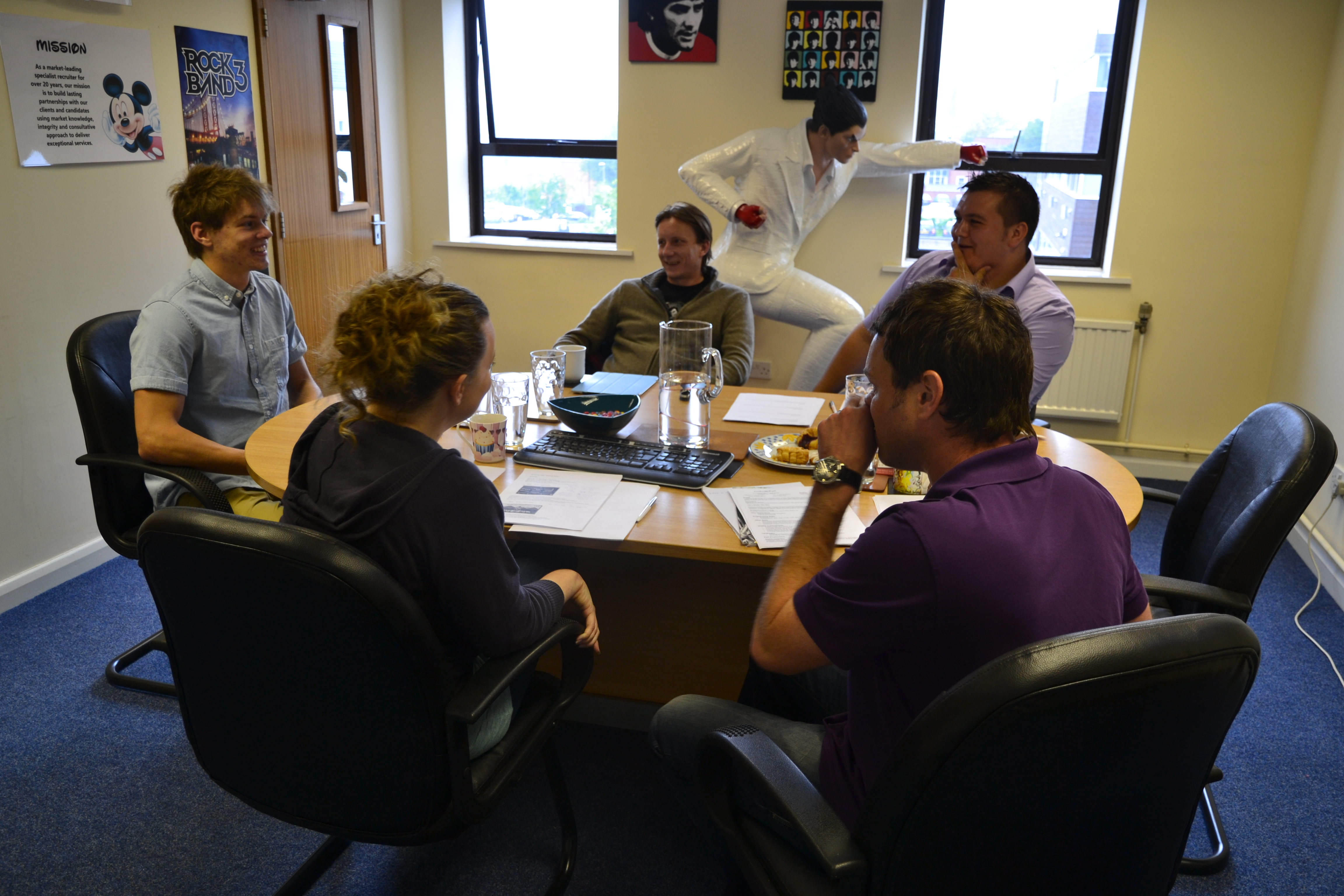
Congratulations to Adam Yaxley (3rd year Computer Systems MEng) who has won the national "Rising Star" games programming competition sponsored by Aardvark Swift. The competition is open to all UK undergraduates and aims to highlight the brightest games programming talent. To gain the title Adam had to face a number of challenges demonstrating technical programming skills, including a software challenge set by Relentless Software. He also had to show his knowledge and passion for the area by facing a panel interview with industry experts. Panel member Mark Hope said "Adam showed knowledge beyond his years to beat off competition from the other finalists, he has a bright future ahead of him and here at Aardvark Swift we wish him all the best for the future!"
Adam will be presented with his award at the Eurogamer Expo in September by industry veteran Ian Livingstone. He is also invited to present a talk at the Expo about his experiences in the competition.
Adam is currently looking forward to a placement at Havok next year before returning to Warwick to complete his MEng in Computer Systems.
DCS academic wins international grant for research on cancer prognostics
A consortium of four academic and clinical institutes has won an international grant for a research project on novel multiplex prognostic biomarkers for colorectal cancer via computerised analysis of multi-protein fluorescence images. The research project led by Dr Nasir Rajpoot has been awarded the total amount of $1.05m by the Qatar Foundation. The consortium involves academic and clinical partners based in the UK and Qatar. The research team at Warwick will be composed of two new researchers and key investigators from four departments across the campus in Dr Nasir Rajpoot (Computer Science), Dr Mike Khan (Life Sciences), Prof David Epstein (Mathematics), and Dr Rich Savage (Systems Biology).
Opening: Assistant Professor
The University of Warwick is one of the founding partners in New York's recently announced Centre for Urban Science and Progress (CUSP).
http://www.nyu.edu/about/university-initiatives/center-for-urban-science-progress.html
CUSP is an applied sciences institute focused on creating new transdisciplinary solutions for ‘smart urban environments’.
At full strength, CUSP will house 30 faculty, 400 Master’s students, 100 PhD students and 30 post-docs, researching areas including intelligent transportation, managing urban services and infrastructure, public safety and security, health informatics, and efficient, responsive and resilient buildings.
The University of Warwick is seeking to make several appointments in support of this initiative.
We welcome interest from Computer Science researchers in areas including:
Information Analytics;
Sensors and Mobile Infrastructures;
Data Visualization;
Security and Surveillance;
Real-time video processing;
Adaptive control and machine learning;
The Internet of Things.
Other research areas with clear application to smart cities and urban science will also be considered.
You will undertake research, teaching, administration and other activities supporting the work of the Department of Computer Science, both at the University of Warwick and also at the Centre for Urban Science and Progress (CUSP) in New York.
You will have a PhD or equivalent in Computer Science or a discipline related to smart urban environments, and you will be able to demonstrate excellent research potential in this area. You will have interdisciplinary interests and industrial research experience. Although you will be based at the University of Warwick in the UK, you must be prepared to make regular visits to New York for teaching and research purposes. You will also be required to work with industry partners as part of this initiative.
Closing date: 2 July 2012
Please quote job vacancy reference number 71908-052.
£37,012- £44,166 pa
Opening: Professor
The University of Warwick is one of the founding partners in New York's recently announced Centre for Urban Science and Progress (CUSP).
http://www.nyu.edu/about/university-initiatives/center-for-urban-science-progress.html
CUSP is an applied sciences institute focused on creating new transdisciplinary solutions for ‘smart urban environments’.
At full strength, CUSP will house 30 faculty, 400 Master’s students, 100 PhD students and 30 post-docs, researching areas including intelligent transportation, managing urban services and infrastructure, public safety and security, health informatics, and efficient, responsive and resilient buildings.
The University of Warwick is seeking to make several appointments in support of this initiative.
We welcome interest from Computer Science researchers with excellent research track records in areas including:
Information Analytics;
Sensors and Mobile Infrastructures;
Data Visualization;
Security and Surveillance;
Real-time video processing;
Adaptive control and machine learning;
The Internet of Things.
Other research areas with clear application to smart cities and urban science will also be considered.
You will play a leading role in the development and direction of the research, administration and teaching in the Department of Computer Science at Warwick. You will have particular responsibility for the University of Warwick's commitment to the Centre for Urban Science and Progress (CUSP) in New York.
You will have a PhD or equivalent in Computer Science or a discipline related to smart urban environments, and you will have an excellent track record of research in this area. You must be able to demonstrate an ability to secure funded research grants. You will have interdisciplinary interests with industrial research experience. Although you will be based at the University of Warwick in the UK, you must be prepared to make regular visits to New York for teaching and research purposes. You will also be required to work with industry partners, and develop and lead industry/university research projects as part of the CUSP research program.
Please quote job vacancy reference number 71909-052.
Closing Date: 2 July 2012
Salary Negotiable
Celebrating the Life and Work of Alan Turing - 20th June 2012
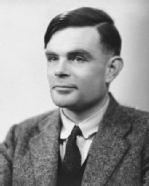
The Department of Computer Science is proud to present a day of talks celebrating the life and work of Alan Turing, a pioneer in mathematics and the founding father of Computer Science. The day, which marks the centenary of Turing’s birth, will feature lectures from leading academics on Turing’s contributions and their enduring relevance to a broad range of scientific disciplines.
The event is open to all, and attendance from undergraduate and postgraduate students is warmly welcomed. There will be a series of talks on the life and work of Turning, the chance to chat over coffee and buffet lunch.
For more information on the celebration go to http://go.warwick.ac.uk/turing
Warwick Named Europe's Best University Under 50 Years Old
The University of Warwick has been named the best university in Europe and number three in the world in The QS Top 50 under 50 league table.
The University, which will celebrate its 50th anniversary in 2015, was featured on the QS Top 50 under 50 rankings of the new generation of elite young global institutions.
The top two global institutions were both in Hong Kong - the Chinese University of Hong Kong and the Hong Kong University of Science and Technology.
Full results of QS Top 50 under 50 are available here.