
Zaman Lantra
Introduction
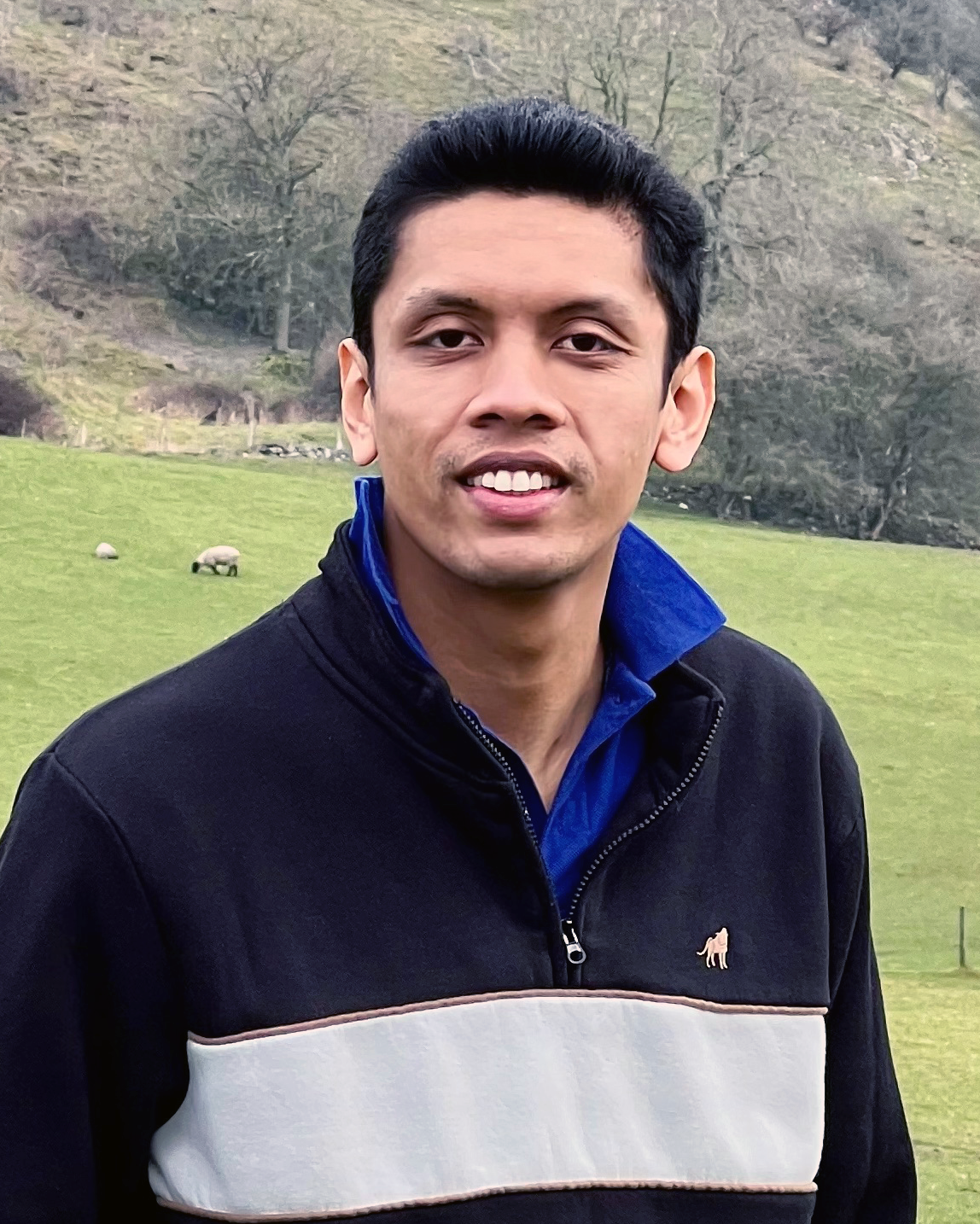
Zaman is an assistant professor (research-focused) in the Department of Computer Science. He completed his PhD in High Performance Computing at the University of Warwick (2021-2025), under the supervision of Dr. Gihan Mudalige.
Prior to his PhD, he worked at the London Stock Exchange Group (LSEG) Technology as a Specialist Software Engineer, where he was responsible for designing and developing performance-critical software components for equity, derivatives and CFD markets. He holds a BSc (Hons) in Electronic and Telecommunication Engineering from the University of Moratuwa, Sri Lanka, and also completed a research internship at LiveLabs, Department of Information Technology, Singapore Management University, Singapore.
Research Interest
Zaman's research focuses on advancing numerical simulation software for high-performance computing, with particular emphasis on massively parallel architectures, reconfigurable computing systems, and compiler and code-generation technologies.
His research aims to address the challenges in performance portability and scalability on modern heterogeneous systems, including platform-specific optimizations, as demonstrated during his PhD research developing OP-PICLink opens in a new window, a domain-specific language (DSL) for unstructured mesh-based particle-in-cell (PIC) simulations.
He is currently a researcher on the Virtual Exascale Calculations Transform Aviation (VECTALink opens in a new window) project, funded by UKRI and Rolls-Royce. Within this project, he works on accelerating production-grade unstructured mesh CFD applications using the OP2Link opens in a new window DSL.
PhD Thesis
Particle-in-cell (PIC) methods are widely used to model plasma dynamics, a key area of research in next-generation energy production through nuclear fusion. Ensuring the performance portability of such simulations across emerging heterogeneous high-performance computing systems has become a critical challenge in scientific computing. One promising approach is the use of high-level abstractions, such as domain-specific languages (DSLs).
In his PhD thesis, he introduced OP-PICLink opens in a new window, a new DSL for unstructured PIC computations, building on the techniques pioneered in OP2Link opens in a new window, a DSL for unstructured mesh algorithms. This work was carried out as part of the ExCALIBUR NEPTUNELink opens in a new window project, in collaboration with the UK Atomic Energy Authority and the University of York.
OP-PIC enables scientists to describe problems at a high level, while relying on automatic source-to-source translation and code generation to produce efficient backend implementations in MPI, OpenMP, CUDA, HIP, and SYCL. This approach achieves performance portability across major HPC architectures using a single unified codebase.
The OP-PIC framework was benchmarked on leading HPC systems including LUMI-G, ARCHER2, Tursa, and Bede, reaching simulation scales exceeding 140 billion elements on up to 1,024 GPU devices. The results were presented at top-tier conferences such as ICPP'24 and SC'24.
Tech Stack : C/C++, Python, MPI, OpenMP, CUDA, HIP, SYCL, Kokkos, Legion, CMake, Make, Spack, Arm Forge DDT, GDB, Valgrind, Intel Advisor/VTune, Nsight compute/nvProf, ROCProfiler, SLURM, Bash, Clang.
Teaching
As an Assistant Professor, Zaman delivered lectures for CS257: Advanced Computer Architecture, covering one-third of the module. He taught Advanced Topics in Processor Architecture and Parallel and High-Performance Computer Organisation, including parallelism, pipeline design, superscalar processors, multithreading, multi-core CPU architectures, and GPU architectures.
During his PhD, Zaman served as a Senior Graduate Teaching Assistant in the Department of Computer Science, supporting several undergraduate modules:
- CS118 – Programming for Computer Scientists (Java)
- CS139 – Web Development Technologies (HTML, CSS, Python, Flask, SQLAlchemy)
- CS258 – Database Systems (Java, PostgreSQL)
- MA117 – Programming for Scientists (Java)
He also contributed to exam paper marking for Web Development Technologies and served as a Support Examination Invigilator during the Summer 2023 examination period in the Department of Computer Science.
Contact
MB2.34 (Maths Building),
Department of Computer Science,
University of Warwick,
CV4 7AL