Skip to main content Skip to navigation

Human-Centred Computing News

Select tags to filter on

How to tell if a tweet is telling the truth

How to tell if a tweet is telling the truth, The Times, Pages 1-2, 19 February, 2014.

Information we find through social media cannot always be trusted. A study of social media during the Boston bombing of 2013 concluded that 29% of the most viral content were rumours. This is clearly a major problem and, given the volume – Twitter users send 500 million tweets per day – requires the use of automated techniques to solve it. Research has already identified a number of tell-tale features in the digital ‘signatures’ of social media postings and the sources that produce them that are correlated with trustworthiness. These include posting history and connections with other social media users. The Pheme project, a new £3.5M European Union funded research project involving Computer Scientists from the University of Warwick, will build on this research and will also develop ways to analyse topics in postings, their consistency with other sources and distinguish the different ways in which social media users respond to them.

By combining these different approaches, Pheme will create computer tools with improved ability to discriminate between trustworthy and untrustworthy sources and with the capacity to process the large volumes of information circulating in social media daily. These tools will be made widely available for news media, government agencies and community organisations to use. By providing the means to amplify natural self-correction mechanisms in human communication, Pheme will help people to be more confident in assessing the veracity of information they find in social media.

See: http://www.thetimes.co.uk/tto/technology/internet/article4009691.ece

Rob Procter is Professor of Social Informatics in the Department of Computer Science, University of Warwick. He led a multidisciplinary team to work with the Guardian/LSE on the ‘Reading the Riots’ project, analysing tweets sent during the August 2011 riots. This work won the Data Visualization and Storytelling – National/International category of the inaugural Data Journalism Awards sponsored by Google, the 2012 Online Media Award for the ‘Best use of Social Media’. He is a founder member of the Collaborative Online Social Media Observatory (Cosmos), a multidisciplinary group of researchers in England, Scotland and Wales that is building a platform for social media analytics.

Mon 24 Feb 2014, 13:07 | Tags: People Grants Research

Bank of America Merrill Lynch 1st Year Maze Coursework Winners

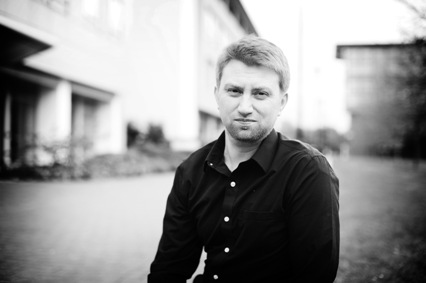
Marcin Pucilowski

Friday 6th December 2013 saw the judging and awarding of prizes for the best solutions to this year's 1st year Programming for Computer Scientists module coursework. David Deacon from Bank of America Merrill Lynch was on hand in the afternoon to award the prizes at the celebration party.

There were some outstanding solutions to the 'Robot' Maze problem this year, which involves finding the optimal path through sets of random mazes, some containing loops. As well as solving the problem at hand, some of the candidates ingeniously subverted the Java framework and produced simple games for the users to play!

This year's overall winner was Marcin Pucilowski who used an A* search for the target with a colour overlay to represent the depth of each node in the graph. Well done to Marcin! Second and third placed were Radu Blana and David Richardson. Radu too made an A* search and a snake game if you "get bored" of running on the same maze. David made 2 additional games, a block defender game and a cellular automaton that worked inside the maze. Highly commended were Rayhaan Jaufeerally, Rhiannon Michelmore and Oliver Hamelkijnck. Rayhaan made a multiplayer networked race to the target. Rhiannon also made a snake game which was great fun to play! Oliver made a Dijkstra-based search for the target. The top three winners received Amazon book tokens and all have been invited to the BAML Insight Week events to be run in spring and autumn next year.

Thank you to David Deacon and BAML for sponsoring the event this year and also to all of the Post Graduate markers involved in the one-to-one marking and feedback sessions.

Fri 13 Dec 2013, 18:03 | Tags: People Undergraduate

EPSRC Funding for new Centre for Urban Science

m6-traffic

The EPSRC has recently announced funding for a new Centre for Doctoral Training (CDT) in Urban Science, which will train scientists to harvest and process big data in order to develop a better understanding of the science of cities, and to apply that knowledge to find smart solutions to urban problems.

In just a few decades the world's population will exceed 9 billion, 70% of whom will live in cities. Enabling those cities to deliver services effectively, efficiently and sustainably, while keeping their citizens safe, healthy, prosperous and well informed, will be among the most important undertakings of this century” [UN Habitat].

This new CDT is led by Computer Science at Warwick, and involves partnership with the cities of New York and Birmingham. Several industry partners are backing the centre, including IBM, URS, AT&T, Cisco, E.ON and British Gas. The centre will support over 50 new PhD students over the next 5 years and each student will have the opportunity to work as part of a larger cohort, involving students from Carnegie Mellon University, New York University, University of Toronto and IIT Mumbai.

The CDT will provide EPSRC-funded PhD students with an unprecedented opportunity to work with industry experts and alongside our city officials on real-world urban science problems. Seldom have so many international academic institutions, leading businesses and city agencies been focused on one activity; seldom has the opportunity arisen to develop scientific solutions that will have direct impact on billions of the world’s population.” [Deputy Mayor New York City]

For more information about the centre, or enquiries about PhD opportunities, please contact Prof Stephen Jarvis.

Mon 25 Nov 2013, 15:36 | Tags: Research Faculty of Science

Latest news Newer news Older news

Let us know you agree to cookies