
News
See below for the latest news from the Warwick Crop Centre.
For our latest publications see Crop Centre in Print
Andrew Jukes on BBC's 'Supermarket Shopping Secrets' testing chilli heat
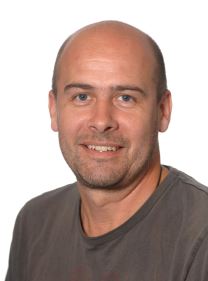 Andrew Jukes from the School of Life Sciences, Warwick Crop Centre discusses the testing of chilli heat with Greg Wallace on the BBC's programme 'Supermarket Shopping Secrets'.
http://www.bbc.co.uk/iplayer/episode/b08w8r98/supermarket-shopping-secrets-series-1-1-war# (42:28 to 46:39).
New AHDB-funded project - SCEPTREplus
The School of Life Sciences is a partner in a new £1.4M 4-year project ‘SCEPTREplus’ funded by the AHDB. The aim of the project is to deliver applied research on high priority disease, pest and weed problems in fresh produce and ornamental crops in order to support approval of products and devise and develop IPM programmes. The project consortium is chaired by Ed Moorhouse (Agri-Food Solutions Director) and includes RSK ADAS, NIAB EMR and Stockbridge Technology Centre.
26 May 2017: Inaugural Elizabeth Creak Distinguished Guest Lecture on Food Security
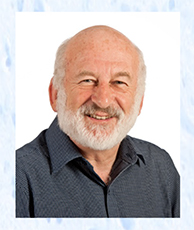 On Friday 26 May Professor John A Pickett, from Rothamsted Research, will be coming to the School of Life Sciences to give the Inaugural Elizabeth Creak Distinguished Guest Lecture on Food Security. The title of his presentation is 'Global food security: removing production constraints with GM but learning from nature'.
Abstract:
The need further to intensify, in a sustainable way, global agriculture becomes ever more pressing. Our current tools mainly comprise seasonal inputs for dealing with constraints relating to crop protection and production but delivery of associated traits via seed, and other planting material, sets high demands often without obvious solutions. GM will need to play a major part certainly in dealing with constraints and because of the low impact on primary metabolic processes, secondary plant metabolism presents powerful new targets. By definition, the genetic apparatus for exploitation of these metabolites only requires identification and natural regulatory processes provide evidence of value already realised in some elements of biological control such as companion cropping. Synthetic biology can then extend these opportunities and will be exemplified for the isoprenoid pathway in plant defence and production.
The lecture will be in GLT1 13:00-14:00.