
News
See below for the latest news from the Warwick Crop Centre.
For our latest publications see Crop Centre in Print
Scientists on a quest to develop a British baked bean
Scientists at the University of Warwick are using the latest DNA mapping techniques to allow British farmers to grow one of the UK’s favourite foods.
The navy bean (Phaseolus vulgaris), also known as haricot bean, commonly ends up on our plates with a tomato-based sauce as baked beans. It is a staple of the British diet with consumption reaching hundreds of millions of cans of baked beans in a year. Every single baked bean we eat however, is grown outside the UK with the majority imported from Canada.
The Biotechnology and Biological Sciences Research Council (BBSRC) is funding PhD student Andrew Tock’s project through a food security studentship at the University of Warwick Crop Centre, supervised by Professor Eric Holub and Dr Guy Barker
Warwick Crop Centre awarded funding in the the first round of the BBSRC's Horticulture and Potato Initiative (HAPI)
A team from the University of Warwick and East Malling Research, led by Dr John Clarkson of Warwick Crop Centre, and with the HDC and Nickerson-Zwaan as industry partners, has been awarded one of the grants for a project entitled 'Exploiting next generation sequencing technologies to understand pathogenicity and resistance in Fusarium oxysporum'.
Purple and white carrots help preserve the future of the orange variety
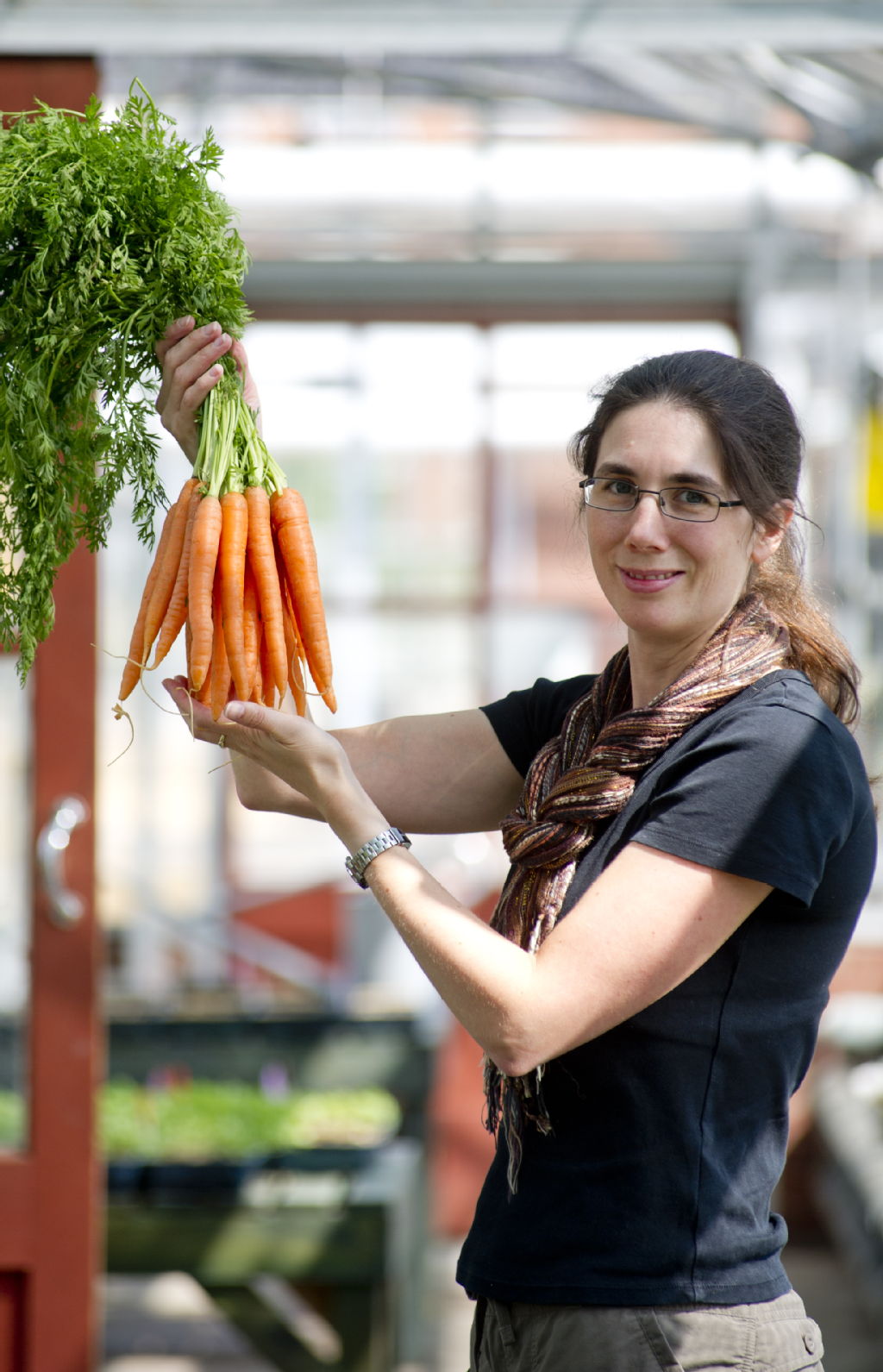 The University of Warwick has captured a snapshot of the genetic diversity of cultivated and wild carrots in order to guide crop researchers and breeders in developing varieties adapted to future growing conditions.
Research at Warwick Crop Centre, led by Dr Charlotte Allender, involved selecting 96 varieties of carrot, chosen for their wide range of characteristics, to grow in order to harvest information on their genetic makeup.
Called the Carrot Diversity Set, the collection covers wide variations in root shape and colour, with orange, white, yellow and purple carrots included in the sample.
Geographic origin was also a factor in selecting the carrots, with varieties coming from all over the world including Europe, Asia and North America.