
Presenter Portal
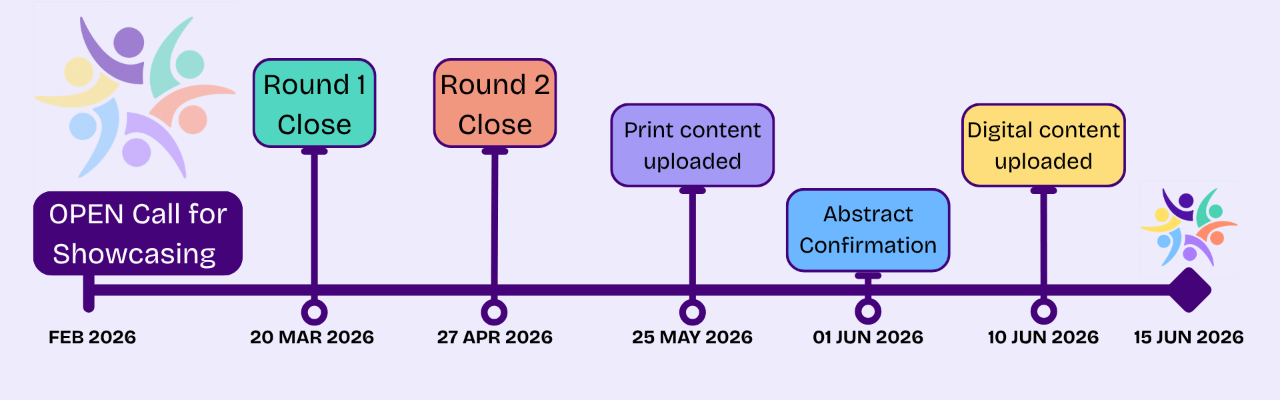
Presentation Uploads
Abstracts
Abstracts for both Showcase presentations and Showcase Exhibitions. Upload Abstract
01 JUN 2026 deadline
Print Content
Posters and any other physically printed content. Upload Print Content.
25 MAY 2026 deadline
Digital Content
Slides and any other digital content. Upload digital content.
10 JUN 2026 deadline
Community Showcase
We encourage all presenters to also participate in the Community Showcase.
Reading Room
This space holds published works of our PGRs for audiences to read and be inspired, it is a quite space to step away from the Festival buzz whilst enjoying PGR achievements.
We welcome papers and books where Warwick PGRs have been co-authors.
Love Letter to Your Thesis
PGRs reflections on their research journey and their emotional responses contribute to our community display in the Festival Exhibition.
PGRs can participate anonymously with this communal display.
Contribute to the Community Showcase via the submission form.
Important Information
We request abstracts from all Festival presenters (Showcase Presentations and Showcase Exhibition), please see advice below on abstract writing for interdisciplinary audiences.
Please arrive 15min before your session is due start and sign-in at the Festival registration desk.
If you are attending earlier sessions at the Festival, please inform the member of the Festival team that you are a Festival presenter (Showcase Presentations and Showcase Exhibition).
Showcase Presentations
Immediately before the allocated session, we request please come to the front of the lecture theatre (OC0.03). There will be seats allocated for all presenters in the front row for the duration of the session. After presentations, there will opportunity for the audience to engage with presentations and ask questions.
Showcase Exhibition
We encourage all Showcase Exhibition presenters to be present at both Exhibition Sessions (11am-11.45am and 2.15pm-3pm) to engage with audiences regarding their work and respond to questions. Please be aware that the Exhibition will be open throughout the Festival.
Poster dimensions - A0 portrait or A1 landscape,.
Presenter Training
The Doctoral College is offering online training for Festival Showcase Presenters, both Showcase Presentation & Exhibition.
Sign-up for presenter training workshops.
Presentation Skills
The session will cover:
- presentation skills - voice projection and delivery
- body language
- timing a speech
- addressing a non-expert audience
There will also be an opportunity to have a practice run.
This session is open and valuable to all live presenters but there will be focus on Three Minute ThesisTM format.
Workshop - Tue 02 Jun 2026 1pm-3pm
Practise Session - Wed 10 JUN 2026 10am-11.30am
Poster Design
A good poster allows us to communicate our research quickly and clearly. A poor poster will put off our intended audience. So how do we make our poster clear, impactful AND tell everyone what we know? To start we will evaluate a series of posters in order to decide what works which of them are clear, engage us with their research and memorable. We will also examine two major design styles to see what will work for us and our research. We will look at further techniques for poster design and presentation and discuss how to tailor this to your research area. PowerPoint is one of the simpler methods of Poster design and is therefore the package that we will be suggesting you use.
Workshop - Thu 21 MAY 2026 4.30pm-6pm
Abstract Writing
Crafting Effective Conference Abstracts: A Guide for Postgraduate Researchers
Purpose and Function
Conference abstracts serve a dual purpose within academic settings. First, they enable selection committees to evaluate submissions for inclusion in the programme. Second, they allow attendees to navigate parallel sessions and identify presentations relevant to their interests. Developing proficiency in abstract writing is therefore essential for researchers seeking to disseminate their work—whether at conferences, in peer-reviewed journals, or through research repositories.
Core Characteristics
A well-constructed abstract typically ranges from 100 to 250 words and functions as a condensed representation of your research. Three qualities determine its effectiveness:
- Accuracy — faithfully representing the scope and findings of your work
- Relevance — connecting to the conference theme and audience interests
- Engagement — generating sufficient interest to draw appropriate readers or attendees
Achieving this compression while maintaining substance often proves more challenging than producing the full paper itself.
A Structural Approach
One useful technique involves drafting your complete paper first, then distilling each section into a single sentence. These sentences form the skeleton of your abstract. Rather than concatenating them verbatim, use them as scaffolding—reshaping and connecting the ideas into flowing prose. This method preserves logical coherence between abstract and presentation, preventing the introduction of claims absent from your actual work.
Content Expectations
Unlike promotional blurbs designed to intrigue through omission, academic abstracts should comprehensively summarise your contribution. Key elements include:
- The research question or problem addressed
- Your methodological approach
- Principal findings or arguments
- Implications and future directions (where applicable)
Your title warrants equal attention, as it works alongside the abstract to frame reader expectations.
Abstract Structure Guidance
The Doctoral College recommends using the ICUR Method for abstract writing for interdisciplinary audiences.
The ICUR Method is based on research by Day and Peters (1994), "Quality Indicators in Academic Publishing", Library Review, 43, 7
FIRST, consider four key questions about the research project:
The WHY? The WHAT? The SO WHAT? The NOW WHAT?
THEN, create the final abstract by compiling the responses to the key questions, considering the following through the editing process.
- Is anything missing that was integral to the project? Perhaps there’s an aspect of the research that didn’t fit neatly into the four answers. Now add any important elements that were missed.
- Has the combination of the four responses produced some repetition? If so, streamline the abstract and remove any extraneous material.
- Are some transitional phrases needed between the answers to the questions? Think about how to guide the reader through the abstract and the research process. Abstracts should inform but they can also be enjoyable for the audience to read. Add transitional words, phrases, or sentences to clearly connect the different aspects of your project.
- How accessible is the abstract to an interdisciplinary audience? Subject-specific language is used in all disciplines, however, at an interdisciplinary conference, it’s important that the work is accessible to all. Reduce the use of jargon where possible and seek advice outside the field to check the abstract for intelligibility.
- Don’t forget about the title! Titles are important. At the conference, a great title will attract audience members to the presentation and increase their engagement with the research. And, beyond the conference, a good title enhances the discoverability of the research online, increasing the chances of being cited by other scholars. Make sure the title reflects the project accurately and includes key words that can help others discover the research.