
Hispanic Studies and Theatre Studies BA (UCAS R4W4)

Find out more about Hispanic Studies and Theatre Studies at Warwick
Combine your interest in one of the world’s leading global cultures with your desire to develop a critical and creative understanding of theatre and performance with our Hispanic Studies and Theatre Studies (BA) degree.
General entry requirements
A level typical offer
ABB to include a modern or classical language
A level contextual offer
We welcome applications from candidates who meet the contextual eligibility criteria and whose predicted grades are close to, or slightly below, the contextual offer level. The typical contextual offer is BBB including B in a modern foreign language or Latin/Ancient Greek. See if you’re eligible.
General GCSE requirements
Unless specified differently above, you will also need a minimum of GCSE grade 4 or C (or an equivalent qualification) in English Language and either Mathematics or a Science subject. Find out more about our entry requirements and the qualifications we accept.
We advise that you also check the English Language requirements for your course which may specify a higher GCSE English requirement. Please find the information about this below.
IB typical offer
32 to include 5 in a modern or classical language
IB contextual offer
We welcome applications from candidates who meet the contextual eligibility criteria and whose predicted grades are close to, or slightly below, the contextual offer level. The typical contextual offer is 30 including 5 in a Higher Level modern foreign language or Latin/Ancient Greek. See if you’re eligible.
General GCSE requirements
Unless specified differently above, you will also need a minimum of GCSE grade 4 or C (or an equivalent qualification) in English Language and either Mathematics or a Science subject. Find out more about our entry requirements and the qualifications we accept.
We advise that you also check the English Language requirements for your course which may specify a higher GCSE English requirement. Please find the information about this below.
We welcome applications from students taking BTECs alongside an A level in a modern or classical language.
General GCSE requirements
Unless specified differently above, you will also need a minimum of GCSE grade 4 or C (or an equivalent qualification) in English Language and either Mathematics or a Science subject. Find out more about our entry requirements and the qualifications we accept.
We advise that you also check the English Language requirements for your course which may specify a higher GCSE English requirement. Please find the information about this below.
International qualifications
English Language requirements
All applicants have to meet our English Language requirements. If you cannot demonstrate that you meet these, you may be invited to take part in our Pre-sessional English course at WarwickLink opens in a new window.
This course requires: Band B
Learn more about our English Language requirementsLink opens in a new window
Frequently asked questions
Warwick may make differential offers to students in a number of circumstances. These include students participating in a Widening Participation programme or who meet the contextual data criteria.
Differential offers will usually be one or two grades below Warwick’s standard offer.
All students who successfully complete the Warwick IFP and apply to Warwick through UCAS will receive a guaranteed conditional offer for a related undergraduate programme (selected courses only).
Find out more about standard offers and conditions for the IFP.
We welcome applications for deferred entry.
We do not typically interview applicants. Offers are made based on your UCAS form which includes predicted and actual grades, your personal statement and school reference.
Course overview
This degree allows you to develop an in-depth knowledge of the language and culture of the Hispanic world while also exploring theatre and performance studies through both practice and theory.
You benefit from the full range of expertise on offer in both departments, including cultural and historical modules in the School of Modern Languages, and specialisms in the Department of Theatre and Performance Studies including theatre in the African context, contemporary European theatre, applied theatre and playwriting.
There will normally be the opportunity to study abroad in your second or third year of study, immersing yourself in Hispanic culture, in Spain, the Caribbean, or South America.
Study abroad
We strongly recommend that you take a year abroad as part of your modern languages degree, if you are able to. If you are unable to take a year abroad you will move to a three-year course. You will be required to complete further language reinforcement work. You will also be encouraged to spend time abroad in other ways, during vacation times.
You will usually spend your year abroad doing one of three things:
- Working as a language assistant teaching English in a primary or secondary school
- Studying full-time at a partner university in your chosen country
- On a work placement
Find out more about flexible Year Abroad options
Core modules
In your first year, you will follow a core Spanish language programme at either beginner or advanced level, you will also have a core Theatre Studies module called From Text to Performance which examines the relationship between performance and society.
In your intermediate and final years, you will continue to have a core Spanish language module and a choice of a selection of other Hispanic Studies and Theatre Studies modules.
Year One
Modern Spanish Language 1
Do you have A level or an equivalent in Spanish and want to consolidate, extend and refine your skills? This module will equip you with sound grammatical and linguistic foundations, with the aim of increasing your confidence in reading, listening, speaking and writing in Spanish. You'll use authentic resources in a variety of media from around the Hispanic world, including books, articles, newspapers, television, music, and podcasts, as well as taking part in our virtual language exchange with students at the Universidad Javeriana de Bogotá, Colombia, a fantastic way to expand your linguistic and intercultural skills outside the classroom. During the module, you will develop your skills through a combination of classroom sessions, guided learning activities and appropriate self-study resources. Weekly classes will cover reading, language in use, grammar and functional aspects of Spanish such as translation, extended writing and oral expression, which are reinforced through complementary activities on Moodle, our multimedia VLE.
Read more about the Modern Spanish Language 1 moduleLink opens in a new window, including the methods of teaching and assessment (content applies to 2022/23 year of study).
or
Modern Spanish Language for Beginners
As a beginner in the acquisition of the Spanish language, you’ll gain a keen grammatical awareness, a sound understanding of cultures and societies across the Hispanic world, and most of all, confidence in reading, listening, speaking and writing in Spanish. Using authentic resources, including newspapers, television and radio, you are expected to end your first year able to sustain everyday conversations in Spanish, read authentic texts, follow TV extracts and write at an intermediate level in Spanish. You'll also work on basic translations to and from Spanish as a means of consolidating your knowledge.
Read more about the Modern Spanish Language for Beginners moduleLink opens in a new window, including the methods of teaching and assessment (content applies to 2022/23 year of study).
A Hispanic Studies cultural module:
Language, Text and Identity in the Hispanic World
How has the Spanish language travelled around the world and what happens when it co-exists with other languages? How do writers use language to explore identity, and what happens when they work between two (or more) languages? What skills do we need as readers to interpret the nuances of texts that travel between languages? This module will equip you with an understanding of the cultural and sociolinguistic diversity of the Hispanic world, and a strong grounding in the literary and cultural analysis of texts that address this diversity.
Read more about the Language, Text and Identity in the Hispanic World moduleLink opens in a new window, including the methods of teaching and assessment (content applies to 2022/23 year of study).
or
Icons and Representations of the Hispanic World
Have you ever wondered where the familiar stereotypes of Spain and Latin America come from? How have they circulated and been received at different times and in different places? And how have Spaniards and Latin Americans represented themselves to travellers, tourists, artists, and even invaders? The module will introduce you to a wide range of written and visual representations of the Hispanic world, and some of its most influential and iconic cultural figures. We investigate topics which, in different ways, pose important questions about studying other languages and cultures.
Read more about the Icons and Representations of the Hispanic World moduleLink opens in a new window, including the methods of teaching and assessment (content applies to 2022/23 year of study).
Two Theatre Studies modules:
Theatre and Performance in Context
This module considers what theatre and performance can tell us about our histories, cultures, societies and identities. You’ll watch, read and study a range of theatre and performance from across historical, cultural and geographical borders, in order to see how it not only reflects society, but also seeks to change and shape it. The module is split into four blocks, considering theatre and gender, race, sexuality and class. This module will help you to hone your academic writing, research and presentation skills, which will serve you throughout your degree.
Read more about the Theatre and Performance in Context moduleLink opens in a new window, including the methods of teaching and assessment (content applies to 2022/23 year of study).
From Text to Performance
Through practical exploration of a number of selected plays and texts, in this module you’ll investigate the process of taking material from page to stage or performance, and the relationship between theory and practice. You’ll have the opportunity to experiment practically with realising multiple texts in performance, considering aspects such as staging, genre, narrative structure, performance strategies, dramaturgical thinking and directorial conceptualization, as well as the changing role and function of the audience.
Read more about the From Text to Performance moduleLink opens in a new window, including the methods of teaching and assessment (content applies to 2022/23 year of study).
Intermediate Year
Modern Spanish Language 2
On this module, you'll extend your competence in Spanish. You'll deepen your understanding of advanced grammatical and linguistic structures, increase the range and sophistication of your vocabulary, and refine your use of register in authentic spoken and written discourse. You'll use resources from a variety of media from around the Hispanic world, and take part in our virtual language exchange, where you will have the opportunity to work online with students in Spain and Latin America. At the end of the course, you should have sufficient mastery to discuss different topics, report on your independent reading and support your opinions with solid arguments.
Read more about the Modern Spanish Language 2 moduleLink opens in a new window, including the methods of teaching and assessment (content applies to 2022/23 year of study).
or
Modern Spanish Language 2 (Post-beginners)
This module for students who started as beginners follows the first year module HP102 and seeks to consolidate the language skills gained in students’ first year of study. The aim of this module is to further extend and refine competence in modern Spanish. It covers the main linguistic skills (oral, aural, reading and writing), and seeks to promote the continued acquisition of grammatical awareness and essential communicative competences. At the end of the course, you will be able to understand discourse about concrete and abstract topics, to give presentations about different subjects, to report on the results of your independent reading and research, and to state your point of view and support it with solid arguments.
Read more about the Modern Spanish Language 2 (Post-beginners) moduleLink opens in a new window, including the methods of teaching and assessment (content applies to 2022/23 year of study).
A selection of optional modules in the School of Modern Languages and Cultures (30 credits) and in Theatre and Performance Studies (60 credits)
Final Year
Modern Spanish Language 3
This module will consolidate your linguistic skills acquired in the intermediate year and extend them through translation, writing, reading, speaking and listening activities. A range of assessments will be offered for students to track and reflect on their progress through the provision of regular feedback. Students will also be provided with complementary autonomous learning and grammar activities and directed to appropriate activities for self-study in order to develop independent learning strategies.
The aim of this module is to refine fluency in spoken and written Spanish, working towards a C2 standard of the Common European Framework of Reference for Languages (CEFR). Emphasis will be placed on sophisticated translation and writing, as well as oral and comprehension skills, using an appropriate range of complex linguistic structures, vocabulary, register and style.
Read more about the Modern Spanish Language 3 moduleLink opens in a new window, including the methods of teaching and assessment (content applies to 2022/23 year of study).
A selection of optional modules in the School of Modern Languages and Cultures (30 credits) and in Theatre and Performance Studies (60 credits)
Optional modules
Assessment
We will track your progress through:
- Language assignments
- Essays
- Presentations
- Portfolio submissions
- Practical projects
- Creative logbooks
- Examinations (written and oral)
To help you improve your skills you will receive detailed and personalised feedback throughout your course.
Your intermediate- and final-year marks each contribute 50% of your final degree classification.
Teaching
We employ a variety of teaching styles within the School of Modern Languages including:
- Lectures
- Seminars (consisting of around 15 students and focussing on student participation)
- Written and spoken language classes in small groups
You will spend the rest of your time:
- Studying independently
- Preparing for classes
- Reading
- Analysing materials set for study
- Writing essays
- Working on your language skills
Class sizes
Seminars generally involve around 15 students.
Typical contact hours
You will have around 12 hours of contact time per week.
Tuition fees
Scholarships and bursaries
Your career
A languages degree will equip you with skills applicable to a wide variety of different jobs and career paths. Our students often go on to careers using their languages after graduation. They also develop transferrable communicative and analytical skills that are highly sought after by employers.
Graduates from Modern Language courses have gone on to work for employers including:
- Amazon
- British Airways
- Civil Service
- Grayce Consulting
- HM Revenue and Customs
- HSBC
- Ipsos Mori
- Lidl
- NBC Universal
- Save the Children International
- The Department for International Trade
They have pursued careers such as:
- Business and financial project management professionals
- Chartered and certified accountants
- Financial accounts managers
- Human resources and industrial relations officers
- Management consultants and business analysts
- Public services associate professionals
- Teachers and other educational professionals
Helping you find the right career
Our School has a dedicated, professionally qualified Senior Careers Consultant to support you. They offer impartial advice and guidance, together with workshops and events to boost your employability. Previous examples of workshops and events include:
- What are you doing after Warwick? Career planning for final year language students
- Warwick careers fairs throughout the year
- Completing effective CVs and Application Forms for students from the School of Modern Languages
- Reflecting on Your Year Abroad
- Languages Alumni Evening
Modern Languages and Cultures at Warwick
Join us at one of the best universities in the UK for Modern Languages, with an excellent reputation for employability. Study one, two or three languages and cultures, or combine languages with other subjects.
Get to know us a bit better by exploring our department websiteLink opens in a new window
Explore our new Faculty of Arts building
The department recently moved into the brand new £57.5 million Faculty of Arts building.
This means, as an Arts student at Warwick, you’ll find your home amongst brand new teaching, learning and social spaces, including specialist facilities, all designed to support collaborative working and to enable your creativity and innovation to flourish.
The sustainably built, eight-storey building is located next to the newly refurbished Warwick Arts Centre in the heart of the University’s creative and cultural arts quarter.
Explore our new Faculty of Arts building further.
Our courses
For degrees combining two or more languages, please see our Modern Languages courses.
- International Business with French
- Linguistics with French
- International Business with German
- Linguistics with German
- International Business with Spanish
- Linguistics with Spanish
- International Business with Italian
- History of Art with Italian
- Linguistics with Italian
- Linguistics with Arabic
- Linguistics with Chinese
- Linguistics with Japanese
- Linguistics with Russian

Life at Warwick
Within a close-knit community of staff and students from all over the world, discover a campus alive with possibilities. A place where all the elements of your student experience come together in one place. Our supportive, energising, welcoming space creates the ideal environment for forging new connections, having fun and finding inspiration.

Find out how to apply to us, ask your questions, and find out more.

Warwick Accommodation
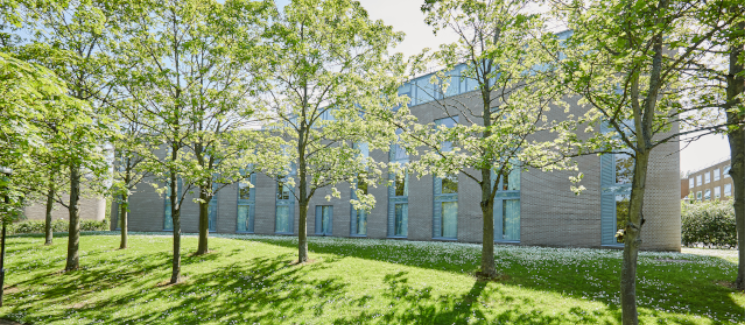
Finding the right accommodation is key to helping you settle in quickly.
We have 12 self-catering undergraduate halls of residence on campus.
Our student property management and lettings agency manages more than 8,000 rooms both on and off campus, and provides advice to all full-time undergraduates.

Our campus
You won't be short of ways to spend your time on campus - whether it's visiting Warwick Arts Centre, using our incredible new sports facilities, socialising in our bars, nightclub and cafés, or enjoying an open-air event. Or if you need some peace and quiet, you can explore lakes, woodland and green spaces just a few minutes’ walk from central campus.

Food and drink
We have lots of cafés, restaurants and shops on campus. You can enjoy great quality food and drink, with plenty of choice for all tastes and budgets. There is a convenience store on central campus, as well as two supermarkets and a small shopping centre in the nearby Cannon Park Retail Park. Several of them offer delivery services to help you stay stocked up.
And don't miss our regular food market day on the Piazza with tempting, fresh and delicious street food. Soak up the atmosphere and try something new, with mouth-watering food for all tastes.

Clubs and societies
We currently have more than 300 student-run societies.
So whether you’re into films, martial arts, astronomy, gaming or musical theatre, you can instantly connect with people with similar interests.
Or you could try something new, or even form your own society.

Sports and fitness
Staying active at Warwick is no sweat, thanks to our amazing new Sports and Wellness Hub, indoor and outdoor tennis centre, 60 acres of sports pitches, and more than 60 sports clubs.
Whether you want to compete, relax or just have fun, you can achieve your fitness goals.


Studying on campus
Our campus is designed to cater for all of your learning needs.
You will benefit from a variety of flexible, well-equipped study spaces and teaching facilities across the University.
- The Oculus, our outstanding learning hub, houses state-of-the-art lecture theatres and innovative social learning and network areas.
- The University Library provides access to over one million printed works and tens of thousands of electronic journals
- Three Learning Grids offering you flexible individual and group study spaces.

Travel and local area
Our campus is in Coventry, a modern city with high street shops, restaurants, nightclubs and bars sitting alongside medieval monuments. The Warwickshire towns of Leamington Spa and Kenilworth are also nearby.
The University is close to major road, rail and air links. London is just an hour by direct train from Coventry, with Birmingham a 20-minute trip. Birmingham International Airport is nearby (a 20-minute drive).

Wellbeing support and faith provision
Our continuous support network is here to help you adjust to student life and to ensure you can easily access advice on many different issues. These may include managing your finances and workload, and settling into shared accommodation. We also have specialist disability and mental health support teams.
Our Chaplaincy is home to Chaplains from the Christian, Jewish and Muslim faiths. We provide regular services for all Christian denominations and a Shabbat meal every Friday for our Jewish students. There is also an Islamic prayer hall, halal kitchen and ablution facilities.

How to apply
Learn more about our application process.

Key dates
Key dates for your application to Warwick.

Writing your personal statement
Make an impression and demonstrate your passion for your course.

After you've applied
Find out how we process your application.
Our Admission Statement
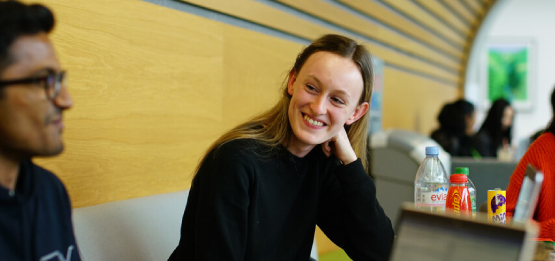
Read Warwick's Admission Statement
3 ways to connect
Talk to us
Join us at a live event. You can ask about courses, applying to Warwick, life at Warwick, visas and immigration, and more.
Warwick Experience
Take a virtual, student-led campus tour. Then join an interactive panel session, where you can hear from and chat to our current students and staff.
Student blogs
Explore our student blogs in OurWarwick. You can read about campus life from students themselves, and register to post questions directly to students.
Explore campus with our virtual tour
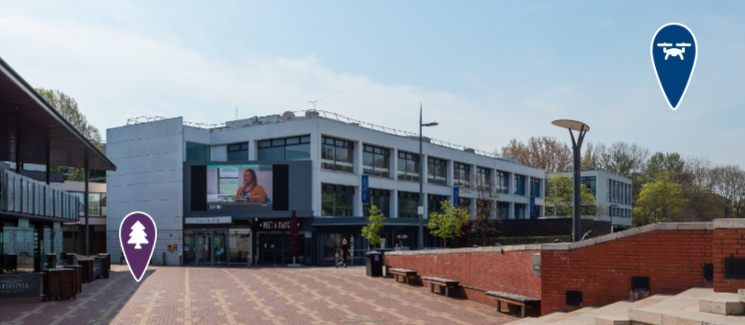
Our 360 tour lets you:
- Watch student videos
- View 360 photography and drone footage
- Learn about facilities and landmarks
Explore our campus virtually through our 360 campus tour now

Come to an Open Day
Don’t just take it from us, come and see for yourself what Warwick is all about. Whether it's a virtual visit or in-person, our University Open Days give you the chance to meet staff and students, visit academic departments, tour the campus and get a real feel for life at Warwick.